What to Plant in March in the UK
A month-by-month guide to what you can sow, plant, and grow in March across UK gardens. Covers vegetables, flowers, herbs, and fruit for greenhouse and outdoor growing.
Key takeaways
- Over 40 crops can be sown or planted in March across UK gardens
- Sow tomatoes, peppers, and chillies indoors at 18-21C for summer harvests
- Direct sow broad beans, peas, and parsnips outdoors when soil hits 7C
- Plant first early potatoes mid-March in the south, late March in the north
- Hardy annuals like sweet peas go directly into prepared outdoor beds
- March sowings produce crops from June through to October
March is when UK gardens shift from planning to doing. Soil temperatures rise above 7C across southern England, the last hard frosts ease in sheltered areas, and the daylight hours reach 12 per day by the equinox. More crops can be started in March than in any other month of the year.
This guide covers every vegetable, flower, herb, and fruit you can sow or plant in March. It is organised by growing method: indoor sowings, outdoor direct sowings, and planting out. All timings are based on UK conditions, with adjustments for northern and southern gardens. For more growing advice, see our growing guides.
Indoor sowings for March
Indoor sowing in March focuses on tender crops that need warmth to germinate and a head start before the last frost. These plants stay inside until late May or early June.
Tomatoes, peppers, and chillies
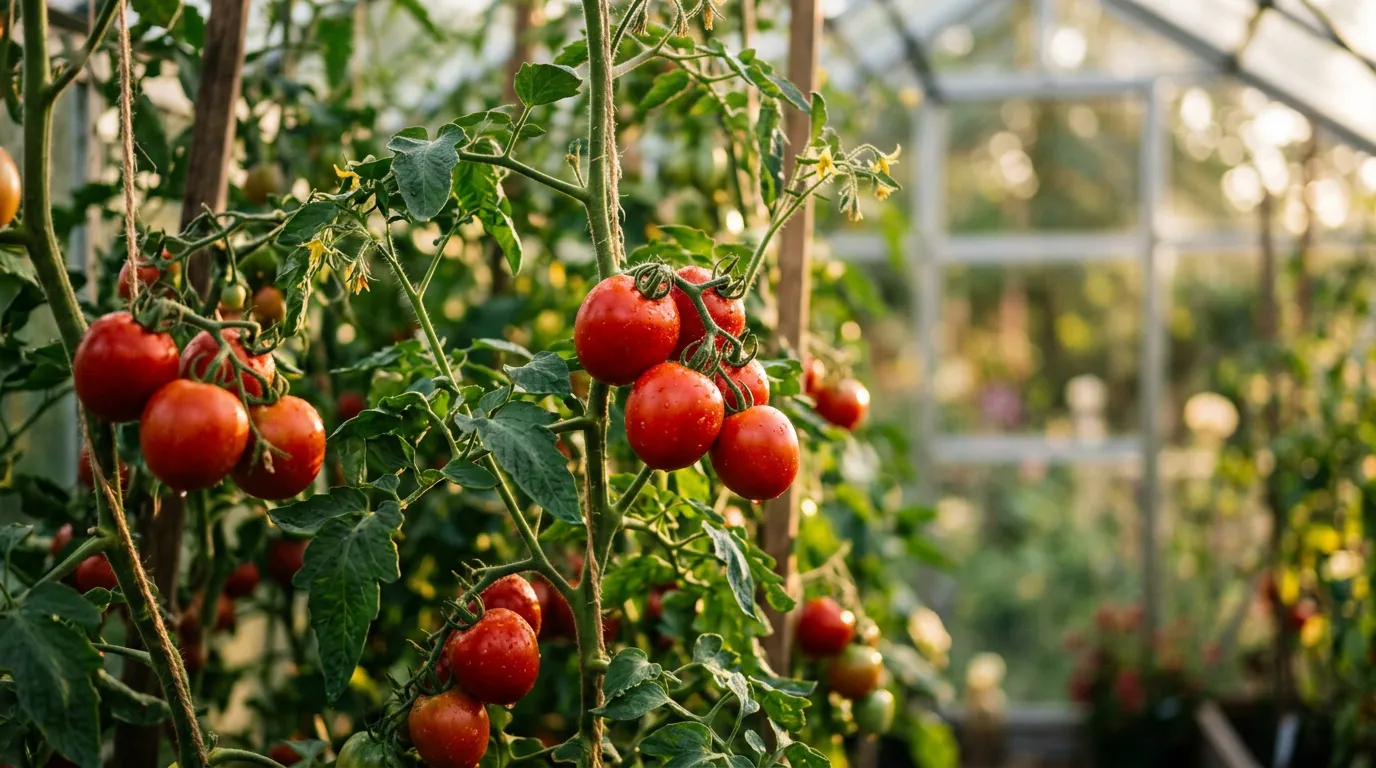
Sow tomatoes in early March if you have a heated propagator. Set the temperature to 18-21C. Seeds germinate in 7-14 days. Peppers and chillies need the same conditions but take longer: 14-21 days for germination.
Sow two seeds per 7cm pot, 1cm deep. Once seedlings emerge, remove the weaker one. Keep on a bright windowsill or under grow lights. These plants need 6-8 weeks of indoor growing before they go outside.
Aubergines and cucumbers
Aubergines need warmth throughout their growing season. Sow in early March at 21-25C. They are slower to establish than tomatoes and need every week of growing time. Cucumbers can wait until late March or early April.
Courgettes and squash
Sow courgettes and squash indoors from mid-March. Use 9cm pots and sow seeds on their edge, 2cm deep. They germinate fast at 18-20C, often within 5-7 days. Do not sow too early. These plants grow rapidly and become pot-bound if stuck indoors for more than 4 weeks.
Sweetcorn
Sow sweetcorn indoors in late March. Use deep modules or root trainers because sweetcorn resents root disturbance. Sow one seed per cell, 4cm deep. Plant out in a block pattern (not rows) in late May for wind pollination.
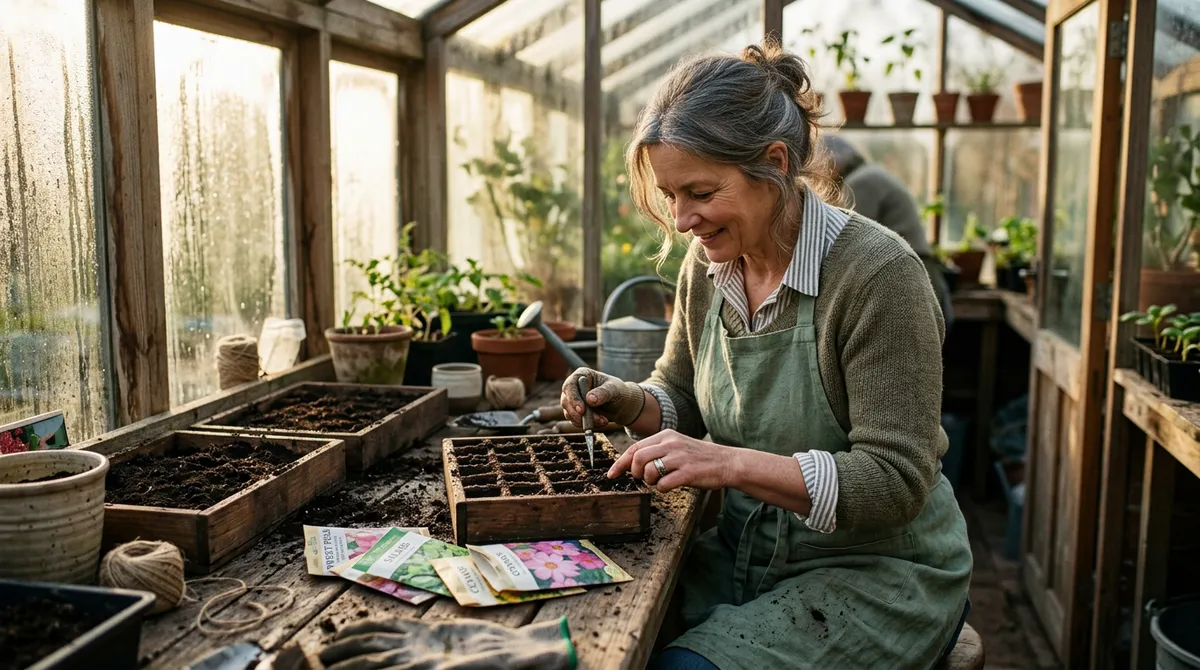
Gardener’s tip: Label everything you sow with the variety name and date. March is hectic, and unlabelled trays become a guessing game by May.
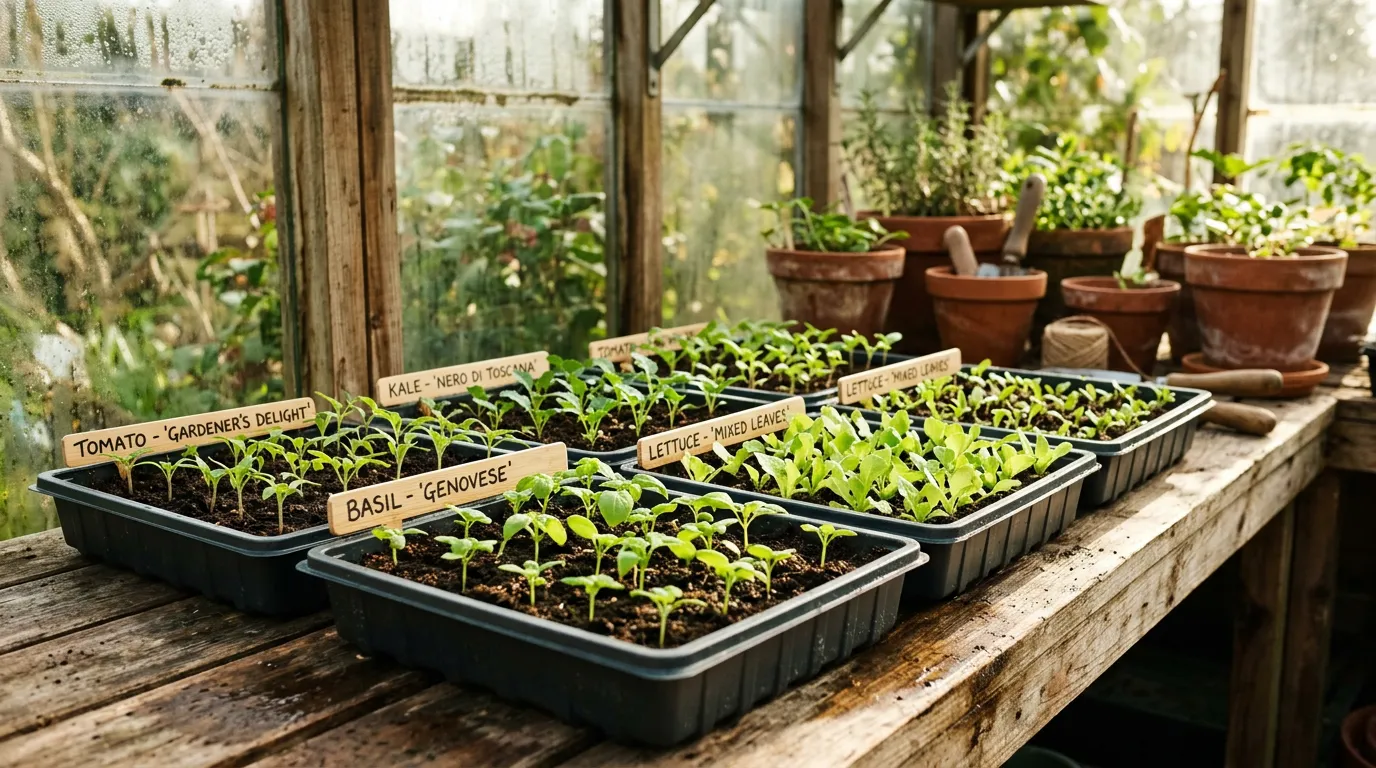 Labelled seed trays on a greenhouse bench. Starting tender crops indoors in March gives them a 6-8 week head start.
Outdoor vegetable sowings
Once soil temperature reaches 7C, a wide range of hardy vegetables can go directly into outdoor beds. Use a soil thermometer pushed 10cm into the ground to check. In southern England, most soils reach 7C by early March. In the Midlands and north, expect mid to late March.
Broad beans
Broad beans are one of the easiest and most rewarding March sowings. Sow seeds 5cm deep, 20cm apart, in double rows. Varieties like Aquadulce Claudia and The Sutton crop reliably from March sowings. Expect harvests from late June.
Broad beans fix nitrogen in the soil through their root nodules. They make excellent companions for brassicas planted later in the same bed. When you cut the plants down after harvest, leave the roots in the ground to release nitrogen.
Peas
Sow peas in March for June picking. Early varieties like Kelvedon Wonder and Meteor produce pods within 12 weeks of sowing. Sow 5cm deep in a flat-bottomed trench, 5cm apart. Push in pea sticks or netting immediately. They climb fast once they germinate.
Peas, like broad beans, fix nitrogen. Rotating them with hungry crops like tomatoes and courgettes improves soil fertility without extra feeding.
Root vegetables
March is the prime time for root vegetable sowings:
- Parsnips - sow directly, 2cm deep, in rows 30cm apart. Use fresh seed every year. Parsnip seed loses viability after 12 months. Germination takes 14-28 days, so be patient.
- Carrots - sow from mid-March under fleece. Sow thinly in rows 15cm apart. Cover with fleece to deter carrot fly, which finds crops by scent.
- Beetroot - sow from mid-March, 3cm deep, in rows 20cm apart. Each “seed” is a cluster of 2-3 seeds. Thin to one seedling per station when 5cm tall.
- Turnips - direct sow from mid-March, 2cm deep, 15cm apart.
Leafy greens
Sow spinach, lettuce, rocket, and spring onions directly into beds from mid-March. These crops grow fast. A March sowing of lettuce produces cutting leaves within 4-6 weeks. Sow in short rows every 2-3 weeks for a continuous supply through summer.
Warning: Do not sow French beans, runner beans, or courgettes outdoors in March. They cannot tolerate frost. Wait until late May for direct outdoor sowings of these tender crops.
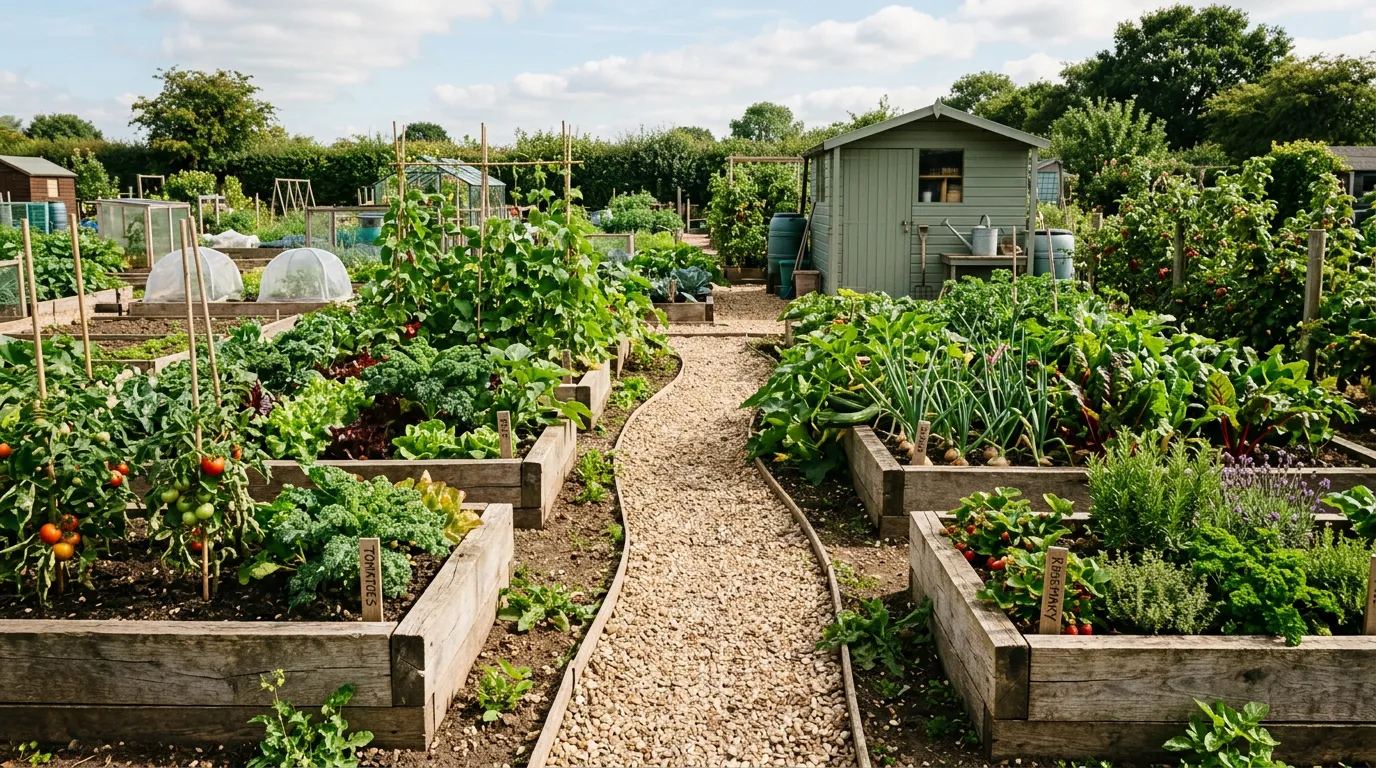
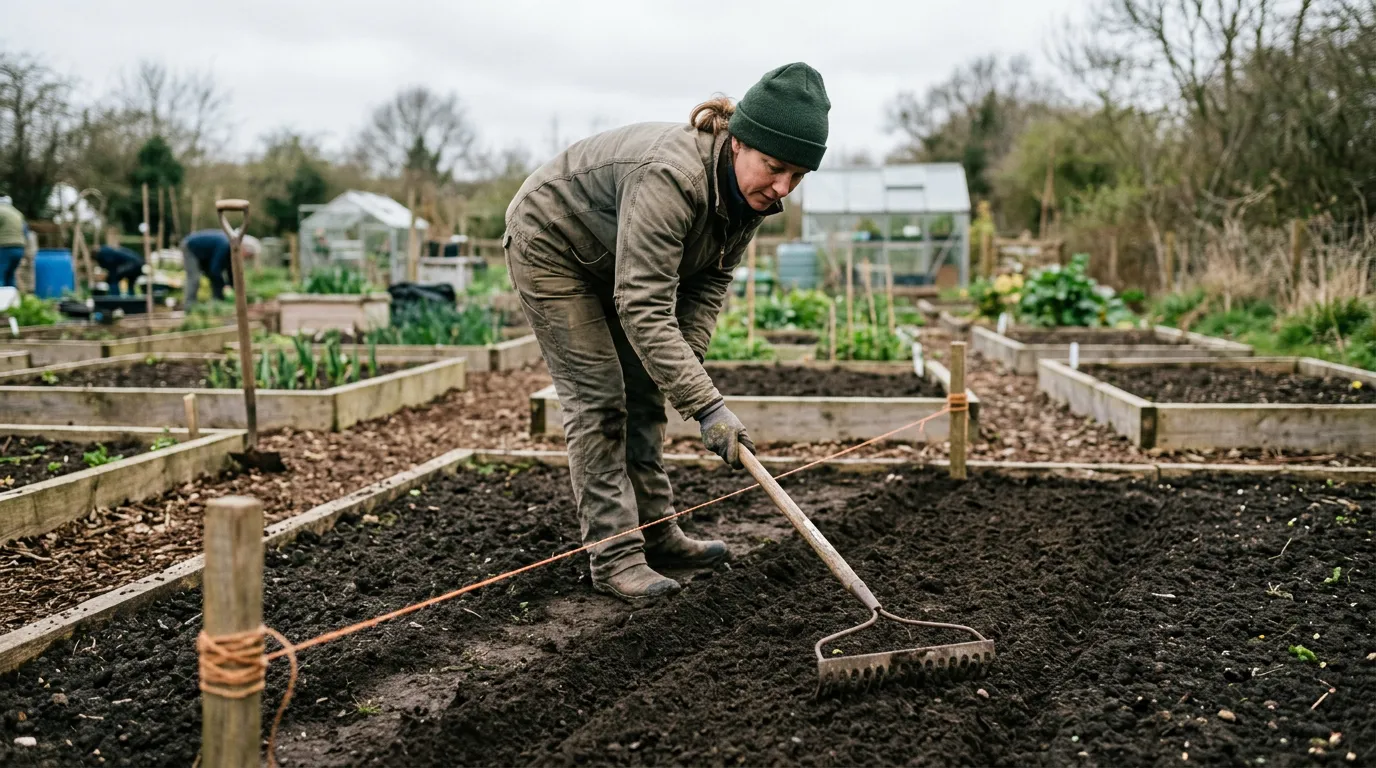 Preparing seed drills in a March vegetable plot. Use a string line for straight rows and a rake handle for consistent depth.
Potatoes
First early potatoes go into the ground from mid-March in southern England. In northern areas, wait until late March or early April. The soil needs to be workable, not waterlogged or frozen.
Chitting
Start chitting seed potatoes 4-6 weeks before planting. Stand them in egg boxes with the end that has the most eyes pointing upward. Place in a cool, bright room (not a dark cupboard). The shoots should be sturdy and 2-3cm long by planting time. Dark, spindly shoots grown in cupboards are weak and break off during planting.
Planting
Dig a trench 15cm deep. Space first earlies 30cm apart in rows 60cm apart. Place the potatoes with the shoots pointing upward. Cover with soil and water well.
First early varieties for March planting:
| Variety | Skin | Flesh | Weeks to harvest | Best for |
|---|---|---|---|---|
| Rocket | White | White | 10-12 | Boiling, salads |
| Swift | White | White | 10 | Earliest crops |
| Red Duke of York | Red | Yellow | 11-12 | Roasting, baking |
| Pentland Javelin | White | White | 12 | Boiling, chipping |
| Lady Christl | Yellow | Yellow | 10-12 | Salads |
Gardener’s tip: If frost threatens after planting, draw soil over the emerging shoots. This technique, called earthing up, protects new growth and increases your yield by encouraging more tubers to form along the buried stem.
Flowers to sow and plant in March
March is prime time for flower sowings. Hardy annuals go directly outdoors. Half-hardy annuals start indoors.
Hardy annuals for direct sowing
These flowers tolerate frost and grow happily from March outdoor sowings:
- Sweet peas - sow 2cm deep in their final position or in root trainers for transplanting. Pinch out the growing tip when 10cm tall to encourage bushy growth. Sweet peas flower from June to September when picked regularly.
- Calendula - scatter seed on prepared soil and rake in lightly. Self-seeds freely once established. Flowers from June.
- Cornflowers - sow directly where you want them to flower. Thin to 20cm apart. Blue, pink, and white varieties available.
- Nigella (love-in-a-mist) - scatter sow on open ground. Does not transplant well. Thin to 15cm apart.
- Poppies - Californian and Shirley poppies from direct March sowings. Mix tiny seed with sand for even distribution.
Half-hardy annuals for indoor sowing
Start these on a warm windowsill or in a greenhouse:
- Cosmos - sow at 15-18C. One of the most reliable cut flowers for UK gardens. Pinch out the main stem at 30cm for bushier plants.
- Zinnias - sow at 18-21C. Hate root disturbance, so sow in individual pots.
- Dahlias from seed - sow at 18C for first-year flowering. These produce tubers that you can lift and store for future years.
Planting out
March is also the time to plant bare-root roses, deciduous shrubs, and herbaceous perennials. Get them in the ground before they break dormancy. Water well after planting and mulch with garden compost to retain moisture.
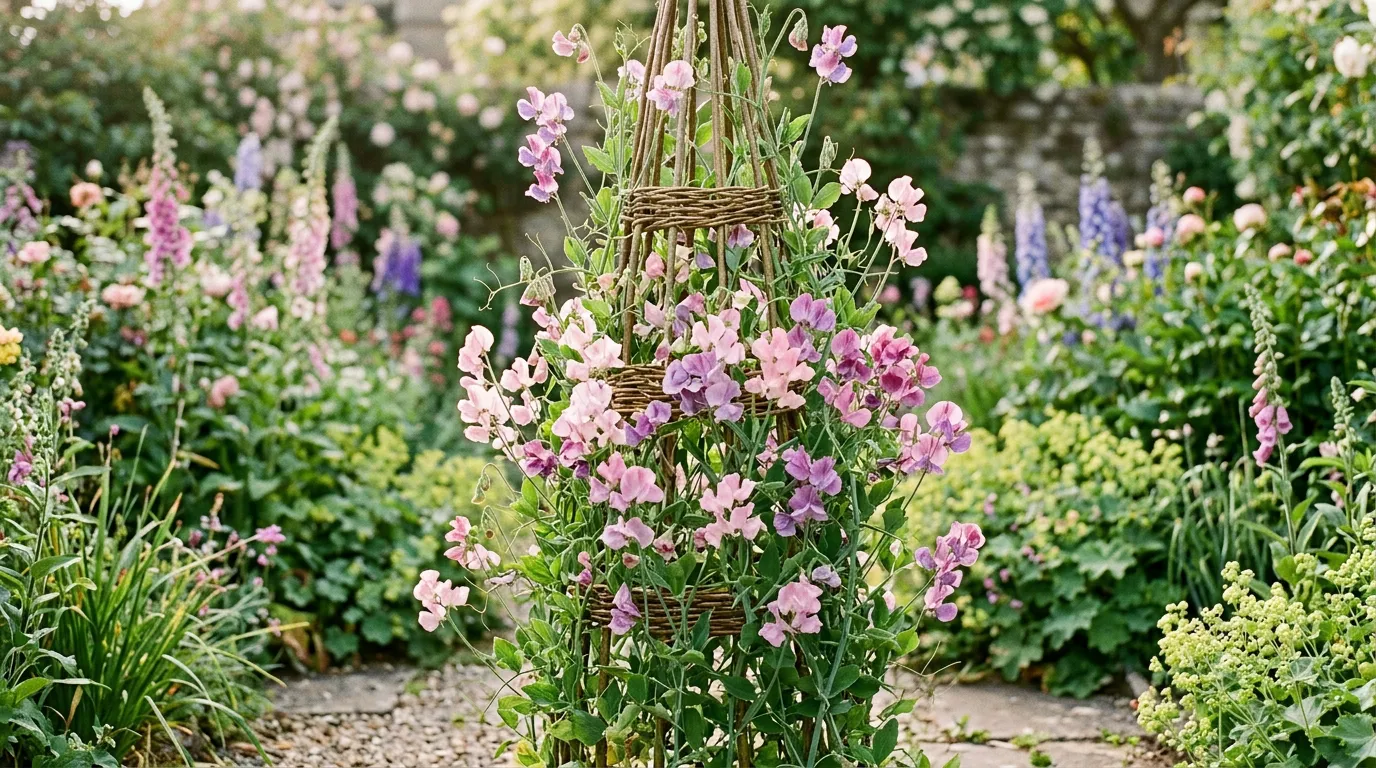 Sweet peas climbing a willow obelisk. Sow directly in March for flowers from June through September.
Herbs to start in March
Most culinary herbs can start in March, either indoors or out depending on their hardiness.
Sow indoors
- Basil - needs 18-20C. Sow on the surface and press gently. Do not cover. Basil seed needs light to germinate. The most common mistake is burying seed too deep.
- Coriander - sow in deep pots (it has a long taproot). Keep cool at 12-15C. Heat makes coriander bolt to seed within weeks.
Sow outdoors
- Parsley - sow directly, 1cm deep. Germination takes 3-4 weeks. Soak seed overnight to speed things up.
- Chives - sow or divide existing clumps. One of the first herbs to show growth in spring.
- Dill - direct sow where it will grow. Dill resents transplanting. Sow in rows or patches.
Plant out
March is a good time to plant container-grown herbs like rosemary, thyme, sage, and oregano. These Mediterranean herbs need well-drained soil and full sun. Add grit to heavy clay soils before planting.
Fruit to plant in March
Strawberries
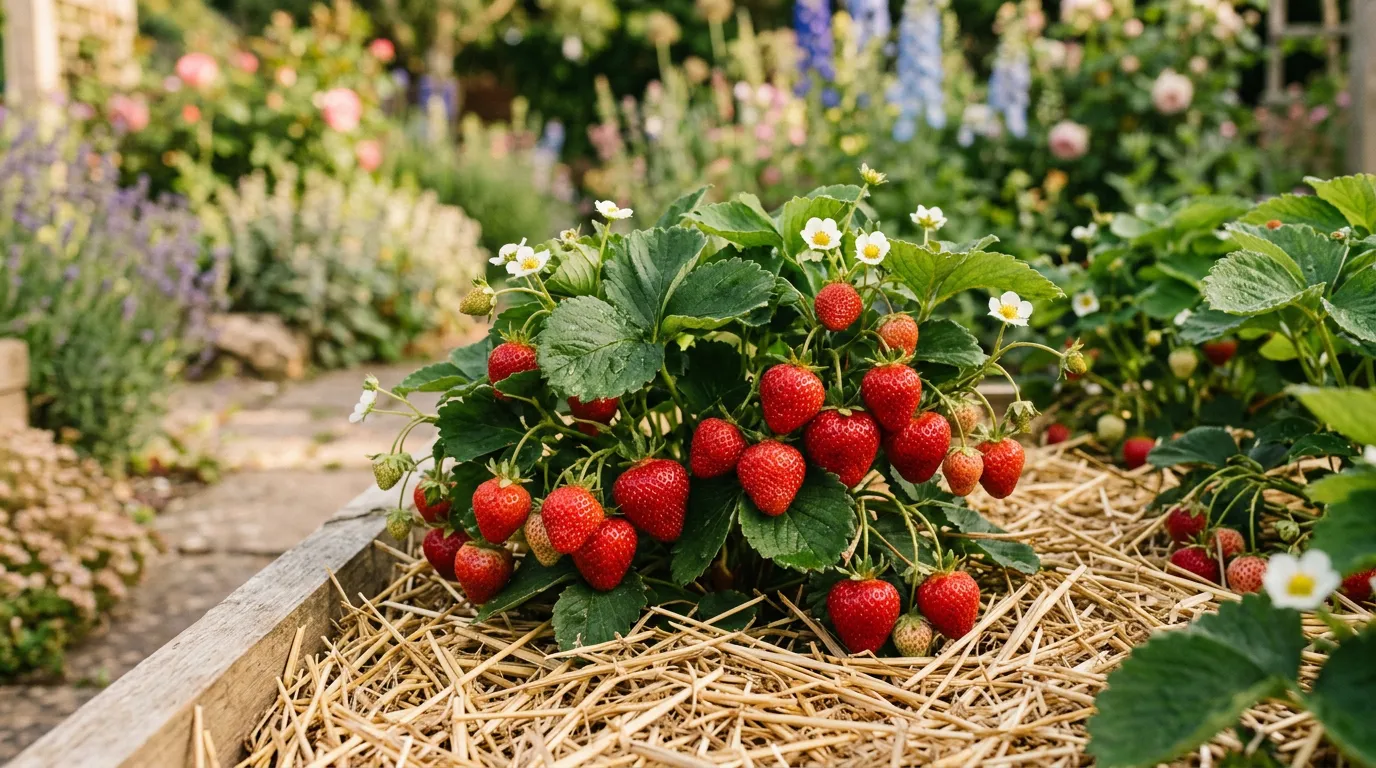
Plant bare-root strawberries in March for the best establishment. Space plants 35cm apart in rows 75cm apart. Varieties like Elsanta and Cambridge Favourite are reliable producers. For more detail, see our guide on growing strawberries.
Raspberry canes
Plant bare-root raspberry canes before they break dormancy. Summer-fruiting varieties like Glen Ample produce fruit on last year’s canes. Autumn-fruiting types like Autumn Bliss fruit on current year’s growth, making them simpler to prune.
Fruit trees
March is the last month for planting bare-root fruit trees. Container-grown trees can go in later, but bare-root trees need to establish roots before leaf growth begins. Water thoroughly after planting and stake firmly.
March planting calendar
| Week | Indoors | Outdoors | Plant out |
|---|---|---|---|
| Week 1 (1-7 March) | Tomatoes, peppers, chillies, aubergines | Broad beans, peas, parsnips | Bare-root roses, fruit trees |
| Week 2 (8-14 March) | Courgettes, lettuce, basil | Carrots (under fleece), beetroot | Raspberry canes, strawberry runners |
| Week 3 (15-21 March) | Sweetcorn, cosmos, zinnias | Spring onions, spinach, rocket | First early potatoes (south) |
| Week 4 (22-31 March) | Cucumbers, squash | Turnips, calendula, sweet peas | First early potatoes (north), herbs |
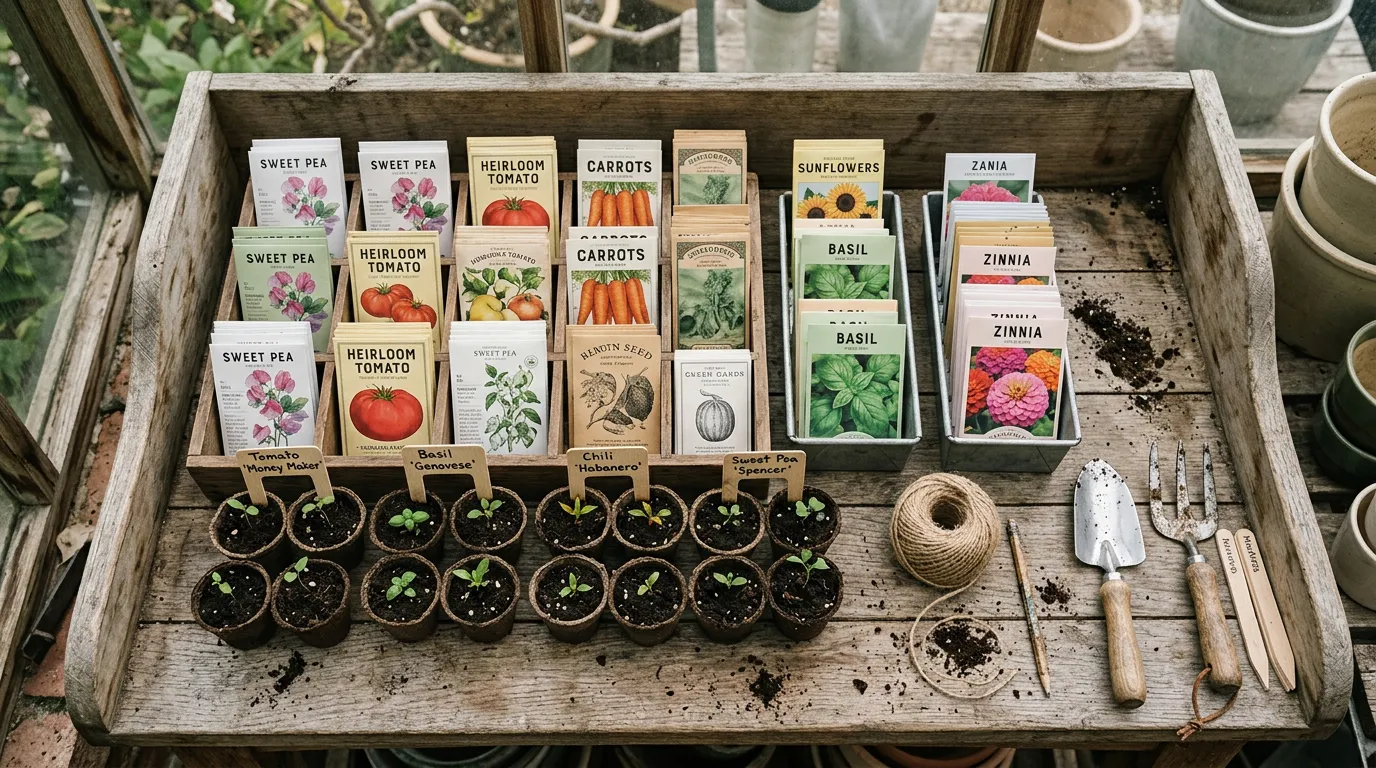 An organised potting bench ready for the March sowing rush. Group seeds by sowing method: indoor, outdoor, and plant-out.
Common mistakes with March sowing
Sowing too deep
Small seeds like lettuce and basil need light to germinate. Press them onto the surface of damp compost and cover with a thin layer of vermiculite, not a thick blanket of soil. A seed buried at three times its diameter will struggle.
Sowing tender crops outdoors too early
French beans, runner beans, courgettes, and sweetcorn cannot survive frost. Every year, keen gardeners lose crops to late April frosts because they sowed outdoors in March. Keep tender crops indoors until late May.
Ignoring soil temperature
Seed packets say “sow March” but your soil might not be ready. Cold, wet soil rots seeds before they germinate. A soil thermometer costs under five pounds and saves wasted seed every year. Most crops need soil at 7C minimum.
Overcrowding seed trays
Sowing too thickly creates leggy, weak seedlings that compete for light. Sow thinly and prick out early. Two strong seedlings produce more than twenty spindly ones fighting for space.
Forgetting to harden off
Moving plants straight from a warm windowsill to outdoors shocks them. The temperature difference between a 20C room and a 5C March night stuns growth for weeks. Harden off over 10-14 days, gradually increasing outdoor exposure.
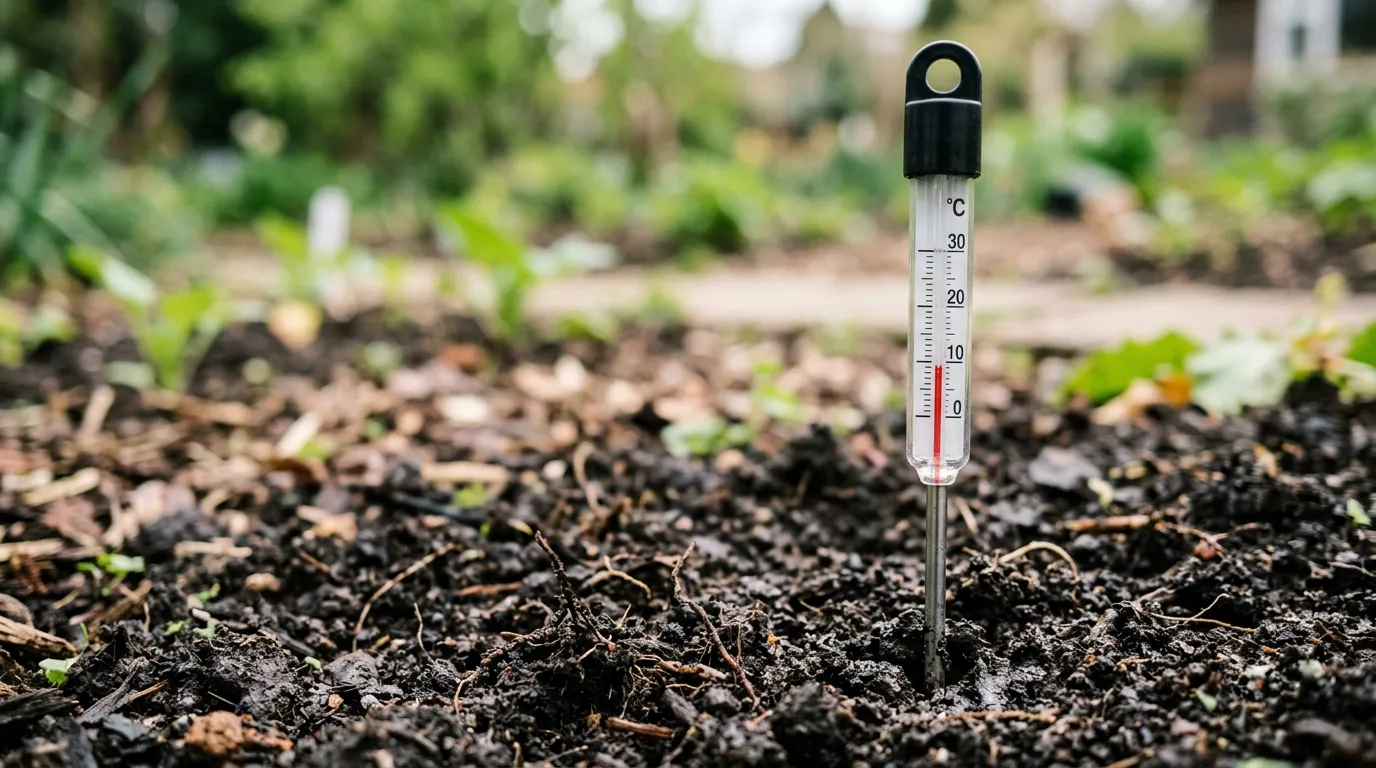 Checking soil temperature before sowing. Most crops need soil at 7C or above for reliable germination.
Regional differences across the UK
The UK has significant climate variation. A garden in Cornwall experiences different March conditions to one in Aberdeenshire.
Southern England and sheltered coastal areas
The mildest March conditions. Soil warms earliest here. Start outdoor sowings from early March. First early potatoes can go in mid-March. Risk of hard frost reduces significantly after mid-March.
Midlands and central England
Expect March soil temperatures of 5-8C. Outdoor sowings are best from mid-March. Protect early sowings with fleece or cloches. Potatoes from late March.
Northern England and Scotland
March is colder and wetter. Focus indoor sowings on a greenhouse or windowsill. Delay outdoor sowings until late March or early April. First early potatoes from late March to early April. Fleece is essential for protecting early crops.
Exposed and upland gardens
At altitude, March is still winter. Focus on indoor sowings only. Outdoor planting starts in April. Use raised beds, which warm faster than ground-level soil. Consider raised bed gardening for extending your season.
Frequently asked questions
What vegetables can I plant in March UK?
Over 20 vegetables can start in March. Sow tomatoes, peppers, and aubergines indoors at 18-21C. Direct sow broad beans, peas, parsnips, beetroot, carrots, and spring onions outdoors once your soil temperature reaches 7C. Plant first early seed potatoes from mid-March in the south.
Is it too early to plant seeds outside in March?
No, many seeds thrive from March outdoor sowings. Hardy crops like broad beans, peas, parsnips, and spinach tolerate March temperatures across most of the UK. Check your soil temperature with a thermometer. Most outdoor sowings need soil at 7C or above for reliable germination.
When should I start seeds indoors in March?
Start tender crops indoors from early March onward. Tomatoes, peppers, chillies, and aubergines need 18-21C to germinate. Use a heated propagator or a warm south-facing windowsill. These crops need 6-8 weeks of indoor growing before planting out after the last frost in late May.
Can I plant potatoes in March?
Yes, plant first early potatoes from mid-March. They take 10-12 weeks to harvest, giving you new potatoes by June. In southern England, plant from mid-March. In northern areas, wait until late March or early April. Chit seed potatoes for 4-6 weeks before planting for the best results.
What flowers can I sow in March?
Sow sweet peas, calendula, cornflowers, and nigella directly outdoors in prepared beds. Start dahlias, cosmos, and zinnias indoors on a warm windowsill at 15-21C. Hardy annuals cope with March frosts. Half-hardy types need indoor warmth until the risk of frost passes in late May.
Should I use a greenhouse or sow outside in March?
Use both for the widest range of crops. A greenhouse lets you start tender crops like tomatoes and peppers. Outdoor beds suit hardy vegetables and flowers that tolerate cool conditions. If you only have outdoor space, focus on peas, broad beans, root vegetables, and hardy annuals.
Lawrie has been gardening in the West Midlands for over 30 years. He grows his own veg using no-dig methods, keeps a wildlife-friendly garden, and writes practical advice based on real UK growing conditions.