How to Get Rid of Slugs Naturally
Effective natural methods to control slugs in UK gardens without chemicals. Covers barriers, traps, biological controls, companion planting, and slug-resistant plants.
Key takeaways
- UK slugs eat up to 40 times their body weight per night in damp conditions
- Nematode biological control (Nemaslug) kills slugs underground for 6 weeks per application
- Copper tape and copper mesh create effective barriers around pots and raised beds
- Evening hand-picking with a torch removes 80% of slug damage in most gardens
- Slug-resistant plants like ferns, geraniums, and astilbes avoid the problem entirely
- Encouraging hedgehogs, frogs, and thrushes provides free long-term slug control
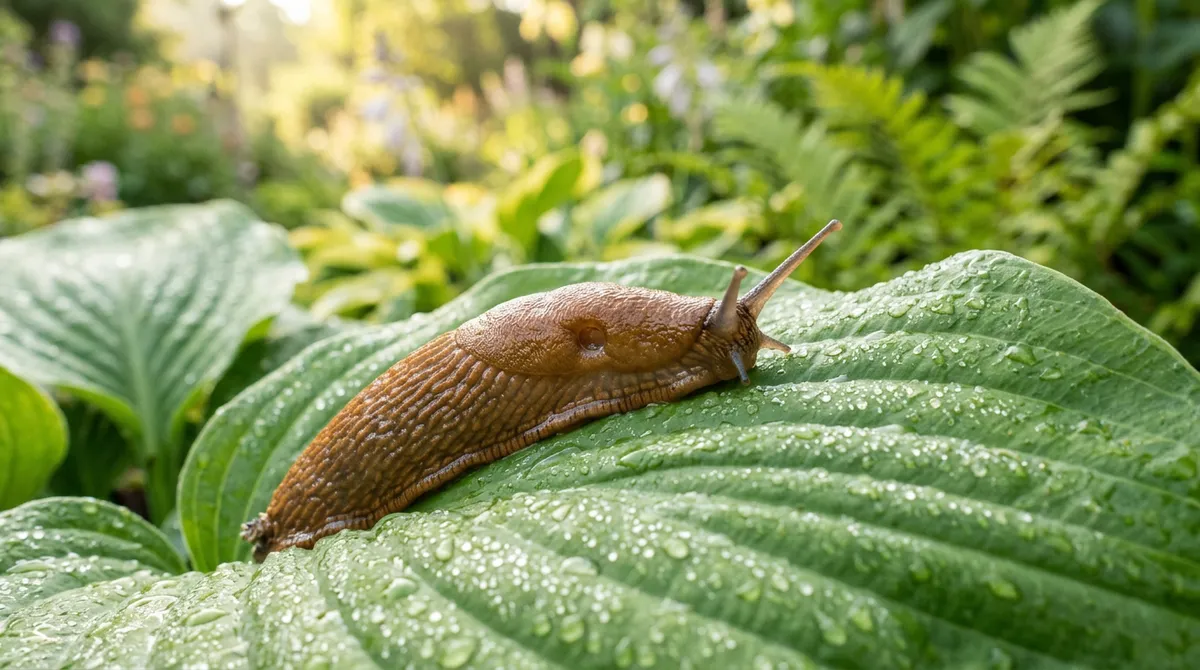
Slugs cause more frustration to UK gardeners than any other pest. They shred hostas overnight, demolish newly planted seedlings, and hollow out strawberries the day before you planned to pick them. The UK’s damp climate makes it one of the best countries in Europe for slug populations. Over 30 species live here, and the mild, wet conditions mean they are active from March through to November.
Chemical slug pellets are falling out of favour. Metaldehyde was banned in the UK in 2022. Ferric phosphate pellets remain legal but many gardeners prefer fully natural methods. This guide covers every proven natural approach, from biological controls to barriers, traps, and garden design. Browse our problems section for more pest and disease solutions.
Understanding UK slugs
Knowing your enemy helps you fight it. Most garden damage comes from just three or four species out of the 30-plus found in the UK.
The main culprits
- Grey field slug (Deroceras reticulatum) - the most destructive species. Small (4-5cm), grey-brown. Found in every UK garden. Feeds above and below ground, destroying roots, seedlings, and leaves.
- Garden slug (Arion hortensis) - black with an orange underside. Lives mostly underground, feeding on roots and tubers. You rarely see this one, but the damage is severe.
- Large black slug (Arion ater) - the biggest UK slug at 10-15cm. Despite its size, it prefers decaying matter over living plants. Less destructive than it looks.
- Leopard slug (Limax maximus) - spotted pattern, up to 15cm. Actually beneficial. It eats other slugs and decaying matter. Leave it alone.
When slugs are active
Slugs are most active between 5C and 25C in damp conditions. In the UK, that means the main slug season runs from March to November, with peak activity in April-May and September-October when conditions are mild and wet.
They emerge at dusk and feed through the night, retreating to dark, damp hiding spots by dawn. A single slug eats up to 40 times its body weight per night. Multiply that by the hundreds of slugs in an average garden and the scale of the problem becomes clear.
| Season | Slug activity | Why |
|---|---|---|
| March-April | Rising | Soil warms, eggs hatch, spring growth provides food |
| May-June | High | Warm, damp evenings. Peak damage to young plants |
| July-August | Variable | Dry spells reduce activity, wet periods cause surges |
| September-October | High | Autumn damp, dying vegetation, new egg laying |
| November-February | Low | Cold slows activity, but slugs do not fully hibernate |
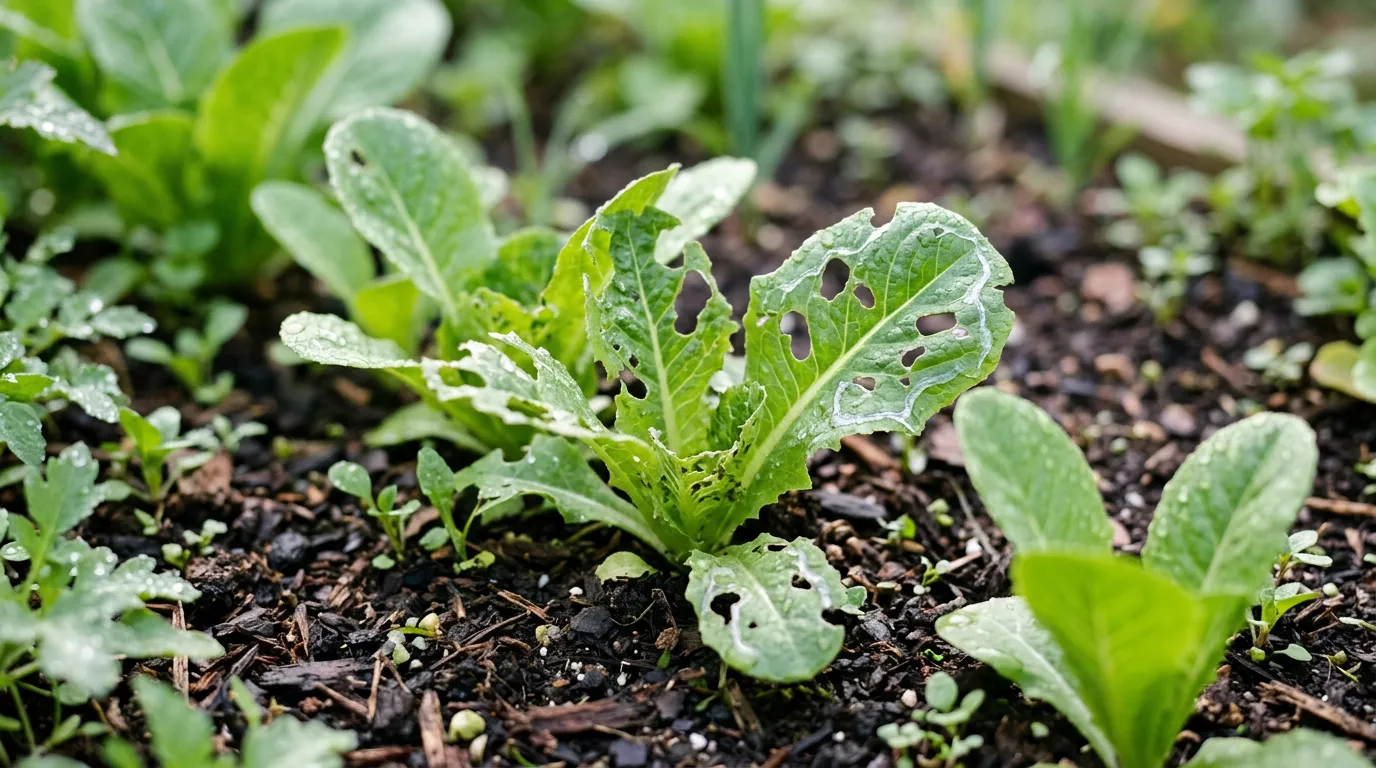 Slug damage on lettuce. The ragged holes and silvery slime trails are the telltale signs of overnight feeding.
Biological controls
Nematodes (Nemaslug)
Nematode biological control is the most effective natural method. Nemaslug contains millions of microscopic nematodes (Phasmarhabditis hermaphrodita) that you water into the soil. The nematodes enter slugs through a body opening and release bacteria that kill the slug within 5-7 days.
How to apply:
- Mix the nematode powder with water in a watering can
- Apply to moist soil when the temperature is above 5C
- Water the area well after application
- Keep soil moist for two weeks after treatment
One application protects for 6 weeks. Apply in early spring (March-April) and again in late summer (August-September) for season-long control. Nematodes work underground, killing slugs where most of the population lives. Surface methods like traps only catch the 5% of slugs feeding above ground.
Cost: around twelve to fifteen pounds per treatment for 40 square metres.
Gardener’s tip: Apply nematodes in the evening when soil is damp. UV light kills them, so avoid application in direct sunshine. Water the area before and after treatment for the best results.
Wildlife allies
Several garden creatures eat slugs. Encouraging them provides free, permanent control:
- Hedgehogs - eat dozens of slugs per night. Provide hedgehog highways (13cm holes in fences), log piles for nesting, and avoid disturbing them during hibernation (November-March).
- Song thrushes - smash snails on stones (the anvil) and eat slugs too. Provide berry-bearing shrubs and undisturbed nesting sites.
- Frogs and toads - eat slugs and slug eggs. A garden pond, even a small one, supports amphibian populations. See our guide to attracting birds and wildlife for more.
- Ground beetles - nocturnal predators that eat slug eggs. Provide ground-level cover like log piles and stone piles. Avoid disturbing leaf litter.
- Slow worms - legless lizards that eat slugs voraciously. Found in compost heaps, under flat stones, and in long grass.
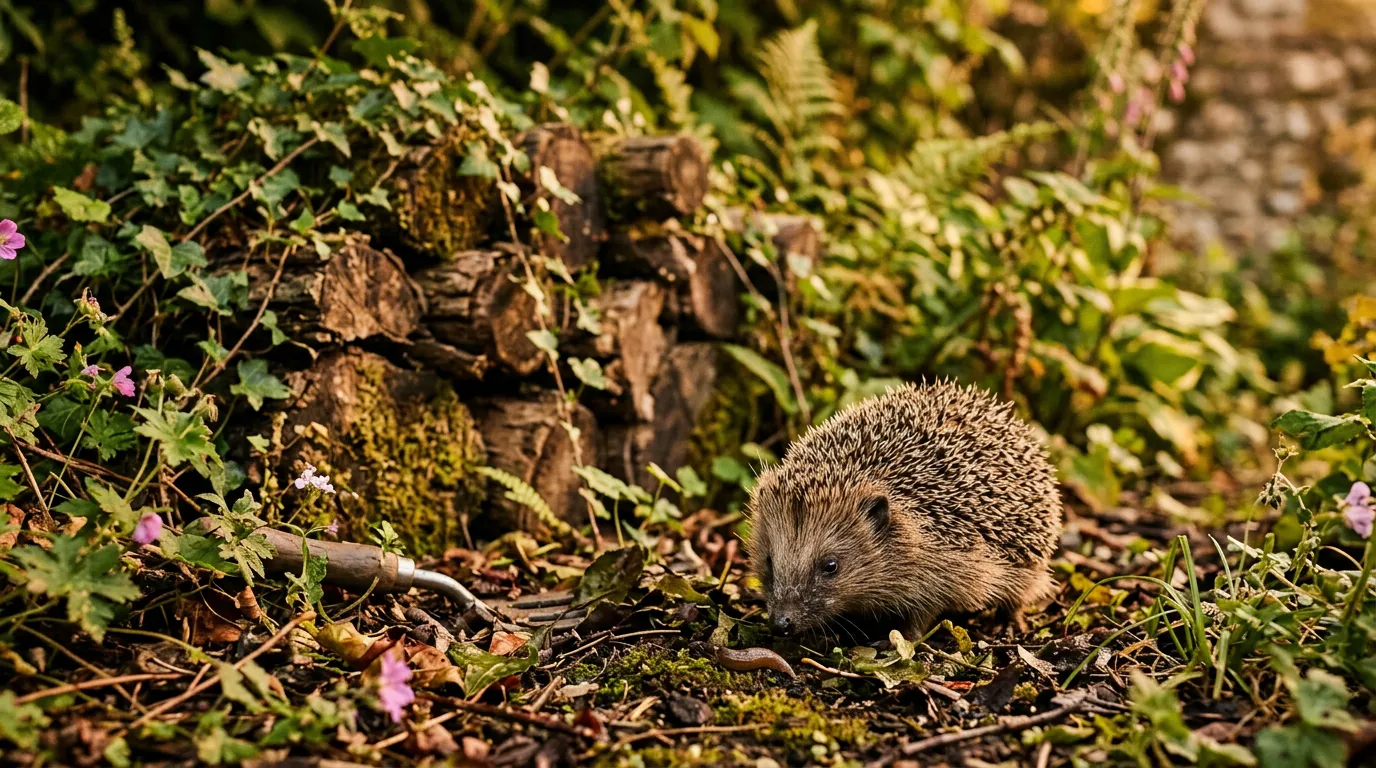 A hedgehog foraging at dusk. Hedgehogs eat dozens of slugs per night and are the gardener’s best natural ally.
Physical barriers
Barriers work by creating a surface or substance that slugs cannot or will not cross.
Copper
Copper tape and copper mesh are the most reliable physical barriers. When a slug’s slime contacts copper, it creates a mild electrical charge that repels the slug. Apply 4cm copper tape around the rim of pots, raised beds, and cold frames.
Effectiveness: high for containers and raised beds. Less practical for open ground borders where slugs can access from underneath.
Key point: keep copper clean. Oxidised copper (green patina) is less effective. Wipe with vinegar every few months to maintain the surface.
Wool pellets
Compressed wool pellets expand when wet, creating a scratchy mat around plants. Slugs dislike crawling over the dry, fibrous texture. Apply a 5cm ring around each plant.
Effectiveness: moderate. Works well in dry weather. Heavy rain flattens the pellets and reduces their effect. Reapply after sustained rainfall.
Grit and sharp materials
Horticultural grit, crushed shells, and diatomaceous earth create rough surfaces. The theory is that slugs avoid crossing sharp materials.
Effectiveness: poor in practice. Studies show slugs cross these barriers readily in damp conditions. The materials settle into soil quickly and need constant replenishment. Not recommended as a primary defence.
Cloches and netting
Physical covers protect vulnerable seedlings during their most susceptible stage. Cut-off plastic bottles placed over newly planted seedlings create individual cloches. Remove once plants are established and less attractive to slugs.
Traps and hand-picking
Beer traps
Sink a yoghurt pot or jam jar into the soil so the rim sits level with the surface. Fill with cheap beer or a mix of water, sugar, and yeast. Slugs are attracted by the yeast smell, fall in, and drown.
Effectiveness: moderate. Beer traps work within a 1-metre radius. You need multiple traps across a border. Empty and refill every 2-3 days. They catch plenty of slugs but make little dent in large populations when used alone.
Grapefruit and melon traps
Place upturned grapefruit halves or melon skins in the garden at dusk. Slugs shelter underneath overnight. Collect and dispose of them each morning. A simple, free method that works well alongside other controls.
Evening hand-picking
Hand-picking is the most immediately effective slug control method. Go out after dark with a torch and a bucket. Pick slugs off plants and the surrounding soil. A 20-minute session removes dozens. Focus on hostas, lettuce, and young seedlings.
Warning: Do not use salt to kill slugs. It causes a slow, painful death and damages soil by increasing sodium levels. Salt also kills beneficial soil organisms and earthworms. Use a bucket of salty water for collected slugs if you cannot relocate them.
Best conditions for hand-picking: mild, damp evenings after rain, from dusk until around 11pm. This is when slug activity peaks. Two or three sessions per week during spring and autumn controls the worst damage.
 Evening hand-picking with a torch. Twenty minutes after dusk removes the majority of surface-feeding slugs.
Garden design for slug control
How you design and maintain your garden affects slug populations more than any single control method.
Reduce hiding places
Slugs shelter during the day in dark, damp spots: under stones, in dense ground cover, beneath pots, and in piled-up debris. Keeping borders tidy, raising pots on feet, and clearing dead foliage reduces daytime shelter.
This does not mean a sterile garden. Log piles for wildlife, compost heaps, and leaf litter all support beneficial slug predators too. Balance tidiness with habitat provision.
Improve drainage
Slugs thrive in waterlogged soil. Improving drainage with organic matter, raised beds, and proper grading reduces the damp conditions slugs prefer. Well-drained soil also produces stronger, healthier plants that resist slug damage better.
Create open spaces
Slugs avoid crossing open, dry ground. A gravel path or bare soil strip between a border and a lawn creates a natural barrier that slugs are reluctant to cross during dry weather. Position vulnerable plants away from dense hedges and walls where slugs shelter.
Timing
Plant out seedlings when they are large enough to withstand some slug damage, not as tiny transplants. Harden off and grow on in pots until plants have 4-6 true leaves before planting out. Larger plants survive partial slug feeding. Tiny seedlings do not.
Slug-resistant plants
The simplest slug control is growing plants that slugs avoid. These have tough, hairy, aromatic, or toxic leaves that slugs dislike.
Perennials slugs avoid
- Ferns - all species. Slugs never eat ferns.
- Hardy geraniums - aromatic leaves, rarely damaged
- Astilbes - tough foliage, ignored by slugs
- Foxgloves - toxic leaves, slugs avoid them
- Euphorbia - milky sap deters all pests
- Japanese anemones - rarely damaged
- Aquilegia - occasionally nibbled but recovers fast
- Lavender - aromatic, dry-loving, slug-free
Vegetables that resist slugs
- Garlic and onions - strong smell deters slugs
- Tomatoes - aromatic foliage. Slugs eat the fruit but avoid the plant
- Chard and perpetual spinach - tough, waxy leaves
- Broad beans - rarely damaged once established
- Herbs - rosemary, thyme, sage, oregano
Plants slugs love (protect these)
- Hostas (especially thin-leaved varieties)
- Lettuce and salad leaves
- Dahlias (young shoots in spring)
- Delphiniums
- Marigolds
- Strawberries (fruit, not foliage)
- Young seedlings of almost anything
| Plant | Slug resistance | Notes |
|---|---|---|
| Ferns | Excellent | Never damaged |
| Hardy geraniums | Excellent | Aromatic leaves |
| Hostas (thick-leaved) | Moderate | Better than thin-leaved types |
| Hostas (thin-leaved) | Poor | Need protection |
| Lettuce | Very poor | Always protect |
| Lavender | Excellent | Too aromatic for slugs |
| Strawberries | Poor (fruit) | Raise on straw, use copper |
| Dahlias | Poor (spring shoots) | Protect emerging growth |
Month-by-month slug control calendar
| Month | Action |
|---|---|
| January | Order nematodes for spring application. Plan slug-resistant planting. |
| February | Check for slug eggs (small white clusters in soil). Destroy on sight. |
| March | First nematode application when soil above 5C. Set beer traps. |
| April | Peak slug season begins. Evening hand-picking twice weekly. |
| May | Protect newly planted seedlings with cloches. Apply copper tape to pots. |
| June | Maintain beer traps. Refresh copper tape if oxidised. |
| July | Dry weather reduces activity. Water nematodes in if dry spell breaks. |
| August | Second nematode application. Protect strawberry fruit. |
| September | Autumn slug surge. Resume evening hand-picking. |
| October | Clear fallen leaves and debris around vulnerable plants. |
| November | Activity slows. Leave log piles and shelter for slug predators. |
| December | Plan next year’s slug strategy. Order nematodes for March delivery. |
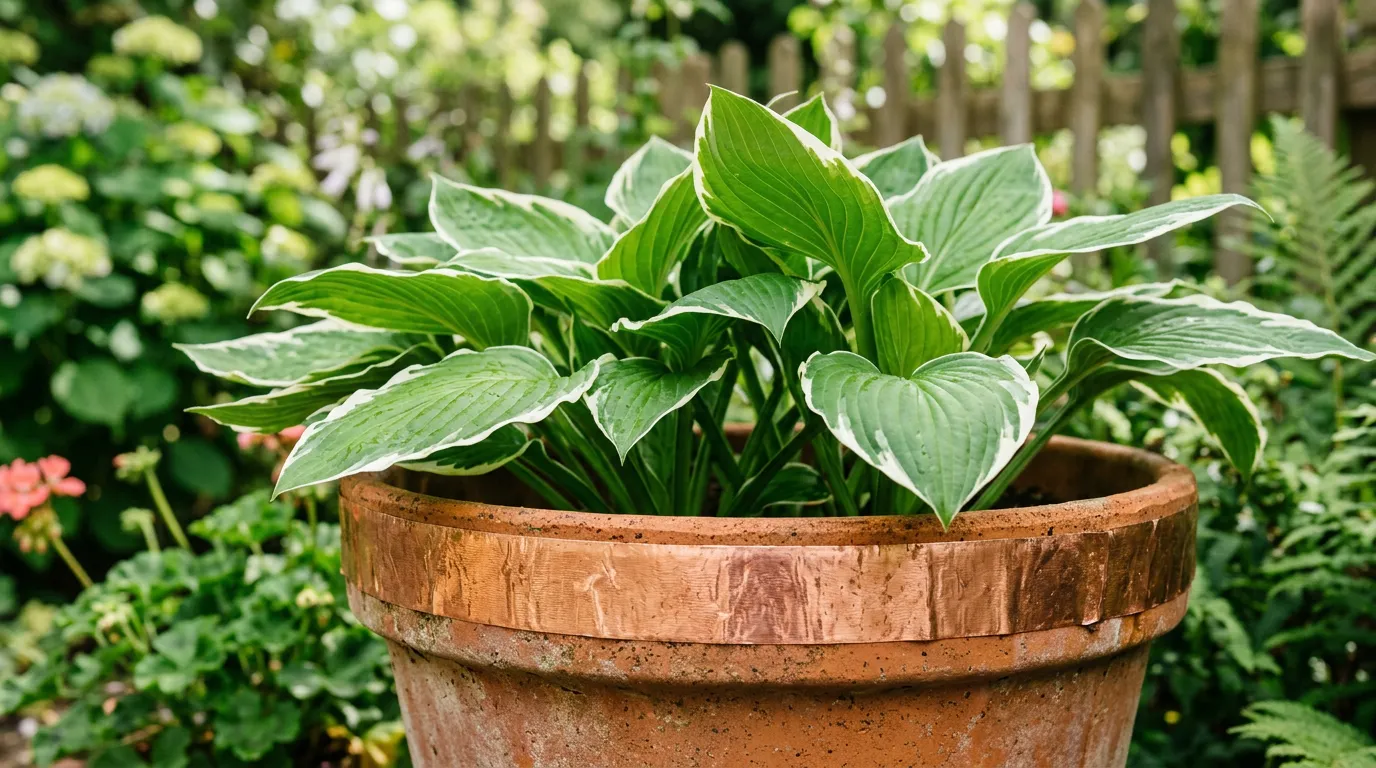 Copper tape around a terracotta pot rim. The mild electrical charge repels slugs effectively from container-grown hostas.
Common mistakes with slug control
Relying on a single method
No single method controls slugs completely. Combine biological controls (nematodes), physical barriers (copper), cultural practices (tidying, drainage), and wildlife encouragement for the best results. A combined approach reduces damage by 80-90%.
Using salt
Salt kills slugs but also kills earthworms, beneficial insects, and soil microorganisms. It raises soil sodium levels, damaging plant roots. Never use salt in a garden.
Applying nematodes to dry soil
Nematodes need moist soil to move through. Applying them during a dry spell wastes money. Water the area well before and after application. Keep soil moist for two weeks following treatment.
Giving up too early
Slug control is ongoing, not a one-off fix. The UK climate constantly produces new slugs. Consistent effort through the season maintains control. Two years of combined methods dramatically reduces slug populations compared to the first year.
Killing beneficial species
The leopard slug and large black slug eat decaying matter and other slugs. Killing them removes allies. Learn to identify the four main species. Focus control on the grey field slug and garden slug, which cause 90% of the damage.
Frequently asked questions
What is the most effective natural slug control?
Nematode biological control works best overall. Apply Nemaslug when soil temperature is above 5C, usually from March onward. The microscopic nematodes seek out slugs underground and kill them within 5-7 days. One application lasts 6 weeks. Combine with evening hand-picking for the most thorough control.
Do coffee grounds deter slugs?
Coffee grounds have limited and unreliable effect. Fresh grounds contain caffeine that slugs dislike, but the deterrent fades quickly as the grounds dry out and break down. They are not a reliable sole defence. Use copper barriers or nematodes for proven, consistent results instead.
What plants do slugs hate?
Slugs avoid plants with tough, hairy, or aromatic foliage. Ferns are never damaged. Hardy geraniums, astilbes, foxgloves, lavender, rosemary, and euphorbia are all reliably slug-resistant. Thick-leaved hostas like Sum and Substance resist damage better than thin-leaved varieties.
Do beer traps work for slugs?
Beer traps catch slugs but only within about a 1-metre radius. Sink a container level with the soil surface and fill with cheap beer or a yeast-sugar-water mix. Empty and refill every 2-3 days. They work as part of a combined approach but cannot protect an entire garden alone.
How do I protect hostas from slugs?
Grow hostas in raised pots with 4cm copper tape around the rim. Slugs rarely cross clean copper. Choose thick-leaved varieties like Sum and Substance and Halcyon that resist damage naturally. Apply nematodes to surrounding soil in March and August for underground slug control.
When are slugs most active in the UK?
Slugs are most active on mild, damp evenings between April and October. Peak feeding occurs between dusk and midnight when humidity rises above 80%. They are less active in cold weather below 5C, during dry spells, and in temperatures above 25C. Rain after a dry spell triggers intense activity.
Do slugs come back to the same garden?
Slugs have a home range of about 5 metres. Relocating them fewer than 20 metres away is ineffective as they navigate back. Moving them 100+ metres away works, but most gardeners find ongoing control methods more practical than regular relocation.
Lawrie has been gardening in the West Midlands for over 30 years. He grows his own veg using no-dig methods, keeps a wildlife-friendly garden, and writes practical advice based on real UK growing conditions.