Best Plants for Shade in UK Gardens
The best shade-tolerant plants for UK gardens, from full shade to dappled light. Covers perennials, shrubs, ground cover, ferns, and shade-loving climbers with planting advice.
Key takeaways
- Three shade types exist: full (under 2 hours sun), partial (2-4 hours), dappled (filtered light)
- Hostas, ferns, and brunnera are the most reliable UK shade perennials
- Dry shade under trees is the hardest condition, solved by cyclamen, epimedium, and geranium
- Hydrangeas, fatsia, and aucuba give year-round evergreen structure in shade
- Most shade plants prefer moist, humus-rich soil enriched with garden compost
- North-facing gardens get reflected light and often grow shade plants successfully
Every UK garden has shady areas. North-facing walls, mature trees, tall fences, and narrow side passages all create shade. Many gardeners treat these spots as problem areas. They are not. Shade supports hundreds of beautiful plants, from lush ferns and bold hostas to flowering hydrangeas and woodland bulbs.
The key is matching the right plant to the right type of shade. A hosta that thrives under dappled tree canopy will struggle against a dark north wall. This guide covers the best plants for every shade situation in UK gardens, with specific variety recommendations and planting advice. Browse more in our plants section.
Understanding shade types
Not all shade is equal. Before choosing plants, identify what kind of shade you have. The distinction matters because plants that love dappled woodland shade may fail in the dry, dark area under a dense evergreen hedge.
Full shade
Full shade receives fewer than 2 hours of direct sunlight per day. Examples: the north side of a house wall, under dense evergreen trees, enclosed courtyards between tall buildings. This is the most challenging condition, but several plants handle it well.
Partial shade
Partial shade gets 2-4 hours of direct sun, usually in early morning or late afternoon. This is the most common shade type in UK gardens. The vast majority of shade-tolerant plants thrive here. North-facing gardens often fall into this category because they receive angled morning and evening light.
Dappled shade
Dappled shade is filtered light through a deciduous tree canopy. It creates a shifting pattern of sun and shade throughout the day. This mimics woodland conditions and supports the widest range of shade plants. Many plants that struggle in full shade flourish under dappled light.
Dry shade vs moist shade
The soil moisture level matters as much as the light level. Dry shade occurs under mature trees and alongside walls and fences where rain shadow keeps the soil parched. Moist shade is found in sheltered hollows, north-facing borders with good soil, and beside ponds or streams. Most shade plants prefer moist conditions. Dry shade is the hardest garden situation to plant.
Best perennials for shade
Hostas
Hostas are the classic shade perennial. They grow as bold clumps of decorative leaves in green, blue, gold, and variegated patterns. Flowers appear on tall stems in summer, though most gardeners grow them for the foliage.
Best varieties for UK shade gardens:
| Variety | Leaf colour | Height | Best shade type | Slug resistance |
|---|---|---|---|---|
| Halcyon | Blue-grey | 40cm | Partial to dappled | Good |
| Sum and Substance | Gold-green | 80cm | Partial | Excellent (thick leaves) |
| Frances Williams | Blue with gold edge | 60cm | Dappled | Moderate |
| June | Gold centre, blue edge | 35cm | Partial to dappled | Good |
| Patriot | Green with white edge | 45cm | Partial | Moderate |
Slug damage is the main problem with hostas. Organic slug control keeps them clean. Choose thick-leaved varieties like Sum and Substance in slug-prone gardens.
Gardener’s tip: Hostas are herbaceous. They die back completely in winter and re-emerge in April. Mark their positions with small canes to avoid damaging the crowns when digging nearby in winter.
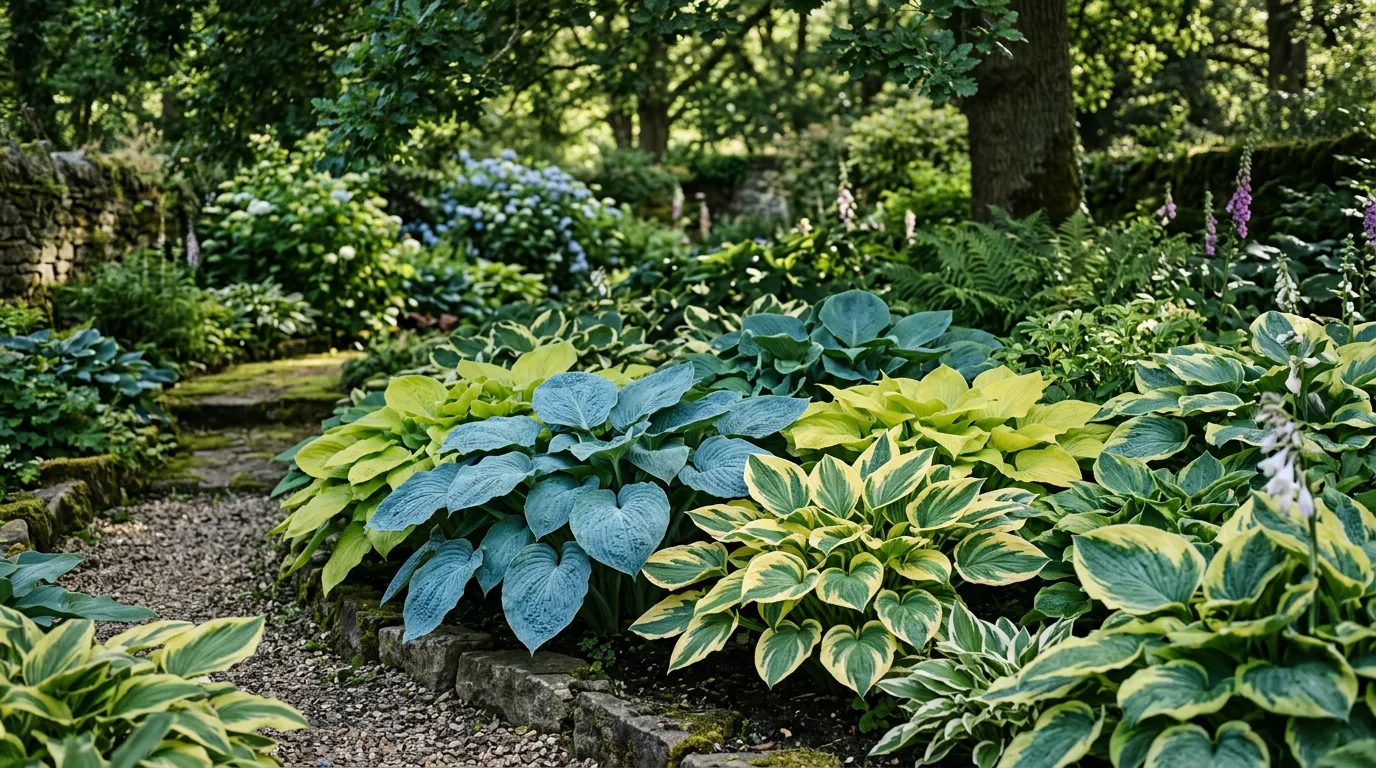 A collection of hostas in a shaded border. Blue-leaved types like Halcyon (left) tolerate deeper shade than gold varieties.
Ferns
Hardy ferns tolerate the deepest shade of any garden plant. They bring texture, movement, and year-round interest to dark corners where few other plants survive.
The best UK garden ferns:
- Dryopteris filix-mas (male fern) - native, tough, grows anywhere. Reaches 90cm. Semi-evergreen. The first fern to try in any shade garden.
- Polystichum setiferum (soft shield fern) - elegant, finely divided fronds. Evergreen. Tolerates dry shade once established. Reaches 60-80cm.
- Athyrium filix-femina (lady fern) - delicate, light green fronds. Deciduous. Prefers moist shade. Reaches 60cm.
- Asplenium scolopendrium (hart’s tongue fern) - glossy, undivided strap-like fronds. Evergreen. Grows in wall crevices and rocky shade. Reaches 45cm.
- Dicksonia antarctica (tree fern) - dramatic architectural fern for sheltered gardens. Hardy to minus 5C. Needs protection in northern UK. Grows to 3m over many years.
Astilbes
Astilbes produce feathery flower plumes in pink, red, white, and purple from June to August. They need moist shade. In dry conditions their leaf edges brown and scorch. Plant beside ponds, in raised beds with moisture-retentive soil, or in borders that stay damp.
Recommended varieties: Fanal (deep red, 60cm), Bridal Veil (white, 80cm), and Amethyst (lilac-purple, 90cm).
Brunnera macrophylla
Brunnera (Siberian bugloss) produces clouds of tiny blue forget-me-not flowers in April and May. The variety Jack Frost has silver-veined leaves that light up dark borders all summer. Tolerates dry shade once established, making it invaluable under trees.
Hellebores
Helleborus orientalis (Lenten rose) flowers from February to April, when few other shade plants are in bloom. Colours range from white through pink to deep purple, often speckled. Evergreen foliage. Thrives in dappled or partial shade. Self-seeds gently.
Japanese anemones
Anemone x hybrida fills the late summer gap in shade borders, flowering from August to October. Pink or white flowers on wiry 90cm stems. Spreads steadily once established. The variety Honorine Jobert (white, single flowers) is outstanding.
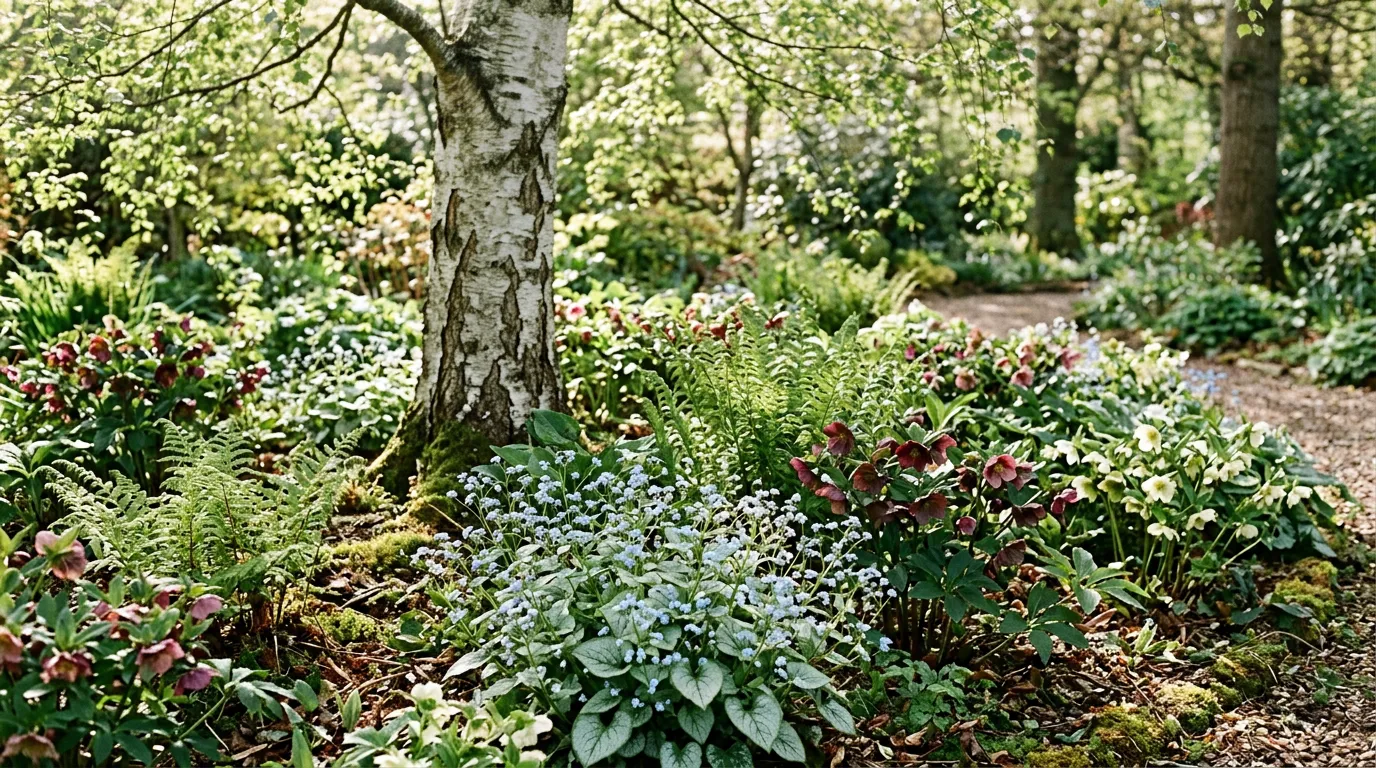 A woodland shade border combining ferns, brunnera, and hellebores under dappled birch canopy.
Best shrubs for shade
Shrubs provide year-round structure in shade gardens. They create the framework that perennials and ground cover fill around.
Hydrangeas
Hydrangea macrophylla is the most popular shade-flowering shrub in UK gardens. Mophead and lacecap types flower from July to September. Flower colour depends on soil pH: blue in acid soil (below pH 5.5), pink in alkaline soil (above pH 6.5). In neutral soil, flowers are mauve.
Plant in partial or dappled shade. Full shade reduces flowering. Prune in late March, removing old flower heads and cutting back to the first strong pair of buds.
Fatsia japonica
Fatsia is the boldest architectural plant for shade. Its glossy, deeply lobed leaves measure 30-40cm across. Evergreen, tough, and tolerant of pollution and coastal conditions. Grows to 3m. White flower clusters appear in November, unusual for a shade plant.
Aucuba japonica
Aucuba (spotted laurel) is virtually indestructible. The gold-spotted variety Crotonifolia brightens the darkest corners. Grows in full shade, tolerates dry soil, and handles pollution. Reaches 2-3m. Clip to shape in April.
Mahonia
Mahonia x media varieties like Charity and Winter Sun produce fragrant yellow flower spikes from November to February. Architectural evergreen foliage. Grows in partial to full shade. Reaches 2-3m. Excellent for winter interest when little else flowers.
Skimmia japonica
Skimmia is a compact evergreen for shade, growing to 1-1.5m. Red buds through winter, white fragrant flowers in spring, red berries on female plants in autumn. Needs acid soil. Plant male and female together for berries.
Ground cover for shade
Ground cover plants solve the problem of bare soil in shady areas. They suppress weeds, reduce moisture loss, and add interest at ground level.
The best shade ground covers
- Vinca minor (lesser periwinkle) - evergreen, blue flowers, spreads steadily. The most reliable shade ground cover. Also available in white and purple.
- Ajuga reptans (bugle) - semi-evergreen, blue flower spikes in May. Bronze-leaved varieties like Atropurpurea add colour. Spreads by runners.
- Lamium maculatum (dead nettle) - silver-marked leaves, pink or white flowers. Beacon Silver has striking silver foliage. Spreads well in moist shade.
- Geranium macrorrhizum - aromatic semi-evergreen leaves. Pink flowers in May-June. Tolerates dry shade. One of the toughest ground covers available.
- Fragaria vesca (wild strawberry) - native, produces tiny edible fruits. Spreads by runners. Charming rather than showy. Good under fruit trees.
- Cyclamen hederifolium - autumn-flowering corms with marbled leaves. Tolerates dry shade under trees. Self-seeds over years to form large colonies.
| Ground cover | Evergreen | Flowers | Spread rate | Dry shade tolerance |
|---|---|---|---|---|
| Vinca minor | Yes | Blue, spring | Moderate | Good |
| Ajuga reptans | Semi | Blue, May | Fast | Moderate |
| Lamium maculatum | Semi | Pink/white, spring | Fast | Moderate |
| Geranium macrorrhizum | Semi | Pink, May-June | Moderate | Excellent |
| Cyclamen hederifolium | No (dormant summer) | Pink, Sept-Oct | Slow (seed) | Excellent |
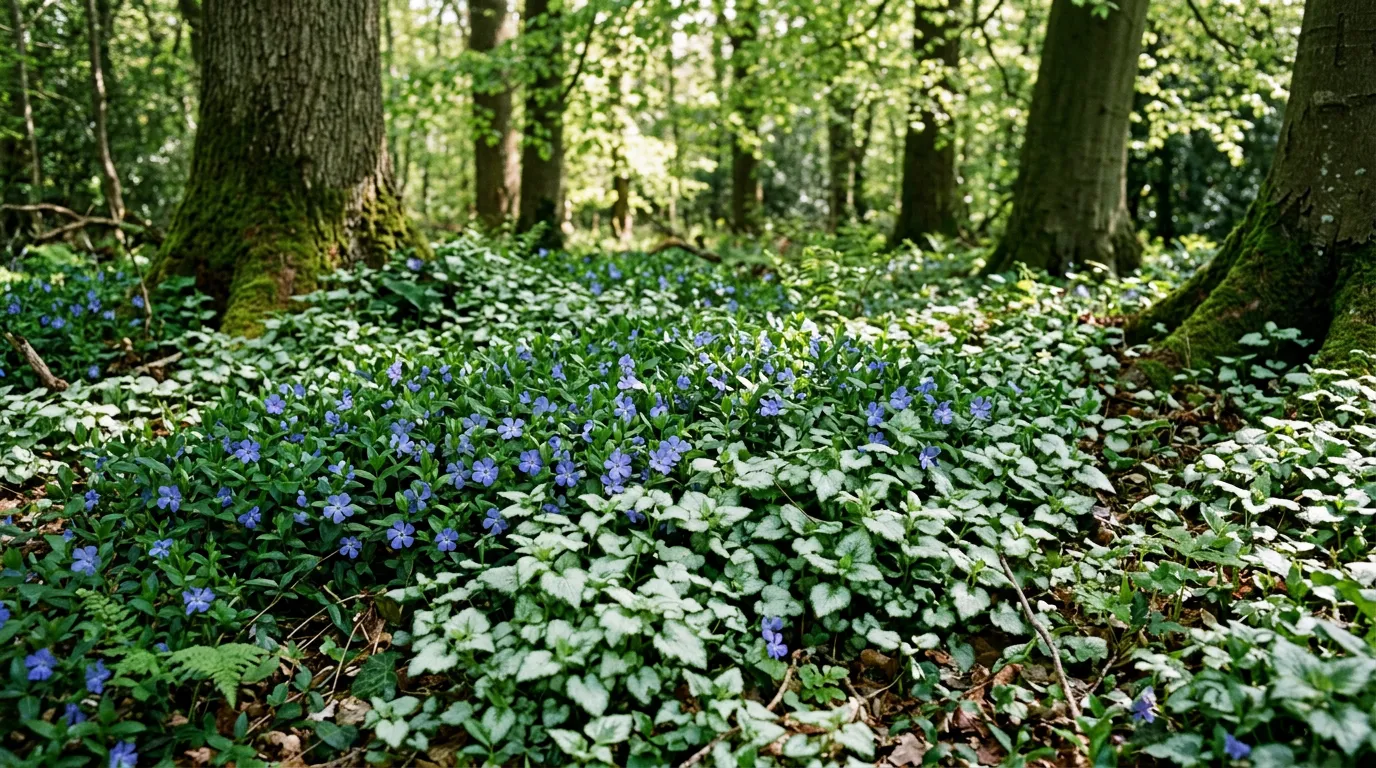 Vinca minor and lamium creating a low carpet of ground cover beneath trees. Both spread steadily to fill bare areas.
Climbers for shade
Hydrangea petiolaris
The climbing hydrangea is the best shade climber for UK gardens. It clings to walls and fences without support, produces white lacecap flowers in June, and grows to 10m or more. Perfect for north-facing walls. Slow to establish (2-3 years), then grows vigorously.
Clematis
Several clematis grow well in shade, though they prefer their roots in shade and heads in light:
- Clematis montana - vigorous, white or pink flowers in May, covers large areas quickly
- Clematis alpina - dainty nodding flowers in April, good on north walls
- Clematis Nelly Moser - pale pink with darker bars, actually colours best in shade (direct sun bleaches the flowers)
Hedera (ivy)
English ivy is the toughest shade climber but needs control. It is self-clinging, evergreen, and provides habitat for wildlife. The variety Goldchild has gold-edged leaves that brighten dark walls. Cut back twice yearly to prevent it overwhelming its support.
Planting for dry shade
Dry shade under established trees is the toughest planting situation. Tree roots compete for moisture and nutrients. Rainfall is intercepted by the canopy above.
How to succeed in dry shade
- Improve the soil - dig in generous quantities of garden compost before planting. Add more each year as a mulch.
- Plant in autumn or early spring - when soil is naturally moist and rainfall is regular.
- Water heavily for the first two years - until roots establish. After that, most dry-shade plants cope without supplementary watering.
- Mulch annually - a 5cm layer of compost or leaf mould in spring retains moisture through summer.
- Choose the right plants - not all shade plants tolerate dry conditions.
Dry shade specialists
- Epimedium - tough, wiry-stemmed perennials with dainty spring flowers. Cut back old leaves in February to reveal flowers. Spreads slowly.
- Cyclamen hederifolium - autumn flowers, marbled leaves, thrives in dry shade under trees. Completely dormant in summer.
- Geranium phaeum (mourning widow) - deep purple flowers in May-June. Self-seeds. Tolerates the driest, shadiest conditions.
- Brunnera macrophylla - spring flowers, ornamental leaves, tolerates dry shade once established.
- Liriope muscari - grass-like evergreen clumps with purple flower spikes in autumn. Tough and very drought-tolerant.
Warning: Avoid planting directly into tree root zones. Dig planting pockets between roots, filling with good compost. Water new plants weekly for their first two summers. Without this establishment care, even dry-shade specialists will fail.
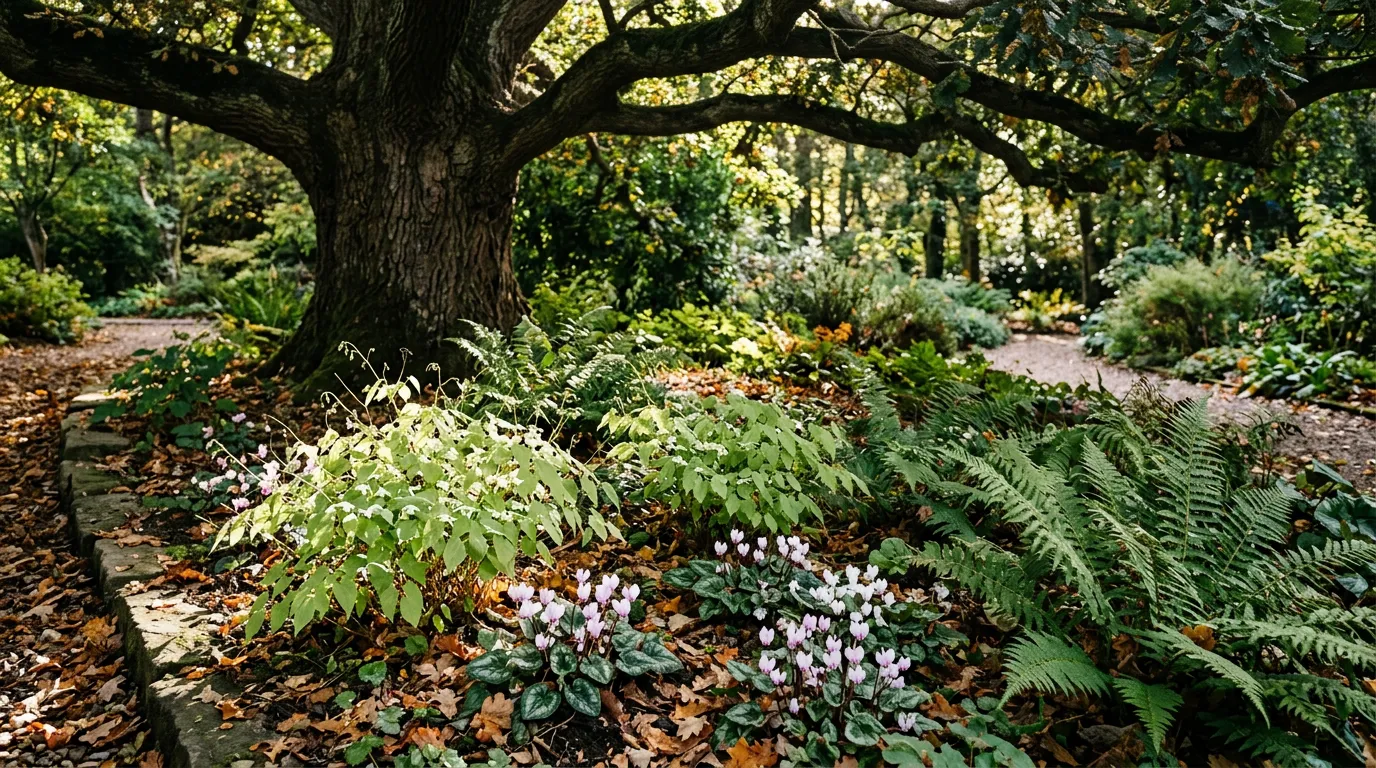 A dry shade planting under oak trees. Epimedium, cyclamen, and ferns thrive once established despite root competition.
Shade plants for containers
Not all shade areas have plantable soil. Courtyards, balconies, and paved side passages need container solutions.
Best shade container plants
- Hostas - excellent in pots. The container raises them away from ground-level slugs. Use a pot at least 30cm diameter. Water daily in summer.
- Fatsia japonica - bold architectural plant for large pots (50cm minimum). Year-round interest.
- Ferns - Polystichum setiferum and Asplenium scolopendrium work well in containers. Keep compost consistently moist.
- Heuchera - colourful foliage in burgundy, lime, silver, and amber. Compact growth suits pots. Replace every 3 years when they become woody.
- Box (Buxus) - clipped spheres or cubes add formal structure. Slow-growing, evergreen, thrives in shade.
Use a peat-free multipurpose compost mixed with 20% perlite for drainage. Feed container shade plants monthly with a balanced liquid fertiliser from April to September.
Common mistakes with shade planting
Planting sun-lovers in shade
Roses, lavender, and most Mediterranean herbs need 6+ hours of direct sun. They will not flower or thrive in shade, no matter how much you feed them. Check every plant’s light requirement before buying.
Ignoring soil moisture
Dry shade and moist shade need completely different plants. An astilbe planted in dry shade will brown and crisp. A cyclamen planted in bog conditions will rot. Assess your soil moisture before choosing plants.
Overcrowding
Shade plants need space for air circulation. Overcrowded shade borders become damp, stagnant, and prone to fungal disease. Follow spacing recommendations and resist the urge to pack plants in for instant impact.
Forgetting winter interest
Many shade perennials are deciduous, leaving borders bare from November to March. Include evergreen structure plants like fatsia, aucuba, and ferns to carry interest through winter. Hellebores bridge the gap with flowers from February.
Not enriching the soil
Shade areas, especially under trees, have poor, depleted soil. Annual mulching with compost or leaf mould is essential. Without it, even shade-tolerant plants will underperform. Build up organic matter every spring for the best results.
Seasonal interest calendar for shade gardens
| Month | What’s in flower or interest |
|---|---|
| January | Mahonia (yellow, fragrant), Sarcococca (scented white) |
| February | Hellebores start, snowdrops, winter aconites |
| March | Hellebores peak, primroses, brunnera begins |
| April | Brunnera, epimedium, pulmonaria, spring bulbs |
| May | Foxgloves, geranium, aquilegia, fern fronds unfurl |
| June | Astilbe, climbing hydrangea, hostas at peak foliage |
| July | Hydrangea macrophylla, astilbe, hosta flowers |
| August | Japanese anemones start, hydrangeas continue |
| September | Japanese anemones peak, cyclamen hederifolium |
| October | Cyclamen, autumn fern colour, berry display |
| November | Fatsia flowers, mahonia begins, evergreen foliage |
| December | Evergreen structure, hellebore buds forming |
Frequently asked questions
What grows well in full shade UK?
Ferns, ivy, and aucuba tolerate the deepest shade. Hardy ferns like Dryopteris filix-mas and Polystichum setiferum grow in the darkest corners where other plants fail. Add cyclamen hederifolium for autumn colour and Vinca minor for evergreen ground cover. Full shade is the most challenging condition, but these plants handle it reliably.
What is the best ground cover for shade?
Vinca minor is the most dependable shade ground cover. It spreads steadily, stays evergreen all year, and produces blue flowers in spring. For faster cover, Ajuga reptans and Lamium maculatum colonise bare soil within two growing seasons. Geranium macrorrhizum is the best choice for dry shade.
Do hostas grow in full shade?
Hostas prefer partial to dappled shade, not full shade. They need some light for strong leaf colour and reliable flowering. Blue-leaved varieties like Halcyon tolerate more shade than gold or variegated types. In full shade, hostas survive but produce smaller, less colourful leaves and fewer flowers.
What shrubs grow in shade UK?
Hydrangeas, fatsia, aucuba, mahonia, and skimmia all thrive in shade. Hydrangea macrophylla is the most popular, flowering from July to September in partial shade. Fatsia japonica provides bold architectural foliage year-round and tolerates even deep shade. Aucuba is virtually indestructible in any shade situation.
Can you grow flowers in a north-facing garden?
Yes, many flowers thrive facing north. Foxgloves, astilbes, hellebores, Japanese anemones, and brunnera all flower well without direct south-facing sun. North-facing does not mean full shade. Reflected light from walls, fences, and paving provides enough energy for most shade-tolerant flowering plants. Some plants, like bee-friendly lavender alternatives, perform well in partial shade.
How do I improve dry shade under trees?
Add organic matter every year. Spread a 5cm mulch of garden compost or leaf mould each spring to retain moisture and improve soil structure. Plant dry-shade specialists like epimedium, cyclamen hederifolium, geranium phaeum, and brunnera. Water new plants weekly for two full summers until their roots establish.
What climbers grow in shade?
Hydrangea petiolaris is the best shade-climbing plant for UK walls. It clings without support, flowers in June, and grows to 10m. Clematis montana and Clematis alpina also grow well on north-facing walls. English ivy is the toughest option but needs regular trimming to prevent it becoming invasive.
Lawrie has been gardening in the West Midlands for over 30 years. He grows his own veg using no-dig methods, keeps a wildlife-friendly garden, and writes practical advice based on real UK growing conditions.