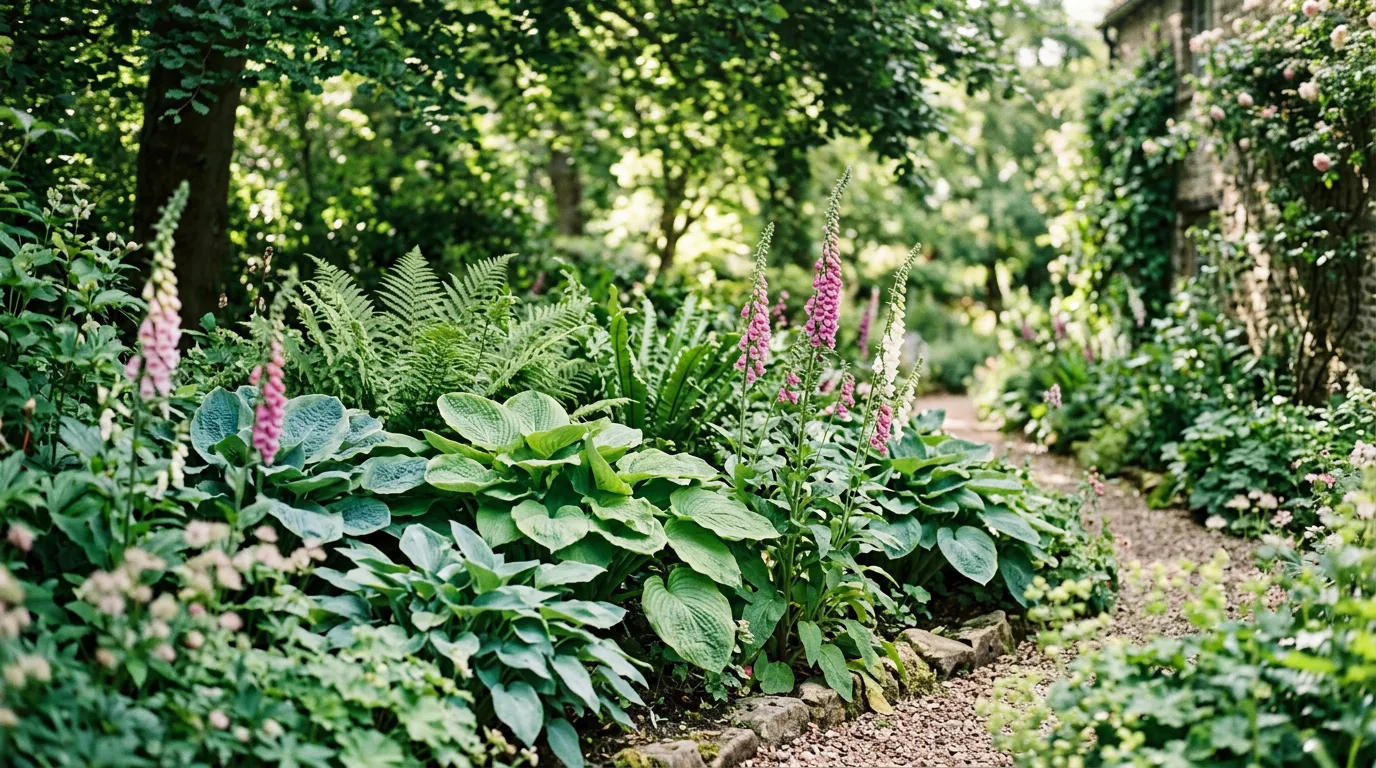
Low Maintenance Garden Plants for the UK
The best low maintenance plants for UK gardens that look great with minimal care. Covers evergreens, perennials, ground cover, grasses, and shrubs that thrive on neglect.
Key takeaways
- Low maintenance plants need one annual cut-back in March and a bark mulch in spring
- Lavender, ornamental grasses, and hardy geraniums are the three essential easy-care plants
- Evergreen shrubs like Choisya, Viburnum tinus, and Euonymus give year-round structure
- Ground cover plants suppress weeds naturally, cutting maintenance by 70%
- Gravel mulch plus drought-tolerant planting creates the lowest-effort garden style
- Most low maintenance perennials need no feeding, staking, or deadheading
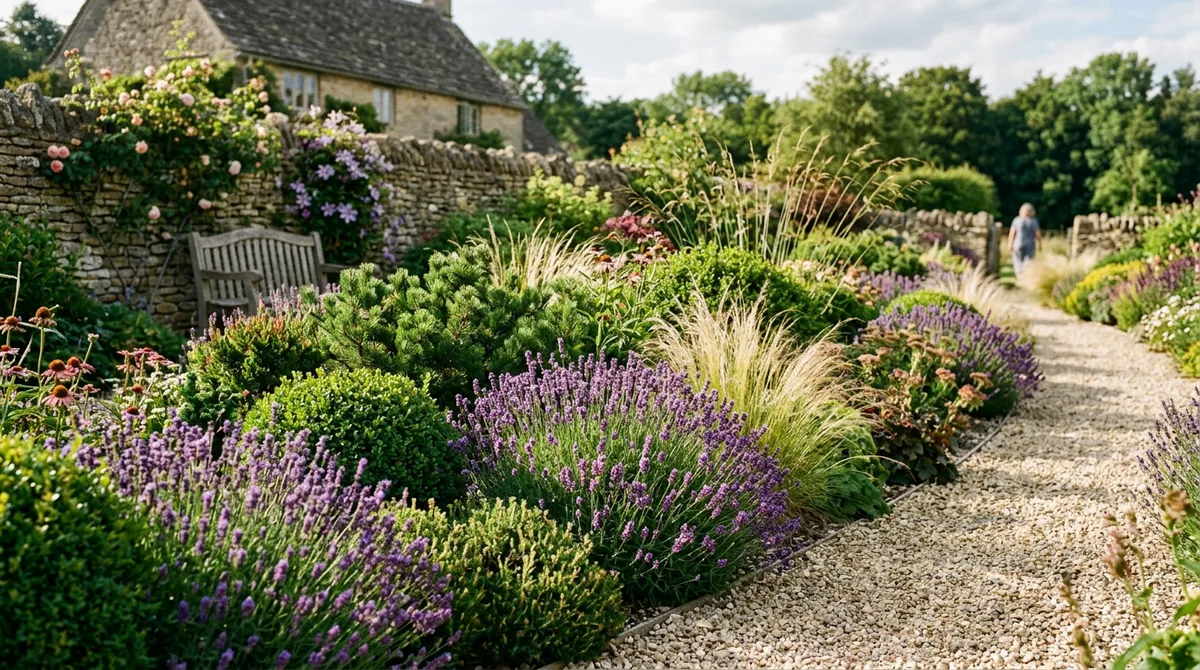
Most UK gardens demand far more work than they need to. Lawns need weekly mowing. Bedding plants need replacing twice a year. Roses need pruning, feeding, spraying, and deadheading. None of this is necessary. A well-designed low maintenance garden looks better than a high-maintenance one for a fraction of the effort.
The trick is choosing the right plants. Low maintenance does not mean boring. It means plants that earn their space without constant fussing: evergreens that provide year-round structure, perennials that flower for months and cover the ground, grasses that move in the wind and need one cut per year. This guide covers the best options for UK conditions. Browse more in our plants section.
The low maintenance principles
Before choosing individual plants, understand the three design principles that reduce work.
1. Cover the ground
Bare soil grows weeds. Weeds are the single biggest maintenance task in most gardens. Ground cover plants eliminate weeding by occupying the space before weeds can establish. A dense ground cover border needs no weeding after the second year.
2. Mulch everything
A 5-8cm layer of bark mulch on all planted areas suppresses germinating weed seeds, retains moisture (reducing watering by 50%), and insulates roots through winter. Apply in spring. Top up annually. This one action cuts garden work dramatically.
3. Right plant, right place
A sun-loving plant in shade will struggle, need feeding, and look poor despite your efforts. A moisture-loving plant on dry soil will need constant watering. Match every plant to its conditions and it will thrive with no help from you.
Best low maintenance perennials
Hardy geraniums
Hardy geraniums (cranesbills) are the single most useful low maintenance plant for UK gardens. They flower for months, cover ground densely, tolerate most soils, and need just one cut-back per year.
Top varieties:
- Rozanne - violet-blue flowers from June to November. The longest-flowering hardy geranium. Spreads to 60cm. Fills gaps between shrubs.
- Geranium macrorrhizum - aromatic semi-evergreen leaves. Pink flowers in May-June. The best ground cover for shade and dry soil. Suppresses weeds completely.
- Johnson’s Blue - true blue flowers, 30cm tall. Neat clumps. Cut to ground level after first flush for a second flowering in autumn.
Lavender
Lavandula angustifolia is drought-tolerant, bee-friendly, fragrant, and evergreen. It needs no feeding, no watering once established, and no pest control. Trim after flowering in August, cutting to just above the new growth. Never cut into old wood.
Best UK varieties: Hidcote (deep purple, compact), Munstead (pale purple, slightly taller), and Grosso (largest flower spikes, best for scent).
Sedums
Sedum spectabile (stonecrop) is virtually indestructible. Fleshy leaves store water, so it never needs watering once established. Pink or red flower heads from August to October attract butterflies and bees. Leave the dried flower heads through winter for structure. Cut back in March.
Nepeta (catmint)
Nepeta x faassenii produces spires of lavender-blue flowers from May to September. It is drought-tolerant, deer-resistant, and attractive to pollinators. Cut back by half after the first flower flush for a second wave. Walker’s Low is the most popular variety.
Epimedium
Epimediums are the kings of dry shade. They tolerate the worst conditions under trees and along north walls. Dainty spring flowers in yellow, orange, pink, or white. Cut back old leaves in February to reveal the flowers. No feeding, no watering, no pest problems.
| Perennial | Flowers | Height | Sun/shade | Water needs | Annual work |
|---|---|---|---|---|---|
| Geranium Rozanne | June-November | 40cm | Sun/part shade | Low | One cut-back |
| Lavender Hidcote | June-August | 50cm | Full sun | Very low | One trim |
| Sedum spectabile | Aug-October | 45cm | Full sun | Very low | One cut-back |
| Nepeta Walker’s Low | May-September | 60cm | Full sun | Low | One cut-back |
| Epimedium | March-April | 30cm | Shade | Very low | One leaf tidy |
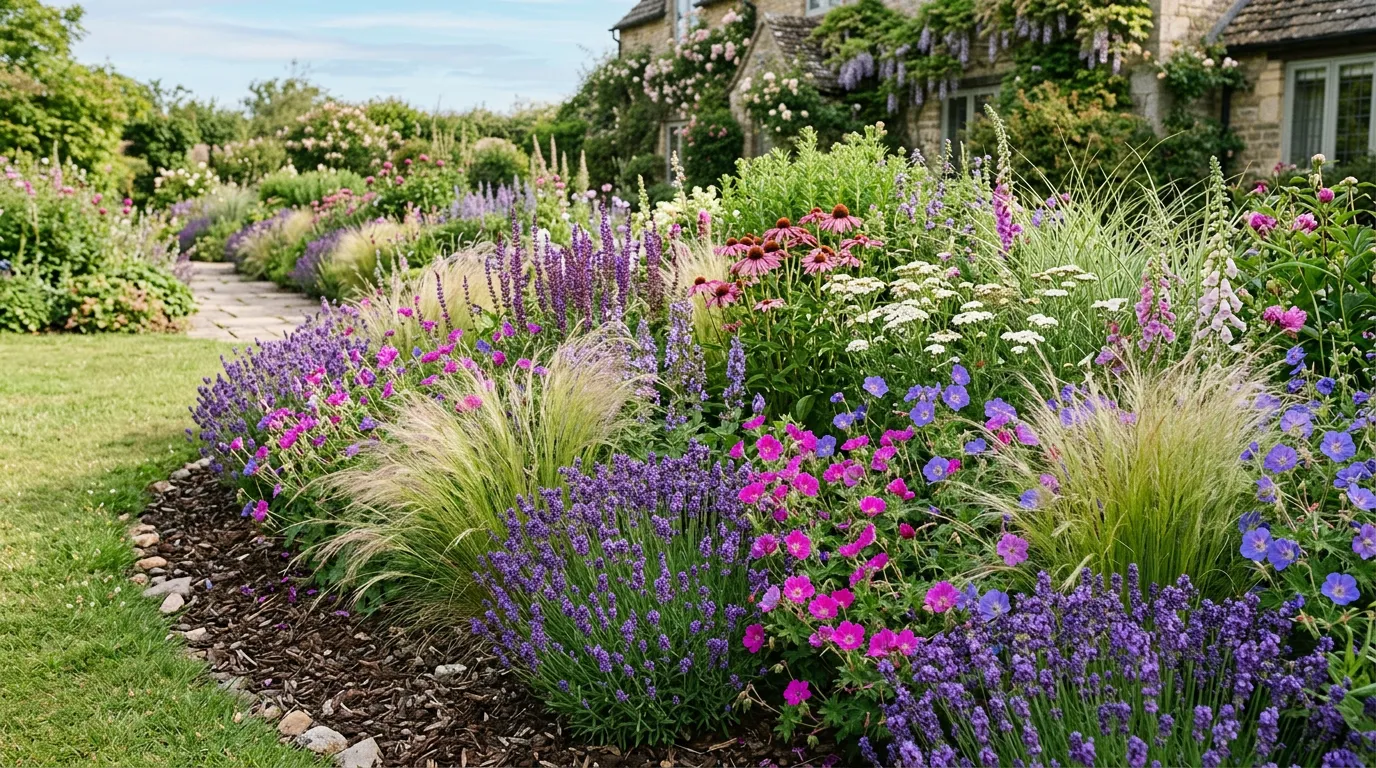 A low maintenance mixed border. Lavender, geraniums, and grasses provide months of colour with minimal upkeep.
Best low maintenance shrubs
Shrubs provide the permanent framework. Choose evergreen types for year-round structure without the bare-winter look of deciduous plants.
Evergreen shrubs
- Viburnum tinus - white flowers from November to March (when nothing else flowers). Dark evergreen foliage. Grows to 3m. No pruning needed. Tolerates shade.
- Choisya ternata (Mexican orange blossom) - glossy evergreen leaves, fragrant white flowers in May and often again in autumn. Grows to 2m. Tolerates sun or partial shade. Sundance has golden foliage.
- Euonymus fortunei - compact, glossy evergreen. Emerald Gaiety has white-edged leaves. Emerald ‘n’ Gold has yellow-edged leaves. Grows to 60cm-1m. Excellent for low hedging or ground cover.
- Fatsia japonica - bold architectural leaves. Tolerates deep shade, pollution, and coastal conditions. Grows to 3m. Zero maintenance.
- Sarcococca confusa (Christmas box) - small evergreen with intensely fragrant winter flowers. Grows to 1.5m. Perfect for shady spots near doorways where you notice the scent.
Flowering shrubs
- Hydrangea paniculata - huge white flower panicles from July to September. Unlike mophead hydrangeas, these flower on new wood so need only a March prune. Limelight is the best variety.
- Hebe - evergreen, compact, flowers from summer to autumn. Hundreds of varieties. Choose mid-sized types (60cm-1m) for borders. Excellent in containers.
- Potentilla fruticosa - compact deciduous shrub covered in small flowers from May to October. Grows to 1m. Never needs pruning. Abbotswood (white) and Goldfinger (yellow) are reliable.
Gardener’s tip: Plant shrubs at 75% of their mature spread apart. They look sparse for 2 years but then knit together into a dense, weed-proof mass. Planting too close creates overcrowding problems within 3-4 years.
Ornamental grasses
Ornamental grasses are the ultimate low maintenance plant group. They need no feeding, no staking, no pest control, no watering once established. One annual cut in late February or March is their entire maintenance requirement.
Top grasses for UK gardens
- Miscanthus sinensis - tall (1.5-2m), arching leaves, silky plumes in autumn. Morning Light has fine silvery leaves. The classic backdrop grass.
- Stipa tenuissima (Mexican feather grass) - fine, wispy foliage that moves in the slightest breeze. 60cm tall. Self-seeds gently. Creates a soft, naturalistic look.
- Calamagrostis x acutiflora Karl Foerster - upright, narrow habit to 1.5m. Bronze feathery plumes from June. The most architectural grass. Superb as a vertical accent.
- Pennisetum alopecuroides (fountain grass) - soft, fluffy flower heads from August. 60cm tall. Needs a sheltered spot in northern UK. Hameln is the hardiest variety.
- Hakonechloa macra - low, cascading grass for shade. Aureola has gold-striped leaves. 40cm tall. Excellent in pots and at border edges.
How to manage grasses
Leave all dead foliage standing through winter. It looks beautiful with frost and provides structure. In late February or early March, cut everything to 10-15cm above ground. New growth emerges within weeks. That is the entire annual maintenance.
Warning: Do not cut grasses in autumn. The old foliage protects the crown from winter wet and frost. Cutting too early can kill the plant in cold, wet winters. Always wait until late February or March.
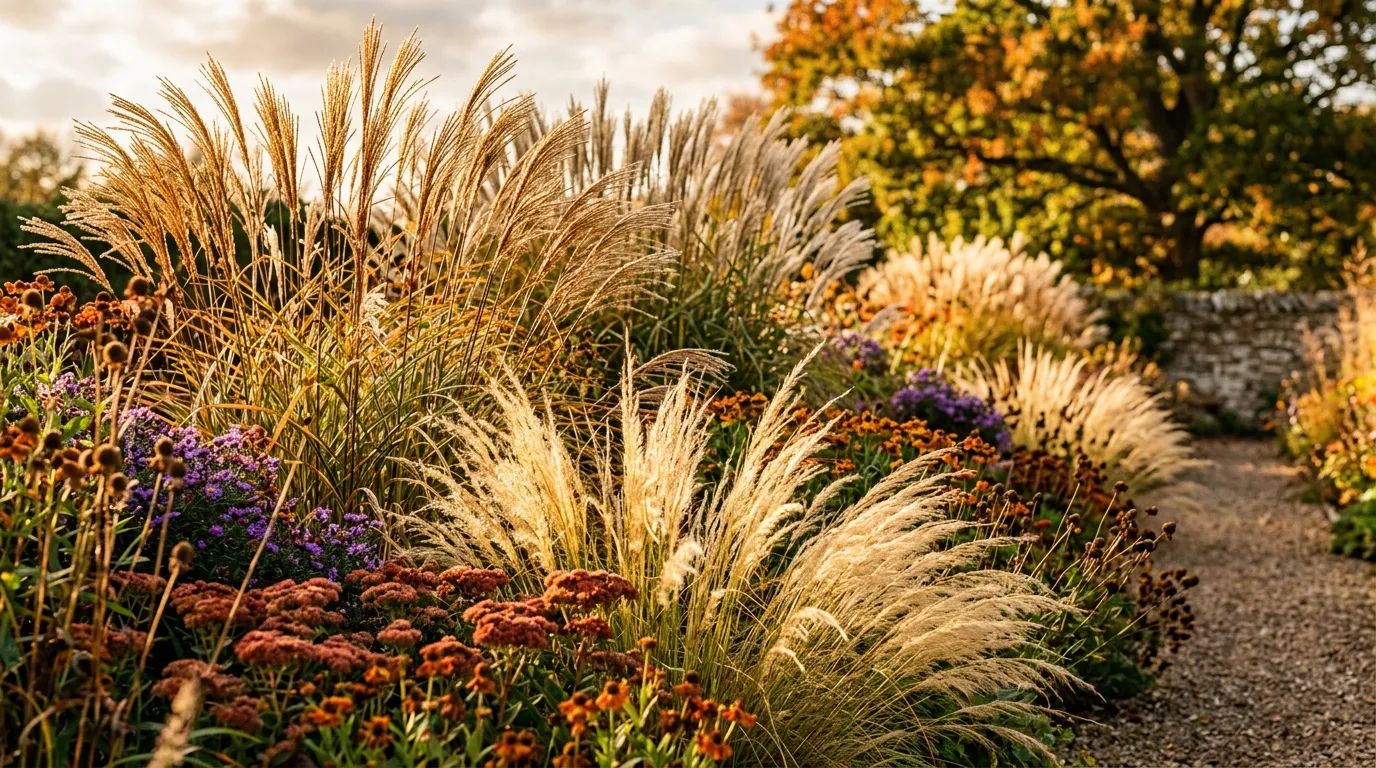 Ornamental grasses catching autumn light. Leave seed heads standing through winter for structure and frost interest.
Ground cover plants
Dense ground cover is the single most effective way to reduce garden maintenance. Once established, ground cover eliminates weeding entirely.
Best weed-suppressing ground covers
- Geranium macrorrhizum - aromatic, semi-evergreen, pink flowers. Tolerates sun or shade, dry or moist soil. Forms an impenetrable mat within 2 years. The best all-round ground cover for UK gardens.
- Vinca minor (lesser periwinkle) - evergreen, blue flowers in spring. Steady spreader. Good for shade under trees and along fences.
- Ajuga reptans (bugle) - semi-evergreen, blue flower spikes. Bronze or purple-leaved varieties add colour. Spreads by runners in moist shade.
- Pachysandra terminalis - evergreen, 20cm tall, dense cover for deep shade. Slow to establish but maintenance-free once growing.
- Alchemilla mollis (lady’s mantle) - lime-green flowers in June-July. Self-seeds to fill gaps. Scalloped leaves hold raindrops. Cut back after flowering for fresh foliage.
How to establish ground cover
Plant at 30cm spacing for fast coverage, 45cm spacing for economy. Mulch between plants with bark until they knit together (usually 18-24 months). Water weekly through the first summer. After that, no further care is needed.
Low maintenance design ideas
Gravel garden
The lowest-maintenance garden style. A 5cm gravel layer replaces lawn and acts as permanent mulch. Plant drought-tolerant species directly through the gravel: lavender, sedum, stipa, rosemary, thyme, and euphorbia. No mowing, no edging, minimal watering.
Shrub and grass border
Mix 60% evergreen shrubs with 40% ornamental grasses. No perennials to deadhead, no gaps in winter, no staking. Annual work: one grass cut in March and occasional dead-wood removal from shrubs.
Woodland shade garden
Under existing trees, plant a carpet of shade-tolerant ground cover: epimedium, cyclamen, ferns, and brunnera. Mulch with leaf mould annually. Once established, this style needs almost no attention.
Container minimalism
For paved courtyards and balconies, use large containers (50cm+) with specimen shrubs: box balls, fatsia, or topiary. Larger pots dry out slower than small ones, reducing watering. Add trailing heuchera or ivy at the base.
Comparison: maintenance levels by plant type
| Plant type | Watering | Feeding | Pruning | Pest control | Annual hours |
|---|---|---|---|---|---|
| Bedding plants | Daily | Weekly | Constant deadheading | Regular | 50+ |
| Roses | Weekly | Monthly | Annual + deadheading | Spraying | 30-40 |
| Lawn | None | Seasonal | Weekly mowing | Occasional | 40+ |
| Low maintenance perennials | First year only | None | One annual cut | None | 2-3 |
| Evergreen shrubs | First year only | None | None to annual | None | 1-2 |
| Ornamental grasses | First year only | None | One annual cut | None | 1 |
| Ground cover | First year only | None | None | None | Under 1 |
Month-by-month low maintenance calendar
| Month | Task |
|---|---|
| January | Nothing. Enjoy winter structure from evergreens and grass seed heads. |
| February | Cut back ornamental grasses to 10-15cm. |
| March | Cut back perennials. Apply bark mulch 5-8cm deep on all borders. |
| April | Nothing. New growth fills in. |
| May | Nothing. Plants flowering. |
| June | Nothing. Peak colour from geraniums, lavender, nepeta. |
| July | Optional: cut back geraniums and nepeta by half for second flush. |
| August | Trim lavender after flowering. |
| September | Nothing. Grasses at their peak. |
| October | Nothing. Autumn colour developing. |
| November | Spread autumn leaves as mulch under shrubs (free soil improvement). |
| December | Nothing. Winter evergreen structure carries the garden. |
Common mistakes
Choosing high maintenance plants by accident
Roses, dahlias, delphiniums, sweet peas, and bedding plants all demand regular attention. Check care requirements before buying. If a plant needs staking, spraying, or weekly deadheading, it is not low maintenance no matter how attractive.
Ignoring the first year
Low maintenance plants still need care during establishment. Water weekly through their first summer. After that, they cope alone. Skipping first-year watering kills new plants, wasting money and time.
Planting too few
Sparse planting leaves bare soil exposed. Bare soil grows weeds. Weeds demand maintenance. Plant densely and mulch thickly for the first two years. The upfront investment eliminates years of weeding.
Replacing lawn with decking
Decking looks low maintenance but becomes slippery when wet, needs annual treatment, and rots in 10-15 years. Gravel, self-binding aggregate, or paving are genuinely low maintenance alternatives.
Forgetting winter interest
A garden of deciduous perennials looks bare from November to March. Include 40-50% evergreen plants for year-round structure. Viburnum tinus, box, fatsia, and evergreen grasses carry the garden through winter.
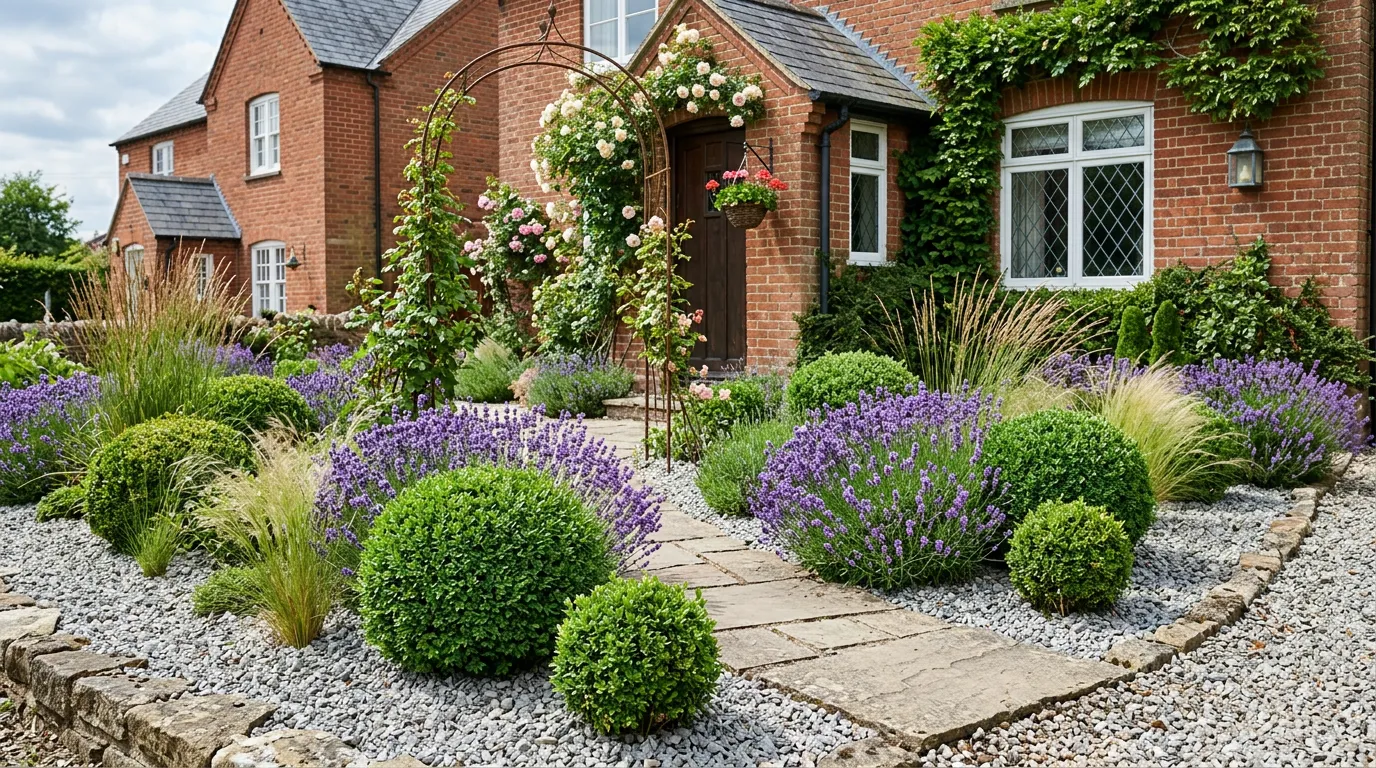 A low maintenance front garden. Gravel mulch, lavender, and clipped box balls need minimal annual care.
Frequently asked questions
What is the most low maintenance garden plant UK?
Hardy geraniums are the most versatile low maintenance plant. They flower for months, suppress weeds as ground cover, tolerate sun or shade, and need just one annual cut-back in March. The variety Rozanne flowers from June to November with no deadheading.
What plants can I plant and forget?
Evergreen shrubs like Viburnum tinus, Euonymus, and Fatsia japonica need virtually no attention once established. Water through the first summer, then leave them alone. Hardy ferns, Vinca minor, and Geranium macrorrhizum are also genuinely plant-and-forget perennials.
What ground cover stops weeds without maintenance?
Geranium macrorrhizum is the most effective weed-suppressing ground cover for UK gardens. It forms a dense, aromatic mat that smothers weeds within two growing seasons. It tolerates sun, shade, dry soil, and moist soil equally. Other excellent options include Vinca minor and Pachysandra terminalis.
Are ornamental grasses low maintenance?
Ornamental grasses are among the easiest plants to grow. They need no feeding, no watering once established, no staking, and no pest control. The only annual job is cutting back dead foliage in late February or March. Miscanthus, Stipa, and Calamagrostis are all outstanding choices.
How do I make my garden low maintenance?
Three strategies cut maintenance dramatically. First, plant dense ground cover to suppress weeds. Second, mulch all borders with 5-8cm of bark to reduce watering and prevent weed germination. Third, choose plants that need no staking, spraying, or deadheading. Replace lawn with gravel or paving where practical.
What shrubs need no pruning?
Viburnum tinus, Fatsia japonica, Sarcococca confusa, and Daphne all maintain their natural shape without any pruning. Choisya and Hebe need only occasional removal of dead wood. For a pruning-free garden, avoid roses, wisteria, fruit trees, and formal hedging plants.
Lawrie has been gardening in the West Midlands for over 30 years. He grows his own veg using no-dig methods, keeps a wildlife-friendly garden, and writes practical advice based on real UK growing conditions.