How to Start a Vegetable Garden in the UK
Complete beginner's guide to starting a vegetable garden in the UK. Covers planning, soil preparation, easy first crops, raised beds, tools, seasonal planting, and common mistakes.
Key takeaways
- 10 square metres of veg garden produces 30-50kg of food per year
- Start with 5 easy crops: lettuce, radish, courgettes, runner beans, tomatoes
- March is the key sowing month, with harvests from June to October
- Raised beds are the most efficient method for beginners and small gardens
- Basic tools cost under fifty pounds: fork, trowel, watering can, string line
- UK growing season runs March to October, November with fleece protection
Growing your own vegetables is one of the most satisfying things you can do in a garden. A handful of lettuce seeds costs fifty pence and produces enough salad for a month. A single courgette plant yields 3-5kg of fruit from June to September. Ten square metres of well-managed vegetable garden produces 30-50kg of food per year, enough to cut two hundred to four hundred pounds from your annual grocery bill.
You do not need an allotment, a large garden, or any previous experience. A single raised bed, a few pots on a patio, or even a sunny windowsill will produce fresh food. This guide takes you from bare ground to your first harvest, covering everything a UK beginner needs to know. Visit our how-to section for more practical guides.
Choosing your growing space
What vegetables need
Every vegetable needs three things: sunlight (6+ hours of direct sun for most crops), decent soil (or compost in containers), and water (regular, consistent moisture during the growing season).
Assess your garden honestly:
- Full sun (6+ hours): grow anything. Tomatoes, courgettes, peppers, beans, and all root vegetables.
- Partial sun (3-6 hours): lettuce, spinach, chard, radish, peas, broad beans, and herbs.
- Shade (under 3 hours): only leafy salads and some herbs. Consider a shade-tolerant planting scheme instead.
Growing methods
| Method | Space needed | Cost | Best for |
|---|---|---|---|
| Raised beds | 1.2m x 2.4m per bed | Seventy to one hundred and thirty pounds | Best all-round method |
| Ground-level beds | Any size | Minimal (soil improvement only) | Large gardens, allotments |
| Containers and pots | Patio, balcony, window | Twenty to fifty pounds | Small spaces, renters |
| Grow bags | Patio, driveway | Five to ten pounds | Tomatoes, salad |
Raised beds are the best starting point for most beginners. The soil warms earlier, drainage is better, and the defined space prevents overambition. A single 1.2m x 2.4m bed is manageable and productive. See our complete guide to raised bed gardening.
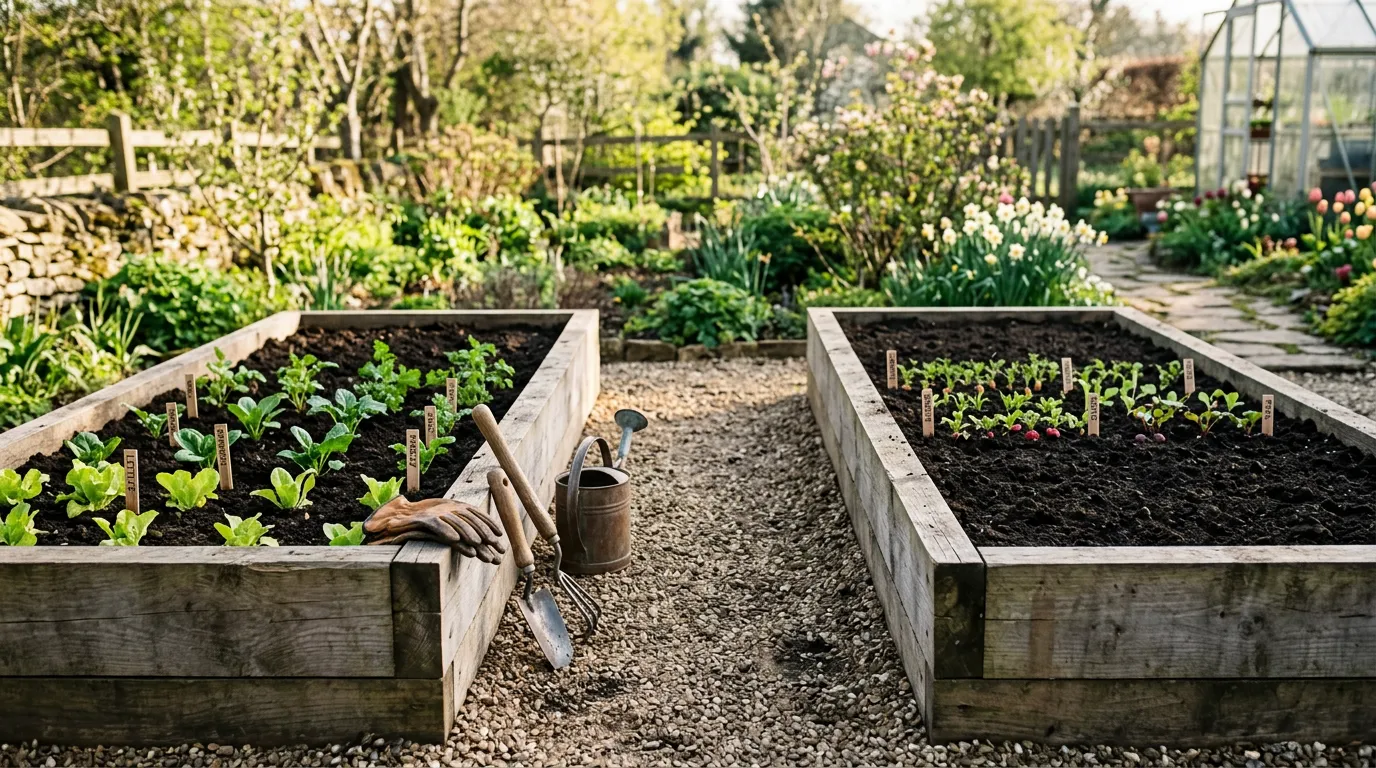 A beginner’s vegetable garden layout. Two raised beds with a path between provide enough space for a family’s summer salad.
Soil preparation
Good soil grows good vegetables. Spending time on soil before planting pays back all season.
Testing your soil
Push a fork into the ground. If it goes in easily, you have workable soil. If the fork bounces off or you hit solid clay, the soil needs work.
Clay soil: heavy, sticky when wet, cracks when dry. Dig in plenty of organic matter (compost, well-rotted manure) to improve drainage and workability. Clay is naturally fertile but needs loosening.
Sandy soil: light, free-draining, dries out fast. Add organic matter to improve water retention and nutrient content. Sandy soil needs more frequent feeding and watering.
Loam: the ideal balance of clay, sand, and organic matter. If you have loam, you are fortunate. Add compost annually to maintain it.
Improving soil
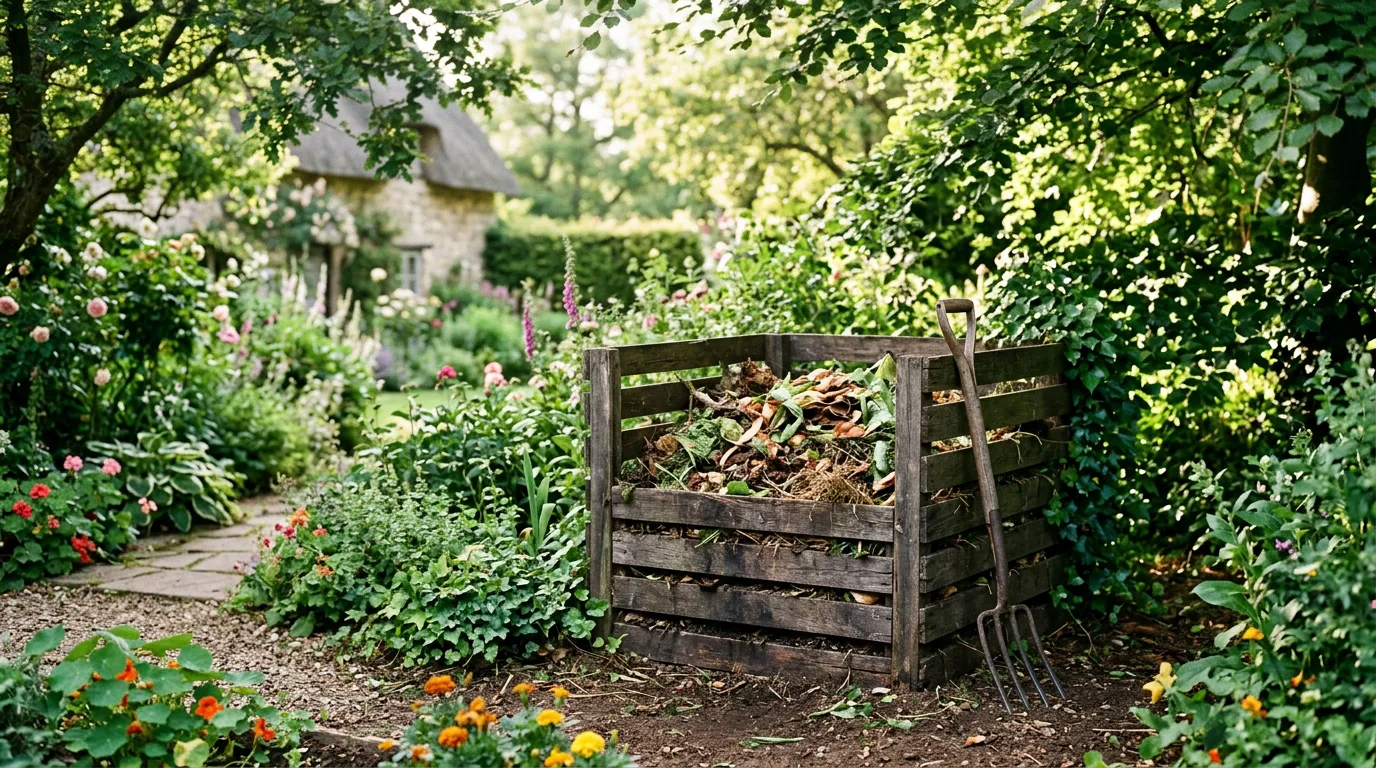
Dig in garden compost or well-rotted manure at a rate of one wheelbarrow per 3-4 square metres. Do this in autumn or early spring, at least two weeks before planting. Making your own compost at home provides a free, continuous supply of soil improver.
For raised beds, use a 50:50 mix of topsoil and garden compost. This gives you perfect growing medium from day one.
Gardener’s tip: If you are starting on compacted or neglected ground, cover the area with thick cardboard and 15cm of compost in autumn. By spring, the cardboard has smothered weeds and the worms have begun mixing compost into the soil. This no-dig method avoids the backbreaking work of traditional digging.
Essential tools
You do not need many tools. A beginner garden needs:
| Tool | Cost | What it does |
|---|---|---|
| Garden fork | Ten to fifteen pounds | Turns and loosens soil |
| Hand trowel | Five to eight pounds | Planting and weeding |
| Watering can (10L) | Eight to twelve pounds | Watering seedlings and beds |
| String line | Three to five pounds | Straight rows for sowing |
| Plant labels | Two to three pounds | Marking what you sowed where |
Total: thirty to forty-five pounds. That is everything you need for year one. Add a hoe (weeding) and a wheelbarrow in year two if you expand. Avoid starter tool kits. They include tools you will never use.
The 5 easiest crops for beginners
Start here. These five crops are almost impossible to fail with in UK conditions. They grow fast, produce well, and teach you the basics of sowing, watering, and harvesting.
1. Lettuce and salad leaves
Sow: March to August, directly into soil or containers Harvest: 4-6 weeks after sowing Yield: one 2m row produces lettuce for 2 people for 4 weeks
Lettuce is the fastest reward in the vegetable garden. Scatter seed on prepared soil, cover lightly, water, and wait. Cut-and-come-again varieties let you harvest outer leaves while the plant keeps growing. Sow a short row every 2-3 weeks for continuous supply.
2. Radish
Sow: March to September, directly into soil Harvest: 4 weeks after sowing Yield: a 1m row produces 30-40 radishes
The fastest vegetable to grow. French Breakfast and Cherry Belle are the standard varieties. Sow between rows of slower crops to use the space efficiently while you wait for other vegetables to mature.
3. Courgettes
Sow: indoors in April, plant out late May Harvest: July to September Yield: 3-5kg per plant (2 plants feed a family of 4)
One of the most productive vegetables per square metre. Two plants produce more courgettes than a family can eat. Sow indoors in March or April, plant out after the last frost. Water consistently. Pick when fruits are 15-20cm long. If you miss one, you get a marrow.
4. Runner beans
Sow: May, directly outdoors or in pots Harvest: July to October Yield: 2-3kg per plant over the season
Beautiful, productive, and easy. Push seeds 5cm deep beside a wigwam of bamboo canes. The plants climb to 2.5m, producing flowers that become beans. Pick regularly (every 2-3 days) to keep the plants productive. Scarlet Emperor and Enorma are reliable varieties.
5. Tomatoes
Sow: indoors in March Harvest: July to September Yield: 3-5kg per plant (greenhouse), 2-3kg (outdoor)
The nation’s favourite crop. Start seeds indoors in early March, grow on in pots, and plant out in late May. Bush varieties like Tumbling Tom need no staking or pruning. Grow in pots, grow bags, or beds. Feed with tomato feed from first fruit set.
| Crop | Sow | Harvest | Difficulty | Yield per plant/row |
|---|---|---|---|---|
| Lettuce | March-August | 4-6 weeks | Very easy | Continuous cutting |
| Radish | March-September | 4 weeks | Very easy | 30-40 per metre |
| Courgettes | April (indoors) | July-September | Easy | 3-5kg |
| Runner beans | May | July-October | Easy | 2-3kg |
| Tomatoes | March (indoors) | July-September | Moderate | 2-5kg |
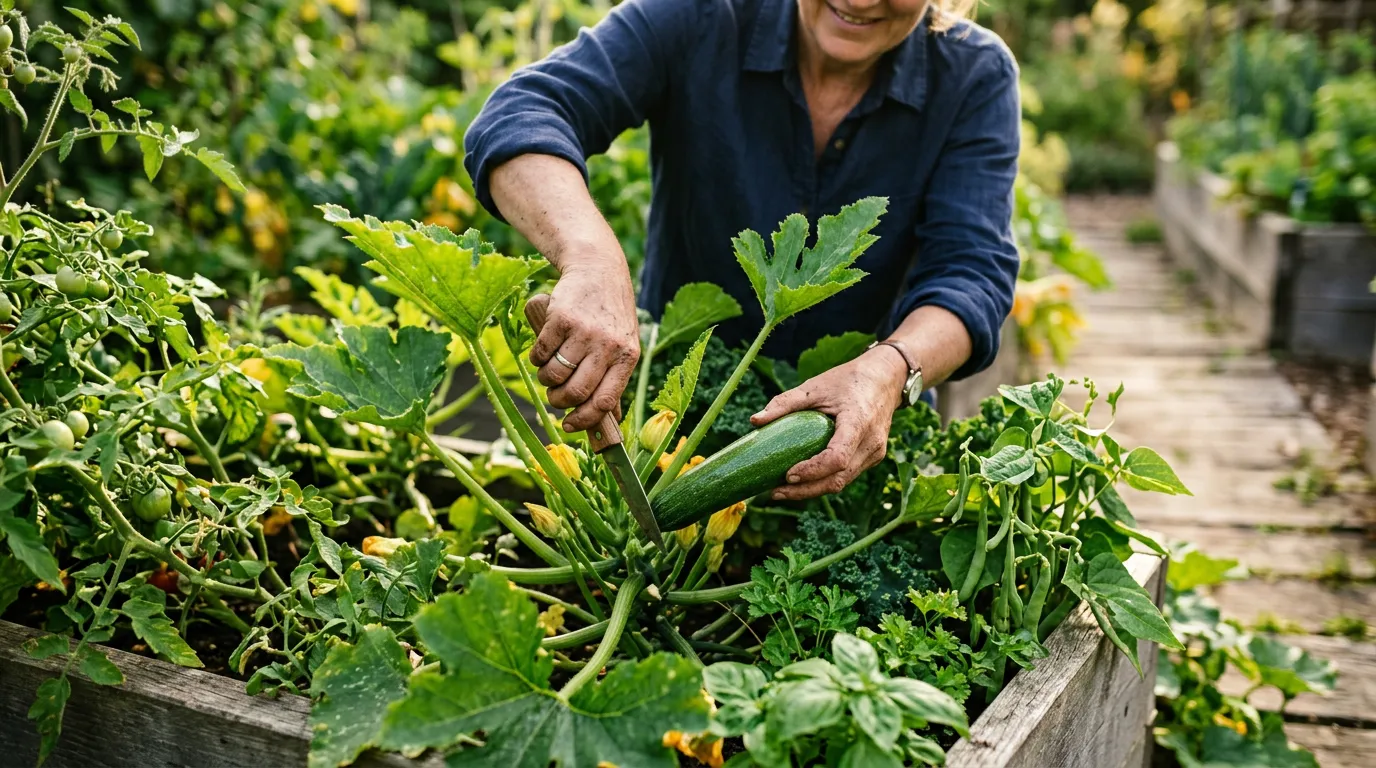 Harvesting courgettes at 15-20cm length. Pick regularly to keep the plant producing fruit all summer.
Beyond the basics: next crops to try
Once you have grown the five easy crops confidently, expand to these:
Root vegetables
- Beetroot - sow March to July, harvest in 8-12 weeks. Easy, colourful, stores well.
- Carrots - sow April to July under fleece (deters carrot fly). Harvest in 12-16 weeks. Need deep, stone-free soil.
- Potatoes - plant first earlies in March, harvest June-July. See our guide to March planting.
Legumes
- Broad beans - sow March, harvest June-July. Hardy, nitrogen-fixing, excellent flavour.
- Peas - sow March to May, harvest June-August. Sweet, productive, children love picking them.
Brassicas
- Kale - sow May, harvest October to March. Incredibly hardy, productive through winter.
- Purple sprouting broccoli - sow April, harvest February-March the following year. Long wait but worth it.
Fruit
- Strawberries - plant March, harvest June-October. Easy in beds or containers.
- Raspberry canes - plant March, harvest July-October. Low effort once established.
Planning your growing year
The UK growing season
The outdoor growing season runs from March to October in most of England and Wales. Northern Scotland is shorter: April to September. Using fleece, cloches, and cold frames extends the season by 2-4 weeks at each end.
Indoor sowing (windowsill, propagator, greenhouse) starts in February-March for tender crops that go outside after the last frost in late May.
Succession sowing
The biggest mistake beginners make is sowing everything at once. You get a glut in July and nothing in September. Instead, sow small amounts every 2-3 weeks:
- Lettuce: every 2 weeks, March to August
- Radish: every 3 weeks, March to September
- Beetroot: every 3 weeks, March to July
- Spinach: every 3 weeks, March to September
This spreads your harvest evenly across the season rather than giving you more than you can eat in one week.
Crop rotation
If you have 3-4 beds, rotate crop families each year. Legumes (peas, beans) fix nitrogen. Brassicas (kale, broccoli) use that nitrogen. Root crops follow brassicas. Potatoes and tomatoes break up the soil. Rotating prevents disease build-up and balances soil nutrients.
Month-by-month vegetable garden calendar
| Month | Indoor sowing | Outdoor sowing | Plant out | Harvest |
|---|---|---|---|---|
| January | Order seeds | Nothing | Nothing | Nothing |
| February | Tomatoes (late Feb, south only) | Nothing | Nothing | Nothing |
| March | Tomatoes, peppers, courgettes | Peas, beans, lettuce, radish, parsnips | Nothing | Nothing |
| April | Sweetcorn, cucumbers | Beetroot, carrots, spring onions | Early lettuce | Nothing |
| May | Nothing (all started) | Runner beans, courgettes (direct) | Tomatoes (greenhouse), hardened seedlings | Radish, lettuce |
| June | Nothing | Succession salads | Tomatoes (outdoor), courgettes, beans | Lettuce, radish, peas, broad beans |
| July | Nothing | Autumn beetroot, carrots | Nothing | Beans, courgettes, early tomatoes, beetroot |
| August | Nothing | Winter salad, spring cabbage | Nothing | Tomatoes, courgettes, beans, carrots |
| September | Nothing | Nothing | Overwintering onion sets | Runner beans, tomatoes, squash |
| October | Nothing | Garlic, broad beans (overwintering) | Nothing | Last tomatoes, kale, leeks |
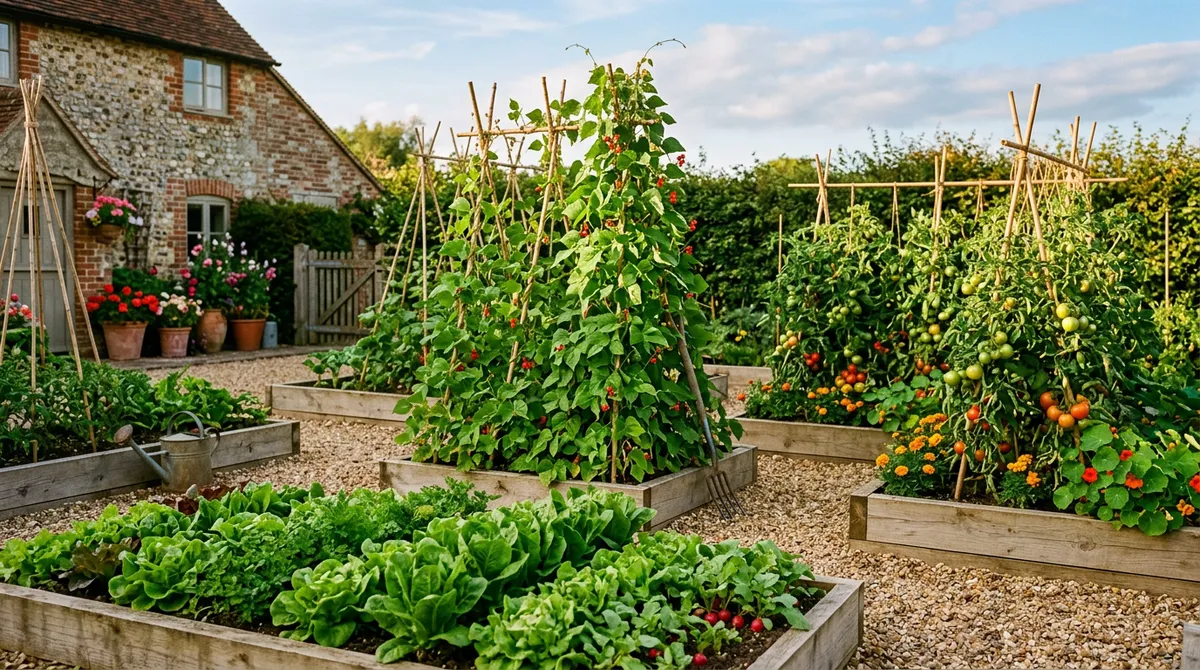
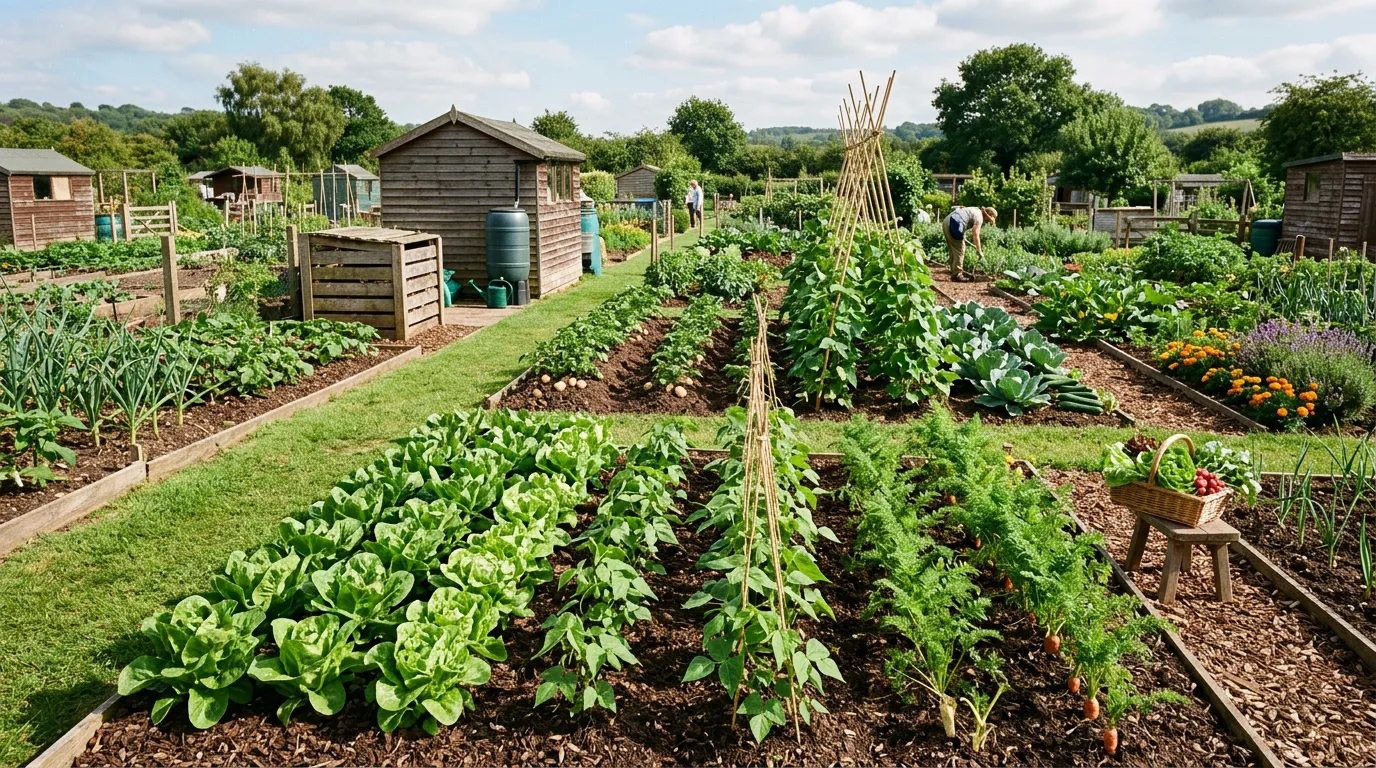 A productive mid-summer vegetable garden. Staggered sowing dates mean different crops are at different stages.
Watering and feeding
Watering
Most vegetable crops need 25mm of water per week during the growing season. In a typical UK summer, rainfall provides some of this. Top up with manual watering during dry spells.
Key watering rules:
- Water at the base of plants, not over leaves. Wet foliage spreads disease.
- Water in the morning where possible. Evening watering stays on foliage overnight.
- Deep, less frequent watering is better than light daily sprinkling. It encourages deep root growth.
- Container plants need daily watering in summer, twice daily in hot spells.
Feeding
Fresh compost provides enough nutrients for most crops. Additional feeding benefits heavy croppers:
- Tomatoes and courgettes: liquid tomato feed (high potash) from first fruit set, twice weekly
- Beans and peas: no additional feed needed (they fix their own nitrogen)
- Leafy crops: general-purpose liquid feed if growth slows
- Root vegetables: avoid nitrogen-rich feeds which produce leaf at the expense of roots
Protecting your crops
Slugs
The number one pest in UK vegetable gardens. Protect seedlings with cloches, copper tape on raised beds, and natural slug control methods. Nematode biological control is the most effective long-term solution.
Birds and pigeons
Pigeons strip brassica leaves. Blackbirds attack strawberries and soft fruit. Net vulnerable crops with 15mm mesh bird netting on a frame. Check netting daily for trapped wildlife.
Late frost
A frost in late April or May kills tender crops planted out too early. Watch weather forecasts. Keep fleece handy. Cover tomatoes, courgettes, beans, and peppers if frost is predicted after planting out.
Warning: Never plant tender crops (tomatoes, courgettes, beans, peppers) outdoors before the last frost date. In southern England this is typically mid-May. In northern England and Scotland, late May to early June. One frost destroys weeks of growing.
Common mistakes
Starting too big
The most common beginner mistake. A 30-square-metre vegetable plot sounds exciting in January. By July it is an overwhelming, weedy wilderness. Start with 3-5 square metres. Master that space. Expand next year.
Sowing too early
Seed packets say “sow March” but your soil might still be at 4C. Seeds rot in cold, wet soil. Use a soil thermometer. Most outdoor sowings need soil at 7C minimum. Patience produces better results than eagerness.
Not thinning
Sowing too thickly and then not thinning produces weak, spindly plants that compete for light. Thin lettuce to 15cm apart, carrots to 5cm, beetroot to 10cm. It feels wasteful but the remaining plants produce far more food than a crowded row.
Ignoring watering in dry spells
UK weather is unreliable. A week without rain in June or July stresses crops severely. Check soil moisture regularly. Water before plants wilt, not after. Wilted plants recover but the stress reduces yield.
Not harvesting regularly
Runner beans stop producing if you leave pods to mature on the plant. Courgettes become marrows if not picked at 15-20cm. Lettuce bolts if left too long. Pick regularly to keep crops producing.
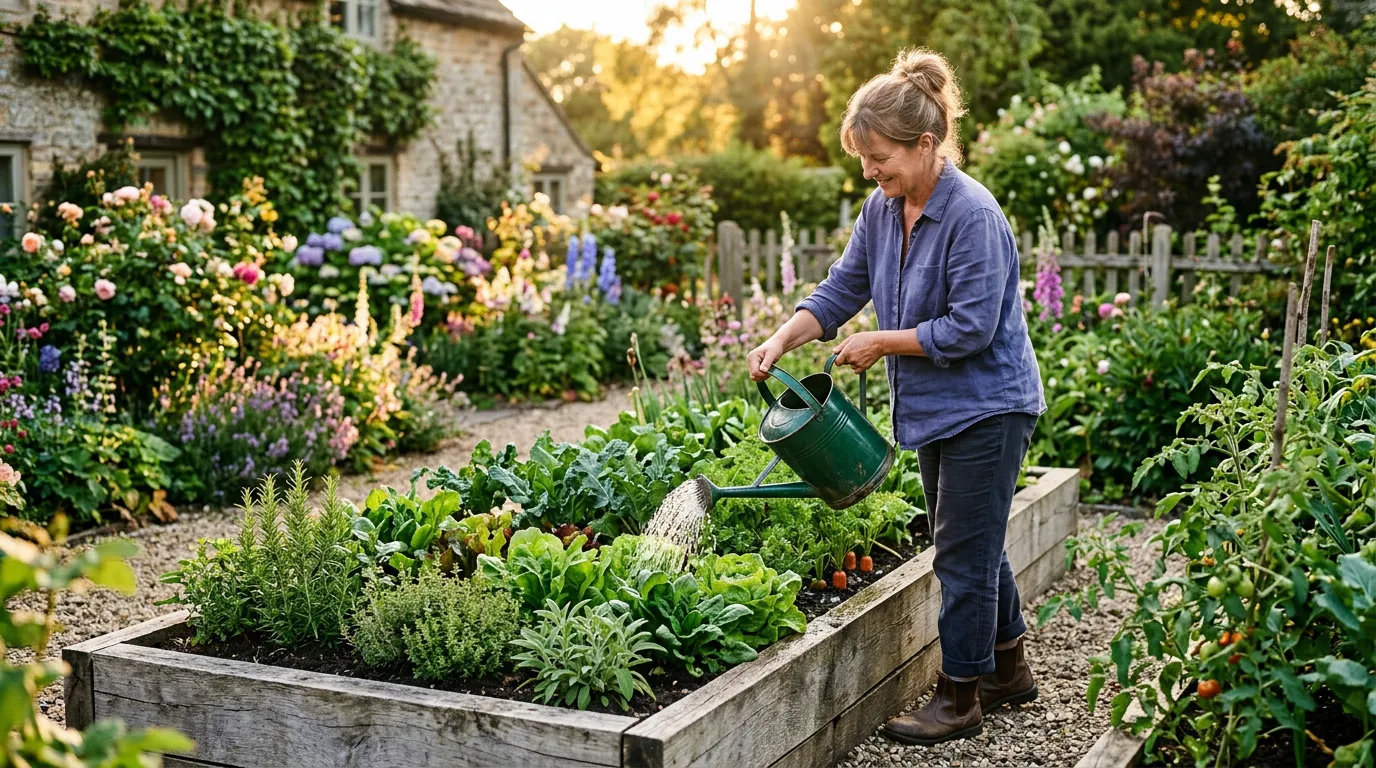 Watering a raised bed in the evening. Water at the base of plants, not over the leaves, to prevent disease.
Growing vegetables in containers
No garden? No problem. Many vegetables grow brilliantly in containers on patios, balconies, and windowsills.
Best container vegetables
- Tomatoes - 10-litre pots minimum. Bush varieties like Tumbling Tom in hanging baskets.
- Lettuce - any pot, window box, or grow bag. Shallow roots suit small containers.
- Herbs - basil, coriander, parsley, chives in 15cm pots or a window box.
- Chillies and peppers - 5-litre pots on a sunny windowsill or patio.
- Dwarf French beans - 10-litre pots, 3-4 plants per pot. No cane support needed.
- Radish - any container 15cm deep. Fast and productive.
Container tips
- Use peat-free multipurpose compost with added perlite for drainage
- Every container needs drainage holes. No exceptions.
- Feed weekly with liquid fertiliser from 6 weeks after planting
- Water daily in summer, twice daily in hot weather
- Position in the sunniest spot available
Frequently asked questions
What is the easiest vegetable to grow in the UK?
Lettuce is the easiest crop for UK beginners. Sow seed directly into soil or a container from March onward. Harvest outer leaves within 4-6 weeks. No special care needed beyond regular watering. Radishes are equally simple, producing a crop in just 4 weeks from sowing.
When should I start a vegetable garden UK?
Begin soil preparation in February by digging in compost or covering beds with cardboard and mulch. Start sowing outdoors in March when soil temperature reaches 7C. Indoor sowings for tender crops like tomatoes begin in early March. Many crops can still be sown until July for autumn harvests.
How big should a beginner vegetable garden be?
Start with 3-5 square metres, roughly the size of one raised bed. This produces enough salad and seasonal vegetables for regular harvesting without becoming overwhelming. Two beds (6 square metres total) provide a good range of crops. Expand in your second year once you understand your garden’s conditions.
What vegetables grow well in shade?
Lettuce, spinach, radish, rocket, and chard tolerate partial shade with 3-4 hours of direct sun. Peas and broad beans manage in light shade. Fruiting crops like tomatoes, courgettes, peppers, and beans need 6+ hours of direct sun. If your garden is mostly shaded, focus on leafy salads and herbs.
Do I need an allotment to grow vegetables?
No. Grow vegetables in any sunny space. Raised beds on patios, containers on balconies, grow bags on driveways, and window boxes on ledges all produce fresh food. A single raised bed of 1.2m by 2.4m yields 20-30kg of vegetables per season. Space is not a barrier to growing your own.
How much does it cost to start a vegetable garden?
A basic startup costs fifty to one hundred pounds: seeds (fifteen to twenty pounds for 8-10 varieties), basic tools (twenty to thirty pounds for fork, trowel, watering can), and compost (fifteen to twenty pounds). Adding a raised bed costs an extra seventy to one hundred and thirty pounds. One packet of seeds grows dozens of plants.
What month do you plant vegetables UK?
March is the main sowing month. Sow peas, beans, parsnips, lettuce, radish, and root vegetables directly outdoors. Start tomatoes, peppers, courgettes, and squash indoors in March for planting out after the last frost in late May. Many crops sow in succession from March through to July for continuous harvests.
Can I grow vegetables in pots?
Yes, many vegetables excel in containers. Tomatoes, peppers, chillies, lettuce, herbs, radishes, and dwarf beans all grow productively in pots. Use at least 10-litre pots with drainage holes for larger plants. Feed container vegetables weekly with liquid tomato feed from 6 weeks after planting. Water daily in summer.
Lawrie has been gardening in the West Midlands for over 30 years. He grows his own veg using no-dig methods, keeps a wildlife-friendly garden, and writes practical advice based on real UK growing conditions.