Amelanchier
Amelanchier lamarckii
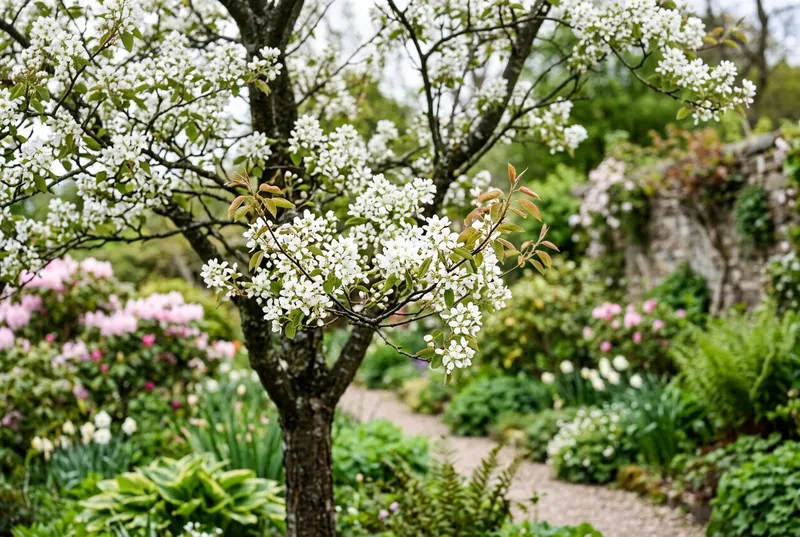
Amelanchier is a multi-season small tree offering bronze spring foliage, clouds of white starry blossom, small edible purple berries in summer, and spectacular orange-red autumn colour. It rarely exceeds 6 metres, making it ideal for small and medium UK gardens. Hardy and unfussy, it thrives in most soil types and requires minimal maintenance once established.
How to grow amelanchier
Plant container-grown trees at any time, or bare-root stock from November to March. Amelanchier prefers moist, well-drained, neutral to acidic soil but tolerates clay and chalk. Choose a sunny or lightly shaded spot. Water regularly during the first growing season. Mulch annually with compost or bark chips. Multi-stemmed specimens create a beautiful naturalistic effect, so consider buying a multi-stem tree or allowing suckers to develop. The small, blueberry-like fruits are edible and taste sweet when ripe in June or July. Birds usually harvest them first, so net the tree if you want to pick them.
Pruning
Prune lightly in late winter, between November and February, to remove dead, crossing, or overcrowded branches. Amelanchier naturally forms an attractive shape with minimal intervention. Remove suckers from the base if a single-stemmed form is preferred. Avoid heavy pruning, which ruins the graceful habit.
Propagation
- Seed
- Suckers
- Layering
Common problems
- Fireblight
- Leaf spot
- Powdery mildew
- Bird damage to fruit
Good companions
Related guides
Best Trees for Small Gardens in the UK
The best trees for small UK gardens, from amelanchier and crab apple to Japanese maple and magnolia, with how to choose, plant and grow them in pots.
Best Flowering Shrubs for UK Gardens
The best flowering shrubs for UK gardens, from forsythia to hydrangea and buddleja, with when to prune each one and how to plan a border.
Spring Gardening Jobs: Complete UK Checklist
Your friendly spring checklist for UK gardens, March to May. Lawn, borders, pruning, sowing, greenhouse, fruit, wildlife and pond jobs in order.