Key takeaways
- Put out seeds and peanuts only from 1 November to 30 April
- From May to October, offer just small amounts of mealworms, suet or fat
- Clean feeders and bird baths at least weekly, and change the water every day
- Move feeders now and then, and avoid flat surfaces like bird tables
- Never use mesh bags, salty food or mouldy food, and skip bread in spring and summer
- If you see sick birds, stop feeding for at least two weeks and report them
Feeding garden birds does the most good when it follows the seasons. In April 2026 the RSPB, working with the BTO, changed its advice after looking at how feeding spreads disease. The message now is “feed seasonally, feed safely”. Seeds and peanuts are for winter, and clean feeders matter all year.
Here’s what to feed, when to feed it and which birds to look out for each month. For feeders, nest boxes and planting for birds, see our main guide to attracting birds to your garden. Our guide to creating a wildlife garden covers the bigger picture.
Should you still feed birds in summer?
Only lightly. Pause seeds and peanuts from 1 May to 31 October, then put the full range back out from 1 November to 30 April. Small amounts of mealworms, suet or fat are fine through summer.
The reason is finch trichomonosis, a disease that spreads through food and water dirtied by sick birds. Seed and peanut feeders bring lots of finches together, and outbreaks peak after the breeding season. Greenfinches have been hit hard, and chaffinches have fallen too. The BTO explains the change in more detail.
The finches most at risk rarely eat mealworms or fat, so those are a safer choice. Wild food is also at its most plentiful in summer and early autumn. The advice is a precaution and will be reviewed as more is learned.
Spring feeding: March to April
Spring is hard work for birds. The berries have gone, insects are only just waking up, and there are nests to build and eggs to lay.
March
Birds are pairing up and singing from dawn. Great tits, blue tits and robins get territorial. Seeds, sunflower hearts, peanuts in a mesh feeder, mealworms and suet are all still fine. Blackbirds may have eggs by late March. Not sure who’s visiting? Our guide to identifying common garden birds can help.
Fieldfares and redwings, winter visitors from Scandinavia, are often still around. They eat leftover windfall fruit and berries before heading north in April.
April
Breeding is in full swing. Soaked mealworms are especially helpful now, because chicks can’t cope with dry, hard food.
Avoid: loose peanuts, bread and other dry, hard food. Parents may take them to the nest, where chicks can choke. Peanuts should only ever go in a mesh feeder so birds peck off small bits.
Chiffchaffs and willow warblers arrive in March and April. They eat insects, not feeder food. Growing herbs like thyme and oregano brings in the insects they need.
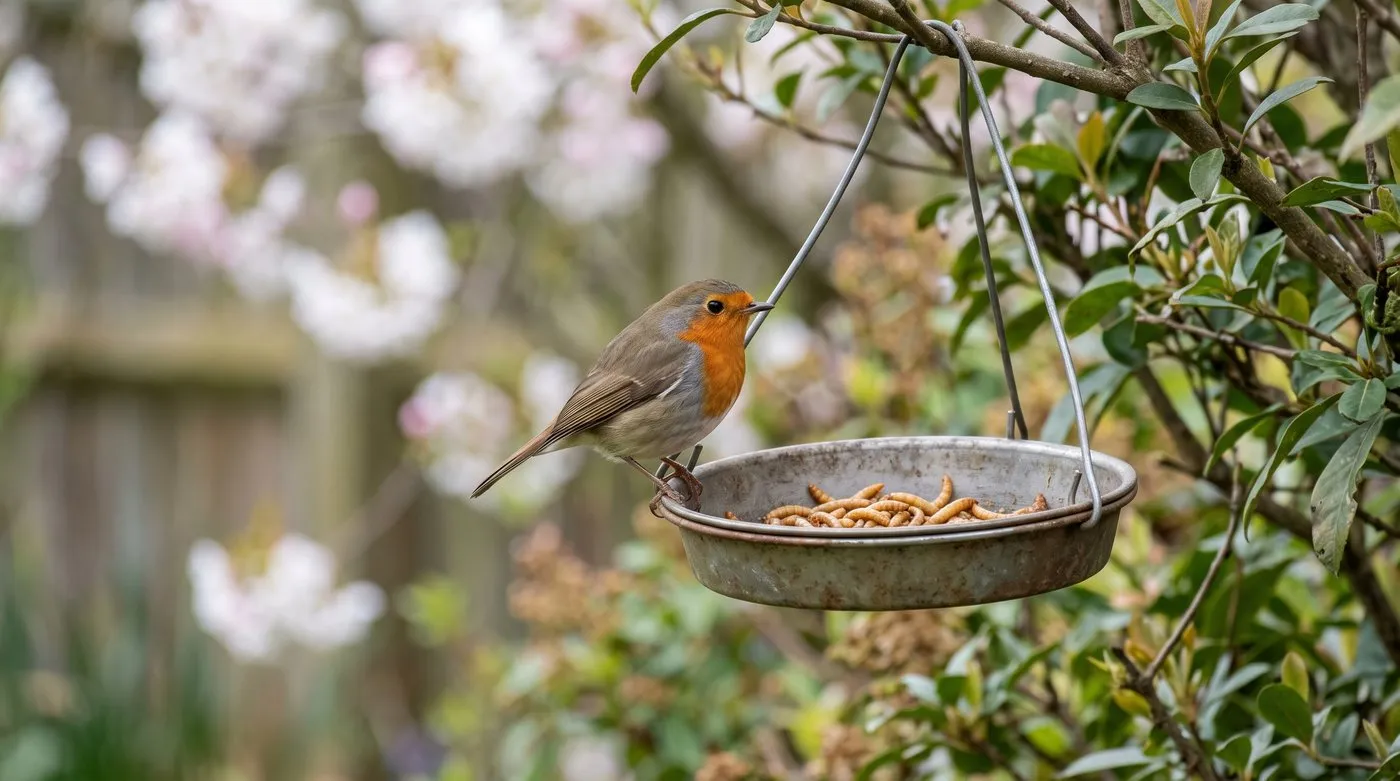
Soaked mealworms are soft enough for parents to carry to the nest. Keep loose peanuts and bread away in spring, as chicks can choke on them.
What is the 30 April cut-off for seed?
It’s the last day to fill seed and peanut feeders until 1 November. Plan ahead so you’re not left with a big sack in May. Keep leftover seed in a cool, dry, rodent-proof bin and check it for mould before using it again. Peanuts are prone to a mould toxin, so buy them fresh and in amounts you’ll use. Throw away anything damp, clumpy or musty.
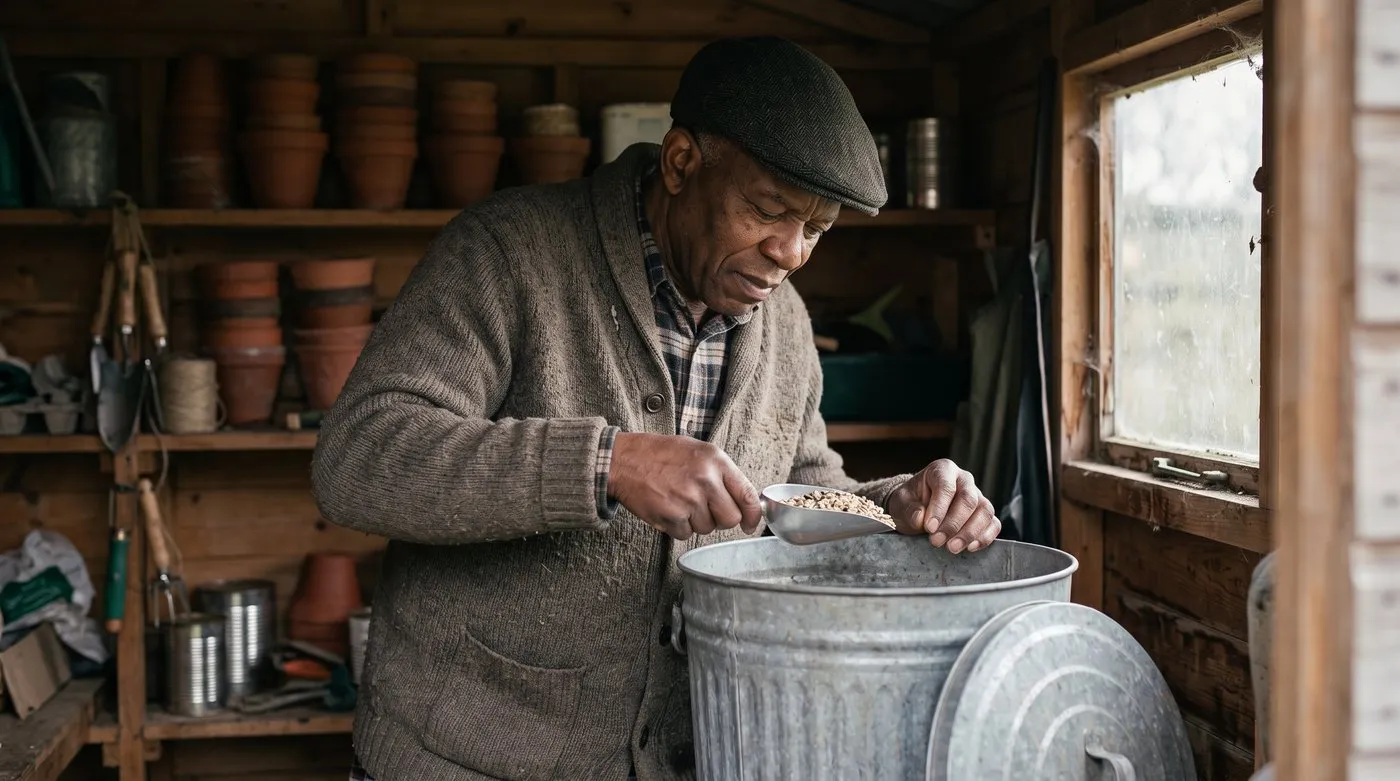
Store leftover seed somewhere cool, dry and rodent-proof over summer. Bin anything damp, clumpy or musty rather than putting it out in November.
Summer feeding: May to August
From May, switch to small amounts of mealworms and suet, plus water and plants that provide wild food.
May
The first fledglings appear, following their parents round the garden. Put out a small daily handful of soaked mealworms and clear any leftovers by dusk.
Swallows and house martins arrive. They catch insects on the wing, and a wildlife pond is a great insect factory for them.
June
Blackbirds, song thrushes and robins often raise second broods. Keep the mealworms small. If you offer fat, choose heat-resistant suet and bin anything soft or smelly.
Spotted flycatchers dart out from a perch to catch insects and pop back again. Flowers that draw insects help them, and our list of bee-friendly plants is a good start.
July: moulting begins
Most adult birds moult after breeding, growing new feathers over several weeks. It takes a lot out of them, and they go quiet and hide while their wing feathers regrow.
Good July foods:
- Soaked or live mealworms, in small amounts
- Heat-resistant suet
- Windfall fruit, such as bruised apples and pears
Don’t worry if birds seem to vanish in July and August. They’re tucked away in thick cover. A cottage garden with dense mixed planting gives them somewhere to hide.
August
Moulting carries on and this year’s young are now independent. This is when finch disease outbreaks are most likely, so keep portions small and feeders spotless. Seed heads left on sunflowers, teasels and knapweed give goldfinches wild food instead.
Swifts leave for Africa in early August, and swallows and house martins start gathering to go.
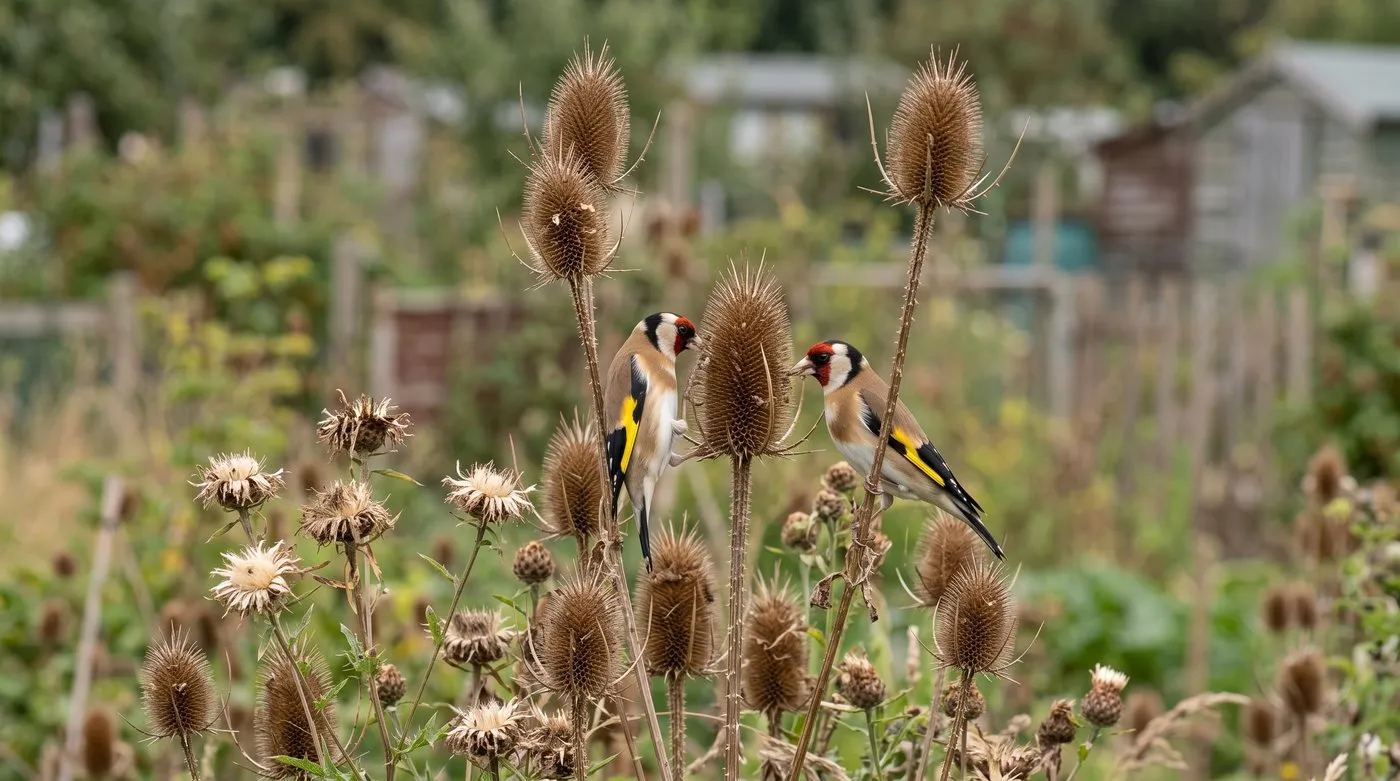
Leaving teasels, sunflowers and knapweed to seed gives goldfinches wild food while seed feeders are paused for summer.
Autumn feeding: September to November
Summer visitors leave, winter visitors arrive and garden birds start building up their reserves.
September
The moult finishes and birds start feeding properly again. Berries, seeds and windfalls are everywhere. Stick to small amounts of suet and mealworms, as seeds and peanuts stay paused until November.
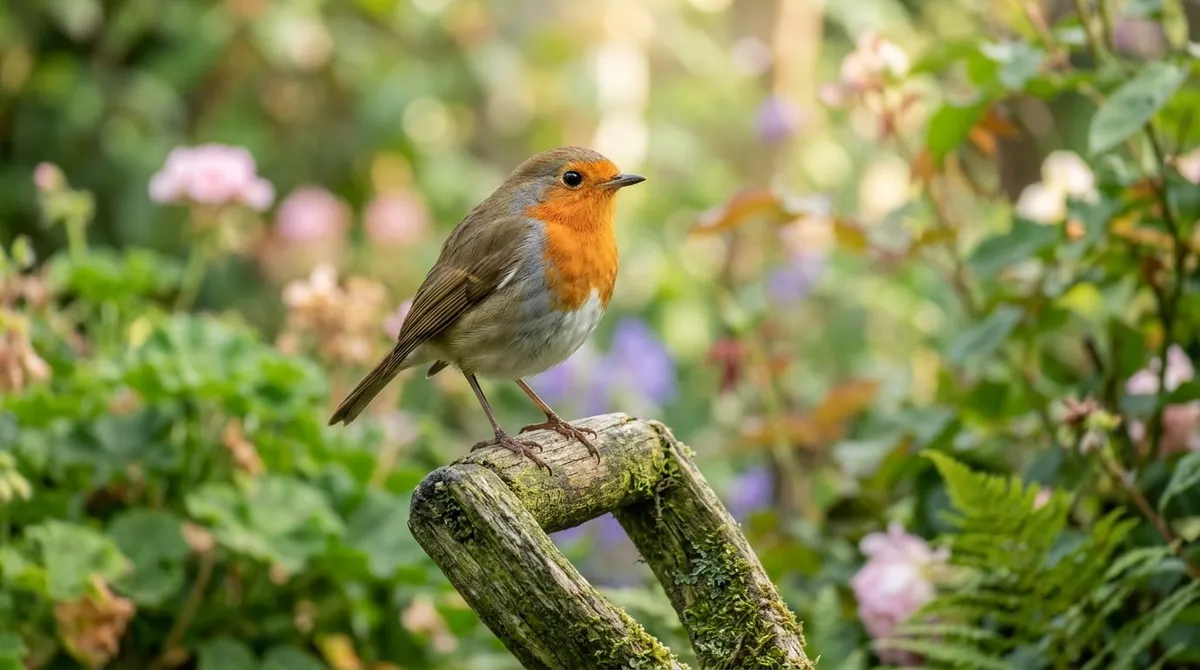
Robins get louder and easier to spot, and both males and females hold their own winter patches. Our guide to attracting robins covers food and shelter for them.
October
Fieldfares and redwings arrive from Scandinavia. They strip the hedgerows first, then come into gardens. Windfall apples left on the lawn will tempt them. Berrying shrubs help all autumn birds, and our plants for shade guide includes several for darker corners.
Goldcrests and long-tailed tits travel round in little mixed flocks and love suet.
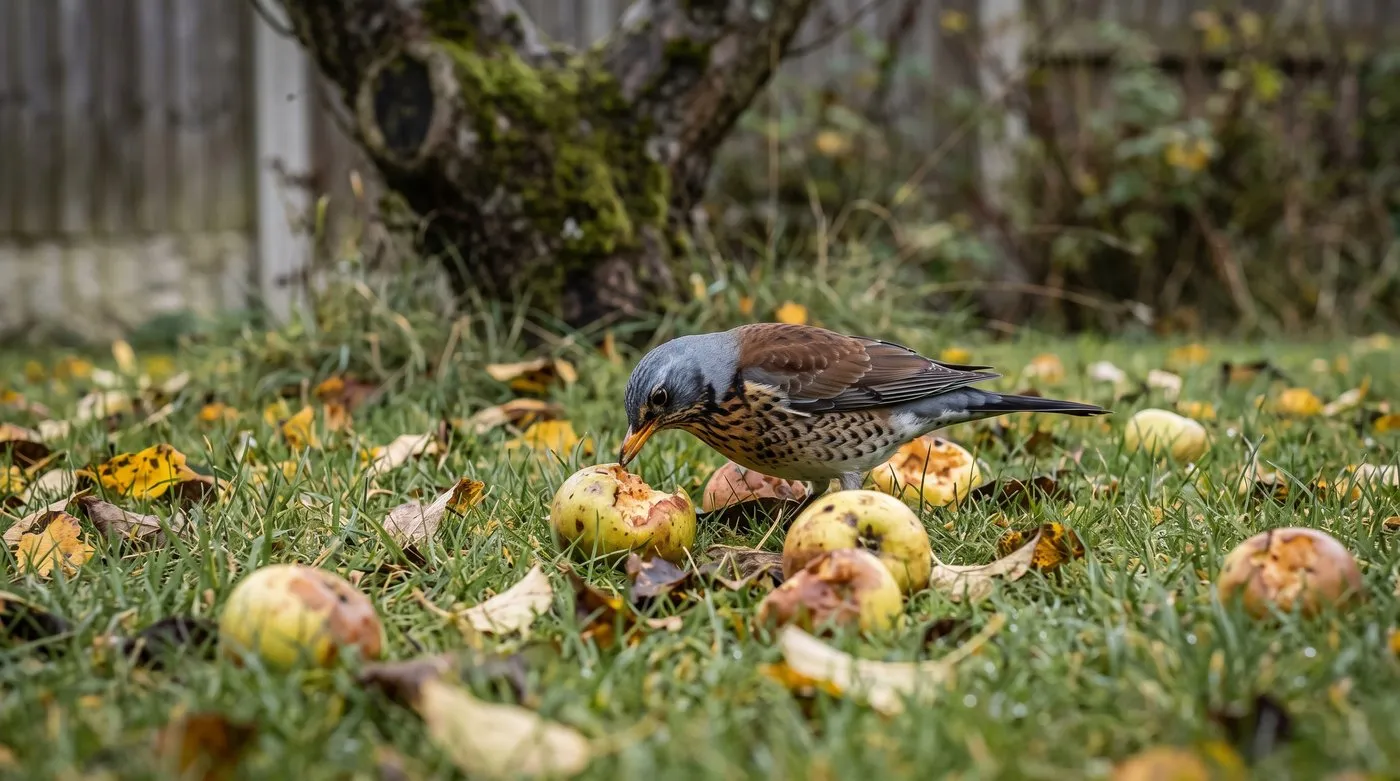
Leave a few bruised apples on the lawn in autumn. Fieldfares and redwings arriving from Scandinavia will soon find them.
November
From 1 November, seeds and peanuts can go back out. Start with small amounts and build up as birds find them, so food is eaten within a day or two.
| Bird | Comes or goes | What they eat |
|---|---|---|
| Fieldfare | Arrives October from Scandinavia | Berries, windfall fruit, worms |
| Redwing | Arrives October from Scandinavia | Berries, windfall fruit |
| Brambling | Arrives October from northern Europe | Beech nuts, seeds, sunflower hearts |
| Siskin | More appear from autumn | Nyjer seed, sunflower hearts |
| Waxwing | Arrives in some years only | Berries, especially rowan and cotoneaster |
| Swallow | Leaves September for Africa | Insects only, not feeder birds |
| House martin | Leaves September to October | Insects only, not feeder birds |
| Swift | Leaves August for Africa | Insects only, not feeder birds |
Winter feeding: December to February
Winter is when your feeders do the most good. Tiny birds like wrens, goldcrests and long-tailed tits use up their reserves on long, cold nights and need to refuel fast at first light.
December
The short days leave little time to feed, so put food out early. High-energy food helps most: fat balls, suet, sunflower hearts and peanuts in a mesh feeder.

Blue tits and great tits on hanging fat ball feeders. Hanging feeders are safer than flat surfaces.
Blackbirds, dunnocks and wrens hunt for food under hedges and shrubs. Leave the fallen leaves there for them to rummage in. A low-maintenance garden with evergreen shrubs gives both shelter and foraging space.
January
The coldest month, and the RSPB Big Garden Birdwatch takes place late in the month. Feed early, and top up in the early afternoon if the food’s gone, so birds can fill up before bedtime.
Wrens huddle together in nest boxes and thick ivy on freezing nights. Leave nest boxes up all year, as they double as winter bedrooms. Climbing plants like ivy give extra roosting cover.
February
The days are getting longer and tits start singing on mild days. Keep up full winter feeding. The berries are gone and insects aren’t out yet, so feeders really matter.
Song thrushes and blackbirds may start nesting in late February if it’s mild. Check for nests before cutting hedges, as all active wild bird nests are protected by law.
Month-by-month feeding summary
| Month | What to feed | What’s happening | Tips |
|---|---|---|---|
| January | Fat balls, suet, sunflower hearts, seed, peanuts | Big Garden Birdwatch, coldest month | Feed early, top up if empty |
| February | Fat balls, suet, seed, peanuts, mealworms | Early nests, tits singing | Wild food is scarce |
| March | Seed, sunflower hearts, mealworms, suet | Pairing up, early nests | Fieldfares still about |
| April | Seed, soaked mealworms, suet | Breeding, migrants arrive | No loose peanuts or bread |
| May | Small amounts of soaked mealworms, suet | First fledglings | Seeds and peanuts paused |
| June | Small amounts of mealworms, suet | Second broods | Heat-resistant suet only |
| July | Small amounts of mealworms, suet, fruit | Moult begins, birds hide | Keep portions small |
| August | Small amounts of mealworms, suet | Moult continues, swifts leave | Highest disease risk |
| September | Small amounts of mealworms, suet | Moult ends | Plenty of wild food |
| October | Small amounts of suet, windfall fruit | Fieldfares and redwings arrive | Leave windfall apples |
| November | Full range back from 1 November | Winter flocks gather | Restart seed in small amounts |
| December | Fat balls, suet, sunflower hearts, peanuts | Shortest days | Feed early |
Feeder hygiene and disease prevention
Dirty feeders spread disease, so clean them at least once a week. Finch trichomonosis is the big worry, but salmonella and bird pox turn up at feeders too.
Your weekly routine:
- Wash feeders and bird baths in hot soapy water
- Disinfect with a wildlife-safe disinfectant or a 5% bleach solution, then rinse well
- Let everything dry before refilling
- Sweep up old food and droppings underneath
- Move feeders to a new spot, away from where birds roost
- Wear rubber gloves and wash your hands afterwards
Only put out what birds will eat in a day or two. Seed and peanuts should go within a day or two, suet within a week, and leftover mealworms should be cleared by dusk.
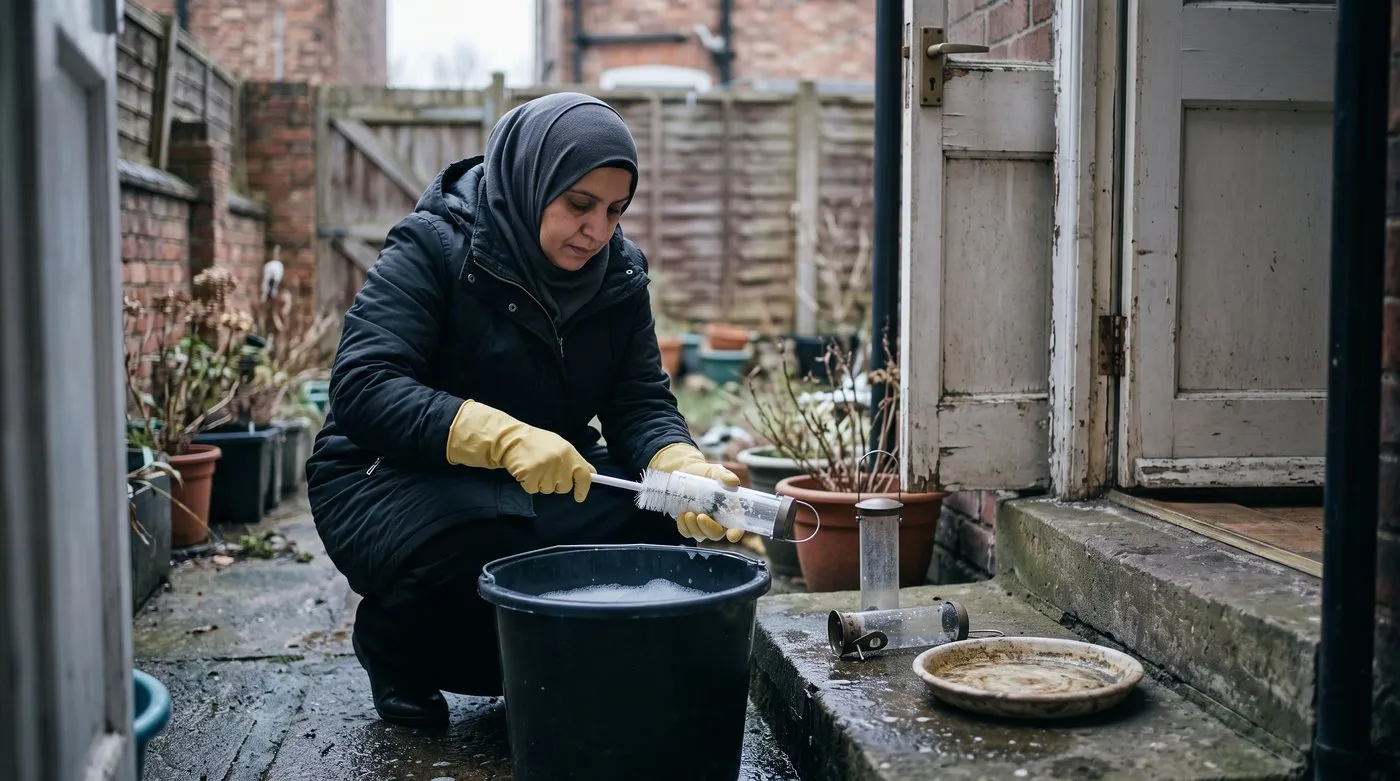
A weekly scrub in hot soapy water, a rinse and a full dry before refilling is the best defence against finch disease.
Should you use a bird table?
No, the advice now is to avoid them. Flat feeders spread disease more easily than hanging ones. That includes bird tables, ground trays, window feeders and hanging feeders with trays. Sick birds often bring food back up, and on a flat surface it mixes with fresh food and droppings. If you have a bird table, retire it or use it only as a stand for a hanging feeder. For blackbirds and dunnocks, leave windfall fruit on the lawn and leaves under shrubs instead.
What should you do if you see sick birds?
Stop feeding straight away, and keep it stopped for at least two weeks after the last sick bird. Sick finches look fluffed up and sleepy, with wet or matted feathers round the beak. Empty and clean all feeders and bird baths, and leave the baths empty until no more sick birds appear. Only restart when the signs have gone, and stop again if they come back. Report sick or dead birds to Garden Wildlife Health, which tracks outbreaks across the country.
What should you not feed garden birds?
Skip salty food, mouldy food, mesh bags, loose peanuts in spring and summer, and cooked scraps. Here’s why:
- Salty food, like salted peanuts and crisps, is bad for birds
- Mouldy or stale food, especially peanuts, can carry a harmful mould toxin
- Mesh bags on peanuts or fat balls can trap feet and catch woodpeckers’ tongues
- Bread and dry, hard food in spring and summer can choke chicks
- Cooked scraps draw in rats
Always take fat balls out of their nets, even if they’re sold netted. A bird with a trapped foot can’t free itself.
Making your own bird food
Homemade food is lovely in winter, when it stays firm and fresh.
Winter fat cake recipe
Melt lard or beef suet. Stir in sunflower hearts, oats and dried fruit, using about one part fat to two parts dry mix. Pour into yoghurt pots and chill until set. Hang in a wire cage feeder. Only use homemade fat cakes from November to April, as they spoil fast in warm weather.
Seed mix for tube feeders
Mix sunflower hearts with a little flaked maize and peanut granules for winter. Tits, finches, sparrows and nuthatches all love it. Avoid cheap mixes padded out with wheat, barley and split peas, which most garden birds leave.
Summer mealworm portion
Soak dried mealworms in warm water first. Put a small handful in a hanging dish for robins, blackbirds and dunnocks, and clear what’s left by dusk. Keep it small: it’s a treat, not a busy café.
Making a feeding area hedgehogs like too
The ground-level spots that help dunnocks, robins and thrushes help other wildlife too. A hedgehog-friendly garden has lots in common with a good bird garden. Leave leaf litter under hedges and put out a shallow dish of water at ground level. A compost heap fills up with the bugs that both birds and hedgehogs eat, and our composting guide shows how to start one.
Now you know what to feed and when, our guide to attracting birds to your garden is the next step.
Frequently asked questions
What should I feed birds in winter UK?
From November to April, put out the full range. Sunflower hearts, good seed mixes, nyjer, peanuts in a mesh feeder, fat balls and suet all help birds through cold nights. Put food out early in the morning, and only as much as they’ll eat in a day or two.
Can I feed birds in summer?
Yes, but only a little. Pause seeds and peanuts from 1 May to 31 October, as the RSPB and BTO now advise, because a finch disease spreads most then. Small amounts of mealworms, suet or fat are fine. Soak dried mealworms first during the nesting season.
How often should I clean bird feeders?
At least once a week. Wash feeders and bird baths in hot soapy water, then disinfect with a wildlife-safe disinfectant or a 5% bleach solution. Rinse well and let them dry before refilling. Clear up old food underneath and move feeders to a new spot now and then.
Do birds need water as well as food?
Yes, they need water for drinking and bathing all year. A pond with a shallow edge is ideal. If you use a bird bath, change the water daily with tap water and clean it weekly. In a freeze, melt the ice with warm water, never salt or antifreeze.
Can I feed birds bread?
Best not. Bread fills birds up without giving them much goodness. In spring and summer, adults may carry it to their chicks, who can choke on dry, hard food. Sunflower hearts in winter and soaked mealworms in summer are much better.
Are fat balls safe for birds in summer?
Small amounts are fine, but fat goes soft and spoils in the heat. Choose heat-resistant suet in summer, as homemade fat balls go off fastest. Always take fat balls out of their mesh bags, and throw away any fat that turns soft, smelly or mouldy.
Why have birds stopped visiting my feeders?
Usually there’s plenty of wild food, or they’re moulting. In late summer many birds hide in thick cover while they grow new feathers. In autumn they feast on seeds and berries. A sparrowhawk nearby or dirty feeders can also put them off, so clean up and give it time.
How do I stop squirrels eating bird food?
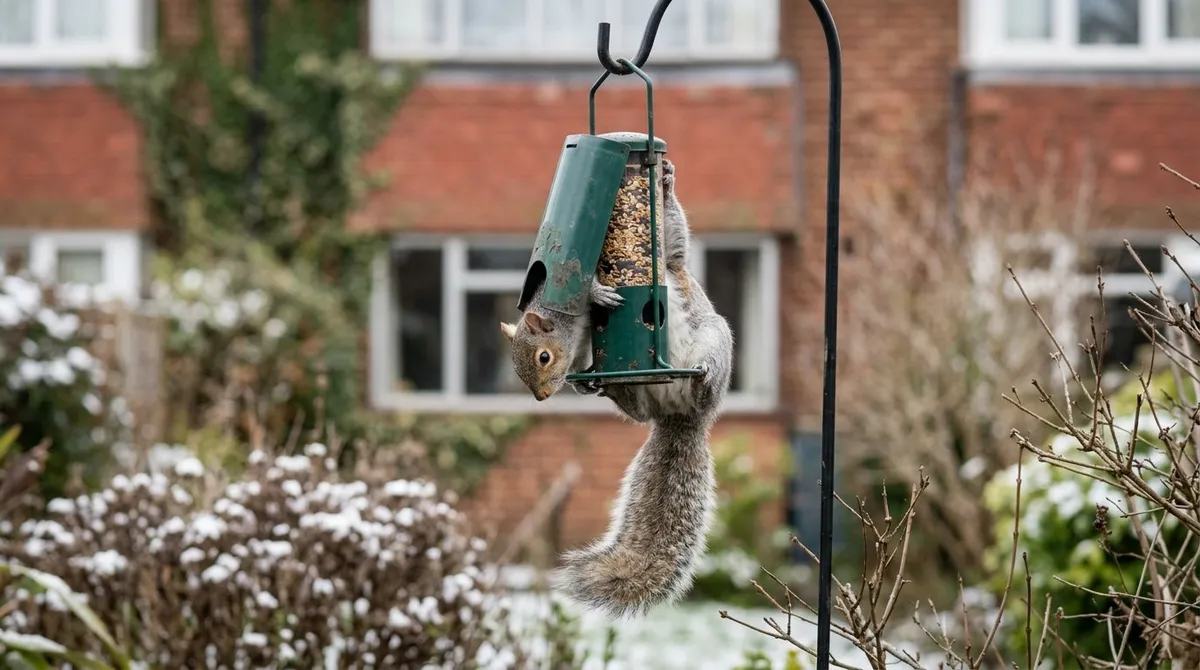
Use a squirrel-proof feeder or a pole with a baffle. Caged feeders and ones with weight-operated shutters both work. Keep feeders well away from fences, branches and roofs squirrels can leap from. Sweep up spilled food so you don’t draw in squirrels and rats.
Our team produces practical UK gardening guidance from source research, contributor records and established horticultural practice. Editorial standards are overseen by Matt W.