
Key takeaways
- Lavender, rosemary and thyme love sun and soil that drains well
- Silver, grey, waxy or fleshy leaves usually mean a plant copes with drought
- Water new plants through their first summer, then most can fend for themselves
- Ornamental grasses send roots deep to find water
- Wet winter roots kill more of these plants than dry summers do
Drier summers and hosepipe bans have lots of UK gardeners looking for plants that don’t need a daily drink. A dry garden doesn’t have to be brown and bare. Pick the right plants and you’ll have colour and flowers while the lawn next door turns to straw.
For an unusual tender plant for a sunny pot, see our guide to growing kangaroo paw.
How plants survive drought
A quick look at the leaves tells you a lot about how well a plant copes with dry weather.
Silver or grey leaves reflect the sun and lose less water. Lavender, artemisia and lamb’s ears are good examples, and so is the aromatic curry plant. Silver leaves are nearly always a good sign.
Waxy or leathery leaves have a coating that holds water in. Think rosemary, bay and many evergreen shrubs.
Fleshy leaves store water like a little tank. Sedum, houseleeks and ice plants all do this. Lots of succulents are happy on a windowsill, see how to care for succulents indoors. Plenty cope outside too, as our guide to succulents outdoors explains, as long as the soil drains really well in winter.
Deep roots reach water that shallow-rooted plants can’t. Ornamental grasses and prairie plants are great at this.
Thin or feathery leaves have less surface to lose water from. Lavender, rosemary and fennel are all like this.
Best drought-tolerant perennials
These settle in within a season, then need very little watering.
| Plant | Height | Flowers | Soil | Why grow it |
|---|---|---|---|---|
| Lavender | 40-80cm | Jun-Aug, purple | Free-draining | Scented, bees love it |
| Echinacea purpurea | 60-100cm | Jul-Sep, pink or white | Free-draining | Flowers for ages |
| Sedum spectabile | 30-50cm | Aug-Oct, pink | Any, even poor | Great for pollinators |
| Verbena bonariensis | 120-180cm | Jun-Oct, purple | Free-draining | Tall and airy, seeds itself |
| Sea holly (Eryngium) | 40-80cm | Jun-Aug, blue-silver | Poor, dry | Spiky and striking |
| Agapanthus | 60-100cm | Jul-Aug, blue or white | Free-draining | Big, showy flower heads |
| Catmint (Nepeta) | 30-60cm | May-Sep, blue | Free-draining | Easy, long season |
| Russian sage (Perovskia) | 80-120cm | Aug-Oct, blue | Poor, dry | Silver leaves, late flowers |
 A dry border in full summer flower. Lavender, echinacea and verbena manage without watering once settled.
Best drought-tolerant shrubs
Shrubs give a dry garden its shape and something to look at all year.
Rosemary makes a good-sized evergreen bush and needs no watering once settled. Early bees love the blue spring flowers. Give it full sun and soil that drains fast.
Rock rose (Cistus) has papery white, pink or purple flowers from May to July. It’s at home in the driest spots. It hates being moved, so plant it small and leave it be.
Ceanothus covers walls and fences in blue flowers in late spring. It loves a sunny wall. Go easy with the pruning, as it won’t regrow from old wood.
Hebe gives evergreen shape and spikes of purple, white or pink flowers. It copes well with dry and seaside gardens, and comes in sizes from low mounds to tall shrubs.
Buddleja grows happily in poor, dry soil and is a butterfly magnet in summer. Cut it hard back in March to keep it tidy. It seeds itself freely.
Ornamental grasses for dry gardens
Grasses are born survivors. Their deep roots find water far below the surface, and their narrow leaves lose very little.
Stipa tenuissima (Mexican feather grass): fine, blonde leaves that sway in the lightest breeze. About 40-60cm tall. Seeds itself around. Probably the most useful grass for a dry garden.
Stipa gigantea (golden oats): tall golden flower stems over a low evergreen clump. A real showstopper.
Miscanthus sinensis: a tall grass with silvery plumes in autumn. Great as a screen or a centrepiece.
Festuca glauca: neat blue-grey tufts about 20-30cm tall. Lovely along an edge or in a gravel garden.
 Sedum and grasses are happy in poor, dry soil, and the late flowers are a treat for bees.
Ground cover for dry areas
Bare soil dries out fast. Low, spreading plants keep moisture in, look pretty and smother weeds. Our guide to lawn alternatives has more ideas.
Creeping thyme: scented, flowery and tough enough to walk on. Lovely between paving stones.
Sedum acre: tiny fleshy leaves that creep into cracks in walls and paving. Yellow flowers in summer.
Geranium macrorrhizum: copes with dry soil and shade. Pink or white flowers in May and June, and scented leaves. Our geranium growing guide covers the whole family.
Bugle (Ajuga reptans): bronze or purple leaves with blue spring flowers. Spreads into a weed-smothering carpet and copes with dry shade.
Planting and care
When to plant
Autumn (September to November) is usually best. The soil is still warm and the rain helps roots settle in before their first summer.
On heavy, wet soil, plant lavender and other grey-leaved Mediterranean plants in spring instead, as they can rot in cold, soggy ground. Spring-planted plants need more watering through their first summer.
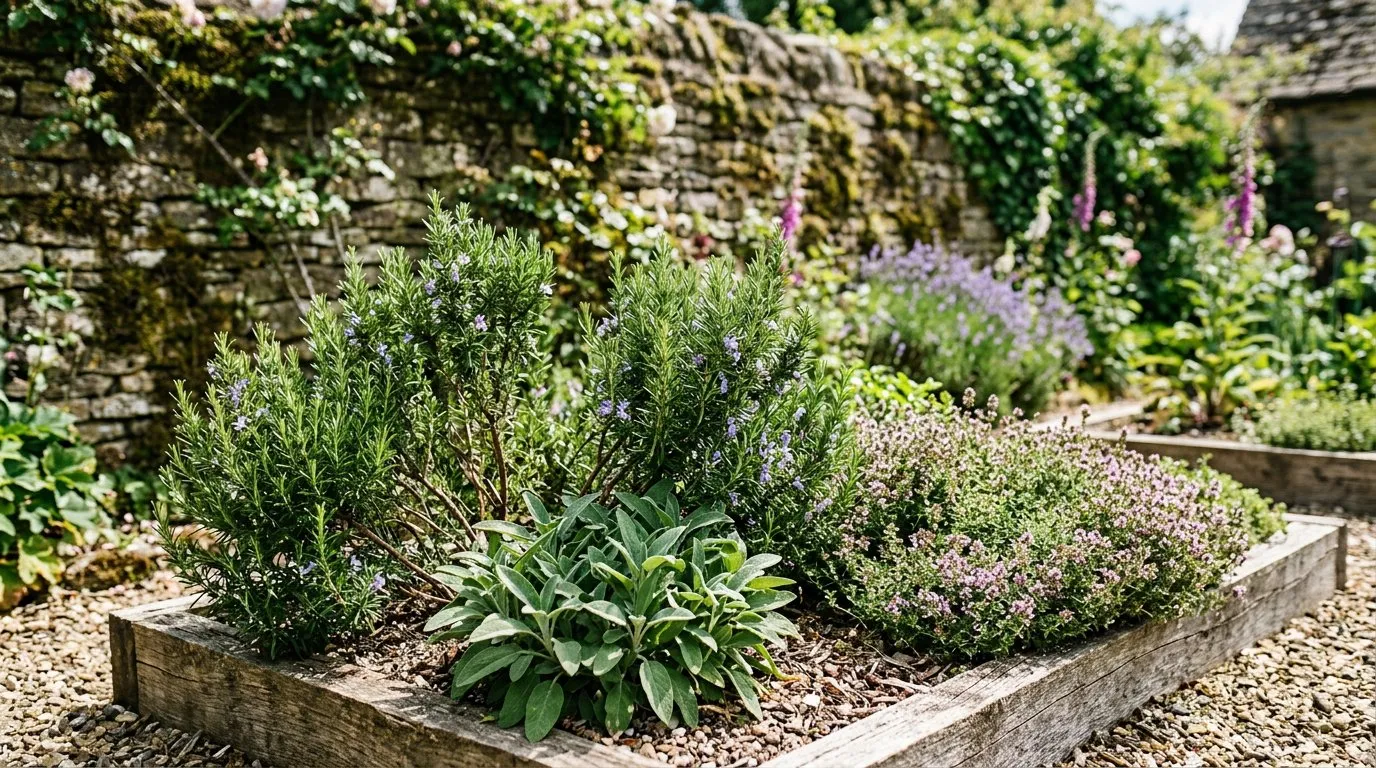 Rosemary, thyme and sage in a raised gravel bed. They like poor soil that drains fast.
Soil preparation
Good drainage matters most. On heavy clay soil, dig in plenty of grit. Don’t add rich compost for Mediterranean plants, as they like poor soil. If you’re on sandy soil, you’re already off to a flying start. See our guide to the best plants for sandy soil for more ideas.
The first-year exception
Even the toughest plants need help in their first summer. Water deeply once a week until the roots are settled. After that, they should only need a drink in a long, hot dry spell.
Tip: Too much water kills more of these plants than drought. Soggy roots in winter are the real enemy, so make sure the soil drains well, especially on clay.
Want to save even more water? Our guide to lawn alternatives and ground cover shows how to swap thirsty lawn for tough planting.
Related reading: for an even drier look, try a deep sand garden bed.
Frequently asked questions
What plants survive drought in the UK?
Lavender, rosemary, sedum, echinacea and thyme are great choices. Ornamental grasses and verbena bonariensis cope well too. As a rule, silver-leaved and Mediterranean plants handle dry spells once their roots are settled.
Do drought-tolerant plants need any water?
Yes, in their first summer. Water them deeply once a week while the roots settle in. After that most need little or no watering, apart from in a long, hot dry spell.
Can drought-tolerant plants grow in shade?
Most of them want sun. For dry shade, try male fern, epimedium, Geranium macrorrhizum, ivy or lesser periwinkle. These cope with both dry soil and low light. See our guide to shade plants for more.
What soil do drought-tolerant plants need?
Soil that drains well and never sits wet. Dig grit or gravel into heavy clay to help water drain away. Many of these plants like poor soil, and rich soil just makes them floppy with fewer flowers.
Are drought-tolerant plants low maintenance?
Yes, once they’re settled. They need less watering and feeding, and don’t mind a bit of neglect. Most just want a tidy-up in spring to clear old growth.
When should I plant drought-tolerant plants?
Autumn is usually best, from September to November. The soil is still warm and the rain helps roots settle before summer. On heavy, wet soil, plant lavender and other grey-leaved plants in spring instead.
Our team produces practical UK gardening guidance from source research, contributor records and established horticultural practice. Editorial standards are overseen by Matt W.


