
Key takeaways
- Sandy soil drains fast and holds few nutrients, so pick plants from dry, sunny places
- Lavender, rosemary, cistus, sea holly and thyme all do well with no soil improvement
- Silver birch, Scots pine and rowan are reliable trees for sandy ground
- Carrots, parsnips, potatoes and asparagus like loose, sandy soil
- Never add grit to sandy soil, as it already drains too fast
- Plant in autumn or spring and mulch with compost every year
The best plants for sandy soil are the ones that love dry, sunny ground: lavender, rosemary, cistus, sea holly, thyme and ornamental grasses. Sandy soil drains fast and warms up early in spring, which these plants adore. Fight it with plants that want damp, rich soil, and you’ll spend all summer with the hose.
Sandy soil is common in parts of East Anglia, the heaths of Surrey and Hampshire, Nottinghamshire and along the coast. It’s light and easy to dig. Below you’ll find the plants that suit it, from shrubs and perennials to trees and veg.
How to tell if you have sandy soil
Pick up a handful of damp soil and squeeze it. Sandy soil feels gritty and falls apart when you open your hand. Clay soil feels sticky and holds its shape.
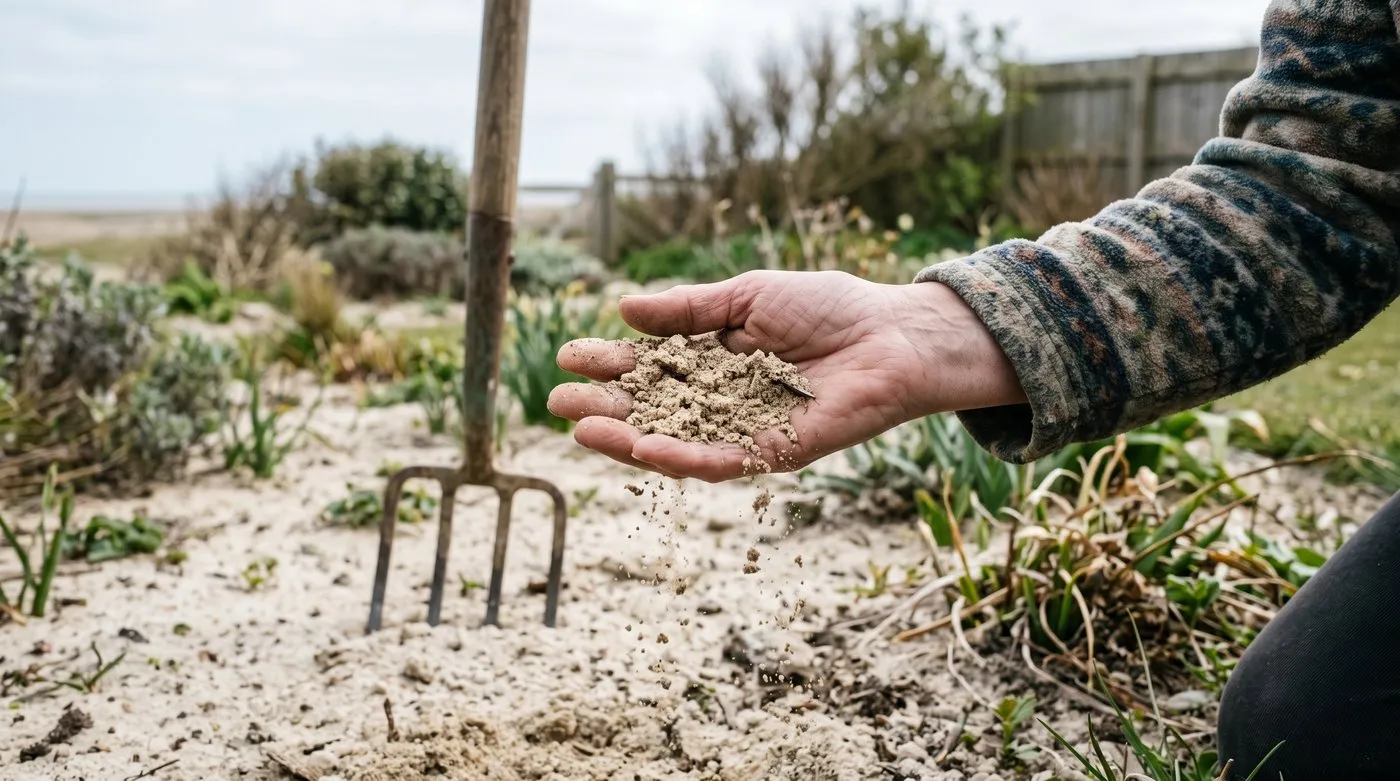
Squeeze a damp handful. Sandy soil feels gritty and falls apart, while clay holds together like dough.
Sandy soil has three traits that matter when choosing plants:
- It drains fast, so it dries out quickly in summer.
- It’s hungry, because rain washes nutrients away.
- It warms up early, so plants get growing sooner in spring.
That makes it perfect for plants from dry, sunny places. If you’re not sure which soil you have, the clay guide is a good contrast: our list of plants for clay soil shows the opposite end of the scale.
Best shrubs for sandy soil
Mediterranean shrubs are made for sandy soil. They prefer lean ground, so don’t add compost to the planting hole.
Lavender loves sun and sharp drainage. Rich soil makes it soft and floppy. Trim it after flowering in late summer, but don’t cut into bare, old wood. Our lavender growing guide covers the best varieties.
Rosemary lasts far longer in sandy soil than in wet clay, where its roots can rot in winter. It’s evergreen and handy in the kitchen.
Cistus (rock rose) has papery flowers in white, pink or cerise in early summer. Each flower lasts a day, but new ones keep coming for weeks. It hates being moved, so plant it where it’s to stay. See our cistus guide for the hardiest kinds.
Heather (Calluna vulgaris) is a natural heathland plant but needs acid soil. Test your soil before planting it. Buddleja and hebe also cope well with poor, sandy ground.

Lavender, lamb’s ears and feather grass all love lean, quick-draining soil and full sun.
Best perennials and grasses for sandy soil
These perennials flower for months in dry, sunny borders and need little fuss.
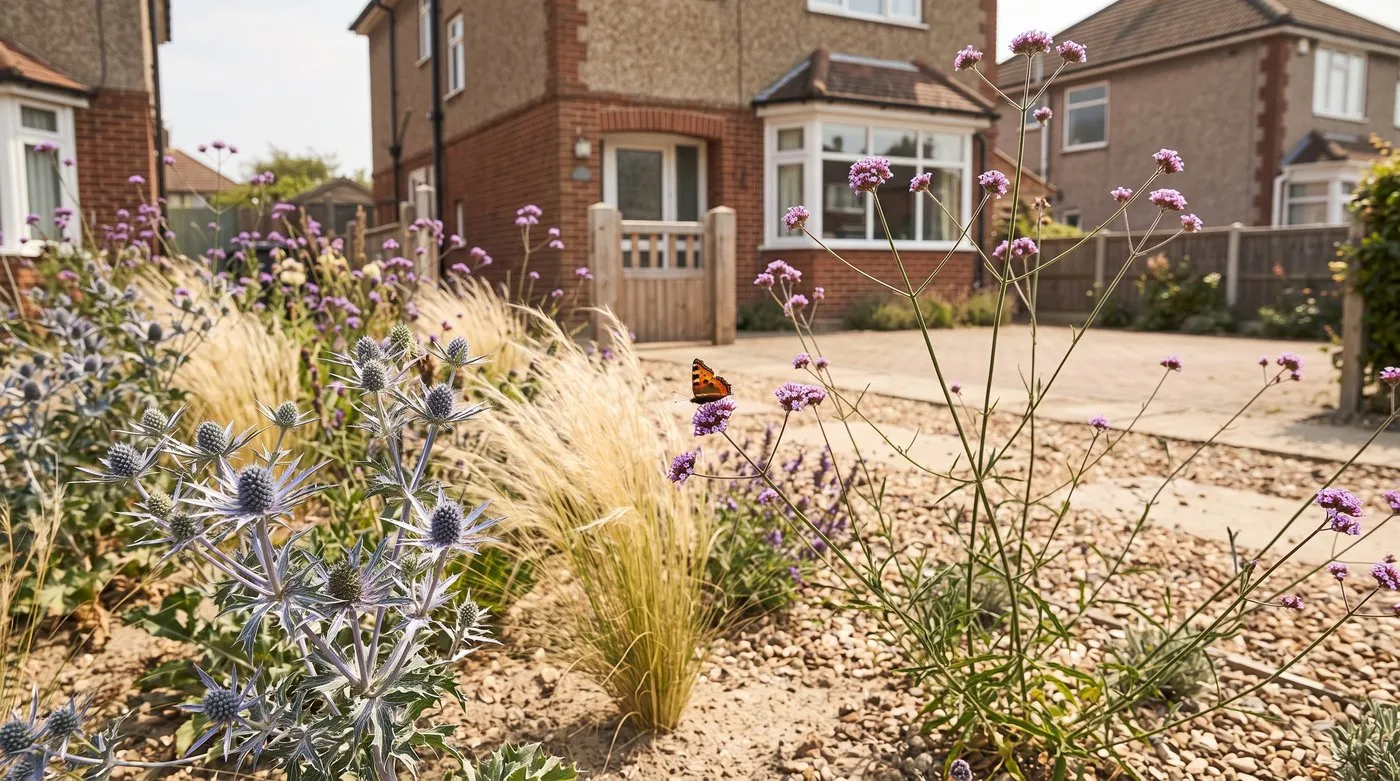
Sea holly, Verbena bonariensis and feather grass flower for months on dry, sandy ground.
Sea holly (Eryngium) has spiky, steel-blue flower heads in July and August that bees love. Rich soil makes it lush and floppy, so keep it lean. Our guide to growing sea holly covers the best types.
Verbena bonariensis grows tall and airy, with small purple flowers from June to October. Butterflies love it, and it self-seeds happily in sandy soil.
Russian sage (Perovskia) has silver stems and hazy blue flowers in late summer. Catmint (Nepeta) flowers for months and suits the front of a border.
Sedums and thyme are tough, low and great for bees. Artemisia adds silver foliage. Echinacea grows well too, as long as it gets sun.
For grasses, Stipa tenuissima gives soft, blonde movement and self-seeds into gravel. Festuca glauca forms neat blue-grey tufts at the front of a border.
Agapanthus likes sandy soil that never waterlogs. Deciduous types, such as the Headbourne hybrids, are hardier than the evergreen ones.
Plants for sandy soil at a glance
| Plant | Type | Height | Good to know |
|---|---|---|---|
| Lavender | Shrub | 40-80cm | Trim after flowering |
| Rosemary | Shrub | 60-150cm | Evergreen and edible |
| Cistus | Shrub | 50-120cm | Don’t move once planted |
| Sea holly | Perennial | 40-90cm | Keep the soil lean |
| Verbena bonariensis | Perennial | 1-1.8m | Self-seeds freely |
| Russian sage | Perennial | 80-120cm | Late summer flowers |
| Stipa tenuissima | Grass | 40-60cm | Self-seeds into gravel |
| Festuca glauca | Grass | 20-30cm | Neat edging |
| Thyme | Herb | 10-30cm | Great for bees |
| Heather (Calluna) | Shrub | 20-60cm | Acid soil only |
| Silver birch | Tree | Large | Light shade, white bark |
| Scots pine | Tree | Large | Evergreen, orange bark |
For whole planting schemes, our guides to Mediterranean garden planting and creating a gravel garden show how to put these plants together.
Best trees for sandy soil
Silver birch is the classic heathland tree. It grows well in quick-draining soil and casts light shade, so you can plant underneath it. The white bark looks good all year.
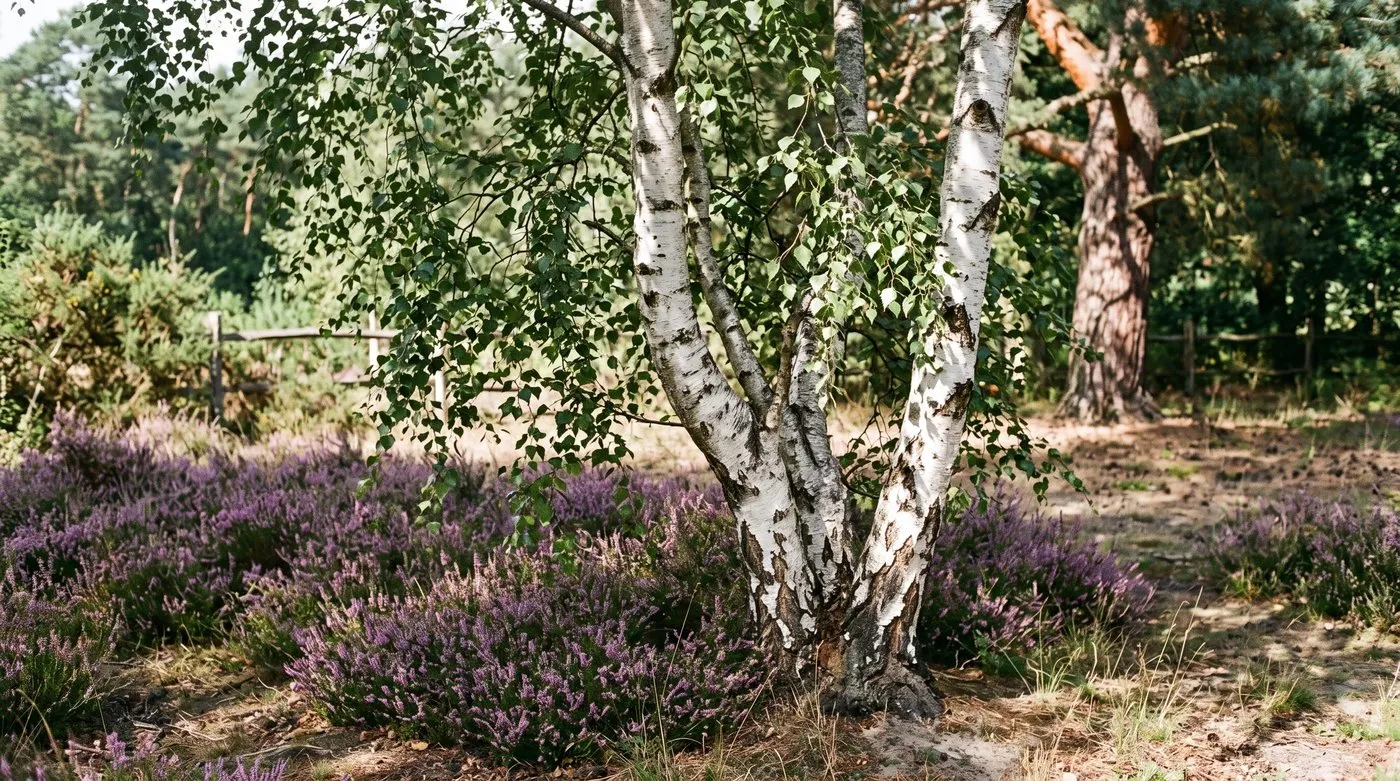
Silver birch casts light shade, so heather and other low plants can grow happily underneath.
Scots pine has blue-green needles and orange-red bark higher up the trunk. It’s a big tree, so it suits larger gardens.
Rowan is a smaller choice, with white spring flowers and red autumn berries for birds.
Plant bare-root trees between November and March. Water them well in dry spells for their first two summers, while their roots grow down to moister soil.
Vegetables that like sandy soil
Root vegetables love loose, sandy soil. Carrots, parsnips and beetroot grow long and straight with nothing to push against. Potatoes lift easily, and asparagus is happy in a sandy bed for years.
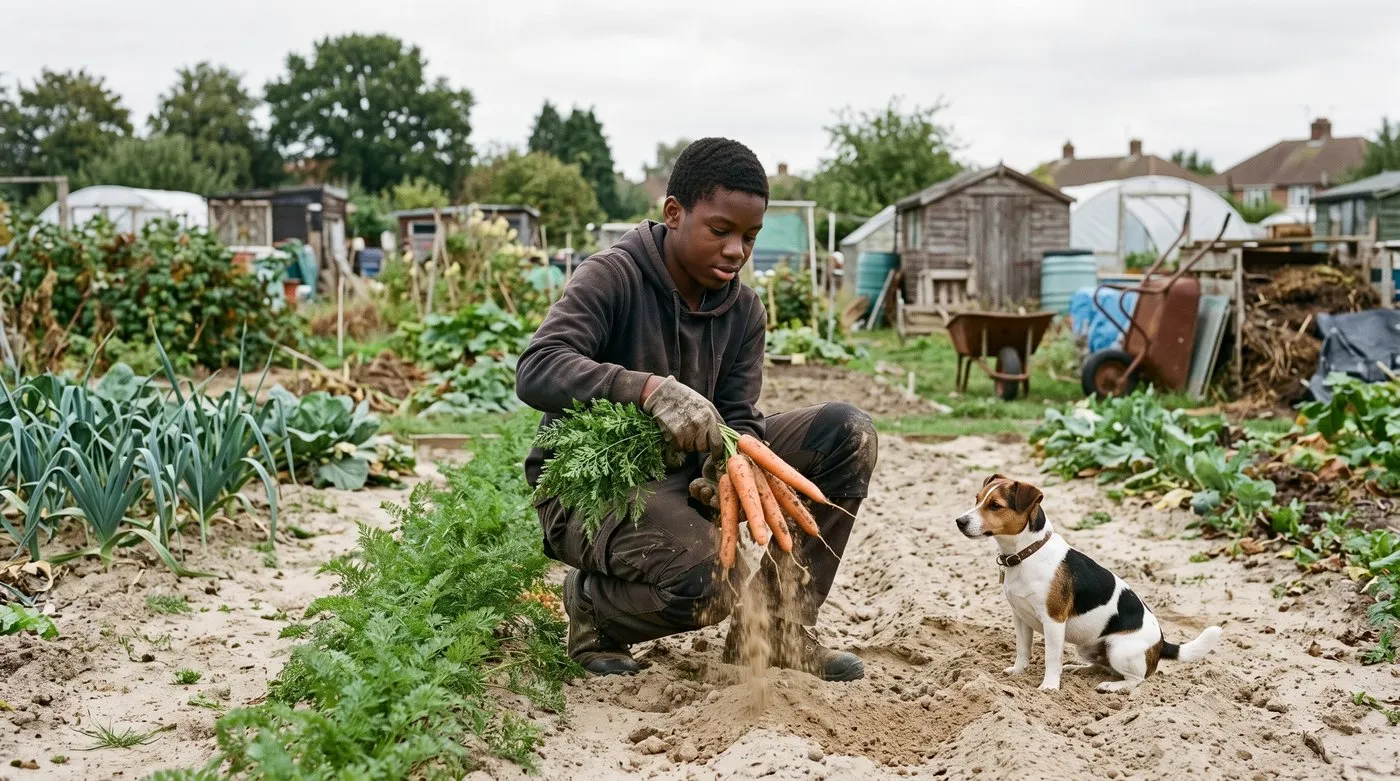
Carrots grow long and straight in sandy soil, and they pull out cleanly with hardly any soil attached.
Sandy soil warms early, so you can often sow a little sooner than on clay. Hungry, thirsty crops such as cabbages, courgettes and squash need plenty of compost dug in first and regular watering.
Helping plants settle into sandy soil
You don’t need to change sandy soil to grow the plants above. A little help makes a big difference, though.
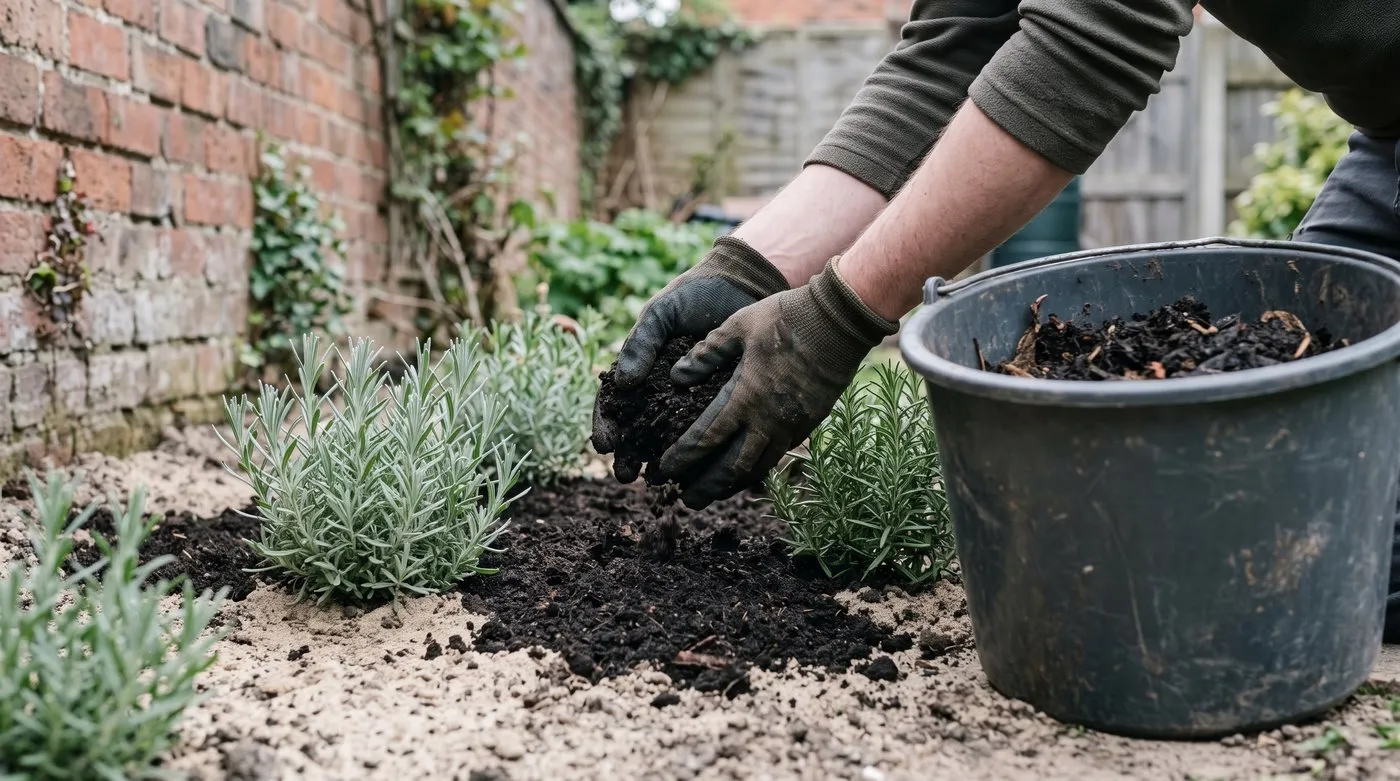
A thick layer of compost each spring holds moisture in sandy soil and slowly feeds it.
- Plant in autumn or spring. The soil is moist and new roots can grow before summer.
- Water new plants deeply once or twice a week through their first summer, rather than a little every day.
- Mulch every spring with 5-7cm of compost or well-rotted manure, kept a few centimetres away from stems. It holds moisture and slowly feeds the soil.
- Feed little and often. Nutrients wash out fast, so a slow-release feed in spring works better than one big dose.
For a wider range of plants, keep adding organic matter year after year. Our coastal gardening guide covers sandy gardens that also face salt and wind.
Month-by-month care for a sandy soil garden
| Month | What to do |
|---|---|
| January to February | Order bare-root trees and shrubs; plan new planting |
| March | Plant bare-root trees before buds open; divide grasses |
| April | Plant lavender, rosemary and cistus; mulch borders with compost |
| May | Plant agapanthus and Verbena bonariensis; sow carrots and parsnips |
| June to July | Water new plants deeply in dry spells |
| August | Trim lavender after flowering |
| September to October | Plant new perennials and shrubs; mulch again |
| November to December | Plant bare-root trees; leave grass and sea holly seedheads for birds |
Common mistakes on sandy soil
- Adding grit. Sandy soil already drains too fast. Grit helps clay, not sand.
- Planting moisture-lovers. Hostas, astilbes and rodgersias need damp, rich soil. In sand, they struggle however much you water.
- Planting in high summer. New plants dry out fast. Wait for autumn or spring, or water very often.
- A thin mulch. A sprinkle of compost dries out in days. Spread at least 5cm.
- Feeding before heavy rain. The feed washes straight through. Feed little and often instead.
Frequently asked questions
What plants grow best in sandy soil in the UK?
Lavender, rosemary, cistus and sea holly grow best in sandy soil. They come from dry, sunny places and like quick drainage. Verbena bonariensis, thyme, Stipa tenuissima, Russian sage and sedums do well too, with little or no soil improvement.
How do you improve sandy soil for planting?
Add plenty of organic matter every year. Spread a 5-7cm layer of garden compost or well-rotted manure over the surface each spring and autumn. Worms pull it in, helping the soil hold more water and food. Never add grit.
Why do plants fail in sandy soil?
Usually because they dry out or go hungry. Water drains away fast and takes nutrients with it. Moisture-lovers such as hostas and astilbes struggle however much you water them, so choose plants that like dry ground.
What vegetables grow well in sandy soil UK?
Root crops and asparagus do especially well. Carrots, parsnips, beetroot, radishes and potatoes grow easily in loose, sandy soil. Hungry, thirsty crops such as cabbages and courgettes need lots of compost added first.
Can I grow a lawn on sandy soil?
Yes, choose a seed mix rich in fine fescues. They cope with drought better than ryegrass. Feed lightly in spring and late summer, and water new lawns in dry spells for their first summer. Established fescue lawns recover well after dry weather.
What trees grow in sandy soil UK?
Silver birch, Scots pine and rowan all grow well in sandy soil. Birch and pine are natural heathland trees in the UK. Plant bare-root trees between November and March and water them through their first two summers.
Is sandy soil acidic or alkaline?
It can be either, so test it. Inland heathland sands are usually acid. Coastal sands with lots of crushed shell are often alkaline. A cheap pH test kit tells you which you have before you buy acid-lovers such as heather.
Now you know what to plant, read our guide on how to improve sandy soil to widen your choice even further, or browse the plants hub for more ideas.
Our team produces practical UK gardening guidance from source research, contributor records and established horticultural practice. Editorial standards are overseen by Matt W.


