
Key takeaways
- Prune apples, pears, wisteria, currants and gooseberries while they are dormant
- Never prune plums, cherries or damsons in winter, because of silver leaf disease
- Plant bare-root trees, shrubs, roses and hedging from November to March
- Fleece tender plants on frosty nights and wrap pots to protect roots
- Leave log piles and leaf litter for hibernating wildlife, and keep water ice-free
Winter gardening jobs in the UK are mostly about pruning, planting bare-root stock, protecting plants from frost and planning ahead. December to February is quieter than the rest of the year, but there’s plenty to do on dry, mild days. With the leaves gone, it’s also the best time to see the shape of your garden.
This checklist is sorted by area of the garden, with a month-by-month table at the end. For a tighter list for one month, see what to do in the garden in January. For what to sow and plant right now, try what to plant in December.
What to prune in winter
Winter is prime pruning time for many trees and shrubs. Without leaves, you can see every branch clearly.
Apples and pears. Prune between December and February while they’re dormant. Remove dead, damaged and diseased wood first, then branches that cross or rub. Thin crowded growth to let light and air into the centre. Don’t take off too much in one year, or the tree replies with a mass of leafy, upright shoots.
Wisteria. In January or February, cut the shoots you shortened in summer back to two or three buds. These short stubs carry next year’s flowers.
Colourful dogwood and willow. Cut stems back hard, to a few centimetres above the ground, in late winter or early spring. New shoots give the brightest colour next winter.
Gooseberries and currants. Prune while dormant. Open up the centre of the bush and shorten side shoots to a couple of buds.
Roses. Prune bush roses in late February or March, as buds begin to swell. Tie in climbing rose stems as near horizontal as you can, which gives more flowers. The guide on how to prune roses shows each cut.
What not to prune. Leave spring-flowering shrubs such as forsythia and flowering currant until after they flower, or you’ll cut off this year’s flowers. Never prune plums, cherries, damsons or apricots in winter. Silver leaf disease gets in through the cuts, so prune them in summer instead.

With the leaves gone, crossing and crowded branches are easy to spot. A sharp, clean cut just above a bud heals best.
Planting bare-root trees, shrubs and hedges
The bare-root season runs from November to March. Bare-root plants are dug from the field while dormant and sold without a pot. They’re usually cheaper than potted plants and settle in well.
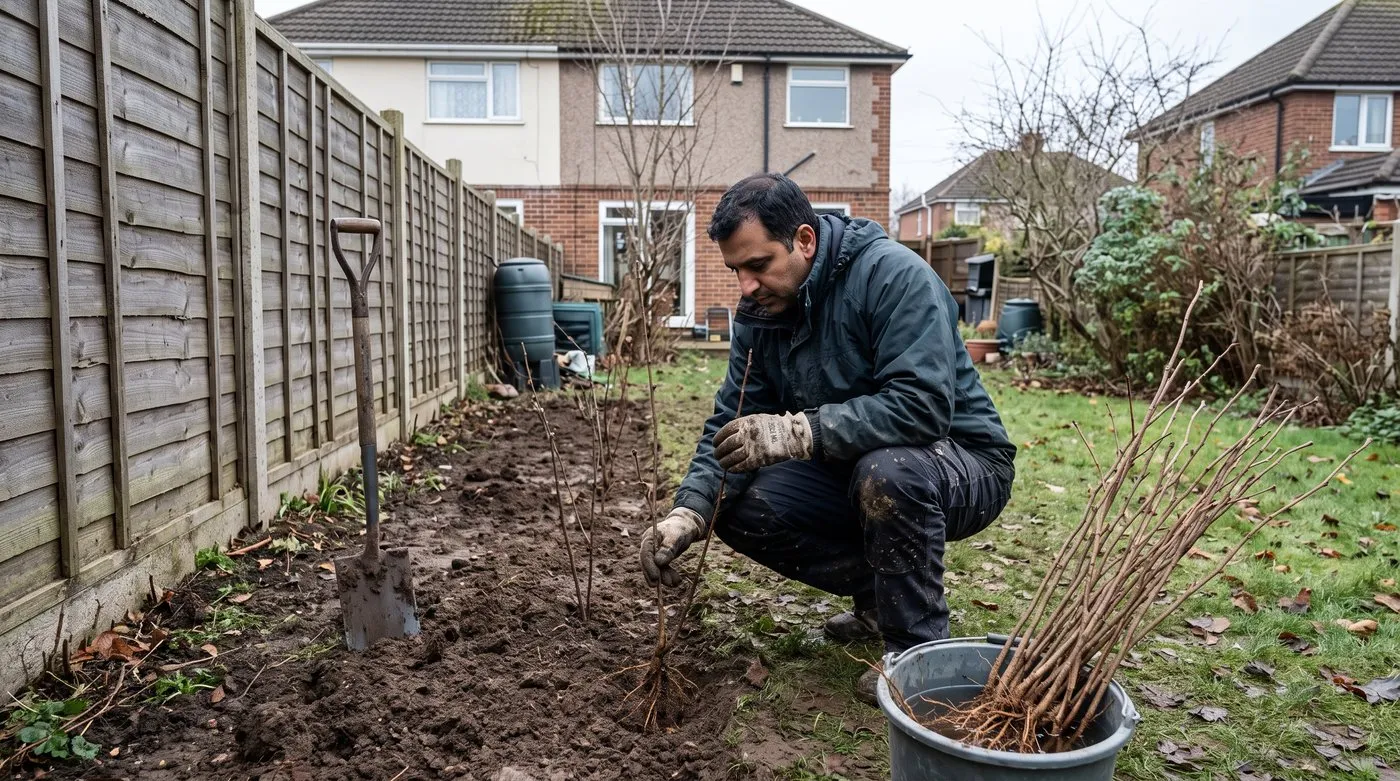
Bare-root hedging goes in from November to March. A double, staggered row thickens up much faster.
Plant on a day when the soil isn’t frozen, waterlogged or under snow. Soak the roots in a bucket of water for an hour or so first. Dig a hole wide enough to spread the roots out. Plant at the same depth the tree grew in the nursery, shown by the dark soil mark on the stem. Backfill, firm gently, water well and stake trees. The bare-root tree planting guide goes step by step.
Winter is also the best time for a new hedge. Hawthorn, blackthorn, beech, hornbeam and hazel are all sold bare-root. Plant them in a double, staggered row for a thick hedge sooner.
Deciduous shrubs can be moved while they’re dormant too. Water the day before, dig up as much root as you can and replant straight away at the same depth.
Protecting plants from frost
Most established trees, shrubs and hardy perennials need no help in a UK winter. Focus on:
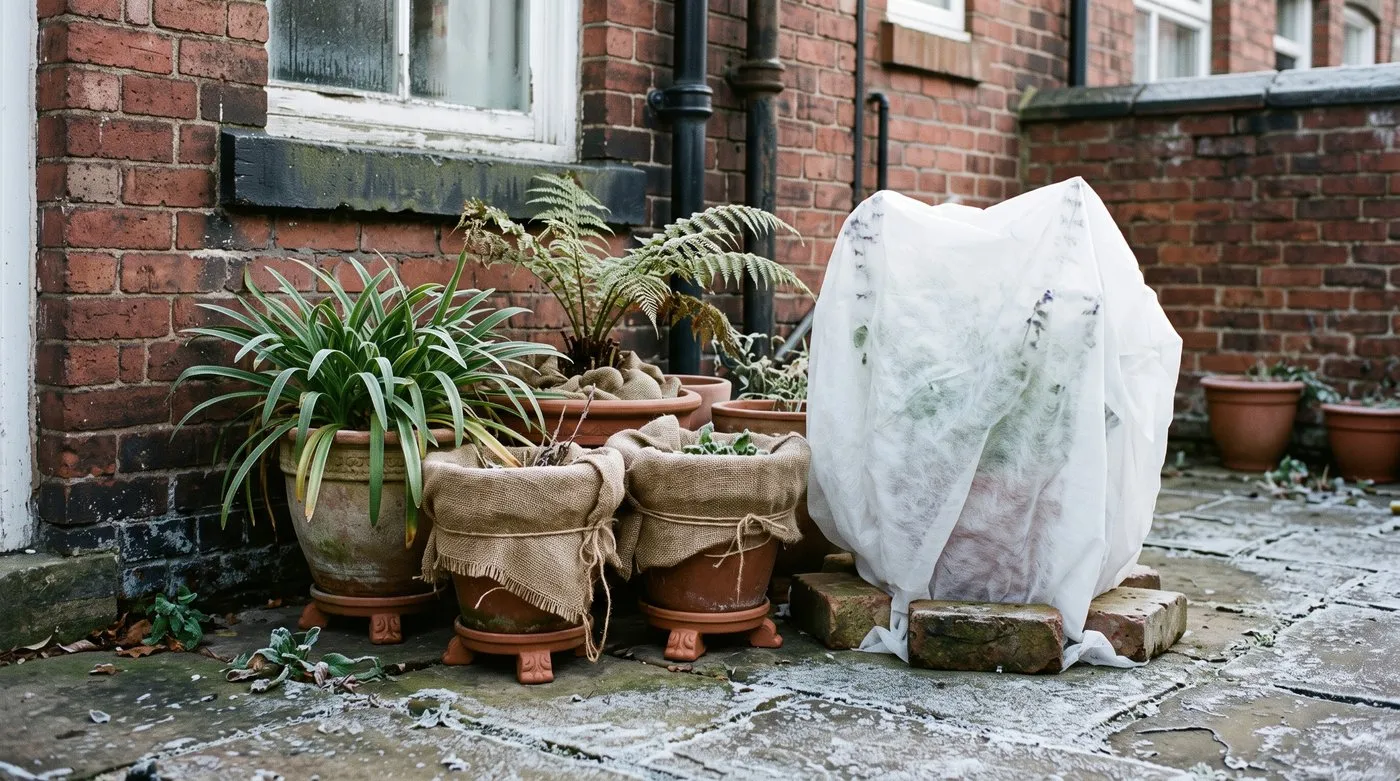
Grouping pots against a warm house wall and throwing fleece over the tender ones gets most plants through a cold snap.
- Tender plants such as tree ferns, bananas and some salvias
- New plantings that haven’t rooted in yet
- Plants in pots, whose roots are much more exposed than those in the ground
- Early fruit blossom, such as peaches and apricots
Cover tender plants with horticultural fleece when frost is forecast. Take it off in mild spells so the plants get light and air. A thick mulch of bark or straw over the crowns of borderline plants, such as agapanthus, protects the roots.
Move pots against a sheltered house wall and group them together. Wrap the pots in bubble wrap or hessian, and raise them on pot feet so they drain. Wet, cold roots kill more pot plants than frost on the leaves. The guide on how to protect plants from frost covers every method.
Winter lawn care
Stay off frozen grass. Frozen blades snap underfoot and leave brown footprints that take weeks to recover.
If puddles sit on the lawn after rain, push a garden fork into the soggy patches and wiggle it to let air in. Leave moss alone for now; rake it out in spring when the grass is growing and can fill the gaps. Keep fallen leaves off the lawn, as they block light and encourage moss.
Borders, soil and winter colour
Dig heavy clay in early winter and leave it in rough clods. Frost breaks the lumps down into a crumbly surface by spring. On lighter soils, simply spread a layer of compost or manure and let the worms do the work.
Keep adding to the compost heap. If you turn it, fork it gently, as hedgehogs sometimes hibernate inside.
Winter doesn’t have to look bare. Plant winter flowers where you’ll pass them every day, by the front door or in view of the kitchen window:
- Hellebores, flowering from January in shade or part shade
- Snowdrops, best planted “in the green” just after flowering
- Winter jasmine, with yellow flowers on bare stems
- Witch hazel, with scented, spidery flowers in January and February
- Sarcococca (Christmas box), with tiny, very scented flowers through winter

Snowdrops, hellebores and red dogwood stems prove winter borders don’t need to be dull. Plant them where you’ll see them daily.
Greenhouse jobs in winter
Insulate the greenhouse with horticultural bubble wrap fixed inside the frame. Leave the vents clear so you can still open them. The guide on how to insulate a greenhouse shows how.

Open the vents for an hour or two on mild days. Fresh air keeps grey mould away from overwintering plants.
For tender plants, a thermostatically controlled electric heater set just above freezing keeps the frost out. Paraffin heaters add moisture to the air, which encourages grey mould.
Open the vents for an hour or two on mild, sunny days. Still, damp air is what grey mould loves. Clean the glass so plants get the most light.
From late January, you can sow early crops under cover, such as broad beans, early peas, sweet peas and hardy lettuce. Sow in modules on a heated bench or in a propagator.
Fruit garden jobs in winter
Mulch soft fruit in late winter. Use well-rotted compost around raspberries and blackcurrants, keeping it clear of the stems. Blueberries need an acid mulch such as pine bark or leafmould instead.
Force rhubarb from January by covering an established crown with a forcing pot or an upturned bucket. Blocking out the light gives tender, pink stems weeks earlier. Only force crowns that are at least three years old, and let them rest the next year.
Check stakes and ties on young fruit trees after winter gales. Loosen any ties that are biting into the bark.
Helping wildlife through winter
Feed the birds. Keep feeders topped up with sunflower hearts, seed mixes and fat balls. Clean feeders regularly to stop disease spreading. Place them near cover but away from spots where cats can lurk.
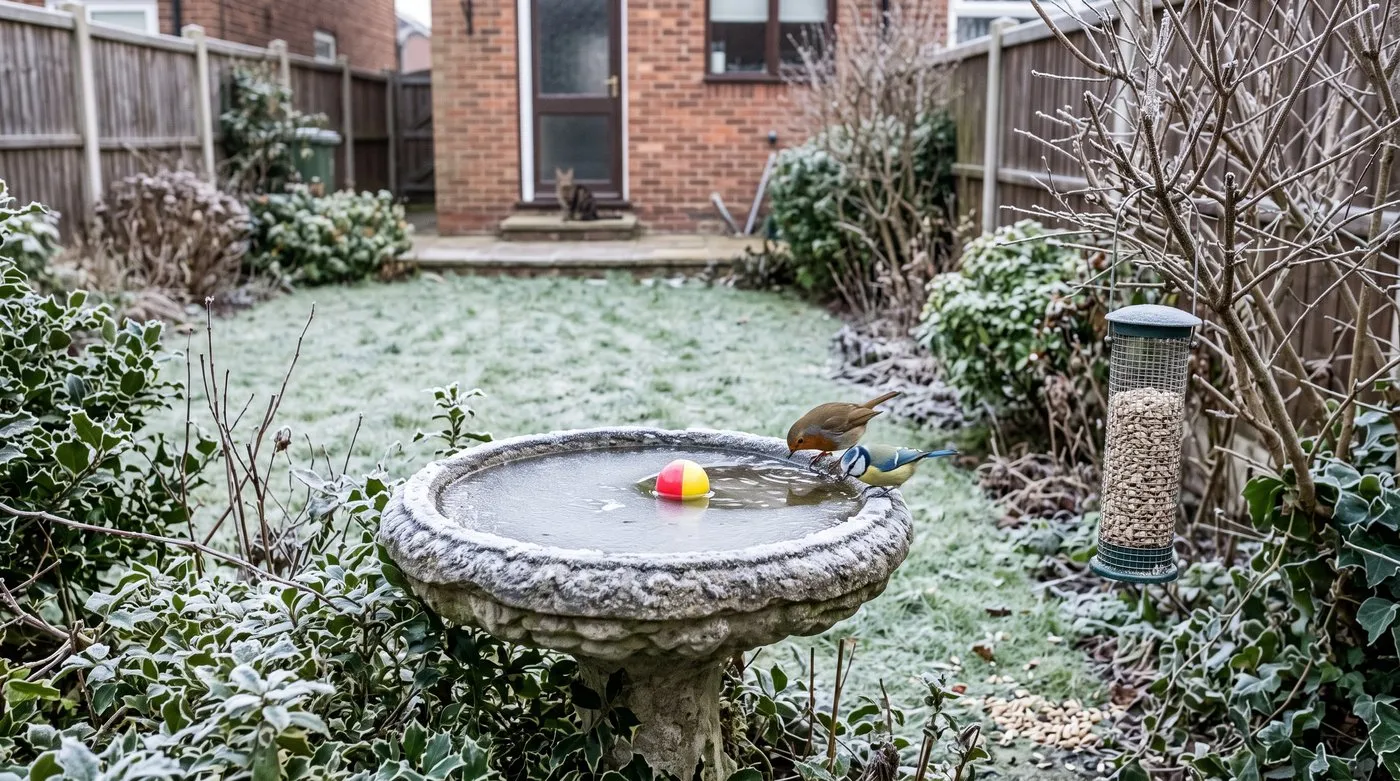
A floating ball stops the bird bath freezing solid. Fresh water matters to birds as much as food in a freeze.
Keep water ice-free. Float a small ball on the bird bath, or pour on warm (not boiling) water each morning. Never add salt or antifreeze.
Clean out nest boxes by the end of January, before birds start choosing sites. Remove old nesting material, rinse with boiling water and let the box dry.
Leave some mess. Log piles, leaf litter and hollow stems shelter hedgehogs, frogs, toads and beetles. The winter wildlife garden guide has more easy ways to help.
Planning, tools and winter projects
On a crisp, clear day, walk round the garden and note what worked last year. Which borders had gaps? Where could a tree or path go? Winter shows the bones of a garden better than any other season.
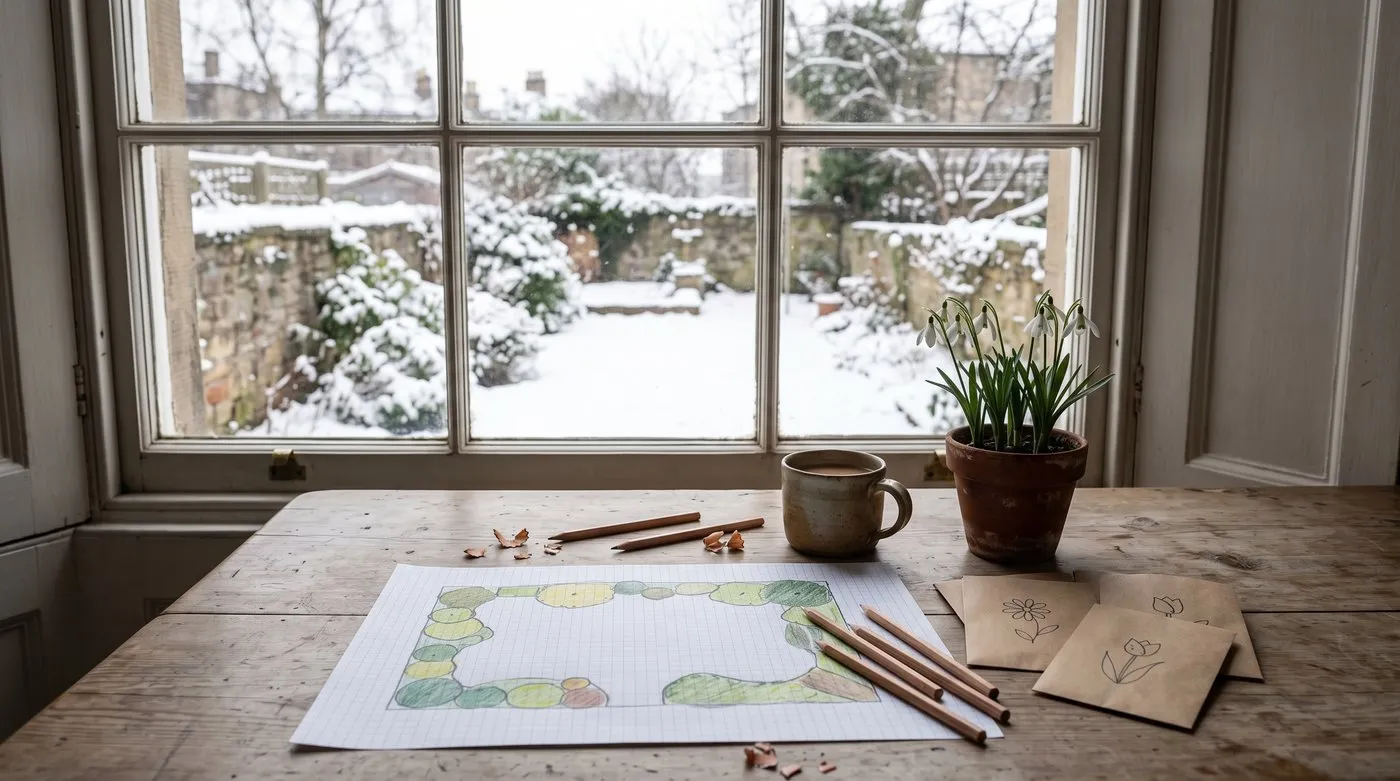
A cold January afternoon is perfect for planning borders and ordering seeds before the best varieties go.
Order seeds in January while the full range is in stock. Sketch new borders on squared paper before spring arrives.
Clean your tools. Brush soil and rust off spades and forks, sharpen secateurs and shears, and oil wooden handles with linseed oil.
Winter is a good time for building projects too: raised beds, paths, fences and compost bays. The ground is firm and there are no plants in the way. Just avoid digging or barrowing over wet, sticky soil.
Month-by-month winter checklist
| Month | Main jobs |
|---|---|
| December | Prune apples and pears. Plant bare-root stock. Dig heavy clay. Fleece tender plants. Insulate the greenhouse |
| January | Keep pruning apples, pears and currants. Prune wisteria. Force rhubarb. Order seeds. Clean nest boxes by the end of the month. Clean tools |
| February | Finish winter pruning. Cut back dogwood and willow late in the month. Start pruning bush roses. Sow early crops under cover. Mulch soft fruit |
| All winter | Feed birds and keep water ice-free. Stay off frozen lawns. Air the greenhouse on mild days. Check stakes and ties after gales |
Common winter gardening mistakes
- Pruning plums and cherries. Winter cuts let in silver leaf disease. Wait until summer.
- Pruning spring-flowering shrubs. Forsythia and flowering currant carry this year’s flower buds now. Prune after flowering.
- Walking on frozen or soggy ground. It damages lawns and squashes soil. Use a plank or wait.
- Leaving pots on frozen ground. Pots can crack and roots can rot. Raise them on feet and wrap them.
- Sealing the greenhouse shut. Damp, still air brings grey mould. Open the vents on mild days.
Frequently asked questions
What gardening jobs can I do in winter?
Prune, plant bare-root stock, protect tender plants and plan. Winter is also good for cleaning tools, building raised beds and paths, and forcing rhubarb. On frosty days, stay indoors and order seeds.
When should I prune fruit trees in winter?
Prune apples and pears between December and February while dormant. Never prune plums, cherries or damsons in winter, as silver leaf disease enters through the cuts. Prune those in summer instead.
How do I protect plants from frost?
Cover tender plants with fleece when frost is forecast. Mulch the roots of borderline-hardy plants, move pots against a sheltered house wall and wrap them. Take fleece off in mild spells so plants get light and air.
Can I plant in winter?
Yes, bare-root trees, shrubs, roses and hedging. Plant from November to March whenever the ground is not frozen or waterlogged. Bare-root plants are usually cheaper than potted ones and settle in well.
Should I walk on a frozen lawn?
No, frozen grass snaps underfoot. It leaves brown footprints that can take weeks to recover. If you must cross the lawn, lay a plank or wait until the frost thaws.
What should I do with my greenhouse in winter?
Insulate it, keep it frost-free and air it on mild days. Line it with horticultural bubble wrap, and use a thermostatically controlled heater for tender plants. Clean the glass so plants get as much light as possible.
When the days start to lengthen, move on to our spring gardening jobs checklist, or browse more how-to guides.
Our team produces practical UK gardening guidance from source research, contributor records and established horticultural practice. Editorial standards are overseen by Matt W.


