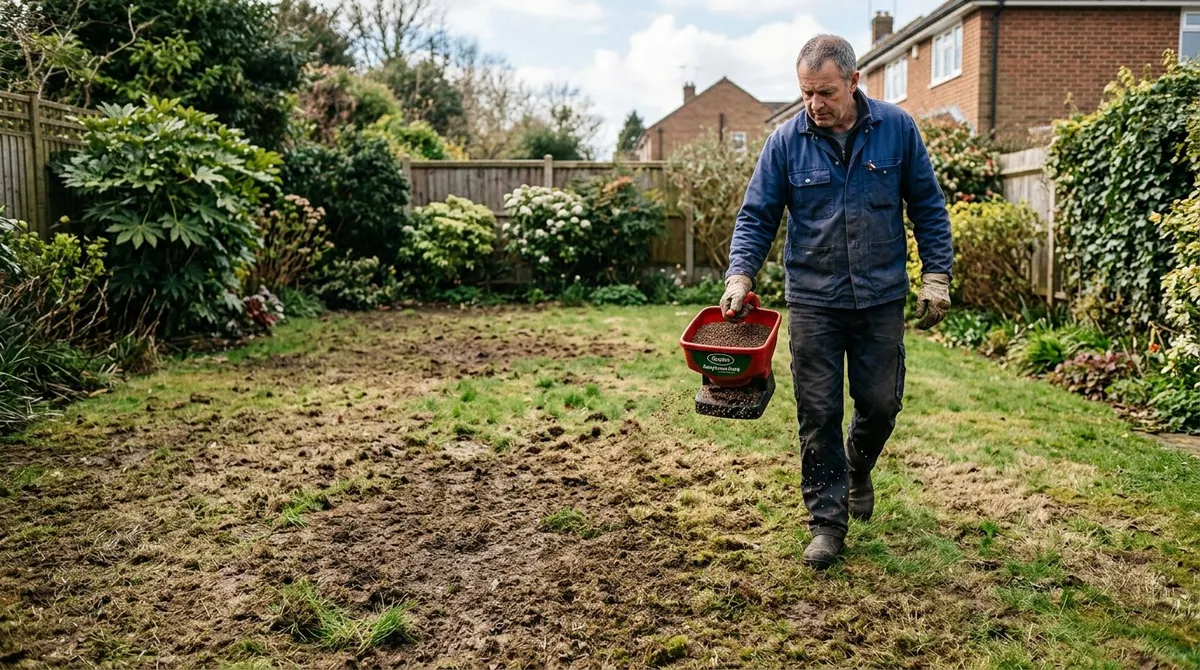
Patchy lawns affect an estimated 80% of UK gardens at some point, with the most common causes being dog urine, heavy foot traffic, shade, drought stress, and chafer grub damage. Spring (mid-March to May) and early autumn (September to mid-October) are the two optimal repair windows, when soil temperatures sit between 8C and 15C. Overseeding with a quality ryegrass mix fills thin areas within 14-21 days.
Key takeaways
- Dog urine, heavy wear, shade, and drought are the four most common causes of lawn patches in UK gardens
- Spring (mid-March to May) and autumn (September to October) are the best times to repair, when soil is warm and moist
- Overseeding with perennial ryegrass germinates in 7-14 days and fills thin patches within 3 weeks
- Turf patches give an instant fix for bare areas larger than 30cm across
- Mowing below 3cm and removing more than one-third of blade height are the most common causes of self-inflicted lawn damage
- Watering new seed twice daily for 14 days is essential, missing even two days can halve germination rates
lawn repair patchy lawn overseeding lawn care bare patches grass seed turf lawn maintenance
Our team produces practical UK gardening guidance from source research, contributor records and established horticultural practice. Editorial standards are overseen by Matt W.