Key takeaways
- Mulch keeps soil moist, so you water much less in summer
- Spread it over damp, weed-free soil in spring or autumn
- Bark lasts a few years, while compost needs topping up each spring
- Keep mulch a few centimetres back from stems and trunks
- Council green waste, tree surgeons and your compost bin are free sources
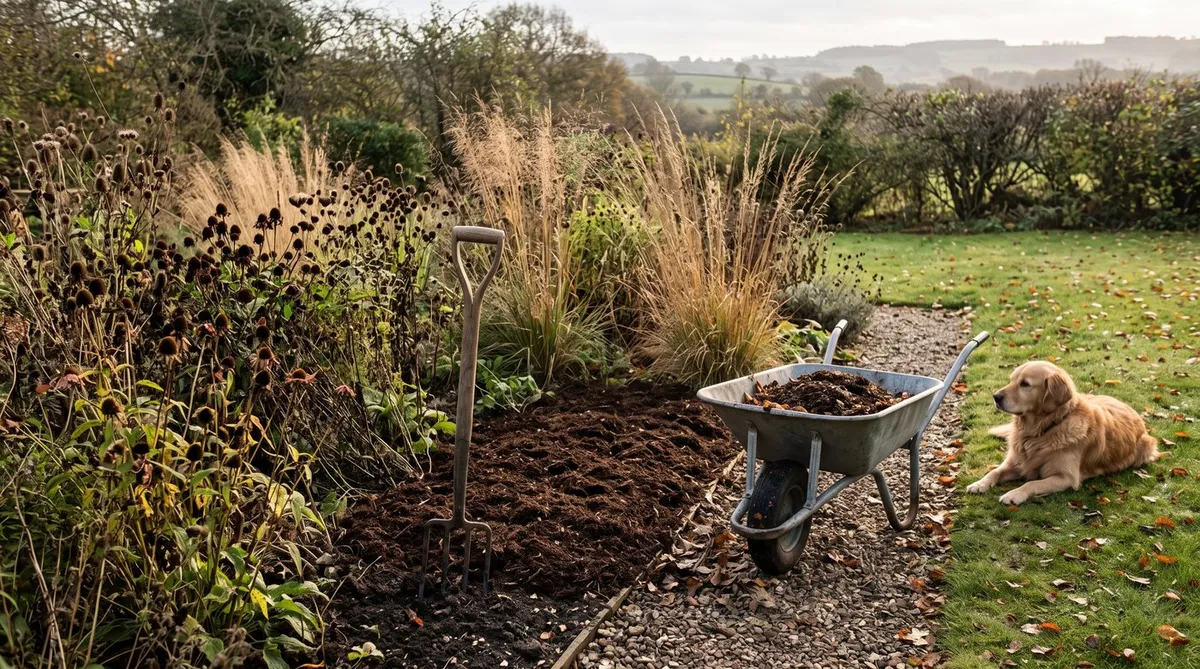
Mulch is anything you spread over the soil to protect it. It’s one of the most useful jobs in the garden, and one of the most overlooked. A good layer keeps moisture in, stops weeds sprouting and keeps roots snug.
Every professional gardener mulches, yet plenty of home gardens still have bare soil between the plants. Here’s what mulch is, which type to use where, and how to get it for free.
Organic vs inorganic mulch
There are two kinds: ones that rot down and feed the soil, and ones that don’t.
Organic mulch comes from things that were once alive: bark, wood chip, compost, leaf mould and straw. It slowly rots down, feeding the soil and improving it. You’ll need to top it up every year or few, which is a good thing. It’s just like leaves building up on a woodland floor.
Inorganic mulch doesn’t rot. Gravel, slate, pebbles and weed membrane are all inorganic. They stop weeds and hold moisture but don’t feed the soil. They last for years, so they suit paths, drives and low-maintenance beds.
Handy tip: Use organic mulch on beds and borders you want to improve. Use gravel or slate on paths, round alpines and in gravel gardens.
Types of mulch: a comparison
The right mulch depends on where it’s going and what you want it to do.
| Mulch | How deep | How long it lasts | Cost | Best for | Feeds the soil? |
|---|---|---|---|---|---|
| Bark chips | 5-8cm | A few years | Medium | Borders, shrub beds, paths | Yes, slowly |
| Garden compost | 3-5cm | One season | Free if homemade | Veg beds, flower borders | Yes, quickly |
| Straw | 5-8cm | One season | Low | Veg and strawberry beds | Yes, slowly |
| Leaf mould | 3-5cm | One season | Free | Woodland and shade borders | Yes, brilliantly |
| Wood chip | 5-8cm | A few years | Free to low | Paths, big borders, round trees | Yes, slowly |
| Gravel | 3-4cm | Permanent | Medium | Paths, alpines, Mediterranean plants | No |
| Slate chippings | 3-4cm | Permanent | Medium to high | Modern borders, paths | No |
| Weed membrane | Not applicable | Many years | Low | Under gravel | No |
 Six popular mulches. Clockwise from top left: bark chips, garden compost, straw, gravel, leaf mould and wood chip.
Why mulching is worth it
Mulch saves you watering and weeding, and makes your soil better.
Keeps the soil moist
A good layer of organic mulch slows the water escaping from the soil on warm, windy days. A mulched border needs watering much less often than bare soil in a British summer. For more water-saving ideas, see our guide to water-efficient gardening.
It matters most from June to August, when dry spells are most likely. Most established plants in a well-mulched bed can manage without daily watering.
Stops weeds
Mulch blocks the light weed seeds need to sprout, and smothers tiny seedlings. Spread at the right depth, it makes a huge difference to how many weeds you get.
A few still turn up. Birds drop seeds on top, and tough perennial weeds push through almost anything. But you’ll spend minutes weeding instead of hours. If lawn weeds creep into your borders, a thick strip of mulch along the edge helps keep them out.
Keeps roots comfortable
Mulch works like a blanket. In winter it helps protect roots from frost, and in summer it keeps them cool. That’s especially handy for shallow-rooted plants and anything newly planted.
Don’t mulch frozen ground in January, as it holds the cold in. Wait until March or April when the soil is warming up.
Improves your soil
As organic mulch rots, worms pull it down into the soil. Over a few years, even poor soil becomes darker, crumblier and better at holding water.
It’s a real help on heavy clay soil, where it gradually opens up the surface so it drains better and is easier to dig. On sandy soil, it adds body and helps hold on to water and food.
How to apply mulch
It’s easy, but a few steps make all the difference.
Step 1: Clear the weeds
Pull out every weed first. Hand-pull the annual ones. Dig out perennial weeds, roots and all. Bindweed, couch grass and ground elder will come straight back through if you leave bits of root.
For a really weedy patch, lay cardboard under the mulch to smother what’s left. It’s a great trick for new beds or a neglected border.
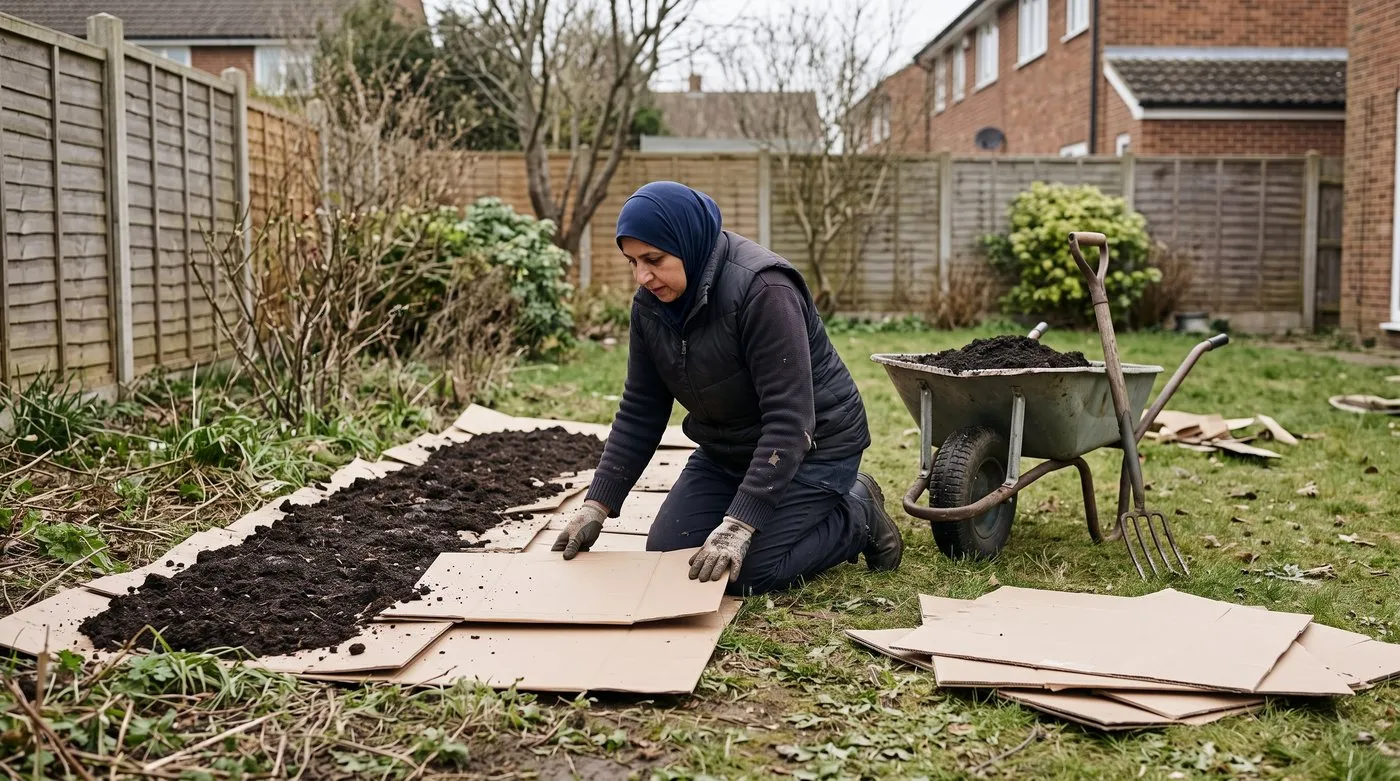
On a really weedy patch, lay cardboard first and mulch on top. It smothers what’s left while the new bed settles in.
Step 2: Water the soil
Mulch works best on damp soil. If the ground is dry, give it a good soak the day before. The mulch then holds that moisture in. Mulch over dry soil just keeps it dry.
Step 3: Spread it evenly
Go 5-8cm deep with bark, wood chip and straw, and 3-5cm with compost and leaf mould. Spread it out with a rake or your hands.
Step 4: Leave a gap round stems
This is the step people forget. Keep mulch about 5cm away from plant stems and shrub trunks. Mulch heaped against stems keeps them damp and makes them rot.
Watch out: Never heap mulch up against a tree trunk, sometimes called “volcano mulching”. It makes the bark soft and rotten. Keep it at least 10cm from the trunk and spread it in a flat ring.
Step 5: Water it in
Give the mulch a light watering to settle it. Dry bark chips can blow about until they’re damp.
 Spreading bark round shrubs. See the little gap left round each stem to stop rot.
When to mulch
Spring is the main time, and autumn is a good second.
Spring mulching (March to April)
This is the big one. Mulch after rain, when the soil is damp and starting to warm. That tends to be March in the south and April further north.
Spring mulch locks in the winter wet, stops the first wave of weeds and feeds the soil. If you only mulch once a year, do it now.
Autumn mulching (October to November)
Autumn mulch tucks roots up for winter and starts rotting down in time to feed plants in spring. Get it on before the first hard frosts, while the soil is still a little warm.
It’s especially useful round tender perennials, new plants and fruit trees.
When not to mulch
Don’t mulch frozen soil, as it keeps the cold in. Don’t mulch bone-dry soil in summer; water first, then mulch. And don’t mulch waterlogged ground in winter, as it can make roots rot.
Month-by-month mulching calendar
| Month | What to do |
|---|---|
| January | Too cold to mulch. Plan where you’ll get your mulch from. |
| February | Order bark or compost for March. Weed your beds. |
| March | Main mulching month in the south. Mulch borders after rain. |
| April | Main mulching month further north. Mulch veg beds before planting. |
| May | Mulch round new plants and top up thin patches. |
| June | Tuck straw round strawberries as the fruit forms. |
| July | Check the soil under the mulch and water deeply in dry spells. |
| August | Add a thin layer of compost to veg beds as you harvest. |
| September | Start collecting fallen leaves for leaf mould. |
| October | Mulch borders and round fruit trees. Protect tender plants. |
| November | Last chance for autumn mulching. Spread leaf mould on shady borders. |
| December | Too cold to mulch. Shred your Christmas tree for future mulch. |
Mulching different parts of the garden
Flower borders and shrub beds
Best mulch: bark chips or composted bark, 5-8cm deep.
Bark is the classic border mulch. It looks good, lasts a few years, stops weeds and slowly feeds the soil. In a cottage garden planting scheme, it gives a natural, settled look between perennials.
Spread it in spring after weeding and feeding, and patch it up in autumn. Under shade-loving plants, it’s just like the woodland floor they love.
Vegetable beds
Best mulch: garden compost, well-rotted manure or straw, 3-5cm deep.
Veg beds want mulch that rots down fast and feeds the soil. Garden compost is perfect. It’s gone within a season, leaving goodness right where your crops need it.
Straw is great round tomatoes, courgettes and strawberries, as it keeps the fruit off the soil. In raised beds, a layer of compost after planting cuts down watering and feeds the crops all season.
Fruit trees and bushes
Best mulch: bark chips or compost, 5-8cm deep, in a wide ring round the tree.
The ring keeps grass away from the roots and holds moisture while the fruit swells in summer. Spread it out towards the edge of the branches.
Handy tip: Keep the ring at least 10cm from the trunk. Think flat doughnut, not volcano.
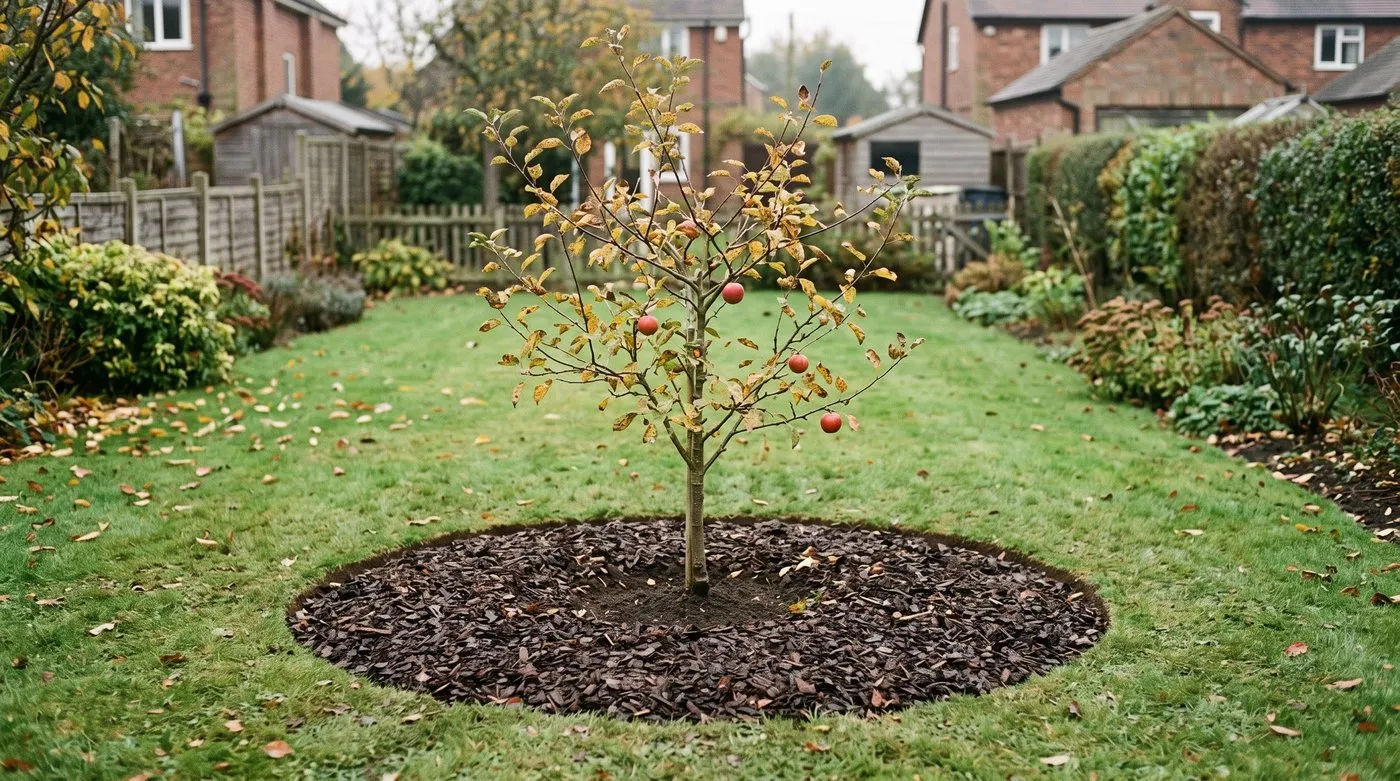
Think flat doughnut, not volcano. Keep the ring at least 10cm from the trunk and spread it out towards the edge of the branches.
Paths and walkways
Best mulch: gravel, wood chip or bark, over weed membrane.
Wood chip paths are cheap and practical in veg plots and allotments. Lay membrane first, then 5-8cm of wood chip. Top it up each year as it squashes down.
Gravel paths last for ever. Lay membrane, then 3-4cm of gravel. The membrane stops the gravel sinking and weeds coming through.
Containers and pots
Best mulch: fine bark, gravel or pebbles, 2-3cm deep. A thin layer slows drying out and keeps roots cooler in summer. Use small bits rather than chunky chips.
 Straw round strawberries keeps the fruit clean and dry and keeps weeds down between the rows.
Where to get mulch for free
You don’t have to buy mulch at all.
Council green waste
Many councils turn garden waste into compost and give it away or sell it cheaply. It’s made hot enough to kill most weed seeds. Check your council website.
Tree surgeons
Tree surgeons make lots of wood chip and are often glad to drop a load off for free. Use fresh chip on paths straight away, or leave it to rot for six months to a year before putting it on beds.
Good to know: Fresh wood chip borrows nitrogen from the soil as it starts to rot, which can make nearby plants go yellow. Keep fresh chip for paths. Older, rotted chip is fine on beds.
Your own compost
Even one compost bin makes enough to mulch a decent patch each year. Making your own compost is the cheapest, greenest mulch there is.
Leaf mould
Stuff autumn leaves into black bin bags with a few holes poked in. A year or so later you’ll have leaf mould, one of the best soil improvers going, and it’s free. Oak and beech leaves are best.
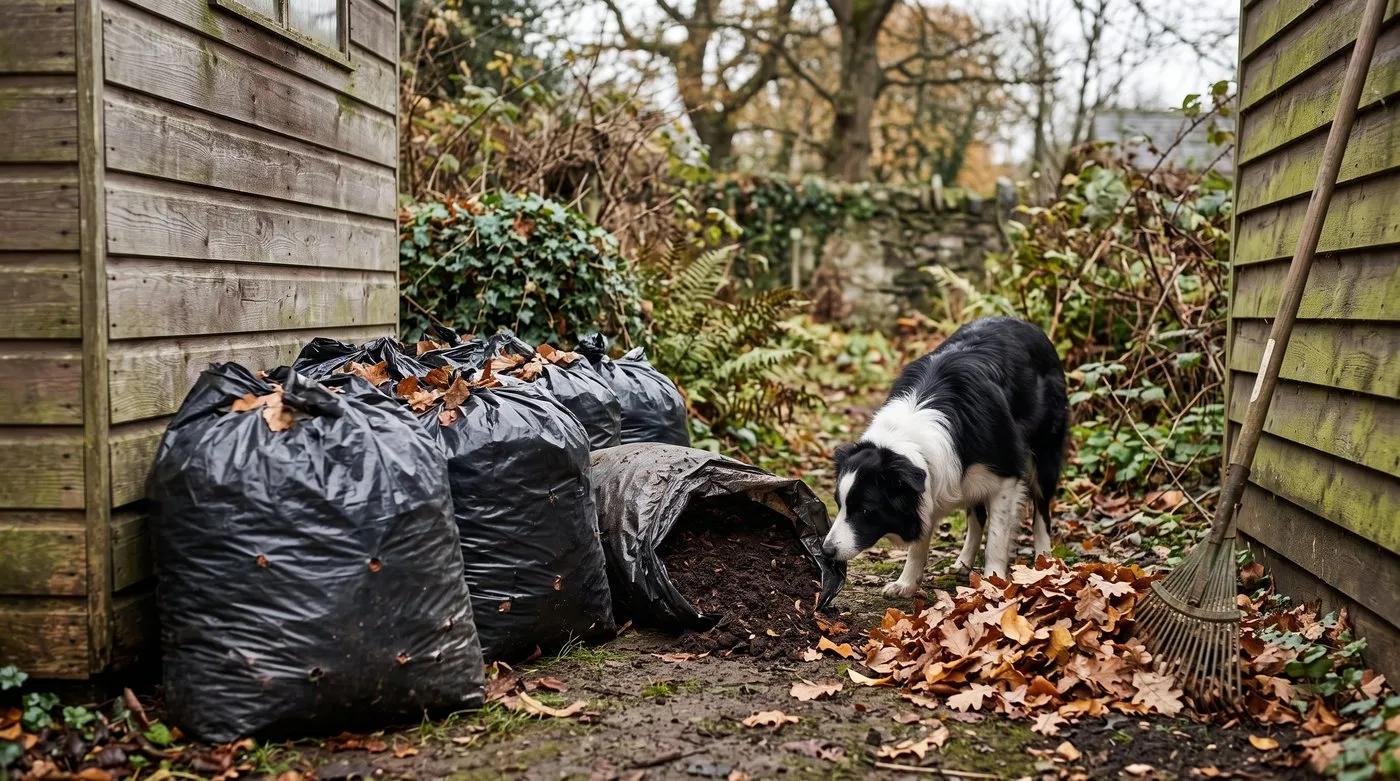
Stuff autumn leaves into bin bags with a few holes poked in. A year or so later you’ll have crumbly leaf mould for free.
Grass clippings
Free all summer. Use thin layers, no more than 3-5cm, and let them dry first. Mix with dry leaves or straw so they don’t go slimy. Top up every few weeks as they rot quickly. Skip clippings from a lawn treated with weedkiller.
Dog owners: Avoid cocoa shell mulch. It can be poisonous to dogs if they eat it.
Buying mulch
If you can’t get it free, buying in bulk is much cheaper than bags. For anything bigger than a small border, ask local suppliers about a bulk bag or a loose load delivered. Bark and compost are the cheapest options, and slate is the dearest.
Common mistakes
Spreading it too thin
A thin sprinkle of bark looks tidy for a week, then weeds poke straight through. Aim for at least 5cm of bark or wood chip, and 3cm of compost.
Piling it against stems
Mulch heaped against stems keeps them damp and can kill the plant. Leave about 5cm round plant stems and 10cm round tree trunks.
Using fresh wood chip on beds
Fresh chip takes nitrogen from the soil as it rots, so nearby plants can go yellow and stop growing. Let it age first, or keep it for paths.
Mulching dry or frozen soil
Mulch over dry soil keeps the drought in, and mulch over frozen soil keeps the cold in. Mulch when the soil is damp and warming in spring, or still warm in autumn. Water dry soil the day before.
Smothering perennial crowns
Covering the tops of sleeping perennials can make them rot in a wet winter. Mulch round them, not on top, and leave the centre open to the air.
Mulch and better soil: the long game
Mulch every year and your soil gets better and better. In the first year it stops weeds and holds water, and worms start pulling it down. After a few years, the top layer is darker and crumblier. Keep going and even poor, packed-down ground turns into lovely soil full of worms.
It’s the same idea as no-dig gardening, made popular by Charles Dowding. You build the soil from the top down without digging. For tricky ground, see our guide to improving clay soil for more ideas.
Mulch also helps a climate-resilient garden cope with both drought and downpours. And it saves you work: less watering, much less weeding and no digging. Pair it with low-maintenance plants and your garden will very nearly look after itself.
Next step? Our guide to improving clay soil helps you build healthy, easy-going soil.
Frequently asked questions
When is the best time to mulch in the UK?
Spring, in March or April, is best. Spread it after rain, when the soil is damp and starting to warm. It locks in moisture and stops the first flush of weeds. Autumn, in October or November, is the next best time.
How deep should mulch be?
Most mulches go on 5-8cm deep. Finer stuff like garden compost and leaf mould only needs 3-5cm. Gravel and slate work at 3-4cm. Too thin and weeds push through, too thick and rain struggles to get through.
Can you put mulch on top of weeds?
No, clear the weeds first. Mulch stops new weed seeds sprouting but won’t kill weeds that are already growing. Bindweed, couch grass and ground elder will push straight through. Dig out every root you can before you spread.
Does mulch attract slugs?
Bark and straw can give slugs somewhere damp to hide. If slugs are a big problem, use gravel round slug favourites like hostas. With organic mulch in a sluggy spot, nematodes or ferric phosphate pellets help.
How often should you replace mulch?
It depends on the type. Compost rots down in one season, so top it up each spring. Bark chips last a few years. Gravel and slate are permanent and just need a top-up where they’ve been kicked about.
Is mulch the same as compost?
No, but compost makes a great mulch. Compost is rotted-down organic matter that improves soil. Mulch is anything spread on top of the soil. Compost does both jobs, while bark, gravel and membrane are just mulches.
Can I use grass clippings as mulch?
Yes, in thin layers of 3-5cm. Thicker than that and they turn into a slimy, smelly mat. Let them dry for a day, and mix with dry leaves or straw if you can. Don’t use clippings from a lawn treated with weedkiller.
Our team produces practical UK gardening guidance from source research, contributor records and established horticultural practice. Editorial standards are overseen by Matt W.