Key takeaways
- Clay is naturally fertile and holds on to water and food well
- Add 5-10cm of organic matter every year to open it up
- Never dig or walk on clay when it's wet and sticky
- Autumn is the best time to dig, so winter frost can break up the lumps
- Raised beds and no-dig are great ways round heavy clay
- Skip the sand and gypsum, as organic matter does a far better job
Clay soil can test anyone’s patience. It sticks to your boots, bakes hard in summer and turns to a soggy mess in winter. But clay is also one of the richest soils in the UK. It holds on to food that sandy soils lose, and it stays moist through dry spells. The trick isn’t to replace it, but to work with it.
Not sure if you have clay? Squeeze a handful of damp soil. If it holds its shape, feels sticky and goes shiny when you rub it with your thumb, it’s clay. Here’s how to turn it into soil that drains, grows strong roots and is a pleasure to dig.
Why clay soil is difficult
Clay is made of tiny particles that pack together tightly. The gaps between them hold water but don’t let it drain away easily. That gives you two problems.
In winter, clay gets waterlogged. It stays cold for longer in spring, so it’s slower to warm up for sowing. Roots sitting in soggy ground can rot. In summer, clay dries out and cracks, and the hard crust sheds rain rather than soaking it up.
What clay needs is a better crumb. Good soil is crumbly, with gaps for air and water. Clay tends to squash into dense layers, especially if you walk on it or dig it when wet.
Testing your clay soil

A couple of quick tests tell you what you’re dealing with.
The squeeze test: Squeeze a handful of moist soil. Clay holds its shape firmly. Sandy soil falls apart. Loam holds together loosely but crumbles when prodded.
The ribbon test: Roll moist soil between your fingers. Heavy clay makes a long, smooth ribbon. Sandier soil barely holds together.
pH test: Grab a cheap kit from a garden centre. Clay can be acid, neutral or alkaline, depending on the rock underneath. Knowing which helps you choose plants and decide if you need lime.
Tip: For a fuller picture, the RHS soil analysis service can send you a detailed soil report for a small fee.
The best time to work clay soil
With clay, timing is everything. Dig at the wrong moment and you’ll do more harm than good.
Autumn (October to November) is the best time. The soil is moist but not soggy. Dig in organic matter now, and winter frost will break up the big clods for you, for free.
Early spring (March) is your second chance, once the ground is dry enough to walk on without leaving deep footprints. Fork over autumn-dug ground and get beds ready for planting.
Never work clay when it’s wet. If it sticks to your boots in thick slabs, leave it alone. Digging or walking on wet clay squashes out the air and causes compaction that takes years to fix.
How to improve clay soil structure

1. Add organic matter, lots and often
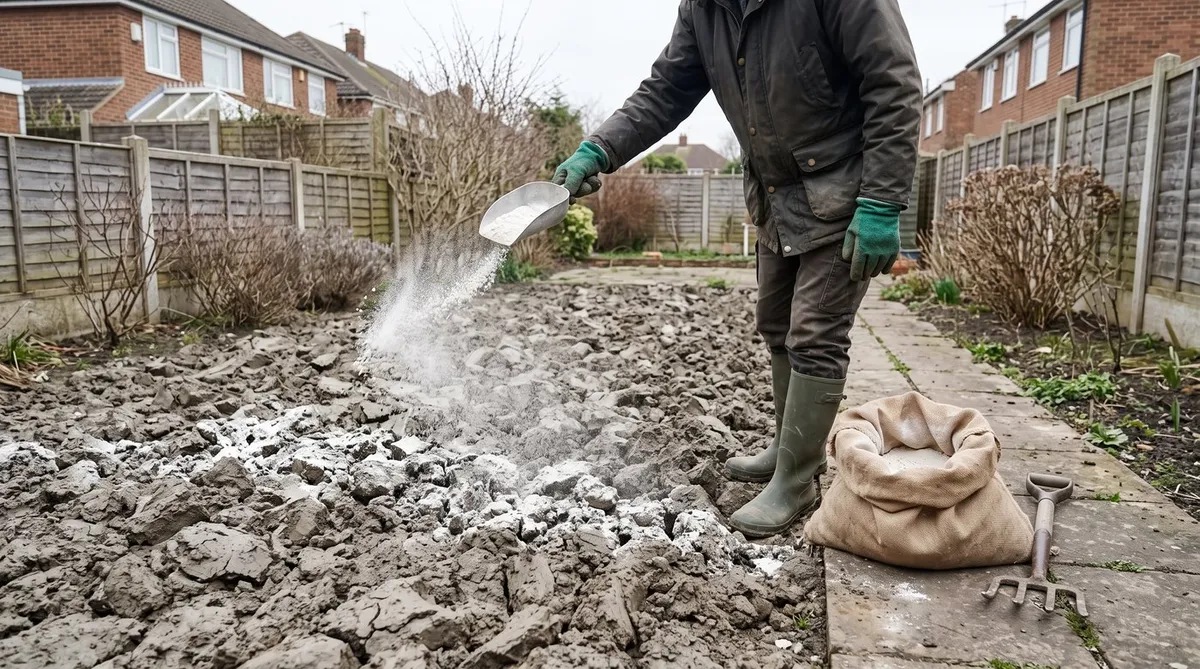
This is the most useful thing you can do. Organic matter opens up the soil, feeds the worms and helps both drainage and moisture. Spread a 5-10cm layer every year. Either dig it in or let the worms pull it down.
| What to add | Why it’s good | Where to get it |
|---|---|---|
| Well-rotted manure | Adds food and bulk | Farms, stables, garden centres |
| Garden compost | Free and balanced | Your own compost bin |
| Leaf mould | Lovely gentle conditioner | Autumn leaves, left for a year or two |
| Composted bark | Lasts a long time | Garden centres, bulk suppliers |
| Council green waste | Cheap and plentiful | Council recycling centres |
| Spent mushroom compost | Rich, slightly alkaline | Mushroom farms, garden centres |
Making your own garden compost is the cheapest way to keep the supply going.
2. Don’t rely on gypsum
Gypsum is often sold as a “clay breaker”. But it mainly helps soils high in sodium, like land flooded by the sea, which are rare in gardens. It doesn’t change your soil’s pH either.
On normal garden clay, gypsum rarely makes much difference. Organic matter is the better bet.
3. Don’t add sand
This is one of the most stubborn gardening myths. Sand plus clay sounds sensible but can set like concrete. You’d need a massive amount of sand to help at all. Organic matter does a far better job for far less effort.
4. Let the frost do the work
In late autumn, dig over the clay roughly and leave the big clods on the surface. Don’t break them up. Frost gets into them over winter and shatters them into smaller crumbs. By spring, a quick forking gives you a much finer soil.
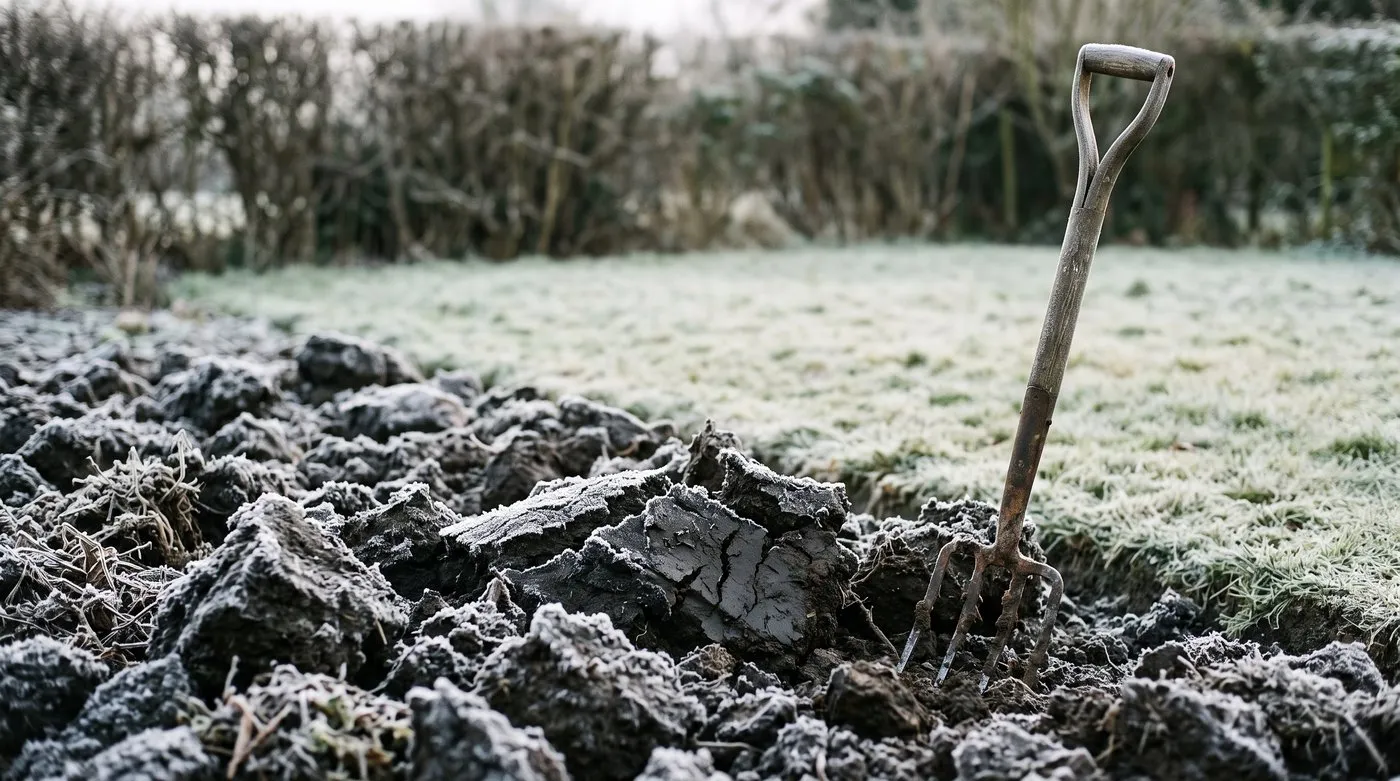
Leave the big clods on the surface over winter. Frost cracks them into crumbs, so a quick fork in spring gives a much finer soil.
5. Grow green manures
A green manure is a crop you sow to cover bare soil over winter, then dig in. It stops rain battering the surface and adds organic matter. Good choices for clay:
- Field beans: deep roots that break up clay, and they add nitrogen
- Crimson clover: adds nitrogen and has pretty flowers
- Grazing rye: lots of roots and grows right through winter
- Phacelia: quick to grow and loved by bees
Cut it down and dig it in at least four weeks before you plant or sow.
Drainage solutions for heavy clay
If puddles sit on the surface for days after rain, you may need to help the water away as well as improving the soil.
Surface drainage
Shape the ground with a gentle slope so water runs off beds and borders. Send it towards a soakaway, rain garden or existing drain.
French drains
A French drain is a gravel-filled trench, usually 30-45cm deep, that catches water and carries it away. Line it with landscape fabric so clay doesn’t clog the gravel. They work well at the bottom of slopes or beside soggy lawns.
Raised beds
Raised beds are one of the easiest answers to heavy clay. Fill them with topsoil and compost and you skip the clay problem for vegetables and herbs. They warm up earlier in spring too.
If you’re planning a vegetable garden on clay, raised beds are a great idea for root crops and salads.
No-dig approach on clay

No-dig, made popular by Charles Dowding, suits clay really well. Instead of digging, you spread organic matter on top and let the worms take it down.
Spread 10-15cm of well-rotted compost over the surface each year. Over a few seasons, you build a rich, crumbly layer on top of the clay. The clay underneath fills with worm tunnels and root channels that help water drain.
No-dig means you never risk digging clay at the wrong time. And it’s much kinder on your back.
Choosing plants that suit clay soil
While you improve the soil, grow plants that already like clay. They settle in quickly and save you the heartache of plants failing.
Trees and shrubs for clay
Roses are the classic clay-lovers. Hawthorn, dogwood (Cornus), crab apples and viburnums do well too. For shady spots on clay, try mahonia, skimmia and sarcococca.
Perennials for clay borders
Hardy geraniums, Japanese anemones, astilbes, heleniums and rudbeckias are all happy in clay. Many are low-maintenance plants too. A cottage garden planting plan works well on improved clay, as lots of cottage favourites like heavy ground.
Vegetables for clay
Potatoes are a great first crop on clay, as digging them up helps break up the soil. Cabbages, broccoli and kale like the firm footing and moisture. Beans and courgettes do well too.
Avoid carrots, parsnips and other roots in heavy clay, as they fork and twist. Grow them in raised beds with lighter soil instead.
A three-year improvement plan
Improving clay isn’t a weekend job. Here’s a realistic timeline.
Year one: Test your pH and drainage. Spread about 10cm of organic matter over borders in autumn. Dig roughly and let the frost work. Plant clay-lovers. Build raised beds for vegetables.
Year two: Add another 5-10cm of organic matter in autumn. The soil should feel lighter and easier to dig, with more worms. Try a wider range of plants.
Year three: Keep adding organic matter. The top layer should be getting crumbly and draining better. Most garden plants will now grow happily.
Keep up the yearly mulch and clay becomes some of the best growing ground there is. The richness that made it tricky at first becomes its biggest strength.
Common mistakes to avoid
- Rotavating wet clay. It smears the soil and creates a hard layer below the surface that blocks drainage and roots. Only rotavate when the soil is properly dry.
- Walking on beds in winter. It squashes wet clay. Lay planks down to spread your weight if you have to get on the beds.
- Adding lime without testing. Some clays are already alkaline, especially over chalk or limestone. More lime makes it harder for plants to take up some nutrients.
- Giving up too soon. The first autumn dig is the hardest. It gets easier every year as the organic matter builds up.
The long-term plan for clay soil
Clay isn’t a curse. It’s rich, moist ground that rewards a bit of patience. The recipe is simple: add organic matter every year, never work it wet, and pick plants that like it. In a few seasons you’ll have soil that grows almost anything.
Now you’ve got your clay plan sorted, read our guide on how to make compost to make the organic matter that will transform it.
Frequently asked questions
How long does it take to improve clay soil?
You’ll see a difference within one growing season. That’s if you add plenty of organic matter. Real lasting change usually takes two to three years of adding more each year. Worms and soil life need time to build up, so keep at it.
Can you add sand to clay soil?
No, it’s best not to. Unless you add huge amounts, sand and clay can set even harder. Organic matter works far better, as it helps drainage and holds moisture too. If you want extra drainage, add coarse horticultural grit along with organic matter.
What is the best organic matter for clay soil?
Well-rotted manure, garden compost and composted bark all work well. Leaf mould is lovely stuff, as it improves the soil without adding too much food. Council green waste compost is good and often cheap. Spread it thickly on top or dig it in when the soil isn’t wet.
Should I use gypsum on clay soil?
It rarely helps on UK garden clay. Gypsum mainly helps soils that are high in sodium, like land flooded by the sea, which are uncommon in gardens. It doesn’t change your soil’s pH either. Adding organic matter every year is a much better bet.
Is clay soil acid or alkaline?
It can be either, or neutral. It depends on the rock underneath. Clay over chalk or limestone is often alkaline, while other clays can be acid. You can’t tell by looking, so use a cheap test kit before adding lime, then choose plants to suit.
What grows well in heavy clay soil?
Lots of plants love clay, including roses, hardy geraniums, asters, Japanese anemones and dogwoods. Fruit trees often do well too. For vegetables, potatoes and brassicas cope nicely. Carrots and parsnips struggle and tend to fork, so grow them in raised beds.
Our team produces practical UK gardening guidance from source research, contributor records and established horticultural practice. Editorial standards are overseen by Matt W.