Key takeaways
- Check the tenancy agreement before buying because shed rules vary by site
- Portsmouth permits 2.4m by 1.8m sheds, while Brighton permits 2m by 3m
- Use wall hooks and high shelving to keep the floor clear for a wheelbarrow
- A fold-down bench provides workspace without permanently blocking the aisle
- Take machinery home and keep remaining tools hidden behind a stout lock
Good allotment shed ideas start with the site rules, then make every wall useful. Store tools vertically, keep seeds dry and leave enough floor space for safe access.
Rules are not standard across the UK. Portsmouth City Council permits sheds up to 2.4m by 1.8m and 2.1m high. Brighton & Hove City Council permits one 2m by 3m shed up to 2.2m high. Your own tenancy remains the deciding document.
What size shed can you have on an allotment?
Start with the landlord’s written rules. Limits, permitted bases and consent processes differ between sites. Bristol City Council requires tenants to obtain Allotments Office permission before erecting or moving a shed. Manchester City Council also requires written consent for structures.
Treat 2.4m by 1.8m as one common example, not a national entitlement. Do not order materials until the site manager confirms the footprint, height, position and base.
| Council example | Maximum footprint | Maximum height | Permission note |
|---|---|---|---|
| Portsmouth | 2.4m x 1.8m | 2.1m | Contact the office for other structures |
| Brighton & Hove | 2m x 3m | 2.2m | One shed per plot |
| Bristol | Set by local approval | Set by local approval | Permission required before work |
Position the shed where it will not shade neighbouring beds. Face the door towards a safe, level path. A guttered roof can feed a covered water butt if the tenancy permits one.
Keep the door clear of the main growing route. A firm, level approach reduces trips when carrying tools or compost. Our allotment path guide compares woodchip, gravel and slab routes for wet plots.
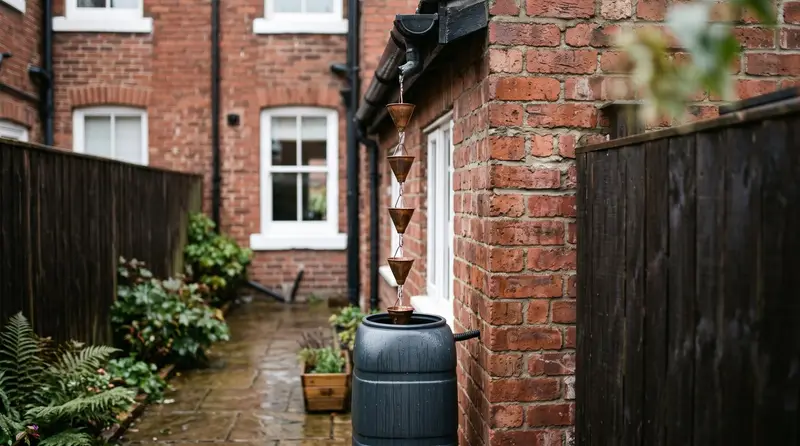
Fit gutters only after the site manager approves the structure. Route the downpipe into a covered water butt and secure the lid. The rainwater harvesting guide explains storage capacity, overflow and safe positioning. Do not let overflow discharge against the timber base.
Separate sharp tools from everyday hand tools. Wall clips work for spades and forks, while a closed box suits blades and fixings. Take a look at our winter tool-storage checklist before leaving equipment through the dampest months.
Choosing or building an allotment shed
You have three options: buy new, buy second-hand or build from reclaimed materials. Each has trade-offs, but every option needs consent, a sound base and a safe route from the site entrance.
Buying new gives you matching panels and instructions. Confirm where a delivery vehicle can stop, how panels will reach the plot and whether another person is available for lifting. Check that the supplied footprint and ridge height fit the written site rule.
Buying second-hand can reuse a sound structure, but inspect it before agreeing to dismantle it. Pay particular attention to the base rails, floor edges, lower door frame, roofing material and any blackened or soft timber. Label panels and fixings during dismantling so the shed can be rebuilt in the same order.
Building from reclaimed materials gives flexibility but does not remove the need for consent. Avoid treated timber of unknown origin where it could contaminate soil, and remove protruding nails or sharp edges before materials enter a shared allotment path.
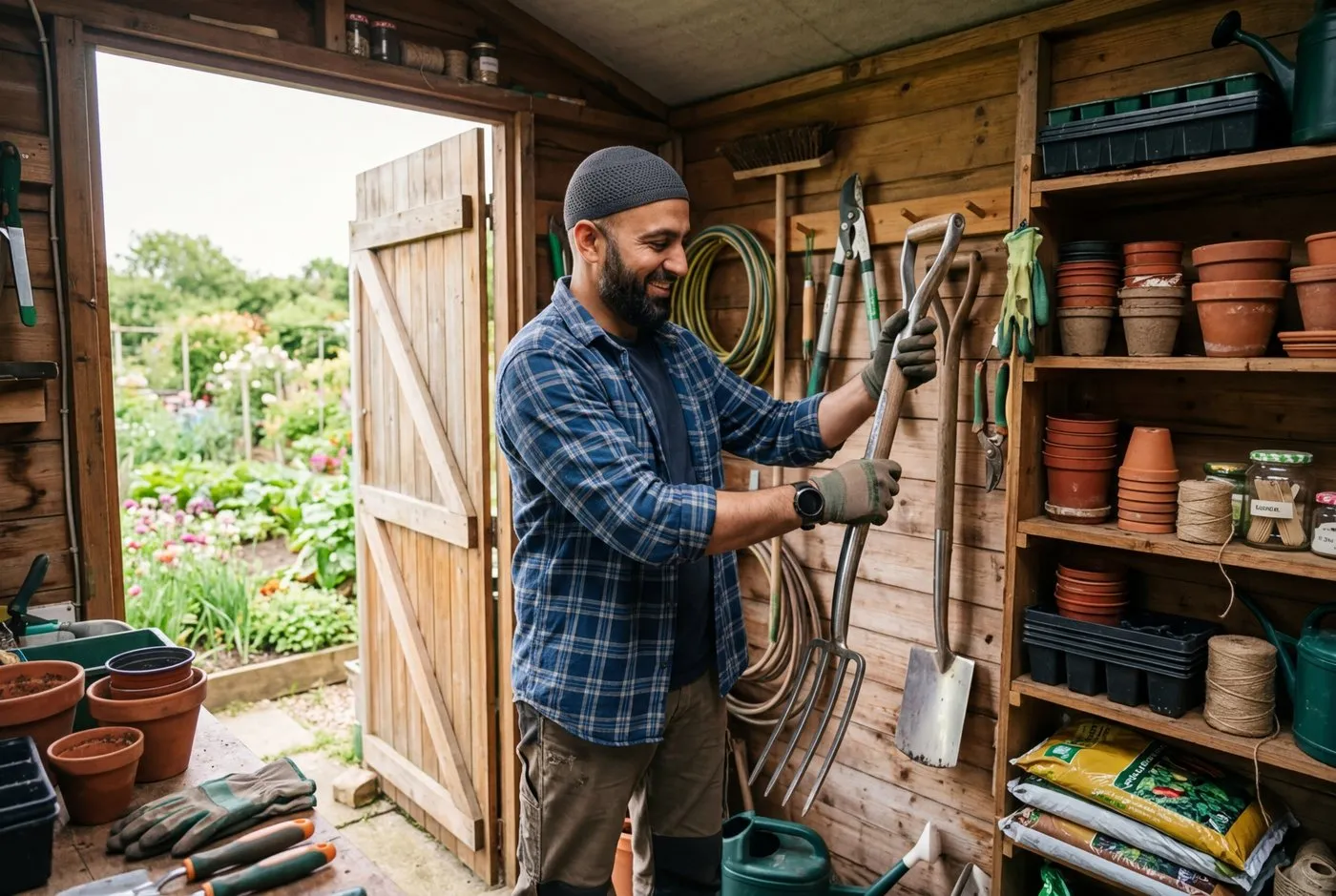
Wall-mounted racks keep every tool visible and accessible, no more rummaging through piles
How to organise tools in an allotment shed
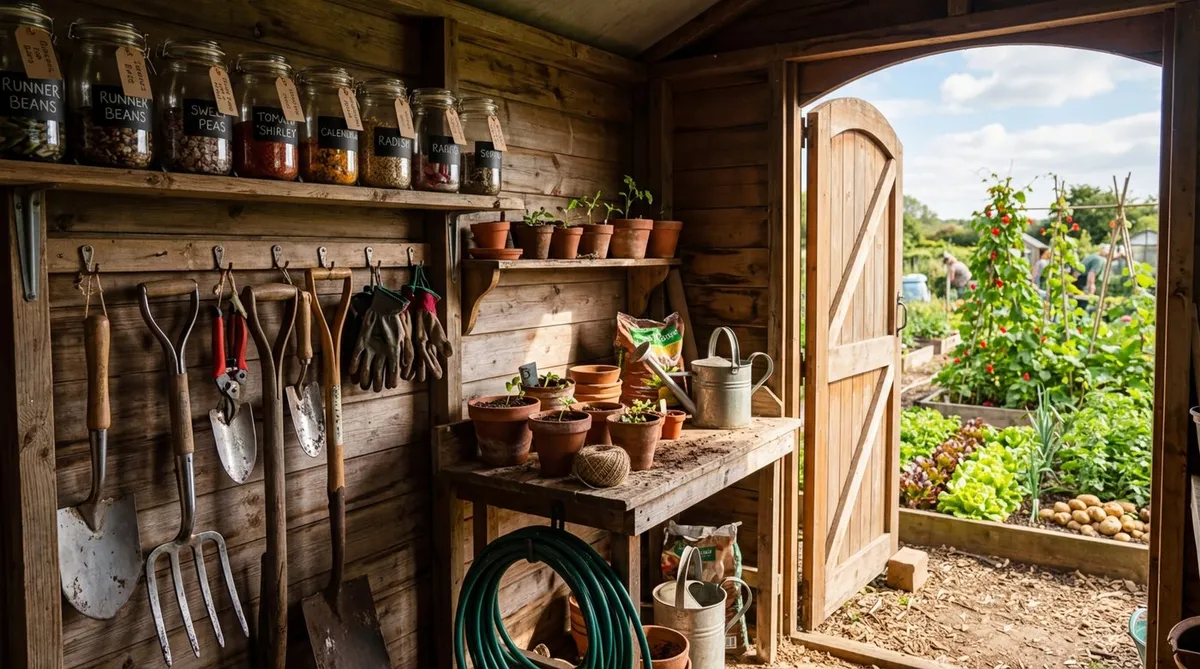
Tool organisation is the single biggest improvement you can make. Wall-mounted storage keeps handles separated and leaves a clear route through the shed. Choose a system that can support each tool securely.
Pegboard
Mount pegboard on spacer battens so hooks can slot in properly. It suits hand trowels, secateurs, dibbers, twine and labels. Keep packeted seed in a closed container rather than on an exposed board, and rearrange hooks as the tool collection changes.
Wall-mounted tool racks
Wooden or metal racks with spring-grip clips hold spades, forks, rakes, hoes and edging shears vertically. Mount each rack into sound framing rather than thin cladding. Place heavy tools low enough to remove without stretching, and test that no handle blocks the doorway.
Magnetic strips
A magnetic strip can hold small metal tools, but exposed blades do not belong at child height. Use a closed, labelled box for knives and sharp fixings. Wipe soil from tools before storage so moisture is not held against the metal.
Ceiling hooks
Fix suitable hooks into sound framing for light seasonal items such as netting, fleece rolls and an empty hose. Do not suspend heavy tools above a walkway or rely on hooks fixed only into thin roof boards.
Seed storage that actually preserves viability
Seeds last longest when they remain dry, cool and dark. A damp packet can develop mould or lose germination quality before the next sowing season.
Fold or clip each dry packet, then place it inside a labelled airtight container. Record the variety and packing or purchase year so older seed can be used first. A reusable desiccant sachet can help only when the seed and container are already dry; replace or recharge it according to its instructions.
| Storage risk | Practical response |
|---|---|
| Open packet | Close it and move it into a labelled airtight container |
| Damp shelf | Find the leak and move seed away until the timber is dry |
| Direct sun | Use an opaque box in the coolest shaded part of the shed |
| Valuable or scarce seed | Store it at home where temperature and moisture are steadier |
Temperature matters. A shed can become hot in summer and damp in winter. Take valuable seed home if the building has wide temperature swings or leaks.
Setting up a potting bench in a small shed
A potting bench improves an allotment shed from pure storage into a functional workspace. You can prick out seedlings, pot up plants, mix compost, and label trays without bending over on the ground.
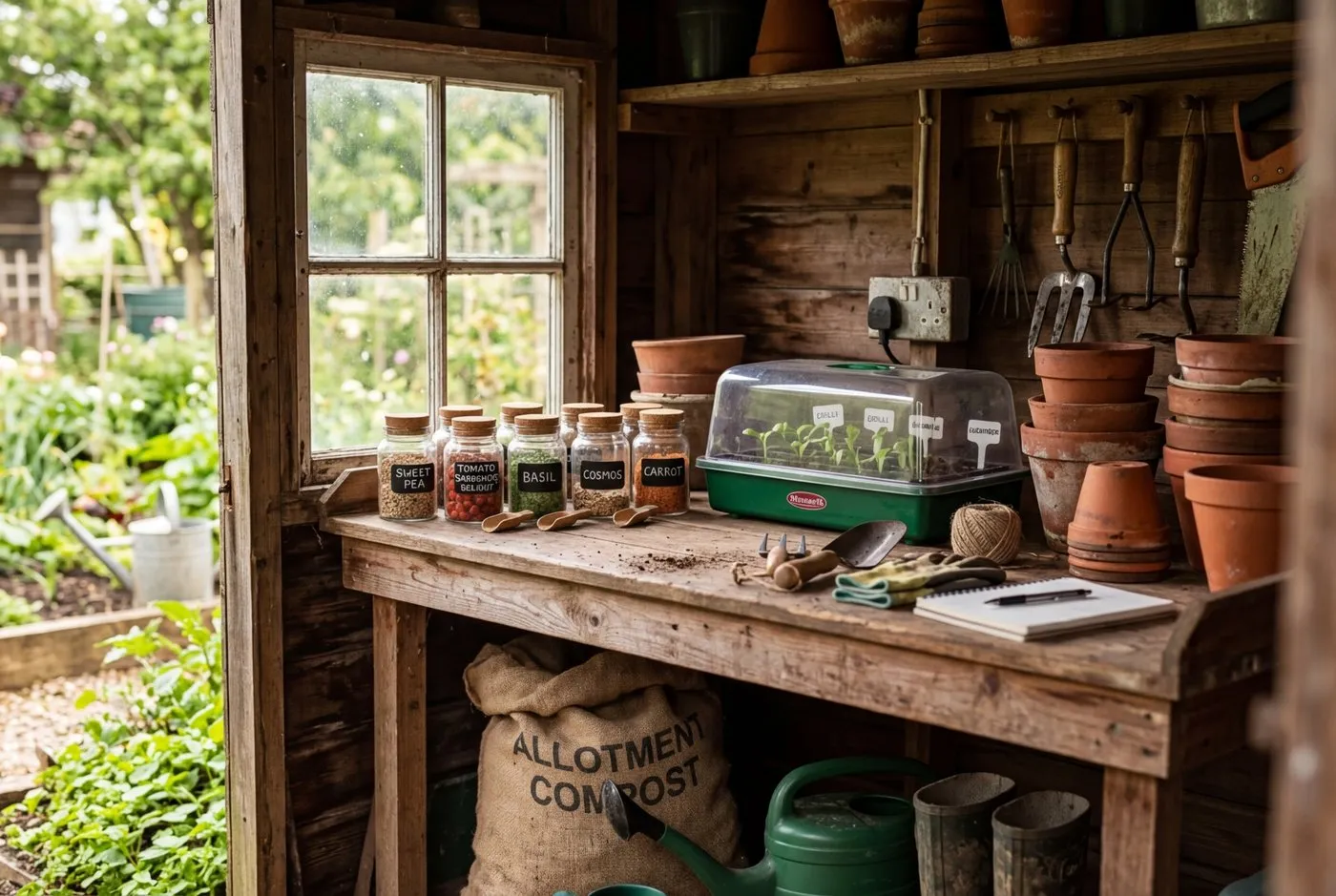
A fold-down bench and labelled seed jars create a proper propagation station in a small shed
Fold-down bench (best for 6x4ft sheds)
Mount a plywood or solid-timber worktop on brackets rated for the expected load. Set it at a comfortable working height, round exposed corners and add a positive catch so the surface cannot drop unexpectedly. Fold it away after use to restore a clear route through the shed.
Fixed bench (8x6ft sheds and larger)
A permanent bench along an end wall gives you a dedicated potting station. Add a raised back edge to contain loose compost and mount shallow shelving above for trays and labels. Keep a lidded bin beneath for waste, and make sure the remaining aisle is wide enough for safe entry and exit.
Essential bench equipment: a potting scoop, sieve for compost, dibber, waterproof labels, a permanent marker, and a bucket of clean water. Store these within arm’s reach of the bench surface.
Allotment shed security
Allotment theft is a persistent problem across the UK. Power tools, copper piping, and quality hand tools are the most targeted items. Visible security helps, but no allotment shed is a safe place for valuable machinery.
Lock: Fit the hasp and hinges with coach bolts. Use a closed-shackle padlock and keep tools out of sight. Bristol City Council’s allotment guidance gives the same advice and recommends taking expensive machinery home.
Tool marking: Mark hand tools with a plot identifier that does not disclose a home address. Keep serial numbers and photographs of distinctive equipment at home. This helps identify property without adding personal information to an unattended shed.
Don’t store valuables. Leave battery packs, power tools, and anything expensive at home. The allotment shed should contain replaceable hand tools and consumables only. If you must leave a strimmer or mower on site, chain it to a ground anchor inside the shed.
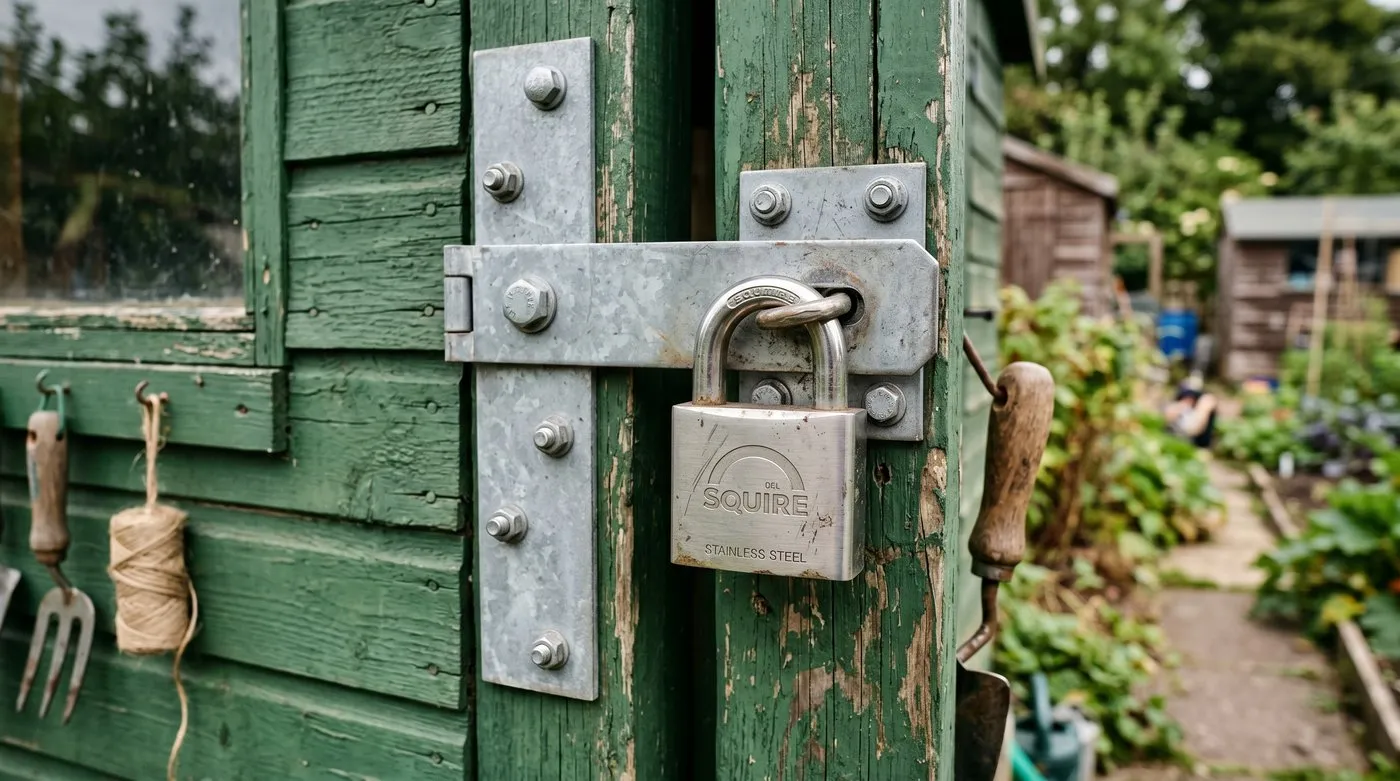 A closed-shackle padlock reduces exposed metal, while coach bolts secure the hasp from inside.
Lean-to extensions and covered areas
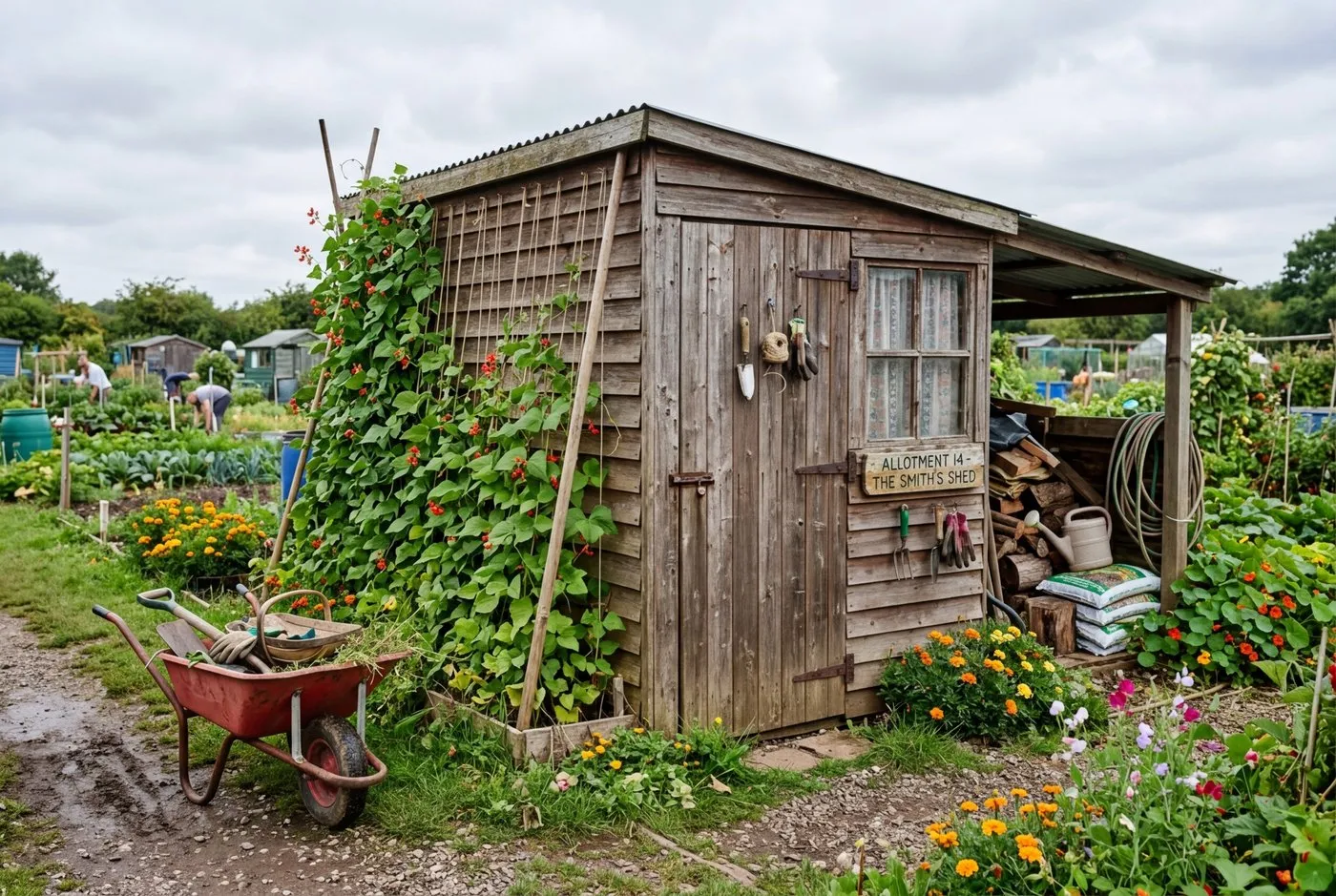
A lean-to extension adds dry storage for bulky items without increasing the shed footprint
A lean-to roof attached to one side of the shed can shelter a wheelbarrow, cane bundle or cold frame without using internal floor space.
Treat a lean-to as an additional structure, not as a loophole in the shed limit. Ask whether it needs separate consent and whether its footprint, drainage or shading would affect a neighbouring plot. Use a qualified installer when the framing, fixings or roof loading are outside your experience.
Essential allotment shed equipment checklist
This checklist covers the tools and supplies every allotment shed should contain. Tick off what you have and fill the gaps.
| Item | Purpose | Storage position |
|---|---|---|
| Spade and fork | Digging and turning compost | Secure vertical rack |
| Hand trowel and fork | Planting and weeding | Pegboard or closed tray |
| Hoe and rake | Weed control and soil levelling | Secure vertical rack |
| Secateurs | Pruning and harvesting | Closed, dry box |
| Watering can | Targeted watering | Floor edge away from doorway |
| Wheelbarrow | Moving compost, soil and harvests | Clear bay or approved shelter |
| Twine and labels | Plant support and identification | Labelled drawer or box |
| Seed trays and pots | Propagation | Nested on a high shelf |
| Fleece and netting | Frost and pest protection | Dry hooks away from blades |
| Timber treatment | Shed maintenance | Sealed container taken home if required |
| Padlock and spare key record | Security | Lock fitted outside; record kept at home |
Buy only the tools the plot work requires. Reuse sound second-hand equipment where practical, inspect wooden handles and metal joints, and avoid filling the shed before there is a defined storage position for each item.
Shed maintenance through the seasons
Timber sheds on allotments face wind, rain and frost. A short inspection in dry weather can catch a leaking roof or wet base before stored tools are damaged.
During a dry spell in spring or early summer:
- Treat external timber with a product suitable for the shed and allowed by the tenancy. Follow the manufacturer’s preparation, temperature and drying instructions.
- Pay extra attention to the base rail, door frame, and end grain where moisture enters first.
- Check roofing felt for tears or lifted edges. Re-nail or patch with bitumen adhesive.
- Clear soil, leaves, and debris from the base perimeter. Organic material banked against the base rail traps moisture and accelerates rot.
Every autumn (October):
- Tighten loose screws and re-nail any sprung boards.
- Oil door hinges and the padlock mechanism.
- Check the floor for soft spots, probe with a screwdriver. Soft timber means rot has started.
- Ensure the water butt is draining properly and not overflowing against the shed wall.
Record repairs and the treatment product used. If the base, floor or framing becomes soft, stop loading that area and repair it before relying on the structure again.
Frequently asked questions
What size shed am I allowed on an allotment?
Allotment shed limits depend on the landlord and site rules. Portsmouth permits 2.4m by 1.8m sheds, while Brighton permits 2m by 3m.
Do I need permission for an allotment shed?
Check your tenancy before buying or building any structure. Bristol requires Allotments Office permission, while Manchester requires written consent for sheds and greenhouses.
How do I secure an allotment shed?
Use coach bolts and a closed-shackle padlock. Take machinery home, keep tools out of sight and report theft to the police and site manager.
What is the best way to store seeds in a shed?
Keep dry seed packets inside labelled airtight containers. Put them in the coolest, darkest cupboard and take valuable or temperature-sensitive seed home.
How do I organise tools in a small allotment shed?
Hang long tools vertically and keep the floor clear. Use pegboard for hand tools, a high shelf for seasonal kit and hooks for netting.
Browse the Garden UK garden-design guides for practical layout advice. Next, compare structure options in our allotment shed buying guide.
Our team produces practical UK gardening guidance from source research, contributor records and established horticultural practice. Editorial standards are overseen by Matt W.