Key takeaways
- Make the main barrow path about 90cm-1m wide and paths between beds 45-60cm
- Woodchip is the cheapest surface and is often free from local tree surgeons
- Lay woodchip 7-10cm deep and top it up as it rots down
- Reclaimed slabs on a sand bed last for years and can be lifted later
- Edge loose surfaces with timber or bricks to keep them out of the beds
- Avoid poured concrete on a rented plot and check site rules first
Good paths make an allotment easier every single visit. Get the width right for a wheelbarrow, pick a surface that suits your budget, and edge it so it stays put. Woodchip is the cheapest and most popular choice, while reclaimed slabs last longest.
This guide is about paths on a rented plot. For ideas for a home garden, see the guide to garden path ideas.
How wide should allotment paths be?
Make the main path that takes a wheelbarrow about 90cm-1m wide. That gives room to push a loaded barrow without scraping the bed edges. Paths between beds can be narrower, about 45-60cm, which is enough to kneel and carry a bucket.
| Path | Width | What it’s for |
|---|---|---|
| Main path | 90cm-1m | Wheelbarrow, regular trips |
| Between beds | 45-60cm | Kneeling, watering, weeding |
| Wheelchair access | About 1.2m | Wheelchair or scooter |
| Round the edge | Match the main path | Getting a barrow to every corner |
Measure your widest kit before you build: barrow, rotavator or mower. Paths under about 45cm get trodden onto the beds. Plan paths first and beds second. The guide to allotment layout ideas shows how paths and beds fit together.
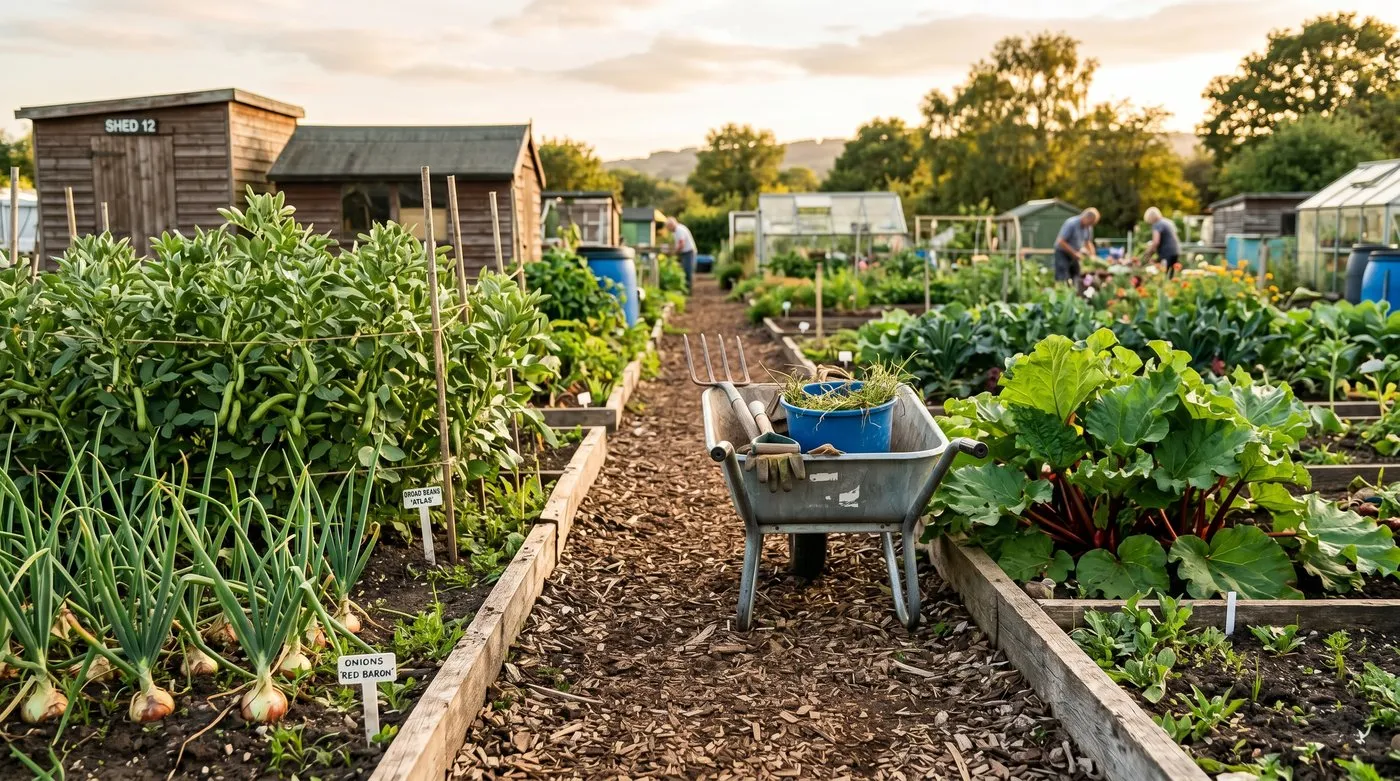
A main path wide enough for a barrow makes every trip easier. Timber edges keep the woodchip where it belongs.
Woodchip: the cheapest allotment path
Woodchip is cheap, soft underfoot and easy to lay. Tree surgeons often give it away, as it saves them a tipping charge. Ask local firms whether they’ll drop a load at your site gate, and check your site is happy to take it.
Spread it 7-10cm deep. On weedy ground, lay flattened cardboard first. Woven membrane also works, but as the chip rots on top of it, weeds root into the compost layer. Top up the path each year as it breaks down.
Edge it with scaffold boards or timber screwed to pegs, or the chip drifts into your beds. Old, rotted chip from the path makes a handy mulch, so nothing goes to waste. The woodchip mulch guide explains how to use it on beds.
Gardener’s tip: Skip sawdust. It packs into a soggy mat that stays wet and slippery. Chunky chip drains much better.
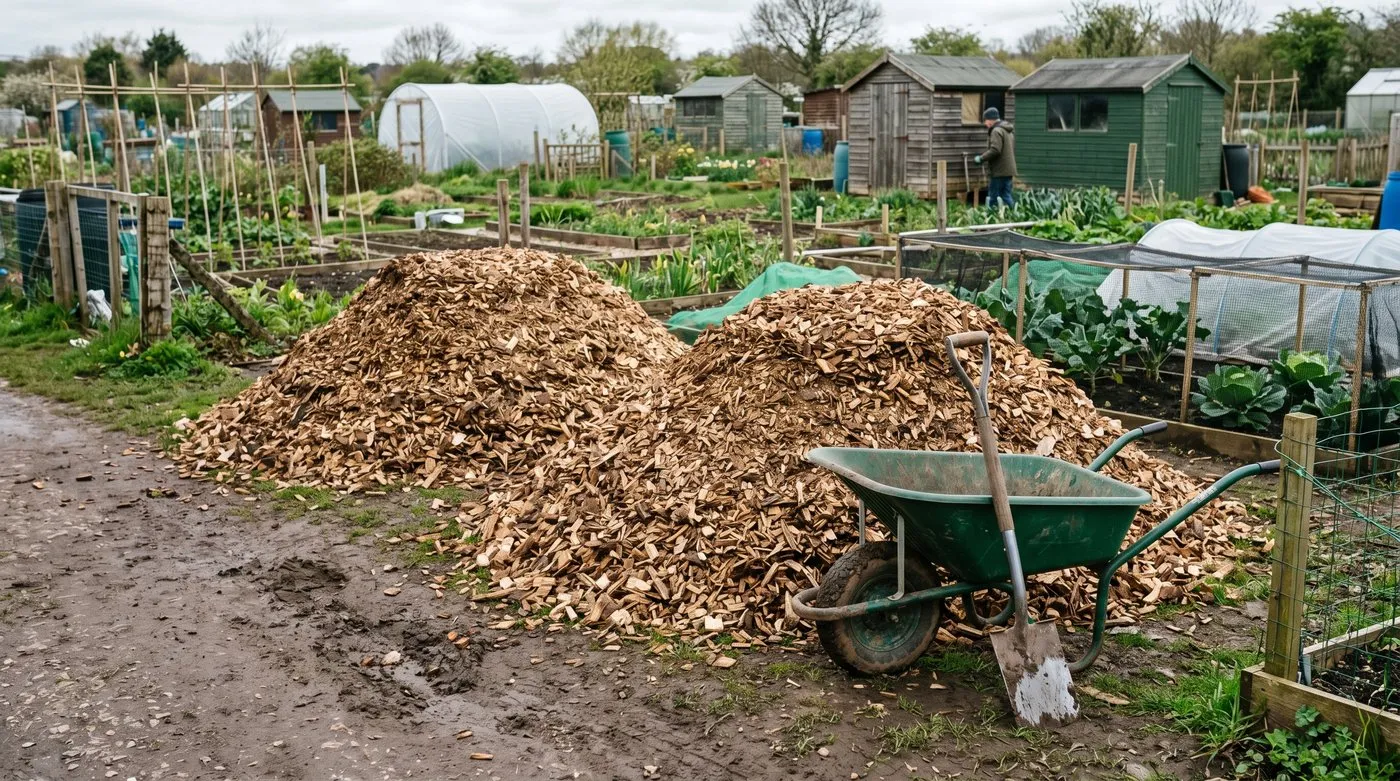
A free load of woodchip from a tree surgeon can cover several plots. Ask the committee where it can be tipped.
Slab paths on an allotment
Reclaimed concrete slabs last for many years and give a firm, level surface for barrows, sticks and wheelchairs. You’ll often find them second-hand.
Lay them on a bed of sharp sand over a compacted layer of crushed stone, such as MOT Type 1. Leave small gaps and brush in kiln-dried sand rather than mortar. That lets rain drain through and lets you lift the slabs later. Brick edging on either side keeps soil off the path in heavy rain.
Most allotment tenancies ban permanent structures, so avoid poured concrete. Slabs on sand can be lifted when you leave. Check your own site’s rules first; the guide to allotment rules explains what’s usually allowed.
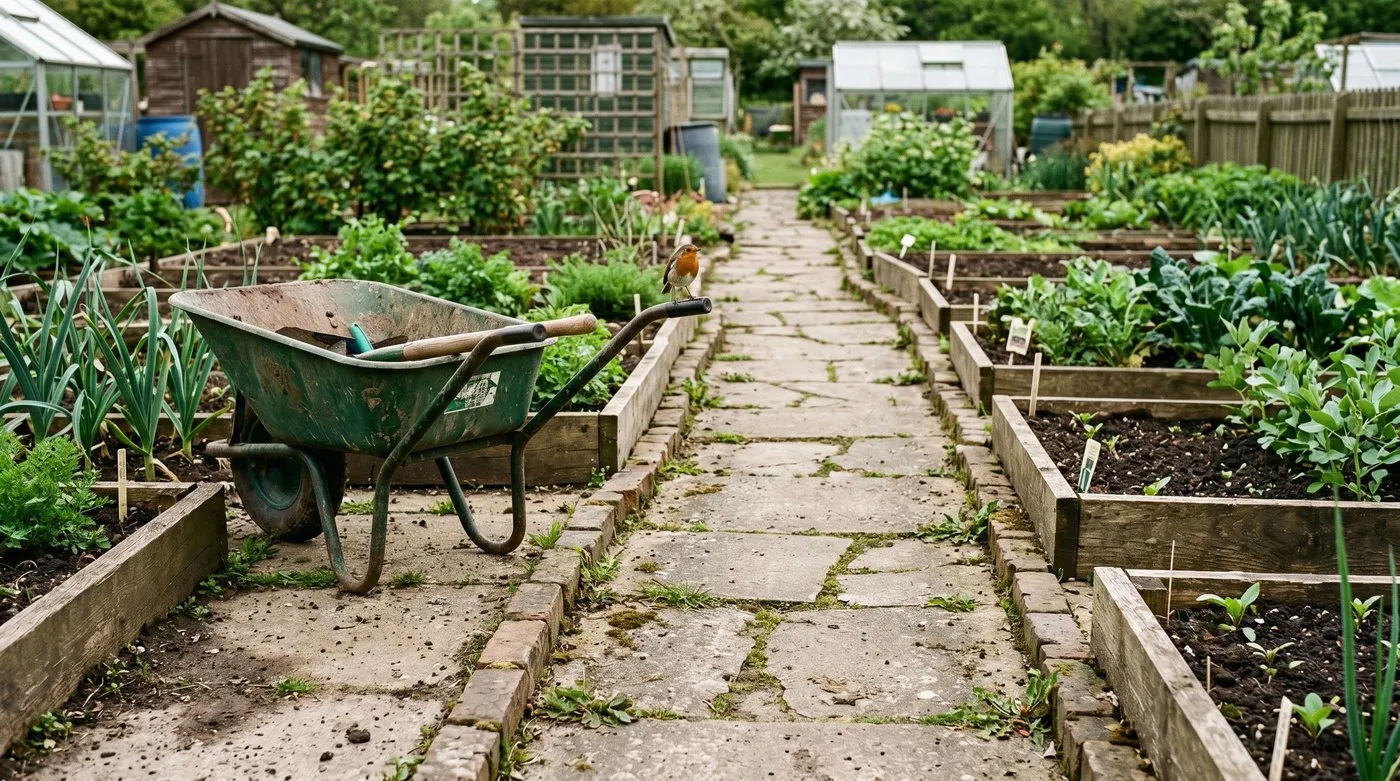
Reclaimed slabs on sand make a firm path that lasts for years. A robin usually turns up to inspect the work.
Gravel and stone allotment paths
Self-binding gravel (often sold as hoggin) packs down hard and suits barrows. Loose pea shingle shifts underfoot and wanders into beds, so it’s less practical.
Lay the gravel over woven membrane on a compacted stone base. Self-binding gravel needs firm compacting with a roller or hired plate compactor. Gravel always needs edging and the odd top-up.
Crushed stone such as MOT Type 1 can be used as a surface on its own. It’s very hard-wearing, though it looks rough and can be dusty in dry spells.
Grass paths and mowing strips
Grass paths are soft, green and cost nothing to lay. The catch is the work. They need mowing every week or two in the growing season, and grass creeps into the beds.
Sow a hard-wearing mix sold for play areas, not a fine lawn mix. A mowing strip makes grass paths far easier. It’s a line of bricks, slab off-cuts or a narrow gravel band along each bed edge. Set it level with, or just below, the grass so the mower wheel runs along it. The lawn edging guide has more edging options.
Grass paths also get muddy and slippery in winter, so they’re best on well-drained sites. Couch grass spreading from paths is a common headache: see how to beat couch grass.
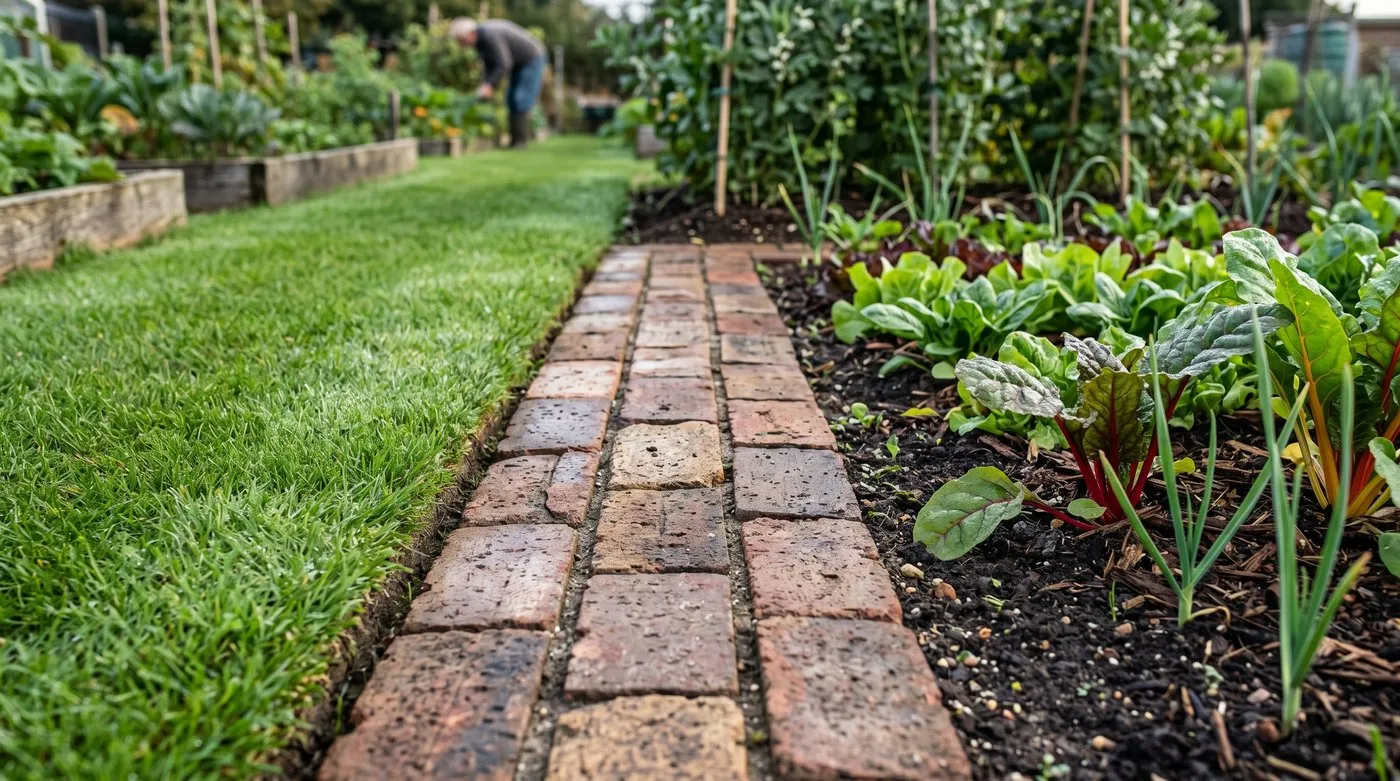
Bricks set level with the grass let the mower run right to the edge. No more grass creeping into the chard.
Which allotment path material is best?
| Surface | Good for | Watch out for |
|---|---|---|
| Woodchip | Cheap, soft, quick to lay | Needs topping up each year |
| Reclaimed slabs | Firm, long-lasting, liftable | Heavy to lay |
| Self-binding gravel | Neat and firm when compacted | Needs edging and compacting |
| Crushed stone | Very hard-wearing | Rough look, can be dusty |
| Grass | Free and green | Regular mowing, muddy in winter |
How to build a woodchip allotment path
- Mark the path with string and pegs on both sides.
- Strip any turf and weeds. Use the turf upside down to build up a bed.
- Lay cardboard or woven membrane along the path, overlapping the joins well.
- Fix the edging. Screw scaffold boards or timber to wooden pegs knocked in along the edges.
- Spread woodchip 7-10cm deep and rake it level, slightly higher in the middle.
- Walk on it for a week, then top up any low spots.
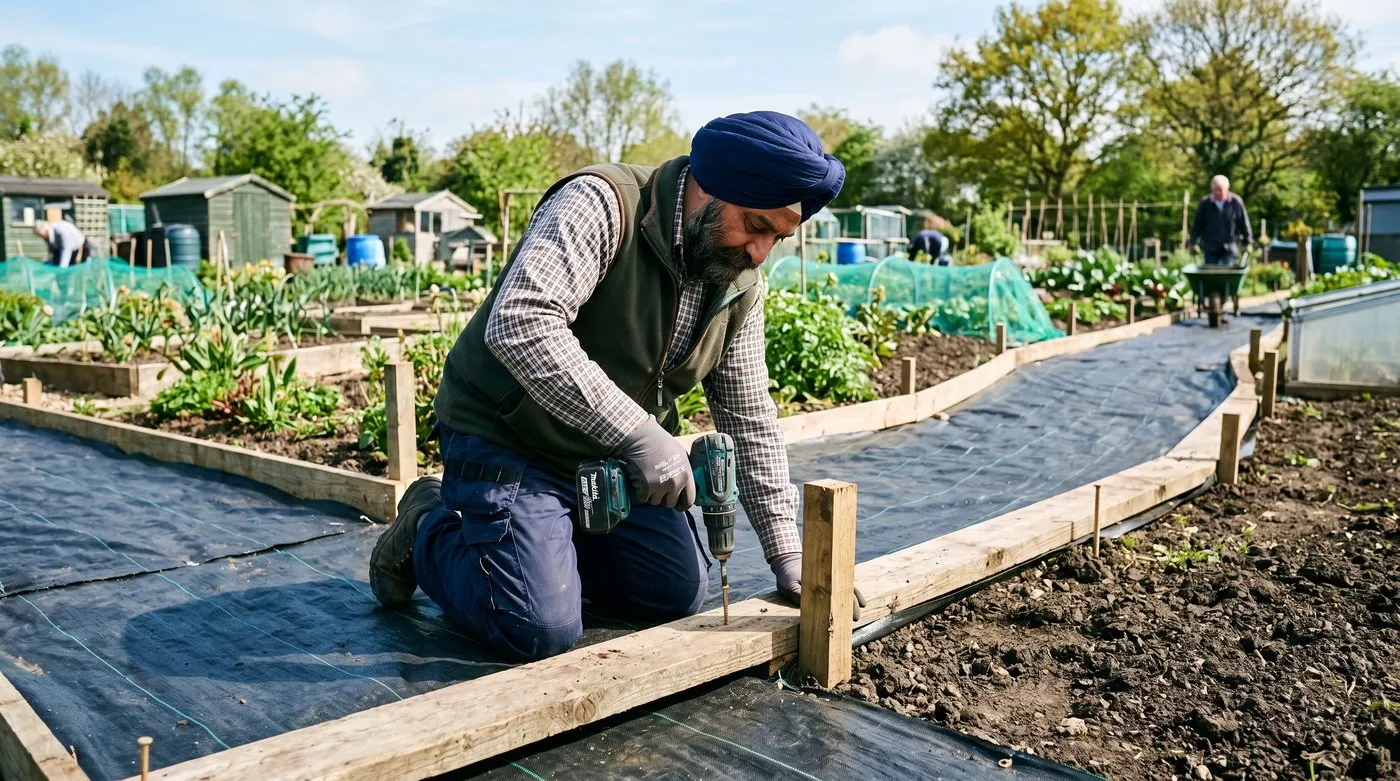
Fixing the edging before the woodchip goes down gives a neat line. It also stops the chip creeping into the beds.
How to stop allotment paths getting waterlogged
Shape the path so it’s slightly higher in the middle than at the edges. Water then runs off to the sides instead of sitting in barrow ruts.
On heavy clay, put a layer of crushed stone under the surface. Avoid solid, sealed edging that traps water on the path. If the whole plot is wet, see the guide to allotment flooding and drainage.
Common allotment path mistakes
- Paths too narrow. A barrow that scrapes every bed soon gets annoying. Start at 90cm for the main path.
- No edging. Woodchip and gravel wander into the beds within a season.
- Using sawdust. It stays soggy and slippery.
- Pouring concrete. It usually breaks site rules and is hard to remove when you leave.
- Forgetting the mowing strip on grass paths, which means endless edging.
If you’re making a plot easier to manage as you get older, read allotment gardening as you get older for wider path and bed ideas. You’ll find more practical guides on our how-to hub.
Frequently asked questions
How wide should an allotment path be?
About 90cm-1m for the main wheelbarrow path. Paths between beds can be 45-60cm. Go wider, around 1.2m, if you use a wheelchair or mobility scooter.
What is the cheapest allotment path material?
Woodchip, which tree surgeons often give away. Ask local firms whether they’ll drop a load at your site. Spread it 7-10cm deep and top it up each year.
Do allotment paths need a weed membrane?
Not always, but it helps on weedy ground. Woven membrane under gravel stops it sinking into the soil. Under woodchip, cardboard works well and rots away cleanly.
Can I lay concrete paths on an allotment?
Usually not, so check your tenancy first. Most sites don’t allow permanent structures. Slabs on sand can be lifted when you leave, so they’re a safer choice.
What is a mowing strip?
A hard edge between a grass path and a bed. Bricks or slabs set level with the grass let the mower run along the edge. They also stop grass creeping into the bed.
How do I stop allotment paths getting muddy?
Lift the path surface slightly in the middle so water runs off. Add a layer of crushed stone under the surface on heavy clay. Woodchip also soaks up a lot of mud.
Our team produces practical UK gardening guidance from source research, contributor records and established horticultural practice. Editorial standards are overseen by Matt W.