Key takeaways
- Most shows judge veg on points, usually following the NVS judging guide
- Harder crops carry higher maximum points than easy ones
- Clean, fresh, undamaged veg in a well-matched set beats sheer size
- Wrong counts or rule breaks get an entry marked NAS, not as schedule
- Read the schedule twice and stage your plates at home the night before
- Take spares to the show in case anything gets damaged on the way
Most allotment and village shows judge vegetables on points. The judge looks at how fresh and clean your veg is, how well the set matches, and whether you followed the schedule. Get those right and you’re in with a real chance, even at your first show.
This guide is about the judging and staging side. For growing the crops in the first place, see the guide to show growing for your village veg show.
How are vegetables judged at a show?
Most UK shows follow the National Vegetable Society (NVS) judging guide, even small village ones. It gives each kind of vegetable a maximum number of points. Harder crops, such as big onions, leeks and long carrots, are worth more than easy ones.
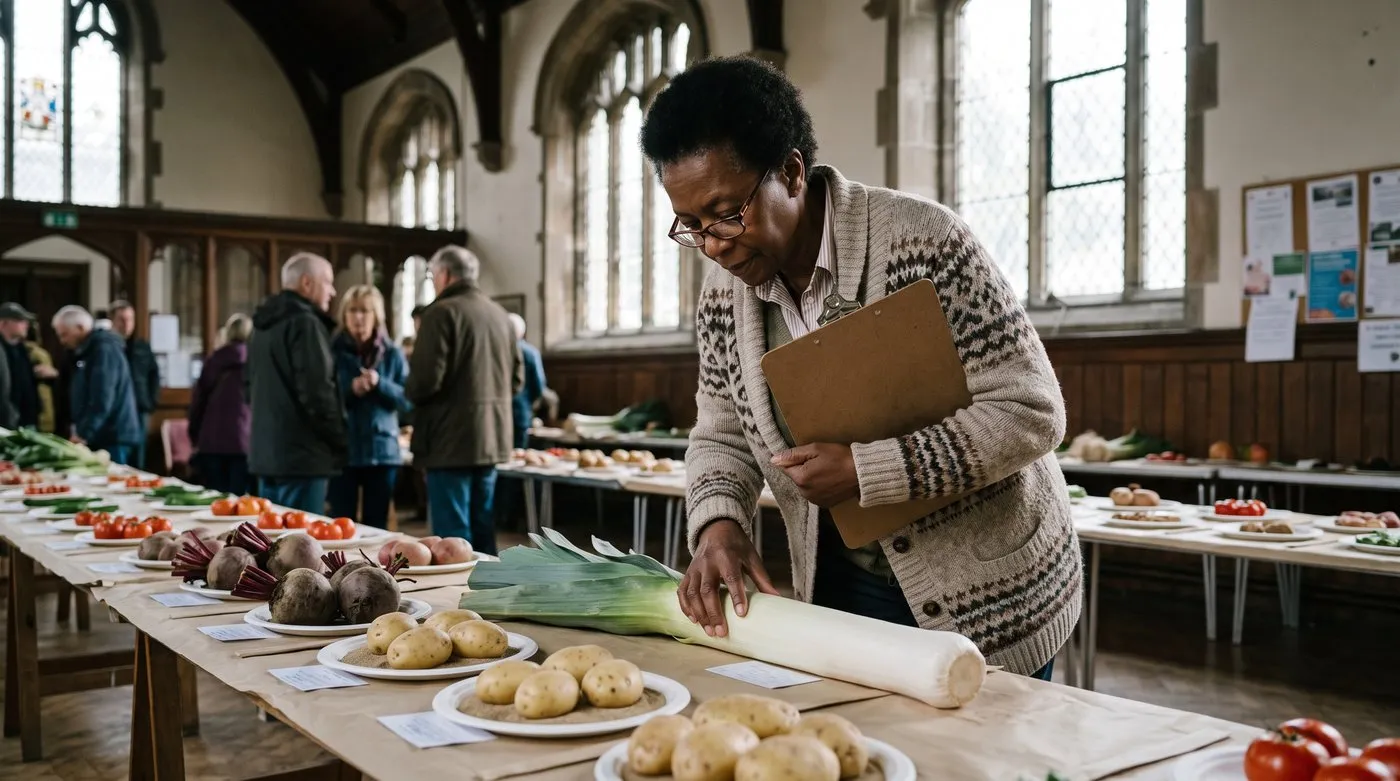
Judges handle each entry to check it’s firm, clean and sound. Condition counts for more than size.
The judge first checks the entry matches the schedule. Then they score the plate, roughly in this order:
- Condition: fresh, firm, clean and free from damage, pests or disease. This matters most.
- Uniformity: how closely the specimens match in size, shape and colour.
- Shape: true to the variety, with no forks, splits or bulges.
- Size: right for the kind and variety. Bigger isn’t always better.
- Colour: clear and even.
Three matched, perfect onions of medium size will usually beat three huge ones that don’t match. You can find out more about the society and its guide on the NVS website.
What does “not as schedule” mean?
NAS, or “not as schedule”, is written on entries that break a class rule. A NAS entry isn’t placed at all, however good it looks. Common reasons:
- The wrong number of specimens.
- Mixed varieties in a class asking for one variety.
- Veg trimmed when the schedule asked for tops to be left on, or the other way round.
- Wrong plate, board or staging method.
- Entering a class you aren’t eligible for, such as a novice class after a first prize.
Read the schedule twice and highlight the classes you’re entering. Note the counts and any special rules.
What judges look for in common classes
Each kind of vegetable has its own points to watch. Here’s a quick guide to what the judge checks first.
| Class | What wins | Common faults |
|---|---|---|
| Onions | Matched, firm, ripe bulbs with clean dry skins | Soft necks, split skins, odd sizes |
| Leeks | Long, firm, clean blanch with no splits | Bulbs, splits, rust, dirty roots |
| Potatoes | Matched tubers, clean skins, shallow eyes | Scab, greening, scrubbing damage |
| Long carrots | Long, smooth, tapering roots with tip intact | Broken tips, side roots, green shoulders |
| Beetroot | Round, smooth, matched roots with the tap root on | Cracks, rough skin, trimmed tap root |
| Tomatoes | Ripe, even colour, fresh green calyx | Cracks, green shoulders, missing calyx |
| Runner beans | Long, straight, fresh pods with no bulging seeds | Curled or limp pods, visible seeds |
The guides to exhibition onions, show potatoes and long show carrots go into each crop in detail.

Matched length and shape, tips intact, laid neatly on dark cloth. This is the kind of set a judge loves to see.
How to stage vegetables for a show
Staging means how you present the plate on the bench. It’s where many first-timers lose points they’ve already grown.
- Wash gently. Use cool water and a soft cloth or sponge. Scrubbing marks skins.
- Trim to the rules. Carrot and parsnip foliage is usually cut back to a short stub; check your schedule for the length.
- Leave tap roots on carrots, parsnips and beetroot.
- Keep calyxes on tomatoes, and keep them fresh and green.
- Tie onion necks neatly with raffia and trim the roots back to the base.
- Arrange neatly. Odd numbers sit well in a triangle or pyramid. Put the set so the best faces point to the front.
Staging onions
Onions are usually staged on rings or a bed of dry sand. Tie the necks neatly and trim the roots back cleanly. The skins should be clean, dry and unbroken, so handle them as little as you can.
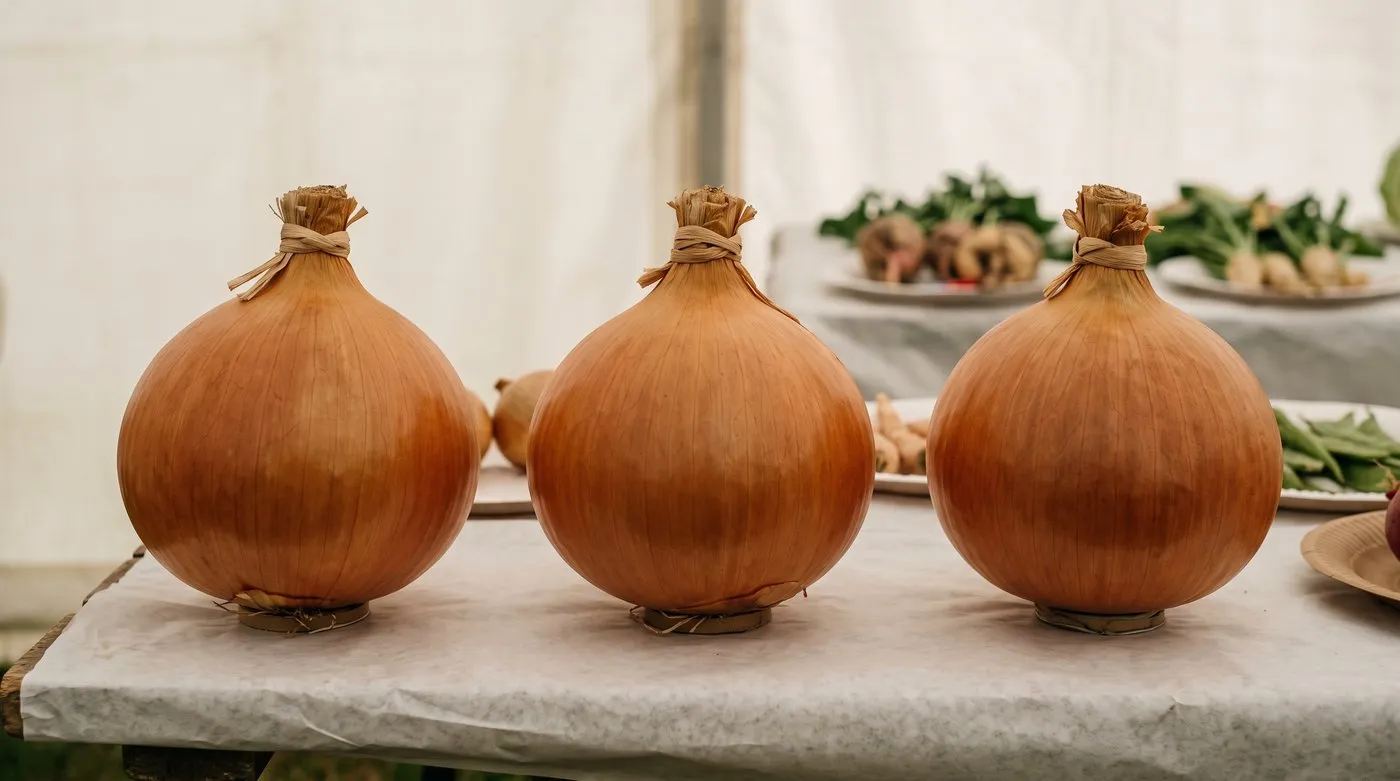
Neat necks, trimmed roots and skins you haven’t rubbed. That’s what makes a judge stop at your onions.
Collection classes
A collection is several kinds of vegetable staged together as one exhibit. Each kind is scored, then the points are added up.
That means one weak dish drags the whole total down. Build your collection around the crops you grow best. A strong collection of a few kinds is better than a big one with weak links.

In a collection, every dish counts towards the total. One tired cabbage can cost you the class.
Common mistakes that cost show prizes
- Wrong count. Count twice, then count again on the bench.
- Mismatched sets. Grow spares and pick the closest match.
- Dirty roots or leaves. Clean gently the night before.
- Damage on the way. A snapped carrot tip or bruised tomato loses condition points.
- Trimming too hard. Cutting into a beetroot crown or a carrot shoulder is easy to spot.
- Arriving late. Staging closes at a set time, and late entries aren’t judged.
Your show-day countdown
Two days before: lift root crops carefully with a fork, keeping tap roots whole. Harvest more than you need.
The night before: wash gently, trim to the rules and stage your plates on the kitchen table. Pick your best matched sets. Wrap each item in tissue or soft paper and lay them flat in shallow boxes.
Show morning: arrive early, find your classes and stage in class order. Have your entry cards ready. Swap in a spare if anything got knocked on the way. Then leave the tent when staging closes, so the judges can work in peace.
Ready to grow for next year’s show? Read our guide to pot leeks for show or show runner beans for your next class. More ideas are on our growing veg hub.
Frequently asked questions
How are vegetables judged at allotment shows?
On points, usually following the National Vegetable Society guide. Each kind of vegetable has a maximum score. Judges award points for condition, matching, shape, size and colour, then compare entries.
What is the most common reason an exhibit loses points?
A set that doesn’t match. One odd carrot or onion pulls the whole plate down. Grow plenty so you can pick the closest match the night before.
What does NAS mean at a vegetable show?
NAS means not as schedule. The entry broke a class rule, such as the wrong number or a mixed variety. It won’t be placed, however good the veg looks.
What does NVS stand for?
NVS stands for the National Vegetable Society. It publishes the judging guide most UK shows follow. Reading it shows exactly what judges look for in each kind of vegetable.
How do you stage onions for a show?
Set them on rings or sand, with necks neatly tied and roots trimmed. Skins should be clean, dry and unbroken. Check your schedule, as staging rules vary between shows.
Can a beginner win at a vegetable show?
Yes, and many shows have novice classes. Careful matching and neat staging win a lot of prizes. Follow the schedule exactly and you can beat more experienced growers.
Our team produces practical UK gardening guidance from source research, contributor records and established horticultural practice. Editorial standards are overseen by Matt W.