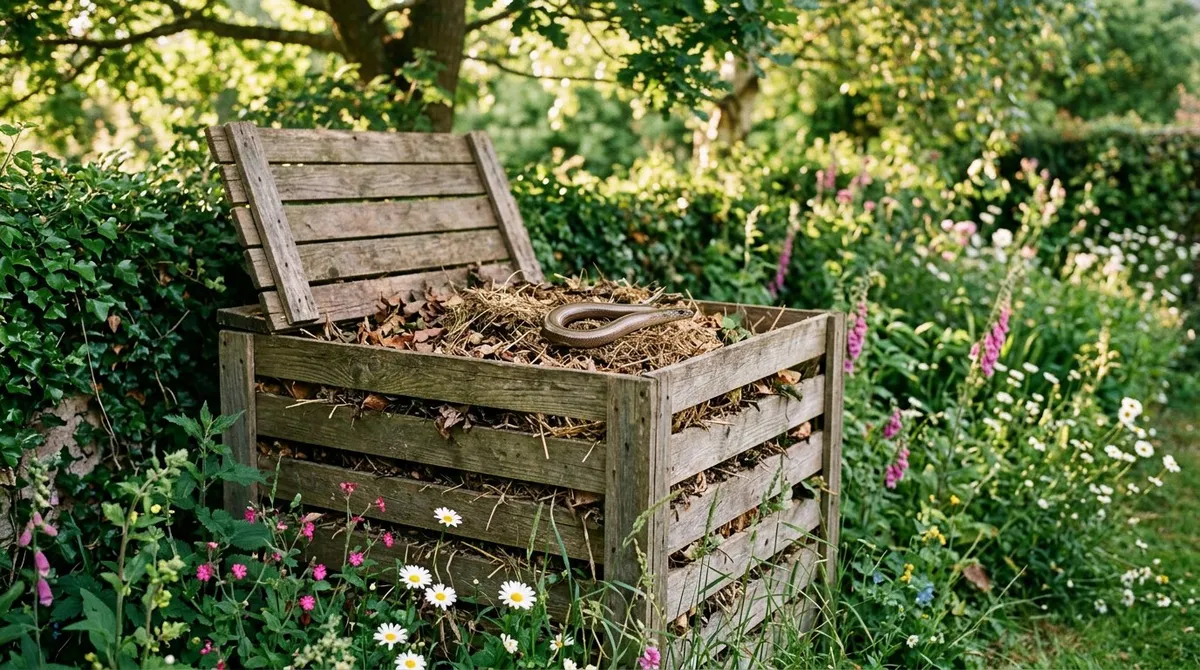
A compost heap supports over 100 invertebrate species and provides habitat for slow worms, grass snakes, hedgehogs, common toads, and fungi. Grass snakes lay 10-40 eggs in warm compost between June and July, needing temperatures of 21-28C for incubation. UK surveys show hedgehogs use compost heaps as hibernation sites from November to March. Keeping one undisturbed heap year-round creates a permanent wildlife refuge alongside your working composting system.
Key takeaways
- Compost heaps support over 100 invertebrate species including beetles, worms, woodlice, and centipedes
- Grass snakes lay 10-40 eggs in warm compost heaps between June and July
- Always check for hedgehogs with a long stick before turning or forking compost
- Keep one permanent undisturbed heap as a dedicated wildlife habitat year-round
- Open-bottomed bins allow ground-dwelling creatures to enter from below
- Leaf mould piles and log stacks beside the compost heap multiply wildlife value
composting wildlife garden hedgehogs slow worms invertebrates biodiversity
Our team produces practical UK gardening guidance from source research, contributor records and established horticultural practice. Editorial standards are overseen by Matt W.