Key takeaways
- Spiders eat lots of garden pests, including aphids and flies
- UK garden spiders aren't dangerous to people
- Orb weavers, money spiders and jumping spiders are the ones you'll see most
- Log piles, long grass edges and dense shrubs give spiders a home
- Skip the pesticides and leave some autumn mess for them to shelter in
Spiders are some of the hardest-working helpers in your garden. They catch aphids, flies, gnats and moths for free, with no sprays involved. Yet lots of us ignore them or sweep their webs away.
There are lots of different spiders living in UK gardens, and none of them are a danger to you. Here’s how to recognise the common ones, what they’re up to, and how to make them feel at home.
The most common garden spiders in the UK
Garden spiders hunt in different ways, so each type catches different bugs. Get to know a few and you’ll spot them everywhere.
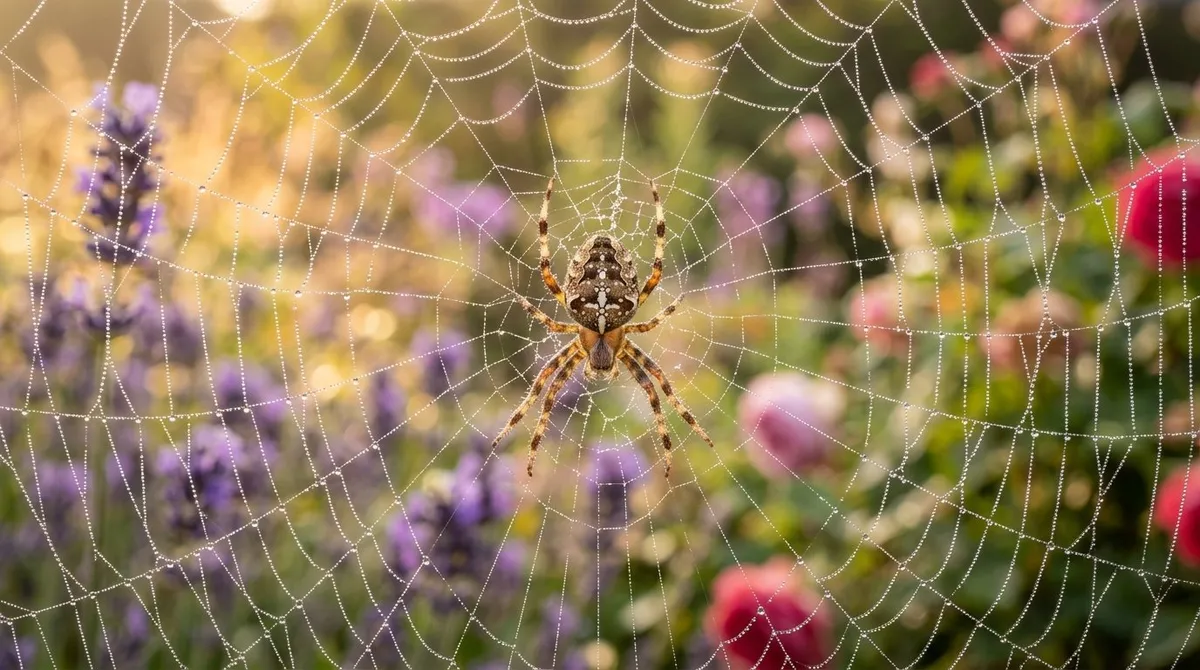
The garden spider (Araneus diadematus) is the one most people know. It builds the classic round web between plants, fence posts and shrubs. Look for the pale cross on its back. They’re easiest to spot in September and October, when the females are fully grown.
Money spiders are tiny, just a couple of millimetres long. They spin flat sheet webs in low plants and on the lawn. What they lack in size they make up for in numbers, and they catch aphids, thrips and springtails that bigger spiders miss.
Zebra spiders (Salticus scenicus) are little black-and-white jumping spiders. They don’t use webs. Instead they stalk flies on sunny walls and fences, then pounce. Their big front eyes give them brilliant eyesight.
| Spider | Web | Eats | When you’ll see it | Where |
|---|---|---|---|---|
| Garden spider | Round orb web | Flies, wasps, moths | Late summer to autumn | Shrubs, fences, hedges |
| Money spider | Flat sheet | Aphids, thrips, springtails | All year | Lawn, low plants |
| Zebra spider | None, it jumps | Flies, gnats, small moths | Spring to autumn | Sunny walls, fences |
| Wolf spider | None, runs | Small beetles, ants, larvae | Spring to autumn | Soil, leaf litter, borders |
| Missing sector orb weaver | Round web with a gap | Flies, midges | Summer to autumn | Hedges, sheds, fences |
| Crab spider | None, ambush | Flower visitors | Summer | Inside flowers |
| Lace web spider | Messy, lacy web | Woodlice, beetles, earwigs | All year | Walls, under bark, sheds |
| Long-jawed orb weaver | Round web | Midges, gnats | Summer | Near ponds, damp spots |
| House spider | Sheet with a funnel | Flies, moths | Autumn | Sheds, garages |
| Nursery web spider | Tent for its young | Flies, beetles | Summer | Long grass |
How garden spiders help with pests
Each type of spider has its own way of catching dinner.
Orb weavers spin sticky round webs to catch flying insects. Many rebuild the web often, and some eat the old silk to recycle it. Their webs catch winged aphids moving between plants, along with flies, midges and moths.
Ground hunters like wolf spiders patrol the soil and leaf litter. They catch crawling bugs that web-builders miss. On a sunny spring day you might see them dashing across a border.
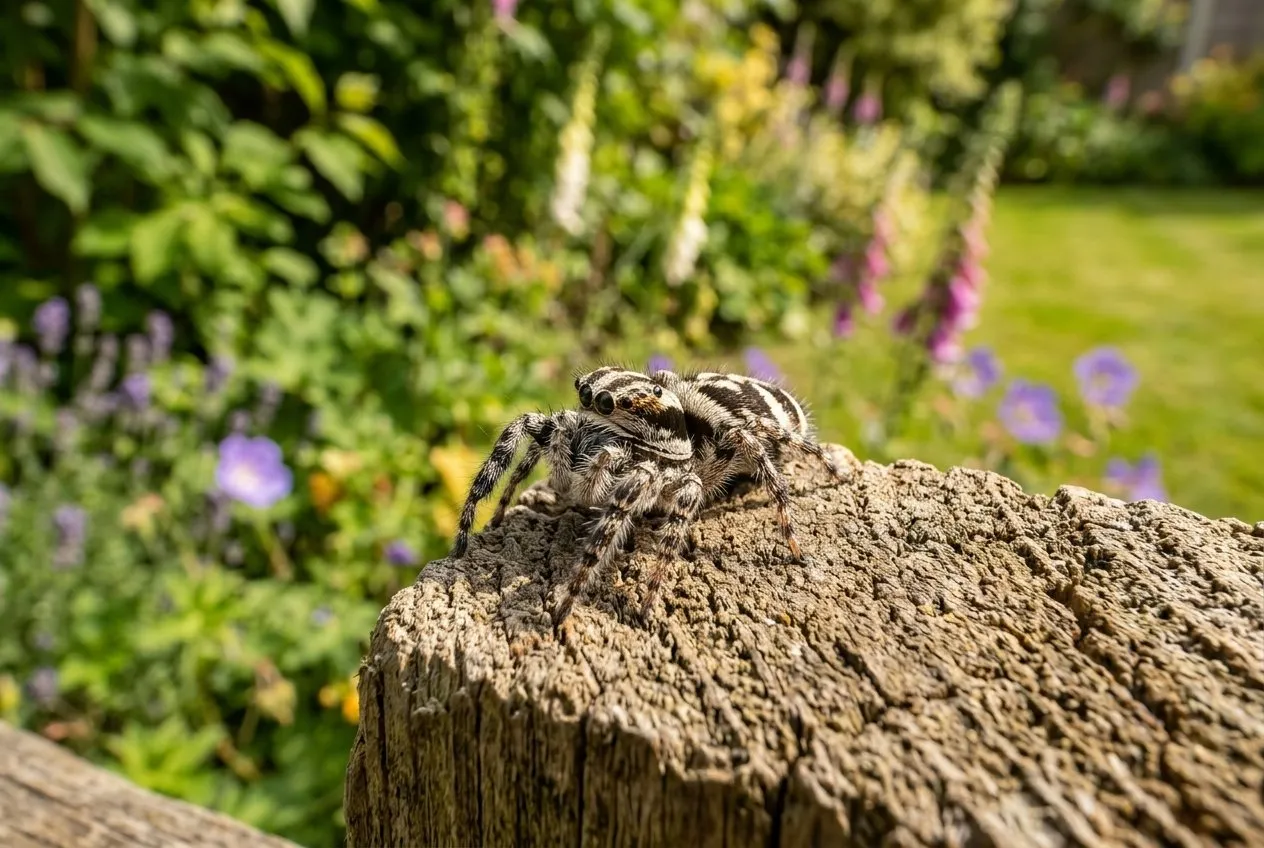 A zebra spider hunting on a warm fence post. It stalks its prey by sight, then pounces.
Jumping spiders like the zebra spider spot their prey and leap on it. They’re great at picking off flies on walls and windowsills, along with gnats and the odd small fly that looks like a hoverfly.
Money spiders are the unsung heroes of natural, biological pest control. There are so many of them that their tiny sheet webs add up to a lot of trapped aphids and other small pests.
Why spiders beat sprays
Insecticide sprays don’t just kill pests. They also kill spiders, ladybirds, lacewings, hoverflies and ground beetles. Pests often bounce back faster than their predators, so you end up spraying again and again.
Spiders keep working for free. Here’s why they’re great to have around:
- Always on duty. Different spiders are busy at different times of year.
- No reapplying. Where there are pests to eat, spiders tend to follow.
- Part of a team. They work alongside other natural predators rather than wiping them out.
Spiders aren’t fussy eaters, so they’ll catch the odd helpful insect too, like a crab spider grabbing a bee. That’s all part of a healthy, balanced garden.
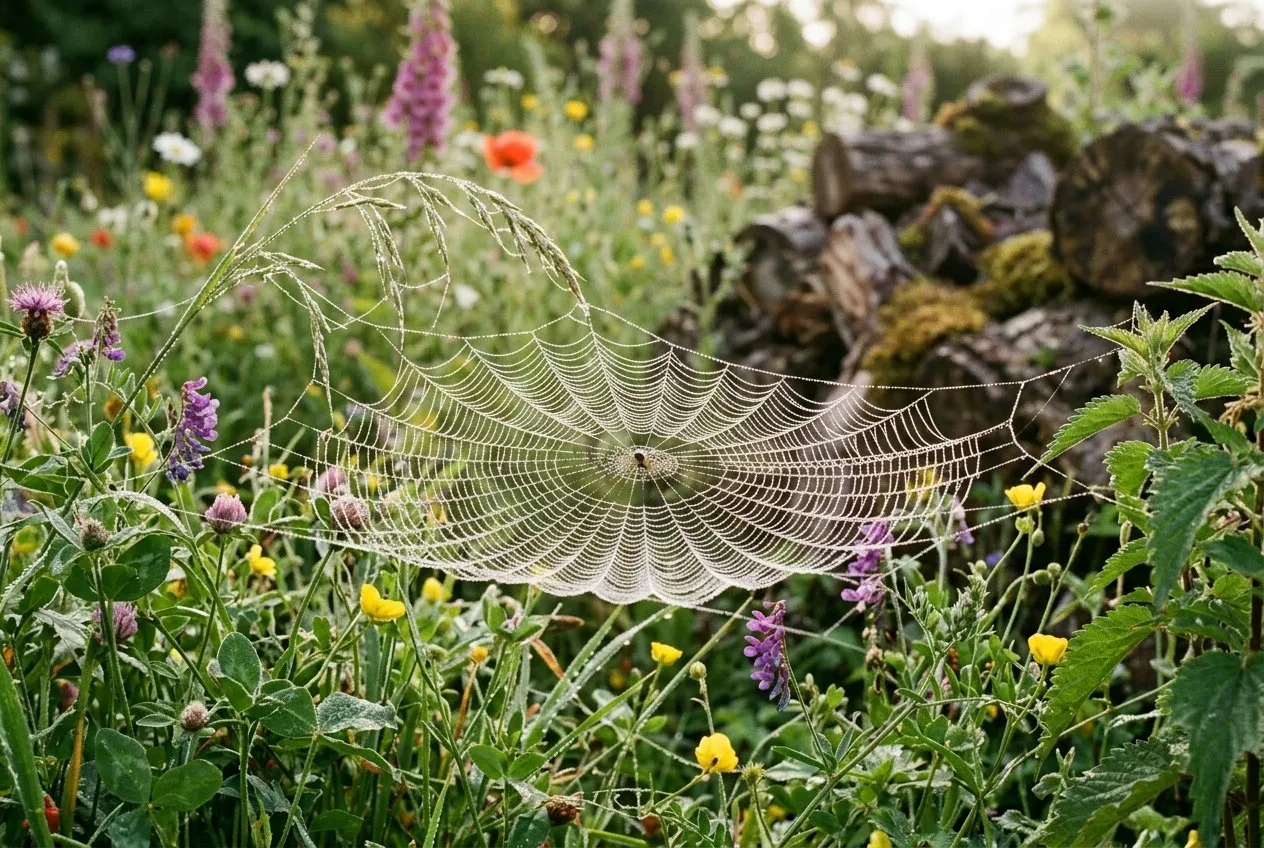 Morning dew shows off all kinds of webs, from flat sheets to classic round orbs.
How to bring more spiders into your garden
Spiders need three things: food, shelter and somewhere quiet. Most gardens have the first two. It’s the quiet, undisturbed corners that are usually missing.
Stop using pesticides. This matters most. Use netting over brassicas and other physical barriers instead.
Leave some grass long. A strip of long grass round the veg beds gives wolf spiders hunting ground and money spiders places to spin. The Wildlife Trusts suggest leaving at least one patch of the garden unmown.
Grow dense shrubs and hedges. Yew, privet and native hedging give orb weavers plenty of places to hang webs. Native hedges also feed the insects spiders eat.
Go easy on outdoor lights. Lights at night pull insects away from the rest of the garden. The Bat Conservation Trust has simple tips on wildlife-friendly lighting.
Build a bug hotel. Hollow canes, drilled logs and bundles of dry stems shelter spiders and the insects they feed on.
Are any UK garden spiders dangerous?
No, UK garden spiders aren’t dangerous to people. It’s worth saying, because fear of spiders leads lots of people to squash them for no reason.
The garden spider can give a mild nip if you handle it roughly, but most people never get bitten. These spiders would much rather run away.
The false widow (Steatoda nobilis) gets a bad press but rarely bites. When it does, it usually feels like a bee sting, with a little pain and swelling for a day or two. If a bite gets red, hot and sore over the following days, see a pharmacist or GP, as it may be infected.
 Plenty of webs is a good sign. It means your garden has lots of natural pest control going on.
The best homes for different spiders
The more varied your garden, the more kinds of spider move in.
| Garden feature | Spiders it suits | What they help with |
|---|---|---|
| Log pile in a shady corner | Wolf spiders, lace web spiders | Crawling bugs in the soil |
| Long grass edge | Money spiders, wolf spiders, nursery web spiders | Aphids and thrips low down |
| Dense hedge | Orb weavers | Flies and moths |
| Sunny wall or fence | Zebra spiders, lace web spiders | Flies and gnats |
| Pond edge | Long-jawed orb weavers | Midges and gnats |
| Flower beds | Crab spiders, money spiders | Small flying insects |
| Unmown patch | Lots of ground-living spiders | All sorts |
The secret is variety. A neat lawn, bare borders and no old wood suits very few spiders. Mixed heights, dense planting, log piles and leaf litter suit dozens.
It all fits with creating a wildlife garden, where lots of predators share the work. Spiders sit happily alongside ladybirds, lacewings and ground beetles.
Garden spiders through the year
Spiders are around all year, but you’ll notice them most in late summer and autumn.
March to May: Wolf spiders come out of hiding and start hunting across borders. Zebra spiders appear on sunny walls. Money spiders get busy just as the first aphids arrive.
June to August: Everyone’s busy. Young garden spiders spin small webs in hedges and shrubs. Honeybees and hoverflies share the garden with hunting spiders.
September to October: Spider season! Female garden spiders are fully grown and spin their biggest webs. Males wander about looking for a mate, which is why you see more spiders indoors. There aren’t really more spiders, they’re just bigger and easier to spot.
November to February: Things slow down, but don’t stop. Money spiders and some ground spiders keep hunting in mild spells. Most shelter in leaf litter, log piles and at the base of shrubs, so save the big tidy-up until spring.
Frequently asked questions
Are garden spiders dangerous to humans in the UK?
No, UK garden spiders aren’t dangerous to people. The garden spider can give a mild nip if handled roughly, but it’s very rare. The false widow, which gets a bad press, seldom bites, and when it does it feels a bit like a bee sting.
How many insects does a garden spider catch per year?
A lot, though nobody can give you an exact number. A garden spider’s web catches flies, midges and moths day after day in summer. Money spiders are tiny but so numerous that together they catch a great many aphids.
What is the most common spider in UK gardens?
The garden spider is the one most people know. It has a pale cross on its back and builds round webs. Tiny money spiders are everywhere at ground level, and the stripy zebra spider is often seen on sunny walls and windowsills.
How do I attract more spiders to my garden?
Stop using pesticides and give them places to live. Add a log pile, leave a strip of long grass, grow dense shrubs and leave some leaf litter. Plant flowers for insects too, as spiders need something to eat.
Do spiders eat slugs and snails?
Not really, they’re mostly after insects. Hunting spiders might take a very tiny slug now and then. For slugs, you want ground beetles, frogs, toads and hedgehogs on your side.
Should I remove spider webs from my garden?
Leave them where you can, as each web is busy catching insects. If one is right across a door or path, gently move it or brush it aside. The spider will usually rebuild somewhere handier.
When are garden spiders most active in the UK?
You’ll notice them most from late August to October. That’s when garden spiders are fully grown and build their biggest webs. Spiders are around all year, though, and some keep hunting through mild winter spells.
Our team produces practical UK gardening guidance from source research, contributor records and established horticultural practice. Editorial standards are overseen by Matt W.