Key takeaways
- Hide part of the garden from view so it feels bigger than it is
- Treat fences and walls as extra planting space for climbers
- Split even a tiny plot into two or three areas
- Stick to two hard landscaping materials to keep it calm
- Lay paths and patios on the diagonal, the longest line in the garden
- Dwarf fruit trees and trained fruit give you a harvest in very little space
Plenty of UK gardens are small, especially behind terraced houses and new-builds. Some are barely 4m by 6m. But small doesn’t have to mean a dull square of paving and a couple of pots. A few simple tricks make a tiny garden feel bigger and much more fun.
Three principles of small garden design
These three ideas work whether you have a tiny courtyard or a Victorian back garden.
1. Do not reveal everything at once
The biggest mistake is letting people see the whole garden from the back door. If you can see every corner, your eye finds the edges and the space feels small. Hide a bit of it behind planting or a screen and it instantly feels bigger. The same trick helps in a triangle-shaped garden.
2. Use every vertical surface
Fences, walls and trellis are extra growing space. A fence running down the side of a small garden can hold more plants than the beds below it.
Ways to grow up:
- Climbing plants like roses, jasmine or clematis on trellis or wires
- Fruit trees trained flat against a wall
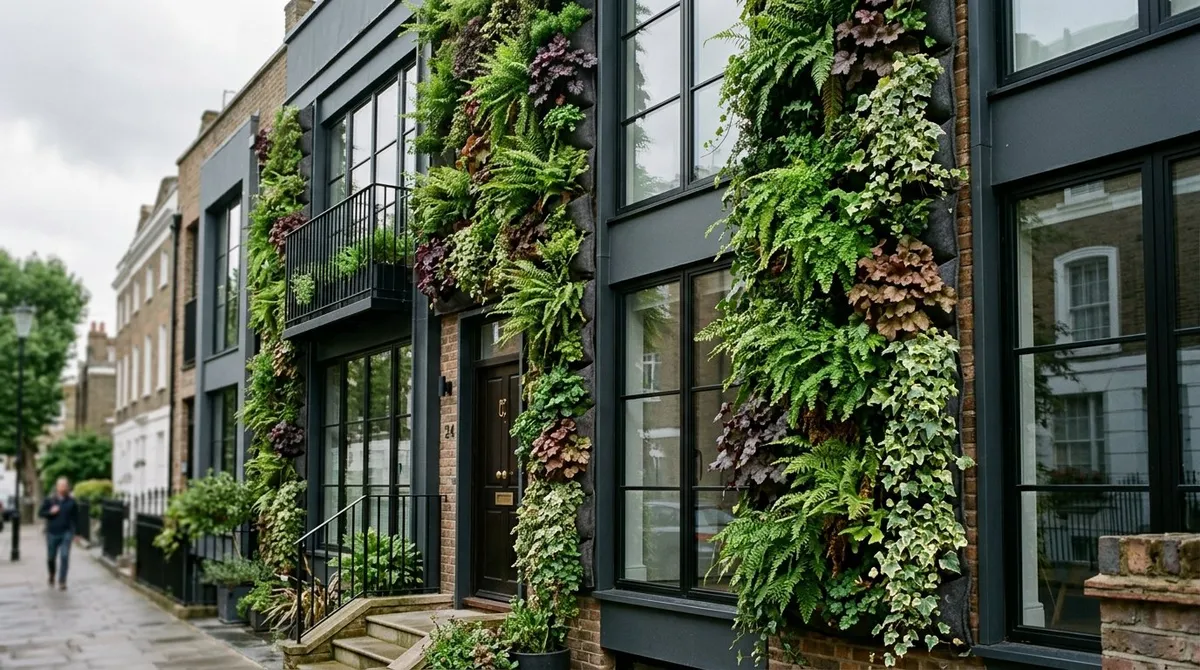
- Vertical planters for herbs
- Hanging baskets along a sunny fence
A south-facing fence is extra precious. It soaks up the sun and stays warm, so it’s the perfect spot for trained fruit, tender plants or tomatoes.
 Climbing roses and jasmine on a brick wall turn bare brick into a flower bed.
3. Define separate areas
A garden that’s one big rectangle feels small. Split it into two or three areas and it feels planned and welcoming.
Ideas for areas:
- A seating or dining spot, usually near the house
- Planting beds or somewhere to grow food
- A corner of pots or a little water feature
- A play area or patch of lawn
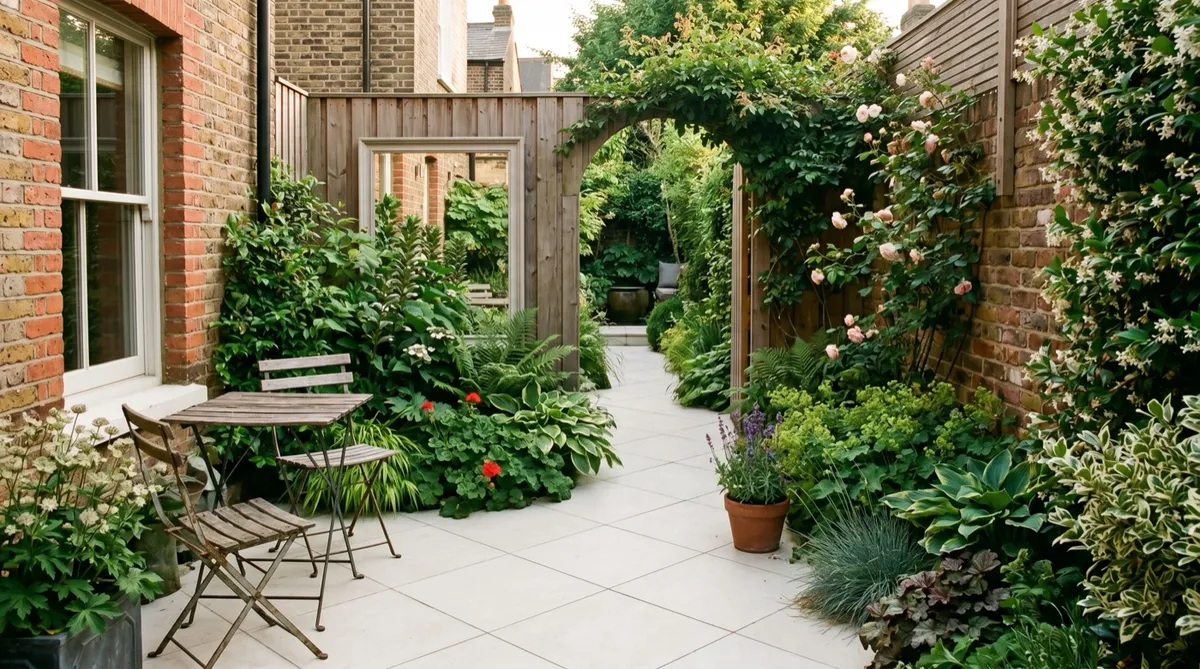
Tip: Stand at the back door and look out. If you can see all four corners, add a screen somewhere. Even one trellis panel set at an angle changes the feel.
 A trellis screen with roses splits this garden in two, hinting at more space beyond.
Layout ideas for common plot sizes
4m x 6m: the typical new-build terrace
This is about as small as gardens get, so every bit counts.
Layout:
- Near the house (about 2m): a paved seating area with a little bistro table. Planters along both side fences. Folding chairs can lean against the wall when you’re not using them.
- Further down (about 4m): a stepping-stone path with raised beds either side, around 60cm wide and 40cm tall. Climbers on the back fence. One small tree in a corner, like a Japanese maple or a multi-stem amelanchier.
- Materials: pale stone or porcelain paving makes the space feel bigger. Our guide on how to lay a patio covers choosing and laying it. Dark decking can make a tiny plot feel gloomy.
6m x 8m: the typical Victorian terrace
More room to play with. A diagonal layout works really well at this size.
Layout:
- Go diagonal: lay the patio and main garden path at 45 degrees to the house. The diagonal is the longest line in the garden, so it feels bigger.
- Three areas: a dining spot near the house, a gravel garden or small lawn in the middle, and a planted border at the back.
- Something to look at: a small water feature or pond, a special tree or a big pot at the far end draws the eye and adds depth.
8m x 10m: the semi-detached standard
A good size by modern standards, with room for several separate areas.
Layout comparison
| Plot size | Areas | Good tree |
|---|---|---|
| 4m x 6m | 2 | Japanese maple in a pot |
| 6m x 8m | 3 | Amelanchier lamarckii |
| 8m x 10m | 3-4 | Himalayan birch (Betula utilis var. jacquemontii) |
 Diagonal paving in a Victorian terrace garden makes the most of the longest line.
Materials and hard landscaping
The materials you pick change how big the garden feels. Two simple rules help.
Limit materials to two
More than two hard materials in a small garden looks busy. Pick one for the main paving, like stone, porcelain or concrete slabs. Then pick one for everything else, like gravel, timber or brick. That’s plenty.
Good pairings:
- Buff porcelain paving with pale gravel
- Sawn sandstone with timber raised beds or a raised deck
- Grey slate paving with red brick edging
Use pale colours
Pale paving bounces light around, so the garden feels brighter and more open. Save dark colours for the edges, like fences and trellis, where they help the boundaries fade away.
Fence colour: painting fences a dark grey or black makes them fade into the background. Green leaves in front really stand out. It’s a small change that makes a big difference.
Watch out: it’s easy to end up with sandstone, brick, gravel, decking and stepping stones all in one small garden. It looks cluttered and makes the space feel smaller. Two is enough.
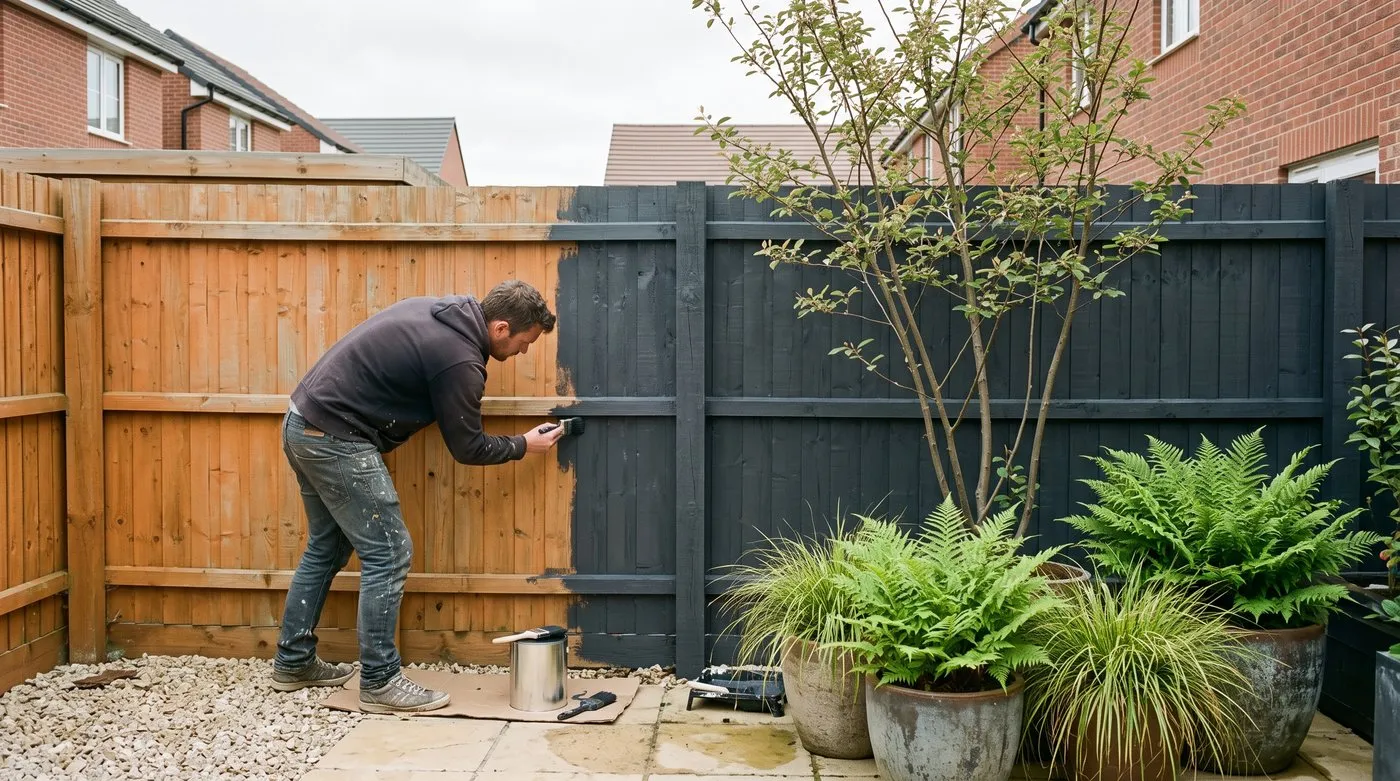
A dark fence fades into the background and makes the green planting in front pop. Pair it with pale paving to keep the space feeling light.
Plants for small gardens
In a small garden, every plant should earn its spot. Pick ones with more than one season of interest, or that do two jobs.
Structural plants
These are the backbone that gives shape all year.
- Japanese maple (Acer palmatum): 2-3m in a large pot, with fiery autumn colour and a graceful shape. Keep it out of strong wind. ‘Dissectum’ types stay lower and rounder, about 1-1.5m.
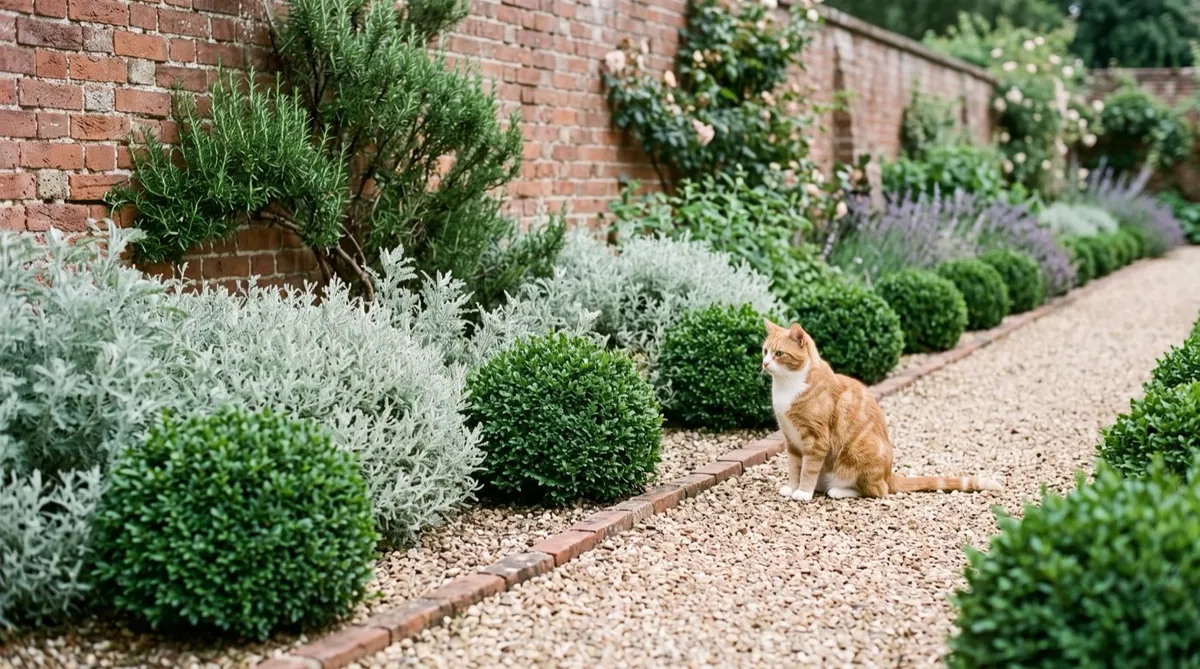
- Box balls (Buxus sempervirens): evergreen balls that anchor borders and doorways. Happy in some shade. Clip in May and August. If box blight is a problem near you, try Ilex crenata instead.
- Fatsia japonica: big, glossy leaves that love shade. Evergreen and 2-3m tall. Brilliant for a dark corner.
- Amelanchier lamarckii: a small multi-stem tree with white spring blossom, autumn colour and berries. Grows 4-5m. One of the best trees for a small garden.
Climbers
Climbers give you flowers without taking up floor space. Our guide to the best climbing plants for UK gardens has lots more.
- Star jasmine (Trachelospermum jasminoides): evergreen, with sweetly scented white flowers in summer. Likes a sunny, sheltered south or west wall. Grows on wires or trellis.
- Clematis ‘Nelly Moser’: big pink striped flowers in May and June, 2-3m tall. The flowers fade in strong sun, so it’s happiest on an east or north-facing wall. Keep its roots cool and shaded.
- Climbing hydrangea (Hydrangea anomala subsp. petiolaris): the go-to climber for a north wall. It clings on by itself and has white flowers in summer. Slow to start but reliable once going. See our guide to plants for shade for more.
- Espalier apple or pear: trained flat against a sunny fence, taking up only about 30cm of depth. Buy them ready-trained on M26 (apple) or Quince A (pear) rootstock.
Productive plants for small spaces
- Dwarf fruit trees: on a very dwarfing rootstock like M27, an apple stays around 1.5-2m tall. Grow it in a big pot, at least 50 litres, or in the ground.
- Herbs on a fence: rosemary, thyme, sage and mint (give mint its own pot so it doesn’t spread). Herb flowers bring in bees and other pollinators too.
- Tumbling tomatoes in hanging baskets: Tumbling Tom and similar varieties trail from baskets on a sunny fence.
- Salad in window boxes: cut-and-come-again lettuce, rocket and radish grow in any pot with 15cm of compost. Sow every 3 weeks from April to August for a steady supply.
 An espalier apple on a fence. Plenty of apples from a tree that’s only about 30cm deep.
| Plant | What it’s for | Height | Space it needs | Looks good |
|---|---|---|---|---|
| Japanese maple | Shape | 2-3m | A big pot | Spring to autumn |
| Amelanchier | Small tree | 4-5m | About 2m across | Spring to autumn |
| Star jasmine | Climber | Tall, on a wall | None on the ground | Summer flowers, evergreen |
| Dwarf apple (M27) | Fruit | 1.5-2m | About 1m | Spring to autumn |
| Box ball | Shape | 40-60cm | About 50cm | All year |
Lighting
Good lighting changes a small garden. It lets you enjoy it in the evenings and draws the eye to plants, not fences, so the space feels bigger after dark.
Uplighting
Put one spotlight at the base of a tree or big shrub. The light and shadows add depth and a bit of drama. One well-placed uplight beats six random ones. Use warm white and point it into the branches, not the sky.
Festoon lights
Hang them across the seating area at about 2.5m high. Choose warm white (around 2700K), not cool white, which feels harsh outdoors. Solar or low-voltage LED festoons are easiest. Let them hang in a gentle curve rather than pulling them tight.
Path lights
Low solar stakes along the main path are useful and pretty. Space them 1.5-2m apart and stagger them from side to side. Low lights that make soft pools of light look better than tall bollards.
 Warm white festoon lights give a small patio a lovely glow at dusk.
What to avoid
Floodlights flatten everything and light up the fences, making a small garden feel like a car park. Motion-sensor security lights are fine for safety, just don’t rely on them for atmosphere.
Blue or colour-changing LEDs date quickly. Stick with warm white.
Common mistakes in small garden design
1. Too many materials
Stick to two. Stone paving and timber beds. Gravel and brick edging. Any more looks busy.
2. Centred rectangular lawns
A small rectangle of lawn in the middle of a small rectangular garden just shows off the shape. Try an off-centre circular lawn, gravel or paving instead. If you want grass, give it a softer shape.
3. Ignoring the boundaries
Bare fences make a garden feel like a box. They’re the biggest surfaces you’ve got, so use them. Plant climbers, add trellis or paint them dark so they fade away.
4. Planting too much
A garden with dozens of different plants looks jumbled. Pick a smaller number and repeat them, leaning on low maintenance plants that earn their place. Three of the same plant looks planned. Lots of one-offs looks muddled.
5. Forgetting winter
Lots of small gardens look great in July and bare in January. Mix in some evergreens to keep shape through winter. Box balls, fatsia, heuchera and evergreen grasses all look good year-round.
Once your layout is sorted, read our guide on raised bed gardening for beginners to make your small garden as productive as possible.
Month-by-month small garden tasks
| Month | Task |
|---|---|
| January | Plan changes on paper. Order seeds and bare-root plants. |
| February | Prune climbing roses. Cut back ornamental grasses. |
| March | Plant shrubs in pots. Sow hardy annuals for summer colour. See what to plant in March. |
| April | Plant climbers. Start feeding pots with liquid feed. |
| May | Plant tender bedding after the last frost. Give box balls their first clip. |
| June | Deadhead roses and perennials. Water pots daily in hot spells. |
| July | Cut back catmint and hardy geraniums for a second flush of flowers. |
| August | Give box balls their second clip. Take cuttings of shrubs. |
| September | Plant spring bulbs. Move tender plants under cover before frost. |
| October | Plant bare-root trees and hedging. Sweep leaves off the paving. |
| November | Plant tulip bulbs. Clean and store garden furniture. |
| December | Look back at what worked and plan next year. |
Frequently asked questions
How do I make a small garden look bigger?
Stop people seeing it all at once. Use planting, trellis or a change of level to half-hide parts of it. Pale paving bounces light around and makes the space feel bigger. A path laid on the diagonal draws the eye along the longest line.
What is the best paving for a small garden?
Pale natural stone or porcelain works best. Light colours bounce light around and make the space feel open. Dark decking can make a small plot feel gloomy. Stick to one type of paving and one other material.
Can I grow fruit trees in a small garden?
Yes, choose dwarf fruit trees. On a very dwarfing rootstock such as M27, an apple tree stays around 1.5-2m tall. Grow it in a big pot or in the ground. Trained fruit like espaliers grows flat against a fence and takes up very little room.
What climbers work best on a north-facing wall?
Climbing hydrangea is the top choice. It clings on by itself, copes with shade and has white flowers in summer. Virginia creeper gives brilliant autumn colour. Ivy will grow where little else will.
How do I light a small garden?
Use one or two uplights at the base of a tree or shrub. Hang warm white festoon lights over the seating area. Add low solar lights along the main path. Skip floodlights, which flatten everything and light up the fences.
Should I have a lawn in a small garden?
A small rectangular lawn can make a small garden feel boxy. If you want grass, try an irregular or round shape set off-centre. In a tiny plot, gravel or paving may work better. Artificial grass gets hot in summer and gives nothing to wildlife.
Our team produces practical UK gardening guidance from source research, contributor records and established horticultural practice. Editorial standards are overseen by Matt W.