
Key takeaways
- Perennial veg come back every year, so there's no sowing or digging each spring
- Rhubarb, sorrel and Welsh onions are the easiest place to start
- Asparagus and rhubarb keep cropping for many years from one planting
- Be patient with asparagus and don't pick it for the first two years
- Give perennials a bed of their own and mulch it with compost each autumn
- Horseradish, Jerusalem artichoke and wild garlic spread, so plan where they go
Perennial vegetables come back year after year from the same roots. Plant them once and they keep cropping for years, with no seed to buy, no sowing and no digging over each spring. Most grow happily across the UK.
They’re not a new idea. Victorian kitchen gardens were full of sea kale, good King Henry and nine-star broccoli. They fell out of fashion when shops started selling annual veg all year, but they never stopped being useful. If you’re short on time, they’re a lovely, easy way into growing your own food.
 A mixed bed of perennial veg on a UK allotment, cropping from spring to autumn with very little fuss.
Why grow perennial vegetables instead of annuals?
They save you a lot of work. There’s no yearly digging, sowing, pricking out, hardening off or planting out. The roots just stay put and get on with it.
Leaving the soil undug is good for it too. Roots and soil life are left in peace, and the ground gets darker and crumblier over the years.
They’re kind on your pocket as well. You buy a crown or plant once and it keeps giving, rather than buying seed every spring.
And they stretch out the picking season. Most annual veg crop from June to October. A perennial bed can give you forced rhubarb in late winter and Jerusalem artichokes into November.
The 14 best perennial vegetables for UK gardens
Asparagus (Asparagus officinalis)
Asparagus is the star of the show. One planting gives tender spears every spring for many years. Plant one-year-old crowns in March or April in trenches about 30cm wide and 20cm deep, 45cm apart. Then the hard bit: don’t pick any spears for the first two years while the roots build up.
From the third year, pick for about eight weeks from mid-April to mid-June. After that, let the ferny growth grow up to feed the crowns for next year. All-male varieties like ‘Gijnlim’ and ‘Backlim’ crop especially well. About 20 crowns will keep a family of four in spears through the season.
For the full method, see our guide to growing asparagus in the UK.
 Asparagus spears pushing up in April. That short picking season is one of the joys of growing perennials.
Rhubarb (Rheum x hybridum)
Rhubarb is the most forgiving perennial veg of all. It copes with heavy clay, part shade and plenty of neglect. Plant crowns in autumn or winter with the buds just below the soil surface, about 90cm apart, in rich soil that doesn’t sit wet.
Pick stalks from spring to July by twisting and pulling them from the base. Don’t cut them, as the stump left behind can rot. Leave a new crown alone in its first year so it can settle in. ‘Timperley Early’ is one of the earliest, and ‘Victoria’ is the classic with thick red stems. Only eat the stalks, as the leaves are poisonous.
For an even earlier treat, cover a crown with a tall forcing pot or bucket in January. The stalks grow pale pink and tender in the dark, ready a few weeks later. Our rhubarb growing guide covers forcing in detail.
Globe artichoke (Cynara cardunculus var. scolymus)
Globe artichokes give you food and good looks. Their silvery, deeply cut leaves grow tall, and the edible flower buds appear from June to September.
Plant offsets in April, about 90cm apart, in full sun. Cut the heads while they’re tight and firm, roughly the size of a tennis ball. Miss a few and they open into stunning purple thistle flowers that bees adore. In cold, exposed gardens, tuck a thick straw mulch over the crowns for winter.
Plants slow down after a few years, so replace them by taking suckers from the base in April. Our globe artichoke growing guide explains how.
 Globe artichokes look good in a border and give you edible buds from June to September.
Jerusalem artichoke (Helianthus tuberosus)
Jerusalem artichokes are the easiest perennial root crop. Plant tubers 10-15cm deep and 30cm apart in February or March. They grow into tall, sunflower-like plants and the knobbly tubers are ready from autumn.
Dig them up as you need them through winter, as they keep better in the ground than in the fridge. Any you miss will sprout again next year. ‘Fuseau’ has smoother skins, so it’s easier to peel.
The catch is they spread. Grow them in a corner or along a fence where that won’t matter. Our Jerusalem artichoke guide has tips on keeping them in check.
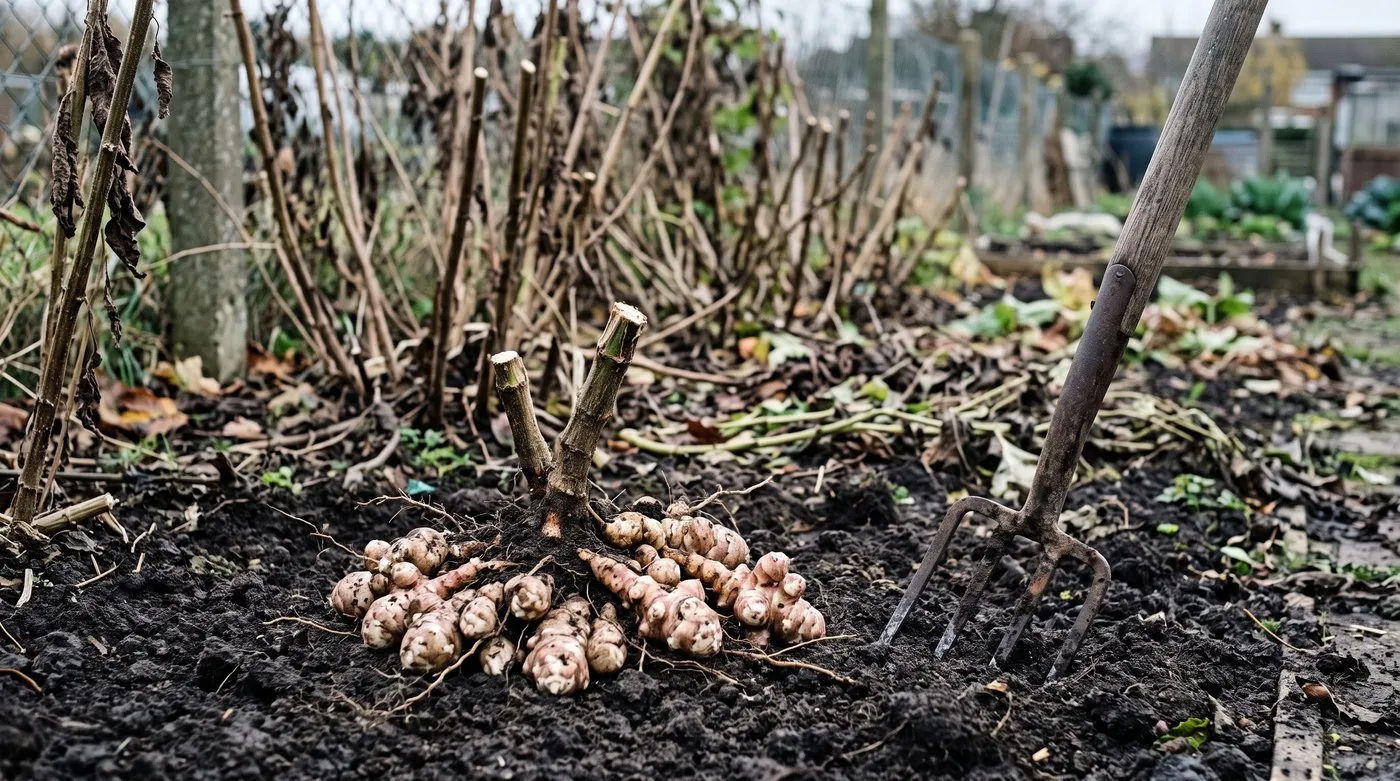
Dig the tubers as you need them through winter, as they keep best in the ground. Any you miss will pop up again next year.
Sea kale (Crambe maritima)
Sea kale is a native British seaside plant that used to be a kitchen garden favourite. Cover the young shoots in spring to blanch them and you get pale, crisp stems with a mild, nutty taste.
Sow seed in spring, or plant root cuttings (called thongs) in March. Space plants 60cm apart in free-draining, sandy or chalky soil. It’s happy by the sea and doesn’t mind salty wind. From January, cover crowns with an upturned pot or bucket to block out the light, then cut the pale shoots when they’re 15-20cm long.
Sea kale takes two or three years to get going, then crops for years. The RHS guide to growing sea kale has more detail.
 Sea kale forced under a terracotta pot gives pale, tender shoots in late winter. An old British favourite making a comeback.
Sorrel (Rumex acetosa)
Sorrel gives sharp, lemony leaves for most of the year, even in a mild winter. A few leaves brighten up salads, soups and sauces. French sorrel (Rumex scutatus) is milder, with rounder leaves.
Sow seed straight into the ground in March or September, 25-30cm apart, in any decent soil. It copes with part shade and clay. Snip off flower stems in summer to keep the leaves coming, and split clumps every three or four years.
Half a dozen plants will keep a household in leaves from spring to autumn. Sorrel is perfect in a no-dig garden bed, where permanent plants are left undisturbed.
Good King Henry (Blitum bonus-henricus)
Good King Henry was once a cottage garden staple, and it gives you three crops from one plant. Eat the young spring shoots like asparagus, cook the leaves like spinach in summer, and steam the young flower spikes like broccoli.
Sow seed in March or plant divisions in autumn, 30cm apart, in rich, damp soil in part shade. It’s a tough native plant. Cut the first shoots when they’re 15-20cm tall in April.
Plants take about two years to get into their stride, then crop for many years. It’s been grown in British gardens for centuries.
Welsh onion (Allium fistulosum)
Welsh onions form permanent clumps of hollow, chive-like stems with a mild onion taste. Fun fact: they don’t come from Wales at all. They come from east Asia. Use them like spring onions all year.
Plant seed or divisions in spring or autumn, 20cm apart, in any soil that drains well. They’re very hardy and you can often still pick them in December. Split crowded clumps every three or four years and replant the pieces.
They’re good partners for wild garlic in a little onion corner that never needs replanting.
Nine-star perennial broccoli
Nine-star perennial broccoli gives several small, creamy-white, cauliflower-like heads each spring. The secret to keeping it going is to cut every head before it flowers.
Sow in a seedbed in April and move plants to their final spot later in the year, about 90cm apart, in rich, firm soil and full sun. From the second spring, pick the heads as they form. If plants are left to flower and set seed, they often run out of steam.
Plants crop for a few years. The taste sits between broccoli and cauliflower, mild and sweet. A lovely Victorian variety that deserves more love.
Oca (Oxalis tuberculosa)
Oca gives small, colourful tubers that taste like a lemony, waxy potato. It comes from the Andes and grows best in milder parts of the UK. The tubers only start forming in autumn, as the days get shorter.
Plant tubers about 10cm deep and 30cm apart once the frosts are over. The leaves are pretty and clover-like. Dig the tubers up after the first light frost blackens the leaves, usually in November.
Oca isn’t fully hardy. Lift the tubers before hard frosts and keep them somewhere cool, dry and frost-free over winter, then replant in spring.
Skirret (Sium sisarum)
Skirret makes bunches of thin, white, sweet roots that taste a bit like parsnip. It was a common root veg in medieval gardens before carrots and parsnips took over.
Sow seed in spring (be patient, it’s slow to come up) or plant root divisions in autumn, 30cm apart, in rich, damp soil. It copes with part shade and clay. Dig roots from November. Leave the central crown in the ground and it will grow again next year.
It’s a low-fuss winter root crop that deserves a comeback.
Perennial kale (Brassica oleracea var. ramosa)
Daubenton’s perennial kale is a kale that rarely flowers, so it just keeps making leaves. It lives for several years, and the leaves taste sweeter after a frost, making winter its best season.
It rarely sets seed, so grow it from cuttings. Root 15cm stem cuttings in pots of gritty compost in spring or late summer. Plant out about 60cm apart along a fence or at the back of a border. Keep picking to keep it bushy and productive.
Horseradish (Armoracia rusticana)
Horseradish has thick, fiery roots for grating into sauce. Once it’s in, it’s almost impossible to kill. Plant pieces of root in early spring, 30cm apart, and you can dig roots from October to February.
The trick isn’t growing it, it’s stopping it. Every scrap of root left in the soil grows into a new plant. Grow it in a sunken container or a spare corner. Our horseradish growing guide has ways to keep it in its place.
Fresh horseradish is much hotter than the jarred stuff. Grate it soon after digging, as the heat fades once it’s cut.
Wild garlic (Allium ursinum)
Wild garlic is a native woodland plant that loves shady, damp ground. Its broad green leaves appear in late winter with a mild garlic flavour, followed by white starry flowers in April and May. You can eat both.
Plant bulbs 5cm deep and 10cm apart in autumn, under trees or along a shady hedge, in damp, leafy soil. It spreads into a carpet over a few years. Pick leaves from February to May, taking no more than a third of each clump.
It’s great in a forest garden or no-dig bed, and the leaves are best fresh in pesto, butter and salads.
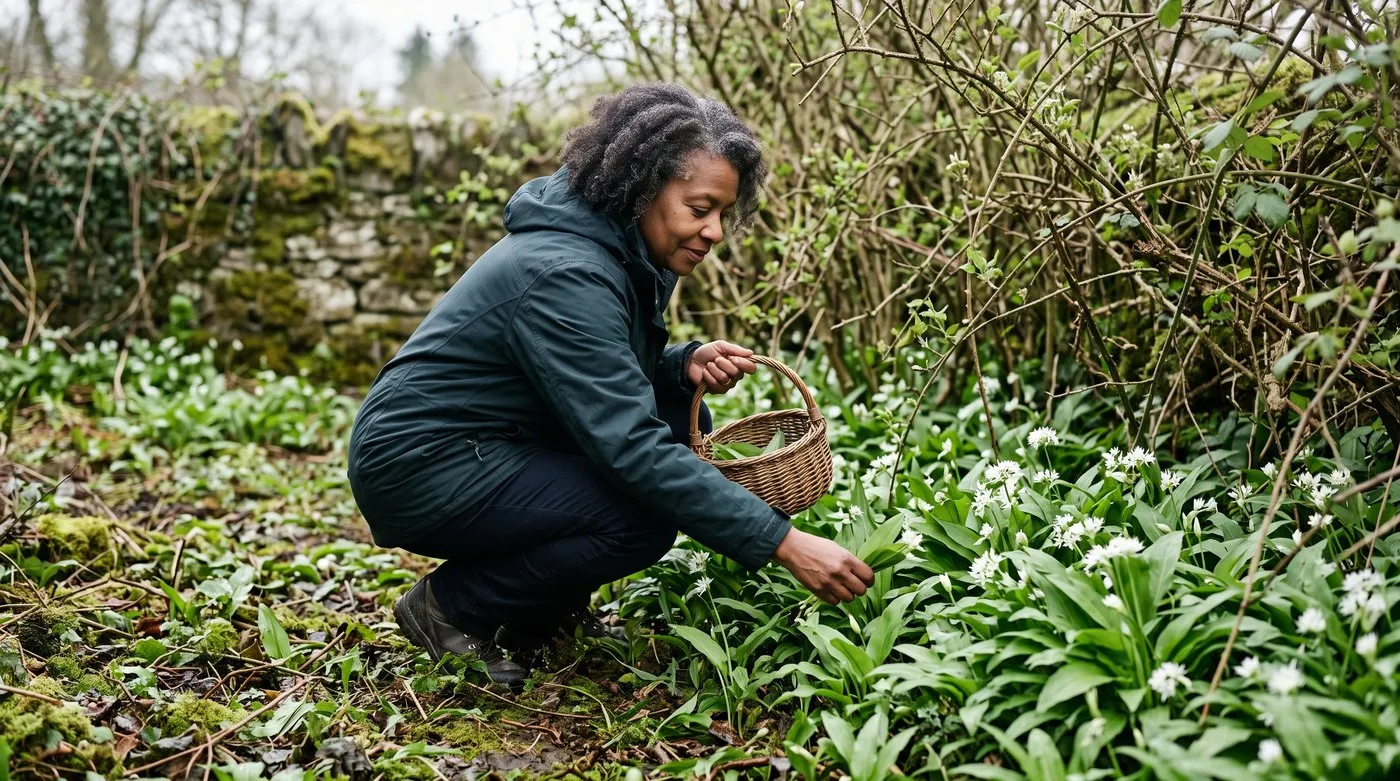
Take no more than a third of each clump and it keeps spreading. Pinch the leaves first: a clear garlic smell is how you know you’ve got the right plant.
Perennial vegetable comparison table
| Vegetable | Toughness | First picking | Spacing | How easy |
|---|---|---|---|---|
| Asparagus | Very hardy | Third year | 45cm | Medium |
| Rhubarb | Very hardy | Second year | 90cm | Easy |
| Globe artichoke | Hardy, mulch in cold areas | Second year | 90cm | Medium |
| Jerusalem artichoke | Very hardy | First year | 30cm | Easy |
| Sea kale | Hardy | Second or third year | 60cm | Medium |
| Sorrel | Very hardy | First year | 25cm | Easy |
| Good King Henry | Hardy | Second year | 30cm | Easy |
| Welsh onion | Very hardy | First year | 20cm | Easy |
| Nine-star broccoli | Hardy | Second year | 90cm | Medium |
| Oca | Tender, lift in winter | First year | 30cm | Medium |
| Skirret | Hardy | Second year | 30cm | Easy |
| Daubenton’s kale | Hardy | First year | 60cm | Easy |
| Horseradish | Very hardy | First year | 30cm | Easy |
| Wild garlic | Very hardy | Second year | 10cm | Easy |
How to plan a perennial vegetable bed
A 3m x 6m bed comfortably holds eight to ten kinds. Put tall plants like globe artichoke, Jerusalem artichoke and nine-star broccoli at the north end so they don’t shade the rest. Edge the bed with sorrel, Welsh onions and wild garlic. Tall lovage, a long-lived herb, also suits the north end.
Get the soil right before you plant. These plants will be there for years, so it’s worth the effort. Spread a thick layer of well-rotted compost over the bed and fork it in. On heavy clay, mix in some horticultural grit to help drainage. Our composting guide shows you how to make your own.
Keep perennials out of your annual veg beds. They get in the way of digging, crop rotation and green manure. Give them their own space. Permaculture design does the same, as our permaculture principles guide explains.
Month-by-month perennial vegetable calendar
| Month | Jobs |
|---|---|
| January | Cover rhubarb and sea kale to force them. Order asparagus crowns |
| February | Pick forced rhubarb. Pick the first wild garlic leaves. Plant Jerusalem artichoke tubers |
| March | Plant asparagus crowns. Sow sorrel and skirret. Split Welsh onion clumps |
| April | Pick asparagus (from year three). Plant globe artichoke offsets. Sow nine-star broccoli |
| May | Keep picking asparagus. Pick sorrel and wild garlic. Plant oca once frosts are over |
| June | Stop picking asparagus by mid-month. Cut globe artichoke heads. Pick perennial kale |
| July | Last month for picking rhubarb. Water globe artichokes in dry spells |
| August | Take perennial kale cuttings. Snip flower stems off sorrel |
| September | Plant Welsh onion divisions. Sow sorrel |
| October | Dig Jerusalem artichokes and horseradish. Plant rhubarb crowns |
| November | Lift oca after the first frost. Mulch beds with 5-8cm of compost. Cut down yellow asparagus fern |
| December | Dig Jerusalem artichokes and horseradish as needed. Plan next year’s additions |
Common mistakes with perennial vegetables
Harvesting too soon
The most common slip is picking before the roots are ready. Leave asparagus alone for two full years. Give rhubarb its first year off. Sea kale and good King Henry need about two years too. Picking too early weakens the plant for years. Be patient, it pays off.
Planting in annual vegetable beds
Perennials tucked among annual crops get dug up, hoed by mistake and crowded out. Give them a bed of their own and everyone is happier.
Ignoring containment
Horseradish, Jerusalem artichoke and wild garlic all spread. Every bit of horseradish root grows back, and every missed Jerusalem artichoke sprouts. Grow them in sunken containers, raised beds with a solid base or a spare corner, or you’ll be pulling them out for years.
Letting nine-star broccoli flower
Nine-star broccoli only keeps going if you cut every head before it flowers. Check plants every day or two in spring and cut heads while they’re still tight.
Skipping the autumn mulch
Perennials slowly use up the goodness in the soil. A 5-8cm mulch of garden compost or well-rotted manure each autumn feeds them, protects the crowns from frost and keeps weeds down. Skip it for a few years and crops start to dwindle.
Building soil health with perennial roots
Perennial veg make your soil better over time. Digging every year breaks up the soil and disturbs the worms and fungi that live in it. Perennial beds are left alone, so all that life can thrive.
Deep roots from asparagus, horseradish and globe artichoke open up the soil and help it drain. Fallen leaves rot down where they land, worms move in, and the top layer of soil turns dark and crumbly. You just keep adding compost on top.
 A healthy rhubarb crown crops for years. Twist and pull the stalks from the base rather than cutting them.
What experienced growers plant first
Start with three: rhubarb, sorrel and Welsh onions. They’re easy, cope with most soils and need hardly any looking after. Sorrel and Welsh onions give you something to pick in the first year, which keeps you going while slower crops settle in.
In year two, add asparagus crowns and globe artichoke offsets. They take a while to get going but crop for years. In year three, have some fun with old favourites like skirret, good King Henry and nine-star broccoli.
Handy tip: Keep a simple notebook. Jot down what you pick from each plant and when. After a few years you’ll know which ones love your soil and which aren’t worth the space.
Frequently asked questions
What are the easiest perennial vegetables to grow in the UK?
Rhubarb, sorrel and Welsh onions are the easiest. All three put up with poor soil, part shade and a fair bit of neglect. Rhubarb gives you stalks from its second year with little more than an autumn mulch. Sorrel gives sharp, lemony leaves for most of the year, and Welsh onions form clumps that never need replanting.
Do perennial vegetables taste as good as annual ones?
Many taste even better. Home-grown asparagus, sea kale and globe artichoke go from plot to pan in minutes, so they’re wonderfully fresh. Sorrel has a lemony tang you won’t find in other salad leaves. Perennial kale leaves get sweeter after a frost.
Can I grow perennial vegetables in containers?
Some of them, yes. Sorrel, Welsh onions and herbs are happy in pots at least 30cm deep with drainage holes. Asparagus and globe artichoke need to go in the ground, as their roots are too big for pots. Rhubarb will grow in a large 50-litre tub but gives smaller stalks.
How much space do perennial vegetables need?
A 3m x 6m bed fits eight to ten different kinds. Globe artichokes need the most room, about 90cm apart. Sorrel, Welsh onions and wild garlic fit into gaps of 20-30cm. Asparagus wants a permanent bed about 1.2m wide. Perennial kale is handy along a fence.
When should I plant perennial vegetables in the UK?
Plant most of them between October and March. Asparagus crowns go in during March or April. Pot-grown plants can go in whenever the soil isn’t frozen or waterlogged. Autumn planting gives roots the winter to settle in before their first growing season.
Do perennial vegetables need much feeding?
Less than annual veg. A 5-8cm mulch of garden compost each autumn is enough for most. Globe artichokes and asparagus like a sprinkle of blood, fish and bone in spring, at the rate on the pack. Avoid high-nitrogen feeds in late summer, as soft growth gets hit by frost.
Will perennial vegetables survive a harsh UK winter?
Nearly all of them will. Asparagus, rhubarb, horseradish, sorrel and Welsh onions are very tough. Globe artichokes like a thick straw mulch over their crowns in cold, exposed gardens. Oca is the exception, so lift the tubers before hard frosts and store them like dahlias.
Our team produces practical UK gardening guidance from source research, contributor records and established horticultural practice. Editorial standards are overseen by Matt W.


