
Key takeaways
- One lovage plant is enough for most households
- It's fully hardy and grows in almost any soil, even heavy clay
- The leaves taste of strong celery, so use a few at a time
- Sow in March or April, or divide plants in spring or autumn
- Cut it back hard in late June or July for fresh, milder leaves
- It rarely has pest problems and needs no feeding once settled
Lovage is one of the most underrated herbs you can grow. It was a kitchen favourite in medieval England, and cooks still love its big celery flavour. One plant of Levisticum officinale shoots up to 2m by midsummer and gives you glossy leaves from April to October. It asks for very little: almost any soil, sun or part shade, and no winter fuss.
Here’s how to sow it, plant it, keep it fresh and use it in the kitchen, with a few ideas you won’t find in most herb growing guides. It’s a perennial, so it comes back bigger each spring. If you try one new herb this year, make it lovage.
Where to plant lovage in the garden
Put lovage at the back of a border or against a wall. At 1.5-2m tall, it needs a spot where its height is a bonus, not a nuisance. Sun gives the strongest growth, but it copes with part shade better than most herbs. In shade it just stays a bit smaller.
Lovage grows in almost any soil. The RHS lovage guide has the basics if you want them. It likes deep, rich soil that holds moisture best, but clay, sand and chalk are all fine. On light soil, water it in dry summers. If your soil is poor, dig in a bucket of garden compost before planting, and that’s about it.
How to grow lovage from seed
Sow indoors in March or April, at 15-20C. Sow on the surface of moist compost in modules or small pots, with just a light dusting of vermiculite on top. Seedlings usually appear in a couple of weeks.
Fresh seed works much better than old. Buy a new packet each spring. When seedlings have two proper leaves, move them into 9cm pots. Plant them out once frosts are over, usually mid-May.
You can also sow straight into the ground in April. Thin to one plant per spot. These grow a bit slower in their first year than ones started indoors.

Lovage seedlings in spring. Starting them indoors gives you the strongest first-year plants.
How to plant and space lovage
One plant is enough for most homes. If you’re growing more, space them 60-90cm apart, as each one spreads to about 1m wide after a few years.
Plant at the same depth it sat in its pot, firm in and water well. Mulch with garden compost or bark to hold in moisture. Spring (March to April) or early autumn (September to October) are the best times. Avoid midsummer, when the soil dries fast.
Lovage looks great in a cottage garden planting plan, where its tall stems and flat flower heads add height. It sits happily with other tall herbs like fennel and angelica.
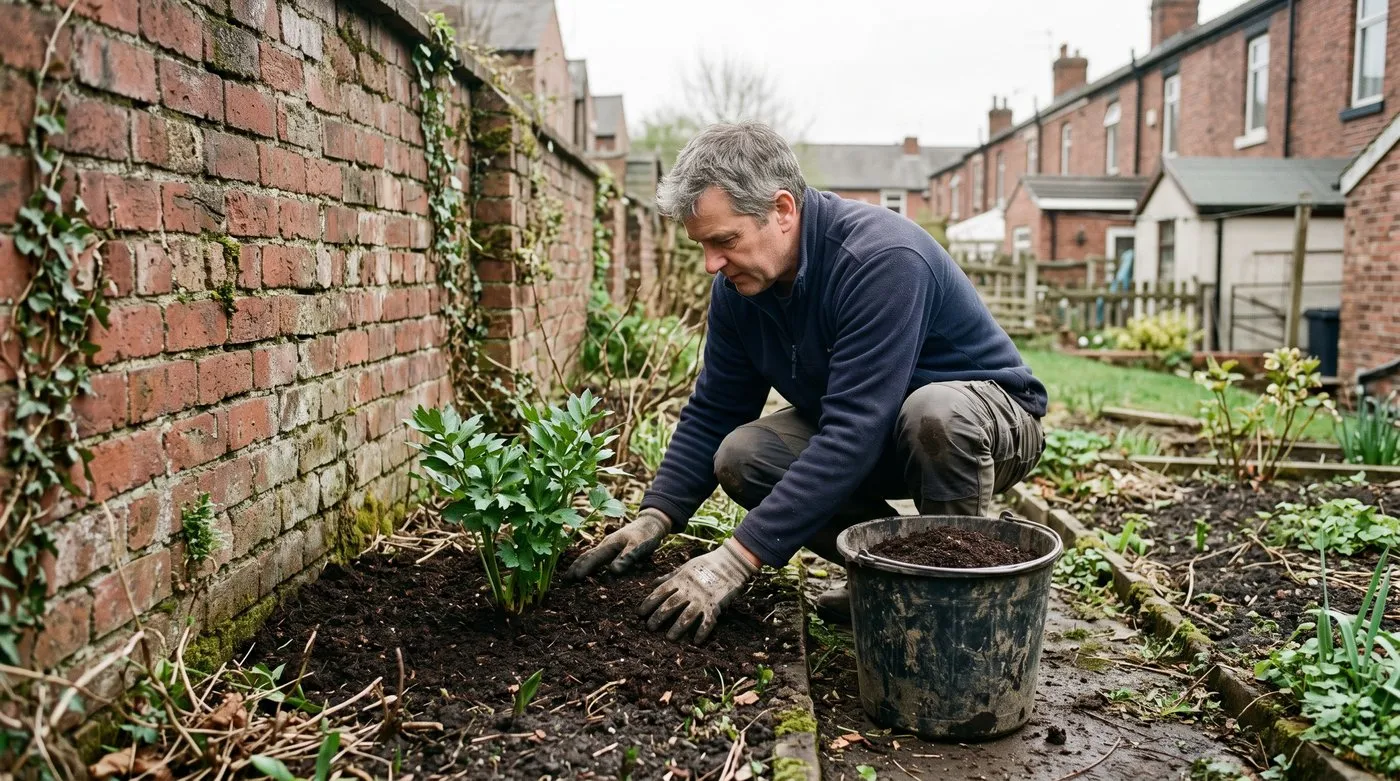
One plant is plenty for most homes, so give it a spot where its height is a bonus. Mulch after planting to hold in moisture.
Lovage growing conditions at a glance
| What | What it likes |
|---|---|
| Light | Sun or part shade |
| Soil | Almost any: clay, loam, sand or chalk |
| Spacing | 60-90cm apart |
| Height | 1.5-2m |
| Spread | Up to about 1m |
| Hardiness | Fully hardy |
| Water | Water in dry spells, more often in pots |
| Feeding | Not needed once settled |
How to care for lovage through the season
Once it’s settled, lovage really is easy. Here’s what to do through the year.
Spring (March to May): New shoots appear in March, or late February in mild areas. Clear away last year’s dead stems. Mulch with compost if your soil is poor. No feed needed.
Summer (June to August): In late June or July, cut the whole plant down to about 15cm. This is the most useful job of the year. By midsummer the leaves turn tough and bitter, and cutting back brings fresh, tender leaves within two or three weeks. Snip off flower heads if you want more leaves, or leave them for seed and for the bees.
Autumn (September to November): Keep picking until the leaves yellow. The plant dies back by late November and needs no protection. Divide crowded clumps in September or October.
Winter (December to February): The roots rest underground. Leave them alone. Lovage is perfectly happy through a UK winter.

Lovage chopped for a stock. The flavour is strong, so a few leaves go a long way.
How to use lovage in cooking
Lovage is wonderfully useful in the kitchen, even if it’s a bit forgotten these days. You can eat the leaves, stems, seeds and roots.
Leaves are the main crop. Young spring leaves are mild enough to tear into salads. Later in the year they get stronger and are better cooked. Use them in stocks, soups, stews and casseroles, as you would celery. Go easy, as a couple of leaves go a long way.
Stems are hollow. Chop them into soups, or use them whole as straws for a Bloody Mary.
Seeds ripen in late summer and taste of celery with a touch of aniseed. Add them to bread, biscuits or roast potatoes. Cut the seed heads as they turn brown and dry them in a paper bag.
Lovage cordial is an old-fashioned British drink. Make a syrup with 500g sugar and 500ml water, steep a big handful of fresh leaves in it for 24 hours, then strain and chill. Top up with sparkling water for a clean, herby drink.
To keep your harvest for winter, see our guide to drying and storing herbs. Lovage also works in herbal teas with mint or lemon balm.
Lovage compared with similar herbs
| Herb | Tastes like | Height | Comes back each year? | Best for |
|---|---|---|---|---|
| Lovage | Strong, peppery celery | 1.5-2m | Yes | Stocks, soups, cordial |
| Celery leaf | Mild celery | 30-60cm | Biennial | Salads, garnish |
| Flat-leaf parsley | Fresh and green | 30-45cm | Biennial | Sauces, salads |
| Fennel (herb) | Aniseed | 1.5m | Yes | Fish, salads, seeds |
| Dill | Mild aniseed | 60-90cm | No, annual | Fish, pickles, yoghurt |
| Chervil | Mild aniseed and parsley | 30cm | No, annual | Eggs, creamy sauces |
If you like lovage, try parsley and dill too. They’re just as easy and quite different.
How to propagate lovage
Dividing is easiest. In March, or in September or October, lift an established plant with a spade. Split the crown into two or three pieces, each with roots and at least one shoot. Replant straight away at the same depth. You’ll be picking leaves within weeks.
Seed is the other way. Collect ripe seed in late August or September, or buy a fresh packet in spring, and sow as above. Seed-grown plants take a season to reach picking size.
Leave the flower heads on and lovage will happily seed itself. Little seedlings pop up around the base the next spring. Move them while small, or hoe them off if you have enough.

A big lovage plant at the back of a town garden border makes a lovely green backdrop.
What problems affect lovage?
Lovage is one of the most trouble-free herbs around.
Celery leaf miner is the only regular pest. Tiny grubs tunnel inside the leaves, leaving brown blotches. It looks untidy but won’t kill the plant. Pick off and bin affected leaves. If it’s bad, cover plants with insect mesh from April. It also attacks celery and parsley.
Aphids sometimes cluster on young shoots in spring. Rub them off or blast them with a jet of water. Ladybirds and hoverflies usually sort them out.
Slugs may nibble the first shoots in early spring. A few wildlife-friendly slug pellets around the crown in March should do. Once it’s growing strongly, slugs aren’t a worry.
Root rot can happen in ground that stays waterlogged, but that’s rare. If the crown goes soft and brown in winter, improve the drainage before replanting.
Lovage is a handy plant for companion planting. Its flat flower heads bring in hoverflies and other helpful insects, so it’s great near the veg patch.
More to grow next:
- How to grow chives in the UK
- How to grow rosemary in the UK
- Medicinal herb garden: what to grow
- Kitchen garden design and layout
- Edible flowers: growing and using them
Frequently asked questions
How tall does lovage grow in the UK?
Usually 1.5-2m tall. Flower stems can go a little higher in rich, damp soil. It dies down to the ground each winter and shoots back up from March. After a few years a plant can be about 1m wide.
Is lovage easy to grow from seed?
Yes, it’s easy from fresh seed. Sow in modules indoors in March or April at 15-20C, with just a light covering. Seedlings usually appear in a couple of weeks. Old seed doesn’t sprout well, so buy a fresh packet each spring.
What does lovage taste like?
Like strong, peppery celery with a hint of aniseed. Young spring leaves are milder and good in salads. Older summer leaves are stronger and best cooked. The hollow stems even make fun straws for a Bloody Mary.
Can I grow lovage in a pot?
Yes, in a big pot at least 40cm deep and wide. Fill it with John Innes No. 3 and water regularly, as pots dry out faster than the ground. Plants stay smaller in a pot, around 1m. Divide or repot every couple of years.
Is lovage poisonous to dogs or cats?
There’s no firm answer, so play it safe. Lovage is in the same family as celery and parsley. Pets rarely bother with it, but if yours chews a lot and seems unwell, call your vet.
When should I cut lovage back?
Cut it back hard in late June or July. Take the whole plant down to about 15cm. Fresh, tender leaves should appear within two or three weeks, and they’re milder and nicer in salads. Tidy away the dead stems again in late autumn.
How do I propagate lovage?
Dividing a big plant is the easiest way. In early spring or autumn, lift the crown and split it into pieces, each with roots and at least one shoot. Replant straight away at the same depth. Divisions settle quickly and give you leaves within weeks.
Our team produces practical UK gardening guidance from source research, contributor records and established horticultural practice. Editorial standards are overseen by Matt W.


