
Key takeaways
- Sow indoors in March or April on the compost surface, as celery seed needs light to germinate
- Self-blanching celery is the easiest type, planted in a block 23-27cm apart
- Celery needs constantly moist soil; dry spells give stringy, bitter stems
- Cold nights below about 10C after planting out can make young plants bolt
- Trench celery has more flavour but needs earthing up from late summer
- Celery leaf spot is the main disease, so water at soil level and pick off spotted leaves
Home-grown celery is crisper and sweeter than anything from the shop, and it’s very satisfying to grow. It does need a long season and lots of water. The easiest route for most UK gardens is a block of self-blanching celery: no trenches, no earthing up. This guide covers sowing, planting, watering and harvesting celery for the kitchen.
If you want long, perfectly blanched sticks for the show bench, see the guide to growing trench celery for show.
Self-blanching or trench celery: which should you grow?
For most gardeners, self-blanching celery is the one to grow. It has naturally pale stems and needs no earthing up. Plant it in a block and the plants shade each other’s stems.
Trench celery has greener stems and a stronger flavour. You blanch it by mounding soil round the stems, or wrapping them in collars, to keep out light. It’s more work but stands in the ground later into autumn and copes with light frost.
Leaf celery is the easiest of all. It’s grown for its leaves rather than stems, and is covered further down.
| Variety | Type | Good for |
|---|---|---|
| ’Victoria’ F1 | Self-blanching | Reliable all-rounder |
| ’Loretta’ | Self-blanching | Long, smooth, pale stems |
| ’Celebrity’ | Self-blanching | Thick, crisp stems |
| ’Giant Red’ | Trench | Red-flushed stems, rich flavour |
| ’Utah 52-70’ | Green | Strong flavour, later harvest |
| ’Par-Cel’ | Leaf celery | Leaves for cooking, cut-and-come-again |
How to sow celery indoors
Celery must be started indoors. Sow in March or April. Earlier sowings need steady warmth, or the seedlings may bolt later.
Celery seed is tiny and needs light to germinate, so don’t cover it.
- Fill modules or small pots with fine seed compost and water well
- Scatter two or three seeds on the surface of each module
- Press them gently onto the compost with a flat piece of card
- Cover with a clear lid to hold in moisture
- Keep at 15C or above, in a propagator or on a warm windowsill
Germination is slow and often patchy, so be patient. Keep the compost moist with a fine mist. When seedlings have two or three true leaves, thin to the strongest one per module.

Celery seedlings grow slowly at first. Keep them warm and bright, with one strong seedling per module.
When and how to plant celery out
Plant out after the last frost, usually late May in the south and early June further north. Harden plants off over a week or two first. Cold nights below about 10C can make young plants bolt later, so cover them with fleece if a chilly spell arrives.
Celery wants rich, moisture-holding soil in sun or light shade. Dig in plenty of well-rotted compost a few weeks before planting. The guide to making compost at home shows how to make your own. Avoid windy, exposed spots that dry the soil.
Self-blanching celery: plant in a block, not a row, with plants 23-27cm apart each way. The outer plants shade the inner ones and keep their stems pale. Water well, then mulch with compost.
Trench celery: plant 30cm apart in a single row, in a trench enriched with well-rotted manure. The trench celery guide linked above covers digging the trench and earthing up step by step.

A straw mulch round self-blanching celery helps hold in moisture. Plant in a block so the stems shade each other.
No bed to spare? Celery grows in a pot at least 30cm deep and wide. The guide to container vegetable gardening has tips on compost and watering.
How to water and feed celery
Celery needs constantly moist soil. It’s naturally a plant of damp ground. Any dry spell gives stringy, bitter, hollow stems, and watering later won’t undo the damage.
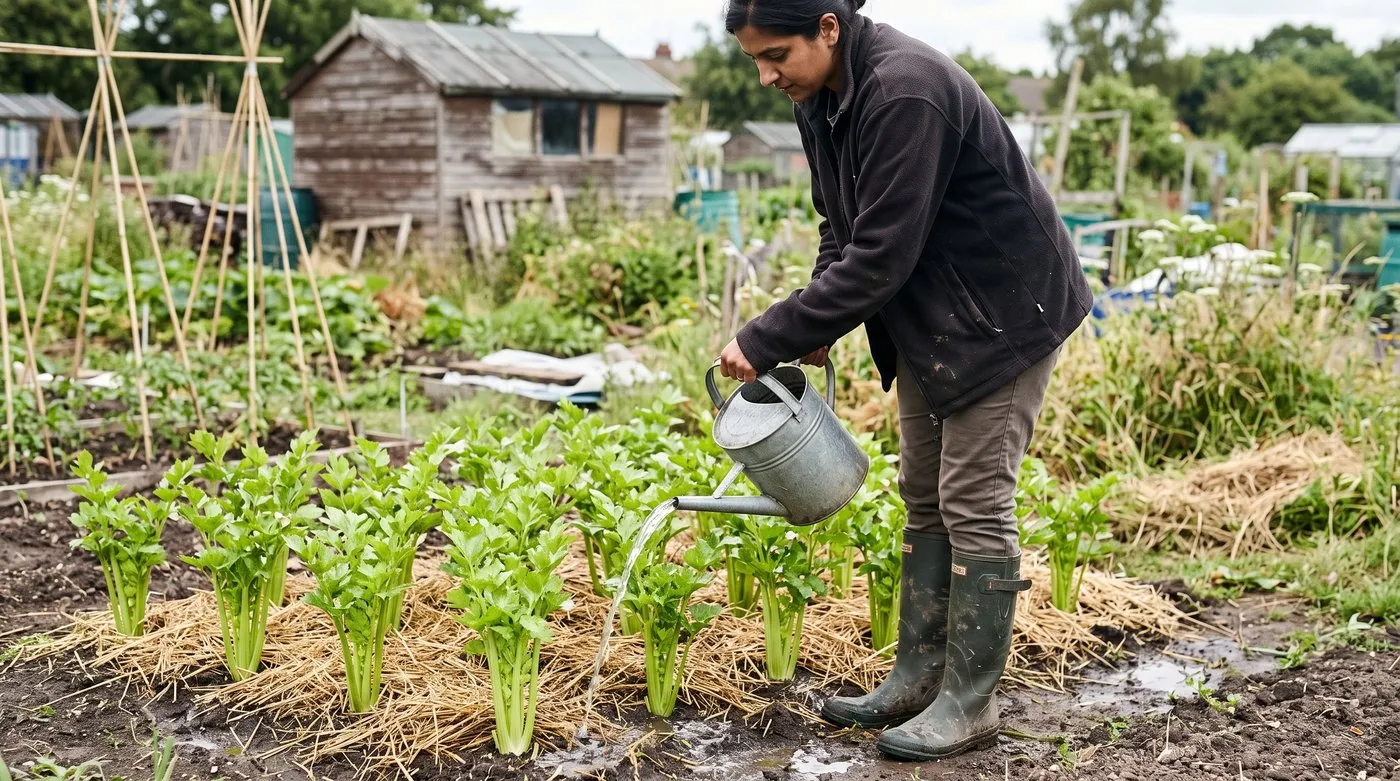
Soak the soil, not the leaves, and keep the mulch topped up. Celery that never dries out stays crisp and sweet.
- Water generously in dry weather, soaking the soil rather than wetting the leaves
- Mulch with 5-8cm of compost, straw or grass clippings in June
- Check pots daily in warm weather
Feed with a balanced liquid feed every couple of weeks from June to September. Don’t overdo high-nitrogen feeds, which give lots of leaf but softer stems.
How to blanch celery
Blanching keeps light off the stems, so they turn paler and taste milder.
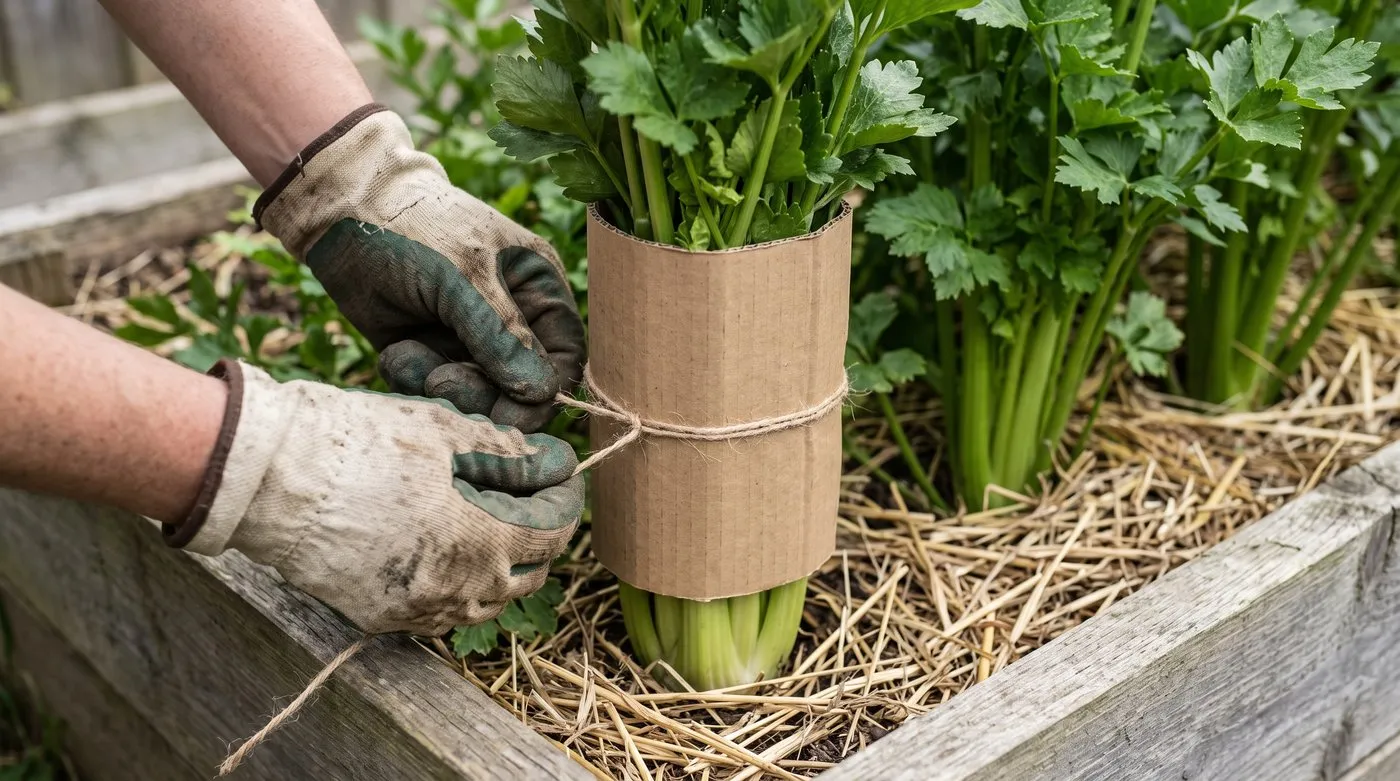
A simple cardboard collar keeps the light off the outer plants, so their stems stay pale and mild like the rest.
- Self-blanching types do this themselves in a block. For paler stems on the outer plants, wrap them in a cardboard collar in August.
- Trench types need earthing up. From late summer, tie the leaves loosely together and draw soil up round the stems every few weeks. Keep soil out of the heart of the plant.
How and when to harvest celery
Self-blanching celery is ready from late July. Lift plants as you need them, using a fork to loosen the roots. Harvest the whole block before the first frost, as frost turns the stems mushy.
Trench celery is ready from autumn. It copes with light frost, so you can keep lifting it into late autumn.

Fresh home-grown celery should snap cleanly with a good crunch. That’s the reward for all the watering.
Common celery problems
Most celery problems come from dry soil, cold, or damp leaves.
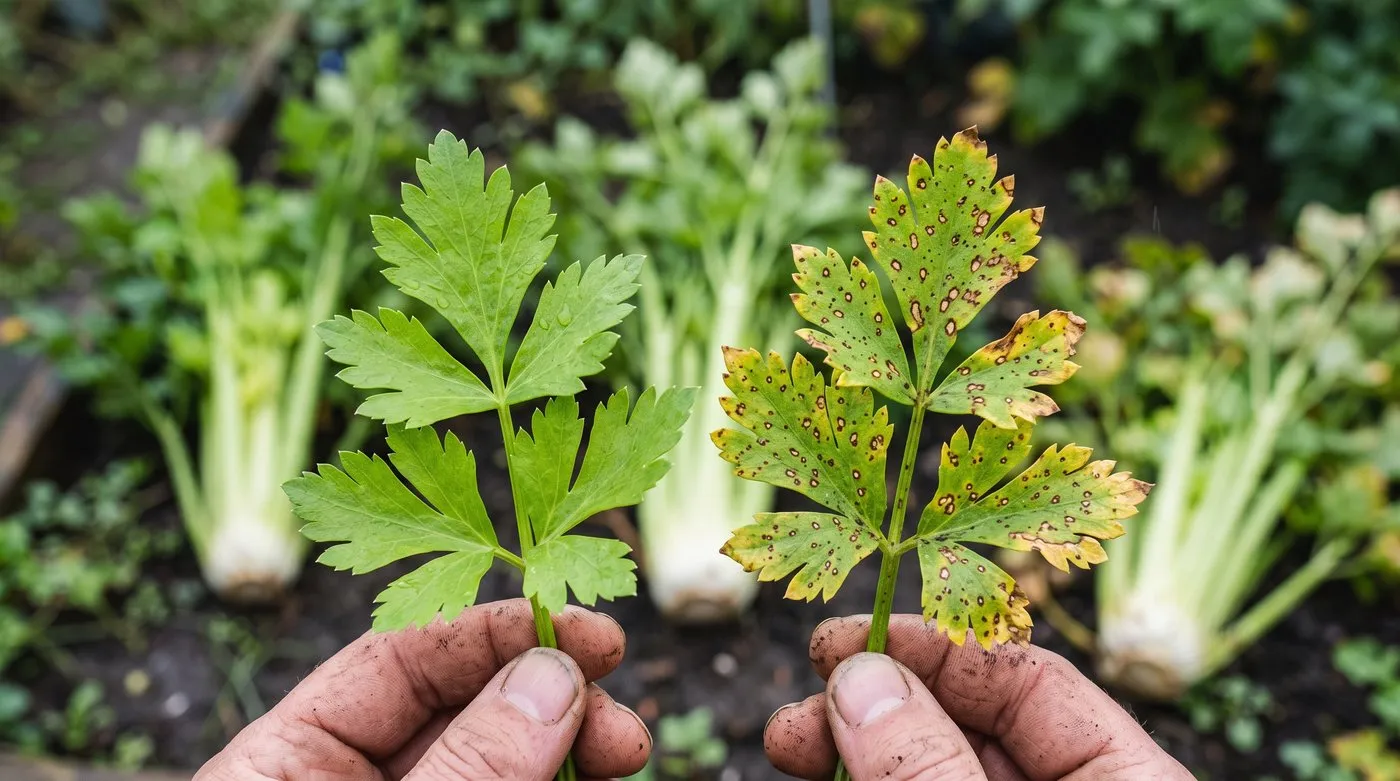
Brown spots with tiny black dots mean celery leaf spot. Pick off affected leaves early and water at the base.
- Celery leaf spot: brown spots with tiny black dots that spread in wet weather. Pick off spotted leaves and bin them, give plants space and water at soil level. The RHS celery leaf spot page has pictures.
- Bolting: plants run to flower and the stems turn bitter. Don’t plant out too early, and water steadily.
- Slugs: they can wipe out young plants overnight. The guide to getting rid of slugs naturally covers safe controls.
- Celery leaf miner: maggots tunnel inside leaves and leave brown blotches. Squash or pick off affected leaves. Fine mesh stops the flies laying eggs.
- Carrot fly: the maggots can tunnel into the roots. Fine mesh over the crop keeps the flies out.
Month-by-month celery calendar
Add a couple of weeks to these timings in northern England and Scotland.
| Month | Task |
|---|---|
| March | Sow indoors on the surface at 15C or above |
| April | Sow more. Thin to one seedling per module. Pot on |
| May | Harden off. Plant out in late May in the south |
| June | Plant out further north. Mulch. Start liquid feeding |
| July | Water often. First self-blanching celery from late July |
| August | Lift self-blanching celery. Start blanching trench celery |
| September | Main harvest. Keep watering in dry spells |
| October | Finish self-blanching celery before frost. Lift trench celery |
| November | Last trench celery in mild areas |
Leaf celery: the easy alternative
If stem celery sounds like hard work, try leaf celery, also sold as cutting celery or ‘Par-Cel’. It gives masses of strongly flavoured leaves on thin stems, a bit like flat-leaf parsley.
Sow and plant it like ordinary celery. It needs no blanching and copes with drier soil. From June, cut the outer leaves and stems as you need them, and new growth soon replaces them. A few plants give enough for soups, stocks and salads all summer.
It also makes a pretty edging for a veg bed. The guide to growing your own vegetables has more easy crops to grow alongside it.
Common mistakes with celery
- Covering the seed. It needs light. Sow on the surface.
- Planting out too early. Cold nights can trigger bolting. Wait until late May or June.
- Letting the soil dry out. This is the number one cause of stringy celery.
- Planting self-blanching celery in a single row. Plant in a block so the stems shade each other.
- Watering over the leaves. Wet leaves spread leaf spot. Water at the base.
Frequently asked questions
When should I sow celery in the UK?
Sow indoors in March or April. Scatter the seed on the surface of moist compost and don’t cover it, as it needs light. Keep it at 15C or above. Germination is slow and patchy, so sow a few more than you need.
Why is my celery bitter and stringy?
Dry soil is the most common cause. Celery stems turn tough and stringy if the soil dries out, even briefly. Water regularly, mulch to hold moisture, and don’t let plants bolt, as flowering also makes the stems bitter.
What is the difference between self-blanching and trench celery?
Self-blanching celery has naturally pale stems and needs no earthing up. It’s planted in a block and suits beginners. Trench celery has greener stems and a stronger flavour, and needs soil or collars round the stems to blanch them. It’s more work but stands later into autumn.
Can I grow celery in containers?
Yes, in a pot at least 30cm deep and wide. Use rich, moisture-holding compost and water often, as pots dry out fast. Self-blanching varieties are the best choice. Expect slightly smaller stems than in the ground.
How do I stop celery bolting?
Don’t plant out too early. Cold spells below about 10C after planting can trigger bolting. Harden plants off for a week or two, plant out in late May or early June, and cover with fleece on cold nights. Steady watering helps too.
Is leaf celery worth growing?
Yes, it’s much easier than stem celery. Leaf celery gives lots of strongly flavoured leaves on thin stems, a bit like flat-leaf parsley. It needs no blanching, and you can cut it again and again for soups, stocks and salads.
What pests and diseases affect celery in the UK?
Celery leaf spot, slugs, celery leaf miner and carrot fly are the main ones. Pick off spotted or tunnelled leaves, water at soil level, and protect young plants from slugs. Fine mesh keeps carrot fly and leaf miner off.
Enjoyed growing celery? Its knobbly cousin is next: read the guide to growing celeriac, which needs a very similar start. You’ll find more crops in growing veg.
Our team produces practical UK gardening guidance from source research, contributor records and established horticultural practice. Editorial standards are overseen by Matt W.


