Key takeaways
- Sow under glass in February or March and keep seedlings above 10°C
- Plant 30cm apart in a manured trench about 30cm deep, in late May or June
- Keep the trench moist all summer, as dry celery turns stringy and pithy
- Collar the stems, then earth up in stages over six to eight weeks to blanch
- Lift the day before the show and stage a clean, well-matched set
Trench celery is one of the classic challenge crops at a veg show. A matched set of long, crisp, pale sticks takes a whole season: a warm early sowing, a well-manured trench, steady watering and weeks of earthing up. Get those right and staging is the easy bit.
New to showing? The village veg show guide explains classes and schedules. For everyday kitchen celery, the guide to growing celery covers the easier self-blanching kind.
Trench celery or self-blanching celery for showing?
For showing, grow trench celery. It’s planted in a single row in a trench and blanched by earthing up, which gives longer, crisper, more solid sticks.
Self-blanching celery is grown in blocks on the flat, where the plants shade each other. It’s easier and quicker, but the sticks are shorter and less pale.
| Trench celery | Self-blanching celery | |
|---|---|---|
| Grown in | Single row in a trench | Blocks on the flat |
| Blanching | Collared and earthed up | Plants shade each other |
| Sticks | Long and solid | Shorter and softer |
| Season | Later, and hardier | Earlier, less hardy |
| Best for | Showing | Kitchen use |
Show growers usually pick tall trench varieties such as Giant Pink, Giant Red or Giant White. Pink and red types tend to be a little hardier than whites.
How to sow exhibition celery without bolting
Sow in February or March under glass, in a propagator at about 15-18°C. Celery seed is tiny and needs light to germinate, so sprinkle it on the surface of fine compost and don’t cover it. It can take two to three weeks to come up.
The big rule is: never let young plants get cold. Chill them below about 10°C and they may bolt, running to seed in summer. A bolted plant is no good for the bench.
Prick seedlings out into small pots and grow them on somewhere warm. Harden off slowly, and don’t be fooled by a warm spell in May. Keep fleece handy until well after planting out.
Warning: A few cold nights on soft young celery can make it bolt weeks later. Keep plants in a cold frame or greenhouse until nights stay above 10°C, even if that means planting in June.
How to prepare a celery trench
Dig the trench in spring, about 30cm deep and 40cm wide. Fork plenty of well-rotted manure into the bottom and mix it with the soil. Then put back enough topsoil to leave the trench about 8-10cm below the surrounding ground.
The dip holds water around the thirsty roots. Pile the spare soil in a low ridge alongside, ready for earthing up later. Use well-rotted manure only, as fresh manure can scorch roots. The guide to animal manures helps you choose.
Planting, watering and feeding trench celery
Plant out in late May or June, once nights stay above 10°C. Space plants 30cm apart in a single row down the trench, firm them in and water well.
From then on, keep the trench moist all summer. Celery that dries out turns pithy and stringy, the worst fault on the show bench. Water deeply two or three times a week in dry spells. A liquid feed every couple of weeks in summer keeps growth steady.

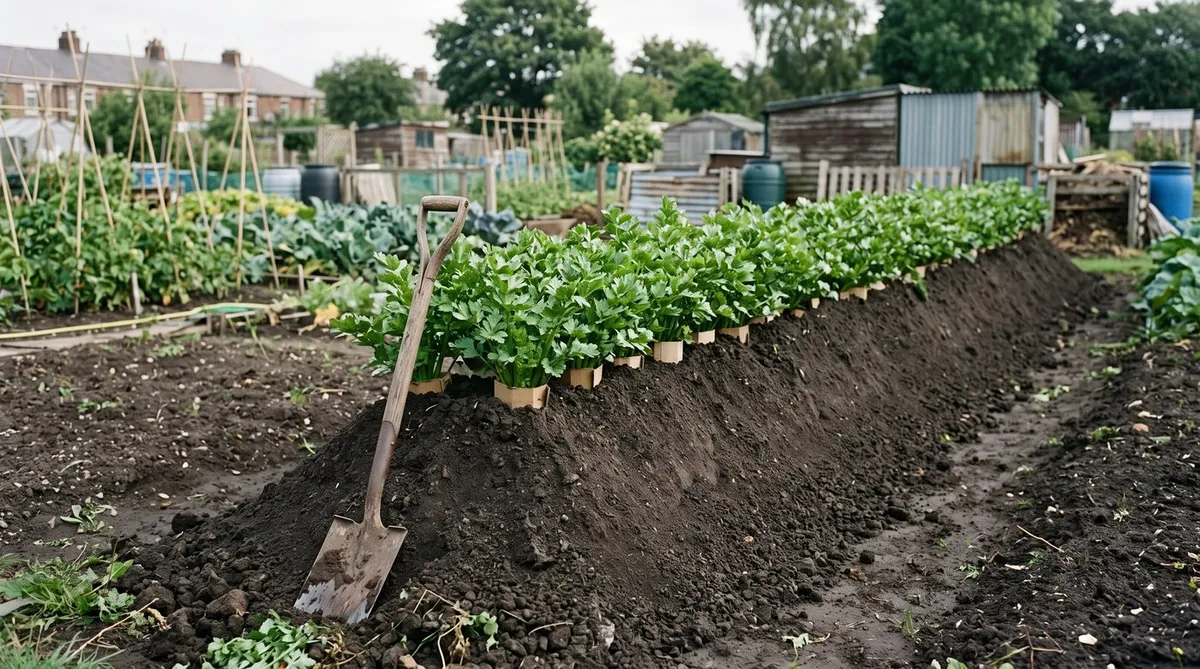
Young celery planted 30cm apart in a single row. Keep the soil moist from day one, as dry spells make the stems stringy.
How to collar and earth up celery to blanch it
Start blanching about eight weeks before the show, usually from late July or August. Blanching keeps light off the stems so they turn pale and crisp.
- Wait for a dry day once plants are about 30cm tall.
- Gather the stems together and loosely tie them.
- Wrap a collar of corrugated card, thick paper or plastic pipe around the stems, leaving the leafy tops free.
- Draw soil from the ridge up around the collar, about a third of the way up.
- Repeat every two to three weeks until only the leafy tops show above a steep mound.
The collar keeps the heart tight and stops soil falling into the middle. Gritty hearts lose marks. Keep soil off the leaves each time you earth up.

Collar the stems before you earth up. It keeps the soil out of the heart, so the sticks come up clean.

Earth up in stages, a little more every few weeks. By show time only the leafy tops should poke out of the mound.
Celery pests and problems to watch for
Four problems spoil more show celery than any others.
- Celery leaf miner: grubs tunnel inside the leaves, leaving brown blotches. Pick off affected leaves and grow young plants under fleece.
- Slugs: they graze the hidden stems in moist soil. Check often and clear them, as slug holes lose marks. The slug control guide covers safe options.
- Bolting: caused by chilling young plants, not by summer heat. Keep seedlings warm.
- Cracked stems: often linked to boron shortage or uneven watering. Keep the soil evenly moist.
Lifting and staging show celery
Lift as close to the show as you can, ideally the day before. Dig down beside the mound and ease each plant out with plenty of root, keeping the heart undamaged.
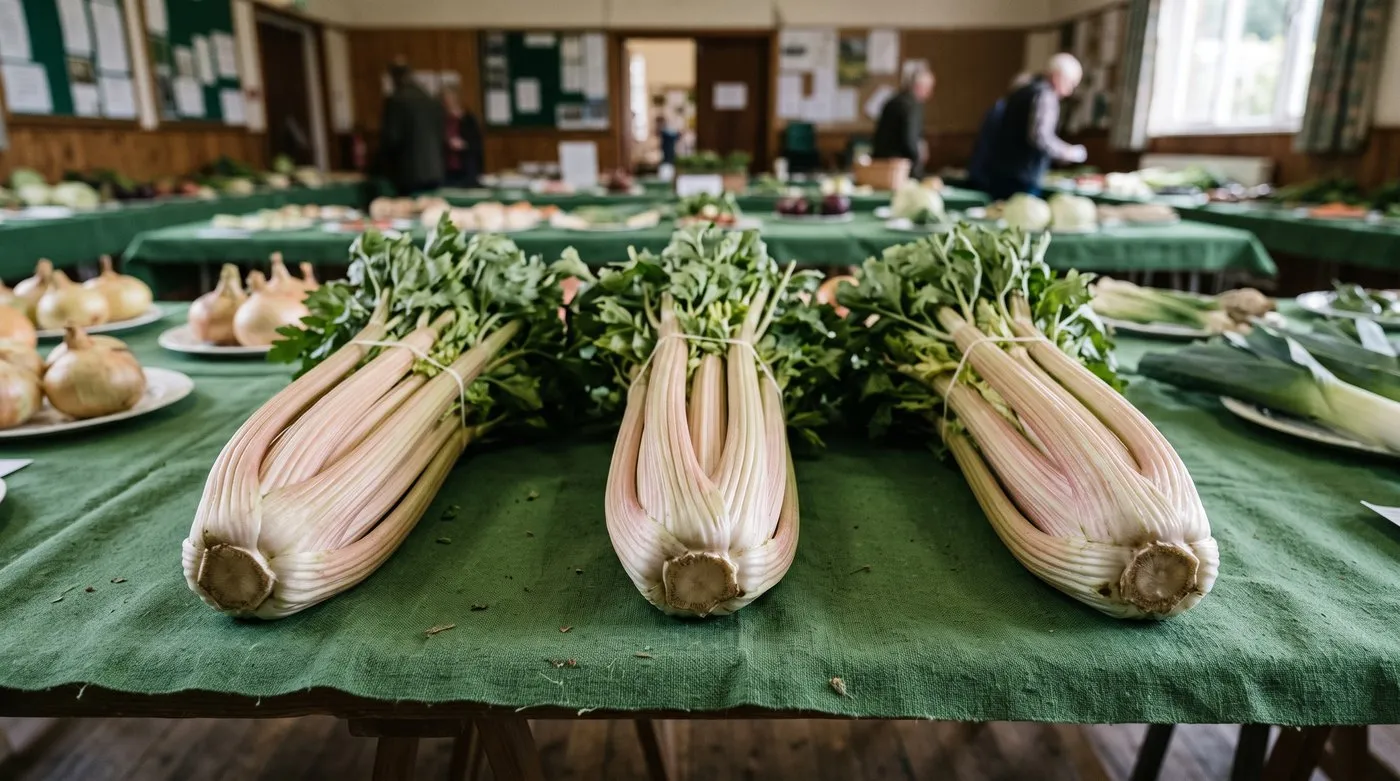
A well-matched set wins over one giant head. Same length, same thickness and a clean, pale blanch on every stick.
Wash gently under a soft spray of water, getting every bit of soil out of the base. Then dress each head:
- Trim the roots neatly, as your schedule asks
- Remove damaged or green outer stalks
- Trim the leafy tops to an even height
Choose the best-matched heads for length, thickness and colour. Your schedule says how many to stage. Judges reward a long, solid blanch, a firm heart and an even set. They mark down pithy, split, rusty or slug-damaged stems. The allotment show judging guide explains how dishes are compared.

A lifted, washed head with a long, clean blanch. That pale stem under the leaves is what the judge is looking at.
Common mistakes with show celery
- Chilling young plants. Even a few cold nights can cause bolting. Keep seedlings warm.
- Letting the trench dry out. Dry celery turns stringy and pithy. Water deeply and often.
- Earthing up without a collar. Soil gets into the heart and spoils it.
- Starting blanching too late. It takes six to eight weeks, so count back from the show.
- Ignoring slugs. Hidden stems are easy pickings. Check regularly.
Trench celery calendar
| Month | Task |
|---|---|
| February to March | Sow under glass at 15-18°C. Don’t cover the seed |
| April | Prick out and grow on warm. Dig the trench and add manure |
| May | Harden off slowly. Plant out late in the month if nights are mild |
| June to July | Water deeply in dry spells. Feed every couple of weeks |
| Late July to August | Collar and start earthing up, about eight weeks before the show |
| August to September | Keep earthing up in stages. Lift the day before the show |
| October to winter | Lift remaining celery for the kitchen as needed |
Frequently asked questions
What is trench celery?
It’s traditional celery grown in a trench and blanched by earthing up. Unlike self-blanching celery, the stems are collared and covered with soil to whiten them. It gives the long, crisp, well-flavoured sticks shown at veg shows.
How do you blanch trench celery?
Wrap the stems in a collar, then draw soil up around them in stages. Keeping light off turns the stems pale and crisp. Allow six to eight weeks, so start about two months before you want to lift.
When do you sow celery for showing?
Sow under glass in February or March at about 15-18°C. Celery seed needs light, so sprinkle it on the surface and don’t cover it. Keep seedlings warm, as a cold spell can make them bolt later.
Why does my celery bolt or run to seed?
Usually because young plants were chilled below about 10°C. The cold tells the plant winter has passed, so it flowers that summer. Harden off gently and only plant out once nights stay mild.
What do judges look for in show celery?
Long, solid, well-blanched sticks with a firm heart, in a matched set. They mark down pithy, split, rusty or slug-damaged stems and uneven heads. Your show schedule says how many heads to stage.
Why are my celery stems cracked or split?
Cracked, brown-streaked stems are often a sign of boron shortage. It’s more likely on dry or limy soil. Keep the soil evenly moist, as uneven watering also splits stems.
Planning more classes? The pot leeks for show guide is a natural partner for celery, and there are more crops in the growing veg guides.
Our team produces practical UK gardening guidance from source research, contributor records and established horticultural practice. Editorial standards are overseen by Matt W.