Key takeaways
- French marigolds bring in hoverflies, whose young eat aphids
- Onions grown between carrots help hide the carrots from carrot fly
- Nasturtiums lure blackfly and caterpillars away from your crops
- The three sisters, sweetcorn, beans and squash, share one patch happily
- Keep potatoes and tomatoes apart, as both get blight
- Flowering herbs like thyme and dill bring in bees and helpful insects
Companion planting is simply growing certain plants together so they help each other out. Some keep pests away, some bring in bees and helpful insects, and some feed the soil. A few act as decoys, luring pests away from the crops you care about.
How does companion planting work?
There are four main ways it helps. Knowing them makes it easier to pick pairings that work, rather than relying on folklore.
Pest confusion
Lots of pests find their favourite plants by smell. Put something strongly scented next to the crop and the pest gets confused. Carrots and onions are the classic example. Carrot fly sniffs out carrots, and the smell of onions helps hide them. Try alternate rows of each.
Trap cropping
A trap crop is a plant pests like even more than your crop. Nasturtiums pull blackfly away from broad beans and French beans. The aphids pile onto the nasturtiums instead. You can pick off the worst leaves, or blast the aphids off with water.
Beneficial insect attraction
Some plants bring in insects that eat pests. French marigolds attract hoverflies, and their young munch through aphids. Dill, fennel and yarrow bring in lacewings and tiny parasitic wasps. A strip of bee-friendly plants by the veg plot keeps these helpers close by.
Nitrogen fixing
Peas, beans and clover have helpful bacteria in their roots that feed the soil. Grow them before or alongside hungry crops like brassicas, sweetcorn and squash, and you’ll need less fertiliser.
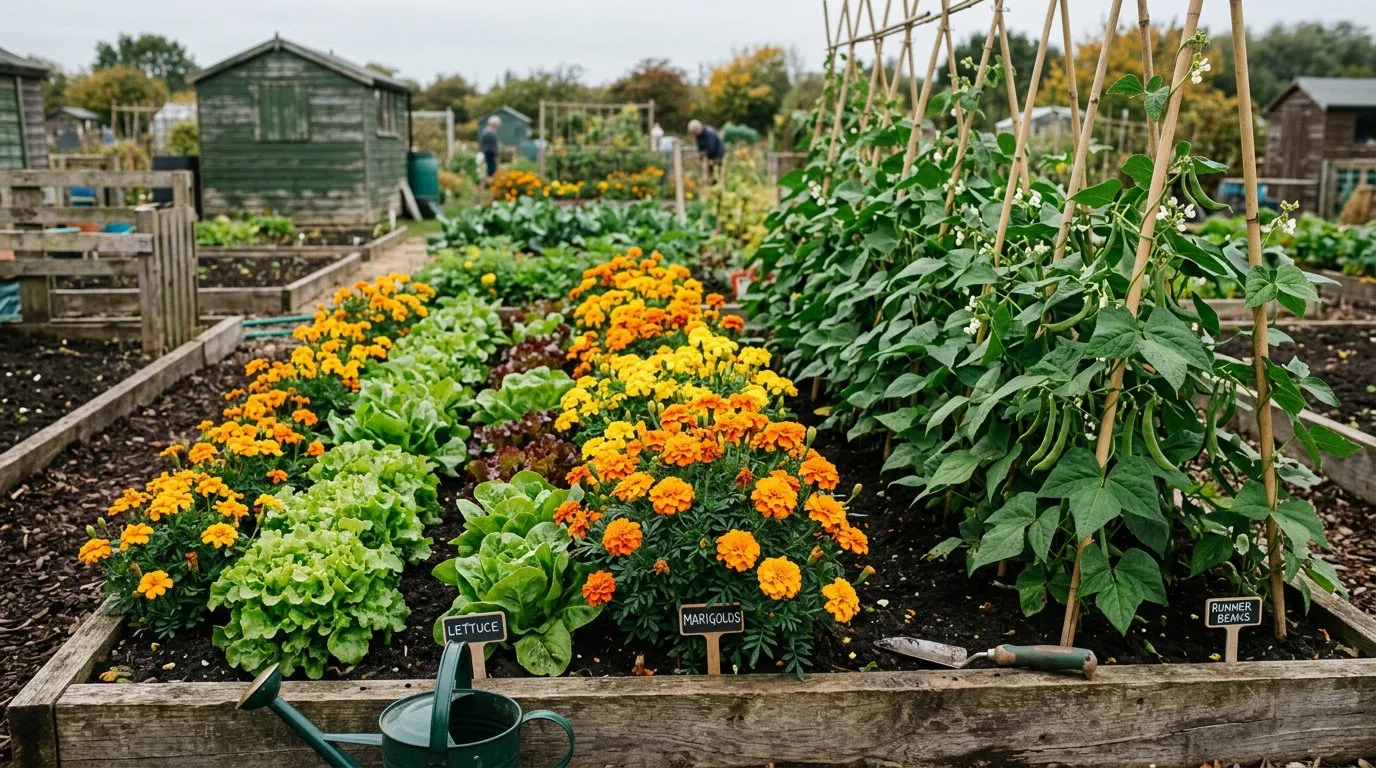
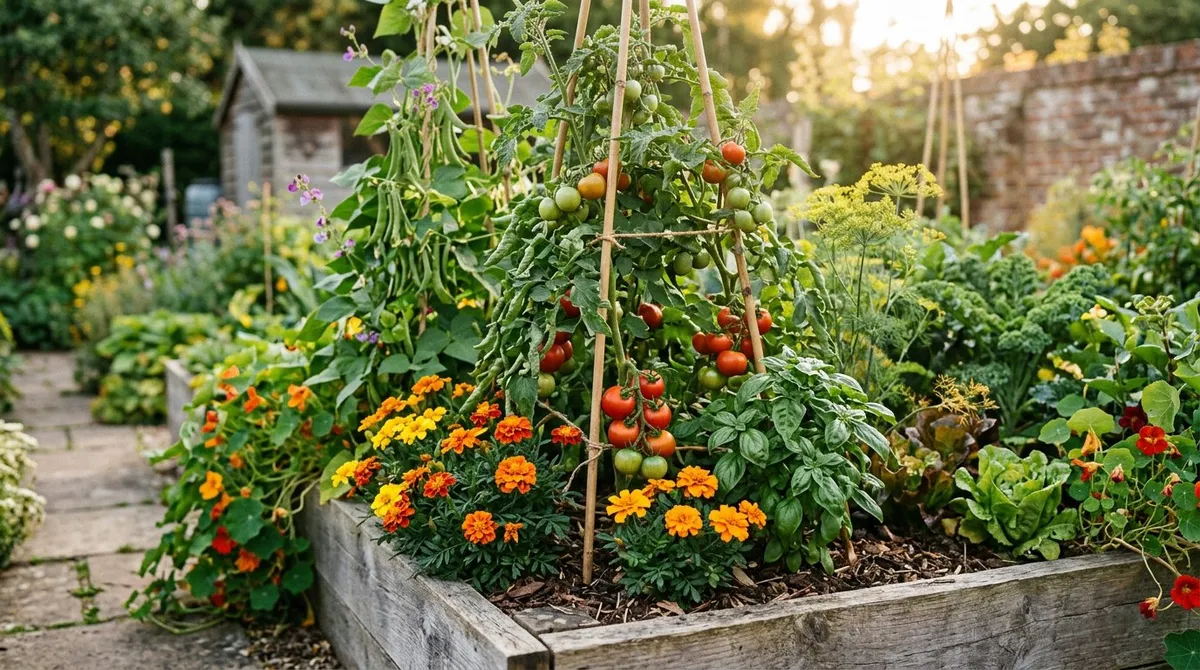
Marigolds between rows of veg bring in hoverflies and add a splash of colour.
The best companion planting combinations
Tomatoes and basil
The most famous pairing. Many gardeners swear basil makes tomatoes taste better, though that’s hard to prove. Basil does bring in pollinators, and its strong smell may put off whitefly. Grow it alongside tomatoes in the greenhouse or at the base of outdoor plants.
Carrots and onions
Grow them in alternate rows. The onion smell helps hide carrots from carrot fly, and they grow at a similar pace. It’s one of the most popular pairings, though results can be mixed. See our guides to growing carrots and growing onions for the details.
Sweetcorn, beans, and squash (the three sisters)
Three crops, three layers, one patch.
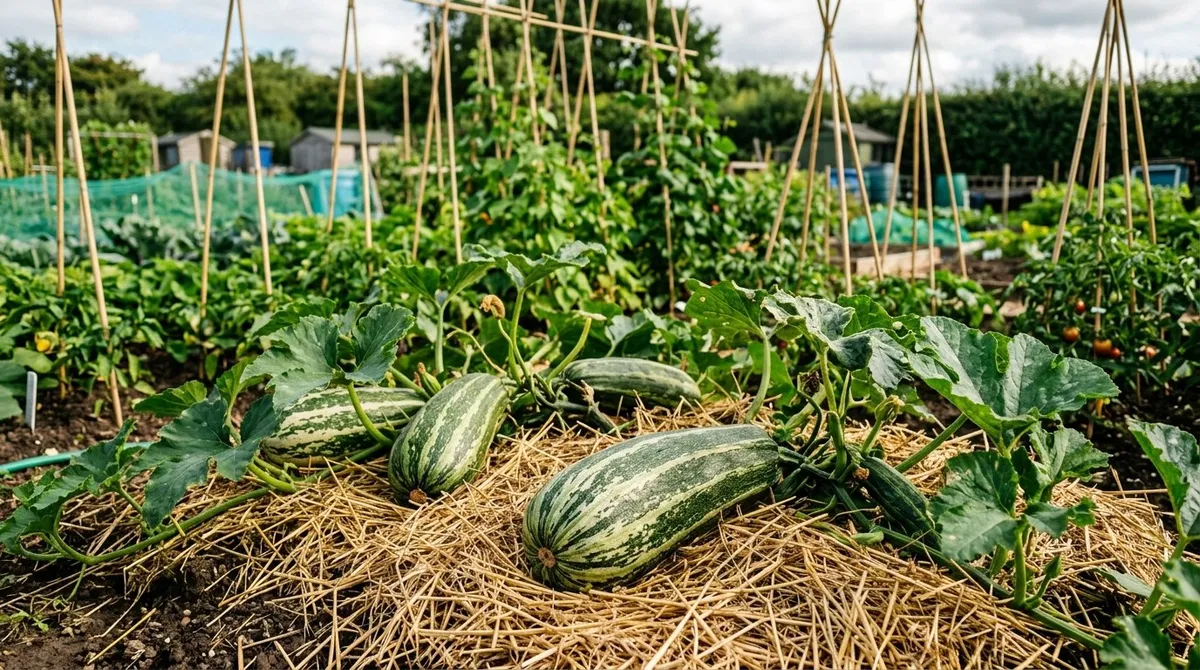
How to plant: In late May, plant sweetcorn in a block rather than a row, 45cm apart. Two weeks later, sow two climbing bean seeds at the base of each corn plant. Add a squash or courgette between every fourth corn plant. The beans climb the corn and feed the soil, and the big squash leaves smother weeds. Our sweetcorn guide has more on growing corn.
Brassicas and nasturtiums
Plant nasturtiums round the edges of your cabbage, broccoli and kale. Cabbage white butterflies often lay eggs on the nasturtiums, and blackfly heads for them first. Check them often and pick off the worst leaves. Our broccoli and kale guides cover growing these crops.
Roses and alliums
Ornamental alliums and garlic chives round roses are said to help keep aphids away, as the strong smell may confuse them. Either way, they fill the bare soil between rose stems with pretty flowers. Our rose growing guide has planting tips.
Companion planting chart for UK vegetables
| Crop | Good companions | Keep apart from |
|---|---|---|
| Tomatoes | Basil, marigolds, parsley, carrots | Potatoes, brassicas, fennel |
| Carrots | Onions, leeks, rosemary, sage | Dill, parsnips |
| Potatoes | Horseradish, beans, sweetcorn, marigolds | Tomatoes, squash, sunflowers |
| Peas | Carrots, radishes, turnips, mint | Onions, garlic, leeks |
| Beans (runner/French) | Nasturtiums, sweetcorn, squash | Onions, garlic, fennel |
| Brassicas | Nasturtiums, dill, chamomile, onions | Strawberries, tomatoes |
| Lettuce | Radishes, chervil, carrots, strawberries | Nothing much |
| Courgettes | Sweetcorn, beans, nasturtiums, marigolds | Potatoes |
| Onions | Carrots, beetroot, lettuce, chamomile | Peas, beans |
| Beetroot | Onions, lettuce, brassicas | Runner beans |
| Strawberries | Borage, lettuce, spinach, thyme | Brassicas |
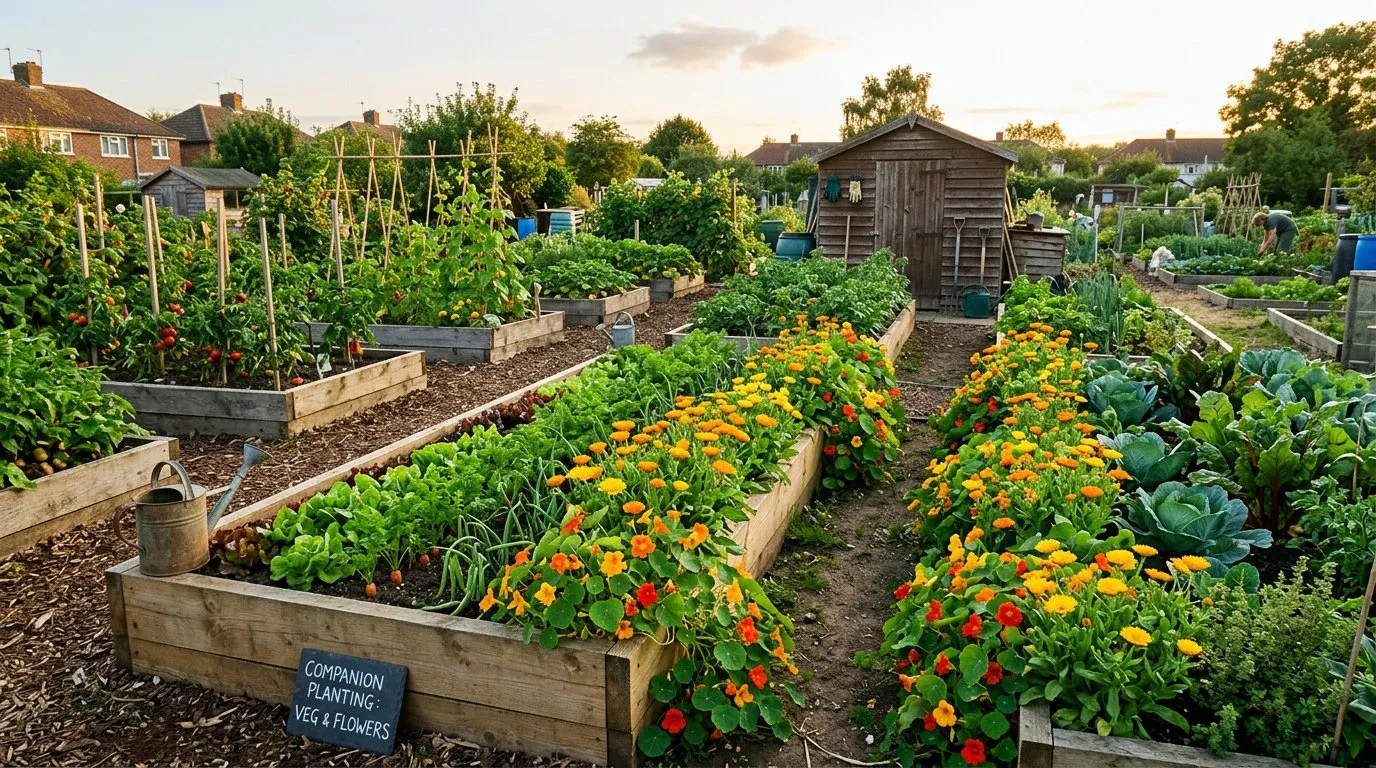
Flowers between the veg rows on an allotment bring in pollinators and help muddle pests.
Herbs as companion plants
Herbs make brilliant companions. Their scent can put pests off, their flowers bring in pollinators, and you get to cook with them too.
Basil: Grow next to tomatoes and peppers. It may help put off whitefly and aphids. It loves warmth, so a greenhouse or sunny, sheltered spot suits it best.
Rosemary: Grow near carrots, brassicas and beans. Its strong smell is said to put off carrot fly and cabbage pests. It’s evergreen, so it’s there all year.
Thyme: Plant along the edges of beds. Bees and hoverflies love it, and it helps cover bare soil. Good with brassicas and strawberries.
Chives: Plant round roses and fruit trees. They may help keep aphids away, and the flowers bring in bees in May and June. Easy, and they come back every year.
Mint: Said to put off flea beetles and aphids near brassicas. Always grow it in a pot sunk into the ground, as it spreads like mad otherwise. Our herb growing guide has more.
Dill: Brings in ladybirds, lacewings and parasitic wasps. Great near brassicas. Let it flower to get the most from it.
Plants to keep apart
A few pairings cause trouble. These are the main ones to avoid.
Potatoes and tomatoes: Both get blight, and it spreads easily between them. Keep them as far apart as you can.
Beans and the onion family: Onions, garlic and leeks are thought to hold back peas and beans. Grow them in different parts of the plot.
Fennel and almost everything: Fennel tends to sulk and hold back its neighbours. Grow it in a pot or at the edge of the plot.
Walnuts and anything underneath: Walnut trees give off a natural chemical that holds back tomatoes, potatoes, peppers and lots of other plants under them.
How to plan companion planting in a small garden
Companion planting is great for small spaces, where everything grows close together anyway. Raised beds and container gardens are ideal.
Edge the bed with flowers. A row of French marigolds or calendula along each side brings in helpful insects.
Tuck in herbs. Pop basil, parsley and chives between bigger crops. They use the gaps and add confusing smells for pests.
Grow upwards. Let climbing beans scramble up sweetcorn or an obelisk, with nasturtiums at the base. That’s three crops in one square metre.
Move things round each year. Rotate crop families to stop pests and diseases building up. Follow peas and beans with brassicas so they enjoy the extra nitrogen. Our vegetable planting calendar helps with planning.
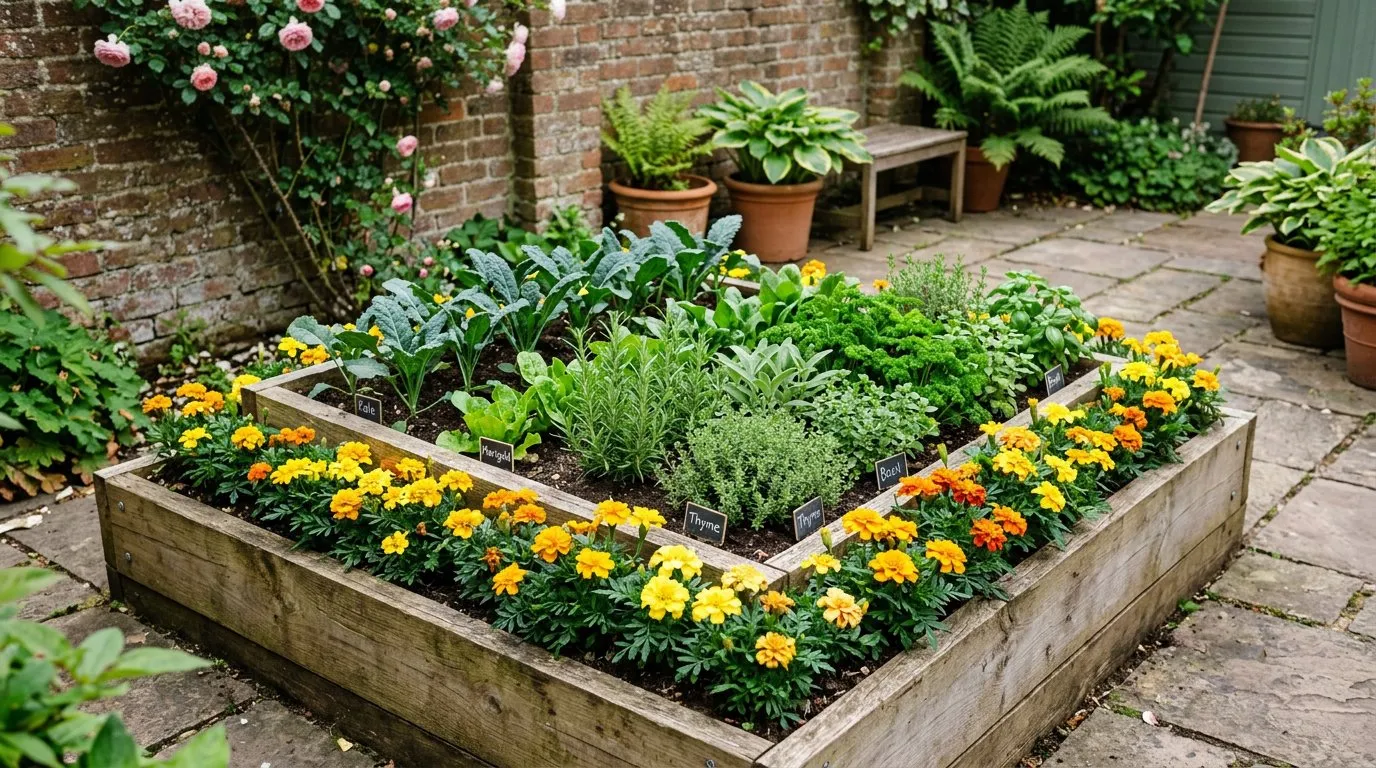
Even one raised bed can enjoy companion planting, with marigolds round the edge and herbs between rows.
Next, read our guide to organic pest control for more chemical-free ways to protect your crops. Comfrey and nettles are great to grow near the veg plot too, and our guide on making comfrey and nettle liquid feed shows how to turn them into a rich plant food.
The RHS companion planting guide is a good next read if you’d like more ideas.
Frequently asked questions
Does companion planting actually work?
Some pairings do, but many are more tradition than proven. French marigolds bring in hoverflies, and onions can hide the smell of carrots from carrot fly. Flowers that attract helpful insects are the best-backed use. It costs little to try, so why not give it a go?
What should you not plant next to tomatoes?
Keep potatoes away from tomatoes. They’re in the same family and both get blight, which spreads easily between them. Keep them as far apart as you can. Big brassicas can also crowd tomatoes, and fennel is best grown on its own.
What flowers are best for companion planting?
French marigolds are one of the most popular. They bring in hoverflies, whose young eat aphids. Nasturtiums lure blackfly and caterpillars away from other plants. Borage and calendula attract bees and other helpful insects. Sweet alyssum gives low cover for small predators among your veg.
Can I companion plant in raised beds?
Yes, raised beds are perfect for it. Plant marigolds or nasturtiums at the corners and along the edges. Grow carrots next to rows of onions or leeks. Tuck basil and parsley between taller crops. Give everything enough room so plants don’t fight for space.
What is the three sisters planting method?
It’s a traditional Native American way of growing sweetcorn, climbing beans and squash together. The corn holds up the beans. The beans feed the soil. The squash leaves shade the ground, keeping weeds down and moisture in. In the UK, plant out in late May or early June after the last frost.
What herbs grow well together?
Rosemary, thyme, sage and oregano are happy together. They all like full sun and very well-drained soil. Grow mint on its own in a pot, as it spreads everywhere. Parsley, chives and coriander like richer, moister soil and get on well with each other.
Our team produces practical UK gardening guidance from source research, contributor records and established horticultural practice. Editorial standards are overseen by Matt W.