
Key takeaways
- Foxes come for food and shelter, so removing both is the fix that lasts
- Lock bin lids, bring pet food in and clear windfalls and spilled bird seed
- Block gaps under sheds and decking only once cubs have left, from late summer
- Keep hens in welded mesh, not chicken wire, and shut them in every night
- Lawn digging means grubs; treat the grubs and the digging stops
- Poison and snares are never an option, and moving a trapped fox elsewhere is not either
Foxes are a normal part of town and village life in Britain. Most of the time they pass through quietly. When they start digging the lawn, fouling the patio, raiding the bins or eyeing up your hens, it’s time to act.
The good news is that the best fixes are humane, legal and mostly free. Take away food and shelter, protect anything vulnerable and the fox will move its rounds elsewhere.
Why do foxes keep coming into my garden?
Food and shelter. Foxes have a regular round, and they keep visiting gardens that pay off.
- Food: open bins, pet food left out, windfall fruit, spilled bird seed, open compost with cooked scraps.
- Shelter: gaps under sheds and decking, overgrown corners, woodpiles.
- Grubs: lawns with chafer grubs or leatherjackets are a free buffet.
Foxes are territorial, so a fox that already knows your garden takes a few weeks of steady effort to put off. Keep at it rather than judging after a night or two.
Is it legal to get rid of foxes?
You can deter foxes however you like, as long as you don’t harm them. Keep it simple:
- Never use poison. It’s illegal and kills pets, hedgehogs and birds too.
- Never use snares or traps that can injure.
- Don’t trap and move a fox. Released somewhere new, it may be treated as abandoned, and it struggles to survive.
- Leave dens with cubs alone until the cubs have left.
If a fox is injured, trapped in netting or clearly unwell, call the RSPCA (or the Scottish SPCA in Scotland) rather than handling it yourself.
Take away what attracts foxes
This is the step that makes the biggest difference, and it costs almost nothing.
- Lock bin lids. Use bins with clip or bungee lids and put them out on collection morning, not the night before.
- Bring pet food in. Never leave bowls out overnight.
- Clear windfalls. Pick up fallen apples, pears and plums every day or two in autumn.
- Feed birds tidily. Use a seed tray under feeders and sweep up spilled seed in the evening. The same habit keeps rats out of the garden.
- Close the compost. Use a lidded bin, and keep cooked food, meat and dairy out of it.

A closed bin store and a lidded compost bin take away one of the easiest meals a fox can find.
How to stop foxes living under your shed
Block the gap, but only at the right time. Foxes rest and raise cubs under sheds, decking and summerhouses.
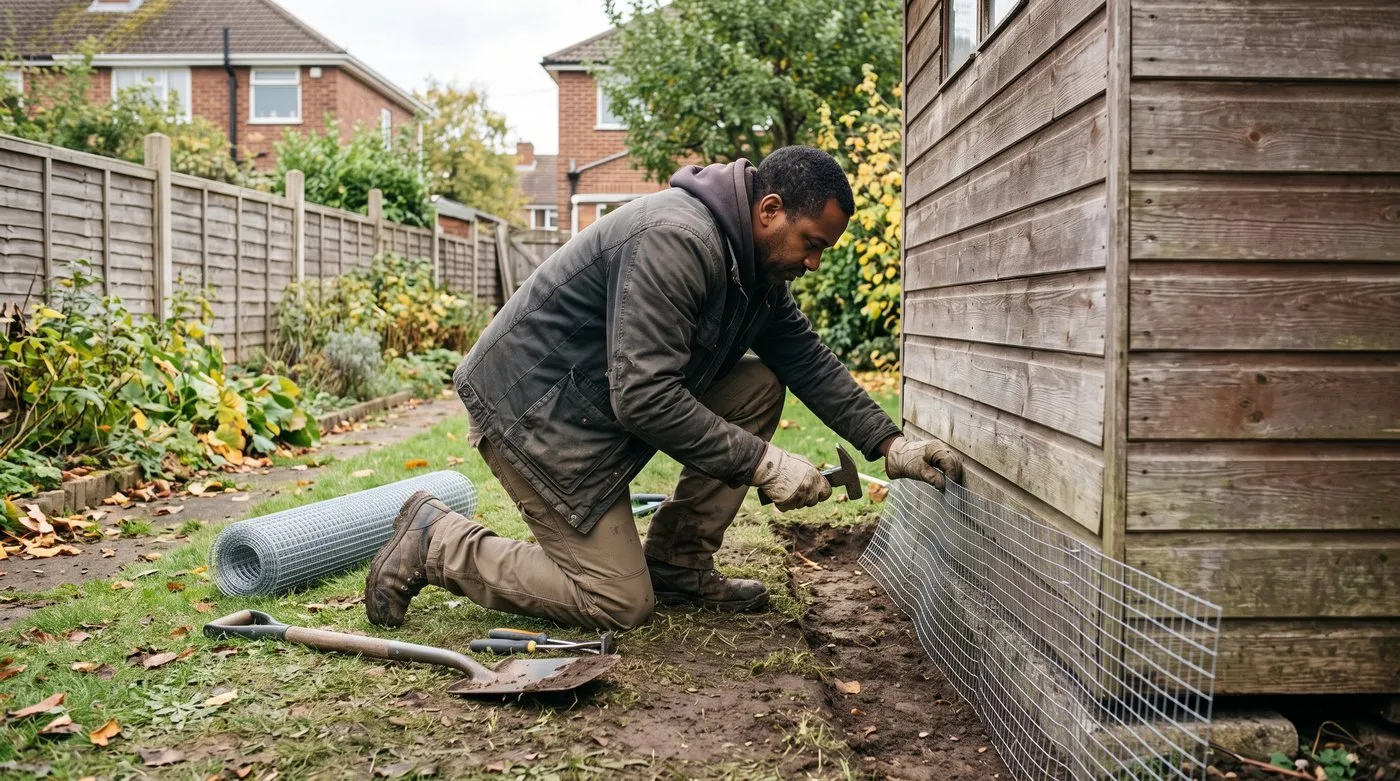
A mesh skirt bent outwards under the soil stops a fox digging back under the shed. Fit it once any cubs have gone.
Between March and July there may be cubs underneath. Blocking the entrance then can trap them inside or separate them from their mother. Wait until late summer, when the cubs have grown and left.
When the time is right:
- Check it’s empty. Loosely stuff the hole with scrunched newspaper or leaves. If it’s undisturbed for three or four nights, nobody is using it.
- Fit a mesh skirt. Fix welded mesh to the base of the shed or decking and bend it outwards underground, about 30cm down and out, so a fox can’t dig under.
- Keep hedgehog gaps elsewhere. Leave a 13cm hole in your boundary fence for hedgehogs. The guide to a hedgehog-friendly garden explains how.
How to stop foxes digging up your lawn
Treat the grubs, not the fox. Foxes dig shallow, scrappy holes and tear up turf to reach chafer grubs and leatherjackets under the grass.
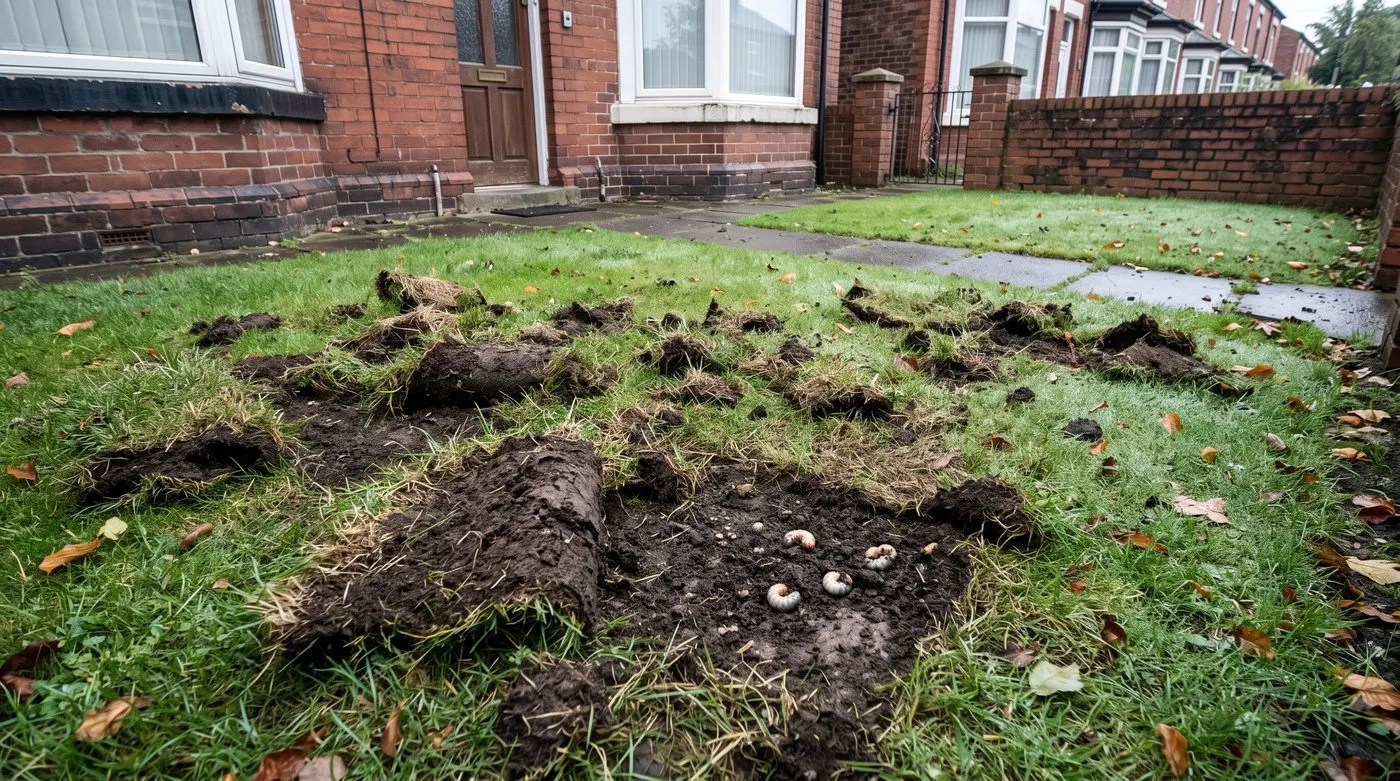
Torn-up turf like this usually means grubs underneath. Deal with the grubs and the digging stops.
Lift a patch of turf and look for fat, C-shaped white grubs or grey-brown legless ones. If you find plenty, water in the right biological nematodes when the soil is warm, usually late summer to early autumn. The guide to chafer grubs in lawns covers timing and repair.
Not sure who’s digging? Badgers make similar damage, and so do birds. The guide to small holes in the lawn overnight helps you tell them apart. For badgers, which are protected, see how to deter badgers safely and legally.
How to protect chickens from foxes
Shut hens in a fox-proof coop every night, without fail. A fox that gets in will often kill every bird.
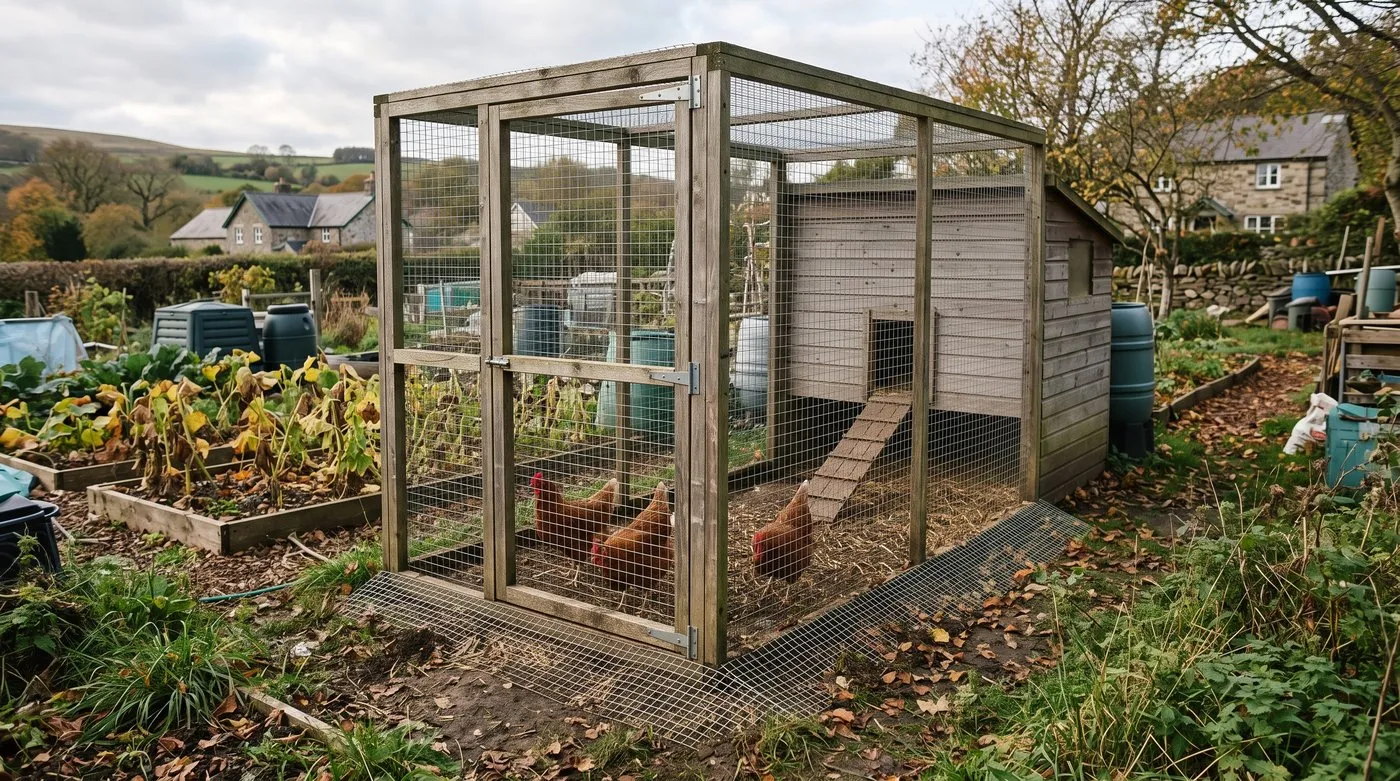
Welded mesh, a roof and a mesh skirt round the base keep a fox from getting in or digging under. Shut the hens in the coop every night too.
- Use welded mesh, not chicken wire. Foxes can bite or tear through chicken wire.
- Roof the run with mesh or a solid cover, as foxes climb well.
- Bury a mesh skirt about 30cm down and out round the run, so foxes can’t dig under.
- Close the pop hole at dusk. An automatic door helps if you’re often home late.
Rabbits and guinea pigs need the same care, with a strong hutch and secure latches. The guide to keeping chickens in the garden has more on coop and run set-up.

An angled mesh topper makes a fence much harder for a fox to climb. Angle it outwards, towards the side the fox comes from.
Do fox repellents and gadgets work?
They can help as a top-up, but none of them work well on their own.
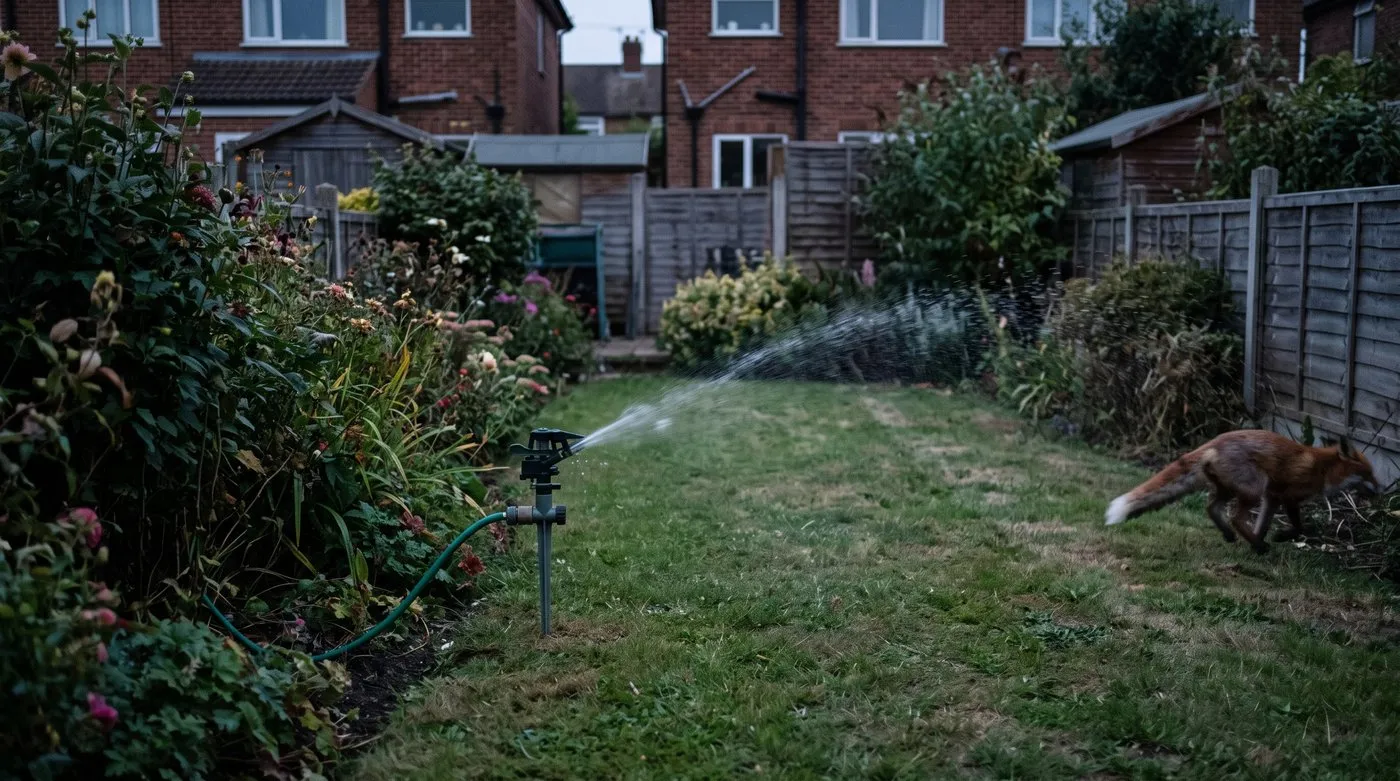
A motion-activated sprinkler can startle a fox off a favourite spot. Move it now and then so it stays a surprise.
| Method | How well it works | Good to know |
|---|---|---|
| Removing food and shelter | Best long-term fix | Free and permanent |
| Mesh skirts and secure runs | Very reliable | Stops digging and protects pets and hens |
| Motion-activated sprinkler | Can startle foxes off a lawn or bed | Move it now and then; switch off in frost |
| Authorised animal repellent | Short-term help on favourite spots | Reapply after rain, follow the label |
| Ultrasonic device | Mixed results | Can bother pet cats and dogs |
| Security lights | Little effect on their own | Town foxes are used to light |
Avoid home-made garlic or chilli sprays. Mixes used to repel animals still need to be authorised products in the UK, and they can sting pets’ eyes.
Fencing helps in a small, enclosed garden. Foxes climb and jump well, so a fence needs to be about 1.8m high with an angled topper, and no gaps at the bottom. That’s a big job for a whole garden, so it’s usually only worth it around a vegetable patch or hen run.
Fox year: what happens when
| Month | What foxes are doing | What to do |
|---|---|---|
| December to February | Mating season; screaming at night, more roaming | Secure bins and food. Check sheds for gaps before cubs arrive |
| March to April | Cubs born under sheds or decking | Leave dens alone |
| May to June | Cubs above ground and playful | Don’t feed or approach them. Protect hens and new lawns |
| July to August | Cubs growing up and exploring | Keep food sources cleared |
| September to November | Young foxes leave to find their own patch | Block empty dens and fit mesh skirts. Treat grubby lawns |
Common mistakes with foxes
Feeding them. A fed fox gets bolder and keeps coming back, and it brings others.
Blocking a den in spring. You risk trapping cubs inside. Wait until late summer.
Relying on one gadget. Sprays and ultrasonic boxes don’t work if the bins are still open.
Using chicken wire for hens. It keeps hens in, not foxes out. Use welded mesh.
Giving up too soon. A fox with an established round needs a few weeks of steady effort to change it.
Frequently asked questions
Is it legal to kill foxes in the UK?
It’s heavily restricted, and not something to try in a garden. Poison is illegal, snares are banned and causing suffering is an offence. Deterring foxes is the legal, practical route for home gardeners.
What smell do foxes hate the most?
There’s no smell that reliably keeps foxes away. Authorised animal repellents can help for a while, but rain washes them off. Taking away food and shelter works far better.
Do ultrasonic fox deterrents actually work?
Results are mixed at best. Some foxes avoid them for a while, others ignore them. They can also upset pet cats and dogs, so remove food and shelter first.
Will a fox attack my cat or dog?
Attacks on cats and dogs are rare. Foxes and cats usually ignore each other. Rabbits, guinea pigs and hens are at real risk, so keep them in secure hutches and runs at night.
How do I stop foxes digging up my lawn?
Deal with the grubs they’re digging for. Foxes dig lawns for chafer grubs and leatherjackets. Water in the right nematodes in late summer or early autumn and the digging stops once the grubs are gone.
When is fox breeding season in the UK?
Foxes mate from December to February. Cubs are born in March or April and come above ground from about four weeks old. Leave dens alone until the cubs have grown and left in late summer.
Can I trap a fox and release it somewhere else?
No, that’s not a good idea and may be an offence. A fox released in strange territory can be counted as abandoned, and it struggles to survive. Another fox soon moves in anyway.
Next steps
If cats rather than foxes are fouling your borders, read how to stop cats pooing in the garden, or browse more humane fixes in pest control.
Our team produces practical UK gardening guidance from source research, contributor records and established horticultural practice. Editorial standards are overseen by Matt W.


