
Key takeaways
- Dahlias flower from July until the first frosts if you keep cutting and deadheading
- Pinch out the growing tip when plants are 30-40cm tall for more stems and flowers
- Put stakes in at planting time so you don't spear the tubers later
- Feed with a high-potash tomato feed every week or two once flower buds appear
- Trap earwigs with upturned pots of straw on canes, and protect young shoots from slugs
- Lift tubers after frost blackens the leaves and store them cool, dry and frost-free
Dahlias give you more flowers for longer than almost anything else in a UK garden. They bloom from July right up to the first frosts, often in October or November. Plant them in sun and rich soil, pinch out the tips, stake them early, feed them well and keep cutting, and they’ll keep going all autumn.
This guide is all about growing and looking after dahlias through the season. For planting dates, starting tubers in pots and when it’s safe to plant out, see the guide on when to plant dahlias. Here you’ll find choosing a type, pinching, staking, feeding, pests, cutting and keeping the tubers safe over winter.
Which type of dahlia should I grow?
Dahlias are grouped by flower shape. Choose by what you want them for: a big border show, flowers for cutting, pots or bees.
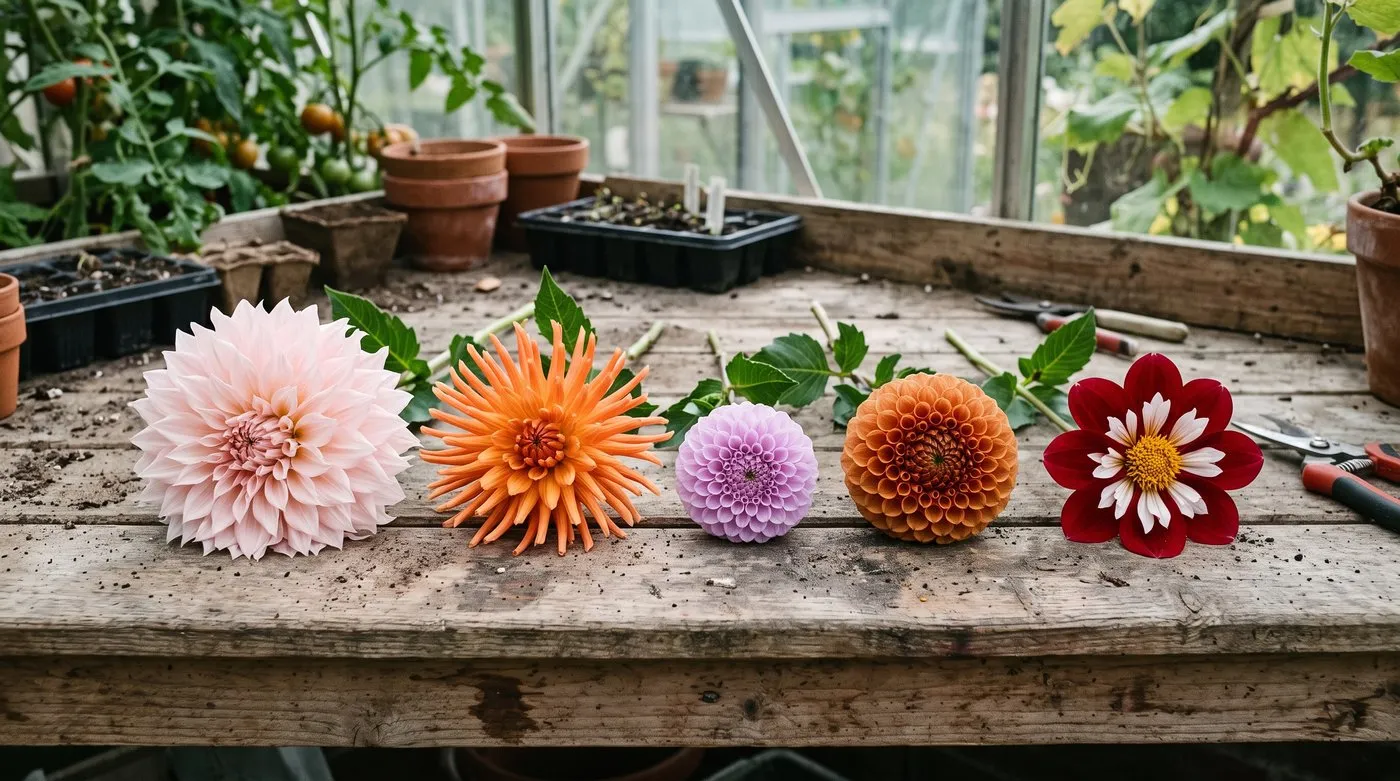
Big and flat, spiky, round or open-centred. Pick the shape that suits your border or vase.
- Decorative: fully double flowers with broad, flat petals. ‘Cafe au Lait’ has huge blush-pink blooms. ‘Arabian Night’ is a deep, dark red.
- Cactus and semi-cactus: spiky, rolled petals for a dramatic look. Great for cutting.
- Pompon: small, perfectly round balls under about 5cm. ‘Franz Kafka’ (lilac-pink) and ‘Willo’s Violet’ are classics.
- Ball: bigger round flowers. ‘Jomanda’ is orange and ‘Cornel Brons’ is a warm bronze.
- Collerette: an open flower with a ring of short petals around the centre. ‘Night Butterfly’ is dark red with a white collar. Bees love them.
- Dinnerplate: a nickname for any dahlia with blooms over about 20cm, such as ‘Emory Paul’. They need strong stakes and plenty of food.
- Dwarf bedding: compact plants under about 60cm, such as the Gallery series. ‘Bishop of Llandaff’, with scarlet flowers and dark leaves, is a much-loved UK favourite.
| Type | Flower size | Needs staking? | Best for |
|---|---|---|---|
| Decorative | Medium to huge | Yes | Borders and cutting |
| Cactus | Medium to large | Yes | Cutting, bold borders |
| Pompon | Small | Rarely | Cutting, mass planting |
| Ball | Small to medium | Sometimes | Cutting, borders |
| Collerette and singles | Medium | Sometimes | Bees and other pollinators |
| Dinnerplate | Over 20cm | Always | Statement plants |
| Dwarf bedding | Small to medium | No | Pots and edging |
Single and collerette types have open centres that bees can reach. Fully double ones look lush but offer pollinators very little.
Where and how to plant dahlias
Plant dahlias in full sun and rich, well-drained soil, once the frosts are over. A south or west-facing border is ideal. Light shade for part of the day is fine, but you’ll get fewer flowers.
- Dig plenty of garden compost or well-rotted manure into the planting area.
- On heavy clay, add some grit to the bottom of the hole so the tuber doesn’t sit wet.
- Push in a strong stake for tall types before you plant.
- Set the tuber beside the stake with the old stem pointing up, the crown just a few centimetres below the surface.
- Space big varieties 60-90cm apart and bedding types 30-45cm apart.
- Water in and protect new shoots from slugs straight away.
Pot-grown plants need hardening off for a week or two before they go out. Exact dates and the “dormant tuber vs leafy plant” rules are in the planting-time guide linked above.
How to pinch out dahlias
Pinching out means snapping off the growing tip so the plant branches. Without it you often get one tall stem with a few flowers at the top. With it you get a bushy plant covered in blooms.
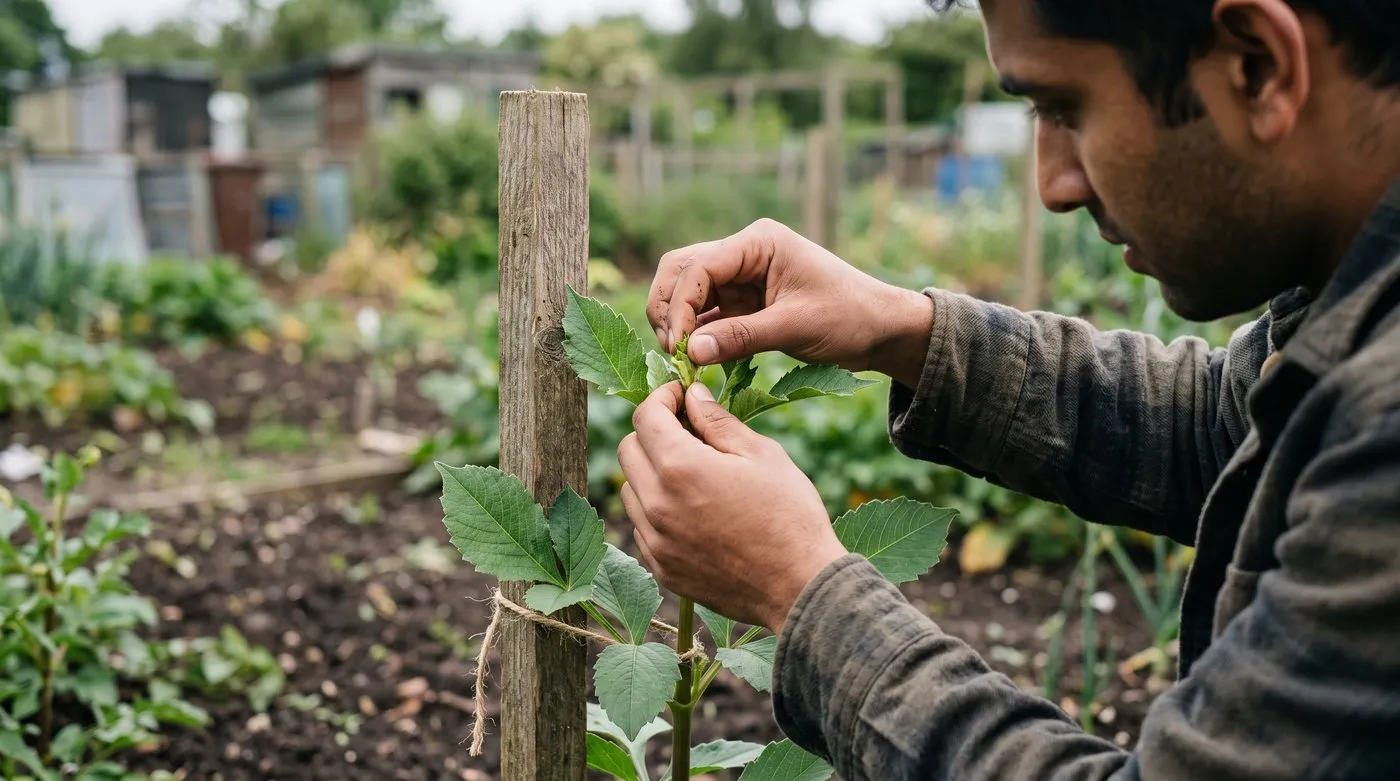
Snap the tip off just above a pair of leaves. The plant soon branches into several flowering stems.
Wait until the plant is 30-40cm tall with three or four pairs of leaves. Pinch out the tip with your finger and thumb, just above a pair of leaves. Within a couple of weeks, new side shoots grow from the leaf joints below, and each one will flower.
For bigger show blooms, try disbudding. Each stem usually has a central bud with a smaller bud either side. Pinch off the two side buds and the plant puts its energy into one bigger flower. The guide to pinching out bedding plants shows the same technique on other plants.
How to stake and support dahlias
Stake any dahlia taller than about 60cm. Heavy rain and late summer winds can snap stems loaded with flowers.
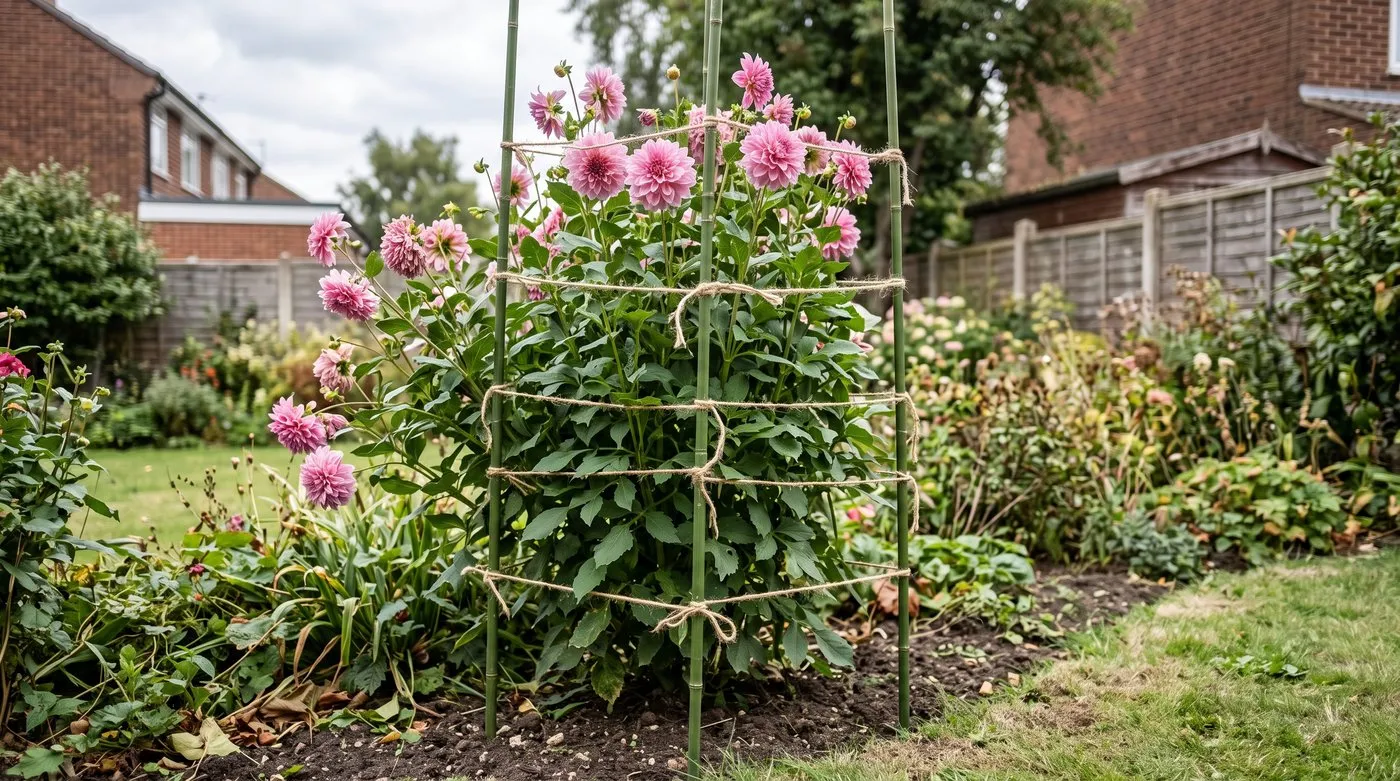
Three canes and some twine hold a bushy dahlia upright through late summer storms.
- Single stake: a strong cane or wooden stake about 1.5m tall, put in at planting time. Tie the main stem in loosely as it grows.
- Three-stake cage: three canes in a triangle around the plant, with string run between them every 30cm or so. Good for bushy, branching plants.
- Netting or string grid: for a row of dahlias in a cutting patch, run netting horizontally between posts. The plants grow up through it.
Use soft twine or stretchy plant ties in a loose figure of eight, never wire. Check ties now and then and loosen them as stems thicken. The guide to staking tall perennials has more ideas.
How to feed and water dahlias
Dahlias are hungry plants. Dig plenty of compost in at planting time, then give a high-potash liquid feed, such as tomato feed, every week or two once flower buds start to form.
Potash encourages flowers. Too much nitrogen does the opposite, giving huge, leafy plants with few blooms. Carry on feeding until the plants slow down in autumn.
Water well in dry spells, especially in July and August. A good soak once or twice a week is better than a daily sprinkle. In June, spread a mulch of garden compost around the plants to hold in moisture, keeping it a few centimetres clear of the stems.
Deadheading for more flowers
Cut off faded dahlia flowers every few days and the plant keeps making new ones. Leave them and it puts its energy into seed instead.
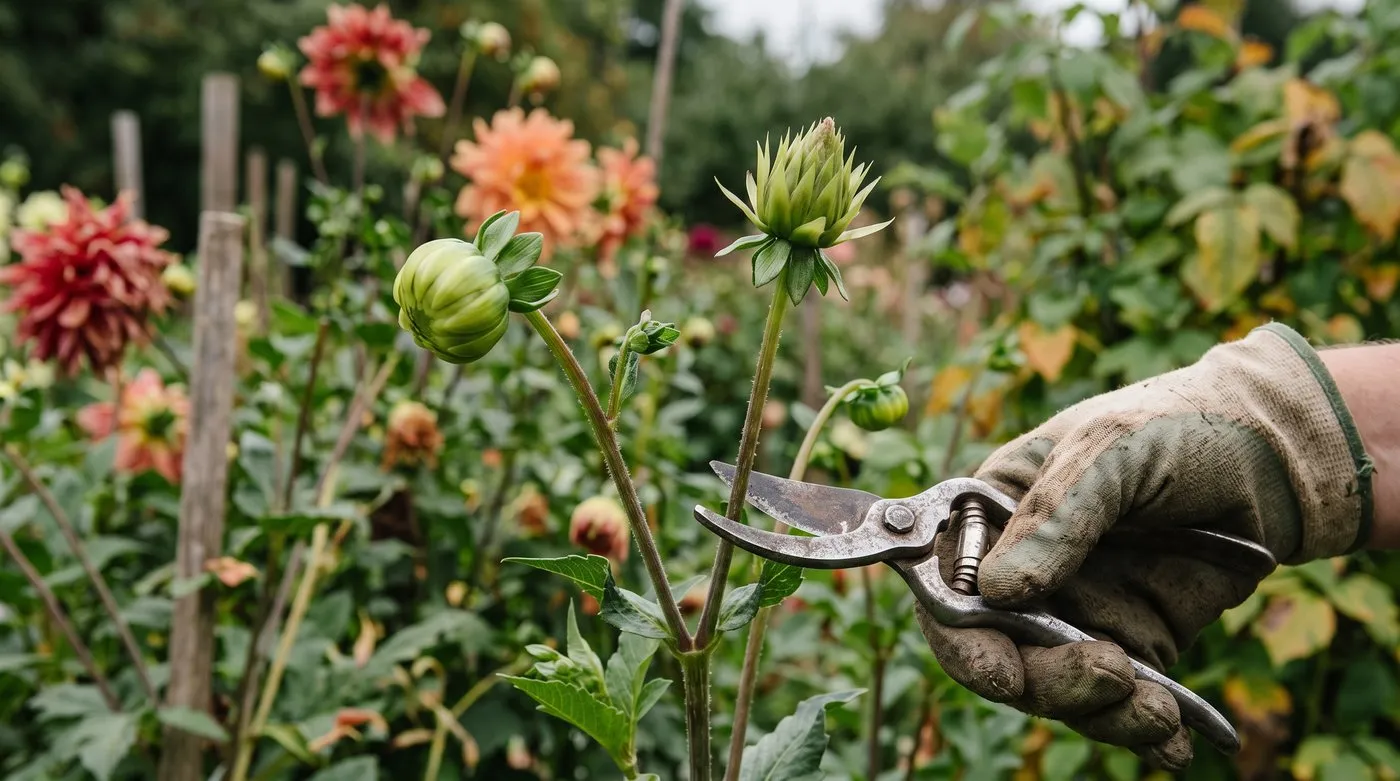
Round and plump is a bud. Narrow and cone-shaped is a spent flower, so snip that one off.
It’s easy to mix up spent flowers and buds. Buds are round and plump. Spent flower heads are narrower and cone-shaped, ending in a point once the petals drop. Cut faded flowers back to just above a leaf joint or side shoot, so the stump doesn’t spoil the plant.
If you cut dahlias for the house regularly, that does the same job.
Dealing with earwigs on dahlias
Earwigs chew ragged holes in dahlia petals and leaves at night. Damage is worst from July to September. If blooms look nibbled but you can’t see anything by day, earwigs are the likely culprits.
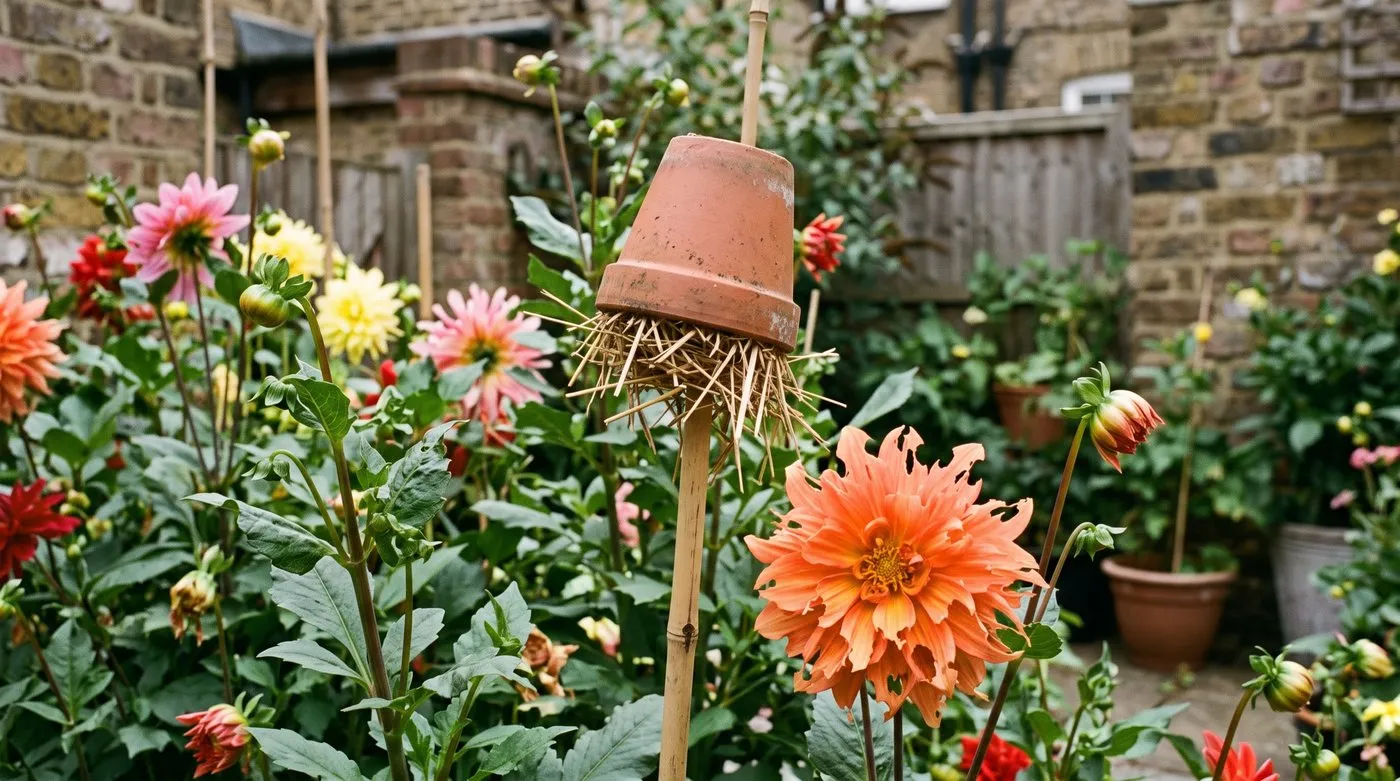
A pot of straw on a cane gives earwigs somewhere to hide that you can empty each morning.
The classic fix is a trap. Stuff a small flowerpot with straw or crumpled newspaper and turn it upside down on a cane among the plants. Earwigs crawl in to hide by day. Check the traps each morning and empty them well away from your dahlias, somewhere like a hedge or compost heap. A smear of petroleum jelly on stakes stops them climbing up to prized blooms.
Earwigs also eat aphids, so they’re not all bad. The guide to earwigs as friend or foe explains the balance. Avoid insecticide sprays, which harm the bees and hoverflies visiting your flowers.
Protecting dahlias from slugs
Young dahlia shoots are a favourite food for slugs and snails. They can eat new shoots to the ground overnight, so protect plants as soon as the shoots appear.
Go out with a torch on damp evenings and pick slugs off by hand. Beer traps, wool pellets and a ring of grit around each plant all help. Biological nematodes watered into the soil in spring work well in warm, moist soil. Starting tubers in pots and planting out sturdier plants also gives them a better chance. The guide to stopping slugs eating dahlias goes through the options in detail.
Dahlias as cut flowers
Dahlias make wonderful cut flowers, and the more you cut, the more you get. Cut early in the morning, choosing flowers that are mostly open, as tight buds rarely open in a vase.
Cut long stems, right down to a side shoot or leaf joint. Strip any leaves that would sit below the water and stand the stems in a bucket of cool water for a couple of hours before arranging. Change the vase water every couple of days and expect about five to seven days of colour.
Good cutting varieties include ‘Cafe au Lait’, ‘Cornel Brons’ and the pompons. Mix them with cosmos, grasses and late perennials for a relaxed, garden-picked look.
Growing dahlias in pots
Dwarf and bedding dahlias are perfect for pots. The Bishop and Gallery types and seed-raised bedding dahlias all do well. Use a pot at least 30cm wide and deep for each plant, or 40-50cm for taller types.
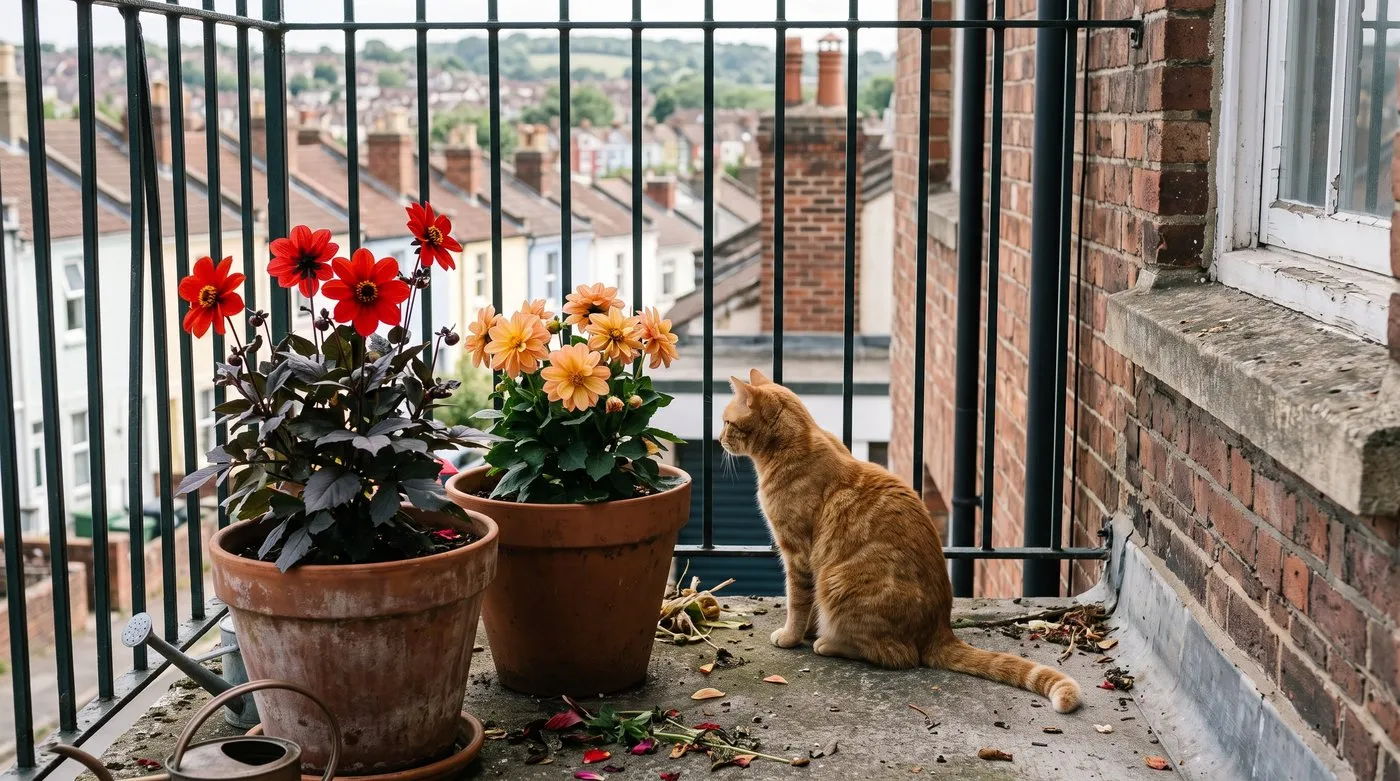
Bedding dahlias are perfect for a balcony. Check pots daily in hot weather, as they dry out fast.
Fill with peat-free multipurpose compost mixed with some perlite or grit. Plant one tuber per pot and water sparingly until shoots appear. Once growing, pots dry out fast, so check them daily in hot weather. Feed weekly with tomato feed once buds form, and deadhead often.
Pots have a bonus: you can move them under cover if a late frost is forecast in May or June.
Pet note: Dahlias are listed as mildly toxic to cats and dogs, and chewing them can upset a pet’s stomach. Most pets ignore them, but it’s worth knowing if you have a nibbler.
Lifting and storing dahlia tubers for winter
Dahlias aren’t frost-hardy. In colder gardens, or on heavy, wet soil, lift the tubers after the first frost and store them somewhere frost-free.
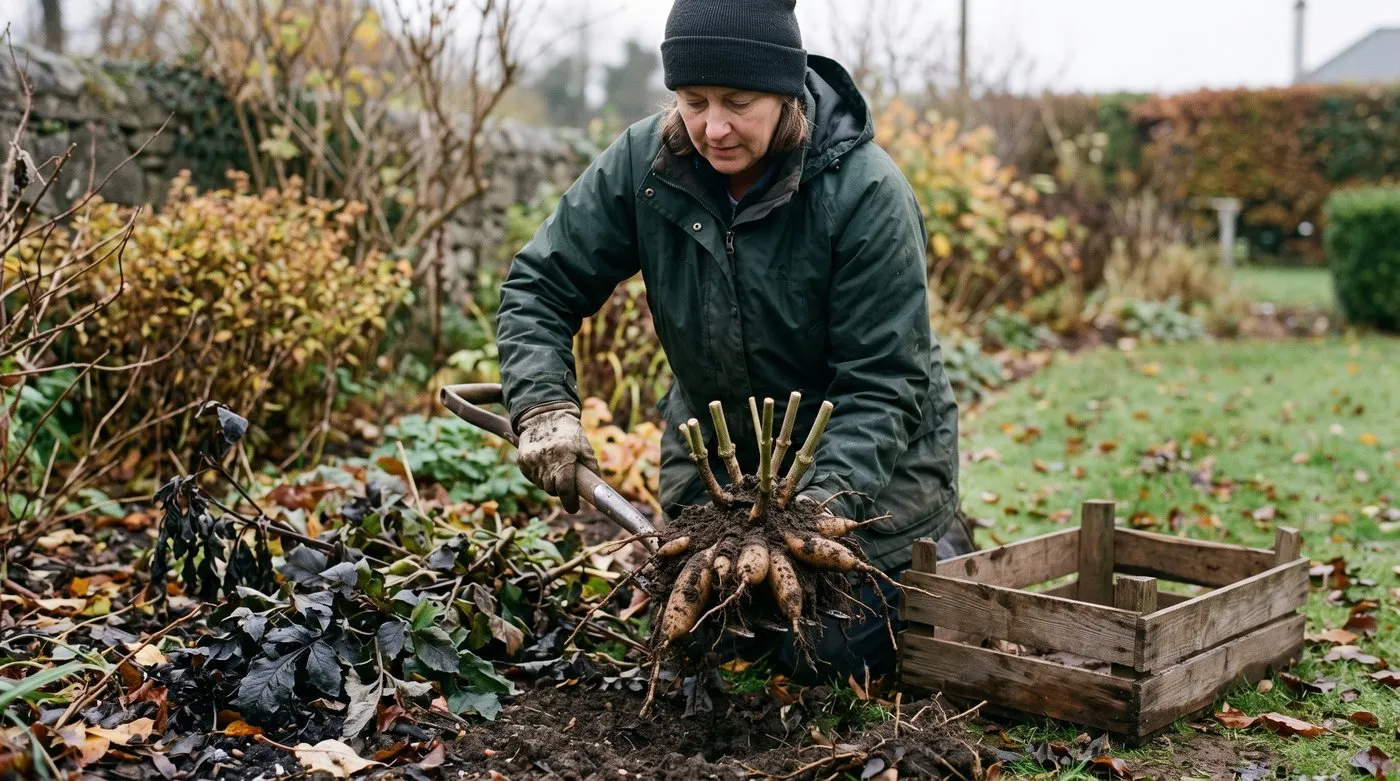
Lift gently with a fork well away from the stem. Dahlia tubers snap easily.
When to lift: wait until frost blackens the leaves, usually late October or November. The leaves feed the tubers right up to that point.
How to lift:
- Cut the stems back to about 10cm.
- Push a fork into the soil well away from the stem and lever gently all round.
- Lift the clump carefully, as tubers snap easily.
- Shake or rinse off the soil and remove any damaged tubers.
- Stand the clumps upside down somewhere dry for a week or two, so water drains out of the hollow stems.
Storing: pack the clumps in trays or boxes of dry compost or vermiculite, crowns up, and keep them somewhere cool, dark and frost-free, such as a garage or shed. Check them monthly. Throw out any that go soft or mouldy, and mist any that shrivel badly. In spring you can start them back into growth in pots. The guide to storing flower bulbs covers other tender bulbs and tubers, such as gladioli, that need the same care.
Leaving them in the ground: in mild areas with well-drained soil, many gardeners leave dahlias in and cover the crowns with a thick mulch of bark, straw or compost after the first frost. It often works, but a long cold, wet winter can still kill them. Lift your favourites to be safe.
Dahlia care calendar
| Month | What to do |
|---|---|
| January | Order new tubers. Check stored ones |
| February | Throw out any stored tubers that have gone soft |
| March | Start stored tubers in pots under cover |
| April | Take cuttings from new shoots on potted tubers. Prepare beds |
| May | Harden off pot-grown plants. Plant out once frosts are over in mild areas. Stake tall types |
| June | Plant out in colder areas. Pinch out tips. Mulch. Keep up slug protection |
| July | Start high-potash feeding. Tie in stems. Start deadheading |
| August | Feed, deadhead and cut. Set earwig traps. Water in dry spells |
| September | Keep deadheading and cutting. Carry on feeding |
| October | Enjoy the last flowers. Lift tubers once frost blackens the leaves |
| November | Finish lifting, or mulch crowns in mild gardens. Dry and store tubers |
| December | Check stored tubers. Keep them frost-free |
Common mistakes with dahlias
- Planting out too early. One frost can kill new shoots. Wait until frosts are over and harden off pot-grown plants.
- Not pinching out. You get tall, leggy plants with few flowers. Pinch at 30-40cm.
- Staking too late. A stake pushed in in July can spear the tuber. Put it in at planting time.
- Feeding with nitrogen all summer. You’ll grow leaves, not flowers. Switch to a high-potash feed once buds form.
- Overwatering dormant tubers. Tubers rot in wet compost before shoots appear. Water sparingly until they’re growing.
- Forgetting to deadhead. Seed heads slow flowering. Cut faded blooms every few days.
Now you’ve got dahlias sorted, find more summer favourites in the plants hub, or grow some cosmos from seed to fill the gaps between them.
Frequently asked questions
Should I pinch out dahlias?
Yes, pinching out gives bushier plants with more flowers. When the plant is 30-40cm tall, snap off the tip just above the third or fourth pair of leaves. New side shoots grow from the leaf joints below, and each one carries flowers.
How do I stop earwigs eating my dahlias?
Trap them with upturned pots stuffed with straw on canes. Earwigs hide in the straw by day. Check the traps each morning and empty them well away from your dahlias. A smear of petroleum jelly on stakes also helps.
Why are my dahlias not flowering?
Usually too much shade, too much nitrogen or no deadheading. Dahlias need full sun. Switch to a high-potash tomato feed once buds form, and cut off faded flowers so the plant keeps making new ones.
Can I leave dahlia tubers in the ground over winter?
In mild areas with well-drained soil, often yes, under a thick mulch. It’s still a gamble, as cold, wet soil rots tubers. In colder gardens or on heavy clay, lift and store them somewhere frost-free.
How do I store dahlia tubers over winter?
Lift them after frost blackens the leaves, then dry them for a week or two. Cut the stems to about 10cm, clean off the soil and stand the clumps upside down to drain. Pack them in trays of dry compost or vermiculite somewhere cool and frost-free. Check them monthly.
Can I grow dahlias from seed?
Yes, bedding dahlias are easy from seed. Sow indoors in early spring in gentle warmth and they flower the same summer. Seedlings vary in colour and shape, so named varieties are grown from tubers or cuttings.
Are dahlias poisonous to pets?
Dahlias are listed as mildly toxic to cats and dogs. Chewing them can cause a stomach upset or skin irritation. Most pets leave them alone, but call your vet if yours eats a lot.
Our team produces practical UK gardening guidance from source research, contributor records and established horticultural practice. Editorial standards are overseen by Matt W.


