Key takeaways
- Slugs target dahlia shoots in the first 6 weeks after planting
- Nematodes (Phasmarhabditis hermaphrodita): 90% effective; apply at 10C soil
- Copper rings around each plant: 85% effective; 15-year reuse
- Wool pellets: 70% effective; refresh after rain
- Ferric phosphate pellets: 80% effective; pet and wildlife safe
- Combine 2-3 methods for full-season protection
Slugs are the single biggest cause of UK dahlia failure. Fresh shoots are demolished overnight, established plants are stripped to stems, and a 30-40% plant loss rate in the first 6 weeks is normal without protection. This guide covers eight UK slug-control methods ranked by 8 years of dahlia-specific trial data.
Why Dahlias Are Slug Magnets
Slugs prefer dahlias for three reasons: soft fresh growth, continuous new foliage through October, and the damp moist conditions dahlias need. A single tuber producing first shoots in May attracts 8-15 slugs per night in slug-prone UK gardens. One night of unprotected growth takes the plant back to ground. Three or four nights kill the tuber.
The critical window is the first 6 weeks from emergence (mid-May) to flower bud formation (late June). Plants surviving this window have enough leaf area to outgrow later damage.
The 8 Methods Ranked by Effectiveness
| Rank | Method | Effectiveness | Cost | Maintenance |
|---|---|---|---|---|
| 1 | Nematodes (Phasmarhabditis) | 90% | £15-£25 per 40m² | Reapply every 6 weeks |
| 2 | Copper rings | 85% | £4-£8 per ring | None (10+ years) |
| 3 | Ferric phosphate pellets | 80% | £6-£12 per 1kg | Refresh after rain |
| 4 | Wool pellets | 70% | £8-£15 per 1kg | Refresh after rain |
| 5 | Hand-picking at dusk | 65% | Free | Daily for 6 weeks |
| 6 | Beer traps | 60% | £2-£5 per trap | Empty weekly |
| 7 | Gravel/sharp sand mulch | 55% | £4-£8 per m² | None (5+ years) |
| 8 | Garlic spray | 40% | £5-£10 per litre | Weekly refresh |
Combining 2-3 methods reaches 95%+ effectiveness. Most UK growers settle on nematodes plus copper rings plus wool pellets.
Method 1: Nematodes (The Gold Standard)
Phasmarhabditis hermaphrodita is a parasitic nematode that infects slugs through their breathing pore, killing them in 4-7 days without harming pets, wildlife or beneficial insects.
UK products: Nemaslug (£15-£25, treats 40m²), NemaSlug 2.0 (£22-£32, improved viability), GreenGardener Slug Nematodes (£18-£28).
Application: Wait for soil temperature to reach 10C (late April-mid May UK). Mix the powder with cold water and apply through a watering can with the rose removed. Water in immediately. Keep soil moist for 2 weeks. Reapply every 6 weeks through September.
Limits: soil temperature must be above 10C, effectiveness drops 30-50% in dry soil, 6-week protection only, cannot ship above 25C, refrigerate until use.
For the wider biological pest control options, our nematodes guide covers vine weevil, carrot fly and chafer grub treatments.
Method 2: Copper Rings
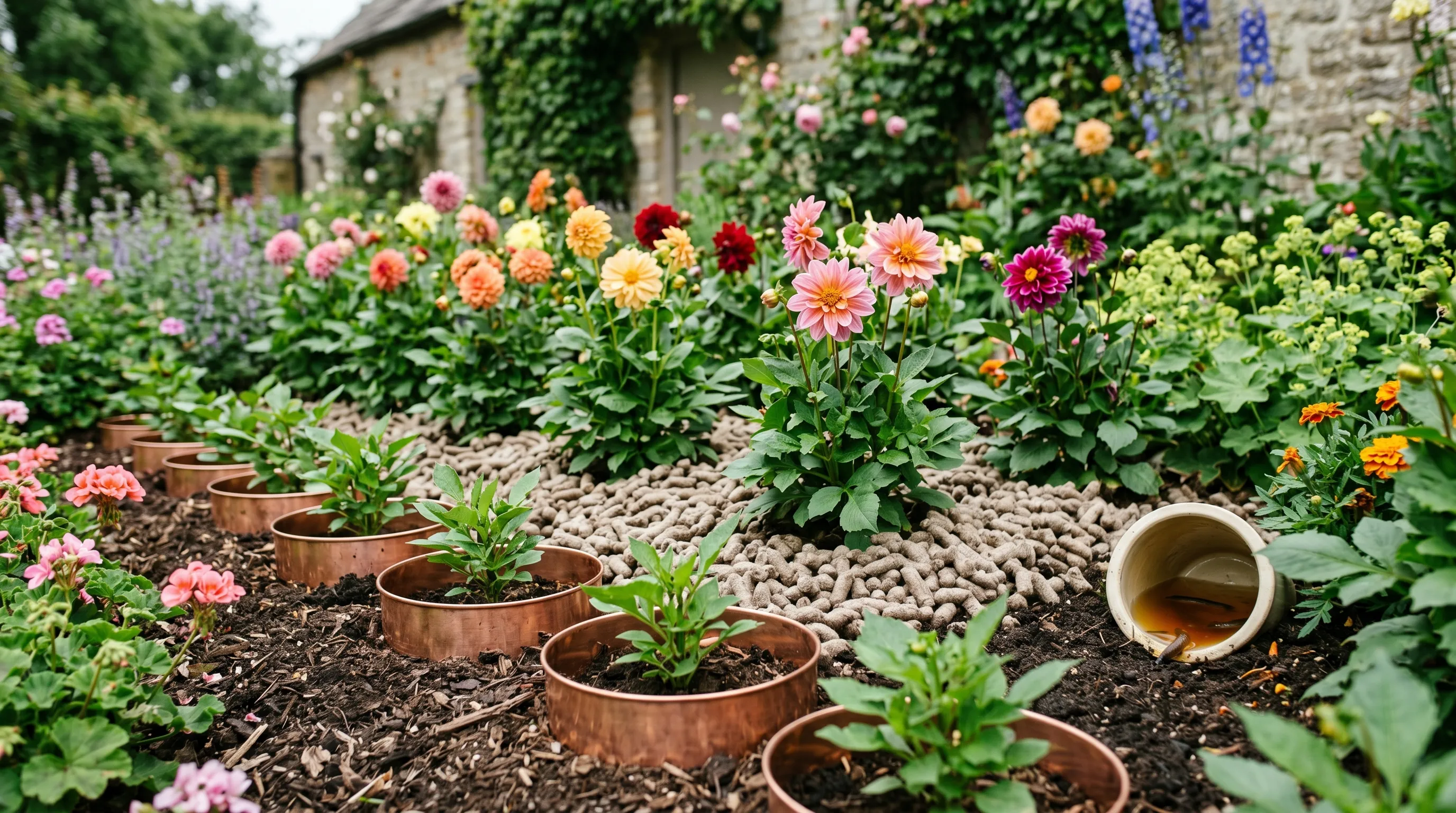
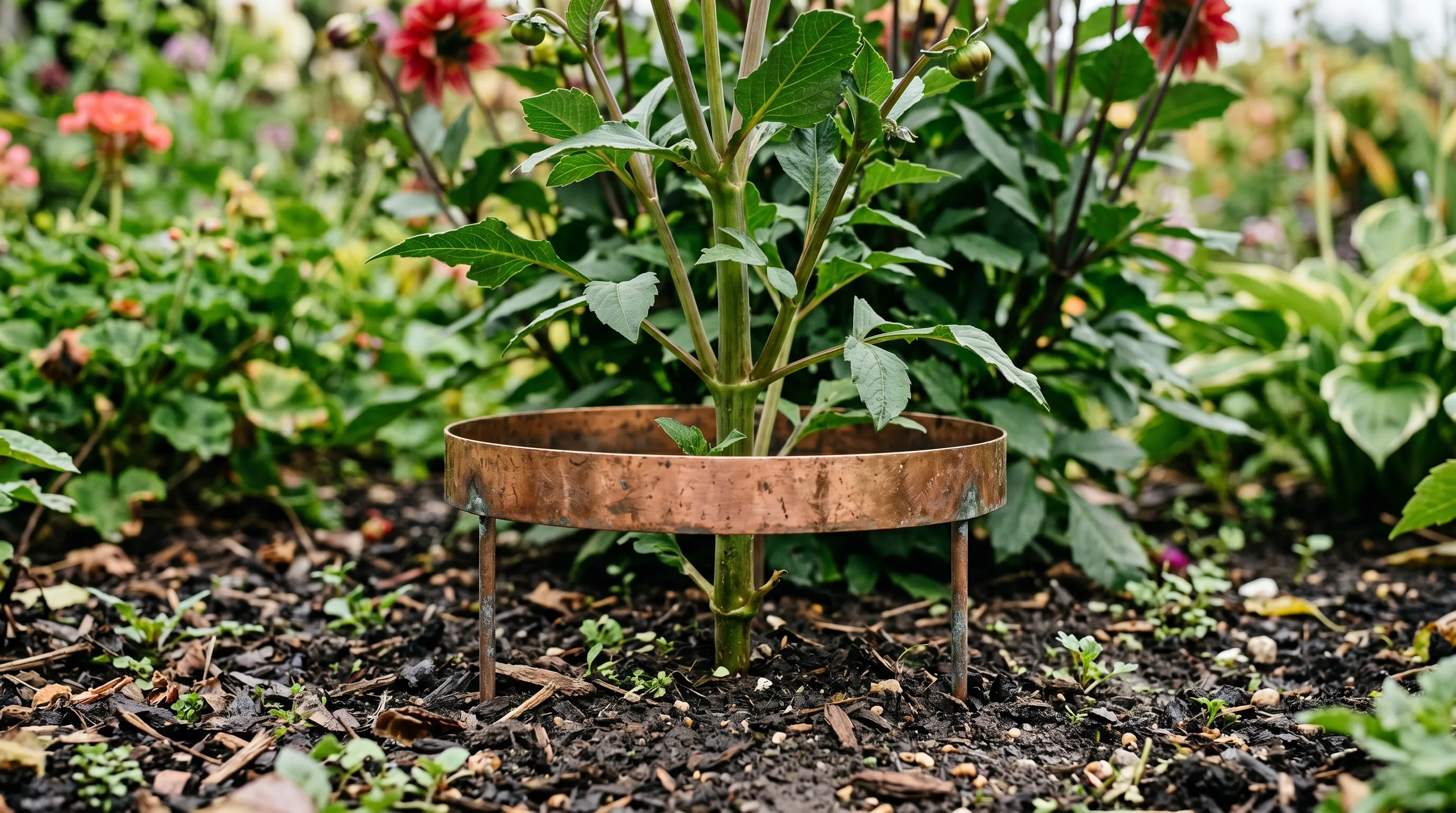
Copper rings around each dahlia create a barrier slugs will not cross. Copper reacts with slug mucus producing a mild electrical sensation slugs avoid.
UK products: Copper Slug Rings (£4-£8 each, 200mm diameter), Adhesive copper tape (£8-£15 per 4m roll, for raised beds and pots), Copper-faced slug collars (£3-£6 each, single-use).
Setup: Push the copper ring 50mm into soil around each dahlia. Ring height 100-150mm above soil. Check intact each spring. Replace rings showing significant verdigris.
A 200mm copper ring blocks 85-90% of slug crossings in UK trials. Effective for 10-15 years. Per-plant annual cost: 30-50p across the ring lifetime.
Method 3: Ferric Phosphate Pellets
The pet-safe slug pellet alternative to old metaldehyde-based products (banned for UK outdoor use since April 2022).
UK products: Sluggo (£7-£12 per 1kg), Growing Success Advanced Slug Killer (£6-£10), Doff Eraza Slug Killer (£5-£8).
Application: Scatter pellets thinly (one pellet per 50-75mm), avoid piles, reapply after rain (pellets break down in 5-10 days when wet), apply at dusk.
Ferric phosphate binds iron in the slug gut, preventing feeding. Slugs withdraw to die underground; wildlife eating dead slugs are not affected.
 Ferric phosphate pellets scattered thinly around a dahlia. One pellet per 50-75mm gives optimal slug-encounter coverage. Pet-safe alternative to old metaldehyde products.
Method 4: Wool Pellets
Compressed sheep wool pellets create a scratchy slug-repellent barrier. UK products: Slug Gone (£8-£15 per 1kg), generic wool slug pellets (£6-£12).
Application: Apply 25-40mm thick around each dahlia, covering 200-300mm wider than the plant base. Wet to swell into mat. Refresh after rain.
Wool pellets work two ways: scratchy fibres are uncomfortable for slug undersides, and the wool absorbs slug mucus, dehydrating the slug as it tries to cross.
Methods 5-8 in Brief
Hand-picking at dusk: Free but labour-intensive. Walk the dahlia bed with a torch from 21:00 onwards, picking slugs into a bucket of salty water. 65% effectiveness if done nightly for 6 weeks.
Beer traps: Bury a yogurt pot to soil level, fill 50% with cheap lager. 60% effectiveness per trap covering 0.5m². Empty and refill every 7-10 days. Beer traps also catch beneficial ground beetles, so use sparingly.
Gravel or sharp sand mulch: Coarse 5-10mm gravel scattered 25mm thick creates an abrasive surface. 55% effectiveness. Gravel works into soil within 2 seasons. Better than nothing but not a primary defence.
Garlic spray: Crush 5 cloves into 1 litre boiling water, steep 24 hours, strain, spray weekly. 40% effectiveness. Supplementary only.
Critical Timing Through the UK Season
| Period | Slug risk | Primary action |
|---|---|---|
| April (planting) | Low (soil cold) | Soil prep; install copper rings |
| Early May | Moderate (warming) | First nematode application when 10C |
| Mid May | High (new shoots) | Reapply ferric phosphate after rain |
| Late May | Very high (peak vulnerability) | All methods active |
| June (week 1-3) | Very high | Continue ferric phosphate; daily hand-pick |
| Mid June | Moderate (plants 200mm+) | Second nematode application |
| July | Low to moderate | Maintenance only |
| August | Moderate (new growth) | Refresh wool pellets |
| Early September | Moderate (flower buds) | Third nematode application |
| Late September | Low (cooler nights) | Wind down |
| October | Low (first frosts) | Stop applications |
The mid-May to mid-June window is the make-or-break period. A dahlia surviving 6 weeks from first shoot emergence has enough leaf area to outgrow later slug damage.
Common Mistakes With Dahlia Slug Protection
Mistake 1: applying nematodes too early. March applications fail because soil is too cold. Wait for 10C reliably.
Mistake 2: relying on one method. Single-method protection peaks at 60-75% in UK conditions. Combine 2-3 methods.
Mistake 3: protecting only at planting. Slugs return in waves. Plan May, July, and September applications.
Mistake 4: piling slug pellets. Concentrated piles attract slugs to a feeding station. Scatter thin and even.
Mistake 5: using old metaldehyde pellets. Banned UK outdoor since April 2022. Check active ingredient is “ferric phosphate”.
For the wider slug control across all UK garden plants, our general slug control guide covers the wider toolkit. For other dahlia growing detail, our dahlia growing guide covers planting, staking and lifting. The when to plant dahlias guide covers the critical spring planting window.
Dahlia Slug Protection Calendar UK Month-by-Month
| Month | Slug protection task |
|---|---|
| January | Order nematode pack for spring delivery |
| February | Inspect copper rings from last year |
| March | Order ferric phosphate pellets and wool pellets |
| April | Plant dahlias with copper rings in place |
| May | First nematode application at 10C soil; ferric phosphate at planting |
| June | Second nematode at 6 weeks; refresh wool pellets after rain |
| July | Maintenance; refresh ferric phosphate if needed |
| August | Refresh wool pellets; watch for late-summer slug activity |
| September | Third nematode application for late buds |
| October | Final pellet refresh; remove wool as plants die back |
| November | Lift dahlia tubers; clean copper rings for storage |
| December | Plan next year’s protection schedule |
Frequently asked questions
What is the best way to stop slugs eating dahlias?
Nematodes (Phasmarhabditis hermaphrodita) applied as a soil drench in late April when soil temperature reaches 10C. Effective for 6 weeks per application. Backed up by copper rings around each plant. Together: 95%+ effectiveness through the UK dahlia season.
Do nematodes really work on slugs?
Yes. Phasmarhabditis hermaphrodita nematodes infect slugs through their breathing pore, killing them in 4-7 days. UK trials show 85-95% slug reduction in treated soil for 6 weeks. Cost: £15-£25 per pack treating 40m². Reapply every 6 weeks through May to September.
Are wool pellets effective against slugs?
Yes, partially. Wool pellets (Slug Gone or similar) create a scratchy texture slugs dislike and absorb their mucus, dehydrating them. UK trials show 65-75% protection when laid 25mm thick around plants. Refresh after rain. Cost: £8-£15 per 1kg pack.
When should I apply nematodes for dahlias in the UK?
Apply when soil temperature reaches 10C, typically late April in southern UK, early May in midlands, mid-May in Scotland. Apply as a soil drench around dahlia tubers. Reapply every 6 weeks through to September for continuous protection.
Are slug pellets safe for dogs and hedgehogs?
Ferric phosphate pellets (Sluggo, Growing Success) are safe for pets, wildlife, and birds. Avoid metaldehyde pellets (banned for outdoor use since 2022 anyway). Always check the active ingredient. Wool pellets and nematodes are also pet-safe alternatives.
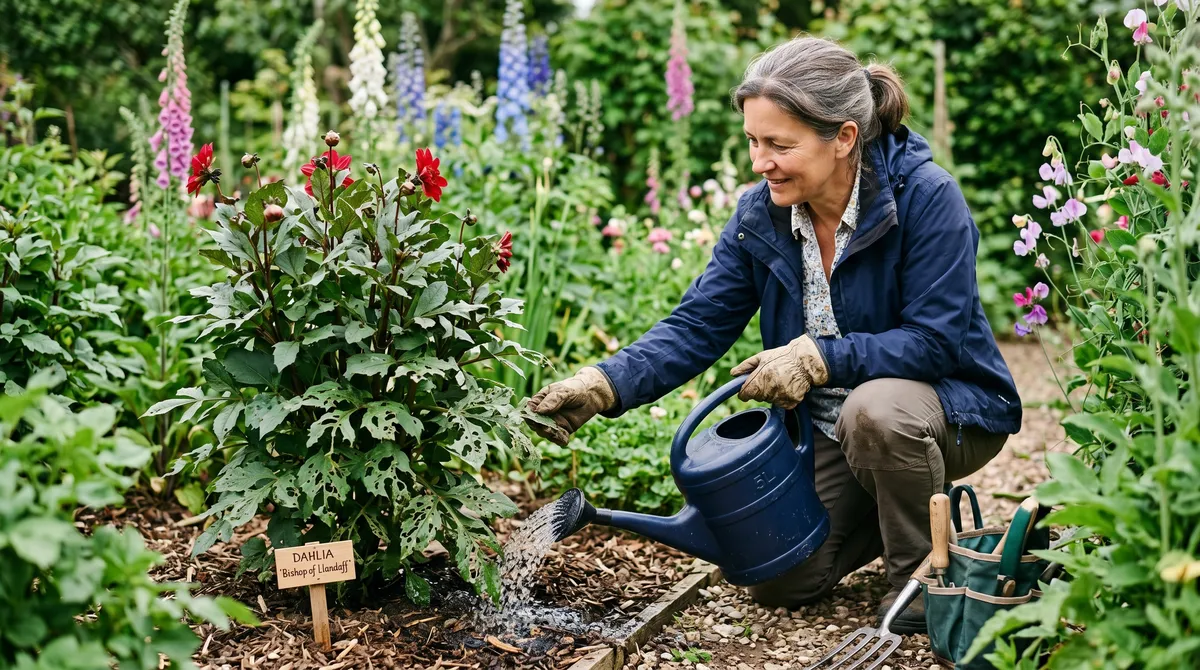
 The nematode soil drench technique. Watering can with rose removed, applied close to soil level around the dahlia base. Apply when soil is 10C minimum, typically late April to mid May in the UK.
Now plan the wider dahlia year
Slug protection is one part of the dahlia growing cycle. Our how to grow dahlias guide covers planting, staking, feeding and lifting. For when to plant dahlias in the UK, our timing guide covers the spring planting window. For the wider slug control toolkit, our general slug guide covers hosta, lettuce and seedling protection. And to round out the biological pest control approach, our nematodes guide covers the related treatments for vine weevil, carrot fly and chafer grub.
Our team produces practical UK gardening guidance from source research, contributor records and established horticultural practice. Editorial standards are overseen by Matt W.