Key takeaways
- Slugs rarely harm established lawn grass, and their silvery trails are harmless slime
- Brown patches and overnight holes have other causes, such as leatherjackets or digging animals
- Newly sown grass is the exception, as slugs graze the soft seedlings
- Thatchy, damp lawn edges shelter slugs that feed on your borders at night
- Scarify, keep edges short and use slug nematodes on new sowings
- Metaldehyde pellets are banned, and pellets are pointless on established turf
Silver trails all over the lawn at dawn look like a slug army has eaten the grass. It almost certainly hasn’t. Slugs leave their mark on lawns but very rarely damage established grass.
Grass is tough and not their favourite food. For a slug, the lawn is a cool, damp place to hide. This guide shows how to tell harmless trails from real damage, and what to do in the two cases where slugs do matter.
Do slugs actually damage lawns?
On an established lawn, hardly ever. The signs people blame on slugs usually have another cause.
- Silvery trails are dried slime. They glint in the morning and fade as the grass dries.
- Brown patches are not slugs. They point to leatherjackets in the lawn, chafer grubs, drought or disease.
- Small holes overnight come from birds or animals digging for grubs. The guide to small holes in the lawn overnight helps you find the culprit.
Check you have the right cause before treating anything. Treating slugs for damage they didn’t do leaves the real problem untouched.
When are slugs a real problem on a lawn?
Slugs matter in two situations: new grass seed, and lawns that shelter slugs next to your borders.
New grass seed. Freshly sown or overseeded grass is soft and slow to start. Slugs can graze a bare, reseeded patch faster than it grows. This is the one case where lawn slugs do real harm.
A base for border raids. A lawn with long, damp edges and thick thatch is a perfect daytime hideout. Slugs rest in the cool turf, then head into the borders at night for hostas, dahlias and seedlings. The guide to stopping slugs eating dahlias covers the border side of the problem.

This is the damage that counts: a slug grazing tender new seedlings. A fresh overseed needs protecting.
Slug damage or something else?
Use this quick check before deciding what to treat.
| What you see | Likely cause |
|---|---|
| Silvery trails, grass looks fine | Slugs, but harmless |
| New seedlings grazed and ragged | Slugs on new seed |
| Yellow-brown patches that lift like carpet | Leatherjackets or chafer grubs |
| Straw-coloured patches in a dry summer | Drought |
| Rings or patches of odd-coloured grass | Lawn disease |
| Holes and torn turf overnight | Birds, badgers or foxes after grubs |
If it isn’t slugs, the fix lies elsewhere. The lawn diseases guide helps with rings and discoloured patches.

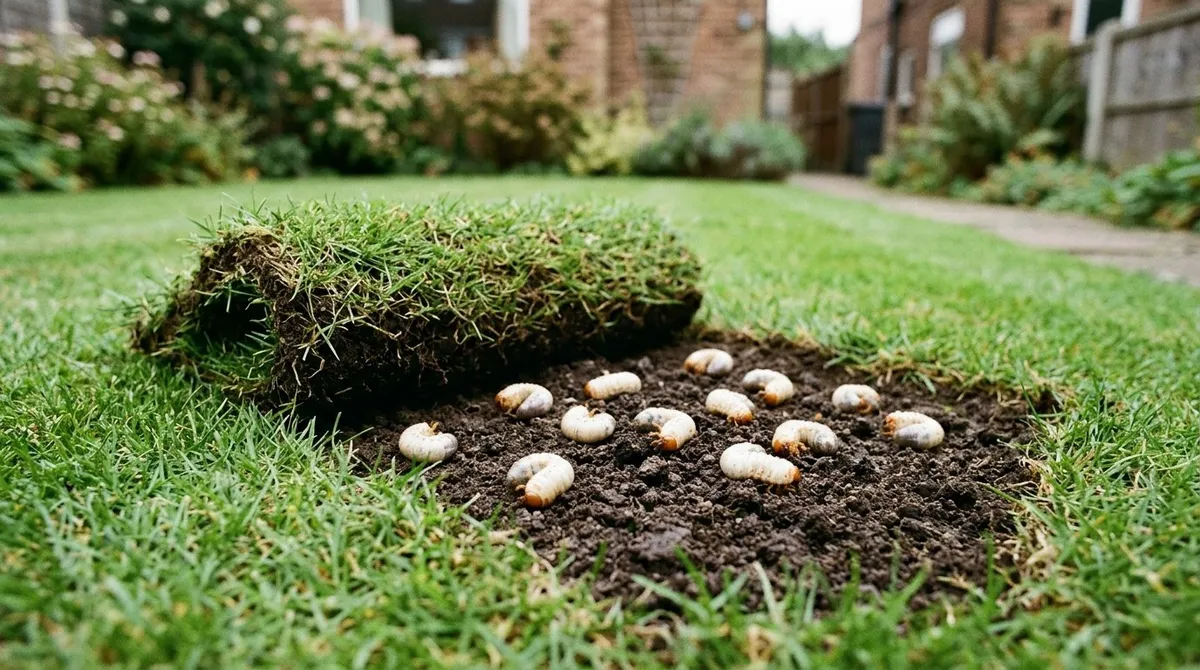
Brown turf that rolls back like a carpet hides grubs, not slugs. Find the right pest before you treat.
How to stop slugs sheltering in your lawn
Take away the damp hiding places and slugs have less reason to stay. These steps work without any chemicals:
- Keep the edges short. Long, floppy grass along a border is prime slug shelter. A crisp, short edge helps more than anything else.
- Cut down thatch. Scarify and aerate the lawn in early autumn so it drains better and dries out faster.
- Clear hiding spots. Move boards, pots and piles of clippings off the grass.
- Pick them off. Go out with a torch on damp evenings and collect slugs from lawn edges.
- Welcome predators. Hedgehogs, frogs, toads, ground beetles, thrushes and blackbirds all eat slugs. Avoid pesticides so they stick around.

A short, tidy lawn edge gives slugs nowhere to hide on their way to the border.
How to protect new grass seed from slugs
Get new grass up quickly and guard it for the first few weeks.
- Sow at the right time. Early autumn or mid-spring, when the soil is warm and moist, gives fast germination. The guide to sowing grass seed covers timing and preparation.
- Use slug nematodes. These tiny living worms are watered onto moist soil above 5°C and kill slugs in the soil. The guide to nematodes for pest control explains how to use them.
- Check at night. A quick torchlight patrol on damp evenings keeps numbers down while seedlings are small.
- Pellets as a last resort. Metaldehyde pellets are banned. If you use ferric phosphate pellets, scatter them thinly around the new patch only and follow the label.

Nematodes go on with a watering can. Use them on moist, mild soil around new sowings.
Let wildlife do the work
A garden full of wildlife keeps its own slug numbers down. Hedgehogs snuffle across lawns at night. Frogs and toads hunt in damp corners. Blackbirds and song thrushes work the grass by day.
Leave a gap under the fence for hedgehogs and a log pile in a quiet corner. A small pond brings in frogs and toads. Skip pellets and sprays so predators have plenty to eat.

Hedgehogs, frogs and birds are free slug control. A wildlife-friendly garden keeps the balance.
Common slug-on-lawn mistakes
- Treating trails as damage. Slime trails are harmless. Your grass isn’t being eaten.
- Blaming slugs for brown patches. Those come from grubs, drought or disease.
- Scattering pellets over the lawn. Pointless on turf, and bad news for wildlife.
- Reseeding without protection. New grass is the one thing slugs graze. Guard it for the first few weeks.
- Leaving long, damp edges. They give slugs a base right next to your borders.
Frequently asked questions
Do slugs damage lawns?
Slugs rarely damage established lawn grass. Grass isn’t their favourite food, and the slime trails they leave are only cosmetic. Lawns mainly give slugs damp shelter by day. Newly sown grass is the exception, as slugs graze the soft seedlings.
What are the silver trails on my lawn?
They are dried slime left by slugs and snails. They cross the grass at night and in damp weather. The slime catches the morning light and can look alarming, but it does no harm. The trails fade as the slime dries and breaks down.
How do I stop slugs grazing new grass seed?
Sow when the soil is warm and moist, and protect the patch with slug nematodes. Quick germination is the best defence, because slugs graze slow, soft seedlings hardest. Pick slugs off by torchlight on damp evenings, and clear boards and long grass nearby where they hide.
Are slug pellets safe to use on lawns?
Pellets are pointless on an established lawn, because slugs aren’t eating the grass. Metaldehyde pellets are banned. Ferric phosphate pellets are still allowed, but keep them as a last resort for new sowings and follow the label exactly.
How do I get rid of slugs sheltering in my lawn?
Take away the damp shelter they need. Scarify out thick thatch, improve drainage and keep the lawn edges short. A neatly mown edge makes it harder for slugs to move from lawn to border. Birds, frogs, toads and ground beetles help keep numbers down.
Do nematodes work on lawn slugs?
Yes, slug nematodes kill slugs in the soil. Water them onto moist soil when it is above 5°C. They are most useful around new sowings and the borders next to the lawn. Established turf rarely needs treating.
Now you can tell trails from real damage, read the guide to getting rid of slugs naturally to protect the rest of the garden. There’s more lawn help in the lawn care hub.
Our team produces practical UK gardening guidance from source research, contributor records and established horticultural practice. Editorial standards are overseen by Matt W.