
Key takeaways
- Sow basil indoors from mid-April in a warm spot, ideally 20-25C
- Sweet Genovese is the most reliable variety for UK kitchens
- Pinch out the growing tips above the third pair of leaves for bushy plants
- Too much water and cold nights are what kill basil most often
- Nip off flower buds as soon as you see them to keep the leaves tasty
- Freeze chopped leaves in ice cube trays to enjoy basil in winter
Basil is a must for any UK kitchen, but it can be a bit of a diva. It sulks in cool weather, collapses in soggy compost and runs to flower at the first sign of stress. Get the conditions right, though, and one plant keeps you in fragrant leaves from June until the first frost.
The trick is remembering where it comes from: hot parts of India and South East Asia. It wants warmth, sunshine and a light hand with the watering can. Treat it like a tough herb and it sulks. Give it what it likes and it’ll thrive on a British windowsill or patio.
When should I sow basil seeds in the UK?
Sow basil indoors from mid-April to early May. The seeds need warmth, ideally 20-25C. In cold compost they just sit and rot. A heated propagator is the most reliable option, but a warm, sunny windowsill works well for most people.
Fill 9cm pots or module trays with free-draining seed compost and water it before sowing. Scatter three or four seeds per pot and cover with just a very thin layer of compost or vermiculite. Pop the pots in a propagator or inside a clear plastic bag.
Seedlings appear in one to two weeks. Take the cover off as soon as they do, to stop them rotting at the base. Move them to your brightest windowsill, ideally south-facing. Once they have two true leaves, thin to the strongest seedling per pot. Our seed sowing calendar shows when to sow basil alongside other herbs and veg.
For a steady supply, sow a few more pots every three or four weeks from April to June. That way you always have young plants coming through. The method is the same as for other indoor seed sowing.
What are the best basil varieties for UK gardens?
Some basils cope with our cooler summers better than others. Here’s how the popular ones compare.
| Variety | Leaf size | Flavour | Best use | How easy in the UK |
|---|---|---|---|---|
| Sweet Genovese | Large | Classic, warm, peppery | Pesto, pasta, tomatoes | Easy |
| Greek | Tiny | Strong | Small pots, garnish | Easy |
| Thai | Medium | Aniseed | Stir-fries, curries | Medium |
| Purple (Dark Opal) | Medium | Mild, clove-like | Salads, colour | Harder |
| Lemon | Medium | Zesty citrus | Fish, drinks, puddings | Medium |

Purple and green basil together in a raised bed. The colours look lovely next to each other.
Sweet Genovese is the one to start with. It has the biggest leaves, crops well and is the most reliable in British summers. If you only grow one basil, make it this. It’s the classic for pesto.
Greek basil grows into a neat little dome of tiny leaves and hardly needs pinching. It’s perfect for small pots on a windowsill. The flavour is strong, so the small leaves go a long way.
Thai basil has purple stems and a lovely aniseed taste. It needs the warmest spot you’ve got, so grow it with your chilli peppers, which like the same. Lemon basil brings a zesty twist to fish and summer drinks. It runs to flower quickly, so keep pinching.
How do I grow basil indoors in the UK?
Indoors is where basil is happiest in Britain. A south-facing windowsill with six hours or more of sun is ideal. East or west windows work too, but growth is slower.

Terracotta pots on a sunny windowsill give basil the warmth and drainage it loves.
Use 12-15cm pots with drainage holes. Multipurpose compost with some perlite mixed in drains nicely. Water when the top centimetre of compost feels dry, and water in the morning so the leaves dry before night. Cold, wet leaves overnight invite disease.
From June to September, feed every two weeks with a half-strength balanced liquid feed. Skip high-nitrogen feeds, which give big, watery leaves with less flavour.
Light is the big indoor challenge. In winter, even a south-facing window doesn’t get much sun. If you want to keep going past October, a small LED grow light on a timer makes a real difference.
Basil and tomato seedlings share a windowsill nicely, as both want warmth, sun and steady watering. They’re a classic pair in the garden too.
Can I grow basil outdoors in the UK?
Yes, from June to September, if you pick the right spot. Go for somewhere south-facing and out of the wind. A wall or fence that soaks up the day’s heat is perfect. Raised beds and pots on paving warm up faster than open ground.
Harden off indoor-raised plants over a week or so. Put them outside for a couple of hours on the first day and a bit longer each day after. Bring them in every evening until the nights are reliably mild. In southern England, basil usually goes out for good from late May. In Scotland and northern England, wait until mid-June.
Plant 20-25cm apart in rich, well-drained soil. Dig in some garden compost first, and avoid heavy, wet clay, where the roots soon rot.
Pots give you the most control outside. Stand them on a sunny patio against a warm wall, and move them under cover if heavy rain is on the way. Keep an eye on the weather in September. One cold night can turn the leaves black, so pick everything before the first chilly snap.
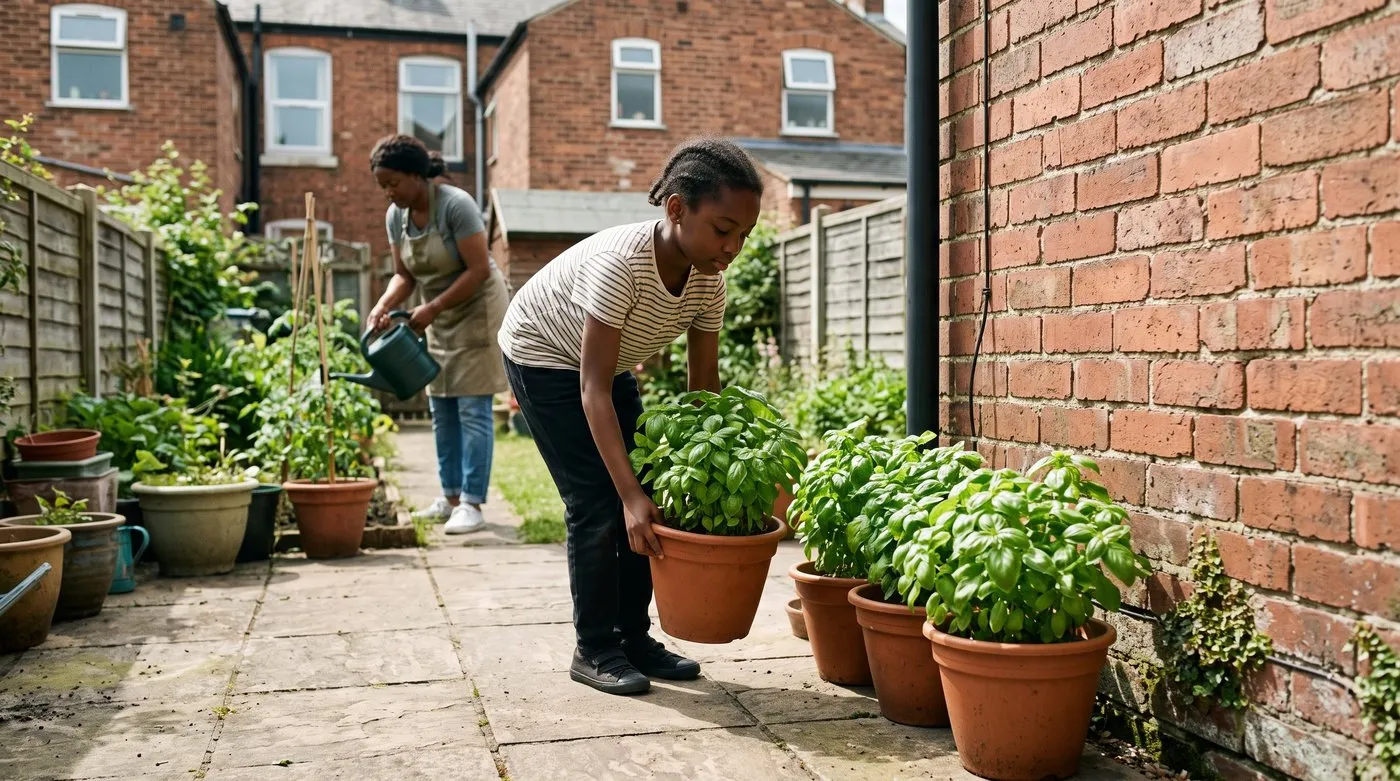
A warm wall and paving soak up the day’s heat, which basil loves. Bring the pots back in at night until the evenings stay mild.
How do I stop basil from dying?
Basil usually dies for one of a few reasons. Spot the cause and the fix is easy.
Too much water is the big one. Soggy compost rots the roots. Water only when the top centimetre is dry. In cool, cloudy weather that might be every four or five days. In a heatwave it might be daily. The RHS basil growing guide has more tips.
Cold shows as blackened or wilted leaves overnight. Bring outdoor pots in when the nights turn chilly, and keep indoor plants away from draughts and cold, single-glazed windows.
Overcrowding finishes off supermarket basil fast. Those lush pots are packed with dozens of seedlings fighting over a tiny bit of compost. Split them into small clumps of three or four and pot them up in fresh compost. Our container vegetable gardening guide shows how to repot.
Too little light gives pale, leggy, floppy stems. Move the pot to your sunniest windowsill.
Damping off makes seedlings collapse at soil level, sometimes with fluffy white mould. Use clean pots and fresh compost, keep air moving, and water from below.
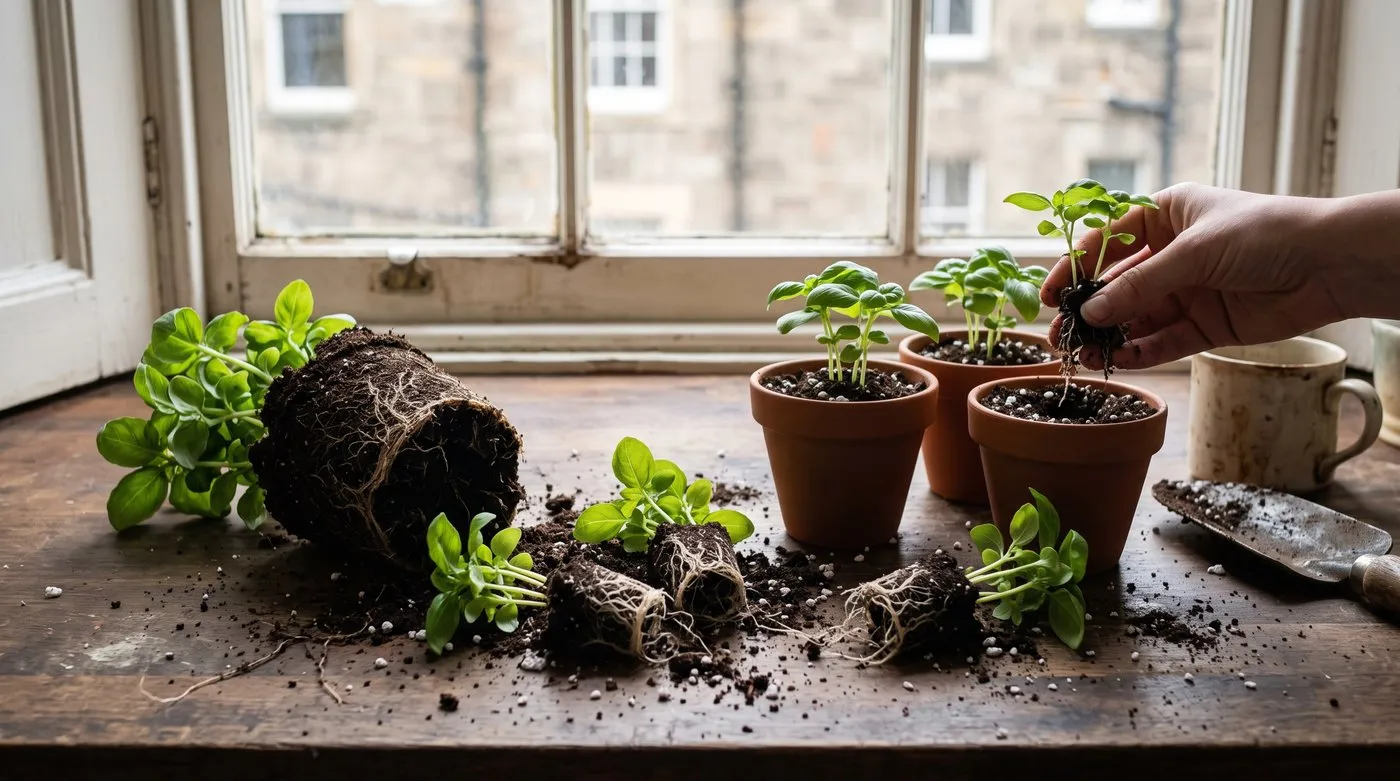
Shop-bought basil is packed with seedlings fighting for space. Split it into small clumps in fresh compost and it’ll keep going for weeks longer.
How to pinch basil for maximum harvest
Pinching is the secret to a big, bushy basil plant. Without it, plants grow tall and leggy with one stem and few leaves. With it, you get a leafy mound that keeps on giving.

Pinch out the tip just above a pair of leaves, and two new shoots will grow from below.
Start when the plant has three pairs of true leaves. Nip out the growing tip with your finger and thumb, just above a pair of leaves. Two new shoots grow from where the leaves meet the stem. Repeat every week or so, and your plant gets bushier each time.
Always cut just above a pair of leaves. A bare stub can die back. Pinch off flower buds the moment you see them, because once basil flowers, it stops making leaves and the ones it has turn bitter.
When you pick, cut whole stem tips back to a pair of leaves rather than plucking single leaves. Leave the lower leaves alone, as they keep the plant going.
How to harvest and store fresh basil
Start picking once the plant has at least six pairs of leaves. Take no more than a third of it at a time. Cutting stem tips rather than stripping leaves helps it bounce back quicker.
Basil bruises easily. Tear the leaves rather than chopping them, and add them to hot dishes right at the end, as heat dulls the flavour.
Freezing basil
Freezing keeps the flavour far better than drying. Chop clean leaves, pack them into an ice cube tray and top up with olive oil. Freeze, then tip the cubes into a freezer bag and keep them frozen until you need them. Drop a cube straight into pasta sauces, soups or risottos.
Making pesto
Blend 60g fresh basil leaves with 30g pine nuts, 50g Parmesan, 2 garlic cloves and 120ml olive oil, then season with salt. Eat it fresh within a few days, or freeze it in small pots or ice cube trays. A good Genovese plant gives enough leaves for several batches over the summer.
Drying basil
Spread the leaves in a single layer on a tray and dry them in a low oven with the door ajar, or in a dehydrator. Dried basil is weaker than frozen, but it’s fine in slow-cooked dishes and rubs. For more herb ideas, see our herb growing guide.
Companion planting with basil
Basil and tomatoes are the classic pair. They like exactly the same things: warmth, full sun and regular watering. Plenty of gardeners swear basil makes their tomatoes taste better too, and they certainly go together on the plate.
Basil also sits happily with peppers and chillies, lettuce and strawberries. Keep it away from sage and rue, which prefer drier soil.
In a large pot, put a basil plant in the middle with trailing herbs around the edge. It looks pretty and gives you lots of flavours from one container. Our companion planting guide has more combinations.
Common basil problems in the UK
Basil has fewer pests than many crops, but a few turn up most years.
Aphids cluster on soft tips and under young leaves. Pinch off badly affected tips and bin them, or knock aphids off with a jet of water. Growing bee-friendly plants nearby brings in ladybirds and hoverflies, which eat them.
Slugs and snails go for outdoor seedlings in wet weather. Stand pots on pot feet and check plants after rain. Our slug control guide has lots of ideas.
Downy mildew shows as yellowing leaves with grey-purple fuzz underneath. Pick off affected leaves straight away and give plants more space for air to move.
Bolting is when basil switches from leaves to flowers. Heat, drought and cramped roots all set it off. Regular pinching, steady watering and moving into a bigger pot when needed all help. Greek basil is slow to bolt if this keeps happening to you.
Now you’ve got basil sorted, read our guide on how to grow herbs in the UK to build a whole herb garden around it.
Frequently asked questions
When should I sow basil seeds in the UK?
Sow basil indoors from mid-April to early May. It needs warmth, ideally 20-25C, and the seedlings appear in one to two weeks. Earlier sowings tend to go leggy in the weak spring light. Only move plants outside once all risk of frost has passed, usually late May in the south and June further north.
Can basil grow outdoors in the UK?
Yes, from June to September in a warm, sheltered spot. It needs a sunny, south-facing position and mild nights. In cooler or windy gardens, grow it in pots you can bring indoors on chilly nights. Basil won’t survive any frost.
Why does my basil keep dying?
Too much water is the most common reason. Basil roots rot quickly in cold, wet compost. Water only when the top couple of centimetres feel dry, and use pots with drainage holes. Cold draughts, poor light and crowded supermarket pots are the other usual culprits.
How do I stop basil from flowering?
Keep pinching out the tips above a pair of leaves. Once basil flowers, the leaves turn bitter and the plant makes fewer of them. In warm weather, check every few days and nip off any flower buds. Regular picking from the tops of the stems helps a lot.
What is the best basil variety for the UK?
Sweet Genovese is the best all-round basil for UK growers. It gives big, fragrant leaves and is the most reliable. Greek basil is a good choice for small pots, and Thai basil adds a lovely aniseed flavour if you have a warm spot.
Can I grow basil on a windowsill all year round?
It’s easy from spring to autumn, but tricky in winter. From November to February, UK daylight is too weak and short for strong growth. A small LED grow light helps. Keep plants warm, away from cold glass, draughts and hot radiators, and water sparingly in winter.
How do I preserve basil for winter?
Freezing keeps the flavour best. Chop fresh leaves, pack them into ice cube trays, top up with olive oil and freeze. Use the cubes straight from the freezer. You can also freeze pesto in small batches. Drying works too, but the flavour is weaker.
Our team produces practical UK gardening guidance from source research, contributor records and established horticultural practice. Editorial standards are overseen by Matt W.


