
Key takeaways
- March and April are the busiest sowing months
- January and February: start slow growers like onions, chillies and sweet peas indoors
- Keep tender crops indoors until the last frost has passed, usually late May
- June: sow biennial flowers like foxgloves and wallflowers for next year
- July and August: sow spring cabbage, winter salads and the last turnips
Sowing at the right time makes everything easier. Too early and seedlings sulk in the cold and dark. Too late and crops run out of summer. Here’s what to sow each month in a UK garden.
Our vegetable planting calendar sticks to veg, but this one covers flowers and herbs too. It tells you what to sow and whether to start it indoors or out. If you’re starting an allotment, use it alongside a simple crop rotation plan. For single crops, see our guides to tomato planting times, potato planting times and sunflower planting times.
January
January is quiet. Sow a few slow growers indoors and spend the rest of the time planning.
Vegetables
- Onions (from seed): sow indoors at 15-18C in modules or trays. They need a long season to make full-sized bulbs by August.
- Chillies: sow somewhere warm, around 21-25C. Hot varieties need a long season to ripen by autumn.
- Aubergines: sow at 21-25C. Like chillies, they’re slow.
Flowers
- Sweet peas: sow in root trainers in an unheated greenhouse or cold frame. Autumn sowings flower first, but January sowings still make strong plants. Our guide on when to plant sweet peas covers the full timing.
- Pelargoniums (geraniums): sow at 18-21C for summer bedding.
Herbs
Nothing to sow yet. Grab the seed catalogues and plan your herb patch instead.
Tip: January is a great time to order seeds. Popular varieties can sell out by March. Keep packets somewhere cool and dry until you need them.

A heated propagator on a sunny windowsill keeps tender seeds nice and warm.
February
February is the month to start tomatoes, peppers and leeks under cover. The days get noticeably lighter as the month goes on.
Vegetables
- Broad beans: sow indoors in root trainers or deep pots. In sheltered southern gardens you can sow outside from late February if the soil isn’t frozen or soggy.
- Tomatoes: sow indoors from late February for growing in a greenhouse. See our tomato timing guide and best greenhouse plants month by month for the year-round plan.
- Peppers: sow at 18-21C. They need 8-10 weeks indoors.
- Leeks: sow in trays at 12-15C. Slow to start but reliable.
- Lettuce: sow indoors for the first spring salads.
Flowers
- Sweet peas: keep sowing if you didn’t start in January.
- Begonias: sow at 21C on the surface of moist compost. The seeds are tiny.
- Snapdragons (Antirrhinum): sow at 18C for summer flowers.
Herbs
- Chives: sow indoors at 15-18C.
March
March is the busiest sowing month. Hardy crops go outside and tender ones start indoors. Our March planting guide has more detail.
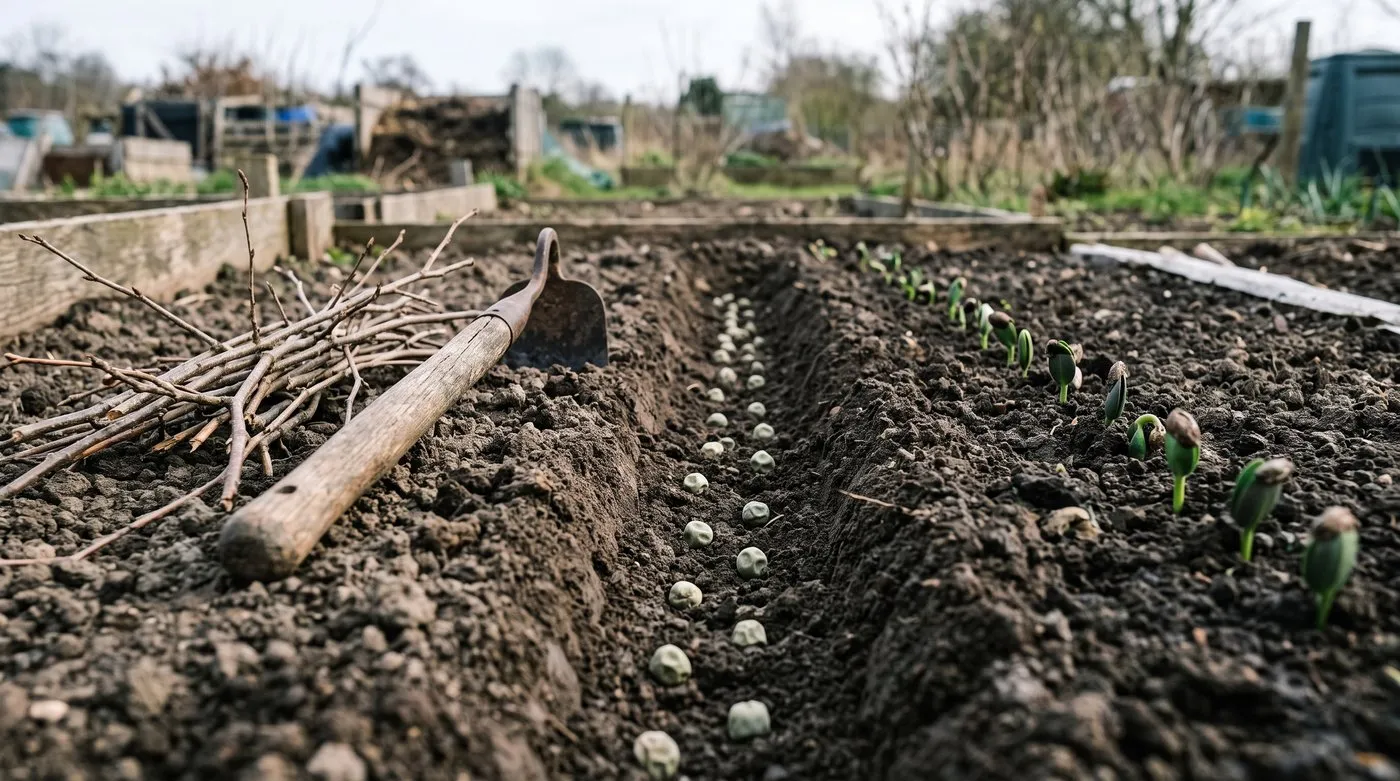
Peas go in a flat trench rather than a single line, so the row fills out. Have twiggy supports ready for when they come up.
Vegetables (indoor)
- Tomatoes: sow at 18-21C. This is the main month for outdoor tomatoes.
- Courgettes: sow from mid-March in 9cm pots at 18-20C.
- Squash and pumpkins: sow from mid-March at 18-20C.
- Sweetcorn: sow from late March in deep modules.
- Cucumbers: sow from late March at 21-25C.
- Beetroot: sow indoors to plant out later, or outdoors from mid-March.
Vegetables (outdoor)
- Broad beans: sow 5cm deep, 20cm apart. Our broad bean planting guide covers timing for different areas.
- Peas: sow 5cm deep in flat trenches.
- Parsnips: sow where they’ll grow. Use fresh seed each year.
- Carrots: sow from mid-March under fleece.
- Spring onions: sow 1cm deep in rows.
- Spinach: sow 2cm deep, 15cm apart.
- Lettuce: sow short rows outside.
- Radish: sow every 2-3 weeks for a steady supply.
Flowers (indoor)
- Cosmos: sow at 15-18C.
- Zinnias: sow at 18-21C.
- Dahlias (from seed): sow at 18C.
- Lobelia: sow on the surface at 18-21C.
- Nicotiana: sow at 18-20C.
Flowers (outdoor)
- Sweet peas: sow straight outside.
- Calendula: scatter seed on raked soil.
- Cornflowers: sow where you want them to flower.
- Poppies: mix the seed with sand and scatter for even spacing.
Herbs
- Parsley: sow outside, 1cm deep. Be patient, it takes 3-4 weeks to come up.
- Chives: sow outside or split an existing clump.
- Coriander: sow where it’s going to grow.
April
April is the main month for outdoor sowing, as the soil warms across most of England and Wales. See our April planting guide.
Vegetables (indoor)
- Runner beans: sow in 9cm pots at 12-15C from mid-April.
- French beans: sow in pots at 12-15C.
- Kale: sow in modules at 15-18C for winter picking.
- Brussels sprouts: sow in modules. They need a long season.
- Calabrese: sow in modules for summer heads.
Vegetables (outdoor)
- Carrots: the main sowing month. Cover with fine mesh to keep carrot fly off.
- Beetroot: sow 3cm deep, then thin to 10cm apart.
- Turnips: sow 2cm deep in rows.
- Radish: keep sowing little and often.
- Lettuce: sow a fresh row every 2 weeks.
- Chard: sow 2cm deep, 30cm apart.
- Spinach: keep sowing.
- Onion sets: push into the soil so the tip just shows.
Flowers (outdoor)
- Sunflowers: sow from late April. See our sunflower planting guide.
- Nasturtiums: push the big seeds 2cm into the soil.
- Nigella: scatter on bare ground.
- Marigolds (French and African): sow 1cm deep.
Herbs (outdoor)
- Basil: sow indoors at 18-20C, on the surface.
- Dill: sow straight outside.
Watch out: a sunny April day can fool you. Nights still drop below freezing in many areas. Keep runner beans, French beans, courgettes and tomatoes indoors until the last frost has passed.
How do you know the soil is warm enough to sow outdoors?
Use a soil thermometer. Most hardy vegetables come up once the soil stays at about 7C or more for a week. Check in the morning, at sowing depth.
Cold, wet soil rots seed, so a later sowing often catches up with an early one. A flush of weed seedlings is a handy sign the soil has warmed. Sandy soils warm faster than clay. Raised beds warm sooner too, as does soil covered with cloches or black polythene for two weeks before sowing. Tender crops like French beans, runner beans and sweetcorn want warmer soil, around 10-12C, so leave them until late May or June.
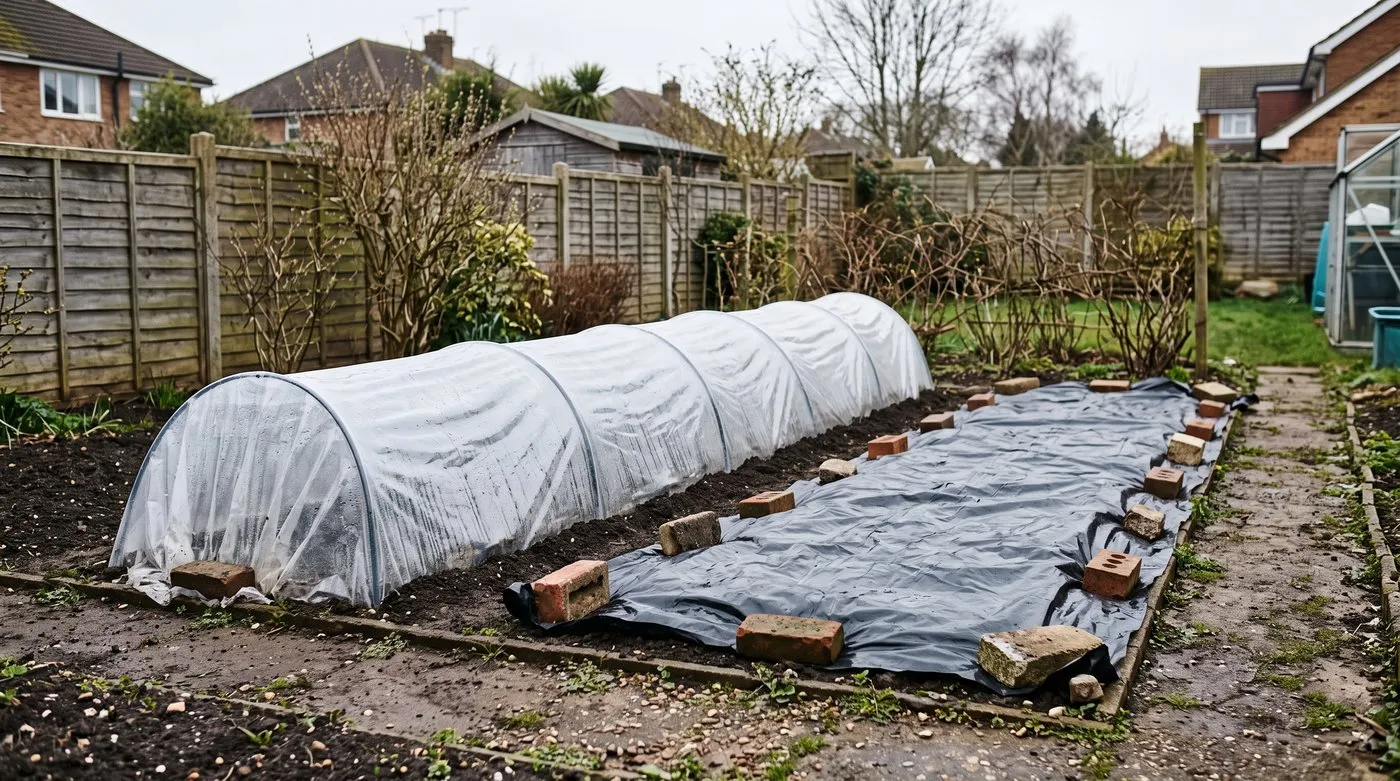
Cover the soil for a couple of weeks before sowing and it warms up noticeably sooner. Seeds come up faster in warm soil than in cold, wet ground.
May
May is when tender crops finally go outside, once the last frost is over. See our May planting guide.
Vegetables (outdoor)
- Runner beans: sow outside from late May, 5cm deep.
- French beans: sow from late May, 5cm deep.
- Sweetcorn: sow in blocks, not rows, from late May.
- Swede: sow in rows from May.
- Turnips: keep sowing.
- Lettuce, radish, spring onions: keep sowing little and often.
Flowers (outdoor)
- Sunflowers: keep sowing until mid-June.
- Night-scented stock: scatter near where you sit in the evening.
- Nasturtiums: keep sowing.
Plant out
Now’s the time to plant out everything you raised indoors: tomatoes, courgettes, squash, sweetcorn, cucumbers, runner beans and French beans.
When is the last frost in the UK?
There’s no single date. Southern and coastal areas usually see the last frost earlier. The north, high ground and valleys get it later, sometimes into May or even June.
The Met Office explains that ground frost is more common than air frost in May. It can nip seedlings even when the air stays just above freezing. Towns are less frosty than open countryside, as buildings hold the warmth. As a rule of thumb, plant tender crops out from late May in the south and early June further north. Keep fleece handy and watch for clear, still nights, which bring the hardest frosts.
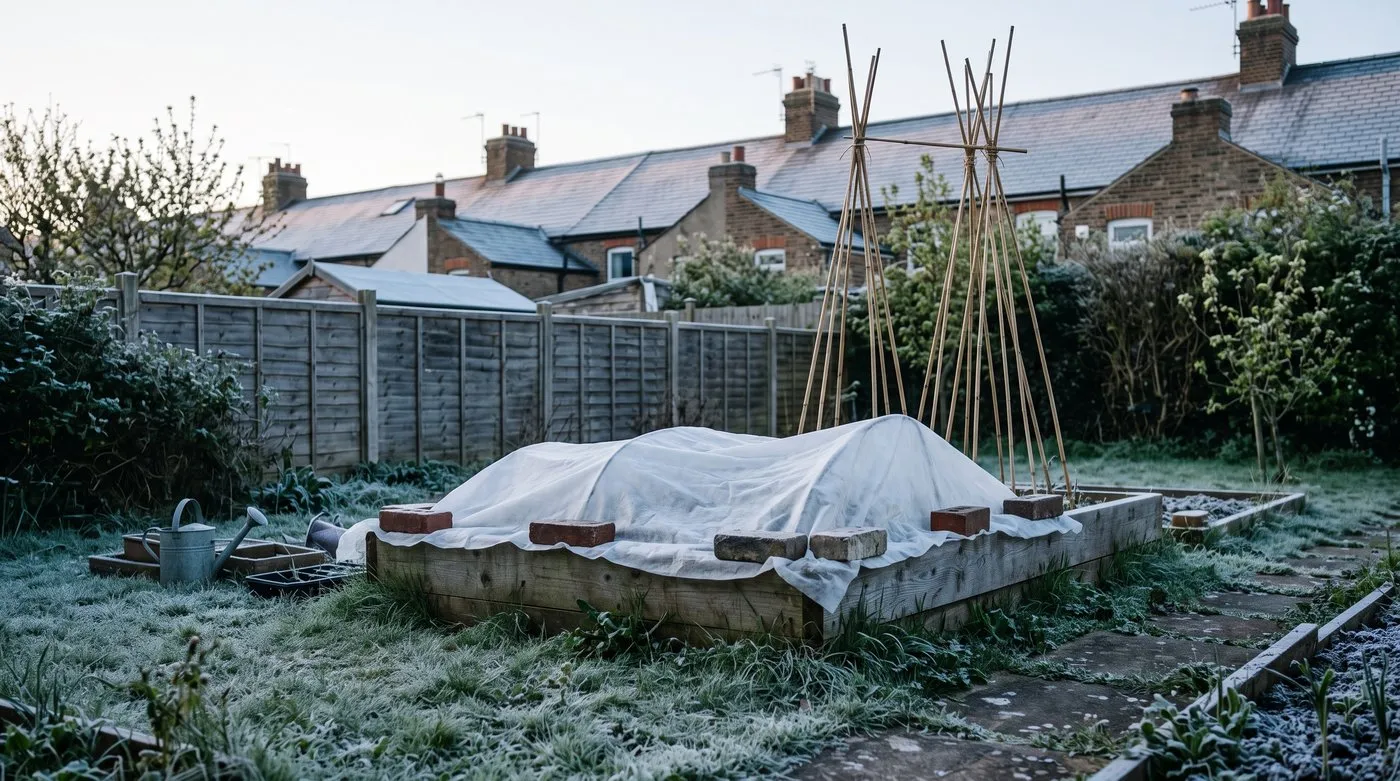
Keep fleece handy into late May, especially on clear, still nights. A quick cover can save weeks of growing.
June
June is for follow-on sowings, winter crops and flowers for next year. See our June planting guide.
Vegetables
- French beans: last sowings by mid-June.
- Runner beans: last sowings by mid-June.
- Kale: sow for winter picking.
- Purple sprouting broccoli: sow in modules to pick from February to April.
- Lettuce, beetroot, carrots: keep sowing little and often.
Flowers (outdoor)
- Foxgloves: sow now for flowers next year.
- Wallflowers: sow in a seed bed and move them in autumn.
- Sweet William: sow for next year.
- Honesty: sow outside for next spring.
Herbs
- Basil: sow outside from early June, but only in a warm, sheltered spot.
- Coriander: sow every 3 weeks for a steady supply.
July
July is the month to sow spring cabbage and the last turnips and salads for autumn.
Vegetables
- Spring cabbage: sow to grow on through winter.
- Perpetual spinach: sow for autumn and winter leaves.
- Turnips: last sowings for autumn.
- Lettuce: keep going until August.
- Radish: keep going until August.
Flowers
- Wallflowers: keep sowing.
- Canterbury bells: sow for next year.
August
August is for the last salads and the last spring cabbage.
Vegetables
- Spring cabbage: final sowings by mid-August. Plant out in September and October.
- Winter lettuce: sow under cloches.
- Perpetual spinach: final sowings.
Flowers
- Hardy annuals: from late August, sow calendula, cornflowers and nigella outside for early flowers next summer.
September to December
September
- Overwintering onion sets: plant from mid-September to October.
- Green manures: sow on empty beds so the goodness doesn’t wash away over winter.
October
- Garlic: plant cloves with the tips 2.5cm below the surface, 15cm apart. Our garlic planting guide explains the best timing for your area.
- Broad beans: sow ‘Aquadulce Claudia’ in sheltered spots to grow through winter.
November
- Broad beans: keep sowing for overwintering.
- Garlic: keep planting.
December
- No sowing. Plan, order seeds, wash pots and get beds ready for next year.
Can you use old seeds from last year?
Usually, yes. Most seed keeps for two to five years if stored cool, dry and dark, but fewer come up each year. The RHS advice on sowing indoors suggests checking the date on old packets.
Parsnip seed doesn’t keep, so buy fresh every year. Onion and leek seed fades quickly too. Tomato, squash and cabbage-family seed lasts for several years. To test an old packet, put 10 seeds on damp kitchen paper in a sealed bag somewhere warm. Count how many sprout after a week or two. If only half come up, sow twice as thickly or buy new. Keep opened packets in an airtight tin in a cool room, not a damp shed or a warm kitchen.
Indoor or outdoor? A quick guide
| Crop | Start indoors? | Sow straight outside? | Best way |
|---|---|---|---|
| Tomatoes | Yes | No | Indoors only |
| Peppers and chillies | Yes | No | Indoors only |
| Courgettes | Yes | No | Indoors is best |
| Cucumbers | Yes | No | Indoors only |
| Runner beans | Optional | Yes, from late May | Either works |
| French beans | Optional | Yes, from late May | Outside is best |
| Broad beans | Optional | Yes, Feb to Apr | Outside is best |
| Peas | Optional | Yes, Mar to Jun | Outside is best |
| Carrots | No | Yes, Mar to Jul | Outside only |
| Parsnips | No | Yes, Feb to Apr | Outside only |
| Beetroot | Optional | Yes, Mar to Jul | Either works |
| Lettuce | Optional | Yes, Mar to Aug | Either works |
| Radish | No | Yes, Mar to Aug | Outside only |
| Sweetcorn | Yes, ideally | Yes, late May | Indoors gives a head start |
| Kale | Yes, ideally | Yes, May to Jun | Indoors is best |
Carrots and parsnips grow one long root, so they don’t like being moved. Sow them where they’ll grow. Cabbage-family crops, lettuce and beans move happily from pots.
For step-by-step help, see our guide on how to sow seeds indoors.

Pricking out seedlings into their own modules. Hold them by a leaf, never the delicate stem.
Common mistakes
Sowing everything in March
March is busy, but sowing it all at once causes a jam. You run out of windowsill, can’t keep up with watering, and end up with a glut then nothing. Spread sowings across March, April and May.
Ignoring light levels
Seeds sown in January and February get short days, so seedlings often turn pale and leggy. Wait until March for most crops, or use grow lights. Keep trays as close to the glass as you can without touching.
Not labelling seeds
It sounds obvious, but a tray of mystery seedlings is no fun by May. A baby tomato and a baby pepper look almost the same. Label everything with the variety and date, using a waterproof pen.
Burying seeds too deep
Tiny seeds like begonia, lobelia and snapdragon need light to come up. Press them onto the surface and add a light dusting of vermiculite at most. Cover other seeds with sieved compost to about their own depth, unless the packet says otherwise.
Forgetting to harden off
Anything raised indoors needs 10-14 days to get used to the outdoors before planting out. A sudden move can stall growth or scorch leaves. Start with 2-3 hours outside on calm days and build up.

Drawing a shallow drill for sowing outside. How deep depends on the seed, so check the packet.
Once you’ve got the hang of sowing, try our guide on seed saving for beginners and grow your own seed for next year.
Frequently asked questions
When should I start sowing seeds in the UK?
You can start in January with a few slow growers. Onions and chillies go in indoors first. The main season kicks off in March for most vegetables, flowers and herbs.
What month is best for sowing seeds UK?
March and April are the best months. March is for tender crops indoors and hardy vegetables outside. April opens up outdoor sowing for lots more as the soil warms.
Can I sow seeds in January UK?
Yes, but only a handful of crops. Sow onions, chillies and aubergines indoors somewhere warm. Sweet peas can go in a cold greenhouse. Most other seeds are happier waiting until March, when the days are lighter.
What seeds can I sow directly outside?
Lots of hardy crops go straight outside from March. Try broad beans, peas, parsnips, carrots, beetroot, radish, spinach and spring onions. Tender crops like runner beans and sweetcorn can go outside after the last frost, usually late May in the south.
When is it too late to sow seeds UK?
Most main sowings finish by late June. Lettuce and radish keep going until August. Sow kale by June and spring cabbage in July and August. Garlic goes in from October, so there’s always something to sow.
Do I need a greenhouse to sow seeds?
No, a bright windowsill works fine for most seeds. From March a south-facing window gives plenty of light. A heated propagator on the sill is a cheap helper. Plenty of crops go straight outside with no indoor start at all.
Our team produces practical UK gardening guidance from source research, contributor records and established horticultural practice. Editorial standards are overseen by Matt W.


