Key takeaways
- Shrubs like pots about 45cm across, bedding about 30cm and herbs about 20cm
- A few big pots dry out more slowly and look tidier than lots of small ones
- Walls, fences and trellis give you more planting space without using the floor
- Terracotta dries out fast, so slip a plastic pot inside to save on watering
- Stand pots on feet and take saucers away in winter so roots don't sit in water
- Check what a balcony can safely hold before you fill it with heavy pots
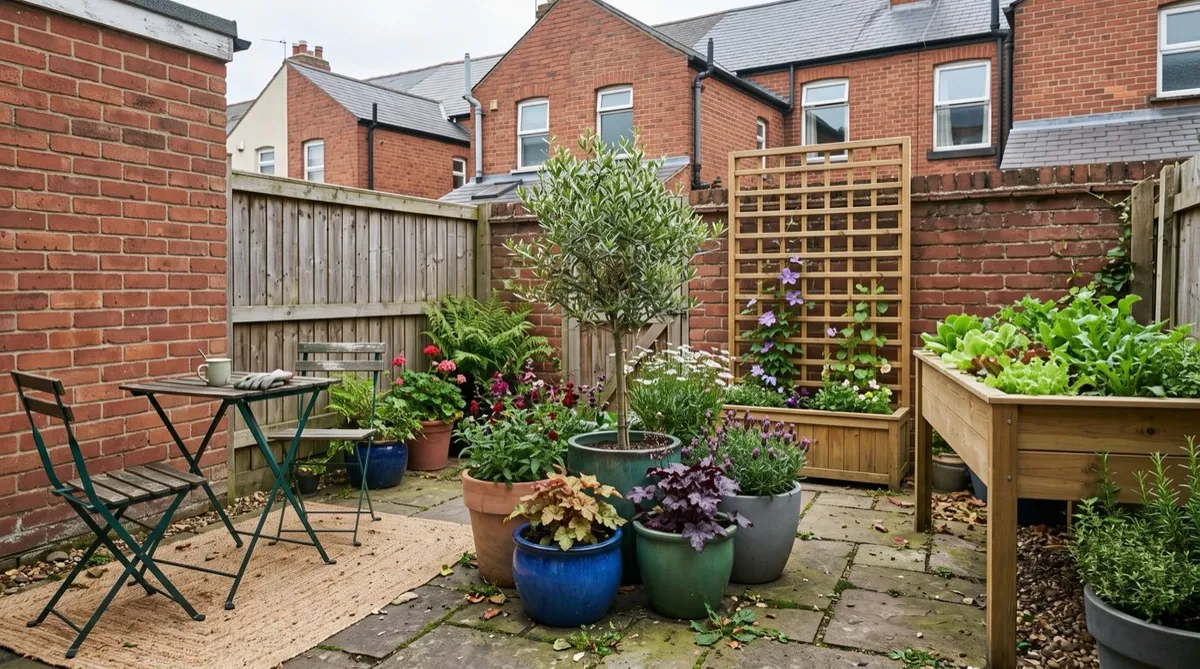
A small patio is a proper growing space, not just somewhere for a table and fairy lights. Even a 3m x 3m patio has room for herbs, flowers, salads and a trained fruit tree. The trick is using your walls and height, not just the floor.
Everything here suits UK weather: hardy plants, compost that copes with a hot spell, and pots that last through winter. If you rent, our rental garden ideas guide has easy, portable options. For a bigger plot, the small garden design guide looks at layout and planting.
What size containers work best for patios?
Shrubs and perennials do best in pots about 45cm across. Bedding needs about 30cm and herbs about 20cm. Go too small and plants dry out and go hungry. Go too big and the pot is a pain to move.
| Plant type | Final pot size | Why |
|---|---|---|
| Herbs (thyme, mint, chives) | 20cm | Small roots, don’t need much water |
| Bedding plants | 25-30cm | Just one season of growth |
| Perennials and grasses | 35-45cm | Roots grow for several years |
| Shrubs (lavender, hebe, pittosporum) | 45cm+ | Room for roots and less tipping over |
| Climbers (clematis, jasmine) | 45-50cm | Deep roots to fuel the climb |
| Dwarf fruit trees | 45-60cm | Big roots to carry a crop |
| Tomatoes and courgettes | 40-50cm or a growing bag | Thirsty and hungry |
These are sizes for grown-up plants. Start young plants in a pot just a little bigger than their roots, then move them up a size as they fill it. A small plant in a huge pot sits in cold, wet compost and can rot. The RHS guide to growing plants in containers explains this nicely. For food crops, our guide to container vegetable gardening covers compost and feeding.
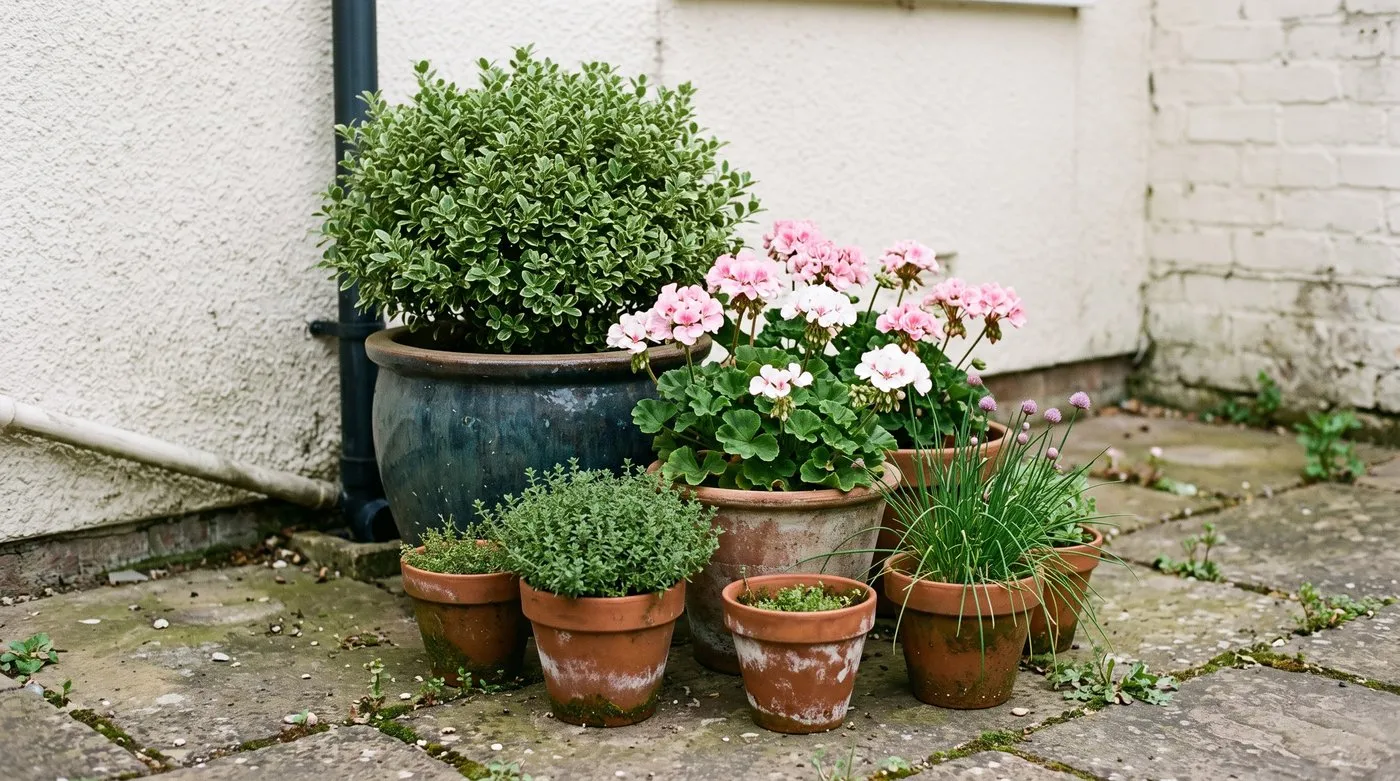
Match the pot to the plant’s grown-up size. Herbs are happy in small pots, but shrubs need a big one so they don’t dry out or blow over.
Choosing container materials
Pick your pot material by what matters most to you: light weight, staying damp or standing up to frost.
| Material | Weight | Stays damp? | Frost | Price | Best for |
|---|---|---|---|---|---|
| Terracotta | Heavy | Dries fast | Only if sold frost-proof | Medium | Sunny spots, Mediterranean herbs |
| Glazed ceramic | Heavy | Fairly well | Fair | High | Feature pots, permanent plants |
| Plastic | Light | Well | Good | Low | Balconies, pots you move a lot |
| Fabric bags | Very light | Dries fast | Fine | Low | Summer veg |
| Galvanised metal | Medium | Well | Good | Medium | Modern looks, raised troughs |
| Treated wood | Heavy | Fairly well | Fair | Medium | Big planters |
Handy tip: Slip a plastic pot inside a terracotta or ceramic one. You get the good looks outside and less watering inside. It also makes swapping seasonal displays easy.
Metal pots get hot in summer sun and cold in winter, so fill them with tough plants. Wooden planters last longer if you line them with an old compost bag.
On a balcony, weight really matters. A big pot of wet compost can weigh 40kg or more. Don’t guess. Ask your landlord, managing agent or a structural engineer before adding several large pots, and use light plastic or fabric where you can.
Do patio pots need drainage holes and pot feet?
Yes, both. Drainage holes let water out, and pot feet keep those holes clear of the paving.
Without them, rain pools in the bottom and roots rot, especially in a soggy winter. Stand pots on pot feet or bricks. Saucers are handy in summer but take them away before winter. Use peat-free multipurpose compost for bedding and veg. For shrubs and other long-stay plants, a peat-free soil-based compost like John Innes No. 3 holds up better. Its extra weight also helps tall pots stay put in the wind.
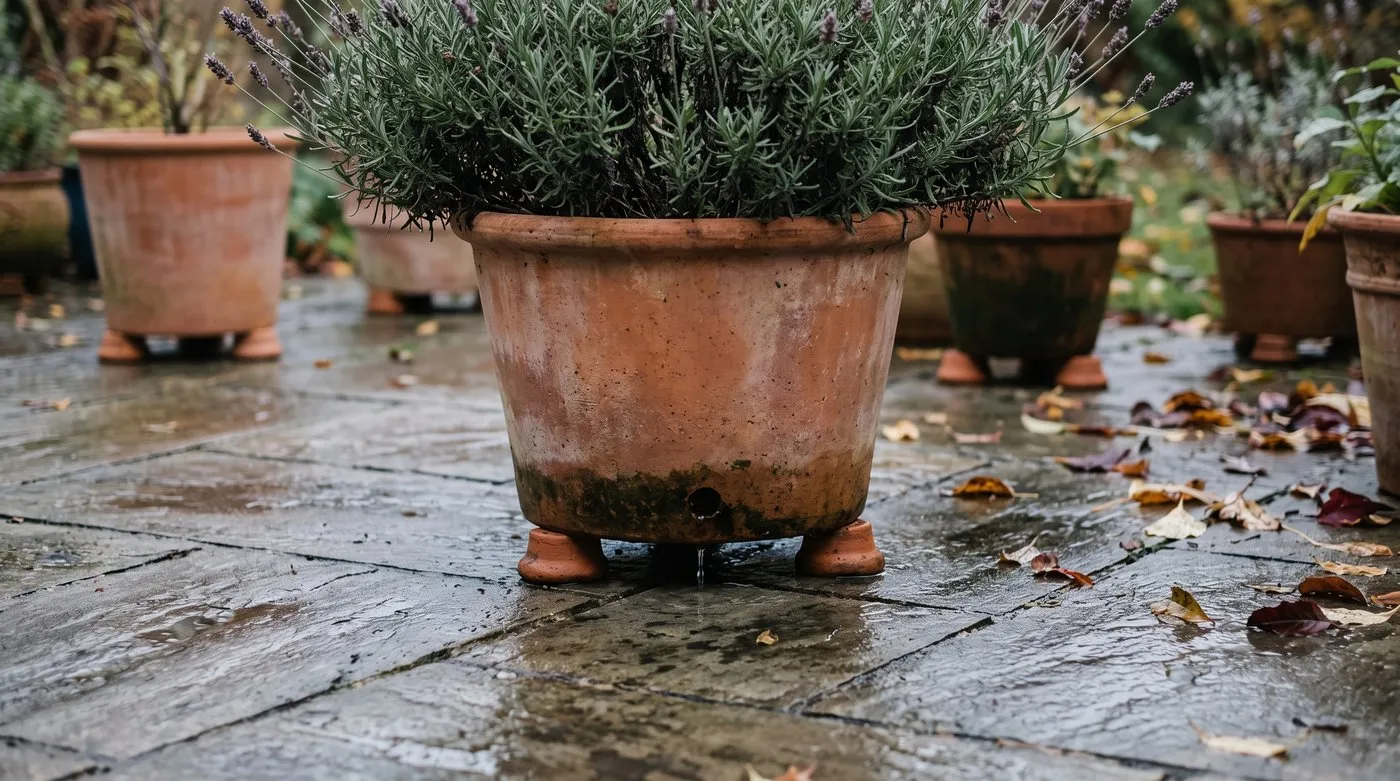
Pot feet lift the drainage hole off the slabs so winter rain can run away. Take saucers away before the wet months too.
Best plants for small UK patios
The best patio plants are happy in pots, look good for months and won’t burst out of their container in one season.
Evergreen structure plants
These give your patio a backbone that looks good all year.
Box (Buxus) clips into neat balls and cones, but box blight and box tree caterpillar are common in the UK, so check plants often. Ilex crenata and small-leaved pittosporums clip in a similar way and are good swaps.
Japanese acers look good all year: fresh leaves in spring, fiery autumn colour and lovely bare branches in winter. They like dappled shade and shelter from wind. ‘Bloodgood’ and the lacy Dissectum types are popular for pots.
Fatsia japonica has big, glossy evergreen leaves and is happy in shade. It’s a star choice for a north-facing patio.
Flowering plants for seasonal colour
Change your pots with the seasons and the patio stays bright all year.
Spring: Tulips, daffodils and muscari in 30cm pots. Plant daffodils in early autumn and tulips in November. Our tulip growing guide and daffodil planting guide cover varieties and depths.
Summer: Lavender, geraniums, petunias and salvias in sunny spots. Fuchsias, begonias and hostas for shadier corners.
Autumn: Heuchera, grasses and Japanese anemones keep colour going into October. Nerines flower in autumn and look great in terracotta.
Winter: Cyclamen, winter pansies, heathers and hellebores cheer up the darkest months. Skimmia adds red berries and scented flowers.
What can you grow on a north-facing or shady patio?
Lots. Ferns, hostas, heuchera, fatsia, hydrangeas, fuchsias, begonias and hellebores all do well in pots in shade.
A shady patio stays cool and damp, so pots need less watering. Leaves do better than flowers in shade, so lean on foliage. Hostas and ferns give bold shapes, and heucheras add purple, lime or amber. For flowers, busy lizzies, begonias and fuchsias keep going all summer. Hellebores and Skimmia cover winter and early spring. Salad leaves, mint, parsley and chives cope with part shade too. Pale pots, pale paving and a mirror bounce light into a dark corner.
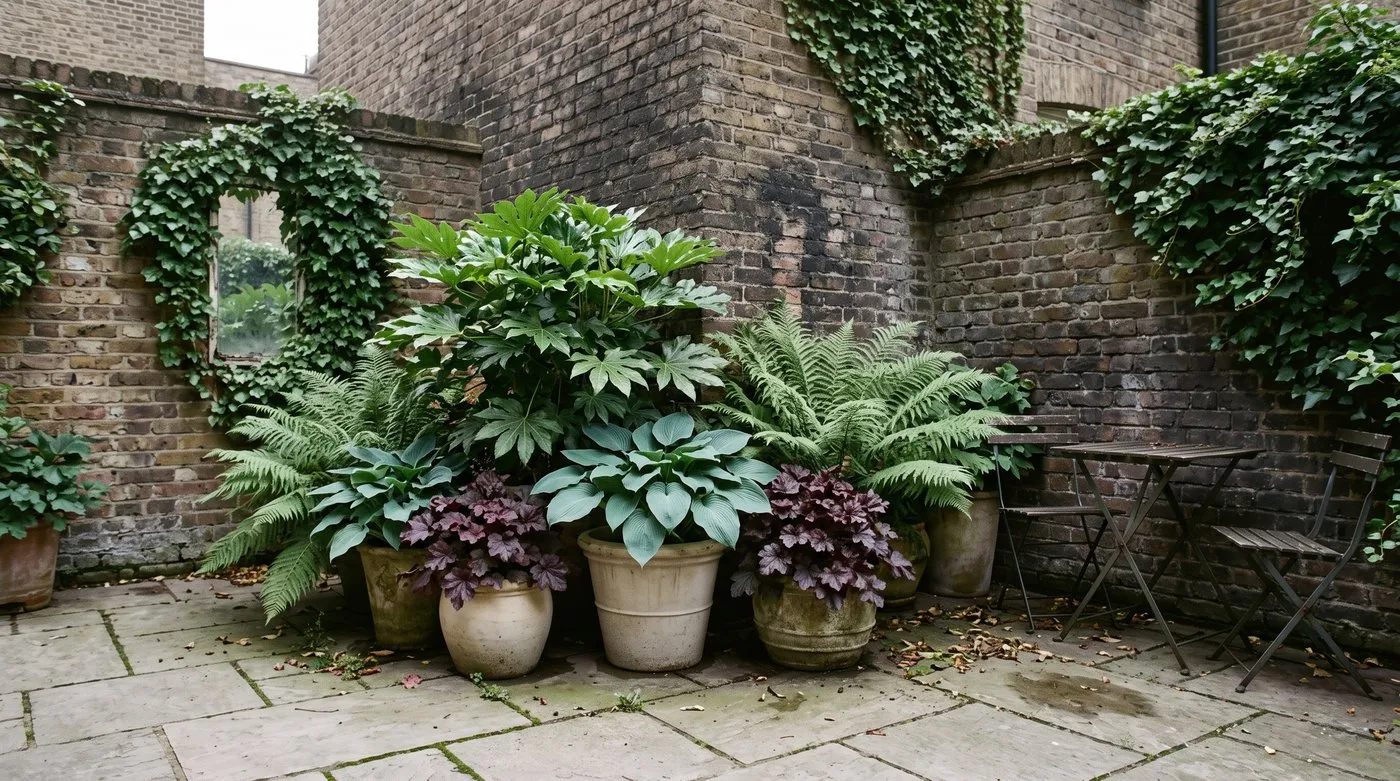
In shade, let leaves do the work. Bold fatsia, hostas and ferns stay fresh all summer, and pale pots bounce a little light back in.
Growing food on a patio
A sunny patio can give you salads, herbs, tomatoes and strawberries from early summer into autumn. No allotment needed.
Herbs: Rosemary, thyme, sage, chives and mint grow happily in 20cm pots. A rosemary can live for years in a 30cm pot of soil-based compost. Give mint a pot of its own, as it spreads everywhere.
Salad leaves: Lettuce, rocket and baby spinach grow fast from seed. Sow a little every couple of weeks from spring to late summer for steady picking. Cut-and-come-again types grow back after you cut them. See our lettuce growing guide.
Tomatoes: One tomato plant per large pot, or two or three per growing bag. Cherry types such as ‘Sungold’ and ‘Gardener’s Delight’ are reliable on UK patios. A south-facing wall keeps them warm.
Other crops: Runner beans scramble up a bamboo wigwam in a big, deep pot. Courgettes want a large pot and lots of water. Strawberries look lovely trailing from hanging baskets and raised planters.
| Crop | Pot size | Sun | Pick |
|---|---|---|---|
| Cherry tomatoes | 40-50cm pot or growing bag | Full sun | July to October |
| Salad leaves | 40cm trough | Sun or part shade | May to October |
| Runner beans | 45cm pot plus canes | Full sun | July to September |
| Mixed herbs | 20-30cm pot | Mostly sun (mint and parsley cope with part shade) | April to November |
| Strawberries | 30cm pot or basket | Full sun | June to August |
| Courgettes | Large pot or growing bag | Full sun | July to September |
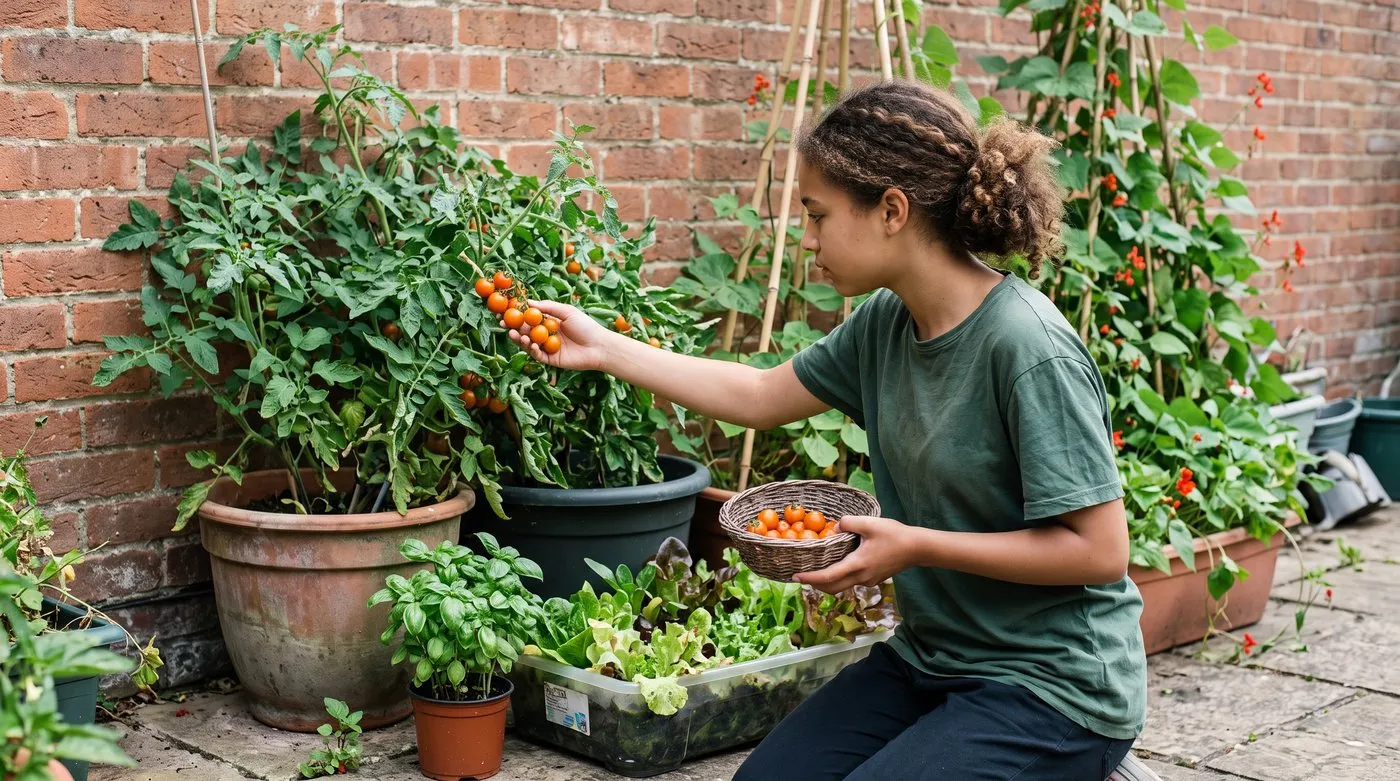
A warm wall is a tomato’s best friend on a patio. One plant per large pot gives a handful of fruit most days in late summer.
Vertical growing for patio walls
Walls and fences are the easiest way to find more growing space on a small patio. Our guide to vertical gardening ideas has living walls, tower planters and more.
Wall planters: Fix troughs to fences and walls at different heights. Ivy, fuchsia and lobelia tumble over the edges. Thyme and oregano are happy in shallow troughs.
Trellis: Fix trellis to a wall or fence and train climbing plants up it. Jasmine, clematis and honeysuckle bring flowers and scent. Fruit trees trained flat against a sunny wall take up hardly any floor.
Shelves and stands: Tiered stands and step shelves hold lots of pots in a small space. Tall pots at the back, short ones at the front.
Hanging baskets: Baskets above head height add colour without taking up floor space. Trailing geraniums, petunias and begonias are perfect. Baskets dry out fast, so water them every day in summer.
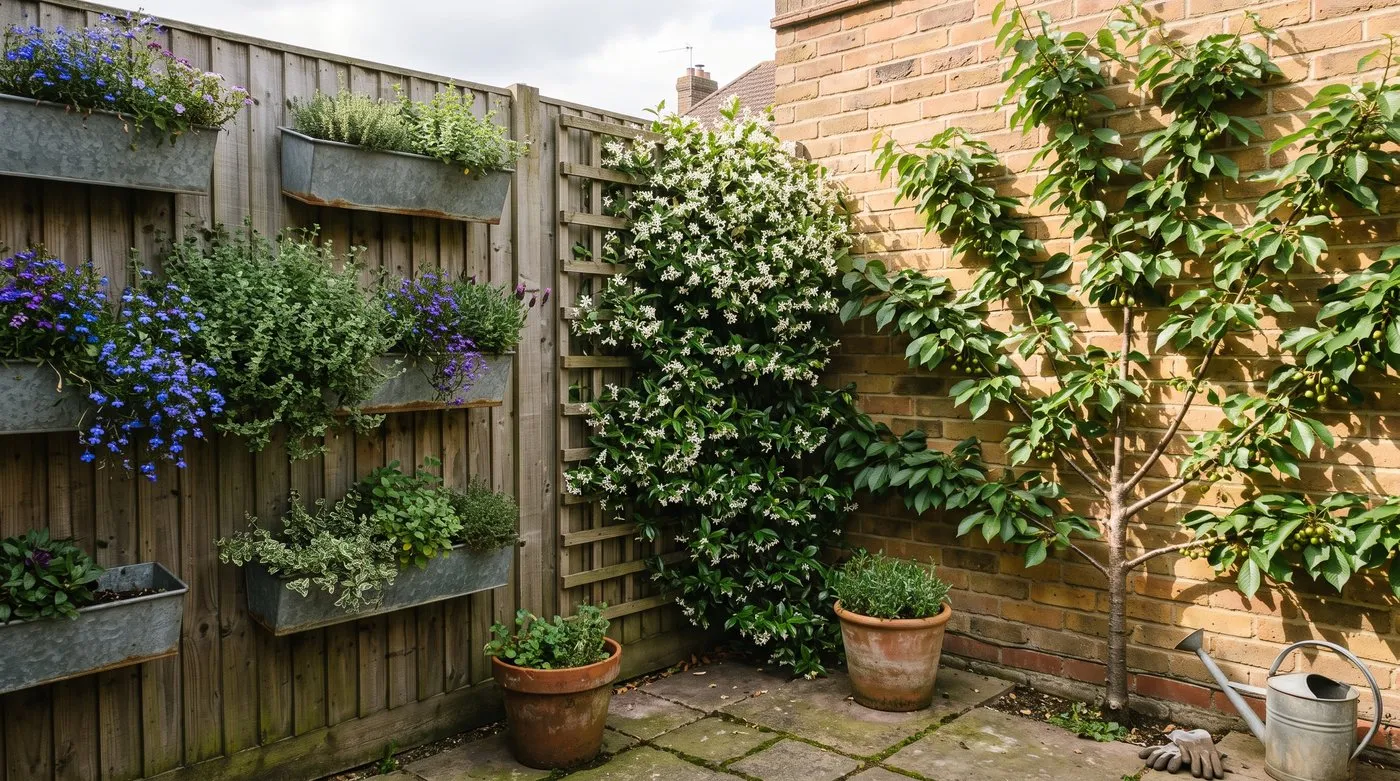
Walls and fences are free growing space. Troughs and trellis can double what a small patio holds without taking any floor.
How do you add privacy to a small patio?
Mix trellis with climbers, tall planters and screening plants rather than putting up one solid wall. Layers hide the view without making the patio feel boxed in.
Trellis on top of a fence adds height quickly. Cover it with an evergreen climber like star jasmine for year-round cover. A row of big troughs with bamboo, pleached trees or tall grasses screens a seating area and can move house with you. A pergola or shade sail hides you from upstairs windows, which a fence can’t. Fences, walls and gates over 2m high (or 1m next to a road or footpath) need planning permission, so check the Planning Portal or your council before adding trellis on top. Our patio privacy screening ideas guide compares the options. Worried about spreading roots? Try these bamboo alternatives for privacy.
Design tricks for making a small patio feel bigger
A few simple tricks make a small patio feel roomier.
Lay paving diagonally. Slabs set at an angle to the house pull the eye along the longest line, so the space feels deeper. Pale paving in cream, buff or light grey brightens things up. Starting from scratch? See our guide on how to lay a patio. For a smooth, pale finish, try our guide to using concrete in small-garden landscaping.
Use fewer, bigger pots. Ten little pots look cluttered. Three or four big ones look planned and leave you room to move. Group them in odd numbers at different heights.
Add a mirror. A big outdoor mirror on a wall or fence makes the patio look deeper. Let it reflect your plants and frame it with climbers. Angle it a little or partly hide it with leaves so birds don’t fly into it.
Keep the middle clear. Put pots and furniture round the edges. A bistro table and two chairs feel lighter than a full dining set.
Stick to one colour scheme. Choose one family, like blues and whites, or warm reds and oranges. Too many colours in a small space can look busy.
Attracting wildlife to a patio garden
Even a tiny patio can feed bees and give birds and insects somewhere to shelter. Choose simple, open flowers, add water and leave a little cover.
For bees: Grow lavender, thyme, sedum, Verbena bonariensis and single dahlias. Skip very frilly double flowers, as bees can’t get inside them.
For birds: A shallow dish of water gives birds a drink and a bath all year. Sunflowers in big pots bring in finches when they go to seed. Berry shrubs like cotoneaster and pyracantha feed blackbirds and thrushes in winter.
For insects: A small log pile or bug hotel in a shady corner gives ladybirds, lacewings and solitary bees a home. Leave some dead stems standing over winter too.
If you share your patio with a dog, pick plants that are safe for pets. Our guide to pet-safe garden plants has good options for pots.
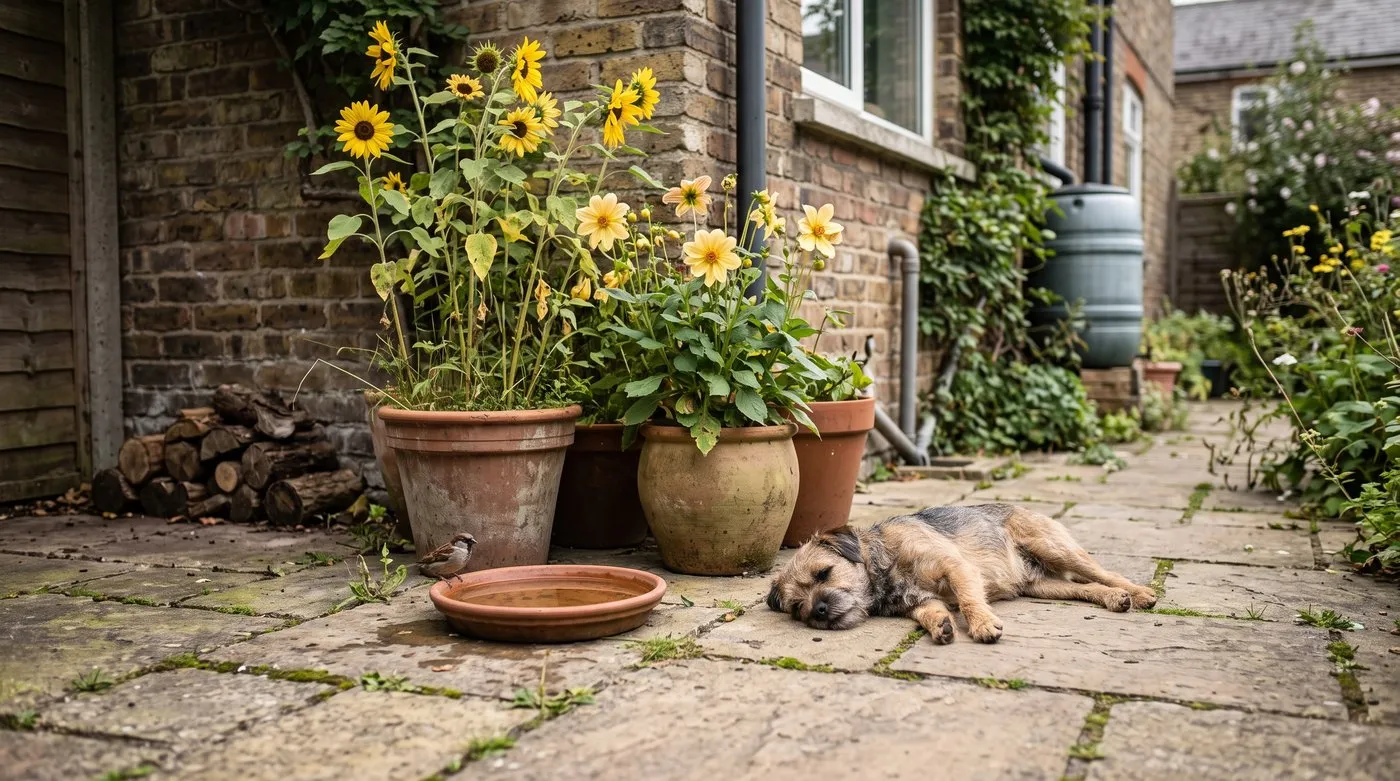
A shallow dish of water and a few open, single flowers bring birds and bees in. If a dog shares the patio, choose plants that are safe for pets.
Seasonal care calendar for patio containers
In short: move plants up a pot size in spring, water and feed in summer, and keep pots well drained and sheltered in winter.
| Season | Jobs to do |
|---|---|
| Spring | Move pot-bound plants into bigger pots. Top up long-term pots with fresh compost. Start feeding. Plant summer bedding after the last frost. |
| Summer | Check pots daily and water when dry (small pots may need it twice a day in a heatwave). Feed flowers and fruit with tomato feed. Deadhead often. |
| Autumn | Water less. Move tender plants like citrus and olive somewhere sheltered. Plant spring bulbs. Group pots against the house wall. |
| Winter | Stand pots on feet and remove saucers. Wrap tender pots in hessian or fleece. Water only when the compost is dry a few centimetres down. Clear fallen leaves. |
For month-by-month jobs, see our spring, summer, autumn and winter gardening guides.
Still choosing a surface? Have a look at our guide to alternatives to paving slabs.
Frequently asked questions
What are the best plants for a small patio UK?
Lavender, Japanese acers, hostas, heuchera and fatsia all love life in pots. For colour, change things with the seasons: spring bulbs, summer geraniums and winter cyclamen. Rosemary, thyme and sage are happy in pots on a sunny patio.
How do I make a small patio look bigger?
Use pale paving and a few big pots. A mirror on a wall makes the space look deeper. Laying slabs diagonally pulls the eye along the longest line. Keep the middle clear and put plants and furniture round the edges.
Can I grow vegetables on a patio?
Yes, lots of them. Tomatoes, salad leaves, runner beans, courgettes, peppers, strawberries and herbs all grow well in pots. Give hungry crops like tomatoes and courgettes big pots or growing bags, and keep them well watered. The container vegetable gardening guide covers what to grow and how to feed it.
How often should I water patio containers?
Check your pots every day in summer. Water whenever the compost feels dry just below the top. Small pots in full sun may need watering twice a day in a heatwave. Water less in spring and autumn. In winter, water only when the compost is dry a few centimetres down.
What size pots do I need for a patio garden?
Aim for about 45cm across for shrubs and perennials. Bedding suits 30cm pots and herbs are fine in 20cm pots. Dwarf fruit trees need 45-60cm. Move young plants up a size at a time, as a tiny plant in a huge pot sits wet and can rot.
Is terracotta or plastic better for patio pots?
Each has its good points. Terracotta looks lovely and is stable, but it dries out fast and can crack in frost, so buy pots sold as frost-proof. Plastic stays damp longer and is lighter. Pop a plastic pot inside a terracotta one and you get the best of both.
Further reading
- Container vegetable gardening, growing food in pots and grow bags
- Small garden design ideas, layout and planting for compact gardens
- Best climbing plants, plants for walls and fences
- Raised bed gardening, a step up from pots for bigger spaces
- Drought-tolerant plants, easy-care choices for sunny patios
Our team produces practical UK gardening guidance from source research, contributor records and established horticultural practice. Editorial standards are overseen by Matt W.