Key takeaways
- Sow indoors from late March, or outside from mid-April to May
- Pick a sunny, sheltered spot with soil that drains well
- Slugs love young seedlings, so protect them from day one
- Stake tall varieties early, before the wind bends them
- Leave dry seedheads for the birds, or save the seed to sow next year
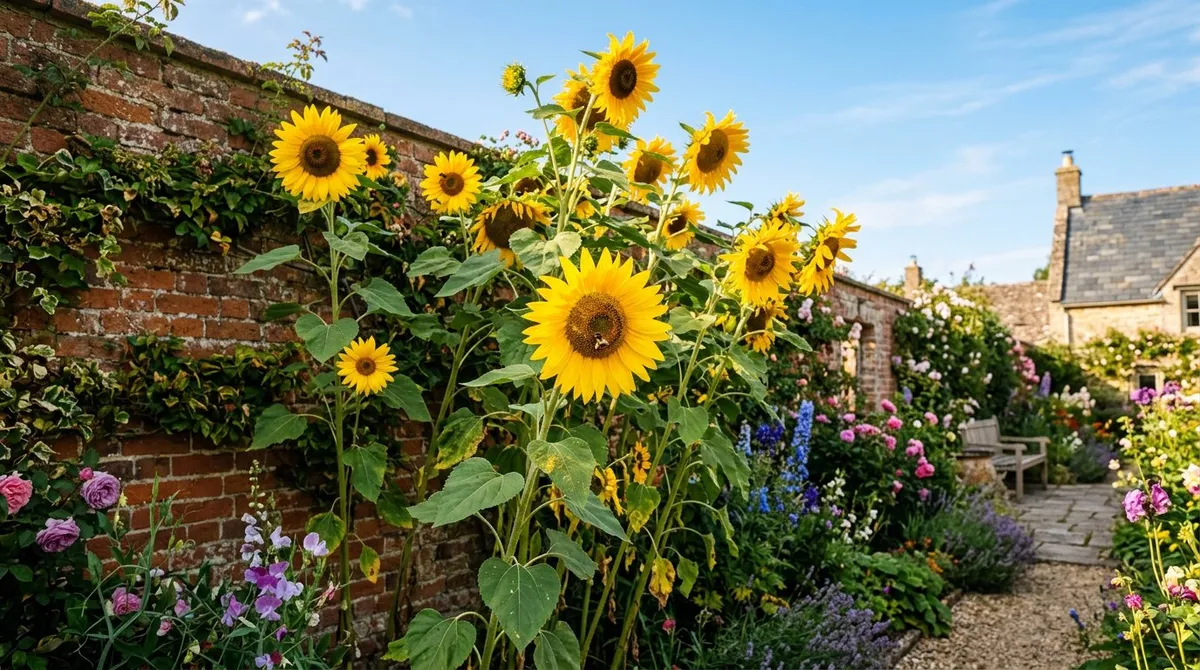
Sunflowers are one of the easiest and most cheerful things you can grow from seed. Give them sun, a bit of shelter and some protection while they’re small, and they’ll do the rest. Sow a few indoors for an early start, or wait for warmer soil and sow them right where they’ll flower.
There are only three things to get right. Pick a variety that fits your space, don’t rush them into cold soil, and stake tall ones before they lean.
When to sow sunflowers in the UK
Sow indoors from late March, or outside from mid-April to May. That’s the timing in the RHS sunflower growing guide too.
| Method | When | Good for | Keep in mind |
|---|---|---|---|
| Sow indoors | From late March | An early start, safe from slugs | Seedlings need bright light and gentle hardening off |
| Sow outdoors | Mid-April to May | Less fuss, fewer pots | The soil should feel warmer and crumbly |
| Sow later | Into late spring | Filling gaps, or flowers for longer | Less time to grow before autumn |
These dates are a guide, not a deadline. A cold northern or exposed garden may be ready later than a sheltered southern one. Feel the soil, check the forecast, and wait if the ground is soggy or a hard frost is on the way.
Our sunflower planting-time guide has more on timing around the country.
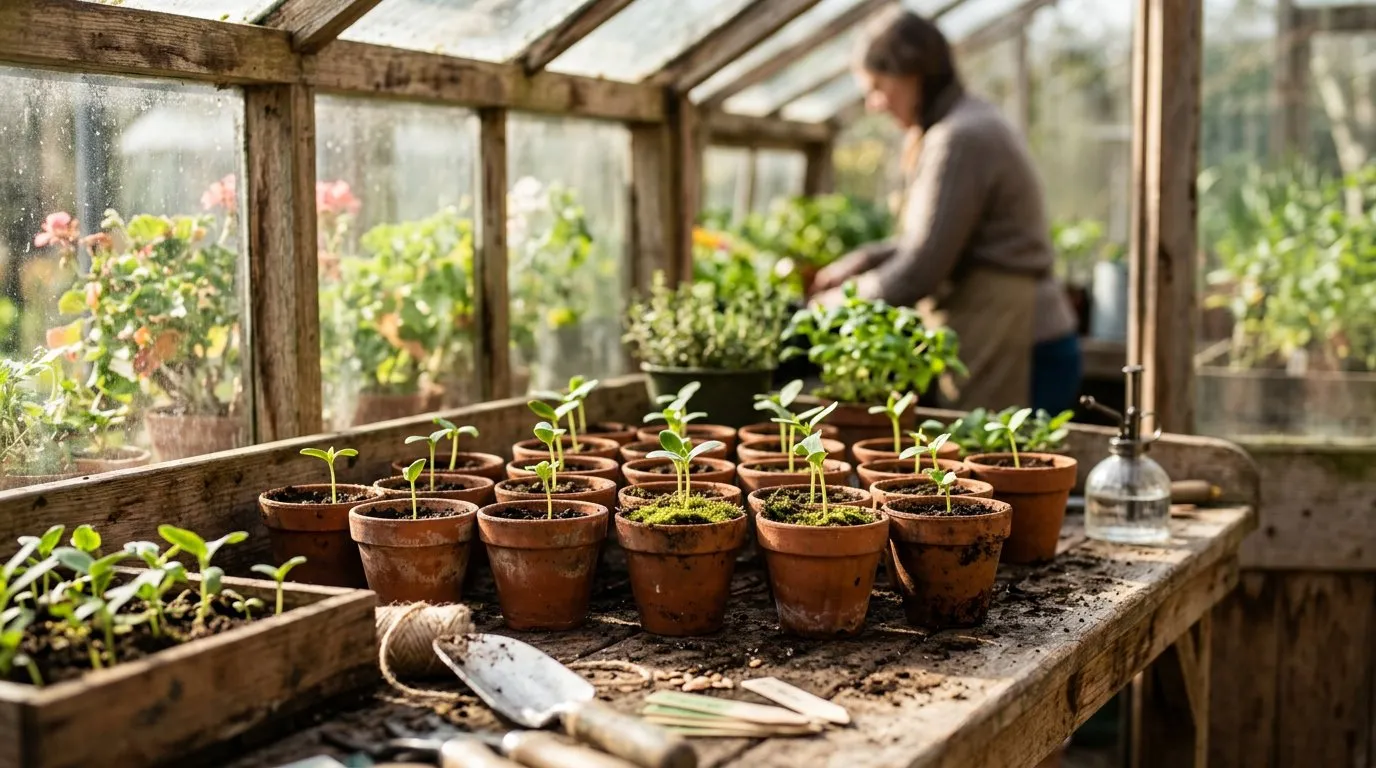
Keep indoor seedlings in bright light so their stems stay short and sturdy.
Choosing the right sunflower
Pick by the final height on the packet, not the picture on the front. Annual sunflowers range from short, bushy plants to towering single-stemmed giants.
| Type | Great for | Plan for |
|---|---|---|
| Dwarf or compact | Pots, raised beds, front of a border | A steady pot and regular watering |
| Medium, branching | Mixed borders, lots of flowers | Room for side shoots |
| Tall, single stem | Back of a border, or a height contest | Early staking and shelter |
| Open, pollen-rich flowers | Bees and other wildlife | A few plants flowering one after another |
A giant sunflower in a windy bed takes a lot of propping up. In a small garden, a compact variety often looks better.
Perennial sunflowers are different plants. They come back from their roots each year and are usually bought as plants. Check the label if you want one that returns.
How to sow sunflower seeds indoors
Give each seed its own small pot. Sunflower seedlings grow big fast, so don’t crowd them in a tray.
- Fill clean pots with peat-free seed compost and water lightly.
- Sow one seed per pot, at the depth on the packet. About 1 to 2cm suits most.
- Cover with compost and put the pots somewhere warm and bright.
- Keep the compost just moist, not soggy.
- Turn the pots if the seedlings lean towards the window.
- If roots fill the pot before it’s warm enough outside, move them into a slightly bigger one.
Take off any cover once the seedlings come up. A warm but dim windowsill gives long, floppy stems, so find the brightest spot you can.
Before planting out, harden them off. Put the pots outside in a sheltered place for a little longer each day over about a week, bringing them in at first. Plant out once the risk of frost has passed.
How to sow sunflowers outside
Sow straight into a weed-free, sunny patch once the soil is warming. Loosen the surface, sow at the depth on the packet, and mark the spot so you don’t hoe it by mistake.
The RHS suggests sowing about 12mm deep and thinning seedlings to about 45cm apart. Spacing varies by variety, so go by the packet. Tall, branching types need more room than small single-stemmed ones.
Water gently and keep the soil damp while the seeds come up, without soaking cold ground again and again. Put slug protection in place as soon as shoots appear.
Growing them with kids? See our guide to growing sunflowers with children.
Where to plant sunflowers
Full sun, shelter from strong wind, and soil that holds some moisture without staying wet.
Dig some well-rotted compost or manure into poor soil before planting, but don’t pile fresh rich stuff right under the roots. Firm the plant in well and water it.
Think about shade. Put tall sunflowers where they won’t block the light from smaller plants or lean over a path. Leave room to get in for tying, watering and checking the stems.
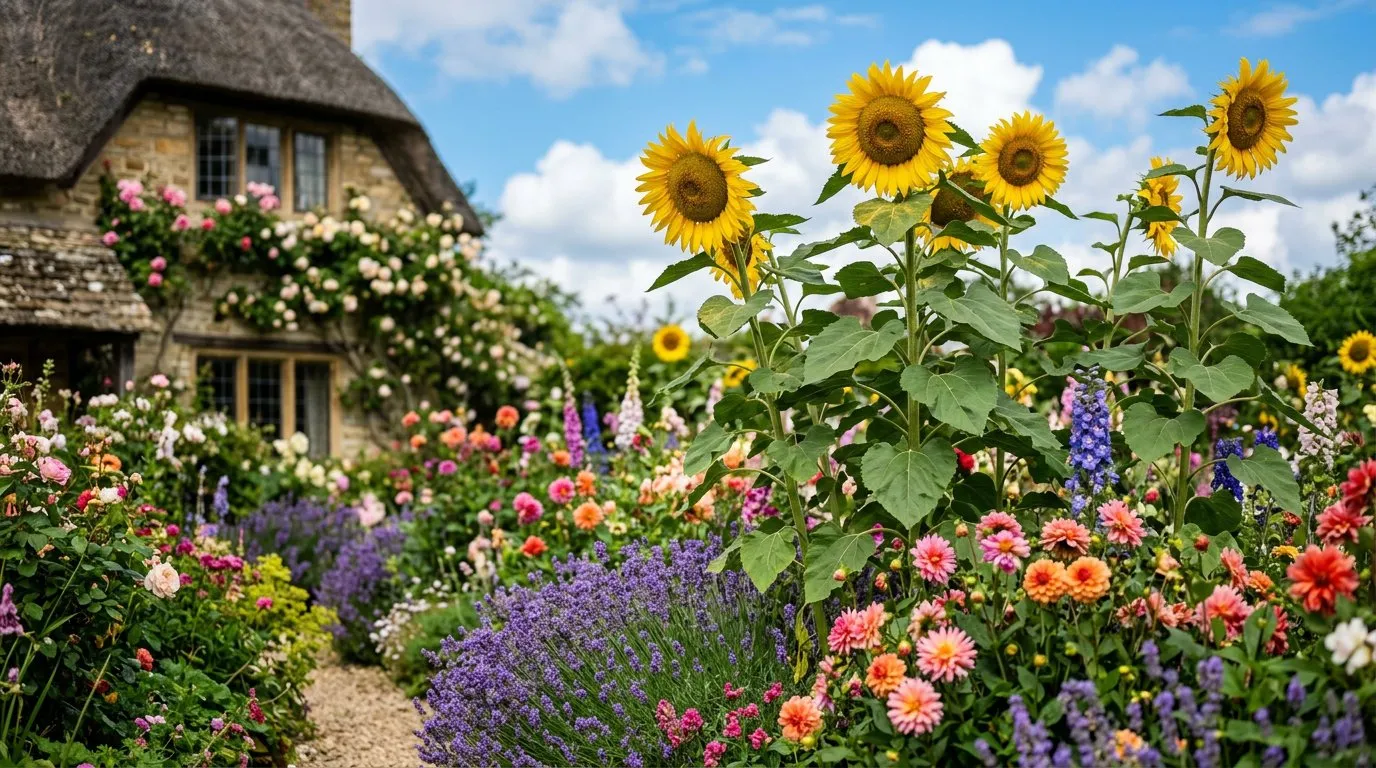
Tall sunflowers look great at the back of a border, where they’re easy to stake.
Growing sunflowers in pots
Compact sunflowers grow happily in pots. Pick a wide, steady container with drainage holes. A narrow, light pot can tip over once the flower heads get heavy.
Use peat-free multipurpose compost, leaving a gap at the top for watering. Sow straight in, or plant a hardened-off seedling without breaking up the roots. One healthy plant per pot usually does better than a crowd.
Pots dry out faster than the ground. Check them often in warm weather and water well when the top starts to dry. Let the extra water drain away, and don’t leave the pot standing in a full saucer.
Move the pot to its final spot before the plant gets tall and awkward. A sunny wall gives shelter, but leave some air around the leaves.
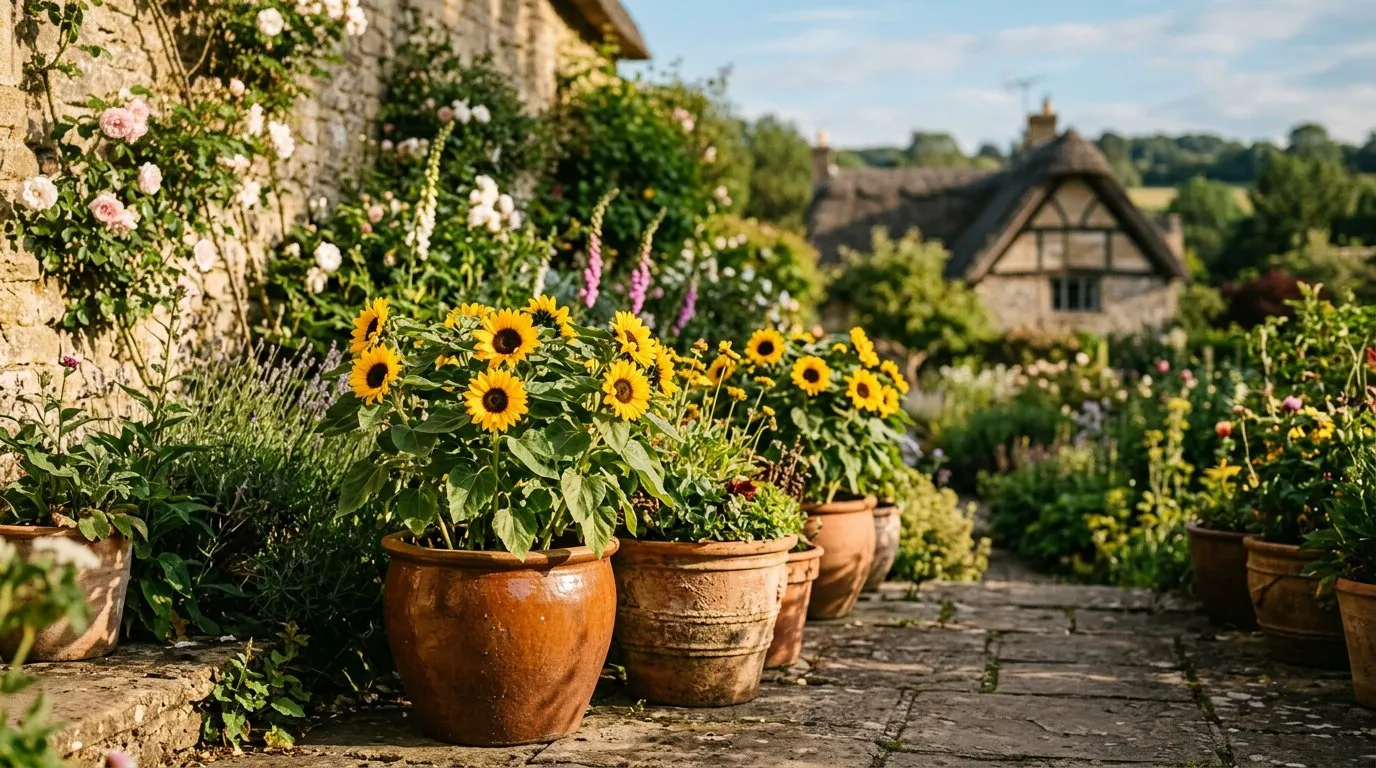
Compact varieties are much easier to keep upright in pots than tall, top-heavy ones.
Watering, feeding and staking sunflowers
Water deeply in dry spells, feed only in pots, and stake early.
Water young plants until they settle in. After that, a good soak in dry weather beats a light sprinkle every day. Aim at the soil, not the leaves.
In decent garden soil, sunflowers don’t need regular feeding. In pots, use a flowering-plant feed as the label says once the compost starts running out of goodness. Too much feed gives soft, leafy growth that’s harder to hold up.
Push a cane or sturdy stake in beside tall varieties while they’re still small, taking care not to spear the main roots. Tie the stem loosely with soft twine in a figure of eight, and add more ties as it grows.
Check the ties after windy weather. They should hold the stem without cutting in. Very tall plants may need several ties or a sturdier frame.
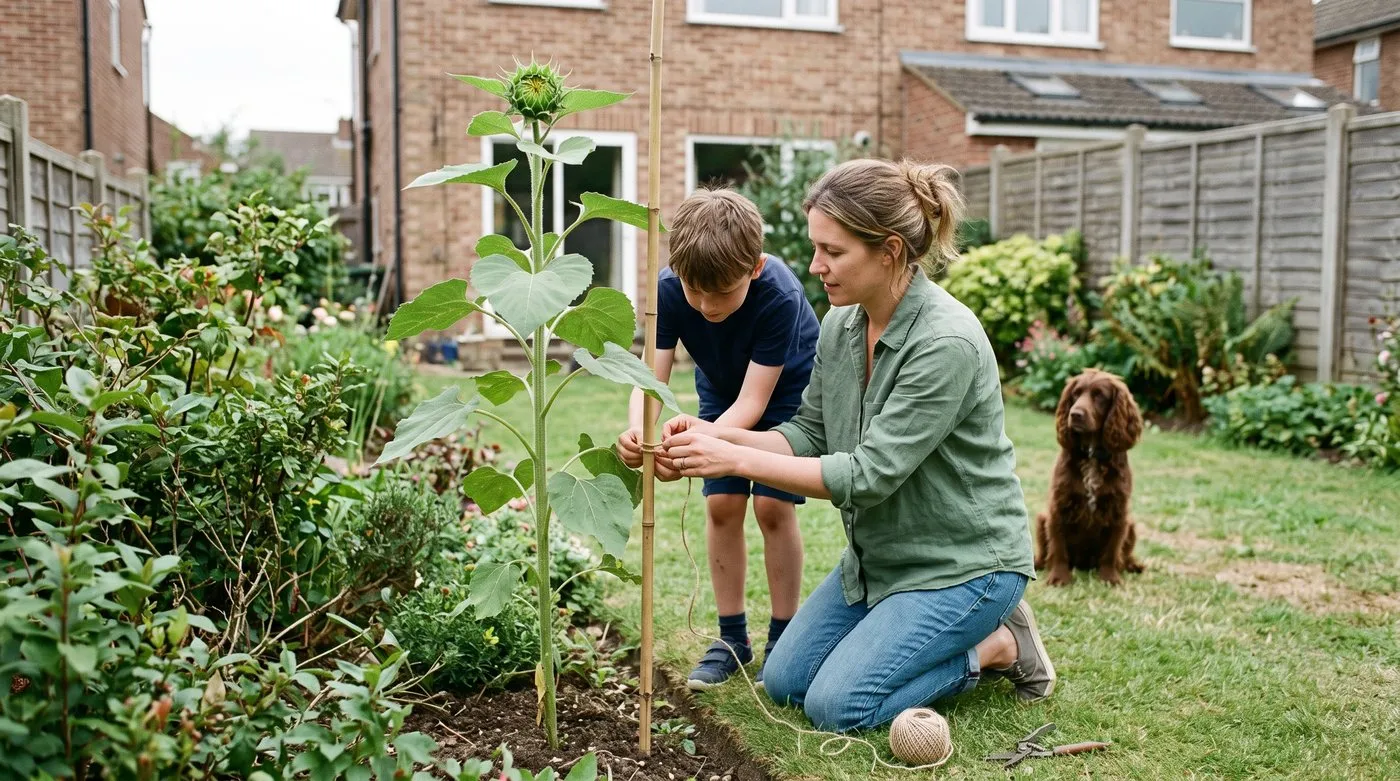
Put the cane in while the plant is small and add ties as it grows. A loose figure of eight holds the stem without cutting in.
Keeping slugs and snails off seedlings
Young sunflowers are a slug’s favourite snack. Check them in the evening and after rain. Clear away hiding places like old boards and piles of debris nearby.
Growing them on in pots for a while helps them get past the most at-risk stage, but keep checking once they’re planted. If you use a slug control product, follow the label carefully and choose one that won’t harm pets or wildlife.
Birds and mice may dig up fresh seed too. A fine mesh over the soil helps, but lift it before the stems grow through. Keep netting taut and check it often so nothing gets caught.
Sunflowers for bees
Open sunflower heads are full of pollen and nectar for bees. Grow several plants, or sow twice, so they don’t all finish at once. Don’t spray open flowers. Mix them with other plants from our bee-friendly plant guide.
Some fancy sunflowers make little or no pollen. If wildlife matters most, check the packet for a pollen-bearing variety.
Keeping the flowers coming
Sow a second small batch a few weeks after the first. That spreads out the flowers, and gives you a backup if slugs or a cold snap hit the first lot.
Branching varieties flower over a longer time. Snip off faded flowers to help later buds, but leave some heads to ripen if you want seed for birds or for sowing.
For a vase, cut stems just as the petals start to open. Cut in the cool of the day with clean secateurs, strip off leaves that would sit underwater, and get them into water quickly. Don’t strip a young plant of most of its leaves.
Keep checking the base once the first flower opens. A big head catches the wind, and rain can loosen a stake.
What to do with sunflower heads after flowering
Leave healthy heads on the plant to ripen. The back of the head dries out and the seeds firm up. Birds will happily feed straight from the standing heads through autumn.
If a stem starts to wobble, cut the head with a length of stalk. Hang it somewhere dry and airy, then put it out for the birds off the damp ground.
To save seed for sowing, pick a healthy plant of a non-F1 variety and let the head ripen fully. Dry the seed well, label it and keep it somewhere cool and dry. Seed from an F1 hybrid may not come out like its parent.
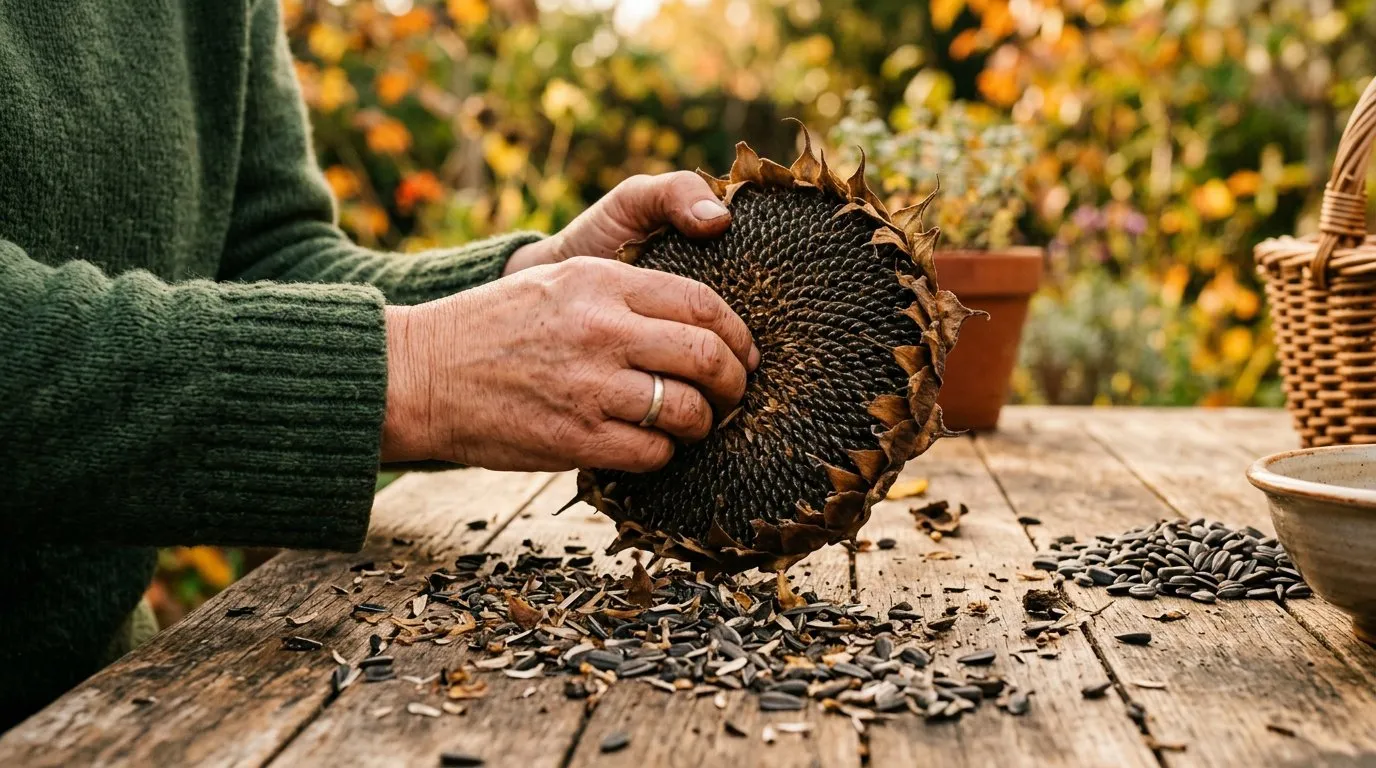
Rub the dry seeds out to save for next year, or leave some seedheads standing for finches.
Sunflower calendar
March and April
Sow indoors from late March. Keep seedlings in bright light and get stakes and planting spots ready.
April and May
Sow outside once the soil is warming. Harden off indoor plants and protect every seedling from slugs.
May and June
Plant out once frost is unlikely. Water while the roots settle and tie in tall varieties early.
July and August
Water in dry spells, check pots often and loosen tight ties. Enjoy the bees.
September and October
Let the seedheads ripen. Leave steady stems for the birds, or dry and store some heads.
Common sunflower mistakes
Sowing too early in poor light
Warmth without enough light gives weak, stretched seedlings. Wait until late March and use your brightest spot.
Skipping hardening off
Wind, cold and strong sun can set back indoor seedlings. Get them used to the outdoors slowly.
Leaving slug protection too late
A seedling can vanish overnight. Start checking as soon as the shoots appear.
Staking after they lean
A bent stem is hard to straighten without damage. Put the stake in early and adjust the ties as it grows.
Cramming a small pot
Several tall plants fight for water and make the pot tip over. Choose a compact variety and follow the packet spacing.
Have a look through our growing guides for more seasonal projects, or use the sunflower planting timetable to pick your sowing week.
Frequently asked questions
When should I plant sunflower seeds in the UK?
Sow indoors from late March, or outside from mid-April to May. In a cold garden, or if the soil is still wet and frosts are forecast, wait a little longer.
How long do sunflowers take to flower?
It depends on the variety and the weather. Check the seed packet for a guide, and expect flowers a bit later after a cool spring or a late sowing.
Can sunflowers grow in pots?
Yes, if you pick a dwarf or compact variety. Use a wide, steady pot with drainage holes and keep the compost evenly moist.
Do sunflowers come back every year?
Most sunflowers are annuals, so they flower once and die. Perennial sunflowers do come back each year, so check the label to see which you have.
Should I leave sunflower heads for birds?
Yes, birds love them. Leave the dry seedheads standing in autumn so finches and other birds can feed, as long as the stems are still firm and safe.
Our team produces practical UK gardening guidance from source research, contributor records and established horticultural practice. Editorial standards are overseen by Matt W.