Key takeaways
- Brambles spread by rooting stem tips and by seeds dropped by birds
- Cut stems to about 30cm, then dig out the stump and as many roots as you can
- Check for nests first, as nesting season usually runs from March to August
- If you use weedkiller, treat green leaves in late summer or early autumn
- Keep bramble roots and whole stems out of the home compost bin
- Watch cleared ground for two growing seasons and dig out any regrowth
Brambles are one of the toughest woody weeds in British gardens. The common bramble, or blackberry, sends out long arching stems that root wherever they touch the ground. Left alone, they build thorny thickets that swallow borders, paths and fences.
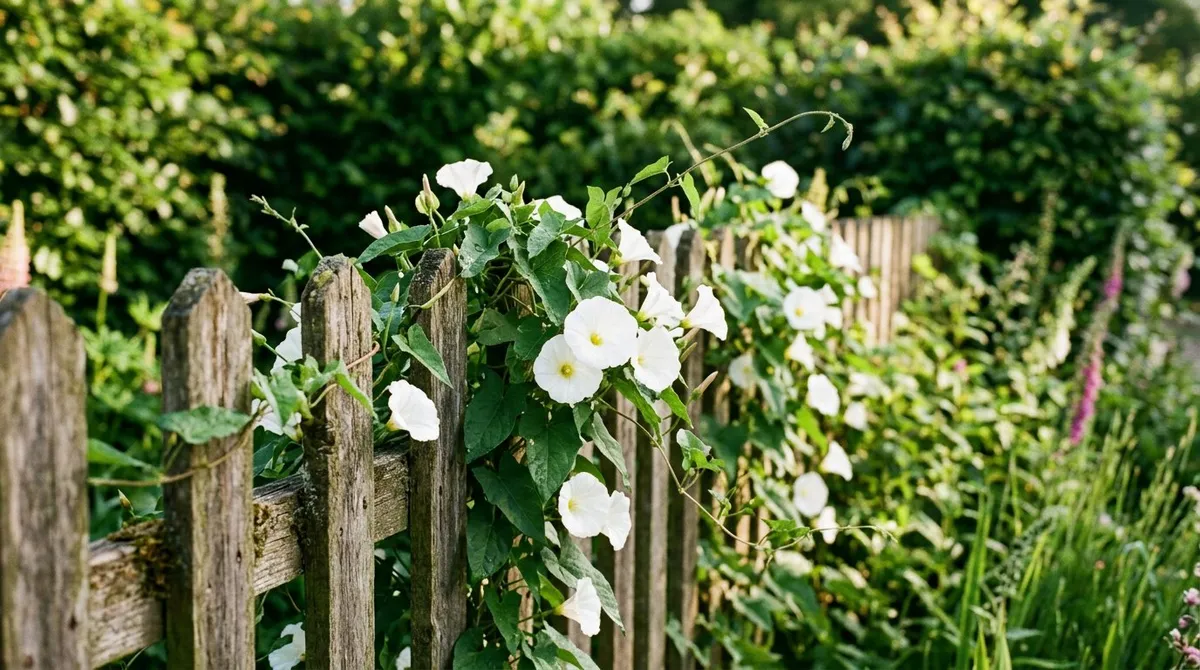
A quick hack with shears won’t do it, because the stump and roots regrow. Cut them back, dig out the stumps, and keep an eye out for regrowth. If you’re battling other weeds too, our guide to getting rid of bindweed tackles another stubborn one that often grows alongside them.

Brambles taking over a forgotten corner of the garden.
How brambles spread and why they’re hard to kill
Brambles spread three ways: rooting stem tips, a stump and roots that regrow, and seeds dropped by birds.
Rooting tips are the main one. The long stems arch over, and wherever a tip touches the soil it roots and makes a new plant. One neglected plant soon becomes a thicket.
The stump and roots are what make brambles so stubborn. The woody stump just below the soil stores food, so cut the stems and up come new ones. The RHS bramble guide notes that roots can regrow from small pieces. That’s why strimming or mowing alone never works.
Seeds add to the fun. Birds and animals eat the blackberries and drop the seeds, so seedlings pop up all over the garden.
When to tackle brambles
Cut and dig in late autumn and winter, after nesting season and when you can see what you’re doing. Use weedkiller in late summer to early autumn.
| Season | What to do | Good to know |
|---|---|---|
| Spring (March to May) | Pull or fork out seedlings. Check for nests before cutting. | Avoid big clear-outs while birds are nesting. |
| Summer (June to August) | Shorten long stems so the tips can’t root. Check for nests. | Poor time for weedkiller. |
| Late summer to autumn (late August to October) | Best time for weedkiller, if you choose to use it. | The weedkiller travels down to the roots. |
| Winter (November to February) | Cut back hard. Dig out stumps and roots. | Best time for clearing. Weedkiller won’t work on bare stems. |
For a big patch, try two stages. Cut back hard in winter, when you can see the stumps, then dig out or treat the regrowth the following year.
Can you cut back brambles in bird nesting season?
Yes, but check carefully for nests first. It’s against the law to damage or destroy an active wild bird’s nest.
Bramble thickets are a favourite nesting spot for dunnocks, song thrushes and other small birds. Nesting season usually runs from March to August, and sometimes longer. Snipping one stem that’s catching on a path is usually fine once you’ve looked. Save big clearance jobs for September to February. If you find a nest in use, leave that bit alone until the young have flown. Adults flying in and out with food often give away a nest you can’t see.
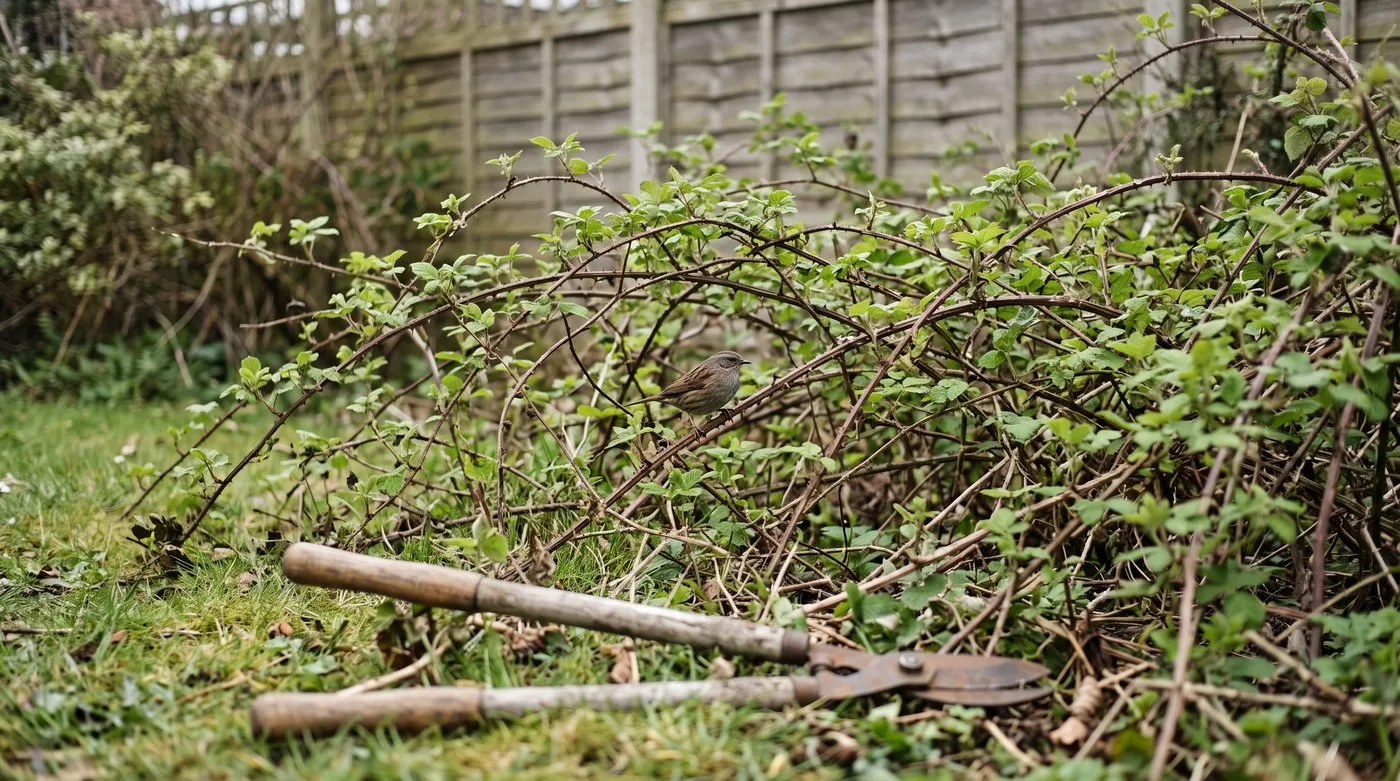
Bramble thickets are prime nesting spots for small birds. If you see adults flying in and out, put the loppers down and come back in autumn.
Cutting and digging out brambles
Cut the stems to about 30cm, then dig out the stump and as many roots as you can. It needs no chemicals and suits most garden-sized patches.
What you’ll need
Bramble thorns hurt, so dress for battle.
- Thick leather gauntlets, as ordinary gardening gloves get pierced
- Long sleeves and trousers in tough fabric
- Safety glasses, especially with power tools
- Long-handled loppers for cutting stems
- A bow saw for thick woody stems
- A sharp spade and fork for digging out stumps
- A mattock for stumps in hard ground
- Strong sacks for clearing up
Step-by-step clearance

Long-handled loppers keep the thorns at arm’s length.
- Check for nests before you start, especially from March to August.
- Cut all stems to about 30cm with loppers, a hedge trimmer or a brush cutter. Work from the outside of the thicket in.
- Clear away everything you’ve cut. Stem tips can root if left lying on bare soil.
- Dig out the main stump with a spade and fork. The 30cm of stem gives you something to lever against.
- Lift out as many roots as you can. Follow them sideways and ease them out rather than chopping through them.
- Check around the edges for stem tips that have rooted into new plants.
- Watch for regrowth through the season and dig out new shoots as they appear.
Digging out stumps is much harder on heavy clay. Our guide to improving clay soil explains how to work with it.
What should you do with bramble cuttings?
Shred them, take them to the tip, or stack them as a dead hedge. Keep roots, seedlings and whole stems out of the home compost bin.
The RHS warns that a home compost heap may not get hot enough to kill bramble roots and stems. Council green waste collections compost at a bigger scale, so that’s the usual route for roots. Shredded stems make a rough mulch for paths, where any stray rooting is easy to spot. Long stems can be woven between stakes as a dead hedge, a lovely home for birds and insects. Keep the roots out of both, and don’t leave thorny heaps where children, dogs or hedgehogs might push into them.
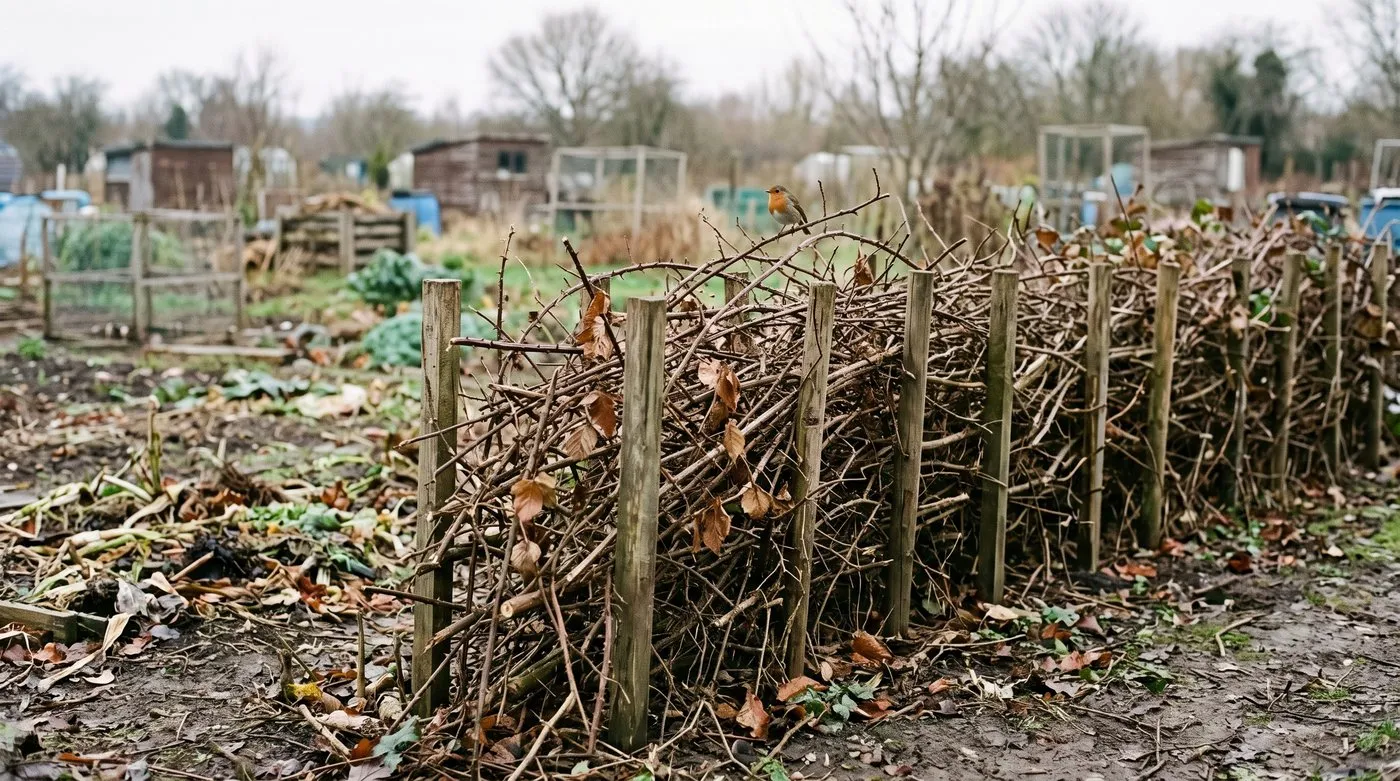
Long bramble stems packed between stakes make a dead hedge that birds and insects love. Just keep the roots out of it so nothing regrows.
Using glyphosate on brambles
Glyphosate is the most common weedkiller for brambles. It goes in through the leaves and travels down to the roots. The RHS suggests trying non-chemical methods first, and asking trained garden centre staff if you do need a weedkiller.
How to apply glyphosate to brambles
Spraying the leaves is the usual way:
- Use a home-garden product whose label lists brambles or woody weeds
- Mix and apply it at the label rate. Don’t use professional products without the right training
- Spray on a calm, dry day, wetting the leaves without making them drip
- Never spray in wind, as glyphosate kills any green plant it touches
- Check the label for how long it needs to stay dry
- Leaves yellow within a few weeks, but the roots take longer and some regrowth is likely

Freshly cut stumps, ready to dig out or treat.
Treating cut stumps is another way:
- Only use a product labelled for stumps, and follow its instructions
- Apply it to the fresh cut, usually straight after cutting
- There’s no spray drift, so it’s safer near plants you want to keep
- It works best in late summer and autumn
Glyphosate kills grass and anything else green it touches. Shield nearby plants with cardboard while you work, and never use it near ponds or streams.
A typical weedkiller plan
| When | What to do | What to expect |
|---|---|---|
| Year 1, winter | Cut back hard and clear the cuttings. | Easier access next season |
| Year 1, late summer | Spray the fresh, leafy regrowth. | Leaves yellow over the following weeks |
| Year 1, late autumn | Cut dead stems to the ground and dig out stumps. | Cleared for winter |
| Year 2, growing season | Dig out or spot-treat any regrowth. | Mops up surviving stumps and seedlings |
Clearing big areas
On a big area, such as an overgrown allotment, a brush cutter clears the top growth fast. You’ll still need to dig out or treat the roots afterwards.
Brush cutter
A brush cutter with a metal blade gets through bramble stems far faster than loppers. Wear a face visor, ear defenders and sturdy boots. Work in strips and pile the cuttings behind you.
Rotavator or mini digger
A rotavator chops bramble roots into lots of little bits, and each can regrow. If you do rotavate, go over the ground a few times over several weeks to wear out the regrowth, then dig out any survivors.
A mini digger lifts stumps and topsoil together. It works, but it’s hard on the soil. Save it for a full site clearance where you’ll bring in fresh topsoil.
Covering the ground
Once you’ve cut everything to the ground, cover the area with heavy weed membrane or thick cardboard. Pin or weigh down the edges.
Leave it for at least a full growing season. Without light, regrowth weakens. Lift the cover now and then to dig out any shoots that find a gap.
Stopping brambles coming back
Check the cleared ground for two growing seasons, then fill it with plants or mulch.
Keep checking
Walk over the cleared area every few weeks from April to October for the first two years. Pull or fork out seedlings while they’re small, and dig out any regrowth from old roots.
Fill the space
Bare soil is an open invitation to bramble seedlings. Once the ground is clear, plant it up:
- Grass, sown at the rate on the packet
- Ground cover plants such as hardy geraniums or vinca
- Shrubs, planted close, for borders and boundaries
For bare fences and walls, our guide to climbing plants has plenty of ideas.
Mulch well
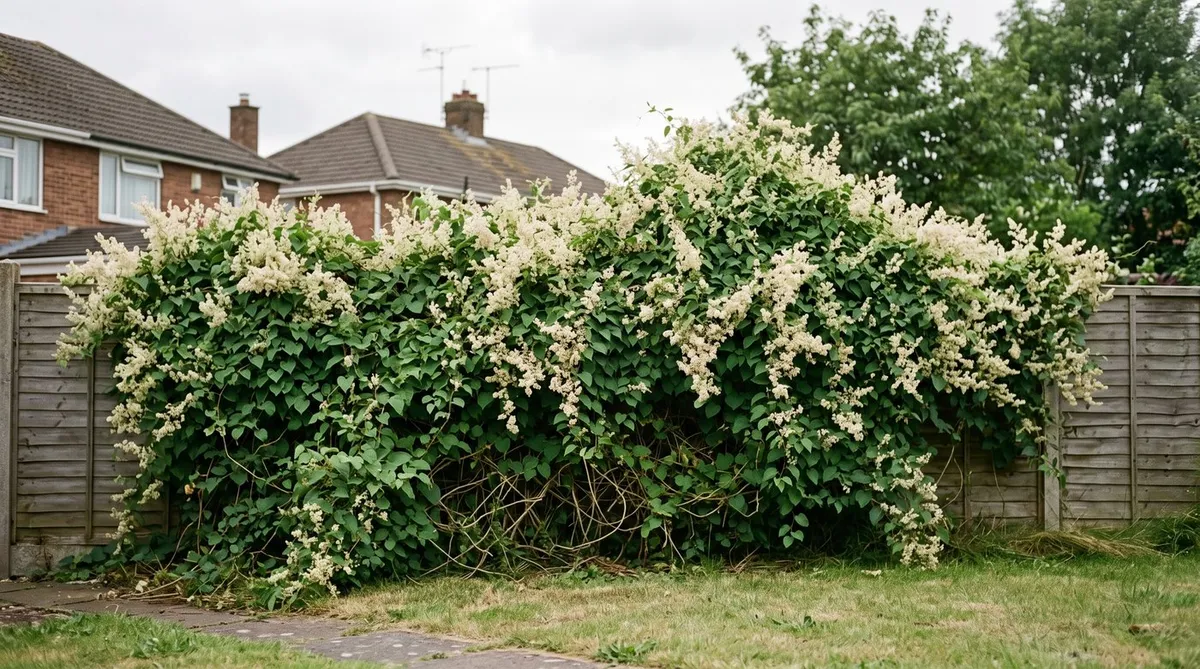
A thick layer of bark or wood chip makes seedlings easy to spot and pull. The RHS suggests at least 5cm, put down from November to February. Mulch won’t stop old stumps regrowing, so dig those out first. Our composting guide shows how to make your own mulch. If you spot Japanese knotweed among the brambles, see our knotweed identification guide, as it has very different rules.
Should you leave some brambles for wildlife?
If you have room, yes. A tidy bramble patch in a far corner is one of the best wildlife features a garden can have.
The RHS lists brambles as food for almost 100 kinds of moth, plus plenty of beetles and bugs. Bees and butterflies love the flowers. Hedgehogs and nesting birds shelter in the thicket, and birds and mammals feast on the blackberries. To keep a patch in check, shorten long stems in winter so the tips can’t root, and keep it back from your boundary. Our guide to creating a wildlife garden has more ideas.
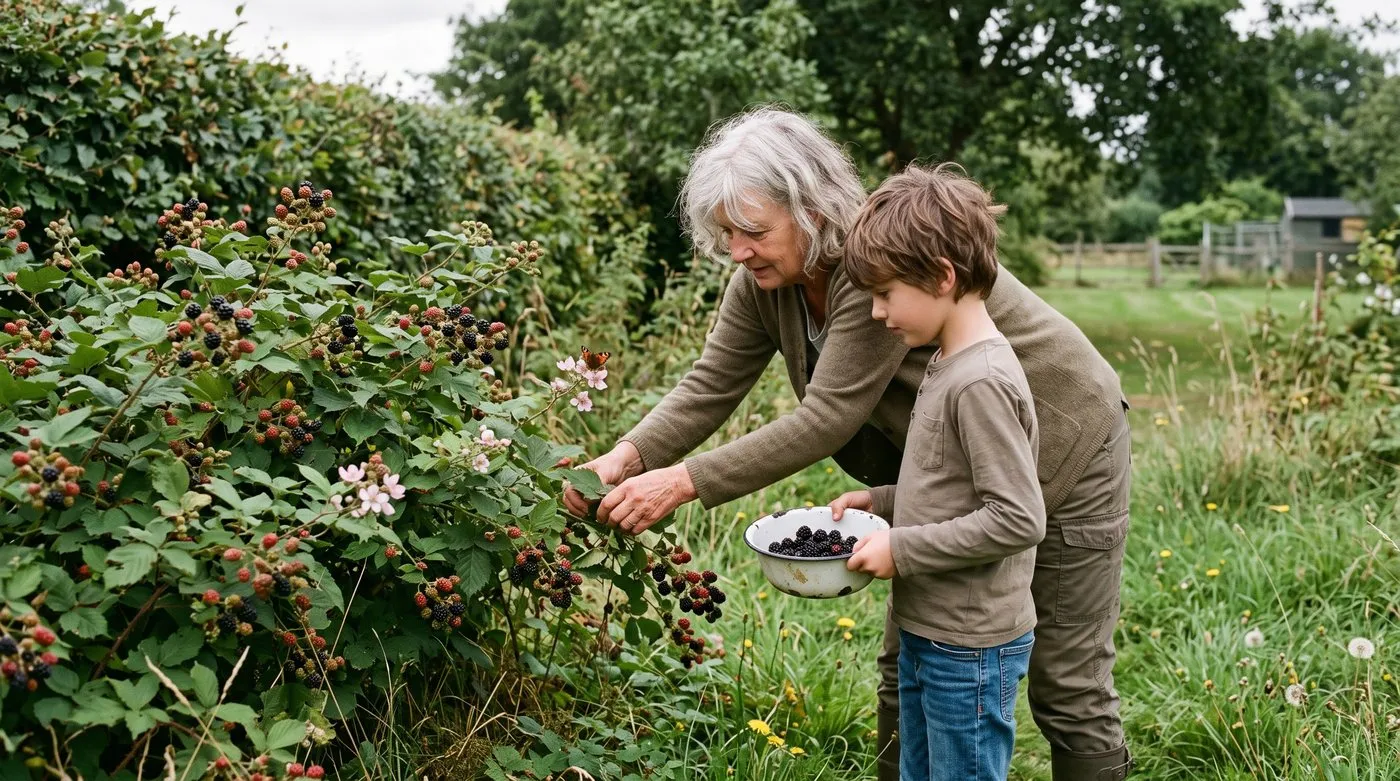
A managed bramble corner feeds bees, butterflies, birds and you. Shorten the long stems in winter so the tips can’t root and spread.
Brambles and your neighbours
Brambles that spill onto a neighbour’s land, a footpath or a road can land you with some responsibilities.
Your neighbour can cut back anything crossing onto their side, but only up to the boundary, and should offer you the cuttings. If your brambles damage their fence or gutters, you could be held responsible, so deal with them early.
If brambles block a road or public footpath, the council can ask you to cut them back under section 154 of the Highways Act 1980. If you don’t, it can do the work and charge you. Councils can also act on overgrowth that really blights the neighbourhood.
Common mistakes when clearing brambles
Strimming and stopping there
Strimming cuts the tops off but leaves the stump alive, and it’s back within weeks. It’s a useful first step, but always follow up by digging or treating.
Composting the roots at home
Bramble roots and whole stems can survive a home compost heap. Send roots to council green waste, and shred stems before using them on paths.
Spraying in early summer
In early summer the plant is sending its food up into new shoots and fruit, so little weedkiller reaches the roots. Wait until late summer or early autumn.
Leaving bits of root behind
Small pieces of root can regrow. Rushed digging that chops roots and leaves them behind means brambles are back within months. Lift roots out whole where you can.
Forgetting to check for nests
Hacking through a thicket in spring or early summer can destroy nests in use, which is against the law. Save big clearance jobs for September to February.
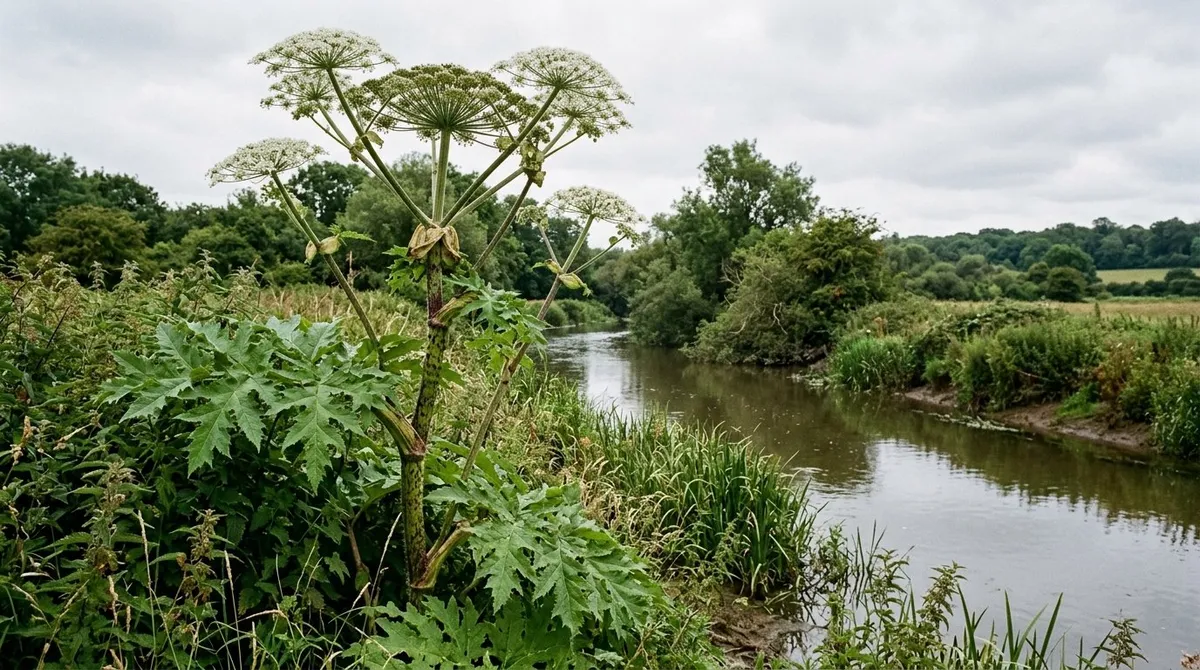
Once your brambles are under control, read our guide to Japanese knotweed identification and legal obligations for a far more serious invader. For a tree that sends up suckers everywhere, see how to remove tree of heaven.
Frequently asked questions
What is the fastest way to get rid of brambles?
Cut them down to 30cm, then dig out the stumps straight away. On big patches, cut back in winter and treat the regrowth with glyphosate the next late summer. Whichever way you go, expect a little regrowth the following year.
Will brambles grow back if you cut them down?
Yes, from the stump and from bits of root left in the soil. Cutting only removes the top growth. To stop them, dig out the stump and as much root as you can, or treat the leafy regrowth with a weedkiller such as glyphosate.
When is the best time to spray brambles with weedkiller?
Late summer to early autumn, while the leaves are still green. At that time of year the plant is sending food down to its roots, and the weedkiller goes with it. Spray on a dry, calm day and check the label for how long it needs before rain.
Can I burn brambles to get rid of them?
Burning gets rid of the cut stems, but not the roots. You still need to dig out or treat the stumps. Bonfires aren’t banned, but smoke that keeps bothering neighbours can count as a nuisance, so check your council’s rules first.
Are brambles classed as an invasive species in the UK?
No, brambles are a native plant and great for wildlife. They’re not on the legal list of invasive plants. Your council can still step in if they block a path or road, or really blight the neighbourhood.
Do I have to cut back brambles growing over my neighbour’s fence?
Not always, but it’s a good idea. Your neighbour can cut back anything that crosses onto their side, up to the boundary, and should offer you the cuttings. If your brambles damage their property, you could be held responsible.
Our team produces practical UK gardening guidance from source research, contributor records and established horticultural practice. Editorial standards are overseen by Matt W.