Key takeaways
- Lily beetles are small, bright red and around from early spring to autumn
- Hand-picking a few times a week is the best way to keep them down
- Check under the leaves for orange eggs and black, slimy blobs hiding the larvae
- They eat true lilies and fritillaries, but leave daylilies alone
- Home-made sprays are not legal pesticides, so use an authorised product if you need a spray
Red lily beetle is the pest lily lovers dread. This little scarlet beetle and its grubs chew leaves, eat buds and can strip a plant bare. The good news? It’s one of the easiest garden pests to deal with by hand. The adults are bright, slow and easy to spot, so a few minutes of picking every few days keeps your lilies looking good.
Here’s how to recognise every stage, when to look, and what actually works.
How to identify red lily beetle
Once you’ve seen one, you won’t mistake it. It’s small, shiny and a brilliant scarlet.
Adult beetles
Adults are bright red with a black head, black legs and black feelers. They’re about 6-8mm long and look glossy and smooth.
You’ll often find them sitting on lily leaves in the sun. When disturbed, they drop to the ground and land on their backs, showing their black undersides. That makes them very hard to see on soil. They even squeak if you pick them up.
A few other red beetles get mistaken for them:
| Beetle | What it looks like | How to tell |
|---|---|---|
| Red lily beetle | Shiny scarlet, black head and legs | Small, glossy, always on lilies or fritillaries |
| Cardinal beetle | Red-orange and flat | Much bigger, with comb-like feelers |
| Soldier beetle | Orange-red with dark tips | Softer and longer, sits on flower heads |
| Rosemary beetle | Striped metallic green and purple | Found on herbs, not lilies |
| Scarlet malachite beetle | Scarlet with green tips | Green tips on the wing cases |
Eggs
Females lay small rows of orange-red eggs under lily leaves from spring into early summer. They darken as they get older and hatch in about a week or so. Start turning leaves over from mid-April.
Larvae
The larvae do the most damage, but they’re easy to miss. They’re soft, orange-brown grubs that cover themselves in their own wet, black droppings. It looks like a blob of dirt or bird mess.
Spot shiny black blobs under the leaves and you’ve found them. They eat the leaf between the veins until only a lacy skeleton is left. When fully grown, they drop into the soil to turn into adults.
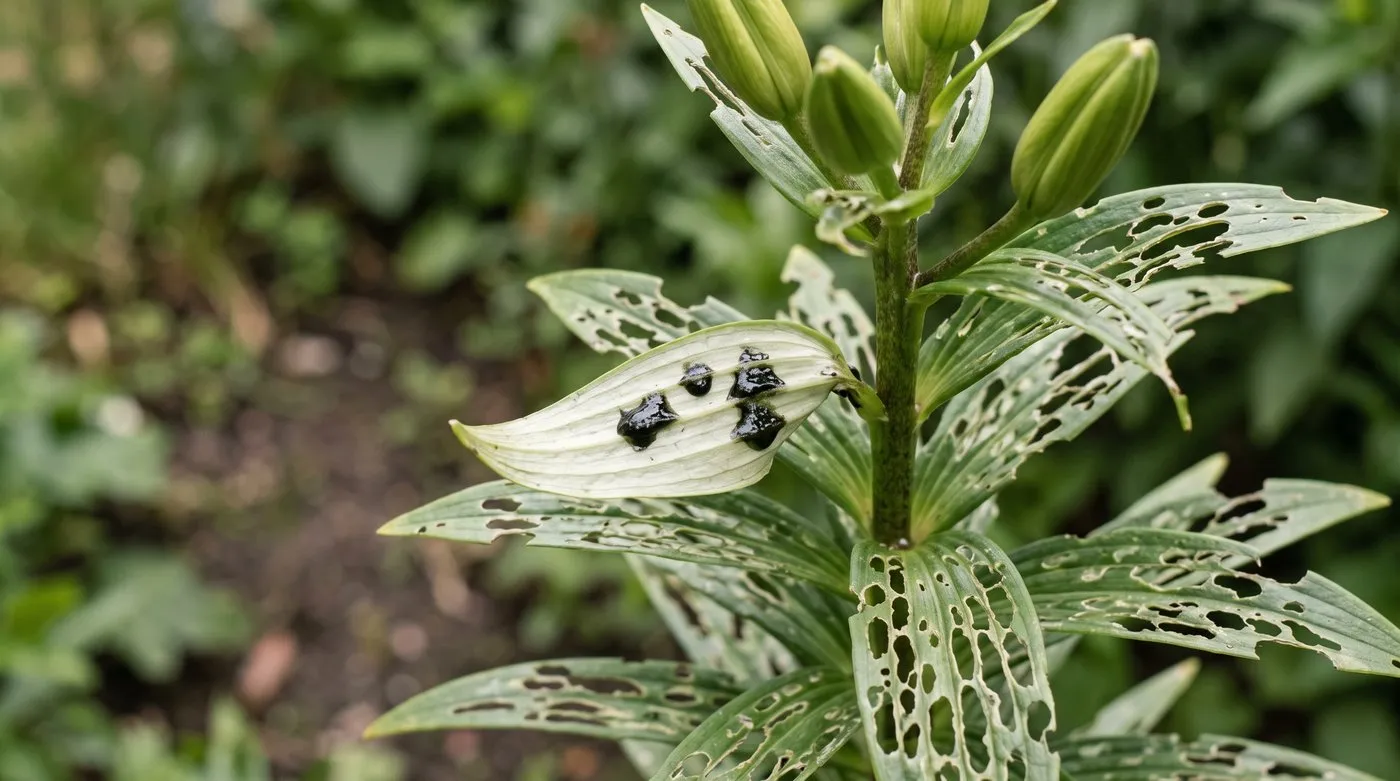
Those black blobs under the leaves are lily beetle grubs hiding in their own droppings. Wipe them off before they strip the stem.
Pupae
The grubs pupate in the soil and new adults pop out in late summer. They feed for a while, then dig back down for the winter.
Tip: Get to know those messy black blobs. Most people spot the red adults but walk straight past the larvae. Wiping off one blob can save a whole leaf.
The lily beetle year
Knowing what happens when helps you check at the right time.
| When | What’s happening | What to do |
|---|---|---|
| Late March to April | Adults come out of the soil and find lily shoots | Start picking as soon as you see one |
| April to July | Eggs laid under the leaves | Turn leaves and rub off eggs |
| May to August | Larvae feeding under their black blobs | Wipe off larvae a few times a week |
| June to August | Larvae drop into the soil to pupate | Keep checking for stragglers |
| August to September | New adults appear | Pick them before they go to ground |
| October to March | Adults sleep in the soil | Lightly fork the soil around lilies |
April to July is the key time. Stay on top of things then and the numbers never build up.
Which plants do lily beetles attack?
Lily beetles are fussy eaters, which helps.
Main targets
All true lilies (Lilium) get eaten, including Asiatic, Oriental, trumpet and martagon lilies. No true lily is immune.
Fritillaries are also on the menu, including crown imperials and snake’s head fritillaries. They usually suffer less, as they grow early before beetle numbers peak.
Occasional nibbles
Now and then they’ll nibble a few relatives, such as giant Himalayan lily (Cardiocrinum), lily of the valley and Solomon’s seal. The damage is usually small.
Plants they leave alone
Daylilies aren’t true lilies, so they’re safe despite the name. Agapanthus, crocosmia, nerines and amaryllis are left alone too. If lily beetle wears you down, these make lovely swaps.
Hand-picking: your best weapon
Hand-picking costs nothing, needs no kit and works really well if you keep at it.
How to do it
Move in slowly, as the beetles drop off when they feel a vibration. Hold one hand or a piece of white card under the beetle before you reach for it. When it drops, it lands in your hand, not the soil. Then squash it.

Hold a hand or white card underneath before you reach for a beetle. When it drops, it lands on the card instead of vanishing into the soil.
How often
Check your lilies two or three times a week from early April to late August. It only takes a few minutes. Look at:
- The tops of the leaves for adults
- Under the leaves for orange eggs and black blobs
- Shoot tips and flower buds, where adults like to feed
- The soil under the plant, where dropped beetles land
Good to know: Lily beetles fly, so new ones arrive from nearby gardens. You may never be beetle-free, which is why little and often works better than one big blitz.
Eggs
Run a finger along the underside of each leaf to squash the egg rows. They’re tiny and soft. A weekly check from April to July catches most of them.
Larvae
Wipe the black blobs off with your fingers, or brush them off with a soft paintbrush and squash them. Check every leaf, as one missed grub can strip a stem.
Sprays for lily beetle
Hand-picking does the real work. If you have a big outbreak and can’t keep up, a spray can help. In the UK only authorised pesticides can be used, so home-made garlic, neem or washing-up liquid sprays aren’t a legal option, however often you see them online. For more chemical-free ideas, see our guide to organic pest control.
Pyrethrum sprays
Pyrethrum sprays come from chrysanthemum flowers and kill beetles and young larvae on contact. Pick a product labelled for the job and follow the label exactly. It also kills helpful insects, so spray only onto the beetles, never the whole plant, and never onto open flowers.
Stronger bug killers
Some stronger garden bug killers are labelled for lily beetle. Treat them as a last resort, as they also kill bees, ladybirds and hoverflies. Some work from inside the plant, which can reach hidden larvae but also gets into pollen and nectar.
Important: Never spray open lily flowers. Bees and hoverflies love lily pollen. Spray before the buds open or after the flowers fade, aim for the undersides of the leaves, and always check the label.
Natural enemies
A tiny parasitic wasp that lays its eggs inside lily beetle larvae has been studied in the UK as a long-term helper.
Can you buy it?
No. It isn’t sold to gardeners, so it’s not something you can use yet. Biological control can work very well, though. It’s the same idea as the insect being used against Japanese knotweed, only that one targets a plant.
Other helpers
Not much eats lily beetles, as their bright red colour warns predators off. A few do help a little:
- Ground beetles eat eggs and grubs that fall to the soil
- Some birds learn to pick off the adults
- Frogs and toads snap up larvae that drop to the ground
Prevention tips
A few simple habits make life harder for lily beetles.
Fork the soil in winter
Adults spend winter in the soil near your lilies. In November or December, lightly fork over the top few centimetres around the clumps. Robins and blackbirds will happily pick out what you turn up. Go gently so you don’t spear the bulbs.
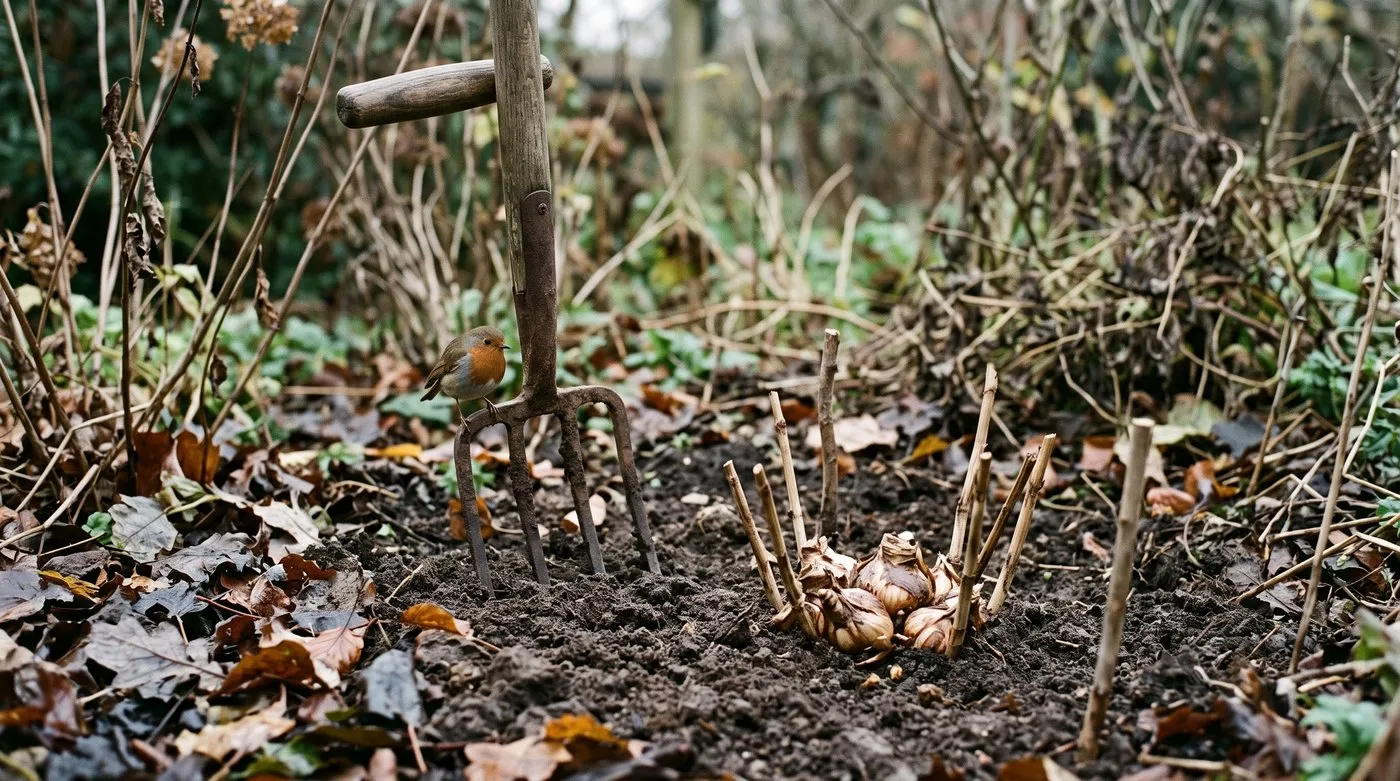
Lightly fork the soil round your lilies in late autumn. Robins and blackbirds will pick out the overwintering beetles you turn up.
Grow lilies in pots
Lilies in pots are easier to check. Stand them by a door or seat you pass every day and you’ll spot beetles without even trying.
Choose tougher lilies
No lily is immune, but some shrug off damage better than others.
| Lily | How well it bounces back |
|---|---|
| Lilium regale | Very well, regrows strongly |
| Asiatic hybrids | Well |
| Oriental-Trumpet (OT) hybrids | Very well |
| Martagon lilies | Fairly, but slow to recover |
| L. longiflorum | Poorly, not many leaves to spare |
Lilium regale is the toughest pick for beetle-prone gardens. Its scented white trumpets open in July. Try it next to sweet peas for a classic cottage-garden look.

No lily is immune, but Lilium regale regrows strongly after beetle damage. Its scented trumpets open in July.
Common mistakes
1. Starting too late. Adults are out from late March. Wait until you see damage in May and they’ve been laying eggs for weeks. Start checking as soon as shoots appear.
2. Only looking on top. Eggs and larvae are under the leaves. Lift and check every leaf.
3. One big clear-out. New beetles fly in all season. Little and often is what works.
4. Forgetting fritillaries. Beetles feed on fritillaries first, as they come up earlier. Clear them in April and fewer beetles reach your lilies.
5. Letting them drop. A beetle that hits the soil lands on its back and vanishes. Always catch it over your hand or a pot.
Want more ways to protect plants without chemicals? Read our guide to organic pest control for UK gardens.
Frequently asked questions
What does lily beetle damage look like?
Ragged holes in leaves, or leaves stripped right back to the stalk. Flower buds can be eaten before they open. Look under the leaves for black, slimy blobs. These are the larvae, hiding under their own droppings.
When is lily beetle most active in the UK?
Adults wake up in late March or April. They lay eggs through spring and early summer, and the larvae feed from May to August. A new batch of adults appears in late summer and feeds until autumn. The worst damage is usually from May to July.
Do lily beetles attack daylilies?
No, daylilies are safe. Lily beetles go for true lilies and fritillaries only. If you want lily-like flowers without the bother, try daylilies, agapanthus or crocosmia.
Can I use biological control against lily beetle?
Not yet, as there’s nothing you can buy. A tiny wasp that attacks lily beetle larvae has been studied in the UK, but it isn’t sold to gardeners. For now, hand-picking is your best bet.
What is the best spray for lily beetle?
Honestly, your fingers beat any spray. Home-made garlic, neem and soap mixes are not legal pesticides in the UK. If picking can’t keep up, use an authorised bug killer exactly as the label says. Never spray open flowers, as that harms bees.
How do lily beetles overwinter?
Adults spend winter tucked into the soil. They usually stay near the lilies they fed on, then come out again in early spring. Lightly forking the soil around lilies in winter lets birds find some of them.
Should I remove lilies from my garden because of lily beetle?
No, they are easy enough to manage. Regular hand-picking keeps damage down. Tough, leafy lilies like Lilium regale and the Asiatic hybrids cope with a bit of nibbling better than most.
Our team produces practical UK gardening guidance from source research, contributor records and established horticultural practice. Editorial standards are overseen by Matt W.