Key takeaways
- Choose plants by the light in the room, not just by looks
- Dark hallways and north-facing rooms suit ZZ plant, snake plant and cast iron plant
- Bright south-facing windowsills suit monstera, rubber plant and string of hearts
- Too much water kills more house plants than anything else, so let the soil dry a little between drinks
- Radiators dry the air in winter, so group plants together or stand them on a tray of wet pebbles
- Spider plant, calathea and Boston fern are safe with cats and dogs. Peace lily, pothos and ZZ plant are not
The best indoor plants for UK homes are snake plant, ZZ plant, spider plant, pothos and cast iron plant. Before you buy, look at the room it’s going in. How much light it gets matters far more than how pretty the plant is.
The RHS guide to choosing houseplants puts light, humidity and warmth first. Below are 12 plants that do well in British homes. For a workplace, try our office-plant comparison.
How much light do UK rooms get?
Light makes or breaks a house plant. A sunny bay window in July is a very different home from a north-facing hallway in December.
| Window direction | What the light is like |
|---|---|
| South-facing | Bright, with strong sun in summer |
| East-facing | Gentle morning sun, bright the rest of the day |
| West-facing | Bright, with warm afternoon sun |
| North-facing | Soft and shady all year |
| Middle of the room or hallway | Dim, even on a sunny day |
| Most leafy plants are happiest a little way back from an east or west window. Only the toughest cope in a dim hallway, and shade-lovers scorch on a sunny south-facing sill. Light drops a lot in winter, so move plants closer to the glass in December. | |
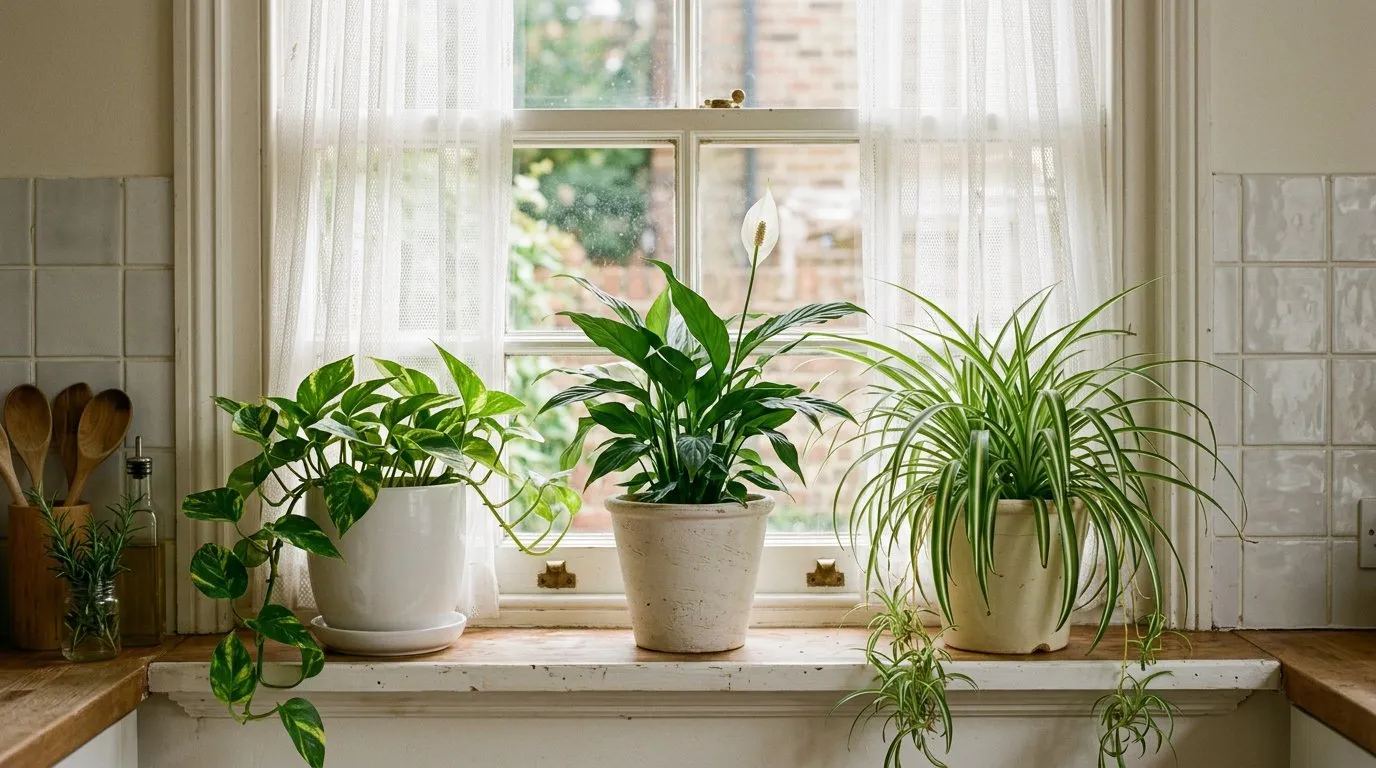 | |
| A bright south-facing windowsill. A net curtain softens the sun for plants that don’t like it too hot. |
The 12 best indoor plants for UK homes
These twelve cover every room in a British house, and all are happy with normal central heating.
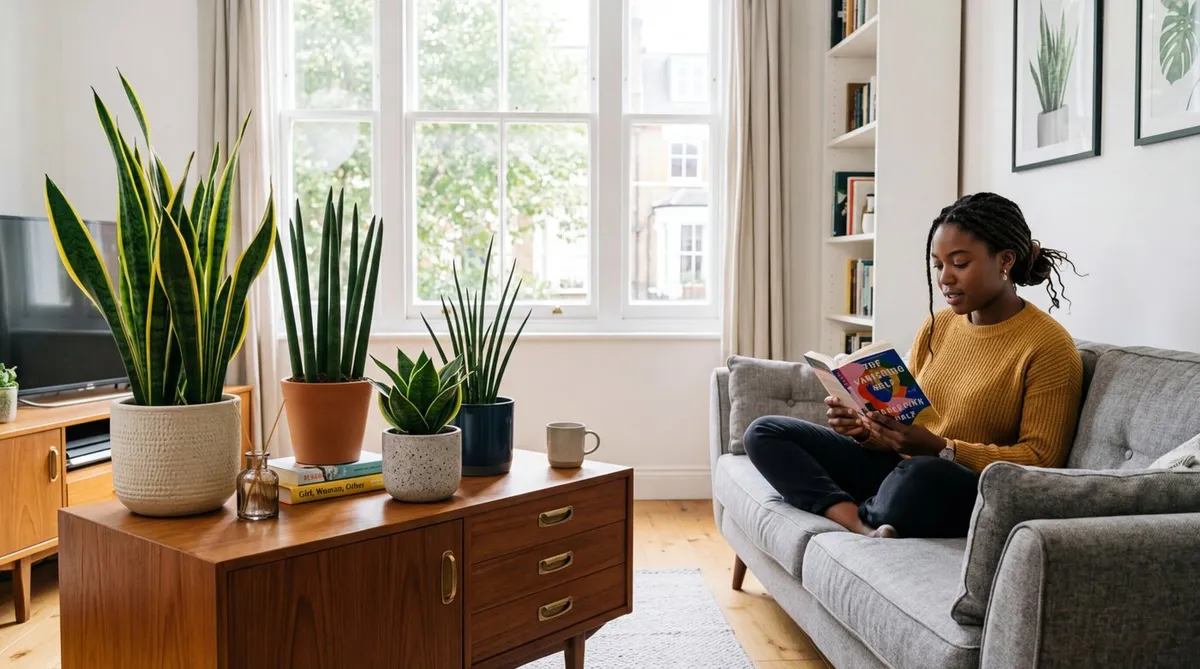
Snake plant (Sansevieria trifasciata)
The toughest plant here. Stiff, upright leaves with yellow edges or silver bands. Happy anywhere from a dark hallway to a sunny lounge. Water every 2-3 weeks. Not safe for pets that chew. If you’re just starting out, our guide to house plants for beginners covers the five easiest to begin with.
Pothos (Epipremnum aureum)
Heart-shaped leaves on long trailing stems. It likes medium light but puts up with less, though variegated ones fade in deep shade. Water when the top 3cm of soil is dry. It droops when thirsty and perks up within hours. Toxic to cats and dogs.
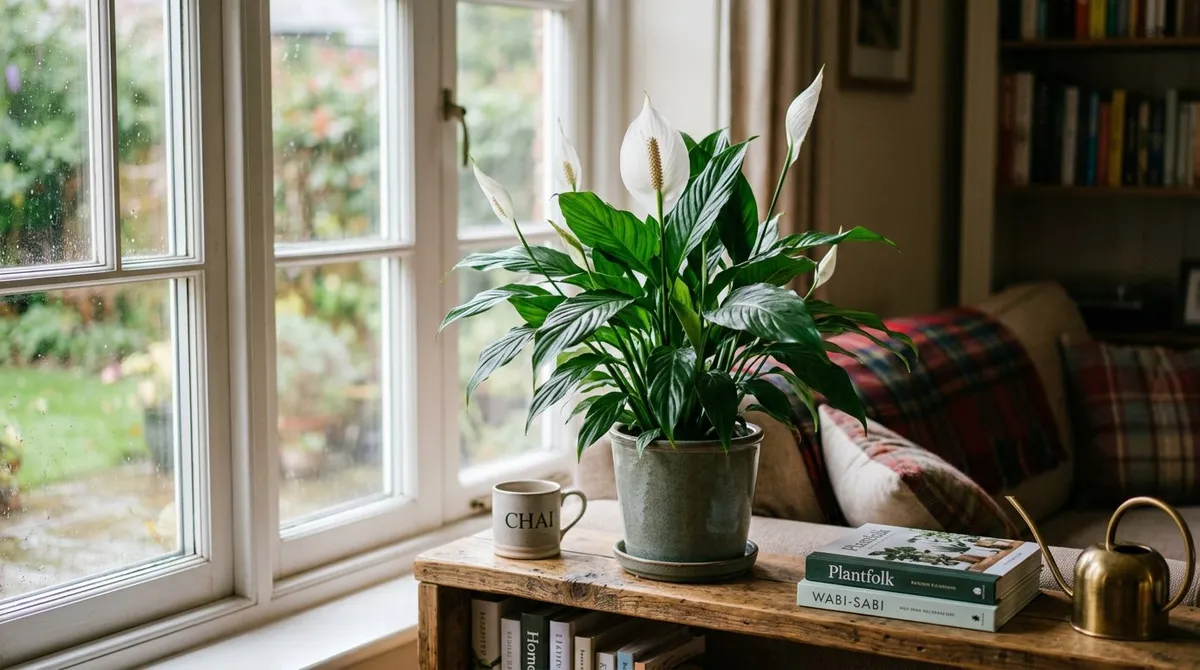
Peace lily (Spathiphyllum)
One of the few plants that flowers in a shady room. Glossy dark leaves and white flowers in spring and summer. Keep the soil moist. It flops when thirsty and bounces back within an hour of a drink. Toxic to cats and dogs.
Monstera deliciosa
The split-leaf favourite grows big fast in a bright spot. In a darker room the leaves stay small and whole. Water weekly in summer and fortnightly in winter. Wipe the leaves monthly to keep the dust off. Toxic to pets.
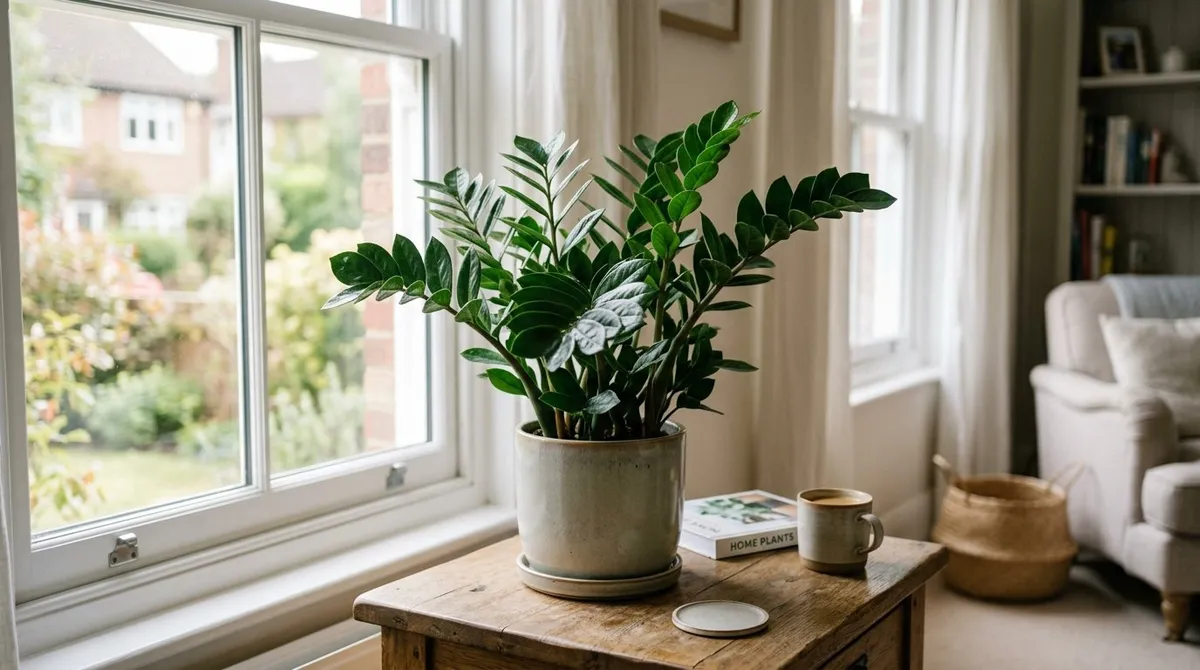
ZZ plant (Zamioculcas zamiifolia)
Waxy, dark green leaves on arching stems. One of the few plants for a really dark corner. It stores water in chunky roots, so once a month is plenty in winter. Almost impossible to kill by forgetting it. Keep it away from pets.
Cast iron plant (Aspidistra elatior)
The Victorian parlour plant earns its name. Broad, dark leaves that put up with shade, dry air, cold and forgetful watering. Slow, but lives for decades. Perfect for hallways and landings. Water every 10-14 days. Safe with pets.
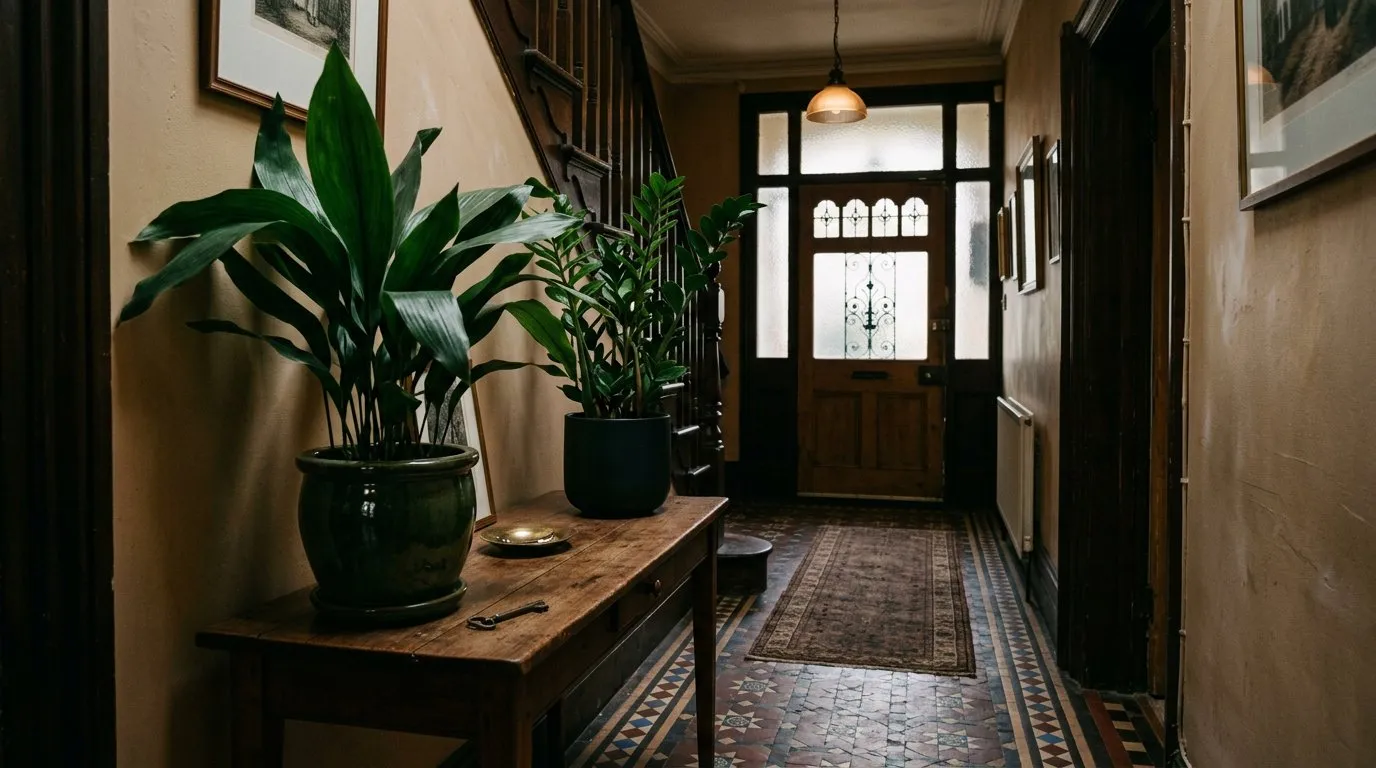 Cast iron plant and ZZ plant are happy in a dim hallway, and the dry air from heating doesn’t bother them.
Rubber plant (Ficus elastica)
Bold, glossy leaves in dark green, burgundy, or cream and pink. Give it a bright spot and it grows into a small indoor tree. Water when the top 5cm of soil is dry. Once settled, don’t move it, as it drops leaves when moved. The sap can irritate pets.
Spider plant (Chlorophytum comosum)
Arching striped leaves with baby plants dangling on long stems. Happy in most light apart from deep shade. Water weekly in summer, fortnightly in winter. Root the babies in water to give away. Safe for pets and great in a kitchen. If you’ve got shady spots outside too, see our list of best plants for shade.
Chinese evergreen (Aglaonema)
Silver-patterned, pink-tinged or plain green leaves. Copes with lower light better than most patterned plants. Water every 7-10 days and mist weekly in heated rooms. Repot every 2-3 years. Not safe for pets.
Calathea
Striking patterned leaves in green, purple and pink. Keep it out of direct sun, which fades them. The fussiest plant here: it wants damp air and soil that never dries out, so a bathroom is ideal. Use rainwater or filtered water. Safe for pets.
Dracaena
Upright clumps of sword-shaped leaves, often edged in red. Fine in most rooms that aren’t really dark. Water every 7-14 days, letting the soil dry in between. Use rainwater, or tap water left to stand overnight. Not safe for pets.
String of hearts (Ceropegia woodii)
Tiny heart-shaped leaves on long, thin trailing stems. It needs a sunny south or west-facing windowsill. Water lightly, every 10-14 days in summer and monthly in winter. Lovely trailing from a high shelf. Safe for pets.
Indoor plant comparison table
| Plant | Light | Watering | How easy | Pet safe | Best room |
|---|---|---|---|---|---|
| Snake plant | Low to bright | Every 2-3 weeks | Very easy | No | Any room |
| Pothos | Medium | When top 3cm dry | Easy | No | Living room |
| Peace lily | Low to medium | Keep moist | Easy | No | Bedroom |
| Monstera | Bright | Weekly/fortnightly | Moderate | No | Living room |
| ZZ plant | Low | Monthly in winter | Very easy | No | Hallway |
| Cast iron plant | Low | Every 10-14 days | Very easy | Yes | Hallway |
| Rubber plant | Bright | When top 5cm dry | Easy | No | Living room |
| Spider plant | Medium | Weekly/fortnightly | Very easy | Yes | Kitchen |
| Chinese evergreen | Medium | Every 7-10 days | Easy | No | Bedroom |
| Calathea | Medium, no direct sun | Keep moist | Hard | Yes | Bathroom |
| Dracaena | Medium | Every 7-14 days | Easy | No | Living room |
| String of hearts | Bright | Every 10-14 days | Moderate | Yes | South windowsill |
Which plant for which room?
Matching the plant to the room works far better than picking whatever catches your eye.
Living room
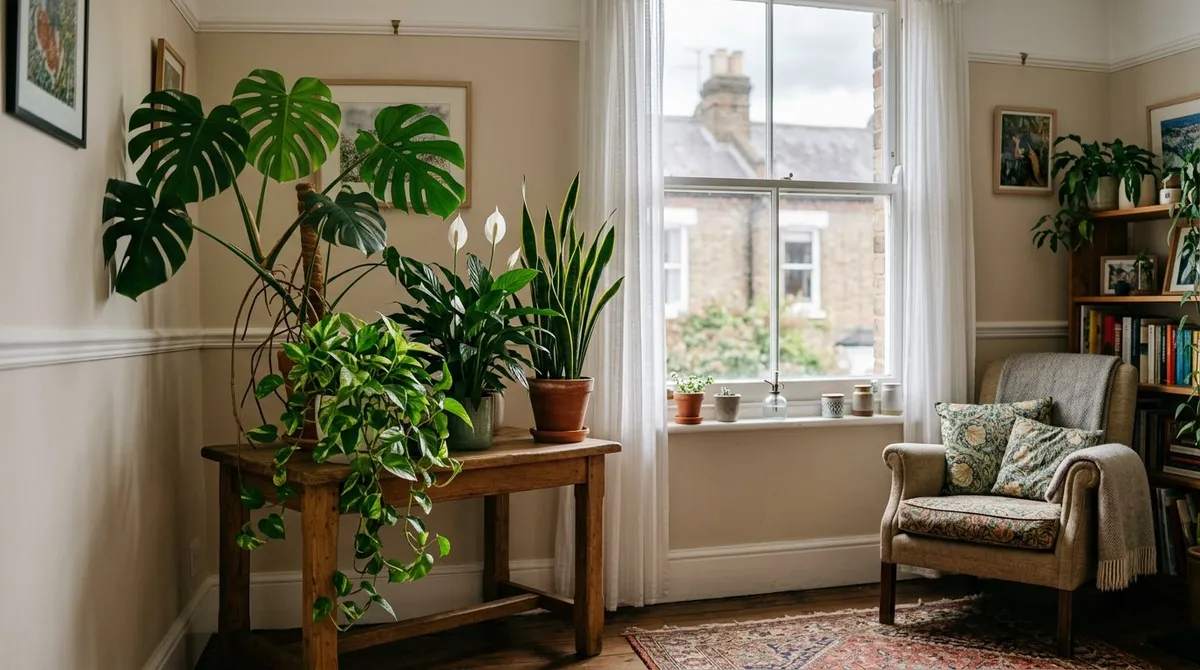
A south or west-facing lounge suits monstera, rubber plant, pothos and string of hearts. A north-facing one suits snake plant and ZZ plant. Group three to five plants together to keep the air around them moister.
Bedroom
Bedrooms tend to be cooler and darker. Peace lily, Chinese evergreen and snake plant are all happy there.
Bathroom
Shower steam makes a bathroom feel like a rainforest. Calathea, Boston fern and pothos love it. A bathroom with no window won’t keep any plant alive, but a frosted window gives enough soft light. If you like easy-going plants, our guide to low maintenance plants has outdoor ones with the same forgiving nature.
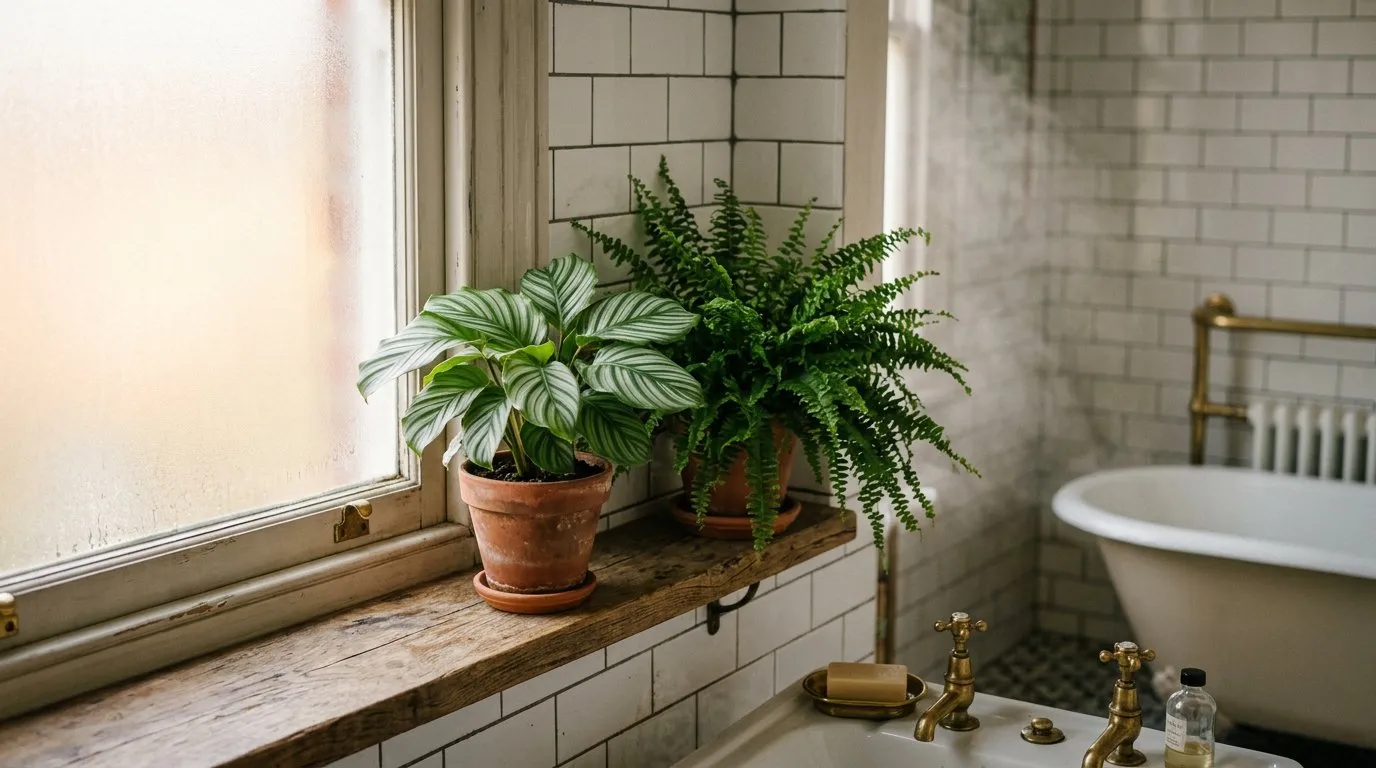 Calathea and ferns love a steamy bathroom, and a frosted window gives them the soft light they like.
Kitchen
Spider plant, pothos and herbs on a sunny windowsill cope well with kitchen ups and downs. Keep plants away from the hob and kettle, where steam scalds the leaves.
Hallway
Usually the darkest, draughtiest spot in the house. Cast iron plant and ZZ plant are the reliable choices. Put them against an inside wall, a metre or two from the front door, out of the cold blast.
Keeping indoor plants happy in a UK home
Central heating keeps most UK homes at a temperature tropical plants like. The trouble is it dries the air out. That’s why calathea and spider plant get brown tips every winter. Group plants together, stand pots on a tray of wet pebbles, or mist the leaves. Growing outside too? See our guides to drought tolerant plants and climate resilient plants. When potting up, mix some perlite into peat-free multipurpose compost so water drains away, because soggy roots kill more house plants than anything else. Our guide to compost for potting up house plants explains more. Once you’ve got the basics, have a look at the best low-light houseplants for UK homes for darker rooms. For big, colourful leaves under cover, see our guide to growing caladium.
Frequently asked questions
What is the best indoor plant for a dark room?
The ZZ plant is your best bet. It copes with very little light and stores water in its thick roots, so it can go weeks without you. Cast iron plant and snake plant are good backups for a shady north-facing room.
Are indoor plants safe for cats and dogs?
Some are and some aren’t. Spider plant, calathea, Boston fern and prayer plant are safe choices. Peace lily, monstera, ZZ plant and pothos can upset a pet that chews them. If you’re not sure about a plant, check with your vet before you buy.
How much light do indoor plants need in the UK?
Most like bright light without hot direct sun. A spot near an east or west-facing window suits most leafy plants. South-facing sills are the brightest, so save them for sun-lovers or use a net curtain. North-facing rooms suit only the toughest plants.
Do indoor plants really clean the air?
A little, but they won’t replace opening a window. Plants like peace lily, dracaena and ZZ plant do take in some pollution, but a real room holds far too much air for a few pots to make a big difference. Enjoy them for how they look and feel, and keep the room aired.
Why do my indoor plant leaves turn brown at the tips?
Usually because the air is too dry. Central heating dries out rooms in winter. Mist the leaves a couple of times a week, or group plants on a tray of wet pebbles. Moving calathea and ferns into the bathroom helps too.
Our team produces practical UK gardening guidance from source research, contributor records and established horticultural practice. Editorial standards are overseen by Matt W.