Key takeaways
- Most vegetables and garden plants are happiest at around pH 6 to 7
- A simple colour-change kit is cheap and good enough for most gardens
- Raise pH with garden lime in autumn or winter, at the rate on the pack
- Lowering pH is slow, and on chalk it barely works, so use pots or raised beds
- Test every few years, as rain slowly makes soil more acidic
- Don't add lime and manure at the same time
Getting your soil pH right is one of the simplest ways to help your plants. Here’s how to test it, what the numbers mean and how to nudge it up or down. The RHS soil types guide is good background reading, and the British Geological Survey map viewer shows the rocks under your area.
What is soil pH and why does it matter?
pH tells you how acid or alkaline your soil is, on a scale from 0 to 14. 7 is neutral. Below 7 is acid. Above 7 is alkaline, often called limey. Most UK garden soils sit somewhere between about 4.5 and 8.5.
How pH affects nutrient availability
pH decides which nutrients plants can actually take up. At the wrong pH, the food is in the soil but locked away where roots can’t get it.
| pH | What happens | How plants look |
|---|---|---|
| Below 5 | Very acid, some nutrients run short | Stunted growth |
| 5 to 5.5 | Acid | Perfect for acid-lovers |
| 6 to 7 | Most nutrients easy to reach | Ideal for most plants |
| 7 to 7.5 | Slightly alkaline, iron getting harder to reach | Some yellowing on fussy plants |
| Above 8 | Very alkaline, iron and others locked up | Lots of yellow leaves |
The sweet spot for most plants is pH 6 to 7. Outside it, you can add all the fertiliser you like and plants still can’t use it.
pH preferences by plant group
Different plants like different soils. Match your plants to your soil, or tweak the soil to suit them.
| Plant group | Likes | Examples |
|---|---|---|
| Acid-lovers (ericaceous) | Acid | Rhododendrons, azaleas, blueberries, camellias, heathers |
| Soft fruit | Slightly acid | Strawberries, raspberries, blackberries |
| Most vegetables | Slightly acid to neutral | Tomatoes, potatoes, beans, lettuce, carrots |
| Cabbage family | Neutral to slightly alkaline | Cabbage, broccoli, cauliflower, sprouts |
| Mediterranean herbs | Neutral to alkaline | Lavender, rosemary, thyme, sage |
| Clematis and many perennials | Neutral to slightly alkaline | Clematis, delphiniums, dianthus |
Hydrangeas give you a handy clue. Mophead types usually flower blue on acid soil and pink on alkaline soil, with purple in between.
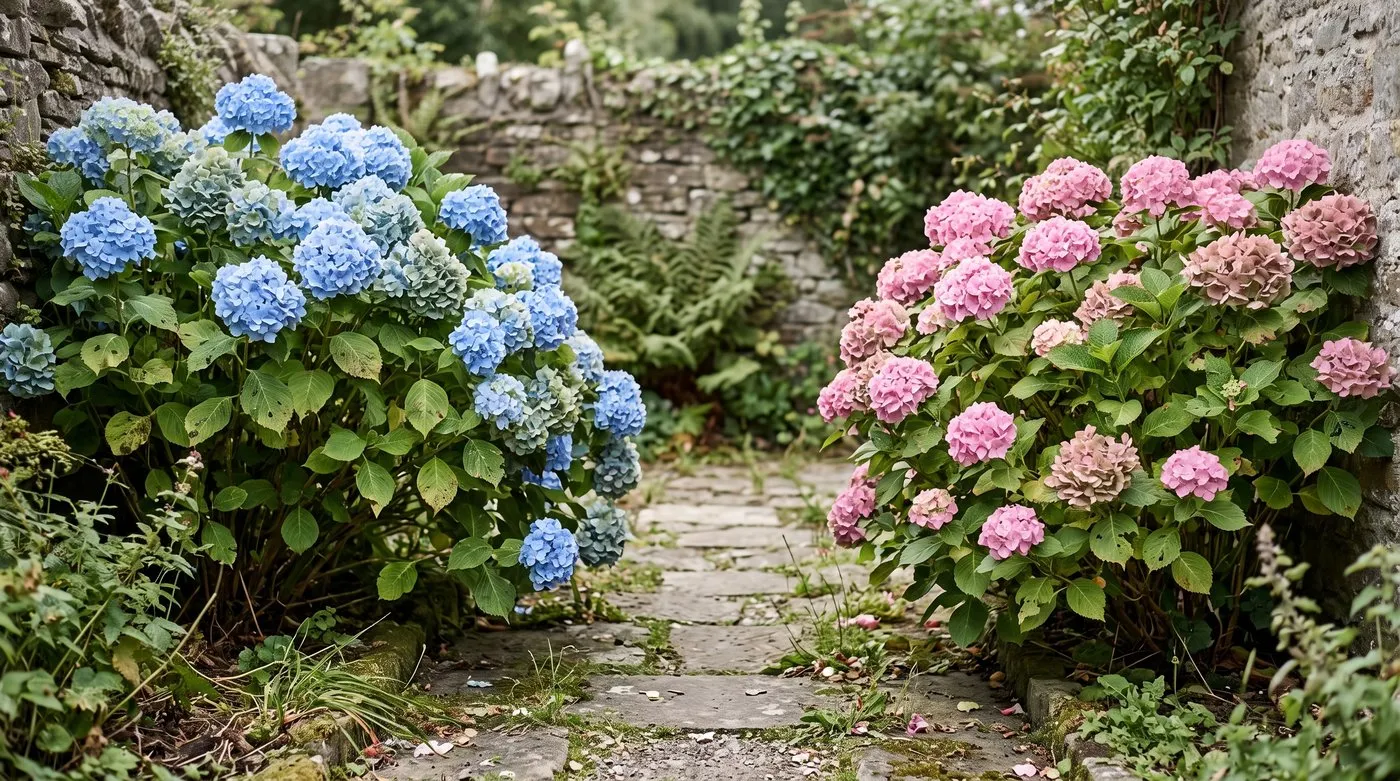
Mophead hydrangeas are a free soil test. Blue flowers usually mean acid soil, while pink points to alkaline ground.
UK soil types and their typical pH
The rock under your garden sets your starting point. Knowing your soil type gives you a good idea of your pH before you test.
Clay soils
Heavy and sticky when wet, cracked when dry. Common in the Midlands, the Thames Valley and many lowland areas. Usually around neutral. Clay is full of nutrients but slow to warm up in spring and hard work to dig.
Our guide to improving clay soil covers this in detail. Organic matter is the long-term answer.
Sandy soils
Light, quick-draining and quick to warm in spring. Found in parts of East Anglia, Surrey, Hampshire and along the coast. Often on the acid side, because rain washes the lime down. Sandy soil loses food quickly and needs regular feeding.
Chalk and limestone soils
Shallow, stony and free-draining. Found on the chalk downs of southern England, the Cotswolds and limestone areas like the Peak District and Yorkshire. Alkaline, so acid-lovers struggle unless grown in raised beds or pots.
Loam soils
The dream soil. A good mix of clay, sand and silt that drains well and holds food. Usually slightly acid to neutral. Lucky you if you’ve got it.
Peat soils
Dark, spongy and moist. Found in the Fens, parts of Lancashire and upland areas. Naturally very acid. Great for acid-lovers, but vegetables need lime.
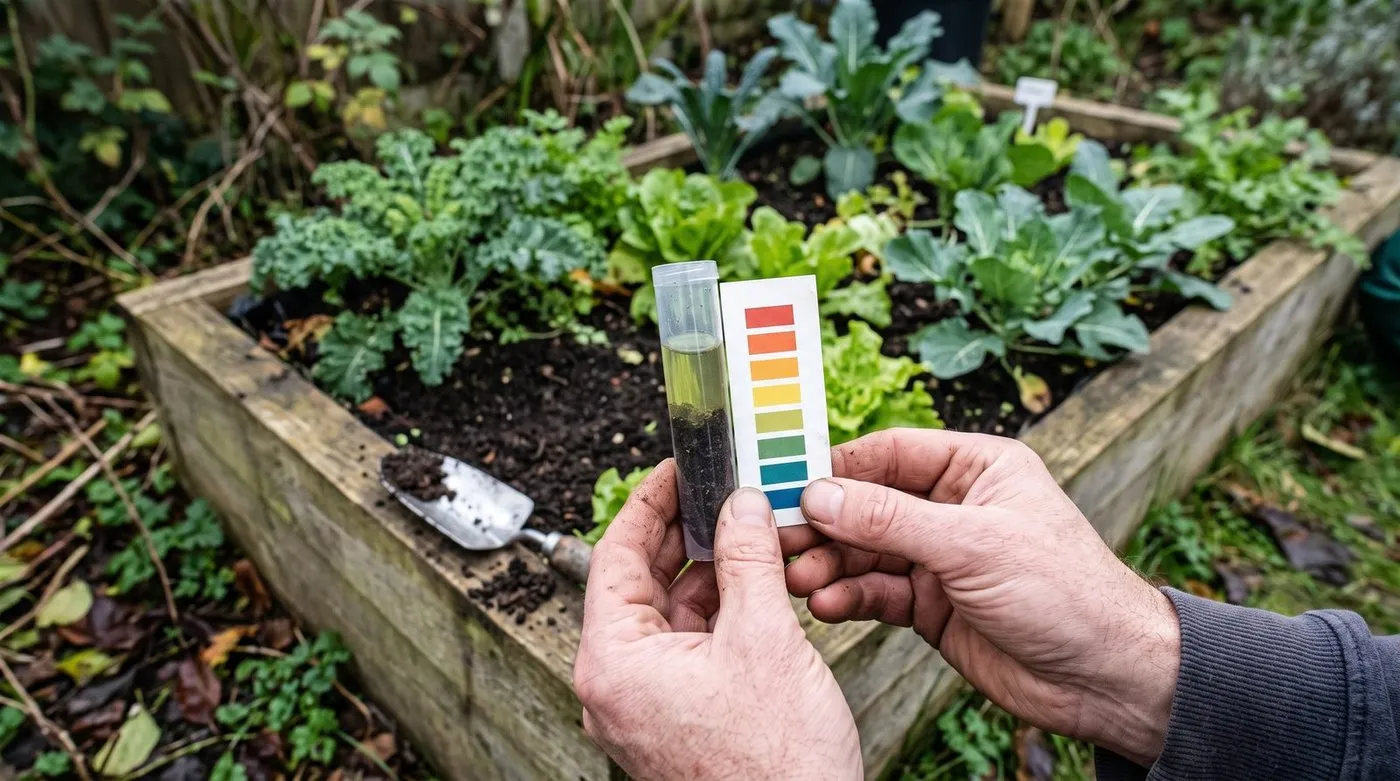 A simple test kit gives a quick pH reading. Take soil from 10-15cm down and test a few spots.
How to test your soil pH
There are three ways to test, from a cheap home kit to a lab. All of them work, so pick the one that suits you.
Method 1: Colour-change test kits
The cheapest and quickest. Every garden centre sells them.
How to use one:
- Dig up soil from 10-15cm down, below the top layer
- Take samples from 5-6 spots and mix them together
- Put a little soil in the tube
- Add the liquid and shake
- Let it settle for 5-10 minutes
- Match the colour to the chart
They’re good enough for most garden decisions. You don’t need a precise number to know whether your soil needs lime.
Method 2: Digital pH meters
Electronic meters show a number on a screen.
How to use one:
- Calibrate it with the solutions that come with it
- Mix your soil with distilled water, not tap water
- Put the probe in and wait for the reading to settle
- Write it down
Good meters work well if you clean and calibrate them as instructed. Very cheap probe meters often give jumpy readings, so treat them as a rough guide.
Method 3: Professional laboratory analysis
For the full picture, post a sample to a soil lab. You’ll get a report on pH, the main nutrients, trace elements and organic matter, with advice on what to add.
When a lab test is worth it:
- Starting a new allotment or big veg patch
- Plants keep struggling even though you’re looking after them well
- Before planting an orchard or lots of trees
- When setting up raised beds and you want to know what to add
Sampling technique for accurate results
A good sample gives a good result. Here’s how.
- Test when the soil is moist, not soggy. Spring and autumn are best.
- Wait at least 6 weeks after adding lime, fertiliser or manure
- Use a clean trowel
- Dig 10-15cm down, where the roots are
- Take 5-6 samples in a zigzag across the bed
- Mix them in a clean bucket
- Test the mix
Tip: Test different parts of the garden separately. The veg patch, front border and lawn can be quite different, especially if a past owner limed one area.
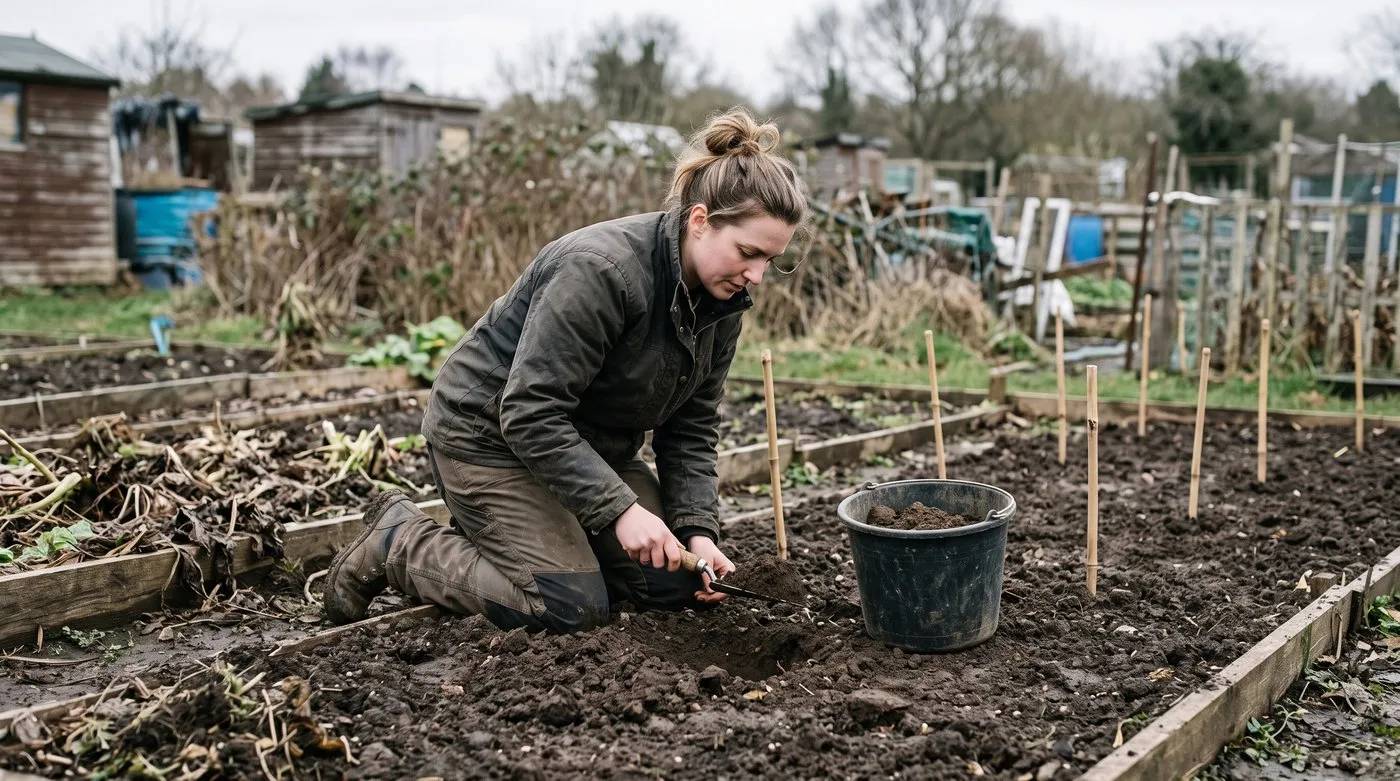
Take samples from several spots in a zigzag and mix them together. One test of the mix gives a fairer picture than a single scoop.
Understanding your results
Once you know how to read it, one number tells you a lot.
What your reading means
| Your pH | What it means | What to do |
|---|---|---|
| Below 5 | Very acid | Lime for vegetables. Perfect for blueberries and rhododendrons |
| 5 to 5.5 | Acid | Lime for most crops. Fine for soft fruit and potatoes |
| 5.5 to 6 | Slightly acid | A little lime for cabbages. Fine for most plants |
| 6 to 7 | Just right | Nothing needed for most plants |
| 7 to 7.5 | Slightly alkaline | Fine for cabbages and lavender. Too high for acid-lovers |
| 7.5 to 8 | Alkaline | Grow acid-lovers in pots. Chalk-loving plants are happy |
| Above 8 | Very alkaline | Raised beds with bought-in compost for fussy plants |
Regional patterns across the UK
Your local rocks explain a lot about your result.
- South-east chalk downs: alkaline, and hard to change for good
- Midlands clay: around neutral and fairly steady
- East Anglia’s sandy and peaty soils: often acid, and quick to respond to lime
- Wales and the Lake District: naturally acid
- Scottish Highlands: some of the most acid soils in the UK
- Limestone areas like the Cotswolds, Peak District and Yorkshire Dales: alkaline
How to raise soil pH with lime
Liming is the most common pH fix in UK gardens. Rain slowly makes soil more acid over time, and most vegetables like it close to neutral.
Types of lime
| Lime type | How fast | Best for |
|---|---|---|
| Garden lime (ground limestone) | Slow and steady | Everyday use, the safest choice |
| Dolomite lime | Slow and steady | Soils short of magnesium |
| Ground chalk | Fairly slow | Light, sandy soils |
Garden lime is the safest choice at home. It works slowly, so it’s hard to overdo.
How much lime to apply
It depends on your soil and how acid it is. Clay needs more than sandy soil for the same change. Test first, then follow the rate on the packet for your soil type. Don’t guess, as too much lime causes its own problems.
When and how to apply
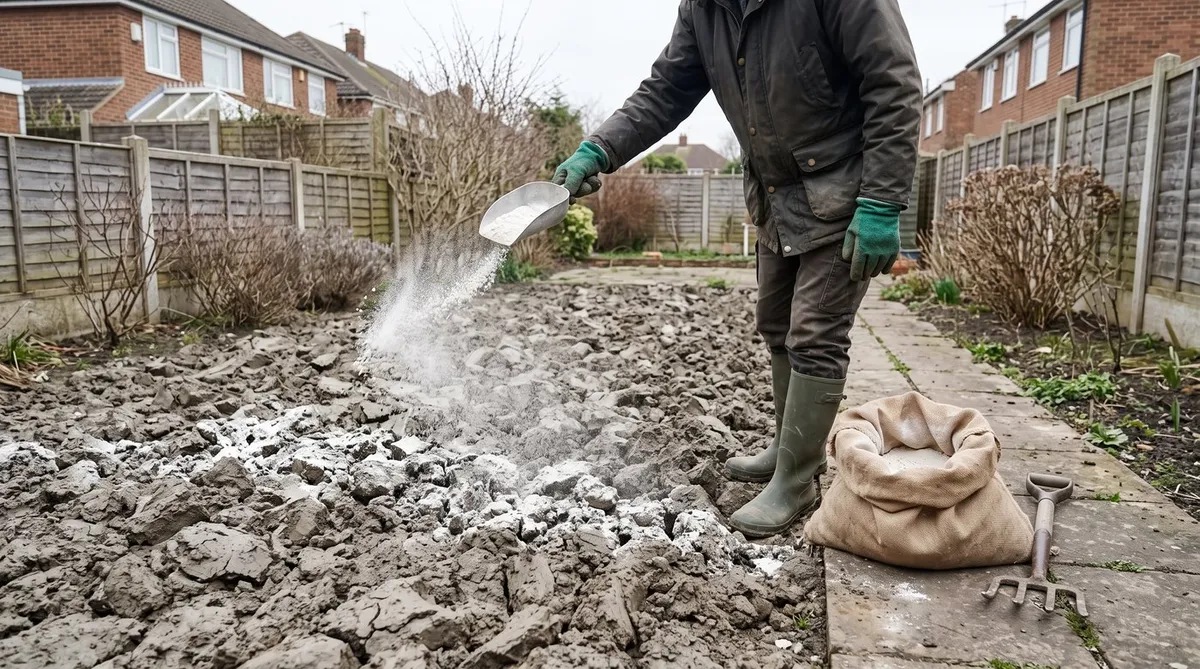
Spread lime in autumn or winter, at least 4-6 weeks before sowing or planting. Scatter it evenly over the surface and let the rain wash it in. No need to dig it in deeply.
Don’t add lime at the same time as manure or fertiliser. Lime makes manure lose its nitrogen into the air as smelly ammonia. Leave 4-6 weeks between them.
 Spreading garden lime by hand. Use the rate on the pack, let the rain wash it in and wear gloves.
Liming and crop rotation
In a four-bed rotation, lime the cabbage-family bed every few years. They like slightly alkaline soil, and lime helps keep clubroot, a nasty soil disease, at bay. Don’t lime where potatoes are going. They like slightly acid soil, and lime encourages potato scab.
Our composting guide explains how to make your own. Good garden compost is roughly neutral and helps stop big pH swings either way.
How to lower soil pH
Lowering pH is harder and slower than raising it. On chalk or limestone, the rock underneath keeps topping the lime back up.
Methods for lowering pH
Garden sulphur: soil bacteria slowly turn it into acid over a few months. Use the rate on the pack. Fine powder works faster than chips.
Ericaceous compost: acidic peat-free compost. Mix it into the top of the soil or use it as a mulch around acid-lovers. Top it up every year.
Composted pine bark: naturally acidic and long-lasting. A lovely mulch under rhododendrons, camellias and blueberries.
Rainwater: tap water in hard-water areas is limey and slowly raises pH. Use collected rainwater instead, especially for acid-lovers in pots.
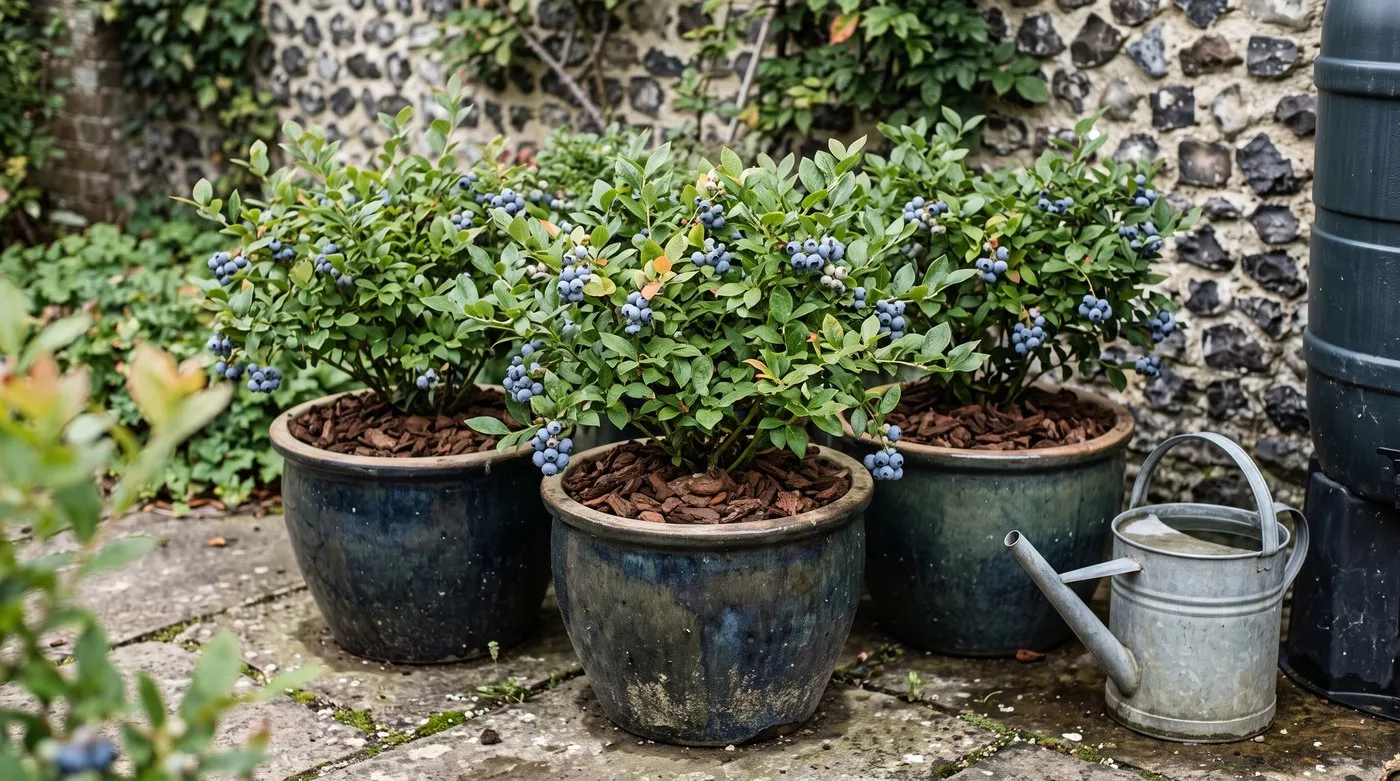
On chalk it’s far easier to bring acid soil to the plant. Pots of ericaceous compost, a pine bark mulch and rainwater keep blueberries happy.
The chalk soil problem
On chalk, you can’t lower the pH for good. The chalk underneath keeps dissolving and undoes your work.
Easier options are:
- Raised beds filled with ericaceous compost for acid-lovers
- Pots of ericaceous compost for blueberries, camellias and azaleas
- Plants that love chalk: lavender, clematis, viburnums, box, yew and many wildflowers
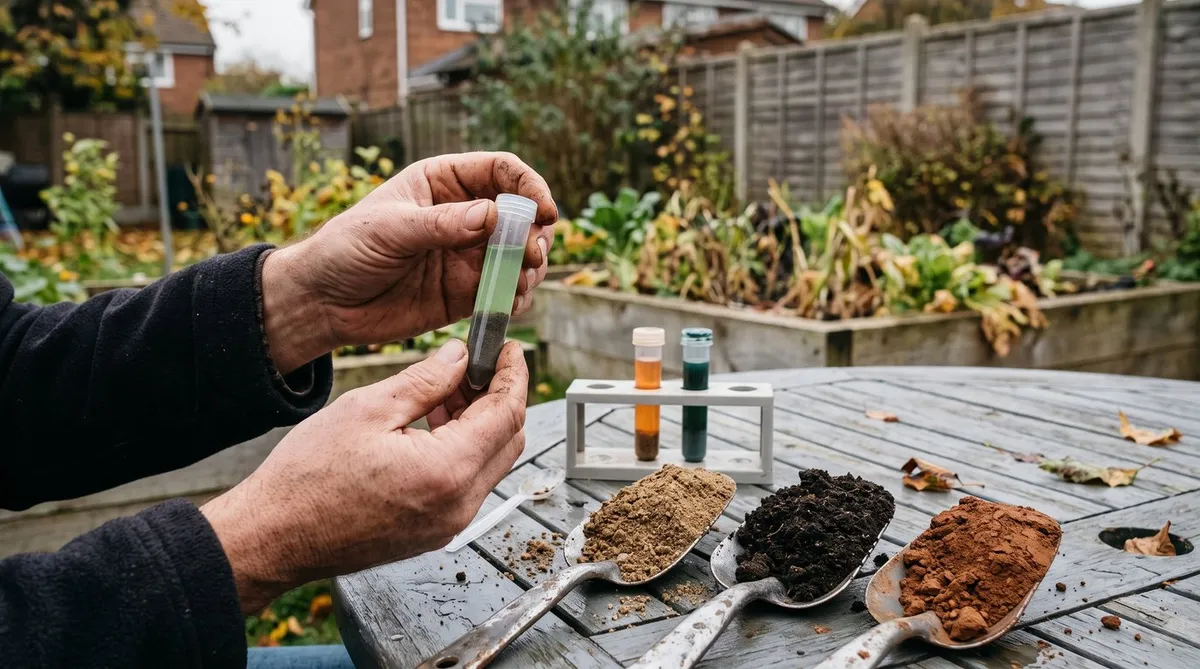
 UK soils side by side. From left: heavy clay, sandy, chalk, loam and peat. Each has its own natural pH.
Testing for nutrients beyond pH
pH is the starting point. A lab test can also tell you what food your soil is short of.
NPK: the big three
| Nutrient | What it does | Signs it’s short | Natural sources |
|---|---|---|---|
| Nitrogen (N) | Leafy growth | Pale yellow leaves, slow growth | Compost, manure, blood meal |
| Phosphorus (P) | Roots and flowers | Purplish leaves, weak roots | Bone meal, rock phosphate |
| Potassium (K) | Fruit and flowers | Brown leaf edges, poor fruit | Comfrey feed, wood ash, potash |
Trace elements
Lab tests also check the minor nutrients, like iron, manganese, zinc and boron. Shortages aren’t common, but they can cause odd problems. Boron shortage, for example, gives cabbage-family plants hollow stems.
Organic matter content
Lab reports also tell you how much organic matter your soil has. More is almost always better. It helps food stay put, helps clay drain, helps sand hold water, feeds soil life and steadies the pH. Compost, mulch and green manures all add to it.
When and how often to test
Recommended testing schedule
| Situation | How often |
|---|---|
| Established veg patch | Every 2-3 years |
| New allotment or garden | Before you plant |
| After adding lime or sulphur | A few months later |
| Plants keep struggling | Straight away |
| Raised beds with bought-in compost | Every year for the first few years |
| Fruit trees and orchards | Before planting, then every few years |
Best time to test
Autumn is ideal, when the soil is moist and warm. Avoid midsummer, when soil can be too dry, and midwinter, when it can be waterlogged. Spring is fine if you miss autumn.
Wait 6 weeks after adding lime, fertiliser or manure before testing, or the result will be off.
Making the most of your soil test
A test is only useful if you act on it. Here’s a simple guide.
If your pH is 5.0-5.5 (acidic)
Your soil suits acid-lovers and soft fruit. Potatoes and strawberries are happy here. For cabbages, carrots and beetroot, spread garden lime in autumn at the rate on the pack.
If your pH is 6.0-7.0 (ideal)
Keep it there with regular compost. Test every few years to check. Most vegetables, flowers and fruit do well here.
If your pH is 7.5-8.0 (alkaline)
Don’t plant acid-lovers in the ground. Garden sulphur can bring a small bed down a little. Grow blueberries in raised beds or pots of ericaceous compost. Pick chalk-happy plants for the borders.
If your pH is above 8.0 (very alkaline)
Go with plants that love chalk and limestone. Plenty of lovely ones do: lavender, rosemary, clematis, delphiniums, scabious, viburnum, beech and box. For vegetables, build raised beds and fill them with topsoil and compost.
A practical first-year soil improvement plan
Never tested your soil? Try this.
| Month | What to do |
|---|---|
| September | Take samples and test the pH |
| October | Spread lime if the veg patch is below pH 6 |
| November | Spread 5-10cm of compost or well-rotted manure, at least 4-6 weeks after liming |
| January | Test again to see how the lime is doing |
| March | Start planting to suit your soil |
| September (year 2) | Test again and adjust if needed |
Soil improvement is a slow and steady job. Each year of compost and sensible liming brings your soil closer to that happy pH 6 to 7. Test, adjust, test again, and your plants will show you the difference.
Once your soil is sorted, read our guide on raised bed gardening for beginners for the next step.
Frequently asked questions
What pH should garden soil be UK?
Most plants like it slightly acid to neutral, around pH 6 to 7. Acid-lovers like rhododendrons, camellias and blueberries want it below about 5.5. Cabbages and their relatives like the top end of the range, and liming to around pH 7 helps keep clubroot away. Test before you change anything.
How do I test my soil pH at home?
Use a colour-change test kit from a garden centre. Take small samples from several spots, about 10-15cm down, and mix them. Pick out stones and roots, then follow the kit instructions. Match the colour of the liquid to the chart. Digital meters exist too, but chemical kits are usually more reliable.
How much lime do I need to raise soil pH?
It depends on your soil and how acid it is. Clay needs more lime than sandy soil for the same change. Test first, then follow the rate on the lime packet for your soil type. Spread it in autumn or winter, not at the same time as manure. Test again the next year.
Can I lower soil pH that is too alkaline?
Yes, but it’s slow and hard on naturally limey soil. Garden sulphur, used at the rate on the pack, slowly lowers pH as soil bacteria break it down. Acidic mulches help a little. On chalk or limestone the effect rarely lasts. Growing acid-lovers in raised beds or pots of ericaceous compost is usually easier.
How often should I test my garden soil?
Every few years, or before planting a new bed. Rain slowly washes lime out of the soil, so pH creeps down over time. Test more often if you’re adding lime or sulphur. It’s also worth testing if plants look unhappy. Always test before adding lime.
What does yellow leaves on plants mean for soil pH?
Yellow between the veins often means alkaline soil. In limey soil, iron and manganese get locked up and plants can’t take them in. Acid-lovers on chalky soil suffer most. Test the pH before treating anything. Waterlogging, poor drainage and lack of nitrogen can also turn leaves yellow.
Is a digital soil pH meter accurate?
They give a rough guide, but many aren’t very accurate. Cheap probe meters often jump about. Better meters do well if you clean and calibrate them as the instructions say. Chemical kits are usually more dependable at home. For the most accurate result, send a sample to a soil lab.
Our team produces practical UK gardening guidance from source research, contributor records and established horticultural practice. Editorial standards are overseen by Matt W.