Key takeaways
- Soil pH runs from acid (below 7) to alkaline (above 7), with 7 as neutral
- Most vegetables and garden plants are happiest at roughly pH 6 to 7
- Acid-loving plants such as blueberries, rhododendrons and camellias need acid soil
- On the wrong pH, plants struggle to take up nutrients even when they're in the soil
- Changing pH is slow, so it's often easier to grow plants that suit your soil
Soil pH tells you how acid or alkaline your soil is. It matters because it affects which nutrients your plants can actually use. Most garden plants and vegetables are happy at roughly pH 6 to 7. A few, like blueberries and rhododendrons, need acid soil.
This guide explains what your pH means and which plants suit it. For the step-by-step on taking samples and using a kit, see the guide to soil testing and pH adjustment.
What is soil pH?
Soil pH is a scale from 0 to 14. pH 7 is neutral. Below 7 is acid, and above 7 is alkaline.
Each whole number is a big jump. Soil at pH 5 is ten times more acid than soil at pH 6. So a change that looks small on paper is quite a shift in the soil.
Most UK garden soils sit somewhere between fairly acid and fairly alkaline. Chalk and limestone areas tend to be alkaline. Sandy heaths, moorland and high-rainfall areas tend to be acid. Many suburban gardens are somewhere near neutral.
Why soil pH matters to plants
pH controls how easily plants can take up the nutrients in the soil. A plant can be surrounded by food it can’t use if the pH is wrong for it.
In very acid soil, plants may struggle to get phosphorus, calcium and magnesium. In alkaline soil, iron and manganese get locked up. That’s why acid-loving plants on chalk often get yellow leaves with green veins, a sign they can’t get enough iron.
Around pH 6 to 7, most nutrients are easy to reach. That’s why it suits the widest range of plants.
pH also affects some diseases. Clubroot in cabbages is worse in acid soil. Potato scab is worse in alkaline soil.
How to find out your soil pH
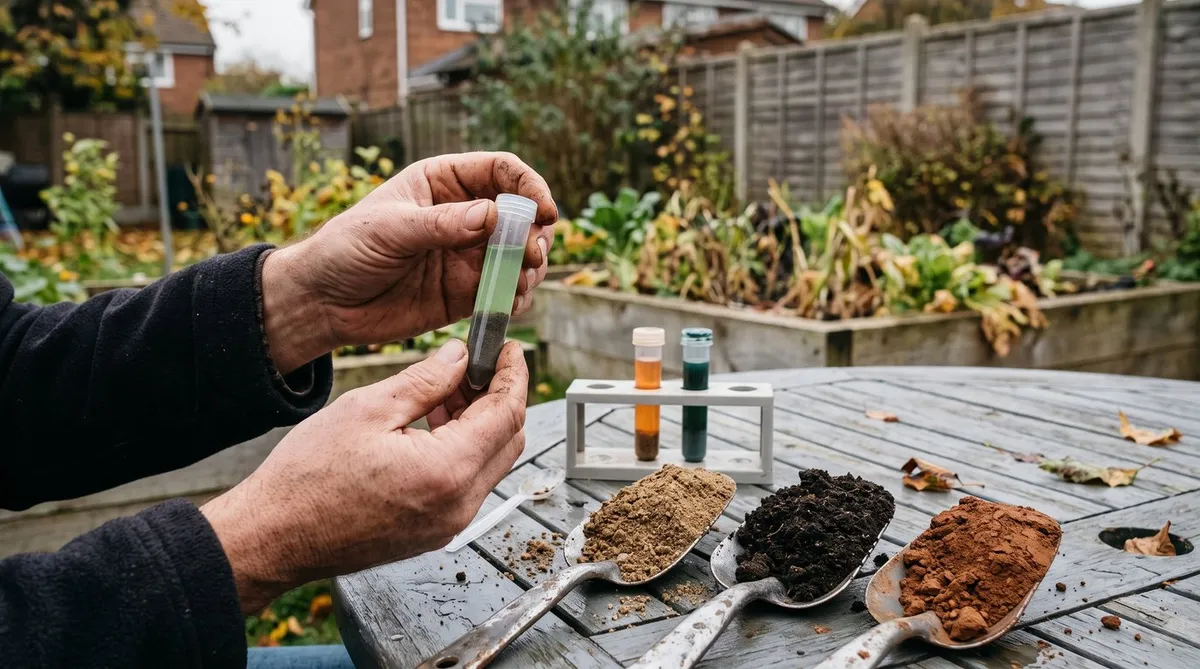
The easiest way is a soil test kit from a garden centre. You mix a little soil with the solution and match the colour to a chart.
- Take small samples from several spots in each bed, about 10-15cm down.
- Mix them together and pick out stones and roots.
- Follow the kit instructions.
- Test each bed separately, as they can differ.
Digital probe meters are handy for a quick check but can be less reliable. If a reading surprises you, check it with a kit. Look at what grows well nearby too. Rhododendrons thriving in neighbours’ gardens are a good clue your soil is acid.

Probe meters are quick for spot checks. Back up a surprising reading with a colour-change kit.
Which plants suit acid, neutral and alkaline soil?
Knowing your pH tells you what will grow happily without a fight.
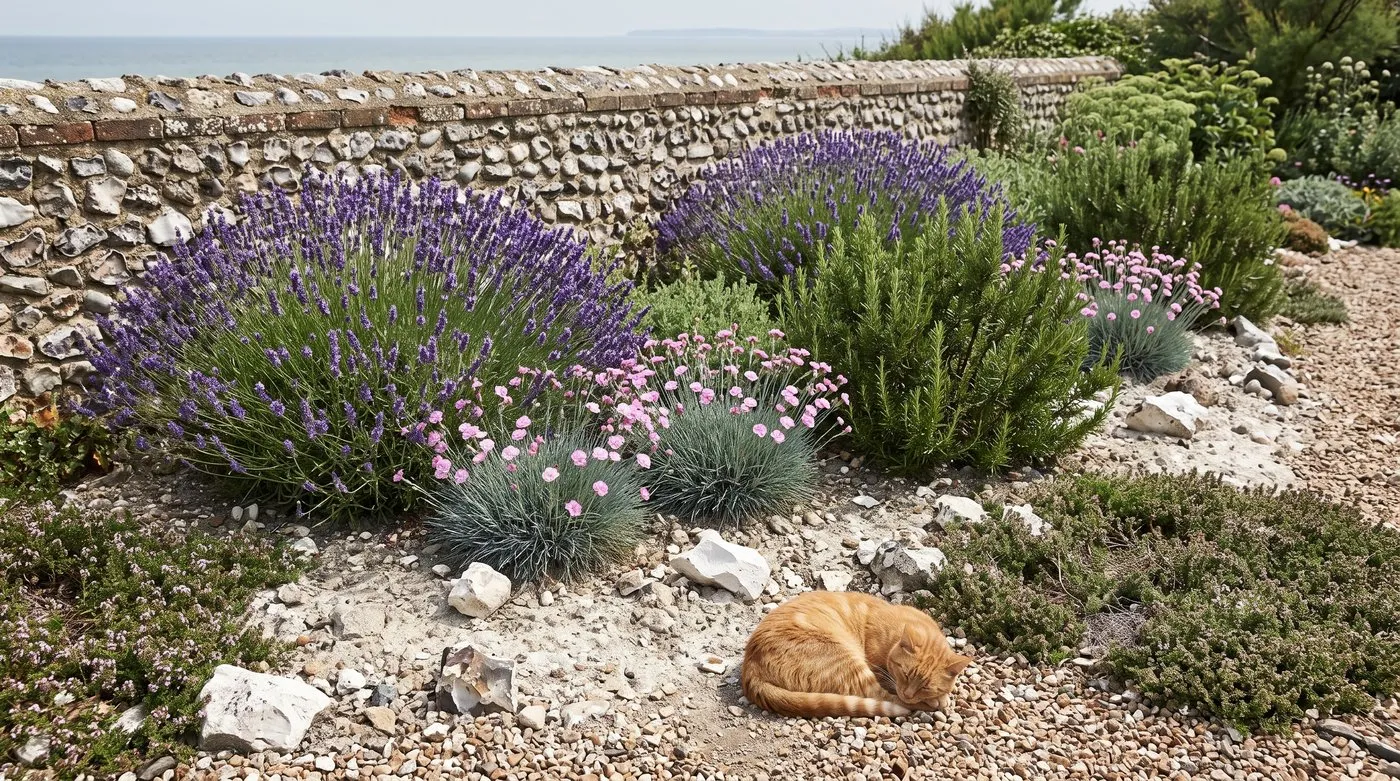
Lavender, pinks and Mediterranean herbs love alkaline, chalky soil, so they’re an easy win if that’s what you’ve got.
| Soil | Rough pH | Plants that thrive |
|---|---|---|
| Acid | Below 6 | Blueberries, cranberries, rhododendrons, azaleas, camellias, heathers, pieris |
| Slightly acid | About 6 to 6.5 | Potatoes, strawberries, raspberries, most soft fruit |
| Neutral | About 6.5 to 7 | Most vegetables, herbaceous perennials and flowering shrubs |
| Neutral to slightly alkaline | About 7 to 7.5 | Cabbages and other brassicas, asparagus, clematis, lilac |
| Alkaline (chalky) | Above 7.5 | Lavender, pinks, rosemary, thyme, buddleja, cistus, box, yew |
Acid lovers really do need acid soil. On chalk they’ll struggle however well you look after them. For ideas, see the list of plants for acid soil.
Most vegetables do well in slightly acid to neutral soil. Brassicas prefer it a little higher, which also helps protect them from clubroot.

Blueberries and rhododendrons thrive side by side in acid soil. On chalk, grow them in pots of ericaceous compost instead.
Chalk lovers such as lavender, pinks and Mediterranean herbs are happy in alkaline soil. The list of plants for chalky, alkaline soil has plenty more.
Hydrangeas are a special case. Many mophead and lacecap types flower blue in acid soil and pink in alkaline soil. The guide on how to change hydrangea colour explains how.
How to raise soil pH (make it less acid)
Add garden lime. It’s the usual fix for soil that’s too acid for vegetables, especially brassicas.
Spread it in autumn or winter and rake it in. Use the rate on the pack, which depends on your soil and how far you need to go. Retest the following year before adding more.
Keep lime well away from acid-loving plants. And don’t spread it at the same time as manure. The guide to garden lime covers types, rates and timing.

Garden lime raises pH slowly. Spread it thinly at the rate on the pack, then rake it in.
How to lower soil pH (make it more acid)
Lowering pH is harder and slower than raising it. Garden sulphur is the usual product, applied at the rate on the pack. It takes months to work, and the soil slowly drifts back.
On chalky or limy soil, you’re fighting the rock underneath. It’s far easier to grow acid-lovers in pots or raised beds of ericaceous compost, watered with rainwater where you can. The guide on how to make soil more acidic has the details.
Coffee grounds don’t make a meaningful difference. Used grounds are close to neutral. Put them on the compost heap instead.

An acid-loving bed of camellia, blueberry and heather. A mulch helps keep the soil moist, but won’t change chalky soil much.
Signs your plants are on the wrong pH
- Yellow leaves with green veins on blueberries, rhododendrons or camellias usually mean the soil is too alkaline for them. A sequestered iron feed is a short-term fix. Moving them into ericaceous compost is the lasting one.
- Swollen, distorted roots on cabbages point to clubroot, which is worse in acid soil. Liming helps reduce it. The guide to brassica diseases has more.
- Scabby potatoes are more common in alkaline or freshly limed soil. Don’t lime before potatoes.
- Hydrangeas the “wrong” colour are simply reflecting your soil.
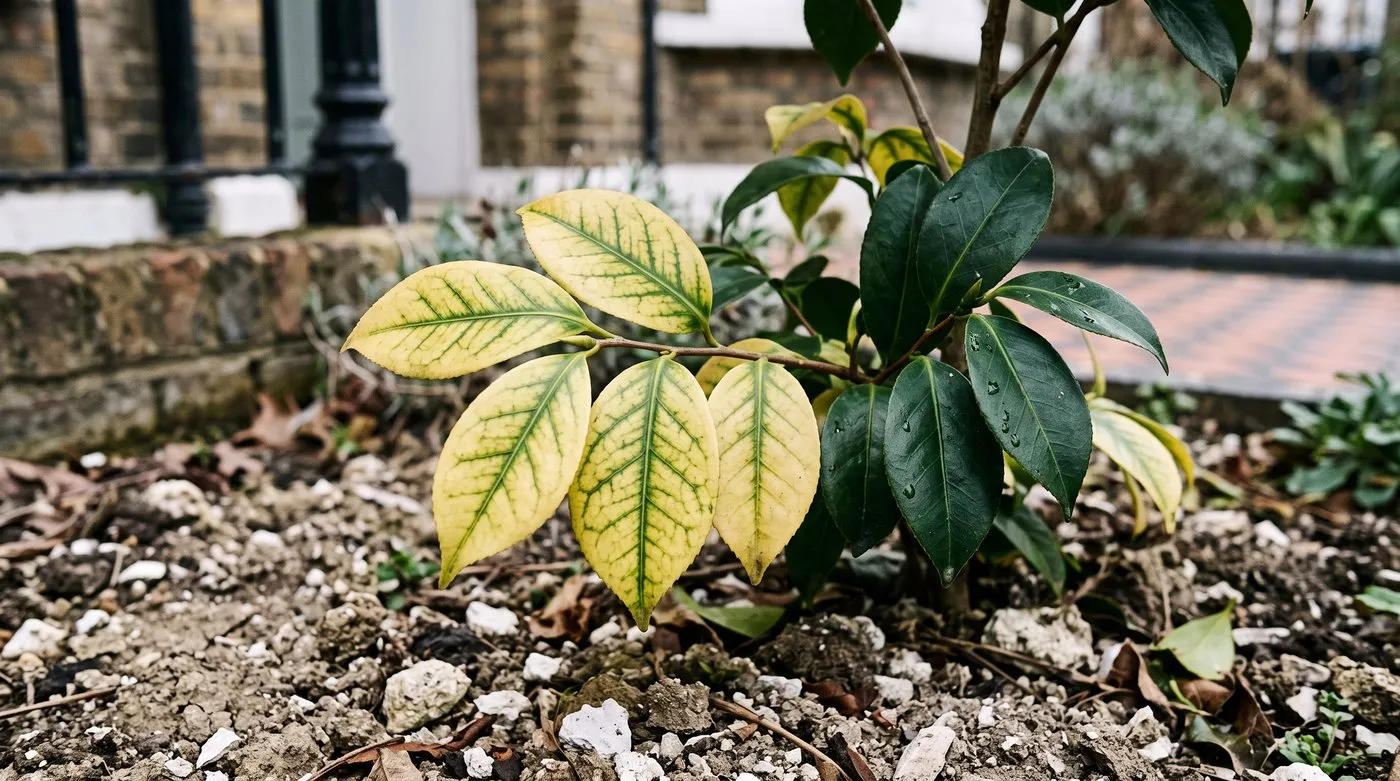
Yellow leaves with green veins on an acid-lover usually mean the soil is too alkaline for it to take up iron.
Not every yellow leaf is a pH problem, though. Overwatering, poor drainage and hunger cause yellowing too.
Should you change your pH or work with it?
In most gardens, it’s easiest to grow plants that suit your soil. Changing pH costs money, takes time and slowly wears off as the soil drifts back.
- Acid soil: enjoy blueberries, rhododendrons and camellias. Lime only the veg beds, especially for brassicas.
- Neutral soil: grow almost anything. No adjustment needed.
- Alkaline soil: grow lavender, pinks and Mediterranean herbs. Put acid-lovers in pots.
Rain slowly makes soil more acid over time. Hard tap water and bonfire ash push it the other way. Retest every few years, especially in veg beds.
Common soil pH mistakes
- Liming without testing. You might push already neutral soil too far. Always test first.
- Testing one spot. pH can vary across a garden. Mix samples from several spots.
- Fighting chalk. Acid-lovers rarely thrive in the ground on chalk. Use pots.
- Expecting quick results. pH changes take months. Be patient and retest.
- Blaming pH for everything. Check watering, drainage and feeding too.
For more soil know-how, browse the how-to guides. Next, find out what your soil is made of with the guide to UK soil types, the other half of knowing what will grow well.
Frequently asked questions
What does soil pH mean?
It’s a measure of how acid or alkaline your soil is. The scale runs from 0 to 14, with 7 as neutral. Below 7 is acid and above 7 is alkaline. It affects which nutrients plants can take up.
What is the best soil pH for vegetables?
Most vegetables grow best between about pH 6 and 7. Cabbages and other brassicas like it neutral or slightly alkaline, which helps against clubroot. Potatoes prefer slightly acid soil, which reduces scab.
How do I test soil pH at home?
Use a soil test kit from a garden centre. Take small samples from several spots in a bed, about 10-15cm down, and mix them together. Then follow the kit instructions and compare the colour with the chart.
How long does it take to adjust soil pH?
Months at least, and often a year or more. Small changes are realistic within a season or two. Bigger changes take repeated treatments, and the soil slowly drifts back over time.
Can I make soil more acidic?
Yes, but only slowly and by a little. Garden sulphur, applied at the rate on the pack, is the usual way. On chalky soil it’s easier to grow acid-lovers in pots of ericaceous compost.
Do coffee grounds make soil acidic?
Not enough to make a real difference. Used coffee grounds are close to neutral once brewed. Add them to the compost heap instead.
Our team produces practical UK gardening guidance from source research, contributor records and established horticultural practice. Editorial standards are overseen by Matt W.