Key takeaways
- Rhododendrons, camellias, pieris, heathers and blueberries love acid soil
- Acid soil is common in Scotland, Wales, the Pennines, the New Forest and the West Country
- A cheap test kit from a garden centre tells you what you've got
- Water acid-lovers with rainwater, as hard tap water slowly makes soil less acid
- Mulch with composted pine bark each year to keep the soil acid
- On chalky soil, grow acid-lovers in pots of ericaceous compost instead
Acid soil is great news, whatever older guides say. If your soil is acid, you can grow plants that chalk gardeners can only dream of: rhododendrons, camellias, blueberries, Japanese maples and magnolias. These are some of the showiest plants you can buy, and they all need acid soil to thrive.
Gardening at the other end of the scale? See our guide to plants for chalky alkaline soil.
Why some plants need acid soil
Acid-loving plants, also called ericaceous plants, can only take up the iron they need when the soil is acid. Plant a rhododendron in chalk and its leaves soon turn yellow with green veins. That’s the plant going hungry for iron, even though there’s iron in the soil.
Iron and manganese availability
In acid soil, iron and manganese are easy for roots to take up. In chalky soil they get locked away. Most plants can cope with that, but ericaceous plants can’t. That’s why a camellia or pieris on chalk looks pale and sickly however much you feed it.
Aluminium tolerance
Very acid soil has a few tricky substances in it that most garden plants dislike. Acid-lovers have adapted to cope, which is why they do so well where other plants sulk.
Hydrangeas show this off beautifully. On acid soil, Hydrangea macrophylla takes up aluminium and its flowers turn blue. The same plant on chalk gives pink flowers. Our hydrangea guide explains how to grow them.
Where acid soil occurs in the UK
Acid soil forms over certain rocks and in rainy areas. Knowing your local ground gives you a good idea what to expect.
Regional acid soil map
- Scottish Highlands and Islands: granite and peat give very acid soil. Heather moorland everywhere.
- Welsh uplands: slate country, including Snowdonia, the Brecon Beacons and Mid Wales.
- Pennines: millstone grit and sandstone from the Peak District up to the Scottish Borders.
- New Forest: sandy acid soil with native heather, gorse and birch.
- Surrey and Hampshire heaths: sandy, acid soil. This is classic rhododendron country.
- Cornwall and Devon: granite moors like Dartmoor and Bodmin Moor are very acid. Lower slopes are milder.
- East Anglia Breckland: patches of acid sandy soil.
Not sure what you’ve got? Our soil testing and pH guide walks you through it.
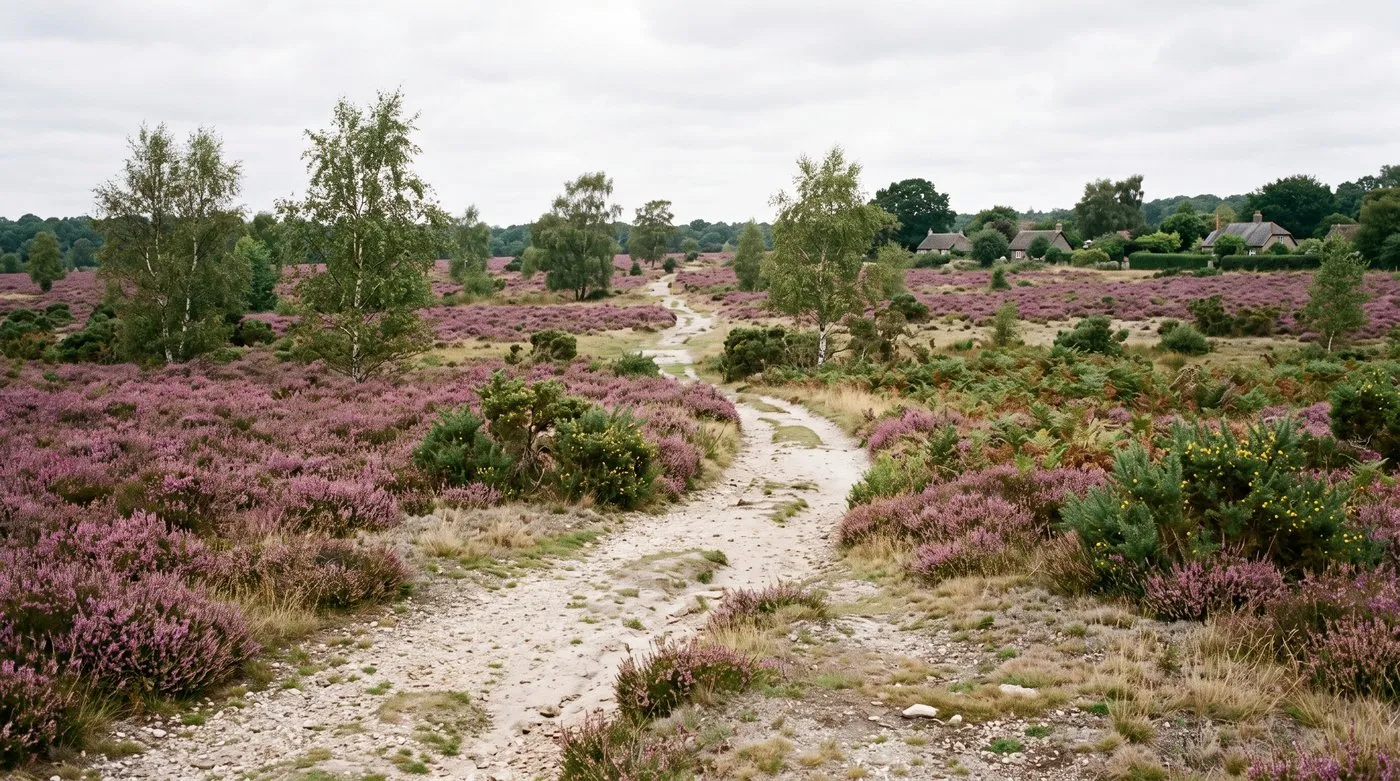
Wild heather, gorse and birch are a sure sign of acid ground nearby. If they grow happily round you, rhododendrons and blueberries probably will too.
How to test and lower soil pH
Check your soil before you buy acid-lovers. It’s quick and cheap.
Testing soil pH
A simple test kit from a garden centre is all you need. Take soil from about 15cm down in five or so spots, mix it together, add the testing liquid and compare the colour to the chart. Below 7 is acid. For a more detailed result, the RHS soil analysis service will test a sample for you.
The vinegar test (quick check)
Pour a spoonful of white vinegar onto a little soil. If it fizzes, your soil contains chalk or lime and is alkaline. No fizz rules out chalk, but it doesn’t prove your soil is acid, so use a test kit to be sure.
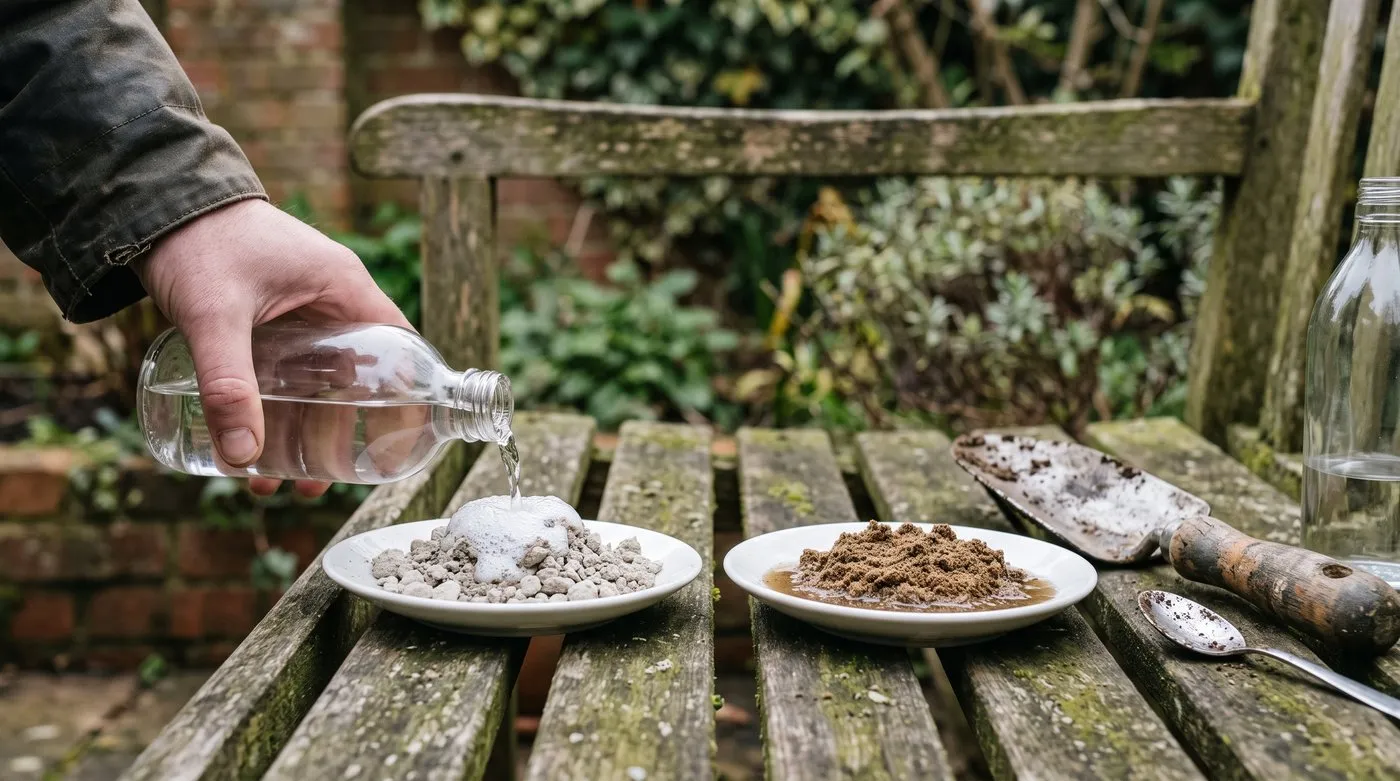
Fizzing means chalk or lime is present. No fizz rules out chalk, but use a test kit to be sure your soil is truly acid.
Lowering soil pH with sulphur
Flowers of sulphur or sulphur chips slowly make soil more acid. Soil bacteria do the work, so it takes months. Fork it into the top 15cm in autumn, following the rates on the pack, and test again after a year. It works best in warm, moist soil. You can lower pH a little this way, but you can’t turn chalk into heathland, so on very chalky soil use pots or raised beds instead.
Keeping soil acid
Once your soil is where you want it, keep it there with:
- Pine bark mulch, a layer of 5-8cm each year
- Composted pine needles
- Ericaceous compost for pots and topping up beds
- Rainwater, because tap water in hard-water areas slowly makes soil less acid
Best shrubs for acid soil
Rhododendrons and azaleas
Rhododendrons are the star acid soil plant. They range from tiny alpine types to huge tree-like shrubs. Reliable choices for UK gardens include R. yakushimanum (compact, pink fading to white), R. augustinii (lavender-blue) and R. luteum, a deciduous azalea with scented yellow flowers. Give them dappled shade, as full sun scorches the leaves, and keep them out of waterlogged clay. For more on the different types, see our guide on how to grow azaleas in the UK.
Size: small shrubs to large bushes, depending on type Flowers: April to June Position: Dappled shade, out of cold winds
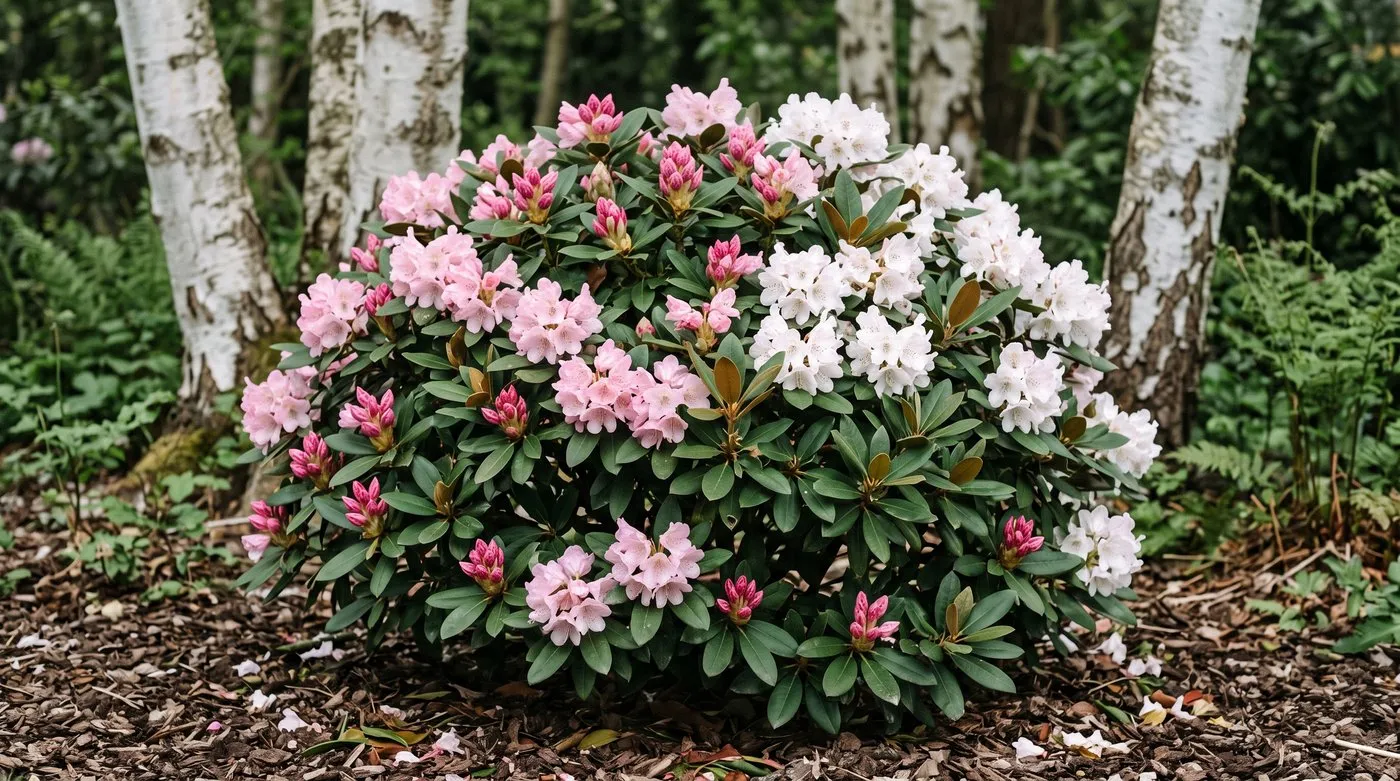
Rhododendrons want dappled shade and moist but not soggy soil. Full sun scorches their leaves.
Camellias
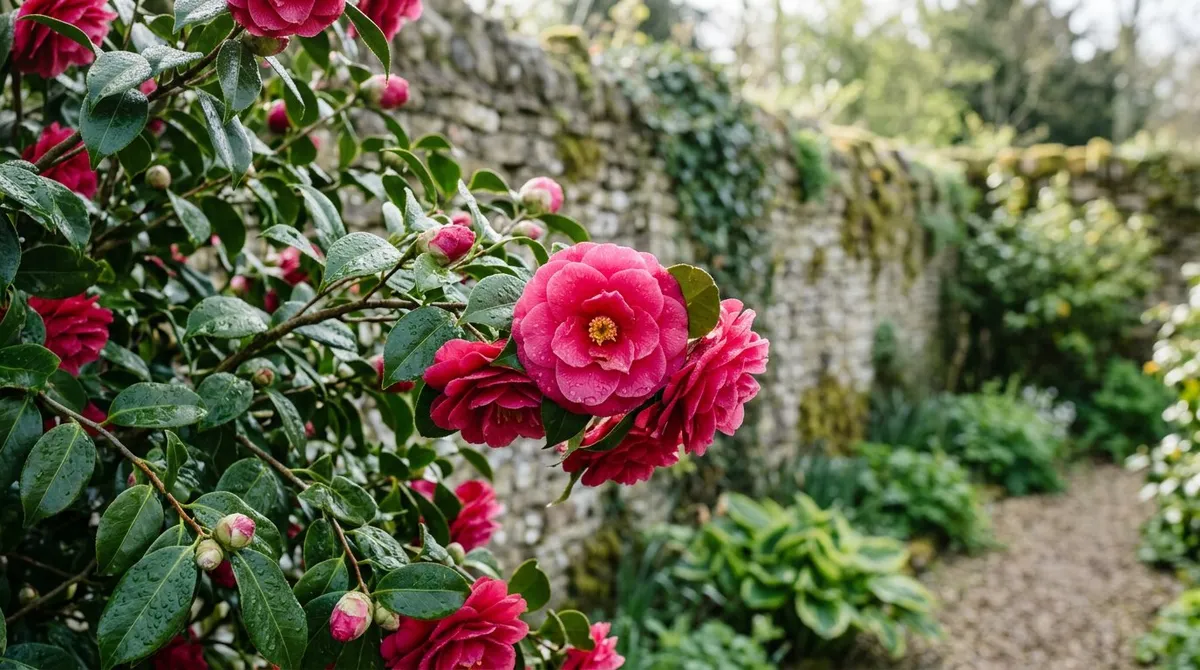
Camellias flower from late winter into spring, when little else is out. Camellia japonica and C. x williamsii are the hardiest for UK gardens. C. x williamsii ‘Donation’ (pink, semi-double) is a great choice because it drops its old flowers, while many japonica types hang on to brown ones. See our camellia guide for the full growing guide. Acid ground also suits the tea plant, Camellia sinensis, covered in our tea plant guide.
Size: 2-5m Flowers: January to April Position: A west or north-facing wall, so early sun doesn’t thaw frozen buds too fast and spoil them
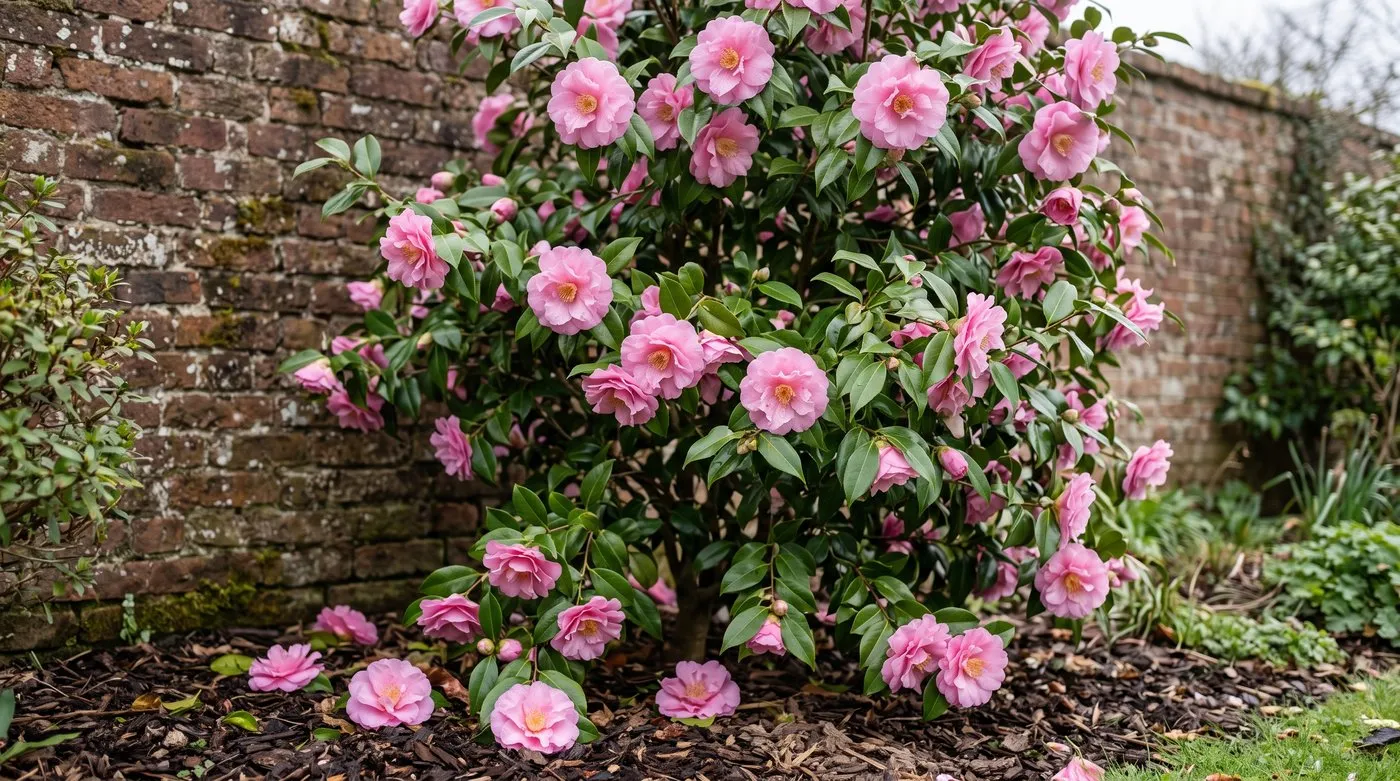
‘Donation’ drops its old flowers cleanly instead of holding on to brown ones. A west or north wall stops early sun spoiling frosty buds.
Pieris
Pieris puts out bright red or bronze new leaves in spring, then sprays of white or pink flowers. ‘Forest Flame’ is the most popular, with fiery red young leaves. ‘Little Heath’ stays small for tiny gardens. Pieris likes the same spot as rhododendrons: acid soil, dappled shade and shelter from cold spring winds that damage new growth.
Size: 60cm to 3m, depending on variety Flowers: March to May Position: Sheltered, dappled shade
Heathers (Calluna and Erica)
Heathers cover acid ground in colour. Calluna vulgaris (ling heather) flowers from summer into autumn and needs acid soil. Erica carnea (winter heather) is the odd one out, as it copes with chalky soil too. For acid gardens, try Calluna ‘Firefly’ (terracotta leaves), Calluna ‘Dark Star’ (crimson flowers) and Erica cinerea ‘Purple Beauty’ (bell heather). Our heather guide has the details.
Size: 15-60cm Flowers: July to November (Calluna), winter to spring (Erica carnea) Position: Full sun, open ground
Best trees for acid soil
Trees give an acid garden height and shape. These do well across the UK.
Japanese maples (Acer palmatum)
Japanese maples are a gorgeous small tree for acid soil, with amazing autumn colour. ‘Bloodgood’ (dark red leaves) and ‘Sango-kaku’ (coral-red winter stems) are two of the most reliable. They hate wind, so plant them somewhere sheltered with dappled shade. Their roots are shallow, so mulch with composted pine bark each year to keep them cool and moist.
Size: 2-8m, depending on variety Autumn colour: October to November Position: Sheltered, dappled shade, away from cold east winds
Magnolias
Magnolias love mildly acid soil. Star magnolia (Magnolia stellata) suits smaller gardens and has white star-shaped flowers in March. Magnolia x soulangeana is the bigger tulip magnolia with pink and white goblet flowers in April. Late frosts can brown the flowers, so avoid cold, low-lying spots. Magnolias hate having their roots disturbed, so plant a young one and don’t dig close to the trunk.
Size: 3-8m Flowers: March to May Position: Sheltered, sun or dappled shade
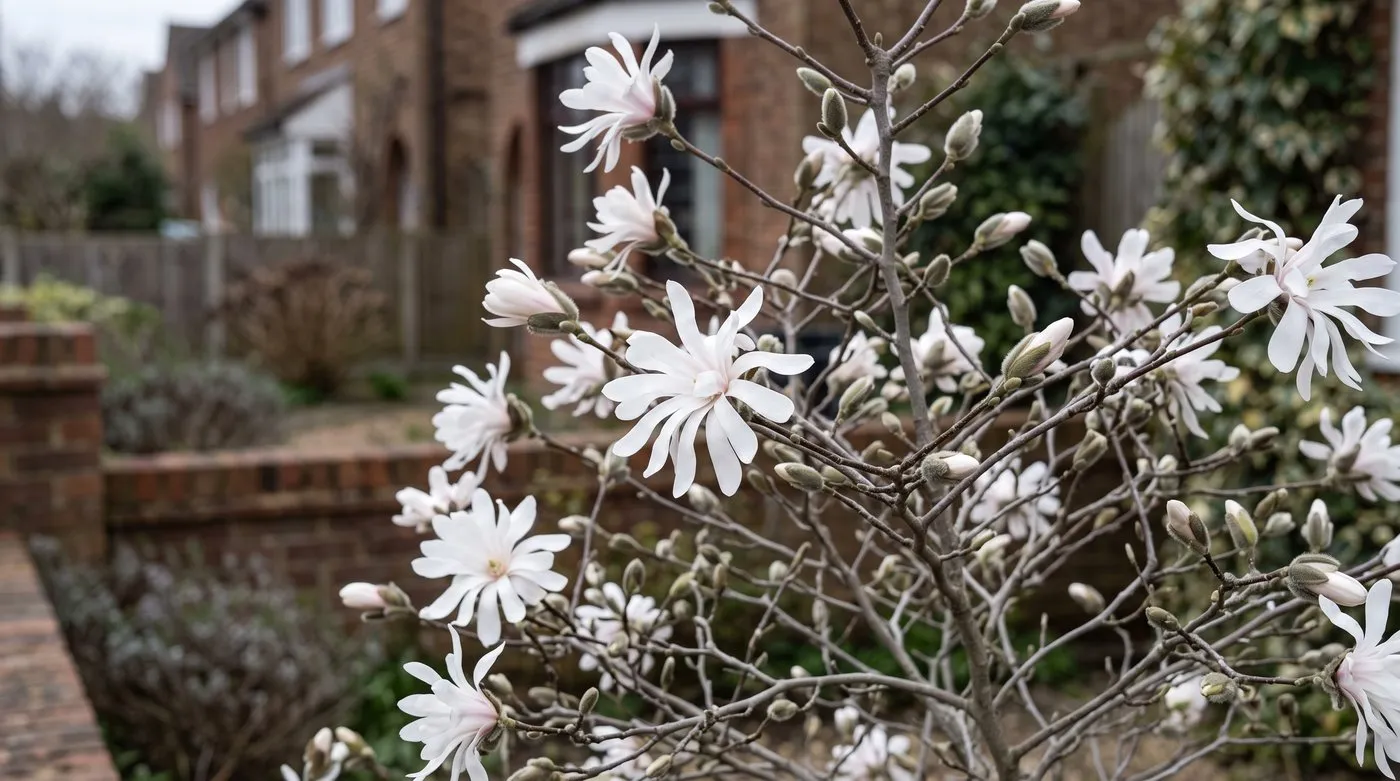
Star magnolia stays small enough for most gardens. Plant it away from frost pockets, as a cold night can brown the flowers.
Birch (Betula)
Silver birch and Himalayan birch both love acid soil. Silver birch is a native heathland tree that grows wild alongside heather. Birches grow quickly and cast light shade that suits rhododendrons and ferns underneath. Their roots take a lot of water, so water any new plants beneath them in dry spells.
Size: 10-18m Best feature: White bark all year Position: Full sun
Best perennials and ground cover for acid soil
Fill the gaps between shrubs and trees with these.
Ferns
Ferns are the natural ground cover for acid woodland. Male fern (Dryopteris filix-mas) copes with drier shade than most. Lady fern (Athyrium filix-femina) likes damper spots. The tree fern Dicksonia antarctica makes a dramatic feature in a sheltered garden. They look great with rhododendrons and camellias under birch trees. For more shade ideas, see our guide to plants for shade.
Trillium
Trilliums are woodland treasures for acid soil. Trillium grandiflorum has white three-petalled flowers in April and May above broad leaves. They need humus-rich soil and shade, and they’re slow to bulk up, so be patient. Always buy nursery-grown plants, never dug from the wild. For another acid-loving woodland gem, see our guide to growing the Himalayan blue poppy, which likes the same cool, leafy, acid ground.
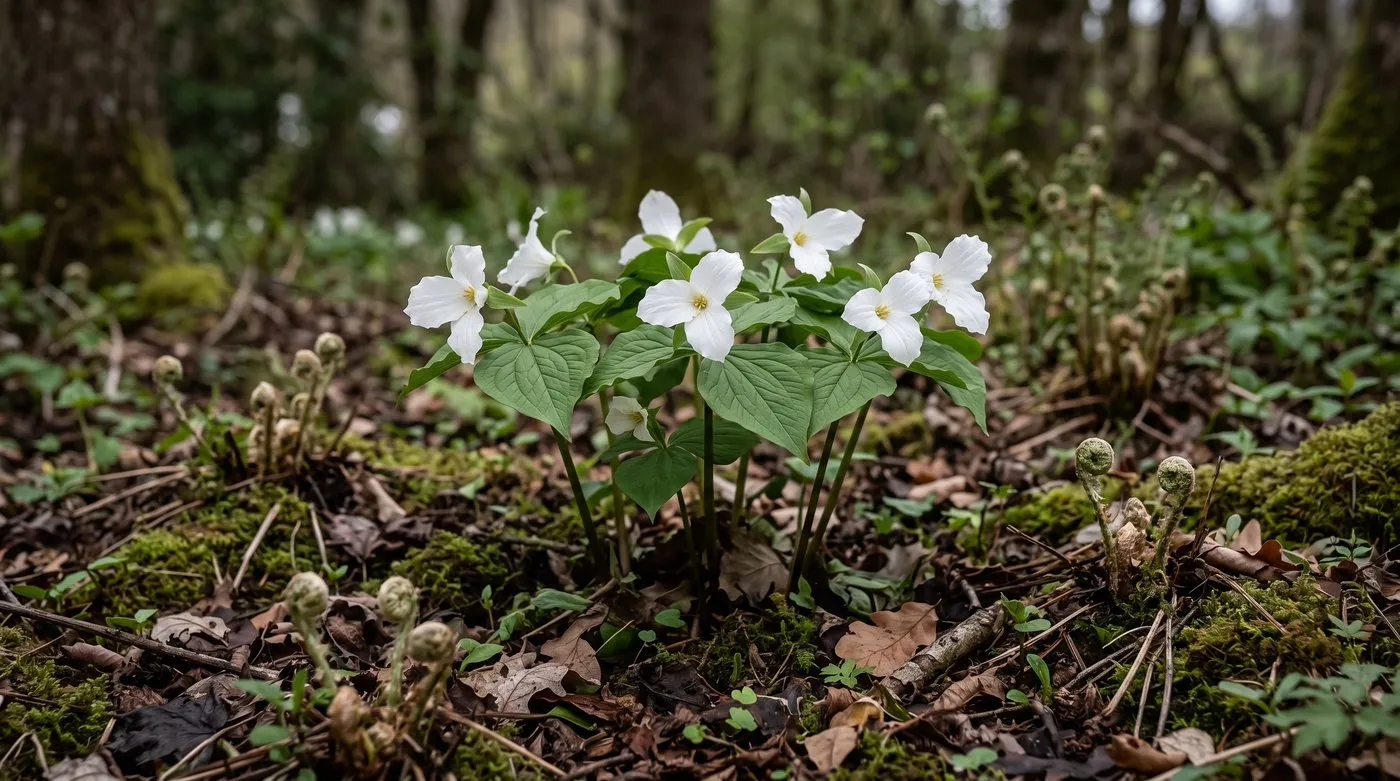
Trilliums need shade and leafy, humus-rich soil, and they bulk up slowly. Always buy nursery-grown plants, never ones dug from the wild.
Primroses and foxgloves
Native primroses and foxgloves both love acid soil. Primroses spread along shady banks and flower from February to April. Foxgloves come back year after year by seeding themselves. Bumblebees adore them in June and July. Both settle in easily without any soil improving.
Lily of the valley
Lily of the valley spreads happily in acid to neutral soil in shade or part shade. Its little white bells in May smell gorgeous. Once settled it makes thick ground cover that keeps weeds down. It can spread too far in a spot it loves, so give it room or edge it with a root barrier.
Best fruit for acid soil
Acid soil is perfect for some lovely fruit.
Blueberries
Blueberries are the star fruit for acid soil. They need properly acid conditions and won’t crop well without them. Good UK varieties include ‘Bluecrop’ (reliable, mid-season), ‘Duke’ (early) and ‘Chandler’ (very big berries). Pick from July to September. Plant in full sun, mulch with pine bark and water with rainwater, as hard tap water slowly makes the soil less acid. Our blueberry guide has the full how-to.
Size: 1.2-1.8m Harvest: July to September Position: Full sun, sheltered
Cranberries
Cranberries like the same acid soil as blueberries but wetter. They’re low evergreen plants that hug the ground and have red berries in autumn. In the wild they grow in boggy ground, so keep the soil moist. They make an unusual ground cover under blueberry bushes.
Raspberries and strawberries
Raspberries and strawberries both like mildly acid soil. Autumn raspberries such as ‘Autumn Bliss’ are the easiest choice. Strawberries do well in raised beds too. For more fruit ideas, see our guide to growing fruit in containers.
Acid soil plants at a glance
A quick guide to the best acid-lovers by type.
| Plant | Type | Height | When it looks best | Why grow it |
|---|---|---|---|---|
| Rhododendron yakushimanum | Shrub | Small | April to May | Compact, pink to white |
| Camellia ‘Donation’ | Shrub | Large | February to April | Drops old flowers cleanly |
| Pieris ‘Forest Flame’ | Shrub | Medium to large | March to May | Red new leaves |
| Heather ‘Dark Star’ | Ground cover | Low | August to October | Crimson flowers |
| Japanese maple ‘Bloodgood’ | Tree | Small tree | October to November | Deep red autumn colour |
| Star magnolia | Tree | Small tree | March to April | White star flowers |
| Silver birch | Tree | Tall | All year | White bark, grows fast |
| Blueberry ‘Bluecrop’ | Fruit | Medium | July to September | Tasty berries |
| Cranberry | Fruit | Low | October | Evergreen ground cover |
| Male fern | Fern | Medium | Spring to autumn | Copes with dry shade |
| Trillium grandiflorum | Perennial | Low | April to May | White woodland flowers |
| Hydrangea macrophylla | Shrub | Medium | July to September | Blue flowers on acid soil |
| Primrose | Perennial | Low | February to April | Native woodland flower |
| Foxglove | Biennial | Tall | June to July | Seeds itself, loved by bees |
Ericaceous compost and growing in pots
If your soil is chalky, you can still grow acid-lovers in pots of ericaceous compost.
Choosing ericaceous compost
Peat-free ericaceous composts use pine bark, coir and sulphur to keep things acid. Top up the top few centimetres each year and repot every 2-3 years. Our peat-free compost guide has more on choosing a good one.
Water pots of acid-lovers with rainwater. Tap water in chalk and limestone areas slowly makes compost less acid. A water butt sorts this out for good.
Best acid-loving plants for pots
Blueberries, camellias and compact rhododendrons are the three best for pots. Use a pot at least 40cm wide with drainage holes. Fill with ericaceous compost and feed with an ericaceous fertiliser in spring and early summer.
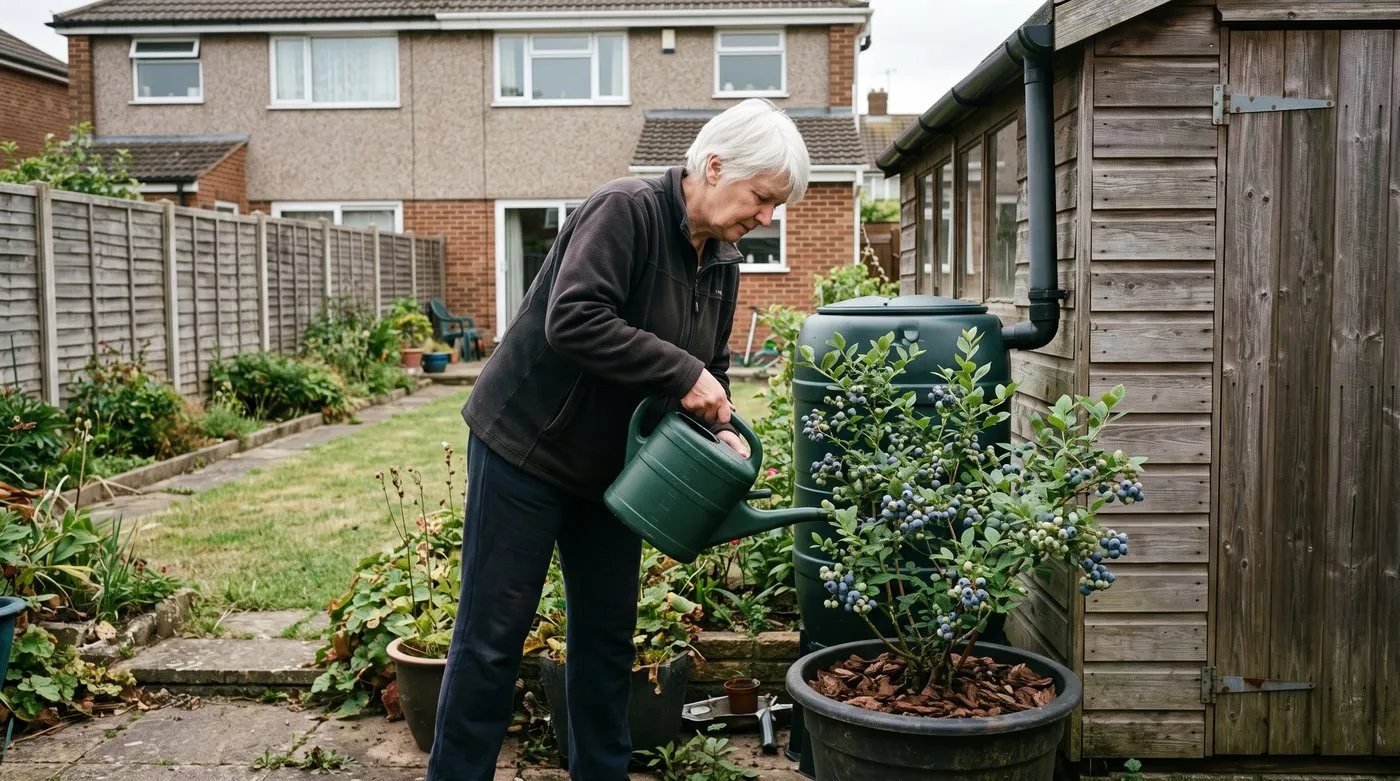
In hard-water areas, use rainwater for pots of acid-lovers. Tap water slowly makes the compost less acid.
Common mistakes with acid soil
Filling the planting hole with compost
If your soil is already acid, don’t fill the planting hole with ericaceous compost. Roots stay in the soft compost and never spread out, and the rootball dries out in summer. Backfill with your own soil and mulch on top instead.
Ignoring drainage
Acid-lovers like moist soil but hate sitting in water. Rhododendrons, camellias and pieris have fine roots that rot in soggy ground. If your acid soil is heavy clay, plant on a low mound or in a raised bed.
Using the wrong water
Tap water in hard-water areas slowly makes soil and compost less acid. Over time, acid-lovers start to yellow. Collect rainwater in a water butt and use it for these plants, especially those in pots.
Liming vegetable beds near acid shrubs
Lime spread on a vegetable patch can creep sideways through the soil into a rhododendron bed over the years. Keep a gap of a couple of metres between them, or grow vegetables in raised beds to keep the lime contained.
Planting calendar for acid soil
Autumn and spring are the best times to plant acid-loving shrubs and trees, when the soil is moist. Plant in the morning or evening rather than in hot midday sun, and water well afterwards. Then spread 5-8cm of composted pine bark around each plant, keeping it a few centimetres away from the stem.
Frequently asked questions
What plants like acid soil in the UK?
Rhododendrons, azaleas, camellias and pieris are the classic acid-lovers. Blueberries, cranberries, heathers, Japanese maples, magnolias and ferns are happy too. Woodland wildflowers like foxgloves and primroses do well on acid soil as well.
How do I know if my soil is acid?
A cheap pH test kit from a garden centre will tell you. Mix soil from a few spots in the bed and test it. A reading below 7 is acid. Heather, bracken, foxgloves and Scots pine growing nearby are good clues too.
Can you make soil more acidic?
Yes, a little, with sulphur chips or flowers of sulphur. It works slowly over several months, so follow the rates on the pack and test again after a year. Pine bark mulch and ericaceous compost help keep soil acid. Avoid lime, mushroom compost and wood ash, which all make soil less acid.
Is acid soil good or bad for gardening?
It’s very good for the right plants. Rhododendrons, blueberries and woodland plants do better on acid soil than anywhere else. Cabbage-family crops and lawns prefer less acid ground, so lime the vegetable beds rather than the whole garden.
What vegetables grow in acid soil?
Potatoes are the best vegetable for acid soil. They tend to get less scab on acid ground. Rhubarb, radishes, sweetcorn, turnips and soft fruit like strawberries, raspberries and gooseberries cope well too. Cabbages, beetroot and asparagus need the soil limed first.
Can you grow roses in acid soil?
Yes, roses are happy in mildly acid soil. On very acid ground they grow poorly, so test first. If your soil is very acid, add some garden lime before planting, following the rates on the pack.
Where in the UK has acid soil?
The Scottish Highlands, Welsh uplands and Pennines have the most acid soil. The New Forest, Surrey and Hampshire heaths, Cornwall, Devon and parts of East Anglia do too. Sandstone, granite and peaty areas usually have acid soil, while chalk and limestone areas are alkaline.
Our team produces practical UK gardening guidance from source research, contributor records and established horticultural practice. Editorial standards are overseen by Matt W.