Key takeaways
- Grow the hardier small-leaved Camellia sinensis var. sinensis, not the tender Assam type
- Tea needs acid soil, so most gardeners use a large pot of ericaceous compost
- Water with rainwater, as hard tap water slowly turns the leaves yellow
- Shelter it from cold east winds and keep the roots from sitting wet in winter
- Let young plants establish before picking two leaves and a bud from each shoot
- Green and black tea come from the same leaves; only the processing differs
You can grow your own tea in the UK. The tea plant, Camellia sinensis, is a close cousin of the camellias in many British front gardens. It’s even grown commercially at Tregothnan in Cornwall, and by small growers elsewhere in Britain.
Treat it like any camellia: acid compost, rainwater and shelter from cold winds. This guide covers choosing the right plant, potting it, getting it through winter, picking the leaves and turning them into green or black tea in your kitchen.
Can you really grow tea in the UK?
Yes. Tea is grown outdoors in Britain, and a single bush in a pot is well within reach of most gardeners. If camellias grow happily in your area, a tea plant should too. The guide to growing camellias covers the family’s needs in more detail.
The type matters. Camellia sinensis var. sinensis is the small-leaved Chinese tea plant and the one that copes with British winters. The large-leaved Assam type, var. assamica, is tender and only suits a heated greenhouse. Check the label says var. sinensis rather than just “tea plant”.
Buy a young plant rather than seed. Tea seed loses its viability quickly and seedlings vary a lot. A young nursery plant also gets you to your first pick years sooner.
What soil does a tea plant need?
Acid soil is a must. In neutral or chalky soil the roots can’t take up iron, and the leaves turn yellow. Test your soil before planting. The guide to soil pH shows how to read the result.
Many UK gardens aren’t acid enough. That’s easily solved with a pot of ericaceous compost, which is made for acid-loving plants.
Water matters too. Hard tap water carries lime, and every watering nudges the compost towards alkaline. The result is chlorosis: yellow leaves with green veins. The guide to chlorosis and yellow leaves explains the problem. Use rainwater from a water butt wherever you can.
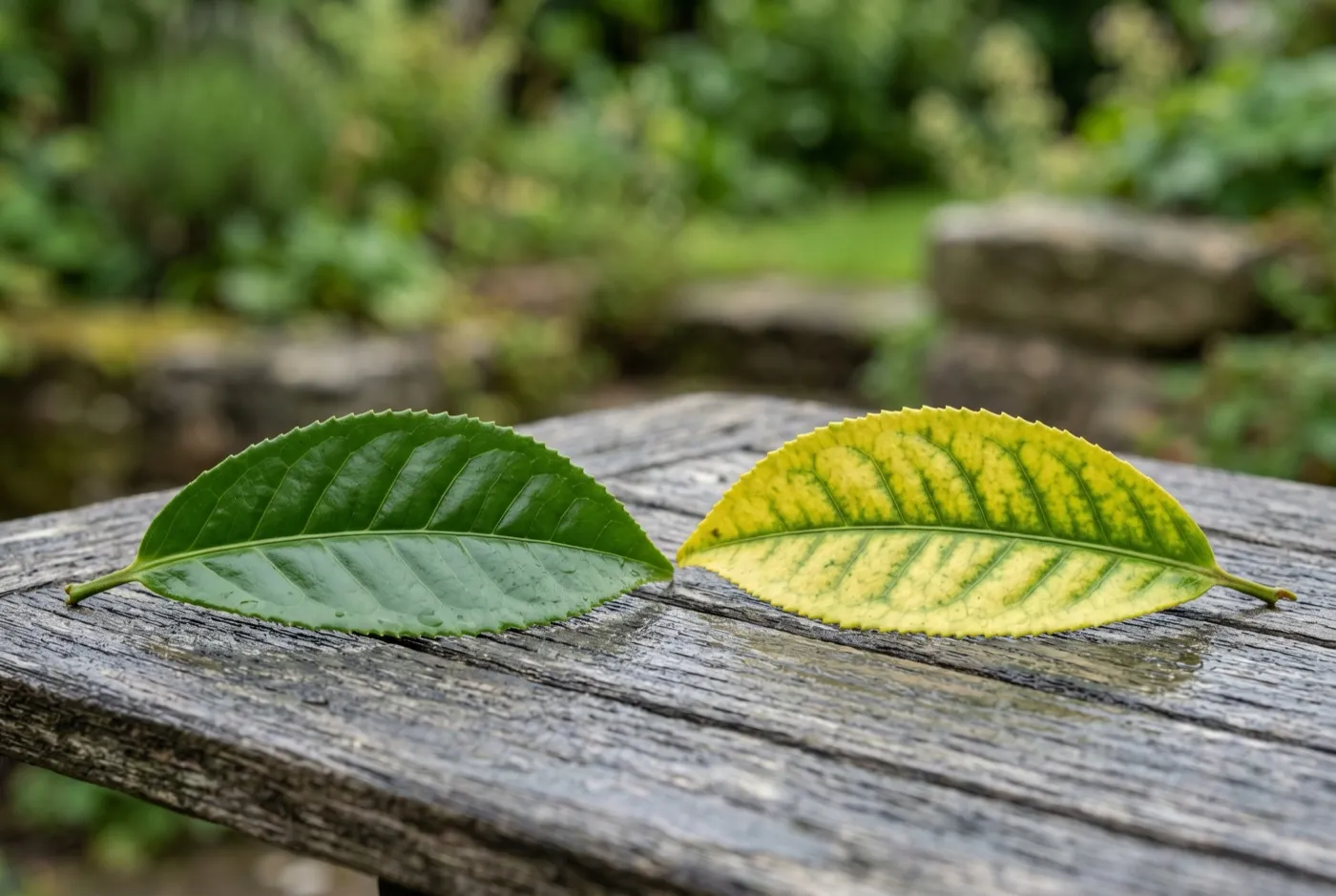
Left, a healthy tea leaf. Right, a leaf yellowing between the veins, a sign the compost is no longer acid enough.
How to grow a tea plant in a pot
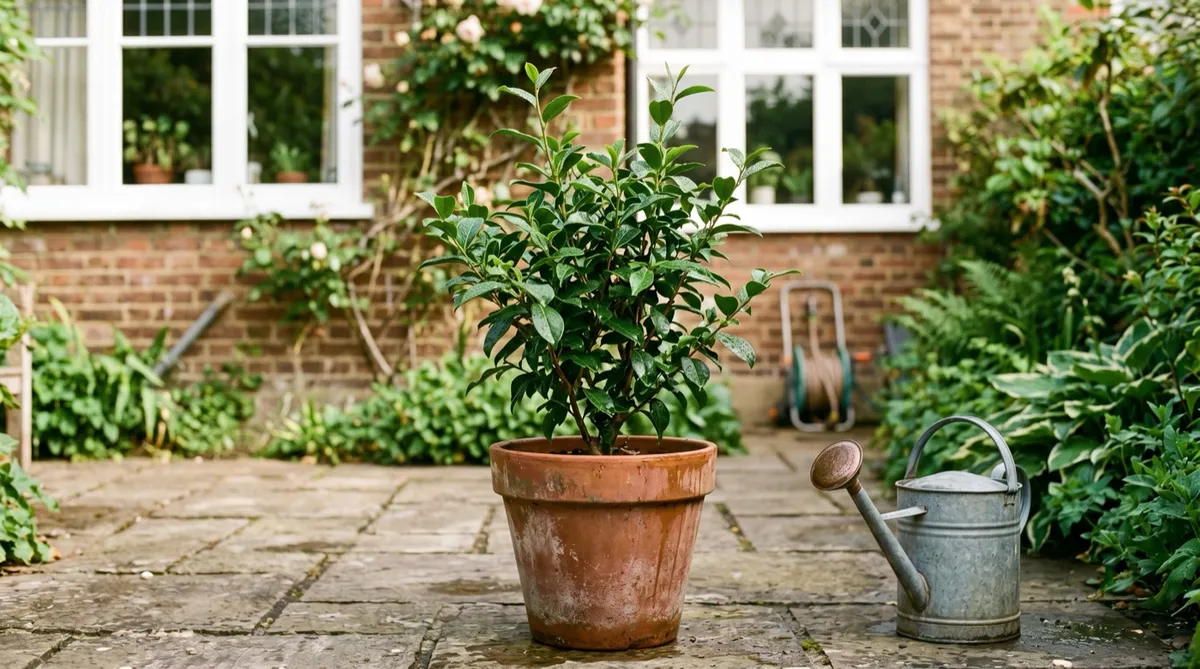
A large pot is the easiest way to grow tea in most gardens. You control the compost from day one, and you can move it to shelter in winter.
Start in a pot a little bigger than the root ball, moving up a size every couple of years. A mature bush is happy in a big pot about 40cm or more across. Use ericaceous compost with some composted bark mixed in for drainage. Stand the pot on feet so winter rain drains away.
Water with rainwater when the top few centimetres of compost feel dry. That might be often in a hot summer and rarely in winter. Feed with an ericaceous liquid feed during spring and summer, following the label.
Every two or three years in spring, repot into fresh ericaceous compost. Old compost breaks down and drifts towards alkaline, so this keeps the plant happy. With regular picking, the bush stays a manageable size.
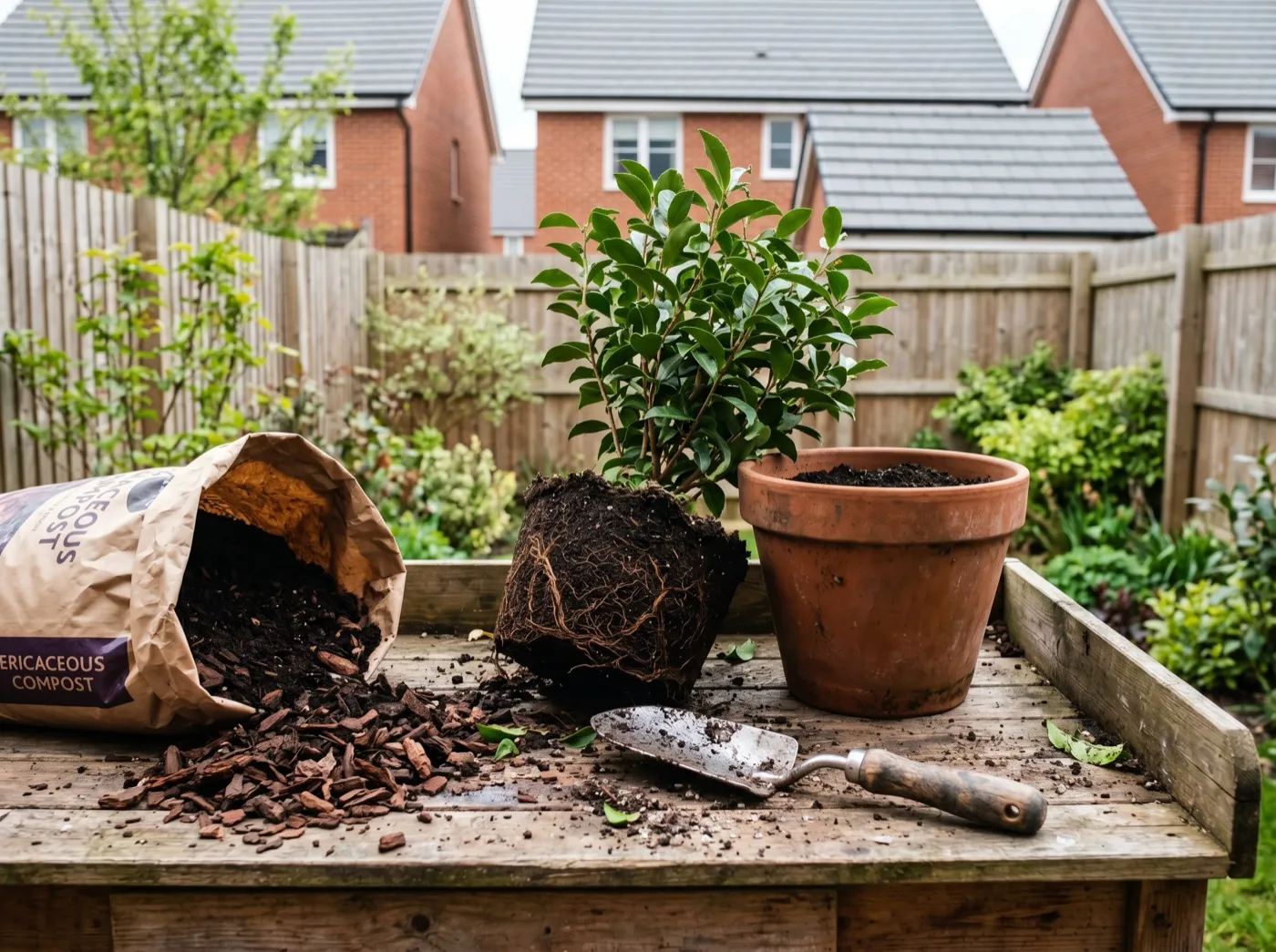
Repot every few years into fresh ericaceous compost with some bark mixed in. It keeps the roots healthy and the compost acid.
Where to put a tea plant: shelter and winter care
Established var. sinensis plants are reasonably hardy, but two things cause trouble in a British winter.
Cold, wet roots do the most harm. A plant sitting in soggy compost through a freezing spell suffers far more than one with dry roots. Good drainage matters more than fleece.
Early morning sun after a frost can scorch leaves and buds. Frozen leaves that thaw too fast get damaged, just as with garden camellias. So avoid east-facing spots. A sheltered place out of the early sun, such as against a west-facing wall, is ideal. Avoid a baking south wall too, as hot reflected sun can scorch leaves in summer.
In cold areas, wrap the pot in bubble wrap or hessian through the coldest months to protect the roots. The guide to protecting plants from frost has more ideas.
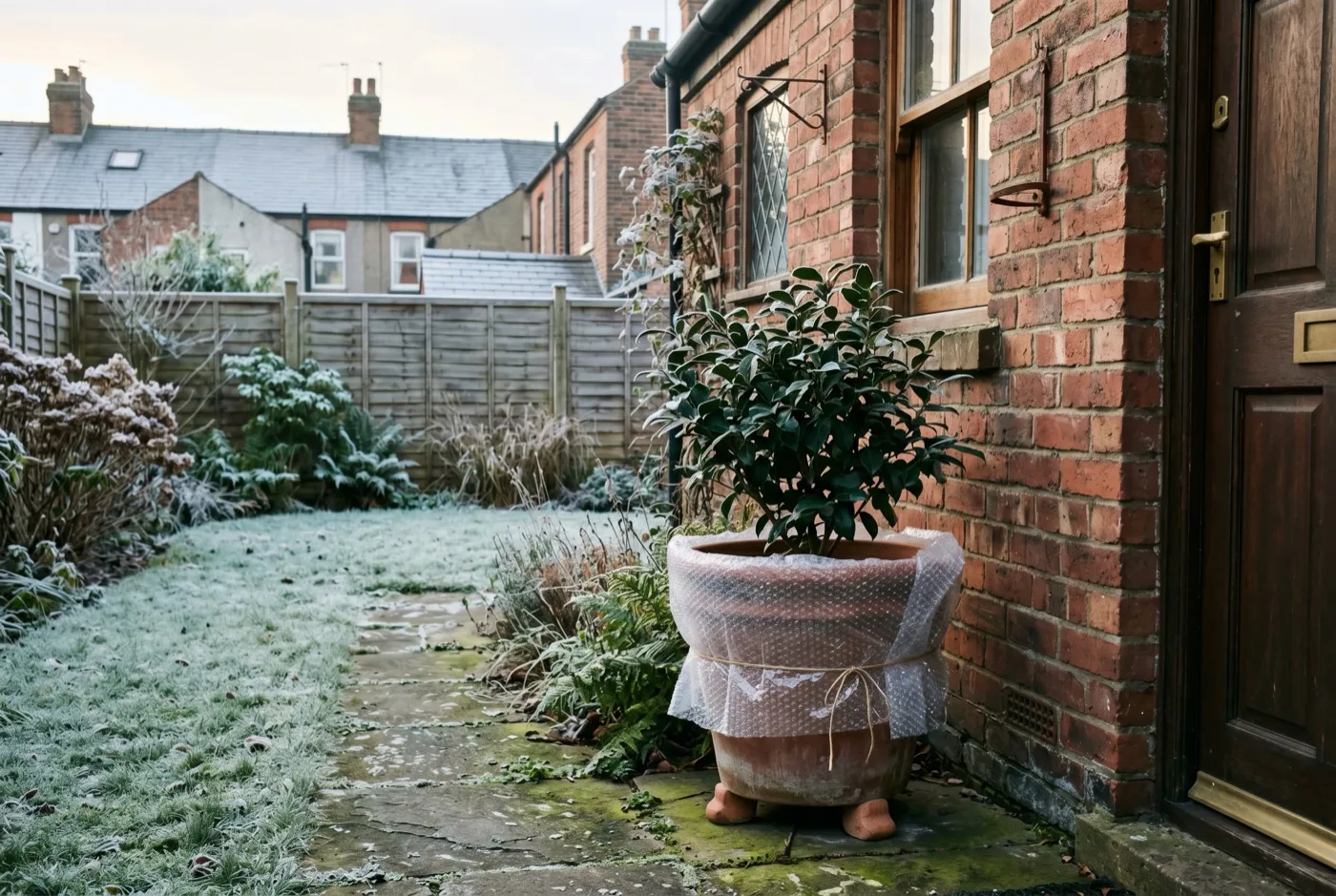
A house wall gives shelter, and wrapping the pot keeps the roots from freezing. Pot feet stop it sitting in water.
How to pick tea: two leaves and a bud
The classic pick is two leaves and a bud. From each shoot tip, pinch off the unopened bud and the two youngest leaves below it. These soft tips hold the flavour. Older, leathery leaves aren’t worth using.
Pick between late spring and late summer, when the bush is pushing out fresh shoots. Picked shoots soon grow new tips, so you can pick again every few weeks. Choose a dry morning and process the leaves the same day.
Be patient with young plants. Let a new bush settle in and put on growth before you start picking, usually for a couple of years. Stripping a young plant slows it down.
Don’t expect a year’s supply. One bush gives enough for some special home-made brews, not your daily cuppa. That’s half the fun.
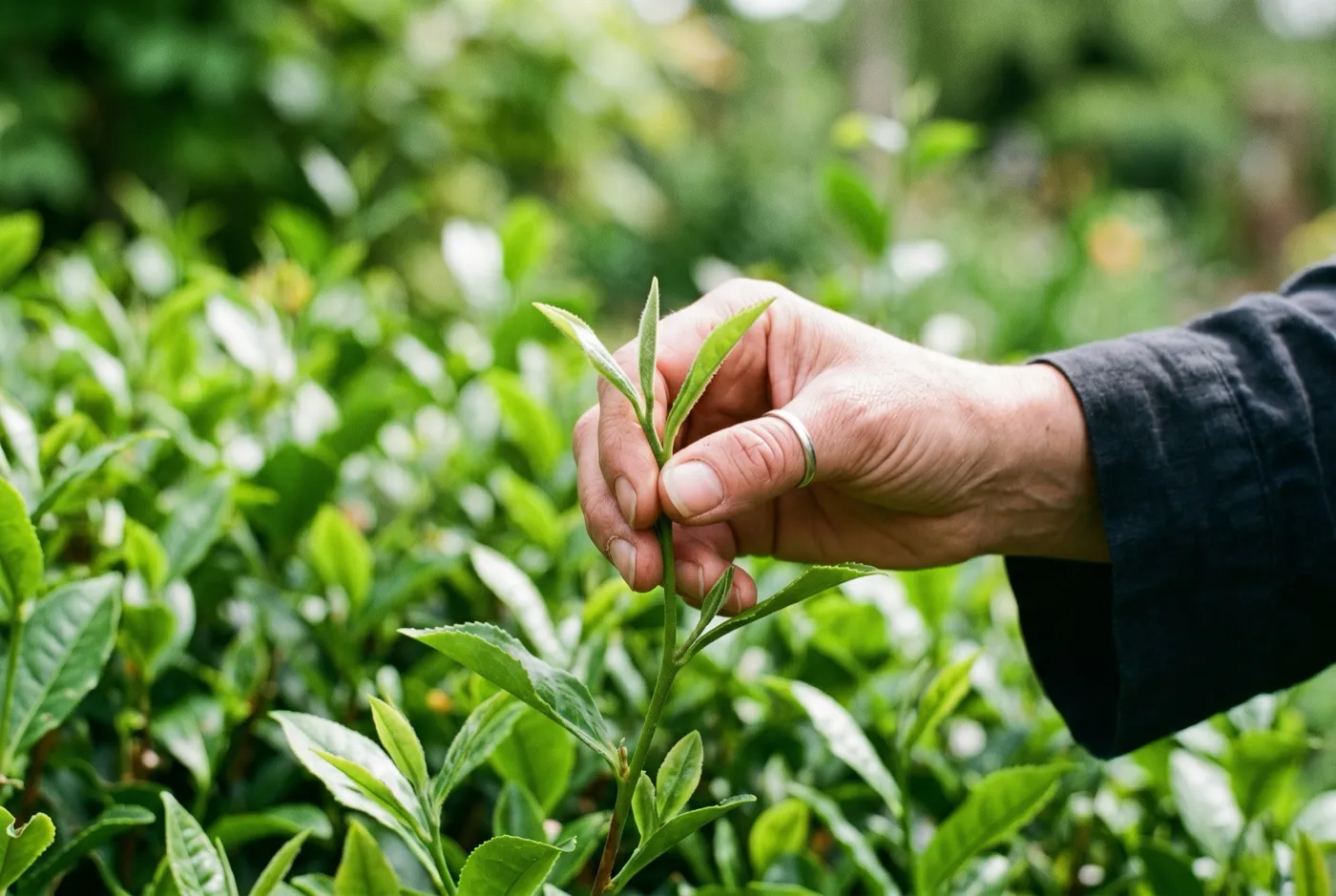
Pinch off the bud and the two leaves just below it. These soft tips give the best flavour.
How to make green and black tea at home
Green and black tea come from the same leaves. Green tea is heated quickly to stop the leaves browning. Black tea is left to brown, or oxidise, before drying. You only need a tray, a dry frying pan and an oven.
Green tea
- Wilt: spread the leaves one layer deep on a tray indoors for an hour or two, until slightly limp.
- Heat: toss them in a hot, dry frying pan for a few minutes. This stops them browning.
- Roll: gently roll the warm leaves between your palms into loose curls.
- Dry: spread them on a tray in a low oven until crisp.
Black tea
- Wilt: leave the leaves spread out overnight, until soft enough to roll without snapping.
- Roll: roll them firmly between your palms for several minutes until they bruise and darken.
- Oxidise: spread them on a tray at room temperature for a few hours until they turn coppery brown.
- Dry: dry in a low oven until crisp.
Don’t rush the wilting stage. Fresh leaves snap rather than roll, so they never bruise properly. Green tea is the easiest to start with, as it has the fewest steps and you see the result straight away.
Store your dried tea in an airtight tin away from light.
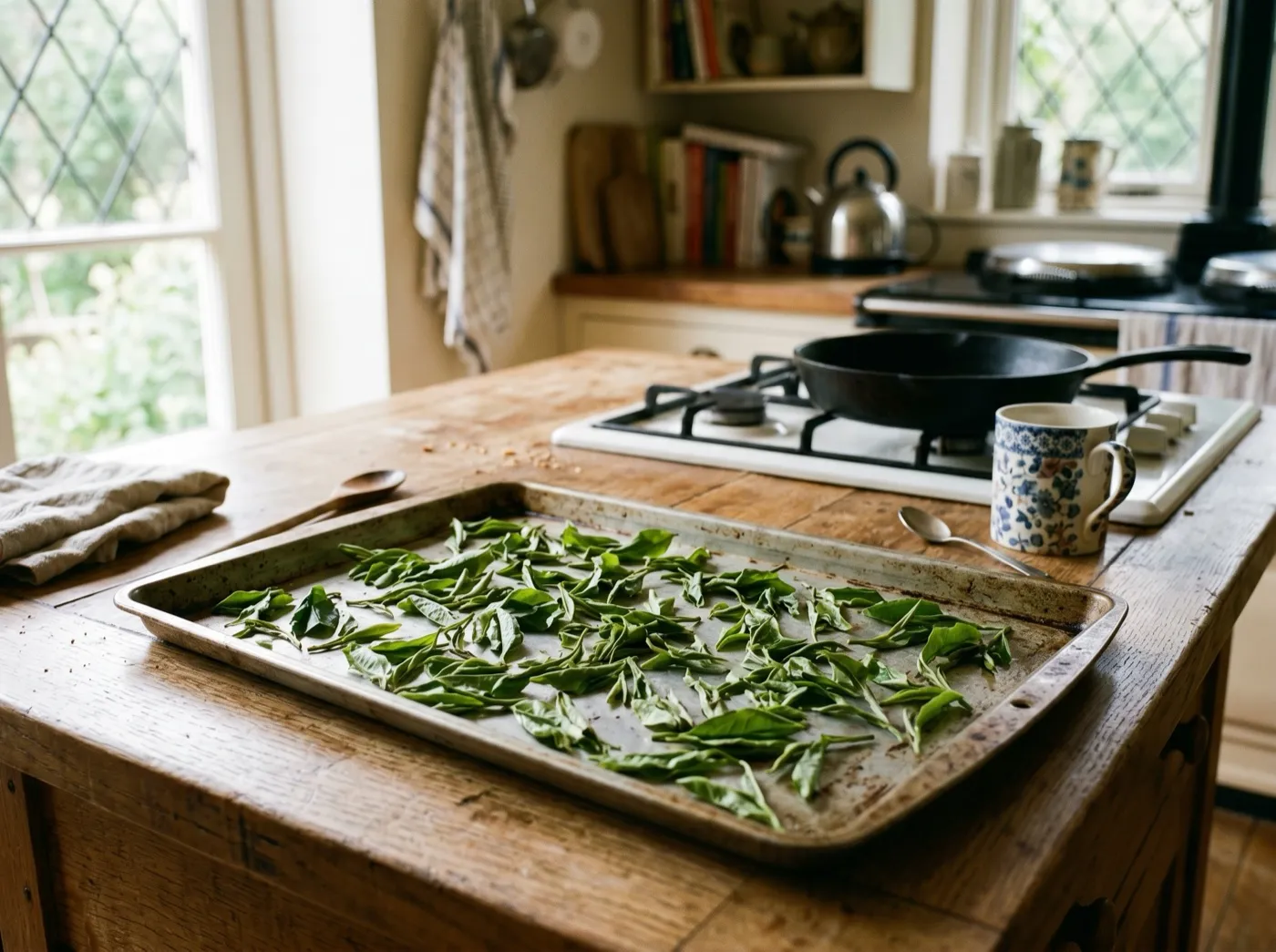
Spread freshly picked leaves in a single layer to wilt. It’s a quiet step, but it makes the rolling work.
Tea plant care month by month
| Month | Task |
|---|---|
| January | Keep pots on feet and sheltered. Water sparingly with rainwater |
| February | Check pot wrapping in hard frosts. Don’t let compost sit wet |
| March | Top-dress with fresh ericaceous compost, or repot if due |
| April | Growth starts. Begin feeding with ericaceous feed |
| May | Start picking on established bushes. Water more as growth speeds up |
| June | Keep picking fresh tips. Feed as the label says |
| July | Check pots often in hot spells. Keep picking |
| August | Keep picking and feeding. Top up the water butt when it rains |
| September | Last picks. Stop feeding |
| October | White flowers start to open |
| November | Flowers carry on. Water less |
| December | Wrap the pot in cold areas. Water only when the compost dries out |
The autumn flowers are a lovely bonus. They’re small and white with golden stamens, opening just as the rest of the garden winds down. Bees visit them on mild days.
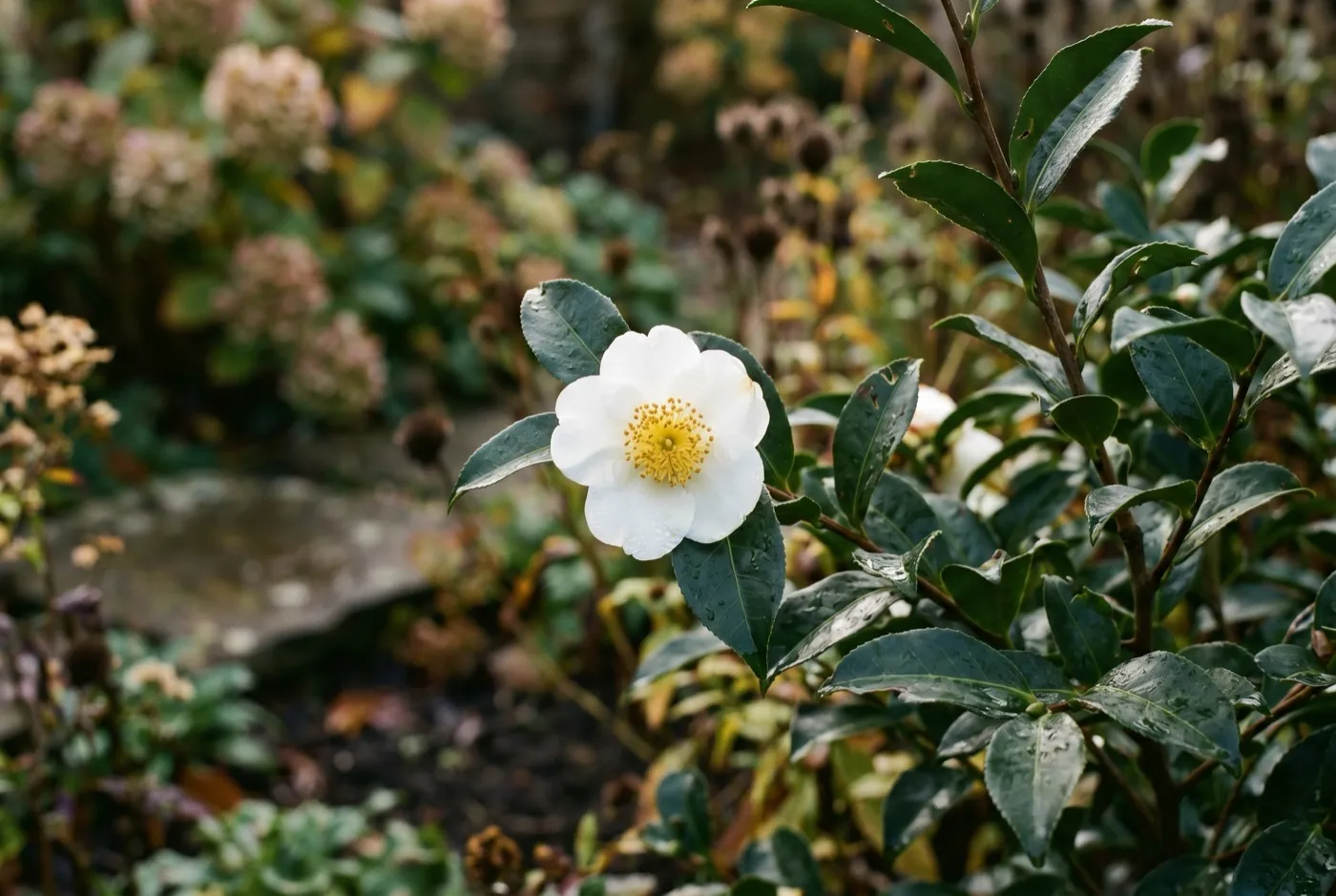
Tea plants flower in autumn, with small white blooms and golden stamens that late bees love.
Common mistakes with tea plants
- Watering with hard tap water: lime builds up and the leaves yellow. Make rainwater the habit.
- Planting in untested soil: most chalky or neutral soils are wrong for tea. Test first, or use a pot of ericaceous compost.
- Choosing the wrong spot: early morning sun after frost scorches leaves, and a hot south wall can burn them in summer. Pick a sheltered spot out of the early sun.
- Picking too soon: young plants need their leaves to settle in. Wait until the bush is growing strongly.
- Letting pots sit wet in winter: cold, soggy roots do more harm than cold air. Use pot feet and a free-draining mix.
If your tea plant starts to struggle, the camellia diagnosis guide covers the problems these close cousins share.
Frequently asked questions
Can you grow tea outdoors in the UK?
Yes, in a sheltered spot with acid soil or ericaceous compost. Tea is grown commercially in Cornwall, and small growers crop it elsewhere in Britain. Choose the hardier var. sinensis and protect it from cold winds and waterlogged roots.
Do tea plants need acid soil?
Yes, tea plants need acid soil, just like garden camellias. In chalky or limey soil the leaves turn yellow. Test your soil first. If it isn’t acid, grow your tea plant in a pot of ericaceous compost.
How much tea does one plant produce?
Not a lot, so treat it as a special treat. One bush gives enough for the occasional home-made brew rather than your daily cuppa. Several bushes give you more to play with.
When can I start picking tea leaves?
Once the bush is established and growing strongly, usually after a couple of years. Pick two leaves and a bud from shoot tips between late spring and late summer. Picking too early slows a young plant down.
Can I use tap water on a tea plant?
Not regularly if you live in a hard-water area. The lime in hard water slowly raises the compost pH and the leaves turn yellow. Use rainwater as your default. A little tap water in a drought won’t hurt.
Can you make green and black tea from the same plant?
Yes, both come from the same leaves. Green tea is heated soon after picking to stop the leaves browning. Black tea is wilted, rolled and left to darken before drying. One bush can give you both.
Once your tea bush is settled, the same acid-compost skills suit other crops. Read our guide to growing blueberries, or try making herbal teas from your garden. There are more unusual edibles in our growing guides.
Our team produces practical UK gardening guidance from source research, contributor records and established horticultural practice. Editorial standards are overseen by Matt W.