Key takeaways
- English lavender is fully hardy and grows anywhere in the UK
- Good drainage matters more than anything else, even sun or feeding
- Trim by about a third after flowering in August, but never cut into bare wood
- Hidcote (deep purple) and Munstead (lilac-blue) are the most reliable
- Bees, butterflies and hoverflies love it
- Prune every year and a plant lasts for many years. Skip it and it goes leggy fast
Lavender is one of the most rewarding plants you can grow in a UK garden. It’s happy with very little fuss, fills borders with colour and scent from June to August, and bees adore it. Even out of flower, the silvery leaves look good. Few plants give so much for so little effort.
What types of lavender grow in the UK?
There are three main types in British gardens. Pick the right one for where you live and you’re halfway there.
English lavender (Lavandula angustifolia)
English lavender is the toughest type and the best choice for most gardens. Despite the name, it comes from the Mediterranean. It’s fully hardy, so it’ll get through winter anywhere in the UK. It makes neat mounds of narrow grey-green leaves, with flowers in purple, blue, pink or white from June to August.
This is the one for cooking, sachets and the classic lavender scent, sweet and floral. It’s great for hedges, borders and cottage gardens. If this is your first lavender, start here.
French lavender (Lavandula stoechas)
French lavender is easy to spot by the little “rabbit ear” petals on top of each flower head. It flowers earlier and for longer than English lavender, often from May to September, usually in deep purple.
The catch is that it’s much less hardy. In sheltered gardens in southern and coastal England it can live outside all year. Further north, grow it in a pot and bring it under cover before the autumn frosts. It’s also happier than English lavender on slightly acid soil.
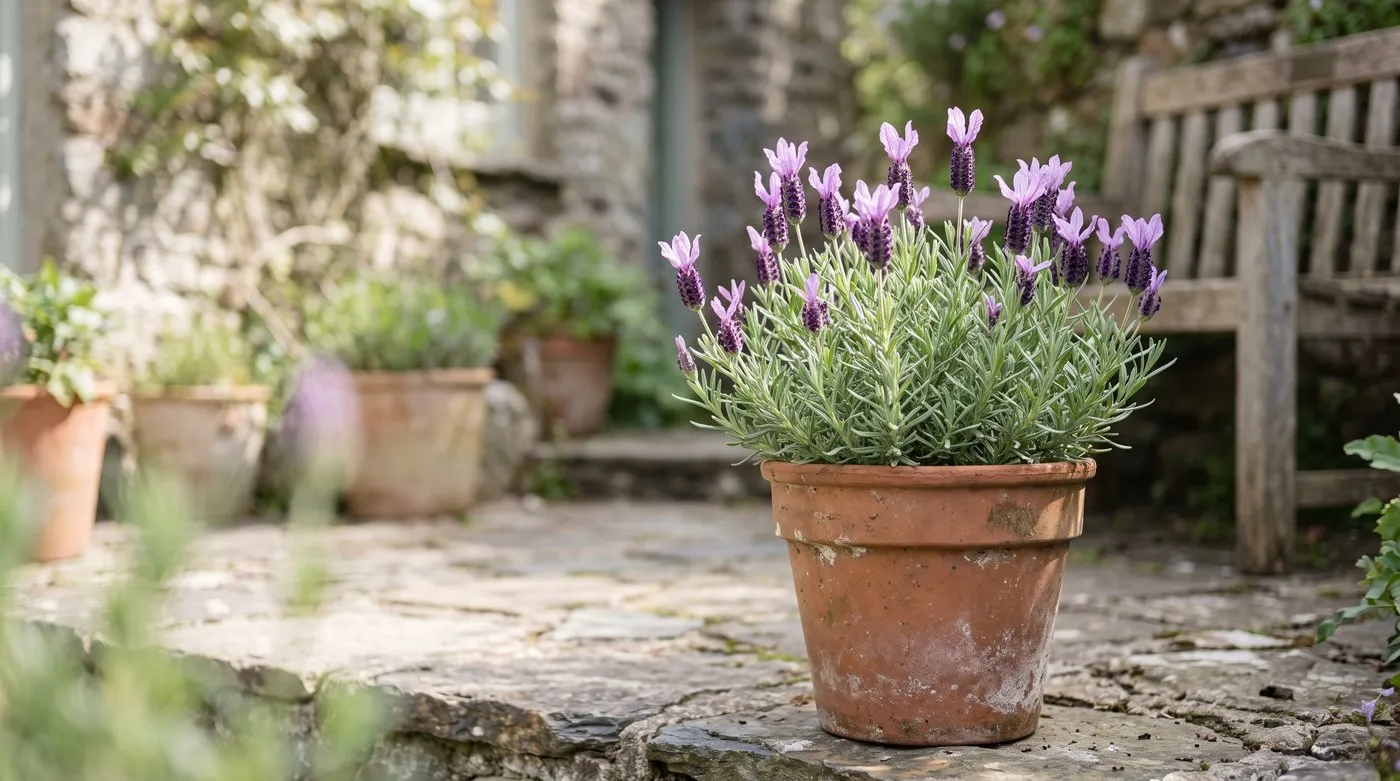
The little rabbit ears make French lavender easy to spot. It’s less hardy, so grow it in a pot in colder areas and bring it under cover for winter.
Lavandin (Lavandula x intermedia)
Lavandin is a cross between English lavender and spike lavender. It makes bigger plants, up to about a metre tall, with long flower spikes on wiry stems. The scent is sharper and more medicinal.
It’s the type grown in fields for lavender oil. It’s hardy enough for most UK gardens and great at the back of a border or as a standalone plant. ‘Grosso’ is the classic, and ‘Phenomenal’ is known for coping well with cold and damp.
Best lavender varieties for UK gardens
Buy a named variety rather than a plain “lavender” label, and you’ll know what height and colour you’re getting. These are the most reliable here.
Hidcote
The UK’s favourite lavender, with an RHS Award of Garden Merit. Deep violet-purple flowers on compact plants about 60cm tall. Its tidy, dense shape makes it perfect for hedging. Named after Hidcote Manor garden in the Cotswolds. Plant 30cm apart for a hedge.
Munstead
A little shorter at about 45cm, with lilac-blue flowers and a softer, looser shape. Great for small gardens, path edges and pots. It flowers a touch earlier than ‘Hidcote’. Named after Gertrude Jekyll’s garden at Munstead Wood in Surrey.
Grosso
The classic field-grown lavandin from Provence. Big plants with long flower spikes on tall stems and a strong scent. It gives loads of flowers, so it’s ideal for cutting and drying. Best at the back of a border.
Phenomenal
A lavandin with silvery leaves and violet-blue flowers. It copes with damp better than most lavenders, so it’s a good pick if your soil is on the heavy side.
Rosea
An English lavender with soft pink flowers, about 50cm tall. Lovely for breaking up a sea of purple, and looks pretty with white lavender in a pastel scheme. Same care as ‘Hidcote’.
Alba Nana
A dwarf white English lavender, just 30cm tall. Perfect for pots, rockeries and path edges. White flowers and silver leaves give a cool, elegant look.
Variety comparison table
| Variety | Type | Size | Flower colour | How hardy | Best for |
|---|---|---|---|---|---|
| Hidcote | English | Medium | Deep purple | Fully hardy | Hedges, borders |
| Munstead | English | Short | Lilac-blue | Fully hardy | Edging, pots |
| Grosso | Lavandin | Tall | Violet | Hardy | Back of border, cutting |
| Phenomenal | Lavandin | Tall | Violet-blue | Hardy | Heavier soil, hedges |
| Rosea | English | Short-medium | Pink | Fully hardy | Mixed borders |
| Alba Nana | English | Dwarf | White | Fully hardy | Pots, rockeries |
| Anouk | French | Short-medium | Deep purple | Tender | Pots, sheltered spots |
How to plant lavender
Get the planting right and lavender will thrive. Drainage is the key. Lavender shrugs off poor soil, drought, wind and cold, but it can’t stand wet feet.
Choosing the right spot
Give it at least 6 hours of direct sun a day. South and west-facing spots are ideal. Avoid shade, especially under trees where rain drips on it. Good air flow helps keep disease away.
Preparing the soil
On sandy or chalky soil that drains freely, just plant it straight in. Easy.
On heavier soil, you’ll need to help it. Dig in plenty of horticultural grit to open the soil up. On really heavy clay, raise the bed 15-20cm with a mix of topsoil and grit, so the roots sit above the winter wet. Our guide on how to improve clay soil has more ideas.
Don’t add compost or manure to the hole. Lavender likes lean, hungry soil. Rich soil gives you floppy leaves and fewer, less scented flowers.
Planting method
Dig a hole twice as wide as the pot but no deeper. Set the plant so the top of the root ball is level with the soil. Firm in gently and water well once. After that, only water in very hot, dry weather. Too much water kills more lavender than anything else.
When to plant
Spring is best, from late March to May, so the roots settle in before winter. You can plant pot-grown lavender in September in mild areas, but spring is safer, especially on heavier soil or in colder parts.
How to prune lavender
Pruning comes a close second to drainage. Skip it and lavender goes woody and bare at the base within a few years. Prune every year and it stays neat and full of flowers for many years. The RHS lavender growing guide is a good extra read on timing.
The one-third rule
Once flowering finishes in August or early September, trim off about a third of the plant’s height with sharp shears. Stay in the green, leafy growth. Shape it into a neat dome.
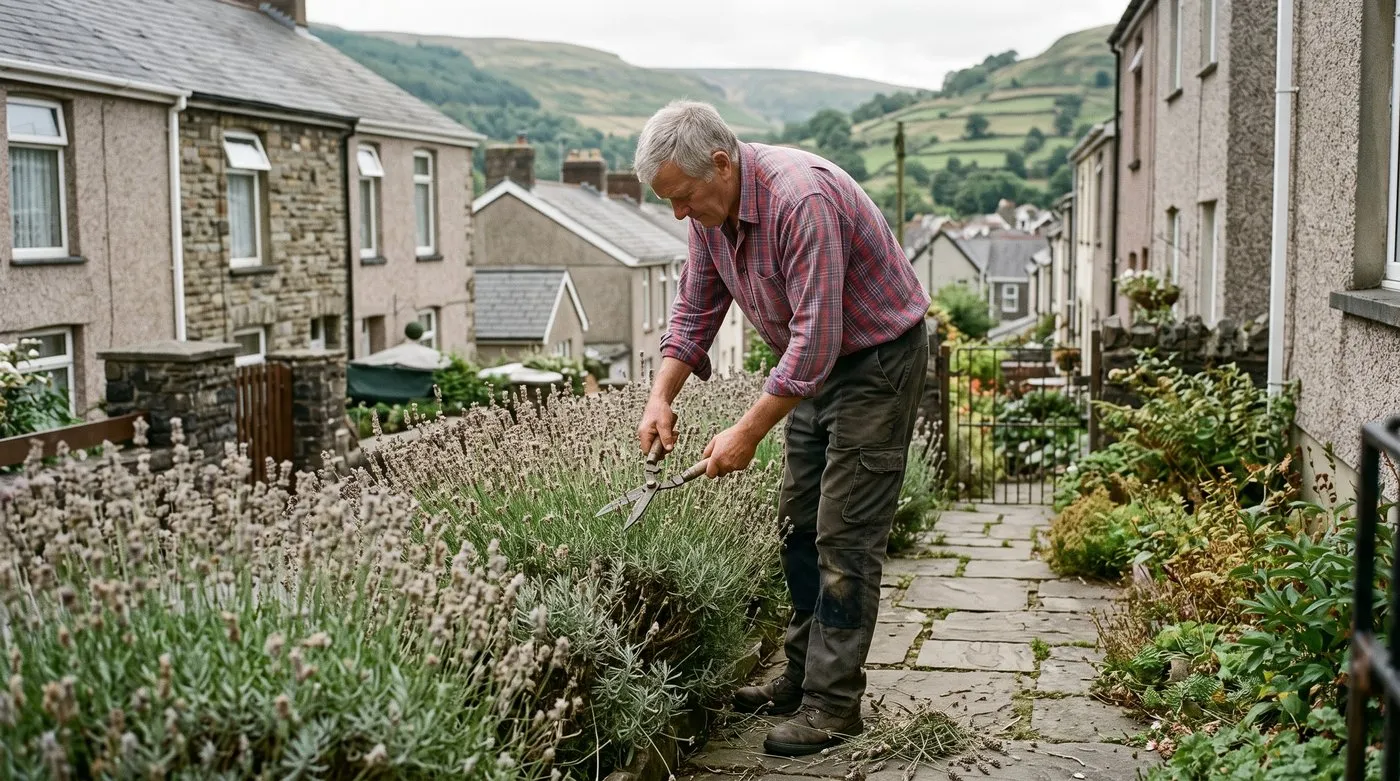
Trim off about a third straight after flowering and stay in the leafy growth. Cut into bare brown wood and it won’t grow back.
The golden rule: never cut into old wood
The most common mistake is cutting too hard. Lavender won’t grow back from old, bare brown wood. Cut below the lowest leaves and you’ll get a permanent bald patch, or lose the plant.
If a plant is already woody with bare stems at the base, it’s usually past saving. Start again with a new one and prune it every year.
Spring tidy
In late March, give it a light trim to take off frost-damaged tips and neaten the shape. Don’t cut hard in spring. Save the main prune for after flowering.
Pruning French lavender
French lavender flowers for months. Snip off faded flower heads through summer to keep it blooming, then give it a light all-over trim in September.
Soil and drainage for lavender
Wet soil kills more lavender than cold ever will. It’s worth saying twice. Lavender comes from rocky Mediterranean hillsides with fast-draining, lean soil. Give it something similar and it’ll be happy.
Perfect soil conditions
The ideal is gritty, free-draining soil that’s neutral to chalky. Chalk, limestone, sandy and gravelly soils all suit it naturally.
Fixing heavy soil
On clay or soil that stays damp:
- Dig out an area about 30cm deep and 60cm wide for each plant
- Mix the soil with plenty of horticultural grit
- Add a thin layer of gravel to the bottom of the hole
- Raise the planting level 15-20cm above the surrounding ground
- Mulch with gravel, not bark or compost, which hold water against the stems
A gravel mulch keeps the base of the plant dry and bounces warmth and light back up into the leaves, just like a Mediterranean hillside.
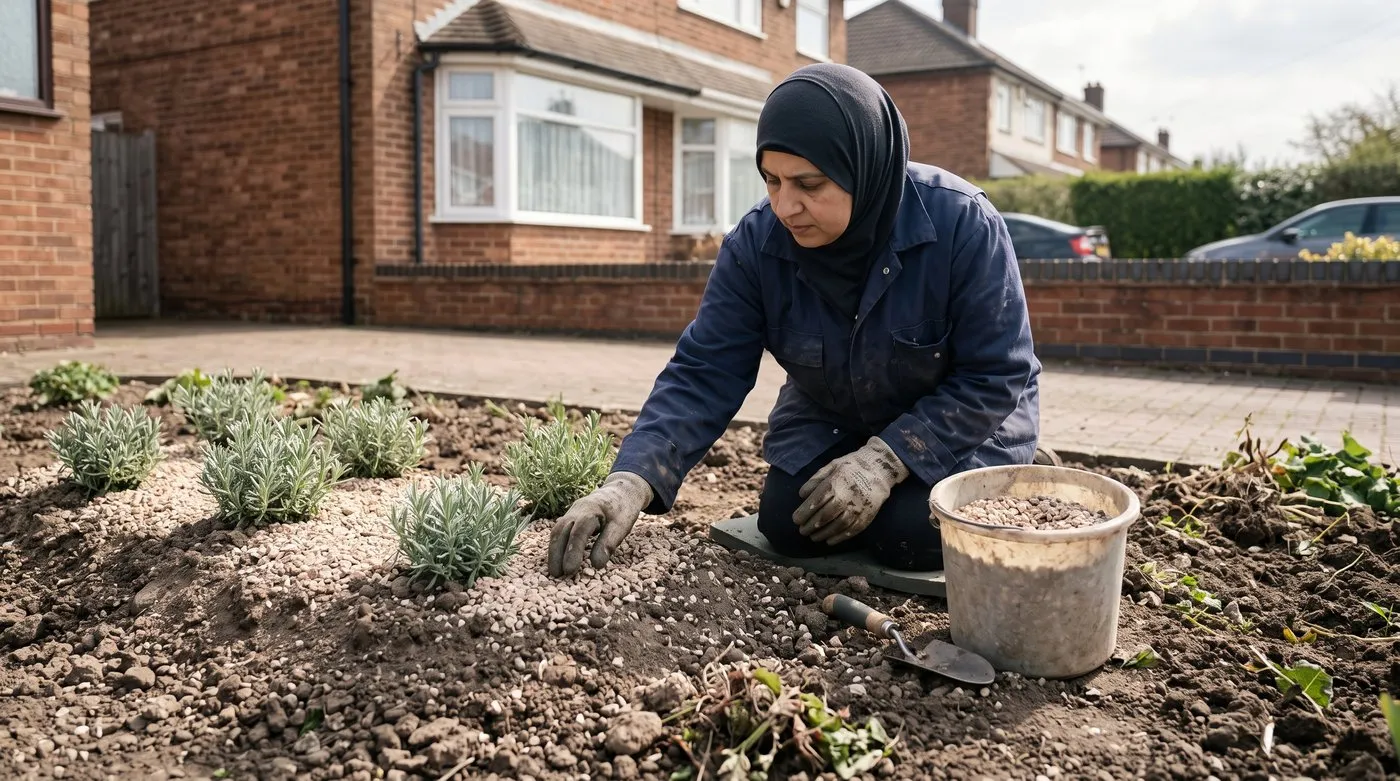
On clay, raise the planting level and mix in lots of grit. Finish with gravel rather than bark, which holds damp against the stems.
Watering
Once settled, lavender in the ground rarely needs watering in the UK. Our rain is plenty. Water new plants once a week through their first summer, then leave it to the weather. Pots are the exception, and may need watering every few days in hot spells.
Growing lavender in containers
Pots are a great answer if your soil is heavy clay, or if you want French lavender that needs winter cover.
Choosing a pot
Go for terracotta rather than plastic, as it lets extra water escape through the sides. Pick a pot at least 30cm across with big drainage holes. Stand it on pot feet. A saucer of standing water will kill lavender faster than any frost.
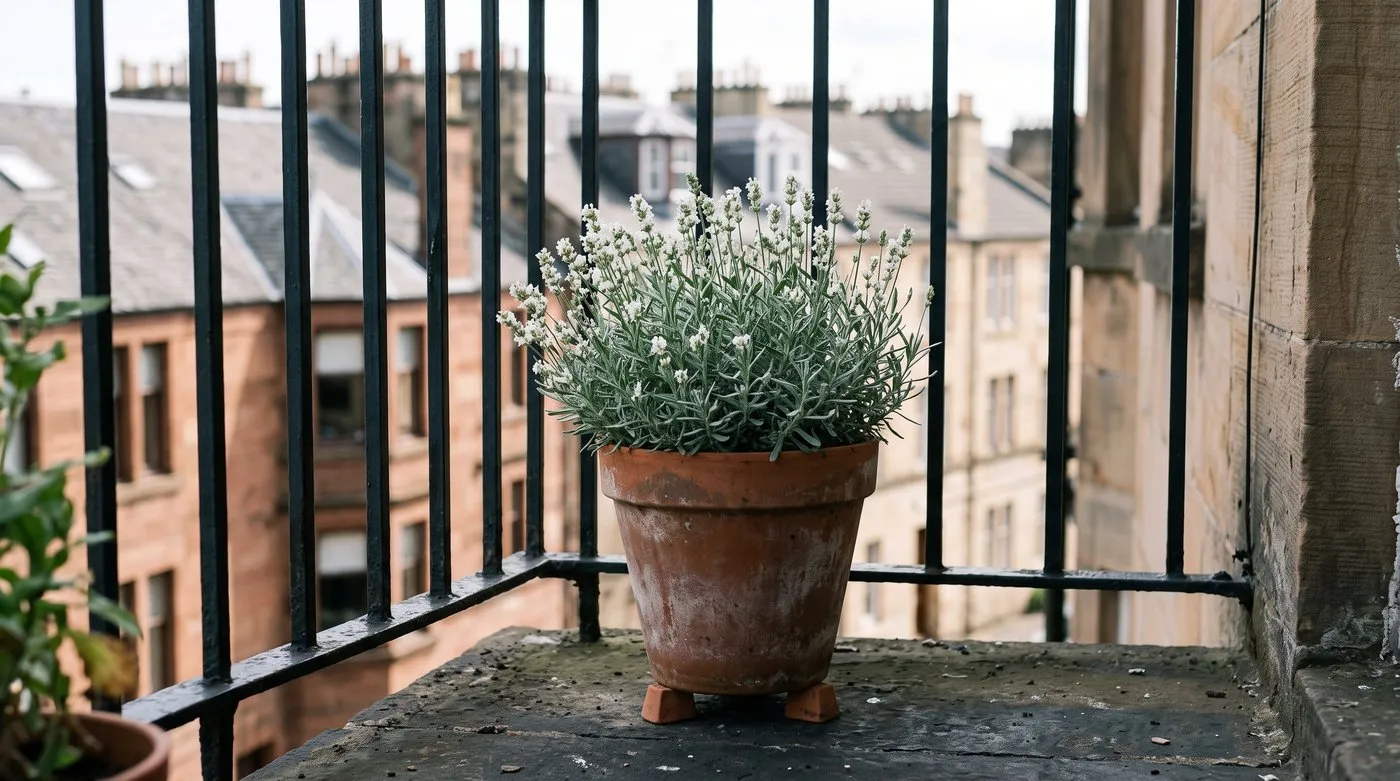
Terracotta and pot feet keep the roots on the dry side. A saucer of standing water does more harm than any frost.
Compost mix
Use multi-purpose compost with about a third perlite or grit mixed in. Never use compost straight from the bag. For a long-term pot, use John Innes No. 2 mixed with grit.
Container care
Feed once in April with a slow-release fertiliser. That’s enough for the whole season. Water only when the top few centimetres of compost are dry. In winter, water even less, but don’t let it dry right out. Move French lavender under cover before the first frost.
Lavender hedging
A lavender hedge in full flower is a joy. It looks lovely along paths, drives and the front of borders.
Best varieties for hedging
‘Hidcote’ is the top choice for a neat, compact hedge. ‘Munstead’ gives a softer, lower hedge for a more relaxed garden. For something taller, try ‘Grosso’ or ‘Phenomenal’.
Planting a lavender hedge
Space ‘Hidcote’ and ‘Munstead’ 30cm apart, so a 3m hedge needs 10-11 plants. Plant in spring along a string line. Water well at planting, then leave it be. In the first year, pinch off the flower buds so the plants bush out at the base. It’s worth it for a thicker, more even hedge.
Maintaining a lavender hedge
Trim the whole hedge with shears after flowering, using the one-third rule. Shape it with a rounded top rather than flat. It sheds rain better and looks more natural.
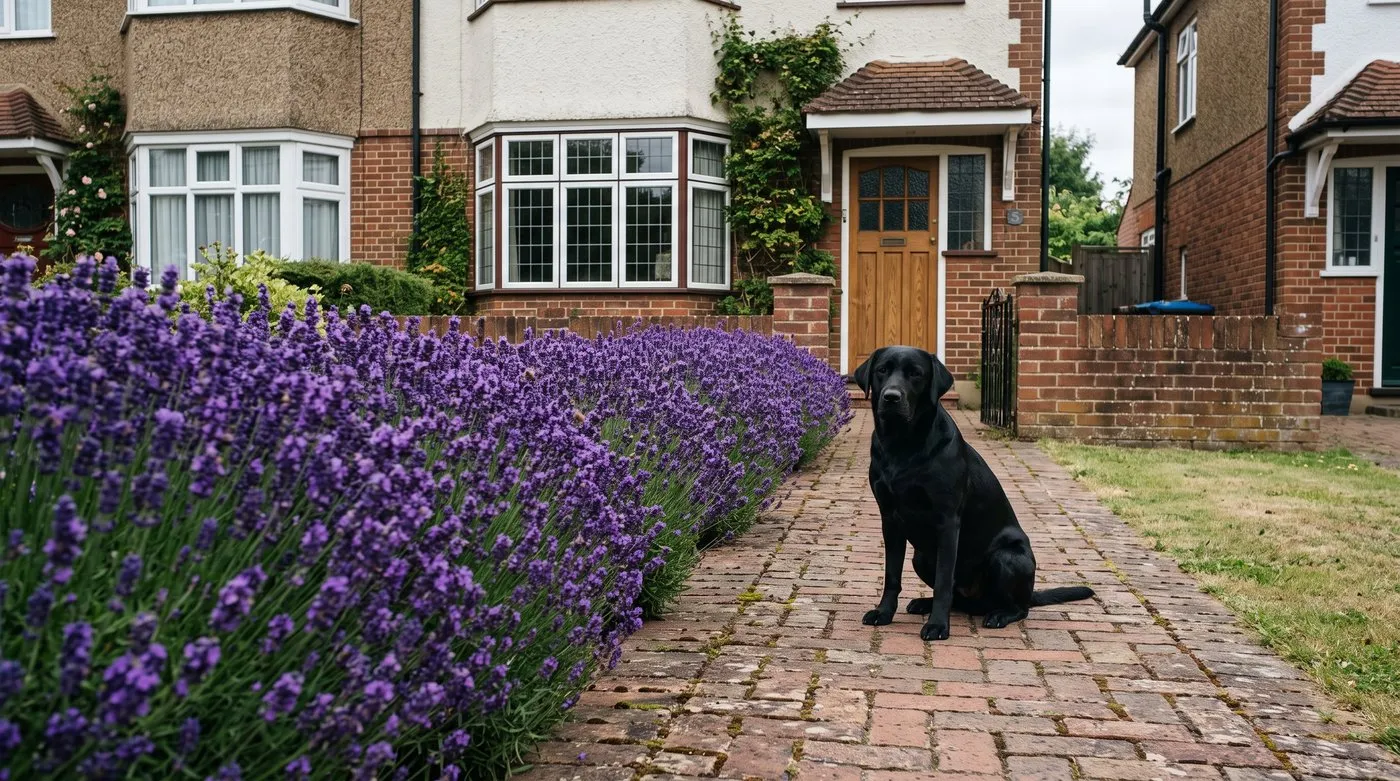
Shape the hedge with a rounded top when you trim after flowering. It sheds rain better and looks more natural than a flat top.
Lavender and pollinators
Why bees love lavender
The small tube-shaped flowers are full of nectar and easy for lots of different bees to reach. A patch of lavender humming with bees on a warm July afternoon is one of the real joys of gardening.
Which pollinators visit lavender?
All sorts. You’ll see honeybees, bumblebees and lots of solitary bees, plus butterflies such as peacocks, red admirals and painted ladies, and plenty of hoverflies.
Maximising pollinator value
Plant lavender in groups of three or more rather than dotting single plants about. Bees can then feed without flying all over the place. Don’t spray lavender with pesticides of any kind, as they can harm the very insects you’re feeding.
Harvesting and drying lavender
Bringing the harvest indoors is one of lavender’s great pleasures. Dried properly, it keeps its scent for months.
When to harvest
Cut stems when about half the buds on each spike have opened, usually mid to late July for English lavender. That’s when the scent is strongest. Leave it until every bud is open and the flowers drop off more easily when dried.
How to dry lavender
Cut stems 20-25cm long. Bundle 20-30 together with an elastic band, which tightens as the stems shrink. Hang them upside down somewhere warm, dry and airy, out of direct sun. A spare room, airing cupboard or shed is ideal. They take 2-4 weeks to dry.
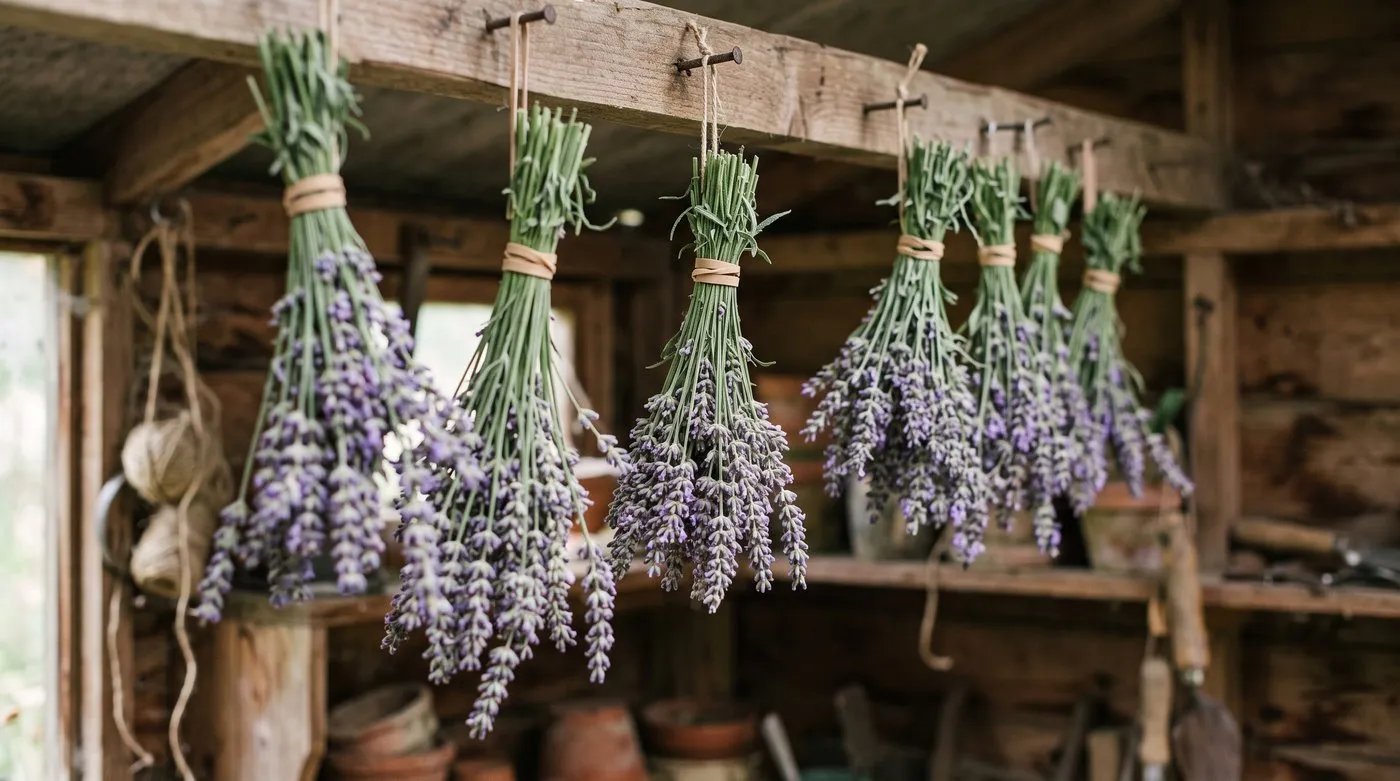
Cut when about half the buds are open, when the scent is strongest. Rubber bands tighten as the stems shrink, so the bundles don’t slip.
Uses for dried lavender
Strip the dried buds and fill little muslin bags for drawers and wardrobes. For cooking, stick to English lavender. ‘Munstead’ and ‘Hidcote’ taste the sweetest. Add a little to shortbread, ice cream or lemonade. It’s strong, so use about half what you think you need.
Dried bundles also look lovely in a jug or tied with ribbon as a simple gift.
Month-by-month lavender care calendar
Lavender is low-maintenance once settled, so plenty of months need nothing at all.
| Month | What to do |
|---|---|
| January | Nothing. Leave it alone |
| February | Order new plants for spring |
| March | Light trim to take off frost-damaged tips. Plant from late March in mild areas |
| April | Main planting month. Feed pots once with slow-release fertiliser |
| May | Finish planting. French lavender starts flowering |
| June | English lavender starts flowering. Sit back and enjoy |
| July | Peak flowering. Cut for drying when half the buds are open |
| August | Main pruning month. Take off about a third after flowering |
| September | Light trim on French lavender. Take cuttings |
| October | Move French lavender under cover before frost |
| November | Nothing. Check pot drainage holes are clear |
| December | Nothing. Enjoy your dried lavender |
Common mistakes when growing lavender
Most lavender is killed with kindness. It simply doesn’t want the fuss most plants enjoy.
Overwatering
The number one killer. In the UK, rain is almost always enough for lavender in the ground. Watering in autumn and winter, unless you’re on sandy soil, invites root rot. Yellowing, wilting in wet soil or blackened stems at the base usually mean too much water.
Planting in rich soil
Compost, manure or fertiliser in the planting hole does more harm than good. It makes soft, floppy growth that suffers in winter. Think rocky hillside, not veg patch.
Not pruning annually
Lots of people plant lavender, enjoy it for a couple of years, then wonder why it’s turned leggy and woody. A trim every year after flowering is the answer. Skip a year and it starts to open up and lose its shape.
Cutting into old wood
Even keen pruners sometimes go too far. Cutting below the leafy growth into bare brown stems causes damage that won’t grow back. Lavender can’t bounce back from old wood the way roses or buddleia can.
Planting too deep
Burying the base of the plant traps damp around the stems and invites rot. Keep the top of the root ball level with the soil, or a little above it on heavy ground.
Using bark mulch around stems
Bark and compost mulches hold damp against the plant. Use gravel or stone chippings instead. A 3-5cm layer keeps the base dry, stops weeds and reflects warmth up into the plant.
How to propagate lavender from cuttings
Cuttings are easy and give you free plants. They’re also the only reliable way to get more of a named variety, as seedlings can vary.
When to take cuttings
September is ideal. Take semi-ripe cuttings from side shoots without flowers. They should be firm at the base but still bendy at the tip.
Method
- Cut 10cm shoots without flowers from healthy plants
- Strip the lower leaves, leaving just the top 2-3cm
- Dip the base in rooting powder if you have it
- Push them 3cm deep into pots of half perlite, half multi-purpose compost
- Water lightly and cover with a clear plastic bag or propagator lid
- Stand somewhere bright but out of direct sun
- Take the cover off after 4-6 weeks once they’ve rooted
- Pot them up one each and keep them in a cold frame or sheltered spot over winter
- Plant out the next spring
Not every cutting will take, so do a few more than you need.
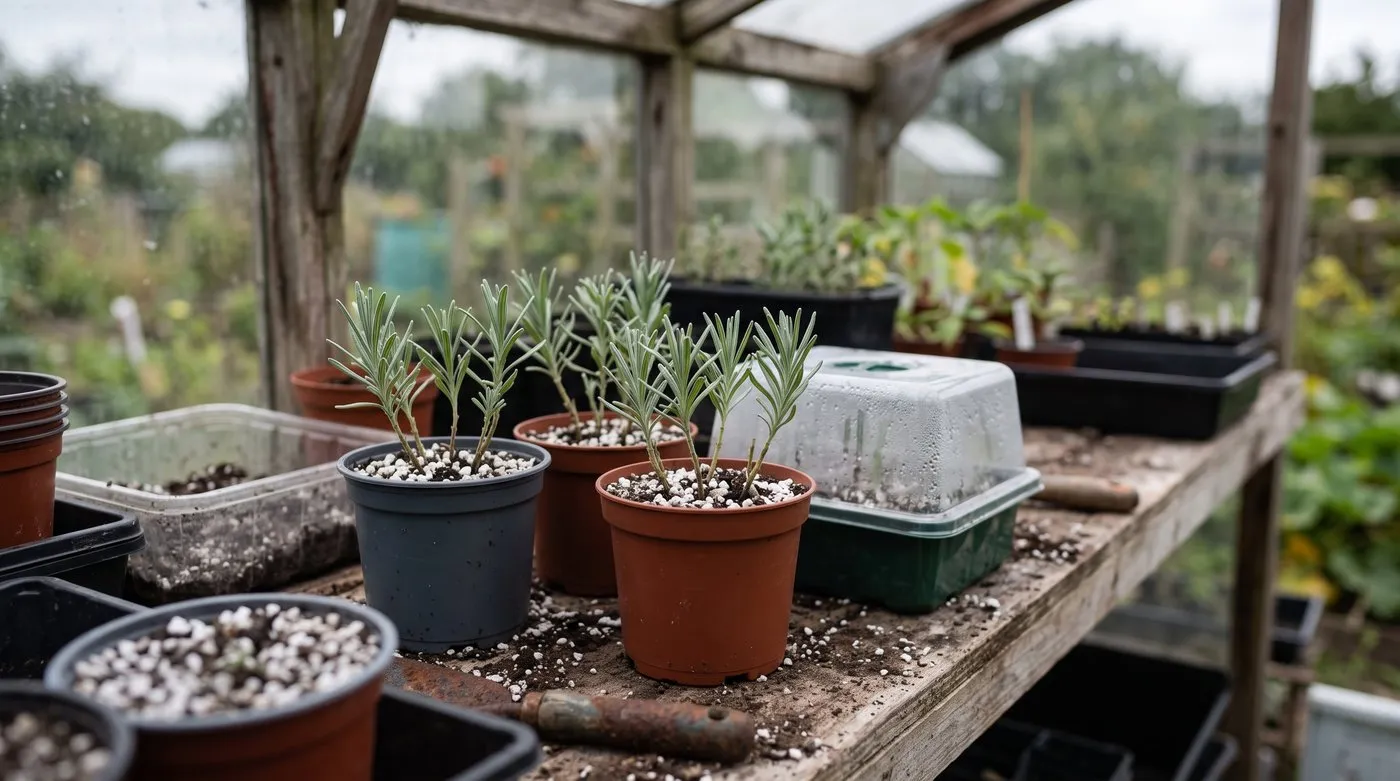
September cuttings usually root in four to six weeks. Take a few more than you need, as not every one will take.
Companion plants for lavender
Lavender looks great with other sun-loving plants that like dry feet. Many of them feature in our guide to climate-resilient plants that cope with the UK’s changing weather.
Rosemary is a natural partner, with similar leaves and needs. Catmint (nepeta) flowers at the same time in soft blues and pulls in the same bees. Salvia nemorosa adds upright spikes against lavender’s rounded shape. Russian sage (perovskia) carries the same silvery, drought-proof look into late summer. See our guide on how to grow Russian sage.
Grasses like Stipa tenuissima add movement. Mexican fleabane (Erigeron karvinskianus) spills over path edges between lavender plants for a relaxed look.
In a cottage garden planting plan, lavender sits happily with roses, foxgloves and hardy geraniums.
Frequently asked questions
When should I plant lavender in the UK?
Plant from late March to May. Spring planting gives the roots a whole season to settle in before winter. In sheltered gardens in the south, September planting works too. Avoid November to February, when cold, wet soil can rot new plants.
Why is my lavender turning woody and leggy?
Usually because it hasn’t been pruned each year. Lavender needs a trim every August after flowering, taking off about a third of this year’s growth. Once a plant has gone bare and woody at the base, it rarely recovers. The best fix is a new plant that you prune every year from the start.
Can I grow lavender in clay soil?
Clay holds too much water for lavender to be happy. Mix plenty of horticultural grit into the planting area and raise the bed 15-20cm above the ground. On very heavy clay, a pot of gritty compost is the safest bet. Our guide on how to improve clay soil has more tips.
Is French lavender hardy in the UK?
Only in mild, sheltered gardens. It can stay outside all year in sheltered spots in southern and coastal England. Further north, grow it in a pot and move it under cover before the first frost. English lavender is the safer choice for cold or exposed gardens.
How do I prune lavender without killing it?
Prune in August after flowering. Use sharp shears to take off about a third, staying in the green, leafy growth, and shape it into a rounded dome. Never cut into the old bare wood below the leaves. It won’t grow back from there.
Can I grow lavender in pots?
Yes, lavender loves a terracotta pot. Use one at least 30cm across, filled with multi-purpose compost mixed with about a third perlite or grit. Stand it on pot feet so water drains away. Water only when the top few centimetres are dry, and feed once in April with a slow-release fertiliser.
How long does a lavender plant last?
With a yearly trim, many years. Good drainage, pruning every year and not overwatering are what keep it going. Without pruning, plants go woody and tired within a few years and need replacing.
Our team produces practical UK gardening guidance from source research, contributor records and established horticultural practice. Editorial standards are overseen by Matt W.