Key takeaways
- Hardy Salvia nemorosa types come back every year without winter protection
- Cut faded spikes back to a leaf pair and you'll get a second wave of flowers
- 'Caradonna' is a great all-rounder with purple spikes on almost-black stems
- Tender salvias like 'Amistad' and 'Hot Lips' need protecting or lifting in colder areas
- All salvias want full sun and soil that drains well
- Bees, butterflies and hoverflies love them
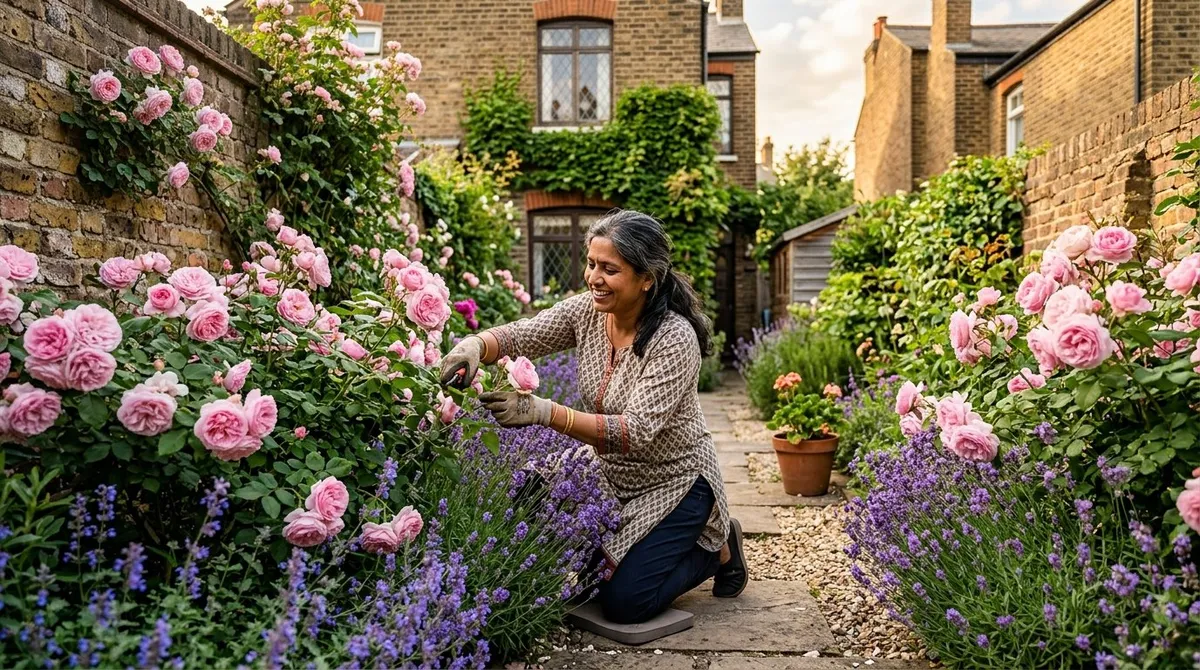
Salvias are some of the longest-flowering plants you can grow in a British garden. Tough border types shrug off winter, while tender ones put on a show from June until the first frost. There’s a salvia for every border, pot and style of garden.
The trick is picking the right type for where you live. Hardy salvias like Salvia nemorosa need almost no care once settled. Tender ones like ‘Amistad’ and ‘Hot Lips’ need some winter protection, or replacing each year. For more easy-going plants, see our guide to drought-tolerant plants for UK gardens.
Which salvias grow well in the UK?
Salvias are part of the mint family, and there are a huge number of them. For UK gardens, think of two groups: hardy ones that stay out all winter, and tender ones that need a bit of help.
Hardy salvias
Salvia nemorosa is the backbone of many British borders. It forms neat clumps 40-50cm tall with spikes of purple, blue or pink flowers from June to August. Cut off the faded spikes and you’ll get more flowers into September or October.
Salvia x sylvestris types behave just the same and are just as tough. ‘Mainacht’ (May Night) is one of the first to flower, from late May. They grow in most soils that drain well and cope with clay if it isn’t waterlogged.
Tender salvias
Salvia microphylla (including ‘Hot Lips’) and Salvia ‘Amistad’ don’t like hard frost. In sheltered gardens in southern England and by the coast, they often come through winter outside with a thick mulch. In colder parts of the UK, lift them before frost, or take cuttings in late summer as a backup.
Salvia patens has the brightest blue flowers of any salvia. It grows from tubers that rot in wet winter soil. Lift and store them like dahlias, or mulch heavily and hope for a mild winter. ‘Cambridge Blue’ is a paler, just as lovely form.
The best salvias for UK gardens
 Hardy Salvia nemorosa spikes next to the red and white flowers of tender ‘Hot Lips’.
A named variety tells you how tall it grows, what colour it is and how tough it is. These are the most reliable choices for British gardens.
Caradonna
A star. ‘Caradonna’ has deep purple spikes on almost-black stems, reaching about 50cm. Those dark stems make it really stand out in a border. It’s fully hardy and holds an RHS Award of Garden Merit. Plant 40cm apart.
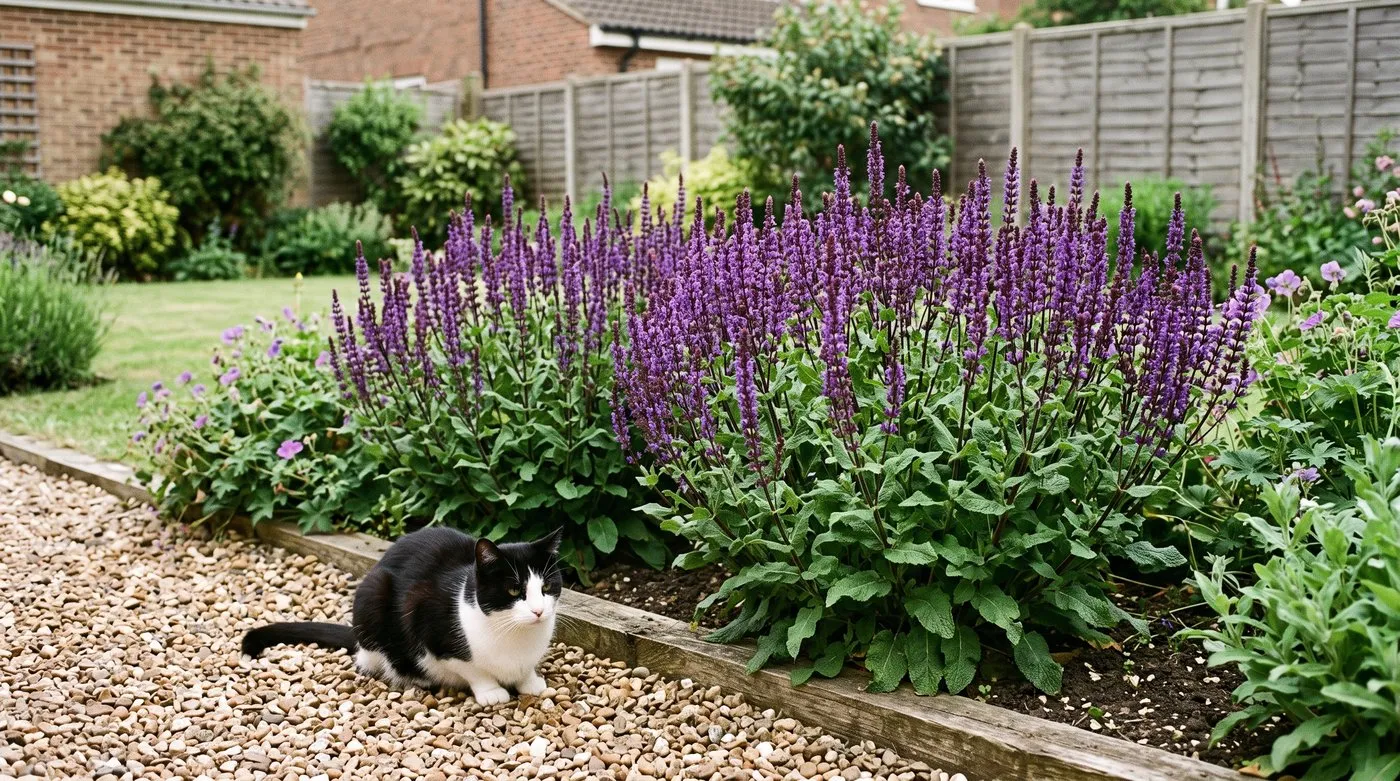
Those dark stems make Caradonna stand out in a border. Plant it about 40cm apart in full sun for a proper drift.
East Friesland
A neat, reliable salvia about 45cm tall with violet-purple flowers. ‘East Friesland’ is a little shorter and wider than ‘Caradonna’, so it’s ideal for the front of a border or along a path. A good pick for small gardens.
Hot Lips
Salvia ‘Hot Lips’ has red and white flowers that change with the weather. Cool spells bring more white, and hot spells more red. It grows 70-90cm and can flower from June to November in a mild year. Give it a sheltered, sunny spot or winter protection in colder areas.
Amistad
A tall, bold salvia at 90-120cm, with big deep purple flowers. ‘Amistad’ flowers from July until the first hard frost, often into November. In most of the UK, grow it for one summer or lift it before winter. It looks great at the back of a border or in a big pot.
Cambridge Blue
Salvia patens ‘Cambridge Blue’ has gorgeous pale blue flowers and grows to about 60cm. Lift the tubers in November and keep them frost-free, or mulch thickly and take your chances. That colour is worth the effort.
Salvias at a glance
| Variety | How tough | Height | Flower colour | Best for |
|---|---|---|---|---|
| Caradonna | Hardy | 50cm | Deep purple | Borders, big drifts |
| East Friesland | Hardy | 45cm | Violet-purple | Edging, small gardens |
| Mainacht | Hardy | 50cm | Indigo-violet | Early colour |
| Hot Lips | Tender | 70-90cm | Red and white | Sheltered borders, pots |
| Amistad | Tender | 90-120cm | Deep purple | Back of the border |
| Cambridge Blue | Tender | 60cm | Pale sky blue | Borders, cutting |
How to plant salvia
Get two things right and salvias are among the easiest plants to look after: full sun and soil that drains well.
Finding the right spot
Aim for at least six hours of direct sun a day. South and west-facing borders are perfect. Avoid shade from walls, trees or buildings. Air moving around the plants helps keep powdery mildew away.
Getting the soil ready
On sandy, chalky or loamy soil, just plant straight in. Salvias like lean soil and don’t need compost or manure in the hole.
On heavy clay, dig in plenty of grit and raise the planting area a little. Soggy winter soil kills more salvias than frost does. Our guide to the best perennial plants for UK gardens has more ideas for clay.
Planting
Dig a hole twice as wide as the pot but no deeper. Set the plant so the top of the root ball sits level with the soil. Firm it in and water well. After that, only water in hot, dry spells. Space hardy types 40cm apart and big ones like ‘Amistad’ 60cm apart.
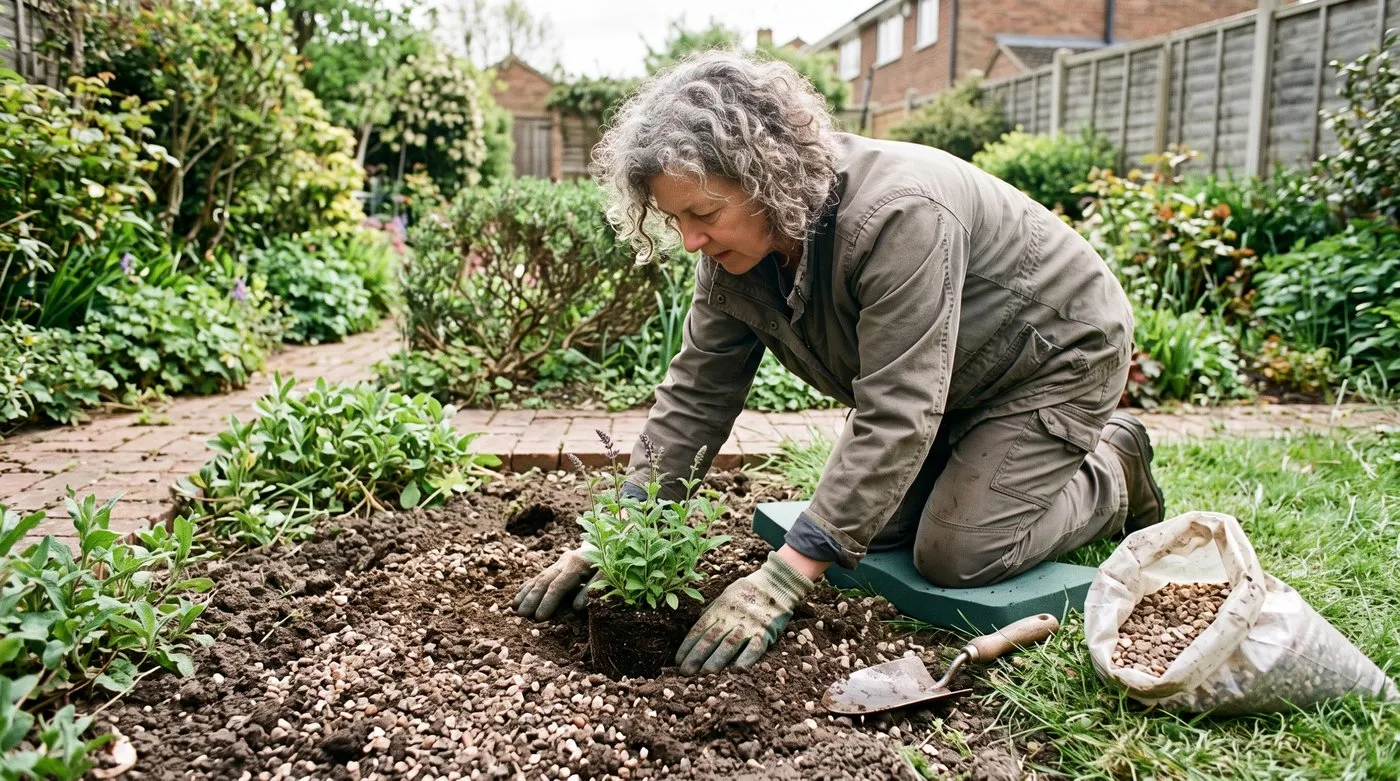
On heavy clay, work grit into the soil and keep the root ball level with the surface. Soggy winter soil kills more salvias than frost does.
When to plant
Late April to June is ideal. Planting after the last frost gives roots the summer to settle. Wait until frost has passed for tender salvias, usually May. To get ahead, you can sow seeds indoors from February.
Deadheading for more flowers
 Cut faded spikes back to the next leaf pair and new flowering shoots soon follow.
Deadheading is the best thing you can do for a salvia. A deadheaded Salvia nemorosa keeps going for months, while an uncut one stops much sooner.
How to deadhead
When most of the flowers on a spike have faded, cut the stem down to the first strong pair of leaves below it. Use sharp secateurs or scissors. Don’t just snap off the dead bits. Cutting to a leaf pair wakes up the buds there, which grow into new flowering shoots.
Why it works
Once a spike finishes, the plant puts its energy into making seed. Snip the spike off first and that energy goes into new shoots instead. You’ll get a second wave of flowers a few weeks later, and sometimes a lighter third one in a warm summer.
When it won’t help
Deadheading can’t fix a plant that’s too dry, too wet or in deep shade. A happy plant in full sun bounces back well. A struggling one won’t, so sort out the spot first.
Growing salvia in pots
 Salvia nemorosa looking happy in a terracotta pot, with gravel on top to keep the base dry.
Pots suit salvias well, especially tender ones you’ll move under cover for winter. Hardy types are happy in pots for a few years before they need dividing.
Choosing a pot
Use terracotta or stone pots at least 30cm wide with good drainage holes. Terracotta dries out faster, which salvias like. Stand pots on feet so water doesn’t pool underneath.
Compost
Mix multipurpose compost with plenty of perlite or grit, roughly two parts compost to one part grit. Salvia roots rot quickly in soggy compost. A layer of gravel around the base helps keep the crown dry.
Feeding and watering
Feed every couple of weeks from June to September with tomato feed. Water when the top few centimetres of compost are dry. Water less from October and keep it barely moist over winter. Roots in pots feel the cold more than roots in the ground. Wrap pots in bubble wrap over winter, or move them into an unheated greenhouse.
What it costs
You’ll need a decent pot, a small plant and a bag of compost, so it’s an inexpensive way to brighten a patio. A potted salvia lasts a few years before it needs repotting or dividing.
Getting tender salvias through winter
Tender salvias live or die by what you do in autumn. Cold and wet together is the real killer. A salvia in well-drained soil copes with much more cold than one sitting in soggy ground.
Mulching (mild areas)
In sheltered gardens in southern England, coastal Wales and the south-west, tender salvias often survive outside with a little help. In November, pile a thick layer of bark mulch or straw over the base. Pull it back in late March when new shoots appear. Leave any trimming of shrubby types until spring.
Lifting and storing (colder areas)
In colder areas, lift tender salvias before the first frost, usually late October. Pot them up in barely damp compost and keep them in a frost-free shed, garage or cold greenhouse. Water just enough to stop the compost drying out completely. Plant them back out after the last frost in May.
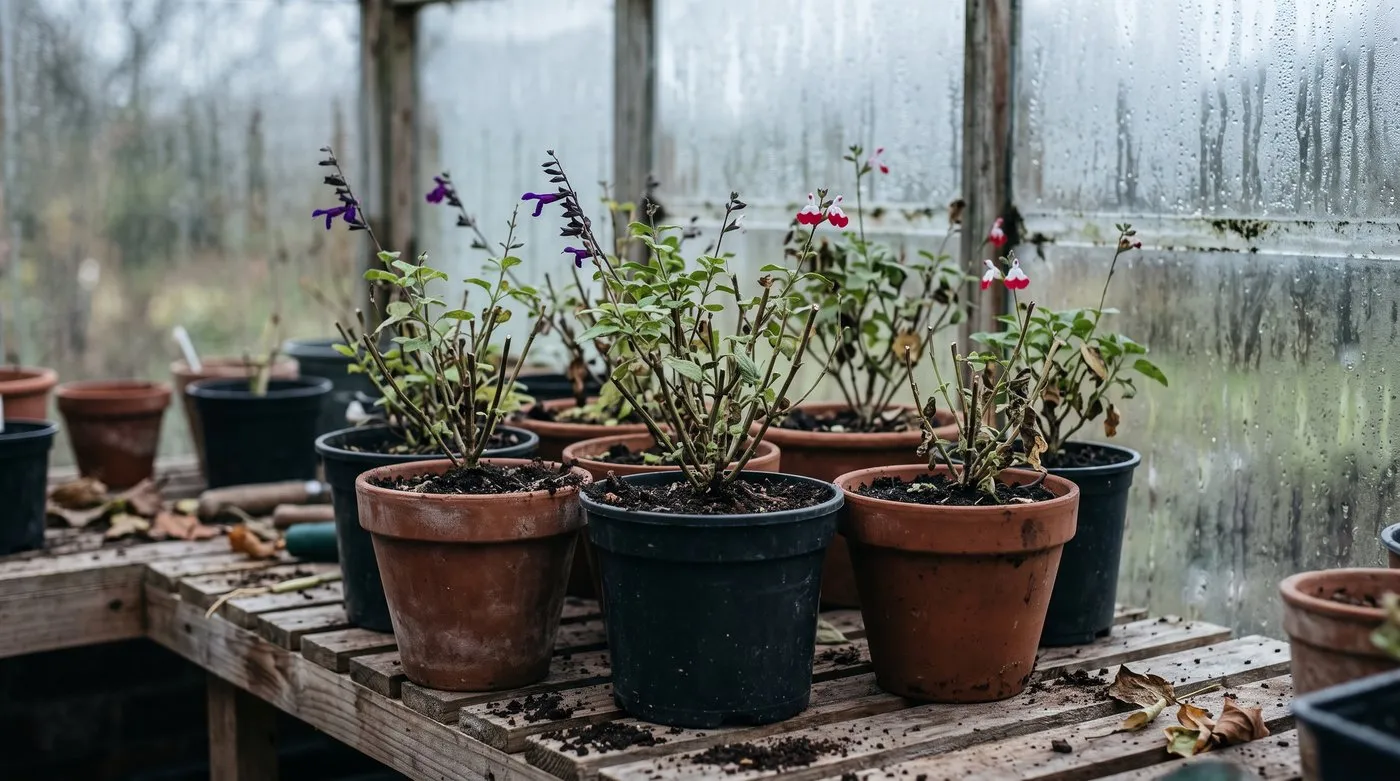
In colder areas, lift tender salvias before the first frost and keep them frost-free. Water just enough to stop the compost drying out.
Backup cuttings
The safest plan is to take cuttings in August or September. Snip 8-10cm shoot tips without flowers, strip the lower leaves and push them into a half-and-half mix of perlite and compost. Cover with a clear bag and keep them somewhere warm. They usually root in a few weeks. Keep the young plants on a bright windowsill over winter. It costs nothing and gives you spares if the parent doesn’t make it.
Making more salvias
Salvias are easy to multiply by division, cuttings or seed.
Division
Split clumps of hardy salvias every three or four years in March or April. Lift the clump and cut it into pieces with a sharp spade, each with a few shoots and good roots. Replant straight away at the same depth and water in. It refreshes tired clumps and gives you free plants.
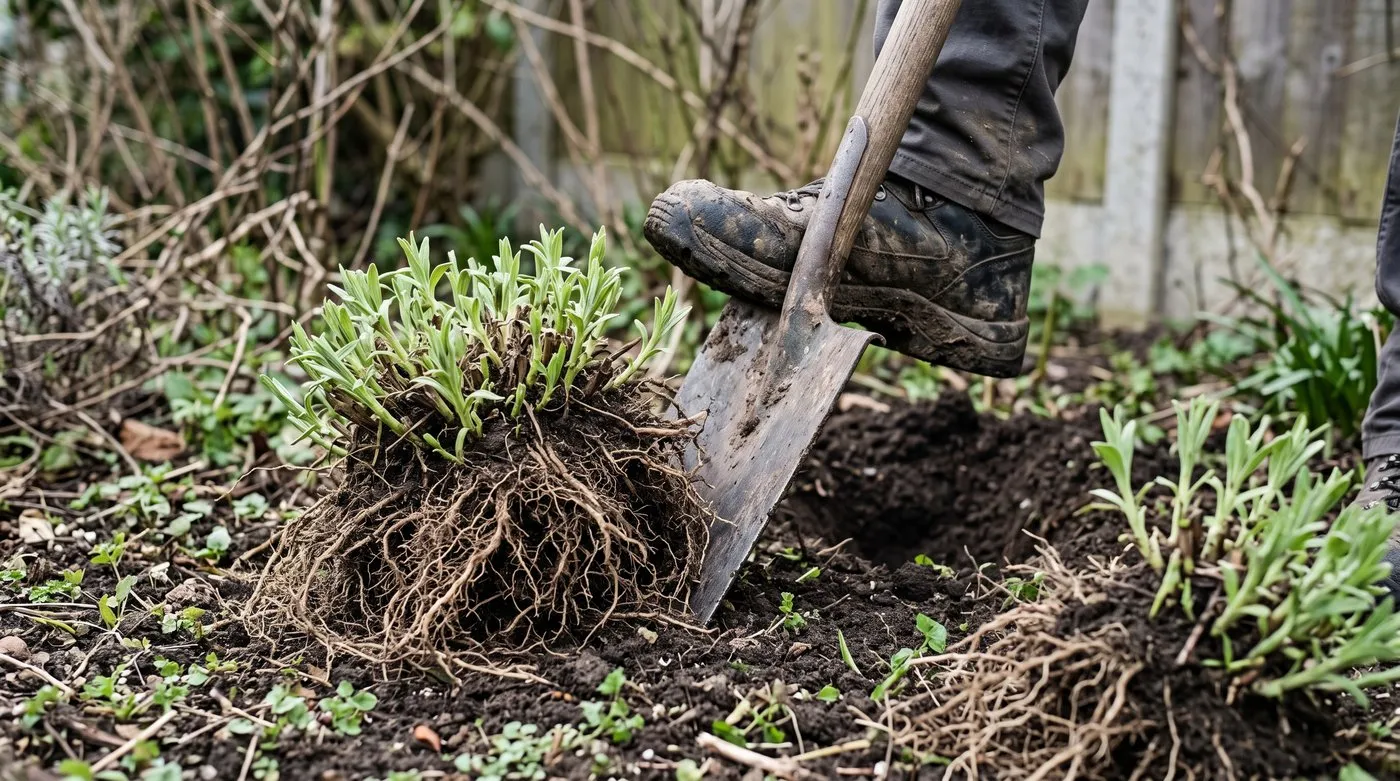
Split hardy salvias every three or four years in March or April. Each piece needs a few shoots and good roots, and it refreshes a tired clump.
Cuttings
Take softwood cuttings from May to July, or semi-ripe cuttings in August and September. Cut 8-10cm shoot tips without flowers and strip the lower leaves. Dip the base in rooting powder if you like. Push them into a half-and-half mix of perlite and compost. Keep them moist and warm, and they’ll usually root in a few weeks.
Seed
You can sow hardy Salvia nemorosa indoors in February or March somewhere warm. Prick out seedlings when they’re big enough to handle and grow them on somewhere cool and bright. Harden them off and plant out after the last frost. Seedlings may differ from the parent, and named varieties don’t come true from seed. Our guide to sage growing covers similar methods for its kitchen cousin.
Salvia care month by month
| Month | What to do |
|---|---|
| January | Nothing. Leave old stems standing for frost cover and insects. |
| February | Order plants. Sow seed indoors somewhere warm. |
| March | Cut old stems of hardy salvias down to the new shoots. Divide big clumps. |
| April | Plant hardy salvias from late April. Get pots ready. |
| May | Plant tender salvias once frost has passed. |
| June | Flowers start. Border plants don’t need feeding. Start feeding pots. |
| July | Peak flowering. Deadhead faded spikes. Take softwood cuttings. |
| August | Deadhead the first flush and wait for the second. Take semi-ripe cuttings. |
| September | Take backup cuttings of tender types. Keep deadheading. |
| October | Lift tender salvias before the first frost. |
| November | Mulch the base of borderline types. Wrap pots in bubble wrap. |
| December | Nothing. Check stored salvias aren’t drying out. |
Common salvia mistakes
Most problems come from the wrong type, the wrong spot or cutting back at the wrong time.
Planting tender types without realising
Garden centres often sell ‘Amistad’, ‘Hot Lips’ and Salvia patens next to hardy salvias with little warning. Plant them all together and the tender ones may die in the first hard frost. Check the label, and if it says “half-hardy” or “tender”, plan for winter from day one.
Cutting back in autumn
Tidying salvias down to the ground in autumn takes away the old stems that shelter the base over winter. Leave them standing until spring, then cut back once new shoots appear.
Planting in shade
Salvias love open, sunny places. Even light shade means fewer flowers and floppy stems. If a border gets less than six hours of sun, choose something else. Our guide to the best plant combinations for UK borders has ideas for shadier spots.
Watering too much
Hardy salvias cope with dry spells once settled, and UK rain is usually enough. Extra watering in the border can lead to root rot. Pots are the exception and may need water every few days in hot weather.
Ignoring drainage on heavy soil
Salvia nemorosa copes with clay better than many sun-lovers, but not with waterlogging. Dig in grit, raise the planting level a little and add a gravel mulch around the base to keep it drier over winter.
Good partners for salvia
Salvias look best with other sun-lovers that like the same dry conditions. Their upright spikes contrast nicely with rounded and flat flowers.
Lavender is a natural partner, flowering at the same time in matching purples. See our guide to growing lavender in the UK for varieties. Catmint makes soft blue clouds next to salvia’s stiff spikes. Ornamental grasses like Stipa tenuissima add movement.
Echinacea and Rudbeckia bring warm oranges and yellows that pop against purple salvia. Perovskia (Russian sage) carries on into September with airy blue flowers, and our guide on how to grow Russian sage covers pruning and placing it. For a bee-friendly garden, salvia, lavender, catmint and echinacea together give bees food for months.
Next, take a look at the best perennial plants for UK gardens to build a border that flowers from spring to late autumn.
Frequently asked questions
When should I plant salvia in the UK?
Plant salvia from late April to June. Planting after the last frost gives roots the whole summer to settle in. Potted salvias can also go in during September in mild areas. Avoid winter planting, when cold, wet soil can rot the roots.
Is salvia a perennial in the UK?
Hardy types like Salvia nemorosa are. They come back every spring across the UK. Tender types such as ‘Amistad’, ‘Hot Lips’ and Salvia patens can die in a hard frost unless you protect or lift them. In colder areas, treat them as tender plants or grow them for one summer.
How do I keep salvia flowering all summer?
Cut faded spikes back to the next pair of leaves. Hardy salvias then send up a second wave of flowers. ‘Hot Lips’ keeps flowering without much help, but a light trim keeps it bushy. Feed salvias in pots every couple of weeks with tomato feed while they flower.
Can I grow salvia in pots?
Yes, salvias are happy in pots 30cm wide or bigger. Mix plenty of perlite or grit into multipurpose compost so it drains well. Terracotta suits them, as it dries out faster. Feed with tomato feed every couple of weeks in summer and water when the top few centimetres are dry.
Why has my salvia died over winter?
Usually it’s a tender type left out in the cold. ‘Amistad’, ‘Hot Lips’ and Salvia patens don’t like hard frost. Wet soil is just as big a killer as cold. Add grit for drainage, mulch the base in late autumn, or lift tender types and keep them frost-free.
Should I cut back salvia in autumn or spring?
Leave the old stems standing over winter. They help shelter the base from frost and give insects somewhere to hide. In spring, once new shoots appear at the base, cut the old stems down to them. Shrubby types like ‘Hot Lips’ get a light trim in spring too.
What is the best salvia for a UK garden?
Salvia nemorosa ‘Caradonna’ is a great all-round choice. It’s fully hardy, grows to about 50cm and has deep purple spikes on almost-black stems. With deadheading it flowers from June into late summer. It also holds an RHS Award of Garden Merit.
Our team produces practical UK gardening guidance from source research, contributor records and established horticultural practice. Editorial standards are overseen by Matt W.