
Key takeaways
- Hardy perennials come back every spring and grow bigger each year
- A mix of 12-15 perennials can give you flowers from May to October
- Divide most clumps every 3-5 years for healthier plants and free extras
- Bare-root perennials planted from October to March are cheaper and settle in well
- Hardy geranium, sedum, astilbe, echinacea and Japanese anemone are great for beginners
Perennials are the backbone of a UK garden. They come back year after year from the same roots, making bigger clumps and more flowers every season. Unlike annuals, you plant them once. A peony planted today could still be flowering in your garden in 50 years.
For tough, drought-proof colour, add red hot pokers too. Our guide to growing kniphofia shows you how.
What makes a plant perennial
A perennial is a plant that lives for more than two years. Gardeners usually mean herbaceous perennials: plants that die down to the ground each winter and grow back from their roots in spring, year after year.
The dormancy cycle
This winter rest is why perennials are so tough. As autumn cools, they stop growing and pull their food reserves down into the crown (the growing point at soil level) and roots. By November there’s not much to see above ground. Underground, the roots and buds are just waiting.
When the soil warms up in March or April, that stored food powers a quick burst of spring growth. It’s also why plants that have been in the ground a few years flower so much better than new ones.
Root systems and longevity
Perennials have different kinds of roots. Some, like geraniums and astilbe, make dense mats of fine roots. Others, like lupins and delphiniums, have one deep tap root. And some, like Japanese anemones and crocosmia, spread sideways underground and slowly make bigger patches.
Roots affect how long they live. Tap-rooted plants like lupins are short-lived, often just a few years. Clump-formers like geraniums keep making new roots, so they go on and on.
 A mature border in full summer swing, planted in layers so there’s colour from front to back.
The 15 best perennial plants for UK gardens
1. Hardy geranium (Geranium)
Hardy geraniums are the most useful perennial you can grow. They’re happy in sun or shade, on clay or chalk, and pretty much everything in between. ‘Rozanne’ is the star. It flowers non-stop from May to October, grows 50cm tall and 60cm wide, and never needs deadheading. Its violet-blue flowers have white centres.
Other good ones include ‘Johnson’s Blue’ (45cm, June to August), ‘Mavis Simpson’ (30cm, trailing, pink) and Geranium macrorrhizum (30cm, semi-evergreen, scented leaves). Our guide to growing geraniums compares more varieties.
Height: 30-60cm. Spread: 40-60cm. Flowers: May to October. Soil: Any. Hardiness: Very hardy.
2. Delphinium (Delphinium elatum)
Delphiniums have the tallest flower spikes in the border. The Pacific Giant series reaches 1.5-1.8m, with spikes of blue, purple, white or pink in June and July. Cut the spent spikes right down after flowering and you’ll often get a shorter second show in September.
They need full sun, rich soil and shelter from wind. On heavy clay they only last a few years, but on lighter soil they seed themselves. Protect the new shoots from slugs from March to May. Our delphinium growing guide covers staking and slugs.
Height: 1.2-1.8m. Spread: 45-60cm. Flowers: June to July, plus September. Soil: Rich, well-drained. Hardiness: Very hardy.
3. Lupin (Lupinus)
Lupins have tall, often two-tone flower spikes in June and July. The Band of Nobles series comes in red, pink, yellow, blue, purple and mixes. Each spike lasts a few weeks. Cut them off when they fade for a smaller second show in late August.
Lupins like slightly acid to neutral soil and struggle on chalk. On heavy clay they last 3-4 years, but on lighter soil they seed themselves happily. Our guide to self-seeding plants has more plants that do this. And our lupin growing guide covers the best varieties and saving seed.
Height: 90-120cm. Spread: 45-60cm. Flowers: June to July. Soil: Acid to neutral. Hardiness: Very hardy.
4. Echinacea (Echinacea purpurea)
Echinacea brings prairie toughness to UK borders. It has pink-purple petals around a big orange-brown cone. ‘White Swan’ is white. ‘Magnus’ grows to 90cm with bigger flowers, and goldfinches love the seeds in autumn.
It needs full sun and well-drained soil. It copes with drought once settled but rots in waterlogged clay. Give it 2-3 years to reach full size. The RHS echinacea guide has more tips. Don’t cut it back in autumn, as the seed heads feed birds and the hollow stems shelter insects. Our echinacea growing guide explains how to get it established.
Height: 60-120cm. Spread: 30-45cm. Flowers: July to September. Soil: Well-drained. Hardiness: Hardy in well-drained soil.
5. Peony (Paeonia lactiflora)
Peonies are the longest-lived border perennial, often flowering in the same spot for decades. The flowers are huge, in double, semi-double or single forms. ‘Sarah Bernhardt’ (pink, scented, double) and ‘Bowl of Beauty’ (pink and cream) are reliable favourites.
The golden rule: plant so the buds sit no more than 2cm below the surface. Planting too deep is the main reason peonies don’t flower. They need full sun, at least 6 hours a day, and good soil. Be patient: expect few flowers for the first couple of years, then more each year. Rarely divide them, and only in September if you must. Our peony growing guide explains planting depth in detail.
Height: 70-100cm. Spread: 60-90cm. Flowers: May to June. Soil: Rich, well-drained. Hardiness: Very hardy.
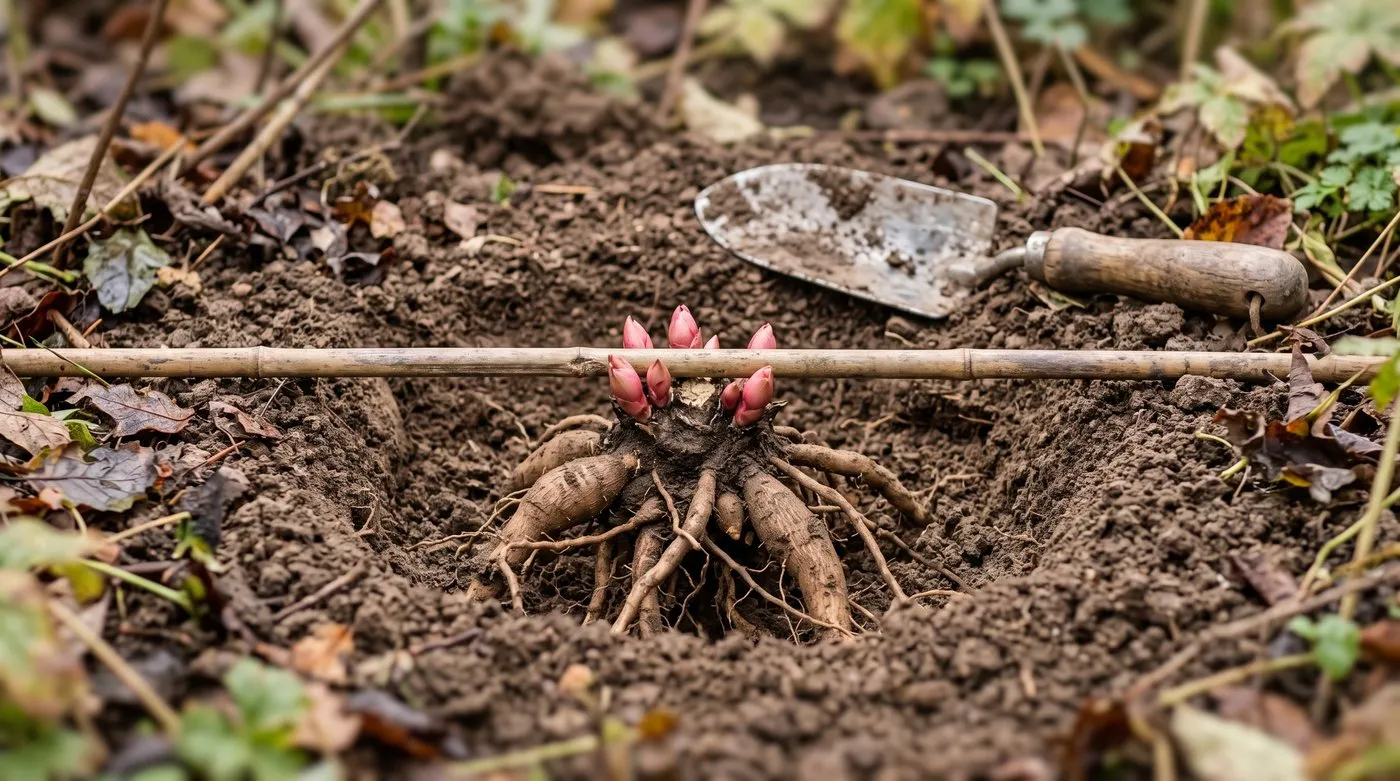
Keep peony buds no deeper than 2cm below the surface. Planting too deep is the main reason peonies sulk and don’t flower.
6. Salvia (Salvia nemorosa)
Salvia nemorosa has dense spikes of violet-blue flowers from June to September. ‘Caradonna’ is a top choice, upright and 50cm tall, with almost black stems that look brilliant against the purple-blue flowers. It holds the RHS Award of Garden Merit.
Salvias love full sun and lean, well-drained soil. In fact, they flower better on poor ground, as rich soil just gives you leaves. Cut faded spikes back to the leaves at the base for a second show in August. They’re hardy in free-draining soil but can rot in wet clay over winter.
Height: 40-60cm. Spread: 30-45cm. Flowers: June to September. Soil: Well-drained, not too rich. Hardiness: Hardy in well-drained soil.
 Salvia ‘Caradonna’ with echinacea. Tall spikes next to daisy shapes is a combination that always works.
7. Astilbe (Astilbe x arendsii)
Astilbe is the best flowering perennial for damp shade. Feathery plumes in red, pink, white or purple rise above lacy leaves from June to August. ‘Fanal’ (dark red, 60cm) and ‘Bridal Veil’ (white, 80cm) do well on clay. Unlike most perennials, astilbe needs soil that stays moist, and it sulks straight away in a drought. It looks lovely with hostas, ferns and Japanese anemones in shady borders.
Height: 40-100cm. Spread: 40-60cm. Flowers: June to August. Soil: Moist and rich. Hardiness: Very hardy.
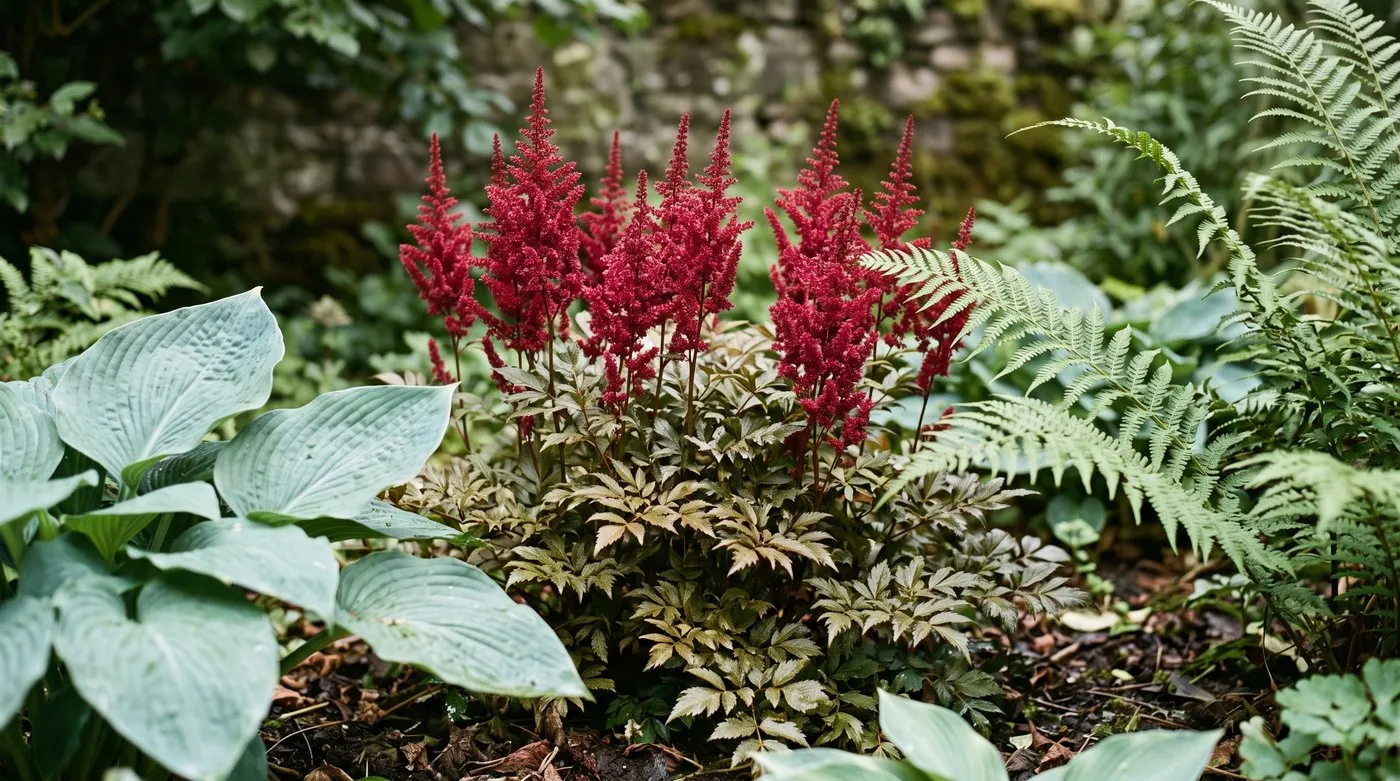
Astilbe needs soil that never dries out, so pair it with hostas and ferns in a damp, shady spot. It sulks straight away in a drought.
8. Heuchera (Heuchera)
Heuchera is grown mostly for its leaves, which come in burgundy, lime, silver, amber, peach and almost black. Tiny bell flowers on wiry stems appear in June and July. ‘Palace Purple’ is deep burgundy, ‘Lime Rickey’ is bright lime and ‘Obsidian’ is nearly black.
Heucheras grow in sun or part shade in any well-drained soil. They’re evergreen, so they keep the border looking dressed in winter. Their weak spot is vine weevil. The beetles nibble notches in the leaves, but the real harm comes from the grubs eating the roots over winter. Check the roots each autumn and use a vine weevil nematode treatment in September.
Height: 25-40cm (leaves), 40-60cm (flowers). Spread: 30-40cm. Flowers: June to July. Soil: Well-drained. Hardiness: Hardy.
9. Sedum (Hylotelephium)
Sedum spectabile (now called Hylotelephium) is one of the toughest border plants. Flat heads of pink, red or white flowers appear from August to October, just as other plants fade. ‘Herbstfreude’ (‘Autumn Joy’) is the classic, 45cm tall, with pink flowers that turn copper-red. ‘Matrona’ has darker stems and stands up better.
Sedums thrive on neglect: full sun, any well-drained soil, no feeding, no staking. They cope with drought, chalk, poor soil and sea spray. The only thing they hate is wet, heavy clay, where they can rot in winter. Leave the dead heads standing, as they look great with frost on them and birds visit too.
Height: 30-50cm. Spread: 30-45cm. Flowers: August to October. Soil: Any well-drained. Hardiness: Very hardy.
10. Japanese anemone (Anemone x hybrida)
Japanese anemones are the queens of late summer. White or pink flowers dance on tall, wiry stems from August to October. ‘Honorine Jobert’ (white, 1.2m) is a classic. ‘September Charm’ (pink, 80cm) is shorter and better in windy gardens.
They spread underground and slowly form big patches. They love part shade and moist soil, so they’re ideal for north-facing borders and under trees. Once settled, they’re almost impossible to kill. The catch: they’re slow to start (don’t expect much in year one), and they can spread too far where they’re really happy.
Height: 80-150cm. Spread: 60cm and spreading. Flowers: August to October. Soil: Moist. Hardiness: Very hardy.
11. Agapanthus (Agapanthus)
Agapanthus has big balls of blue or white flowers on stiff stems from July to September. Deciduous types like ‘Northern Star’ (90cm, deep blue) and Headbourne Hybrids are the hardiest. Evergreen types are more tender and need winter protection north of the Midlands.
Agapanthus wants full sun and well-drained soil. It flowers best when a bit crowded. On heavy clay, grow it in a big pot, at least 30cm across, with soil-based compost. Divide crowded clumps in April, making sure each piece has 4-5 shoots.
Height: 60-120cm. Spread: 30-50cm. Flowers: July to September. Soil: Well-drained. Hardiness: Deciduous types hardy in most areas.
12. Crocosmia (Crocosmia)
Crocosmia has arching sprays of fiery orange, red or yellow flowers from July to September above sword-shaped leaves. ‘Lucifer’ is the classic: 1.2m tall, bright scarlet and totally reliable. ‘Emily McKenzie’ (60cm, orange with a dark throat) suits smaller borders.
It grows from corms (bulb-like roots) and spreads into thick clumps. It’s happy in sun or light shade on any soil, even heavy clay. On very rich soil, ‘Lucifer’ can spread too much. Divide crowded clumps every 3-4 years in March, replanting the corms 8-10cm deep.
Height: 60-120cm. Spread: 30-45cm and spreading. Flowers: July to September. Soil: Any. Hardiness: Hardy.
 Crocosmia ‘Lucifer’ with blue agapanthus. Orange and blue is one of the boldest pairings for a summer border.
13. Rudbeckia (Rudbeckia fulgida)
Rudbeckia has golden daisies with dark centres from July to October. ‘Goldsturm’ is the one to grow: 60cm tall, smothered in flowers and as tough as old boots. It grows on any soil, including heavy clay, and copes with a bit of drought once settled.
It flowers for a good three months without deadheading. Divide every 3-4 years in spring to keep it vigorous. It looks best in big groups of 5-7 plants rather than dotted about singly.
Height: 50-70cm. Spread: 30-45cm. Flowers: July to October. Soil: Any, including clay. Hardiness: Very hardy.
14. Helenium (Helenium autumnale)
Helenium flowers from July to September in warm yellows, oranges, coppers and reds. ‘Moerheim Beauty’ (90cm, deep copper-red) and ‘Sahin’s Early Flowerer’ (80cm, orange-red) are great choices. The daisy flowers have a raised, button-like centre.
It needs full sun and soil that stays moist. It grows strongly on clay and struggles on dry sand. In late May, cut the shoots back by a third (the “Chelsea chop”) for bushier plants with more flowers. Divide every 2-3 years in spring. It’s one of the best perennials for heavy clay.
Height: 60-120cm. Spread: 40-60cm. Flowers: July to September. Soil: Moist, including clay. Hardiness: Very hardy.
15. Nepeta (Catmint)
Nepeta makes a haze of lavender-blue flowers from May to September. ‘Walker’s Low’ (60cm) and ‘Six Hills Giant’ (90cm) are the best known. Both have grey-green scented leaves, and bees go wild for them. Cut hard back in July when the first flush fades for a second full show in August.
Catmint loves full sun and any well-drained soil, even poor chalk and gravel. It’s one of the best plants for a dry, sunny border and makes a lovely soft edging along a path. Mix it with ornamental grasses and salvias for a relaxed prairie look.
Height: 30-90cm. Spread: 40-60cm. Flowers: May to September. Soil: Well-drained. Hardiness: Very hardy.
Perennial comparison table
Here are all 15 at a glance. Use it to plan a mix that suits your soil and flowers all season.
| Perennial | Height | Flowers | Light | Soil | Divide every |
|---|---|---|---|---|---|
| Hardy geranium | 30-60cm | May-Oct | Sun or shade | Any | 3-4 years |
| Delphinium | 120-180cm | Jun-Jul | Full sun | Rich, well-drained | 3-4 years |
| Lupin | 90-120cm | Jun-Jul | Full sun | Acid to neutral | Short-lived |
| Echinacea | 60-120cm | Jul-Sep | Full sun | Well-drained | 4-5 years |
| Peony | 70-100cm | May-Jun | Full sun | Rich, well-drained | Rarely |
| Salvia nemorosa | 40-60cm | Jun-Sep | Full sun | Lean, well-drained | 3-4 years |
| Astilbe | 40-100cm | Jun-Aug | Shade or part shade | Moist | 3-4 years |
| Heuchera | 25-40cm | Jun-Jul | Sun or part shade | Well-drained | 2-3 years |
| Sedum | 30-50cm | Aug-Oct | Full sun | Any well-drained | 3-4 years |
| Japanese anemone | 80-150cm | Aug-Oct | Part shade | Moist | 5+ years |
| Agapanthus | 60-120cm | Jul-Sep | Full sun | Well-drained | 4-5 years |
| Crocosmia | 60-120cm | Jul-Sep | Sun or part shade | Any | 3-4 years |
| Rudbeckia | 50-70cm | Jul-Oct | Full sun | Any, including clay | 3-4 years |
| Helenium | 60-120cm | Jul-Sep | Full sun | Moist, including clay | 2-3 years |
| Nepeta | 30-90cm | May-Sep | Full sun | Well-drained | 3-4 years |
Month-by-month flowering calendar
| Month | What’s in flower |
|---|---|
| May | Hardy geranium, peony, nepeta |
| June | Hardy geranium, delphinium, lupin, peony, salvia, astilbe, heuchera, nepeta |
| July | Hardy geranium, delphinium, lupin, echinacea, salvia, astilbe, heuchera, agapanthus, crocosmia, rudbeckia, helenium, nepeta |
| August | Hardy geranium, echinacea, salvia, astilbe, sedum, Japanese anemone, agapanthus, crocosmia, rudbeckia, helenium, nepeta |
| September | Hardy geranium, delphinium (second flush), echinacea, salvia, sedum, Japanese anemone, agapanthus, crocosmia, rudbeckia, helenium, nepeta |
| October | Hardy geranium, sedum, Japanese anemone, rudbeckia |
How to divide perennials
Dividing is the most useful perennial job to learn. It perks up tired clumps, stops them spreading too far and gives you free plants.
When to divide
Divide early-flowering perennials (like geraniums and lupins) in September or October, after flowering, while the soil is still warm. Divide summer and autumn-flowering perennials (like echinacea, sedum, Japanese anemone and rudbeckia) in March or April, just as new growth starts.
Peonies are the exception. Only divide them in September, and only if you really must. Each piece needs 3-5 buds and some root. Peonies hate being disturbed and may not flower for a couple of years afterwards.
The division method
Dig up the whole clump with a fork, keeping as much root as you can. Pull small clumps, like geraniums and heuchera, apart by hand into pieces with 3-5 shoots each. For big, tough clumps, like astilbe, crocosmia and Japanese anemone, push two forks back to back into the middle and lever them apart.
Throw away the old, woody middle. Replant the healthy outer pieces at the same depth as before. Water well and mulch with 5cm of bark. Geraniums and catmint bounce back fast, while delphiniums and Japanese anemones may take a season to settle.
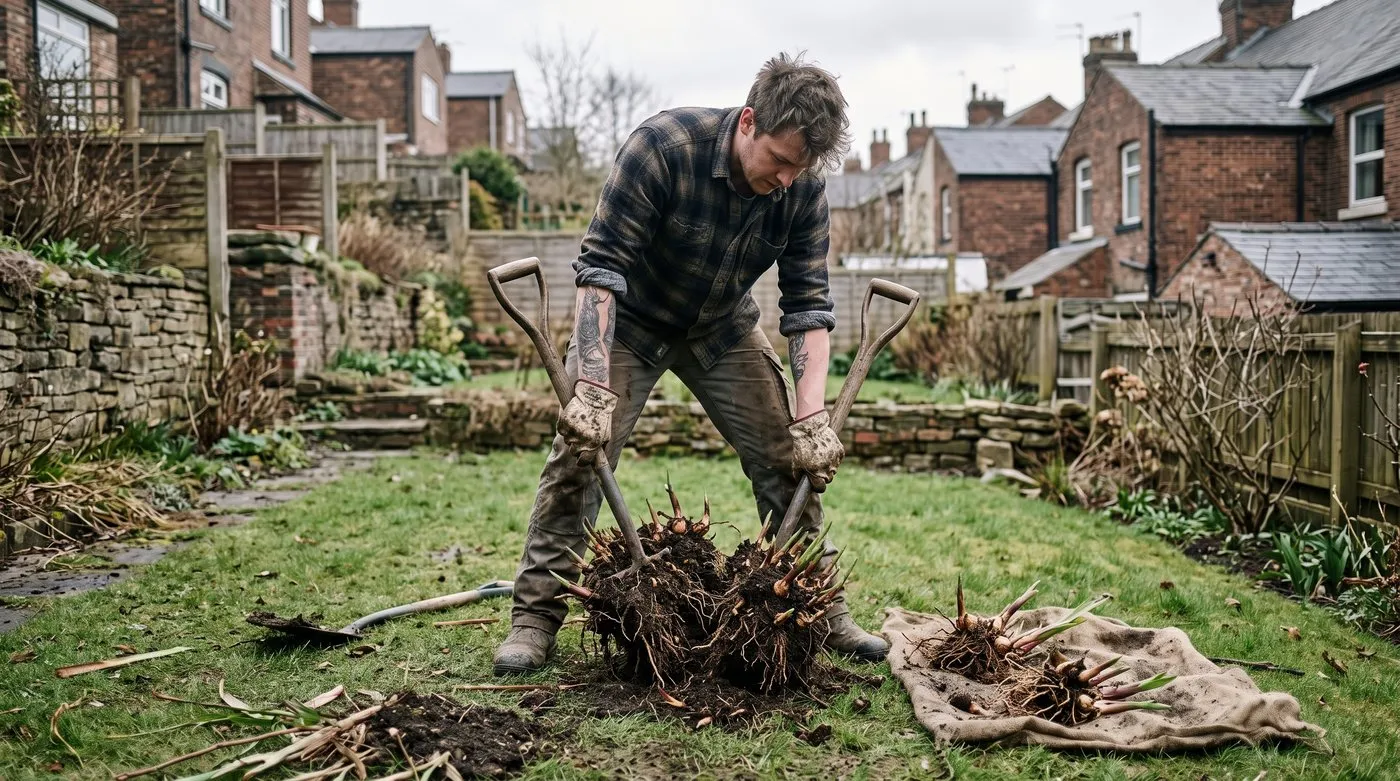
Two forks back to back give you the leverage to split tough clumps. Replant the lively outer pieces and throw away the woody middle.
Designing a perennial border
A good border has three layers. That gives it depth, hides fading leaves and keeps the colour coming from spring to autumn. It works for a narrow strip by a fence or a big island bed.
The three-tier system
Back (80cm and up): Delphiniums, Japanese anemones, tall heleniums and crocosmia ‘Lucifer’. These give height and drama, but they look messy as they die back, so they need plants in front.
Middle (40-80cm): Echinacea, salvia, astilbe, agapanthus, rudbeckia and peonies. Plant 30-60cm apart. This is where most of the colour lives, so pick plants that flower at different times.
Front (under 40cm): Hardy geraniums like ‘Rozanne’, heuchera, sedum and catmint. Plant 25-40cm apart. They spill over the edges and give a finished look. Evergreen heuchera keeps the front tidy in winter.
Colour combinations that work
- Blue and orange: Agapanthus ‘Northern Star’ with Crocosmia ‘Lucifer’ (July to September)
- Purple and yellow: Salvia ‘Caradonna’ with Rudbeckia ‘Goldsturm’ (July to September)
- Pink and white: Astilbe ‘Fanal’ with Japanese anemone ‘Honorine Jobert’ (August)
- Soft pink and silver: Geranium ‘Wargrave Pink’ with Nepeta ‘Walker’s Low’ (June to August)
For ideas on mixing perennials with shrubs, see our guide to the best flowering shrubs.
Common mistakes with perennials
1. Planting too deep
This stops more peonies flowering than anything else. Keep the buds no more than 2cm below the surface. The same goes for delphiniums and lupins: plant the crown level with the soil, not buried.
2. Choosing the wrong plant for the soil
Mediterranean plants like lavender, agapanthus and sage rot in waterlogged clay. Moisture-lovers like astilbe and Japanese anemone crisp up on dry sand. Pick plants that suit your soil rather than fighting it. Our clay soil plants guide has lots of ideas for clay.
3. Not dividing often enough
Clumps left for five years or more go woody and dead in the middle, and only flower round the edges. Most perennials want dividing every 3-4 years. Throw away the dead centre and replant the lively outer bits.
4. Cutting back too early in autumn
Cutting everything down in October takes away the crowns’ winter blanket. Leave stems standing until late February. The dead stems trap air and keep the crowns snug, a bit like a duvet.
5. Planting pot-grown plants in summer
Plants bought in flower from May to July often struggle, because their roots are cramped and they’re already tired from flowering. Bare-root plants put in during October settle in well and cost much less.
Gardener’s tip: If you order bare-root perennials by post, unpack them straight away and soak the roots in water for 30 minutes before planting. If you can’t plant within a couple of days, tuck them into a trench of damp compost for now. Don’t leave them in the packaging for more than three days.
Why perennials fail
Most perennial problems start underground, and you often don’t see the signs until weeks or months later.
Crown rot from waterlogging
On heavy clay, water can sit around the crown all winter and rot it. You’ll notice in spring when the plant either doesn’t come up or sends up weak, yellow shoots that collapse. Prevention is the cure. On clay, mix plenty of grit into the planting hole, or choose clay-lovers like astilbe, geranium, helenium, Japanese anemone and rudbeckia. On really wet ground, a raised bed 15-20cm high solves it.
Vine weevil damage
Vine weevil grubs eat roots from September to April. They’re small, white and C-shaped, and they can eat the whole root system before you spot a thing. Heuchera, primula and strawberry are favourites. The first sign is a plant that wilts even though the soil is damp. Give it a gentle tug. If it comes up with no roots, vine weevil is to blame. Water on a vine weevil nematode treatment in September, and again in spring.
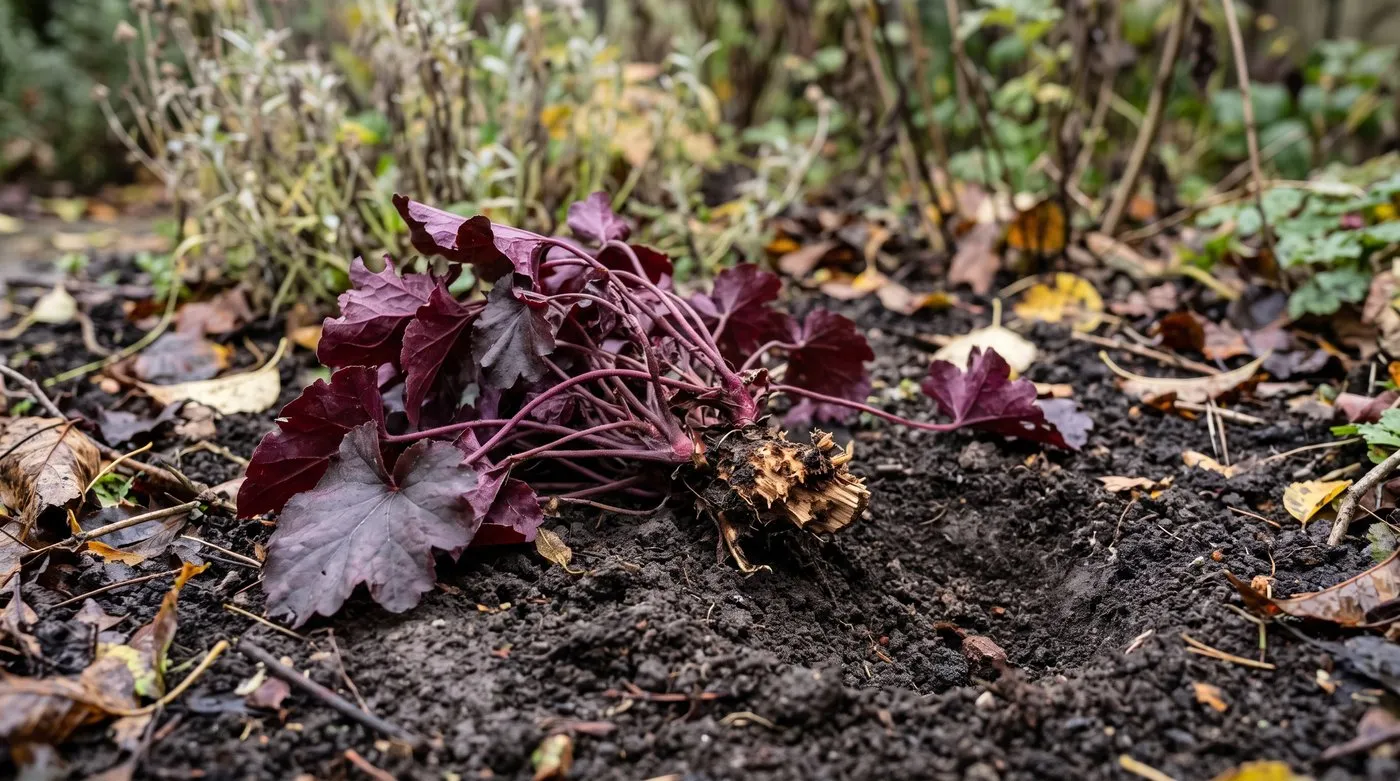
A plant that wilts in damp soil and lifts out with no roots points to vine weevil. Notched leaf edges are the other clue.
Planting depth errors
Too deep stops flowering, and too shallow leaves the crown open to frost. For most perennials, the crown (where roots meet shoots) should sit exactly at soil level, with the top of the rootball level with the ground around it. Mulch around the plant but not over the crown. Our guide to propagation techniques covers division and root cuttings in more detail.
What perennials cost in the UK
Here’s a rough idea of what you’ll pay at UK nurseries and garden centres in 2026.
| Source | When | Rough price | Best for |
|---|---|---|---|
| Bare-root | Mail order, Oct-Mar | £2-4 per plant | Best value, settles in well |
| 9cm pots | Garden centre, all year | £4-8 per plant | Handy but small |
| 2-litre pots | Garden centre, spring | £8-14 per plant | Instant impact, pricier |
| Plug plants | Mail order, spring | £1-3 per plant | Cheapest, needs growing on |
| Seeds | Packets, sow Feb-Apr | £2-4 per packet | Big drifts on a budget |
A 3m x 1m border needs roughly 15-20 perennials. Bare-root, that’s about £30-80. From the garden centre in 2-litre pots, it could be £120-280. After 3-4 years of dividing, you can fill a second border for free.
Watch out: Cheap “perennial collections” promising 20+ plants for very little are usually tiny plugs of unnamed varieties that take years to flower. Buy named varieties from a proper nursery instead.
For a reliable white daisy, see our guide to growing Shasta daisies. For unusual late-summer blue, the balloon flower (platycodon) opens puffy buds into starry bells. And for plants that cope with the driest summers, see our guide to drought-tolerant plants.
Frequently asked questions
What are the easiest perennials to grow in the UK?
Hardy geraniums are about as easy as it gets. They grow in sun or part shade and cope with most soils. ‘Rozanne’ flowers for months with hardly any deadheading. Sedum, Japanese anemone, crocosmia and lady’s mantle are tough too, and shrug off neglect, poor soil and British winters.
When should I plant perennials in the UK?
Autumn is the best time for most perennials. The soil is still warm, the rain keeps it moist and roots settle in before spring. Plant bare-root perennials while they’re dormant, between autumn and early spring. Potted ones can go in almost any time, but not into frozen, waterlogged or very dry ground.
How long do perennial plants live?
Most hardy perennials live for many years, especially if you divide them. Lupins and some delphiniums only last a few years, though many seed themselves. Peonies can flower in the same spot for decades. Dividing clumps every three to five years keeps them going strong.
Do perennials come back every year in the UK?
Yes, hardy perennials come back every year. Most die down in autumn and rest underground through winter, then pop up again in spring. Tender ones, like some salvias and dahlias, may need protecting or lifting in colder areas.
Can I grow perennials in clay soil?
Yes, lots of perennials love clay. Astilbe, hardy geraniums, helenium, Japanese anemone and rudbeckia all prefer damp clay to dry sand. Clay holds food well, so they rarely need feeding. Dig in compost to help drainage, and skip lavender and other Mediterranean plants, which rot in wet clay.
How far apart should I plant perennials?
About half to two-thirds of their final spread. So a geranium that grows 60cm wide wants about 30-40cm between plants. Closer planting fills gaps and smothers weeds faster, but you’ll need to divide sooner. Check the spread on the label, not just the height.
Should I cut back perennials in autumn or spring?
Leave most standing over winter and cut back in late winter or early spring. The dead stems protect the crowns from frost, feed birds and shelter insects. Cut them down just before new growth appears. The exception is soggy or diseased leaves, like hostas, which are best cleared in autumn so slugs have fewer places to hide.
Our team produces practical UK gardening guidance from source research, contributor records and established horticultural practice. Editorial standards are overseen by Matt W.


