Key takeaways
- Shasta daisies are hardy perennials that flower from early summer into early autumn
- Plant in full sun and well-drained soil, 40-45cm apart; wet winter clay rots the crown
- Lift and divide clumps every two to three years in spring to keep them flowering
- 'Becky' is tall and sturdy; 'Snowcap' is a compact dwarf that rarely needs staking
- Deadhead regularly for more flowers, and stake tall types by mid-May
Shasta daisies are the classic white border perennial, with big white petals around a sunny yellow eye. Plant them in full sun and well-drained soil, and divide the clumps every two to three years. Do that and they’ll flower from early summer into early autumn, year after year.
They’re tough, cheerful and easy. The usual complaint is that they fade after a few seasons, but that’s almost always down to crowded clumps or wet winter soil, and both are easy to fix.
Shasta daisy, ox-eye daisy or marguerite?
Three white daisies get mixed up, and only two are hardy perennials in the UK.
- Shasta daisy (Leucanthemum x superbum) is the garden perennial, with big flowers on sturdy stems and dark green, toothed leaves.
- Ox-eye daisy (Leucanthemum vulgare) is its smaller, wild cousin. It’s lovely in a meadow but seeds itself around freely. The guide to creating a wildflower lawn shows where it fits.
- Marguerite (Argyranthemum) has soft, ferny, often grey-green leaves and is tender. It’s sold as a patio plant and won’t survive a hard frost.
If your “daisy” has feathery leaves and came in a summer bedding pot, it’s probably a marguerite and won’t come back next year.

Left to right: the big Shasta daisy, the smaller wild ox-eye, and the tender marguerite with its ferny leaves.
Best Shasta daisy varieties for UK gardens
Pick a variety to suit the height of your border and whether you want to avoid staking.
| Variety | Height | Flower | Good to know |
|---|---|---|---|
| ’Becky’ | Tall, about 90cm | Large single white | Sturdy stems that rarely need staking |
| ’Snowcap’ | Dwarf, about 40cm | Single white | Neat and compact, good for the front of a border |
| ’Banana Cream’ | Short, about 50cm | Lemon fading to cream | A softer colour for pastel schemes |
| ’Goldfinch’ | Short | Pale yellow fading to cream | Another gentle alternative to white |
| ’Wirral Supreme’ | Tall | Double white with a frilly centre | A long-loved double, may need support |
| ’Snow Lady’ | Dwarf | Single white | Can flower in its first year from seed |
If you only grow one, choose ‘Becky’. It holds itself up and flowers for months. For a small garden or pots, ‘Snowcap’ is hard to beat.
Where to plant Shasta daisies
Shasta daisies need full sun and soil that drains freely. In shade, the stems stretch and lean, and you get fewer flowers.
They’re not fussy about soil type, growing well on chalk, sand and improved clay. What they hate is sitting wet through winter. On heavy clay, dig in some grit before planting, or plant on a slight mound so the crown stays above any standing water.
Plant in spring or early autumn, with the crown level with the soil surface. Space plants 40-45cm apart and water them in. Once settled, they cope well with dry spells. The guide to the best plants for clay soil has other good choices for heavy ground.
Why Shasta daisies rot on wet clay
Shasta daisies are fully hardy, so frost rarely harms them. On heavy, poorly drained soil, though, winter wet can rot the crown. The woody centre goes black and soft, and the plant fails to come back in spring.
To prevent it, improve drainage with grit, plant slightly raised, and don’t mulch thickly over the crown in winter. If you find a rotting clump in spring, lift it and save any firm, healthy outer pieces. Replant those in better-drained soil and throw the rest away.

Wet clay rotted this crown. The firm outer shoots can still be saved and replanted somewhere better drained.
How to divide Shasta daisies
Lift and divide clumps every two to three years in early spring. It’s the most useful job you can do for Shasta daisies, and the reason most “short-lived” plants fade is that it never gets done.
- Wait until new shoots appear, usually March or April.
- Lift the whole clump with a fork, working from well outside it.
- Cut out and throw away the woody, bare centre.
- Split the young outer growth into fist-sized pieces, each with roots and several shoots.
- Work some grit into the soil if drainage is poor.
- Replant at the same depth, 40-45cm apart, and water well.
One crowded clump often gives you several new plants. Named varieties don’t come true from seed, so division (or cuttings from young spring shoots) is the way to make more of a favourite. The guide to perennials to divide in May covers the same method for other border plants.

Two forks back to back make light work of a tough clump. Keep the young outer pieces and compost the woody middle.
Using the Chelsea chop on Shasta daisies
The Chelsea chop means cutting a clump back by about a third in late May, around the time of the Chelsea Flower Show. It delays flowering a little and gives shorter, sturdier stems.
Use shears or secateurs to remove the top third of the leafy growth. The plant branches lower down and makes more, slightly smaller flowers on stems that stand up to wind and rain. For a longer display, chop only the front half of the clump. The back flowers first, and the front follows a couple of weeks later. Water well afterwards. The guide to the Chelsea chop lists other plants that respond well.

Cutting just the front half of the clump in late May spreads the flowers over a longer season.
How to stop Shasta daisies flopping
Tall Shasta daisies can flop in summer rain unless you support them early or choose sturdy varieties. A tall clump topped with heavy flowers catches the wind like a sail.
Put supports in by mid-May, while the foliage is around 30cm tall. Link stakes or a grid let the stems grow up through them and hide them by flowering time. Trying to prop up a collapsed clump in July never looks right. Better still, grow ‘Becky’ or ‘Snowcap’, which rarely need help. Rich soil and heavy feeding give soft, floppy growth, so go easy on fertiliser. The guide on how to stake tall perennials shows the main methods.

Link stakes put in by mid-May disappear among the stems by the time the flowers open.
Deadheading and feeding for more flowers
Deadhead regularly and Shasta daisies keep flowering into early autumn instead of stopping in midsummer. Snip each faded flower back to the next bud or healthy leaf as the petals brown. The guide on how to deadhead flowers covers the basics.
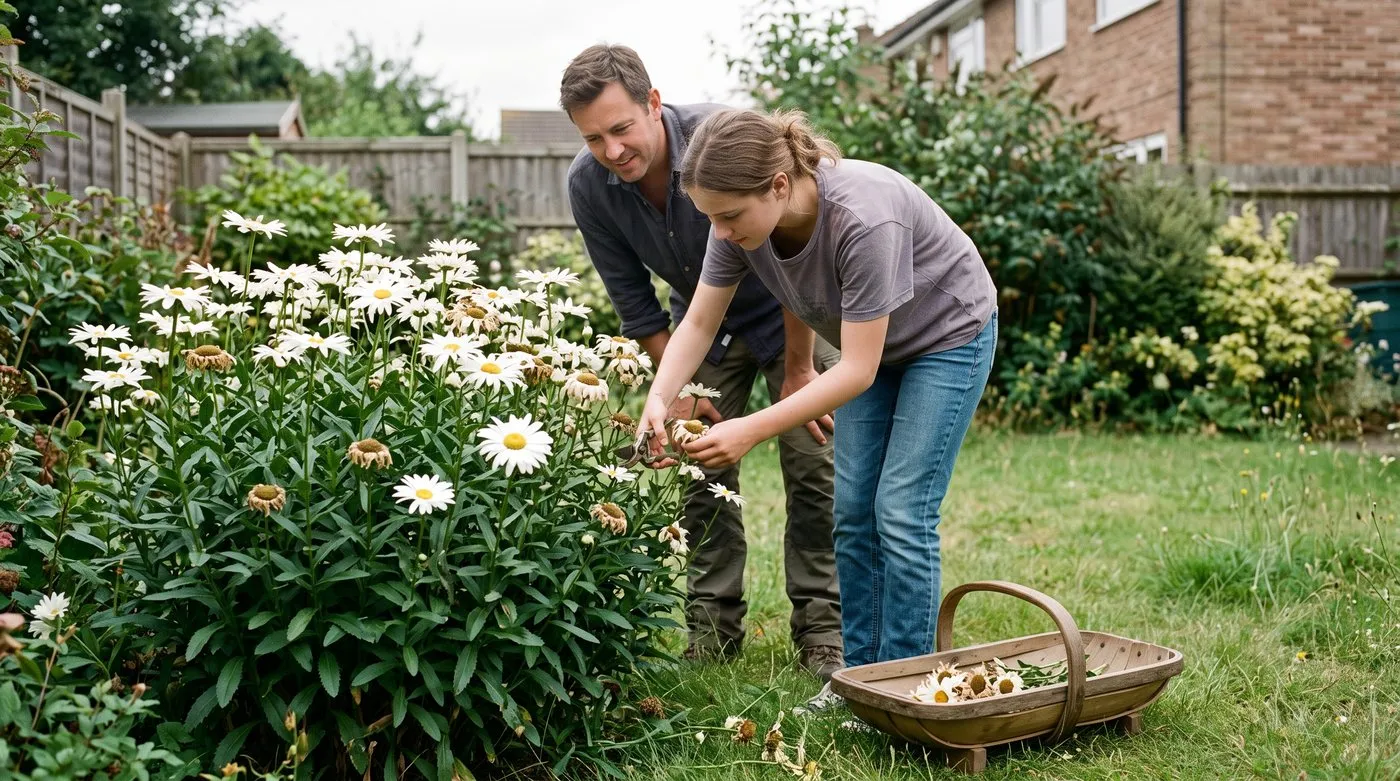
Take off faded heads each week and the clump keeps making new buds well into early autumn.
When the main flush finishes, you can cut the whole clump back by about half. That often triggers a smaller second flush in early autumn.
Feed lightly. A sprinkle of general fertiliser in spring is plenty. A spring mulch of garden compost around, not over, the crown holds moisture in summer.
Cutting Shasta daisies for the vase
Shasta daisies make great cut flowers, with long stems and a fresh, clean look. They usually last a week or more in water.
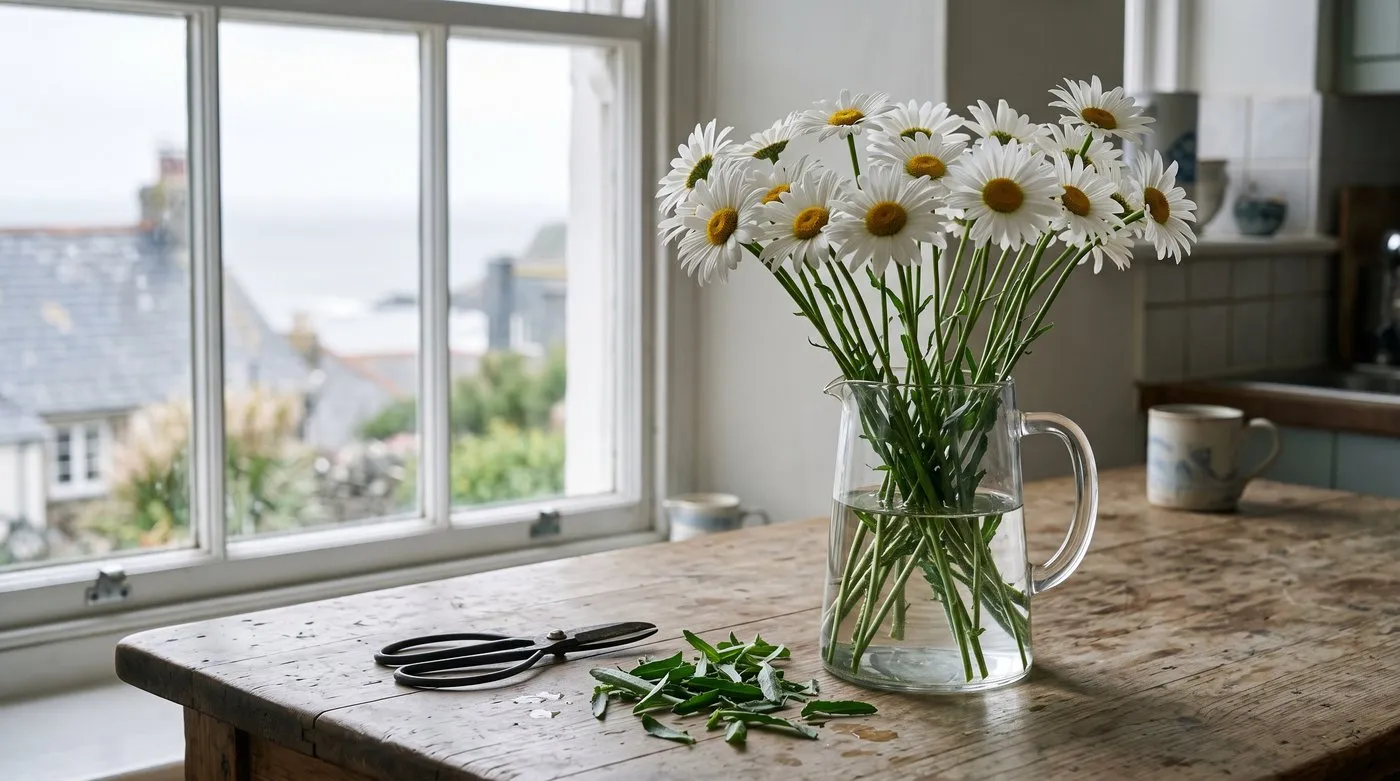
Cut them freshly open, strip the lower leaves and give them a long drink before arranging.
Cut in the cool of the morning, choosing flowers that have just opened. Strip off the lower leaves, recut the stems at an angle and stand them in deep, cool water for a few hours before arranging. Change the water every couple of days. The guide to conditioning cut flowers explains how to make them last longer.
Good to know: Like chrysanthemums, Shasta daisies can cause stomach upsets or skin irritation in cats and dogs that chew them. Keep vases out of reach of nibbling pets.
Shasta daisies month by month
| Month | What to do |
|---|---|
| March to April | Divide crowded clumps as shoots appear. Plant new plants. Light feed |
| May | Put in supports for tall types by mid-May. Chelsea chop in late May |
| June to August | Main flowering. Deadhead weekly. Cut flowers for the house |
| September | Late flowers. Plant new clumps in early autumn if needed |
| October to November | Cut faded stems down. Leave the leafy base over winter |
| December to February | Little to do. Check drainage around crowns on wet soil |
Common mistakes with Shasta daisies
- Never dividing. The clump goes woody and flowers dwindle. Divide every two to three years.
- Wet, shady clay. Plants lean, flower poorly and rot over winter. Give them sun and add grit.
- Too much feed. Rich feeding gives soft, floppy growth and fewer flowers.
- Buying a marguerite by mistake. Check the label for Leucanthemum if you want a hardy perennial.
- Staking too late. Supports go in by mid-May, before the clump flops.
Frequently asked questions
Are Shasta daisies the same as ox-eye daisies?
No, they are close relatives but different plants. The Shasta daisy, Leucanthemum x superbum, is a garden perennial with bigger flowers on stronger stems. The ox-eye daisy, Leucanthemum vulgare, is a smaller wildflower that seeds itself around meadows and verges.
Why do my Shasta daisies stop flowering after a few years?
The clump has become crowded and woody. After a few years, the centre goes bare and flowers dwindle. Lift and divide it in spring, throw away the woody middle, and replant the young outer pieces. Adding grit at the same time helps drainage.
Are Shasta daisies fully hardy in the UK?
Yes, they are fully hardy in the UK. Cold rarely kills them. The real danger is winter wet, which can rot the crown on heavy clay. Good drainage matters far more than frost protection, so add grit on wet soil.
When and how do you divide Shasta daisies?
Divide them in early spring as new shoots appear, every two to three years. Lift the clump with a fork, discard the woody centre and split the outer growth into fist-sized pieces. Replant them 40-45cm apart and water in well.
What is the Chelsea chop on Shasta daisies?
It’s cutting the clump back by about a third in late May. Flowering starts a little later, on shorter, sturdier stems that rarely need staking. Chop only the front half of a clump to spread flowering over a longer period.
How do you stop tall Shasta daisies flopping?
Put supports in early, or grow sturdy varieties. Push in link stakes or a grid by mid-May, before the clump is 30cm tall. ‘Becky’ and the dwarf ‘Snowcap’ rarely need help. Full sun and lean soil also give stiffer stems.
How long do cut Shasta daisies last in a vase?
Usually a week or more. Cut stems in the cool of the morning when the flowers are freshly open. Strip the lower leaves, recut the stems and stand them in deep water. Change the water every couple of days.
Want more white for your borders? Read the guide to the best white flowers for UK gardens, or browse more plant guides.
Our team produces practical UK gardening guidance from source research, contributor records and established horticultural practice. Editorial standards are overseen by Matt W.