
Key takeaways
- Each daylily flower lasts a day, but every stem carries plenty of buds that open in turn for weeks
- Plant in sun with the crown at soil level, 45-60cm apart, in spring or early autumn
- Daylilies cope with clay, dry spells and very little care once settled
- Divide crowded clumps every few years in spring or early autumn to keep them flowering
- Pick off swollen, distorted buds to control hemerocallis gall midge
- Daylilies are highly toxic to cats, so think carefully before planting them if you have one
Daylilies are about as tough as garden perennials get. Plant them in a sunny spot with the crown at soil level, and they’ll flower every summer for years with very little help. They cope with clay, dry spells and neglect, and pests rarely bother them.
The name Hemerocallis means “beautiful for a day”, because each flower lasts just one day. Don’t worry, though. Every stem carries lots of buds that open in turn, so a clump keeps flowering for weeks. One important warning before you start: daylilies are highly toxic to cats.
Are daylilies safe with cats?
No. Every part of a daylily, including the pollen, is highly toxic to cats. Eating even a little can cause kidney failure. Dogs aren’t affected in the same way.
If you have a cat, or neighbours’ cats visit, it’s safest to choose a different plant. If your cat chews a daylily, go to a vet straight away, even if it seems well. The guide to plants toxic to cats lists other plants to avoid, including true lilies, which are just as dangerous.
Which daylilies grow best in the UK?
There are thousands of daylily varieties. These are reliable, easy to find and do well in British gardens, including on clay.
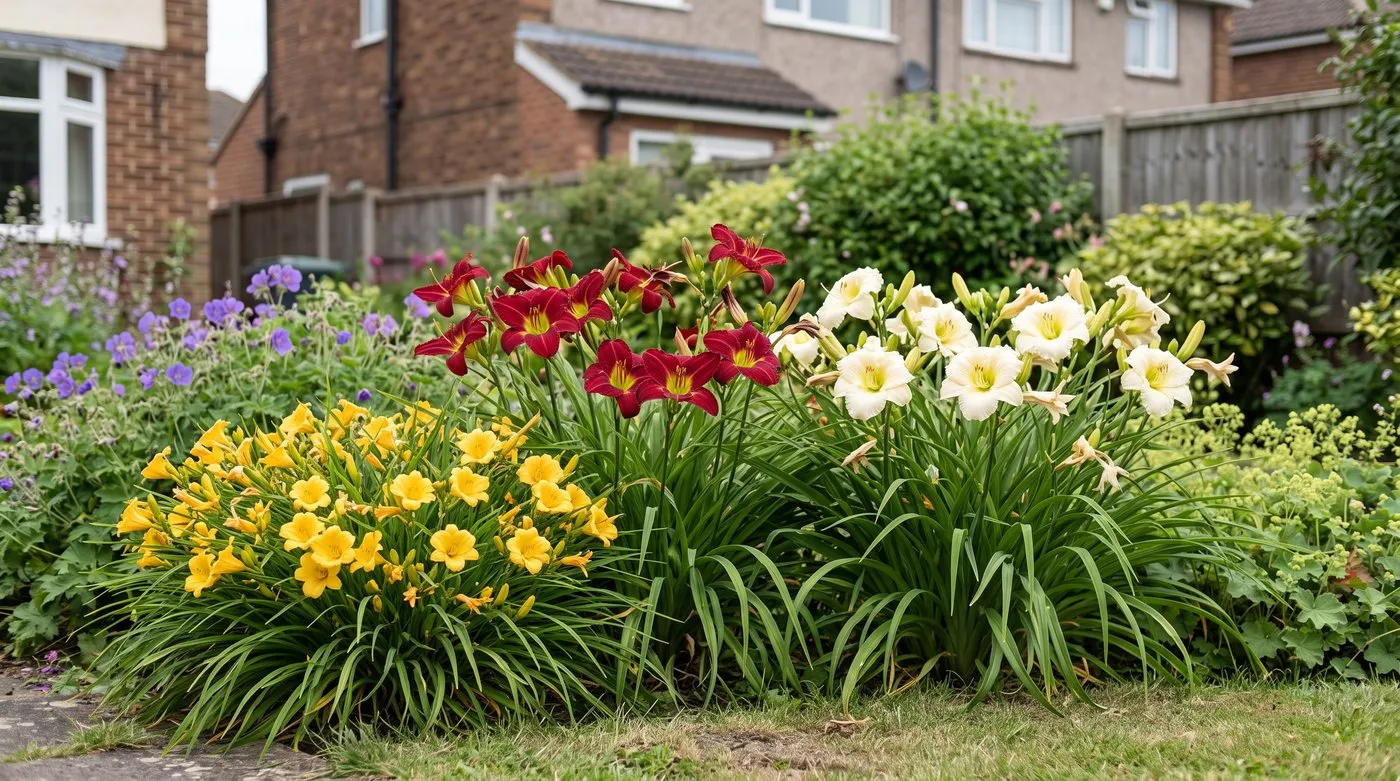
Golden, red or nearly white. Mix a few varieties and you’ll have colour from June into late summer.
| Variety | Height | Colour | Good to know |
|---|---|---|---|
| ’Stella de Oro’ | 30-40cm | Golden yellow | Repeat-flowers into September. Great at the front or in pots |
| ’Pardon Me’ | About 45cm | Cranberry red, green throat | Compact and repeat-flowering |
| ’Gentle Shepherd’ | About 65cm | Near white | Elegant, ruffled flowers |
| ’Stafford’ | About 70cm | Deep red, yellow throat | A classic for mixed borders |
| ’Corky’ | About 70cm | Lemon yellow | Small, starry flowers on dark stems |
| ’Catherine Woodbery’ | About 70cm | Soft lavender-pink | Pretty in pastel schemes |
| ’Frans Hals’ | About 60cm | Rust and yellow | Bold two-tone flowers |
The wild tawny daylily (Hemerocallis fulva) has burnt-orange flowers in July. It’s tough enough to grow almost anywhere, but it spreads by underground runners. Keep it for banks and wild corners rather than a tidy border.
How to plant daylilies
Plant daylilies in spring or early autumn, in sun, with the crown (where leaves meet roots) at soil level. Pot-grown plants can go in at any time the ground isn’t frozen or bone dry.
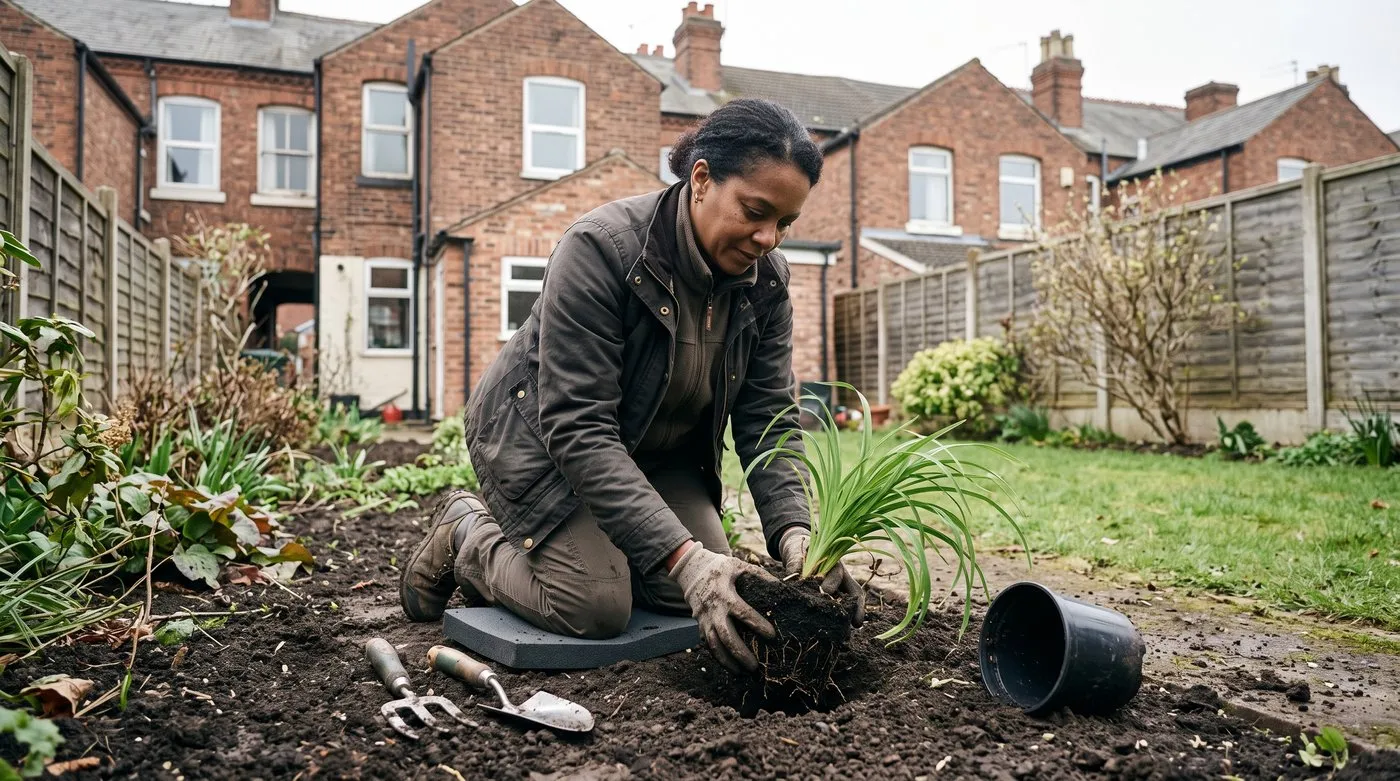
Keep the crown, where leaves meet roots, level with the soil. Buried too deep, daylilies sulk.
- Pick a sunny spot. They’ll grow in part shade, but flower less.
- Dig a hole about twice as wide as the pot and the same depth.
- Set the plant with its crown level with the soil. Don’t bury it.
- Backfill, firm gently and water well.
- Space small types 40-45cm apart and taller ones about 60cm.
Water in dry spells during the first summer. After that, established clumps rarely need watering, even in a dry July. They sit nicely among other drought-tolerant plants.
Why daylilies love clay soil
Daylilies are one of the best choices for heavy clay. Their thick, fleshy roots push through sticky soil and hold water through dry spells, so they cope with clay’s wet winters and baked summers.
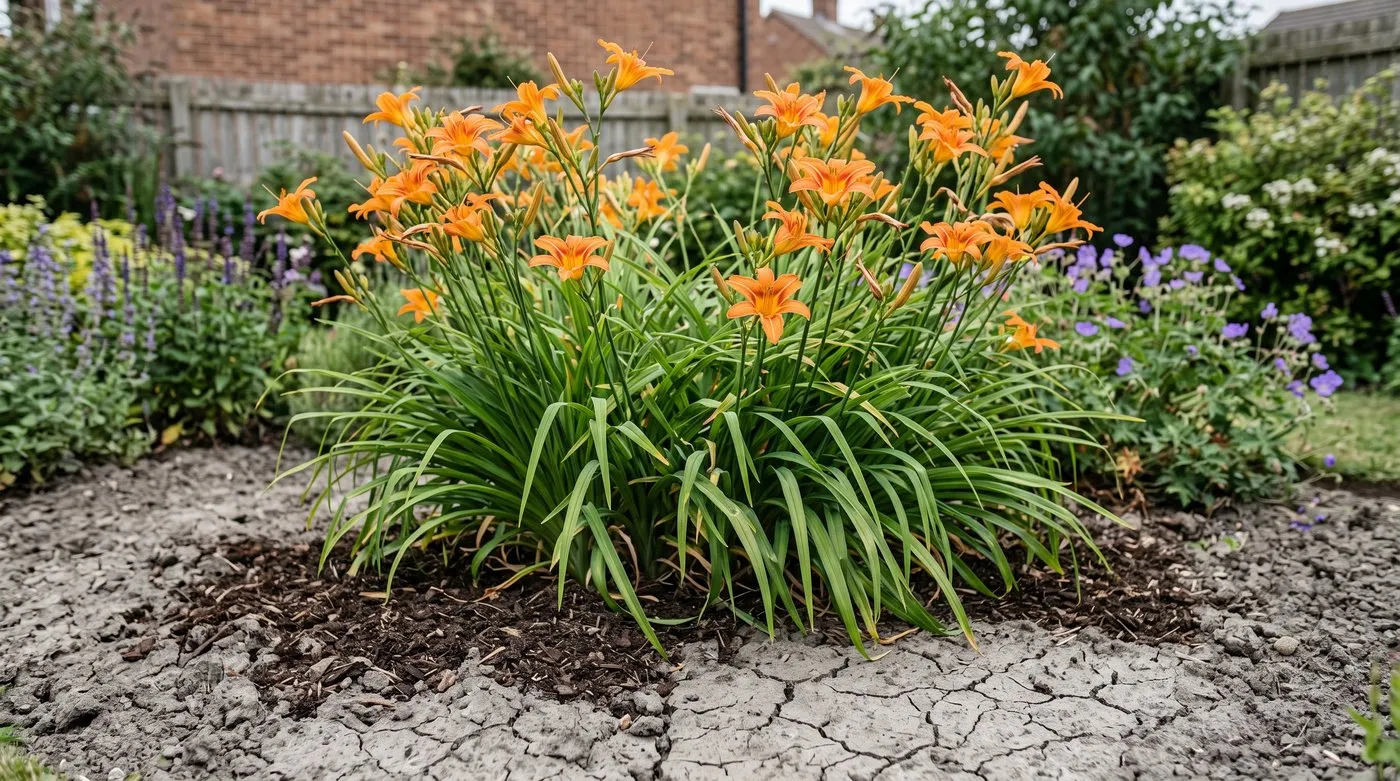
Baked clay in summer, soggy clay in winter, and daylilies take both in their stride.
On very wet ground, plant on a slight mound so the crown isn’t sitting in water over winter. A mulch of compost each spring helps improve the soil over time. For more plants that thrive in the same conditions, see the best plants for clay soil.
How to divide daylilies
Divide daylilies every few years, when a clump gets crowded and flowers less. Spring, as new shoots appear, is the best time. Early autumn works too.
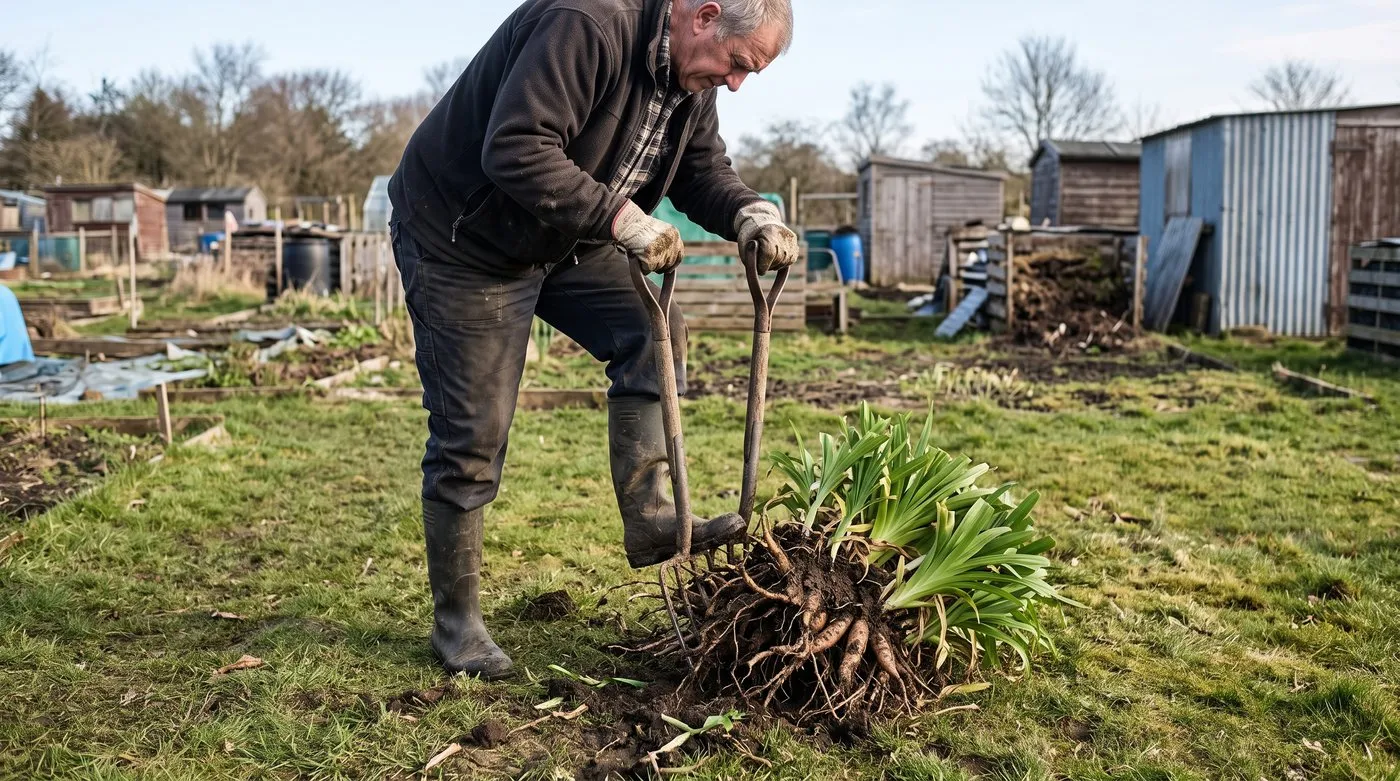
Two forks back to back make light work of a big clump. Each piece needs a few fans of leaves and roots.
- Lift the whole clump with a garden fork.
- Hose off some of the soil so you can see the roots.
- Pull it apart by hand, or prise big clumps apart with two forks back to back.
- Keep pieces with a few fans of leaves and plenty of roots. Throw away the woody old centre.
- Cut the leaves back by about half to reduce wilting.
- Replant at the same depth and water well.
Divisions often flower the same summer and are fully back to strength the year after. One big clump gives you plenty of new plants to spread around or share. The guide to plant propagation covers division for other perennials too.
Daylily pests and problems
Daylilies are mostly trouble-free. A few things are worth watching for.
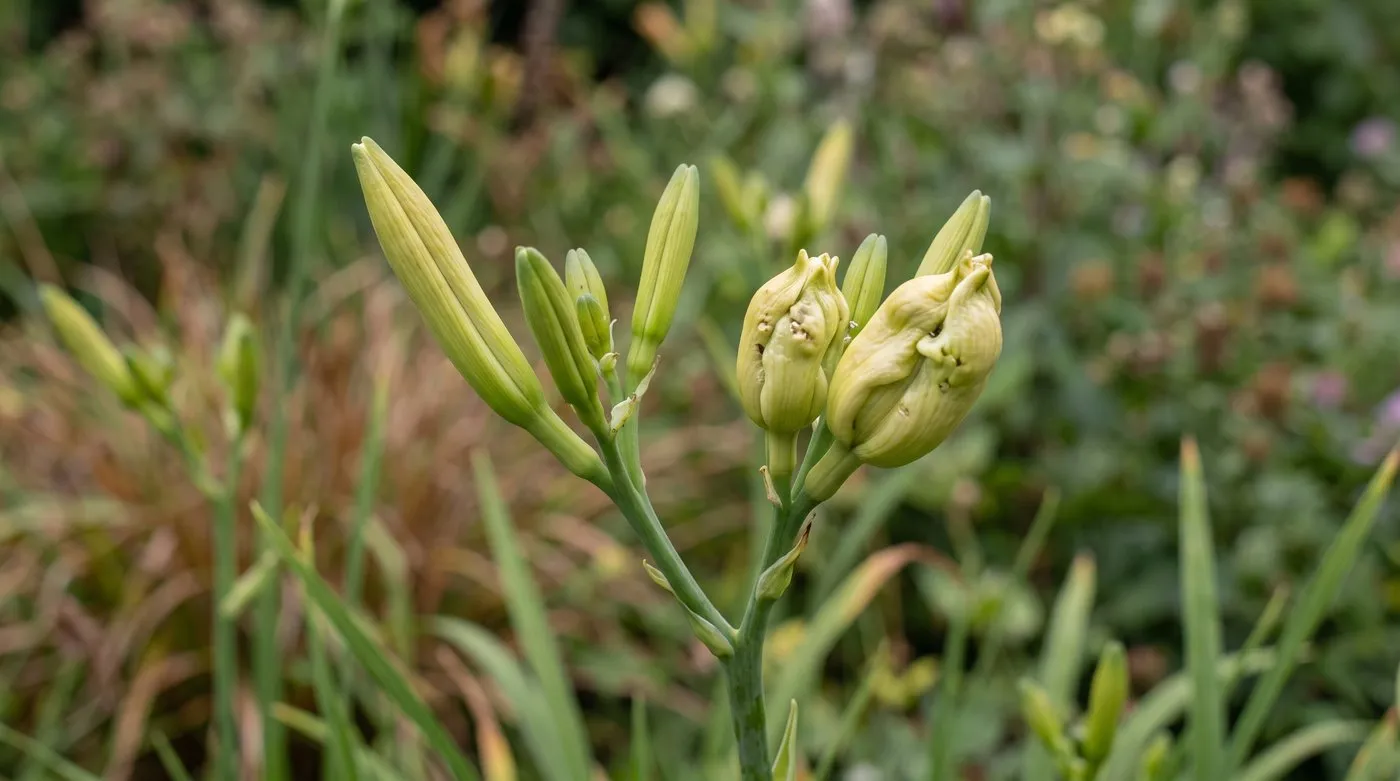
Fat, stubby buds that never open are a sign of gall midge. Pick them off and bin them.
- Hemerocallis gall midge: tiny flies lay eggs in the developing buds. Affected buds swell up and never open properly. Pick off swollen buds as soon as you see them and put them in the bin, not the compost.
- Slugs: they sometimes nibble the new shoots in spring, especially on clay. Established plants soon grow away. The guide to getting rid of slugs has safe options.
- Crown rot: only a problem in waterlogged soil. Plant on a slight mound on wet ground.
- Leaf streak: yellow streaks on the leaves, mostly in warm, humid summers. Cut off the worst leaves. It rarely affects flowering.
Can you eat daylily flowers?
Yes. Daylily flowers and buds are eaten in East Asian cooking, often dried as “golden needles” in soups. Fresh petals can go in salads or be lightly fried.
Only eat flowers you’re sure are Hemerocallis, and only ones that haven’t been sprayed. Try a small amount first, as some people find them hard to digest. Never confuse them with true lilies (Lilium), which are not for eating. Daylilies have long, grassy leaves from the base. True lilies have leaves all the way up a single stem.
Planting ideas for daylilies
Daylilies fit easily into mixed borders. Their arching, grassy leaves look good even when they’re not in flower.
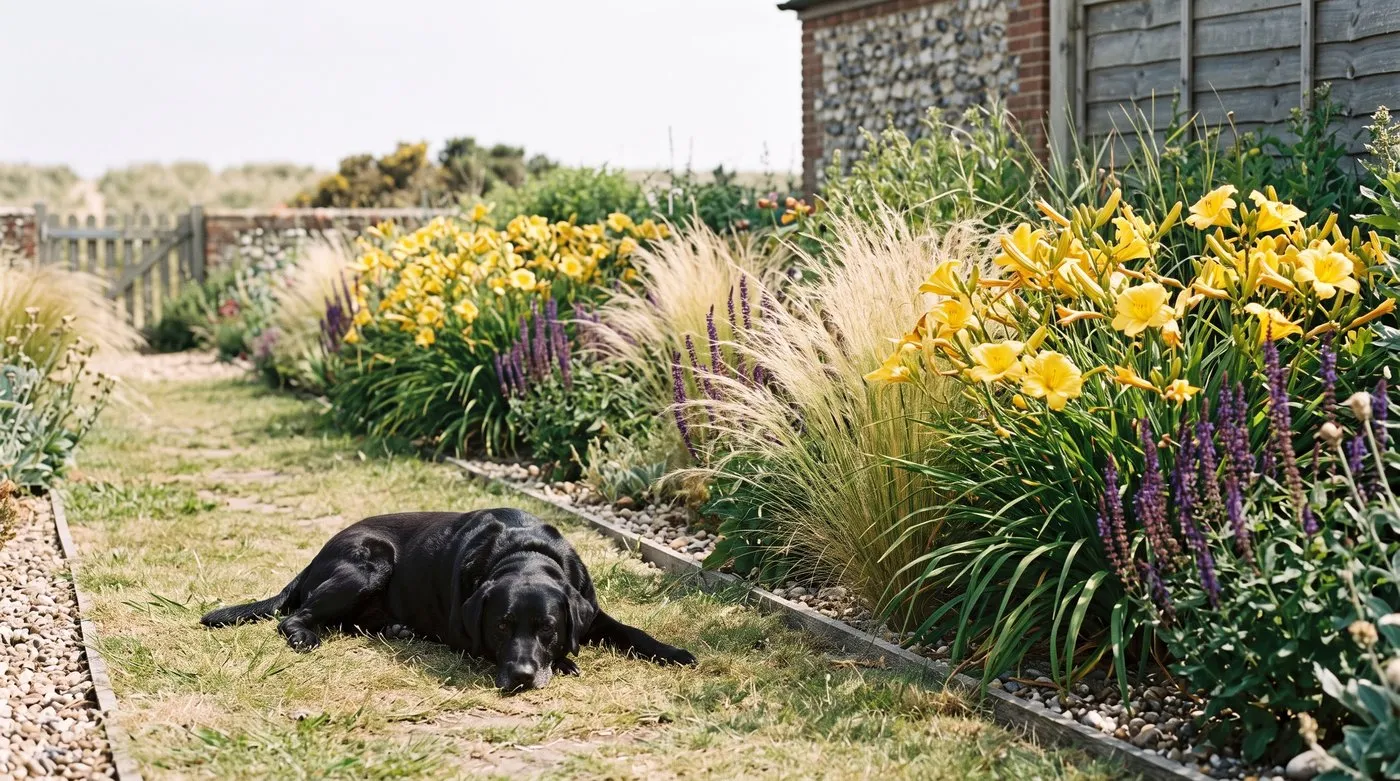
Soft grasses and salvias make easy partners. Daylilies fill the gap between early and late summer flowers.
- With grasses: pair ‘Stella de Oro’ with soft grasses such as Stipa tenuissima or miscanthus for a relaxed, natural look.
- With late perennials: rudbeckia, echinacea and salvias take over as daylilies finish, keeping colour going into autumn.
- Under shrub roses: low daylilies hide bare rose stems and help smother weeds.
- In pots: compact types grow well in a pot at least 30cm across. Use loam-based compost and water regularly in summer.
Daylily care through the year
| Month | What to do |
|---|---|
| March | Clear old leaves. Mulch with compost. Divide crowded clumps |
| April | Plant new daylilies. Watch new shoots for slugs |
| May | Water new plants in dry spells |
| June | First flowers. Check buds for gall midge swelling |
| July | Peak flowering. Snap off faded flowers to keep clumps tidy |
| August | Cut down finished flower stems. Repeat-flowerers carry on |
| September | Plant or divide in early autumn |
| October to February | Leave the clumps alone. Tidy dead leaves in spring |
Common mistakes with daylilies
- Planting too deep. A buried crown can rot and flowers less. Keep it at soil level.
- Too much shade. You’ll get lots of leaves and few flowers. Give them sun.
- Never dividing. Crowded clumps stop flowering well. Split them every few years.
- Ignoring swollen buds. Gall midge numbers build up. Pick off and bin swollen buds early.
- Planting where cats roam. Daylilies are highly toxic to cats. Choose another plant if you have one.
Want more easy, long-lived plants? Browse the best perennial plants for UK gardens, or find more ideas in the plants hub.
Frequently asked questions
How long do daylily flowers last?
Each daylily flower lasts just one day. But every flower stem carries lots of buds that open one after another. A healthy clump flowers for several weeks, and repeat-flowering varieties carry on into late summer.
Are daylilies good for clay soil in the UK?
Yes, they’re one of the best perennials for heavy clay. Their thick, fleshy roots cope with sticky, compacted soil that many plants hate. Plant them on a slight mound if water sits on the surface in winter.
When should I divide daylilies?
Divide them in spring as new shoots appear, or in early autumn. Lift the clump with a fork and pull or cut it into pieces, each with a few fans of leaves and plenty of roots. Replant straight away at the same depth.
Are daylilies poisonous to cats?
Yes, daylilies are highly toxic to cats. Eating even a small amount of leaf, flower or pollen can cause kidney failure. If your cat has chewed a daylily, take it to a vet straight away, even if it seems fine.
Can you eat daylily flowers?
Yes, daylily flowers and buds are eaten in East Asian cooking. Only eat flowers you’re sure are Hemerocallis and that haven’t been sprayed. Try a small amount first, as some people find them hard to digest. Never confuse them with true lilies.
Do daylilies spread aggressively?
Most named varieties form tidy clumps that grow slowly. The exception is the orange tawny daylily, Hemerocallis fulva, which spreads by underground runners. Choose named varieties if you want a well-behaved plant.
Why has my daylily stopped flowering?
Usually the clump is overcrowded or in too much shade. Divide congested clumps and replant the healthy outer pieces. Move plants in shade into a sunnier spot. Planting too deep can also stop flowering.
Our team produces practical UK gardening guidance from source research, contributor records and established horticultural practice. Editorial standards are overseen by Matt W.


