Key takeaways
- Match the climber to your wall: wisteria and roses for sun, climbing hydrangea and ivy for shade
- Plant 30-45cm out from the wall, where the soil is less dry, and lean the plant in
- Self-clingers like ivy need no support but can loosen soft old mortar
- Honeysuckle, clematis and ivy are brilliant for bees, moths and nesting birds
- Water new climbers well for their first two summers, as walls keep rain off the roots
The best climbing plants for UK gardens are the ones that suit your wall. Wisteria, roses and star jasmine love a sunny wall. Climbing hydrangea and ivy are happy on a shady one. Honeysuckle and clematis are perfect for arches. Climbers add flowers, scent and wildlife without taking up much ground, so they’re great for small gardens.
How climbing plants climb
Climbers grip in different ways, so it helps to know which kind you’ve got before you put up supports.
Self-clingers like ivy and Virginia creeper stick straight onto walls with little roots or sticky pads. They need no support, but they’re hard to remove later.
Twiners like honeysuckle and wisteria wrap their stems around things. Give them wires, trellis or a pergola.
Tendril climbers like clematis and sweet peas hold on with curly tendrils or leaf stalks. They need thin supports such as mesh, netting or wire.
Scramblers like climbing roses don’t grip at all. They hook on with their thorns and need tying in.
Best climbers for south and west-facing walls
South and west walls get the most sun and stay warm into the evening. They’re the place for sun-lovers and slightly tender climbers.
Wisteria (Wisteria sinensis and W. floribunda)
Wisteria is the showstopper. Long, scented trails of purple or white flowers hang down in May and June, and the twisty old stems get more handsome every year. Always buy a grafted plant, as wisteria grown from seed can take many years to flower. Our guide on how to grow wisteria explains the twice-a-year pruning that keeps it flowering.
Tip: Buy a wisteria that’s already flowering in its pot. Then you know it’s grafted, and you can see the flower colour for yourself.
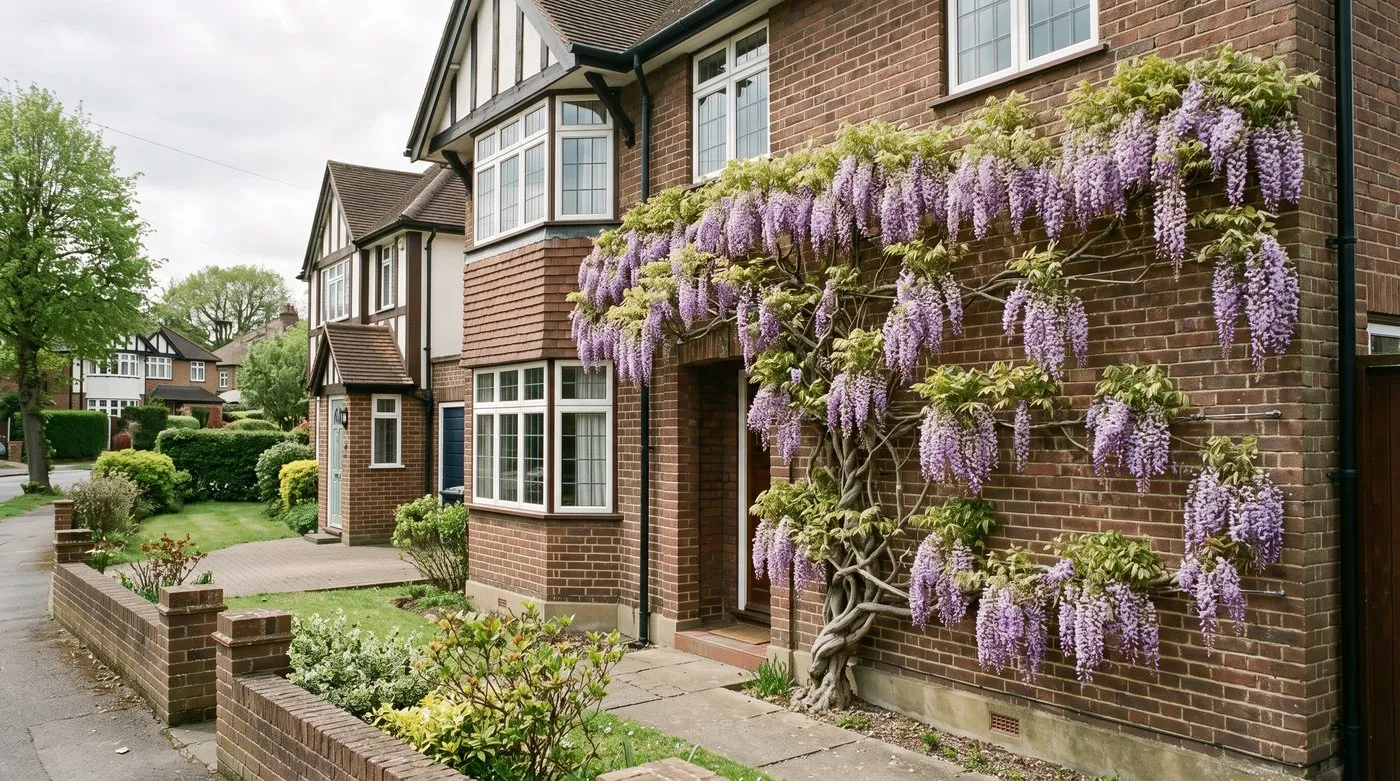
A sunny wall and a grafted plant are the keys to a wisteria like this. Prune twice a year and it keeps flowering on short spurs.
Climbing roses
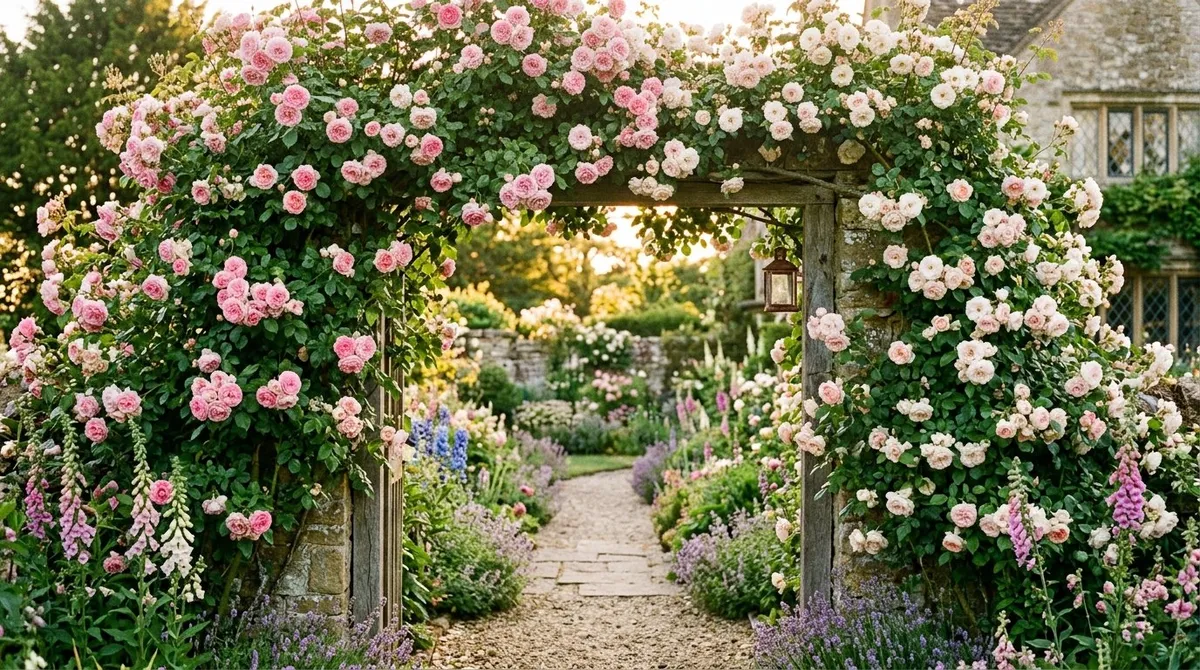
Climbing roses love a sunny wall and repay you with flowers all summer. Many are scented, and repeat-flowering kinds keep going into autumn. Tie the stems in along wires, as flat as you can, for flowers all the way along.
Star jasmine (Trachelospermum jasminoides)
An evergreen twiner with white, deliciously scented flowers from June to August. It needs a warm, sheltered wall, ideally facing south, out of cold easterly winds. In the Midlands and further north, grow it in a large pot and move it under cover for winter. On a warm wall in southern England it’s easy and reliable.
Passionflower (Passiflora caerulea)
The hardiest passionflower, and happiest at the foot of a warm wall in well-drained soil. Its amazing blue and white flowers appear from July to September. It’s vigorous and can reach 5m or more. A hard winter may cut it to the ground, but it usually bounces back from the base.
Best climbers for north and east-facing walls

North and east walls get little direct sun and can be cold and dry at the bottom. These climbers don’t mind a bit.
Climbing hydrangea (Hydrangea anomala subsp. petiolaris)
The best climber for shade. It clings on by itself and has big, lacy white flowers in June and July, even on a sunless north wall. It’s slow for the first two or three years while the roots settle, then speeds up and can cover a large wall. Be patient; it’s worth it. For more ideas, see our guide to the best plants for shade.
Ivy (Hedera helix and cultivars)
Ivy gets a bad press, but it’s one of the best plants for wildlife. Birds nest in it, bees feed on its autumn flowers and birds eat its winter berries. The Woodland Trust has a lovely page on why it matters. For a brighter north wall, try the big-leaved ‘Dentata Variegata’, or stick with our native ivy for wildlife.
Winter jasmine (Jasminum nudiflorum)
Bright yellow flowers on bare green stems from November to February, when hardly anything else is out. It scrambles rather than climbs, so tie it in to trellis or wires. It’s very tough and copes with cold, shade and poor soil. Prune straight after flowering in March.
Best climbers for pergolas and arches

Pergolas and arches need climbers that look good overhead, with flowers, scent or lovely leaves.
Honeysuckle (Lonicera periclymenum)
Our native honeysuckle has one of the best scents in any British garden. Creamy yellow and pink flowers appear from June to September, smelling strongest in the evening when moths visit. ‘Graham Thomas’ and ‘Belgica’ are great varieties. It likes its roots in shade and its head in the sun, which suits a pergola nicely. It’s also a star for bee-friendly gardens.
Clematis
There’s a clematis for almost every month of the year. For pergolas, the big-flowered summer ones look fantastic. ‘Nelly Moser’ (pink and mauve stripes), ‘Jackmanii’ (deep purple) and ‘Niobe’ (dark red) are all reliable and easy to find. Clematis like cool roots, so shade the base with low plants or a few flat stones. Our guide on how to grow clematis explains the three pruning groups.
Grape vine (Vitis vinifera)
A grape vine gives dappled shade, pretty leaves and autumn colour, and in a warm year you get grapes too. ‘Purpurea’ has deep purple leaves and is just for show. For fruit, try ‘Solaris’ or ‘Phoenix’, which are bred to ripen in the UK, especially in the south and centre of England.
Climbers for quick coverage
Sometimes you want results fast, to hide an eyesore, cover a new fence or fill a gap while slower plants grow.
| Climber | Speed | Evergreen? | Flowers | Best spot |
|---|---|---|---|---|
| Russian vine (Fallopia) | Very fast, hard to control | No | White, late summer | Any |
| Summer jasmine (Jasminum) | Fast | Partly | White, scented | South, west |
| Clematis montana | Fast | No | Pink or white, spring | Any |
| Chocolate vine (Akebia) | Fast | Partly | Purple, scented | South, west |
| Honeysuckle (Lonicera) | Medium | Partly | Cream, scented | Any |
Russian vine is the quickest of all but soon runs riot and is hard to get rid of. For most gardens, summer jasmine or Clematis montana give quick cover without the headaches.
How to plant a climber
A little care at planting time gets a climber off to a flying start.
Prepare the planting hole

Dig your hole 30-45cm away from the wall or fence. Soil right against a wall is often dry, packed hard and full of rubble. Make the hole twice as wide as the root ball and just as deep, and loosen the bottom with a fork.
Improve the soil
Mix plenty of garden compost or well-rotted manure into the soil you dug out. If you’ve not tried it yet, learning to make your own compost is one of the best things you can do for your garden. Clematis appreciate a handful of bonemeal in the hole too.
Position and backfill
Lean the plant towards the wall or fence so the stems head for their support. Plant clematis 10-15cm deeper than they sat in the pot, which helps them recover if clematis wilt strikes. Fill in, firm gently and water well. Spread a 5-7cm layer of mulch around the base, keeping it off the stems.
Aftercare
Water regularly for the first two summers, especially in dry spells. Walls keep rain off the soil at their base, so even settled climbers may need a drink. For the best months to plant roses, clematis and other climbers, see our flower planting calendar.
Climbing plants for wildlife
Climbers are brilliant for wildlife, giving birds and insects food and shelter up off the ground. Once settled in, they’re also among the easiest plants in a low-maintenance garden.
For bees and other pollinators: honeysuckle, clematis, wisteria and ivy. Ivy is extra special because it flowers from September to November, when there’s little else about.
For nesting birds: thick evergreens like ivy, pyracantha and climbing hydrangea. Avoid cutting them back between March and August so you don’t disturb nests.
For berries: pyracantha is loaded with orange, red or yellow berries from October, which blackbirds and thrushes love. Birds also eat honeysuckle berries in late summer.
Pruning basics
Pruning at the wrong time is the main reason climbers don’t flower. The rules are simple, though. For clematis, follow our guide to pruning clematis by group.
Spring-flowering climbers (wisteria, Clematis montana, winter jasmine) flower on last year’s stems. Prune straight after flowering so new growth has time to ripen for next year.
Summer-flowering climbers (big-flowered clematis, summer jasmine) flower on this year’s stems. Prune in late winter or early spring, back to strong buds. Check your clematis group first: Group 1 needs hardly any pruning, Group 2 just a tidy, and Group 3 gets cut back hard to about 30cm in February.
Climbing roses like their main stems bent as flat as possible and tied to wires. That way they flower all along the stem, not just at the top. Cut side shoots back to two or three buds in late winter.
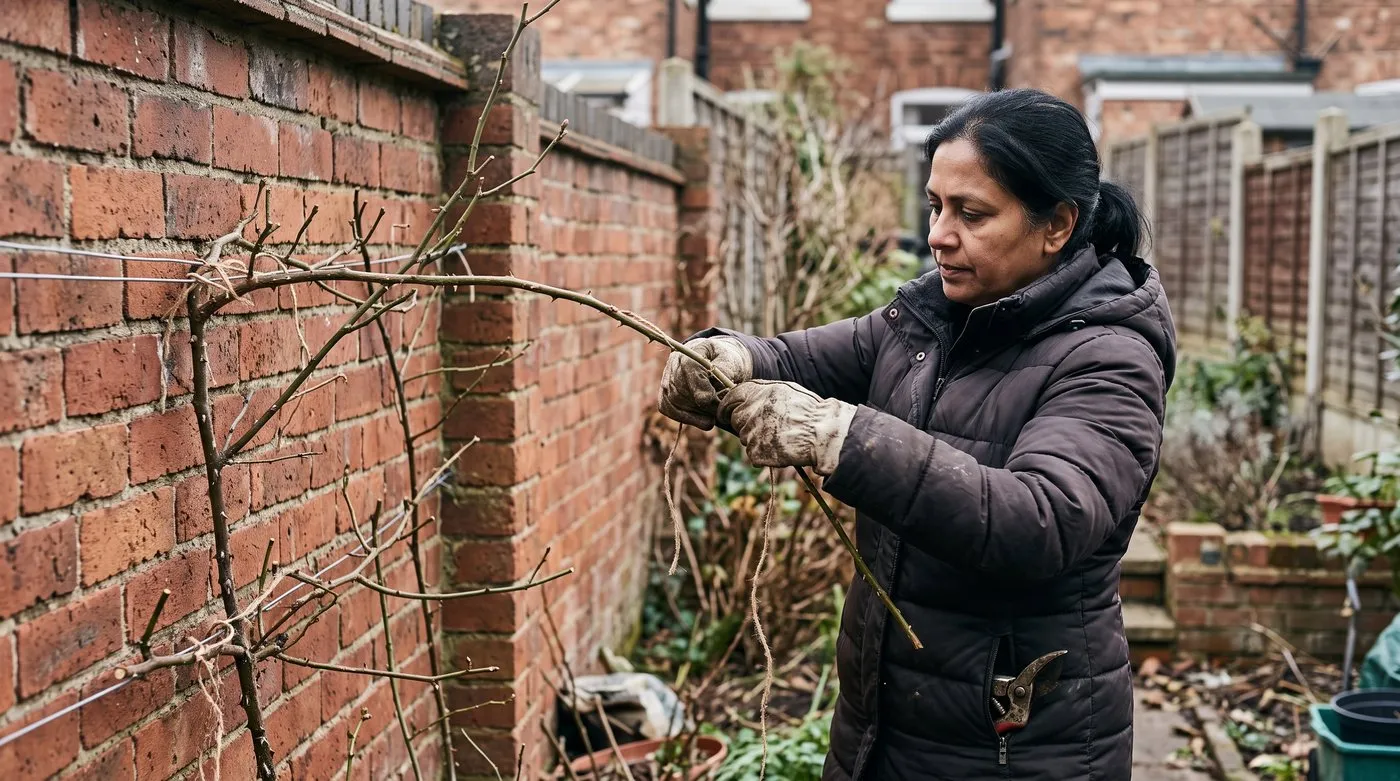
Bend the main stems as flat as you can and tie them in. The rose then flowers all along the stem, not just at the top.
Choosing the right climber for your garden
For a north-facing garden where you want something easy and good for wildlife, climbing hydrangea or ivy will do you proud. For a warm south wall and a bit of drama, treat yourself to a grafted wisteria. For scent, honeysuckle and summer jasmine are hard to beat. If you’re planting in early spring, see what else is on our March planting list; climbers in pots can go in as long as the ground isn’t frozen or waterlogged.
Above all, match the plant to the spot. Check which way it faces, measure the space, and be honest about how much pruning you fancy. Get that right and a climber will give you years of pleasure for very little effort.
Now you’ve chosen your climbers, read our guide on best flowering shrubs for UK gardens to fill the border at their feet. Whichever climber you go for, its first two years of training young climbing plants shape how it grows.
Frequently asked questions
What is the best climbing plant for a north-facing wall in the UK?
Climbing hydrangea is the best pick for a north wall. It clings on by itself, copes well with shade and has white lacy flowers in early summer. It’s slow for the first two or three years, then romps away. After that it just needs an occasional trim after flowering.
Will climbing plants damage my house walls?
Rarely on sound walls, but self-clingers can harm soft old mortar. Ivy and Virginia creeper can work into crumbly lime mortar on older houses. On sound brick and render they seldom cause trouble. Clematis and honeysuckle grown on wires or trellis don’t touch the wall at all.
How do I plant a climber against a fence?
Plant it 30-45cm out from the fence, where the soil is less dry. Dig a hole twice as wide as the root ball and mix compost into the soil. Lean the plant towards the fence and tie the stems to wires or trellis. Water well and mulch around the base.
What is the fastest growing climbing plant in the UK?
Russian vine is the fastest, which is why it’s called mile-a-minute. It can grow several metres in a season and soon gets out of hand. For fast cover you can still control, try common summer jasmine. It covers trellis within a few years and has scented white flowers all summer.
Can I grow climbing plants in pots?
Yes, lots of climbers are happy in a big pot. Go for at least 40 litres. Clematis, star jasmine and climbing roses all suit pots. Use a soil-based compost such as John Innes No. 3, water regularly in summer, and feed every two weeks with tomato feed from spring to late summer.
When should I plant climbing plants in the UK?
Plant bare-root climbers from October to March. Climbers in pots can go in at any time of year. Autumn is ideal, as roots settle in over winter. Water spring and summer plantings regularly in their first year, and don’t plant into frozen or waterlogged ground.
Our team produces practical UK gardening guidance from source research, contributor records and established horticultural practice. Editorial standards are overseen by Matt W.