Key takeaways
- The blue passionflower (Passiflora caerulea) is the reliable choice for growing outside in the UK
- Plant it against a sunny south or west-facing wall in soil that drains well
- It flowers from July to October on this year's new shoots, and bees love it
- Prune in late spring, cutting out dead stems and shortening side shoots to 15cm
- Edible passion fruit needs a heated greenhouse, as it won't survive outside
- Take cuttings in July or August to make new plants for free
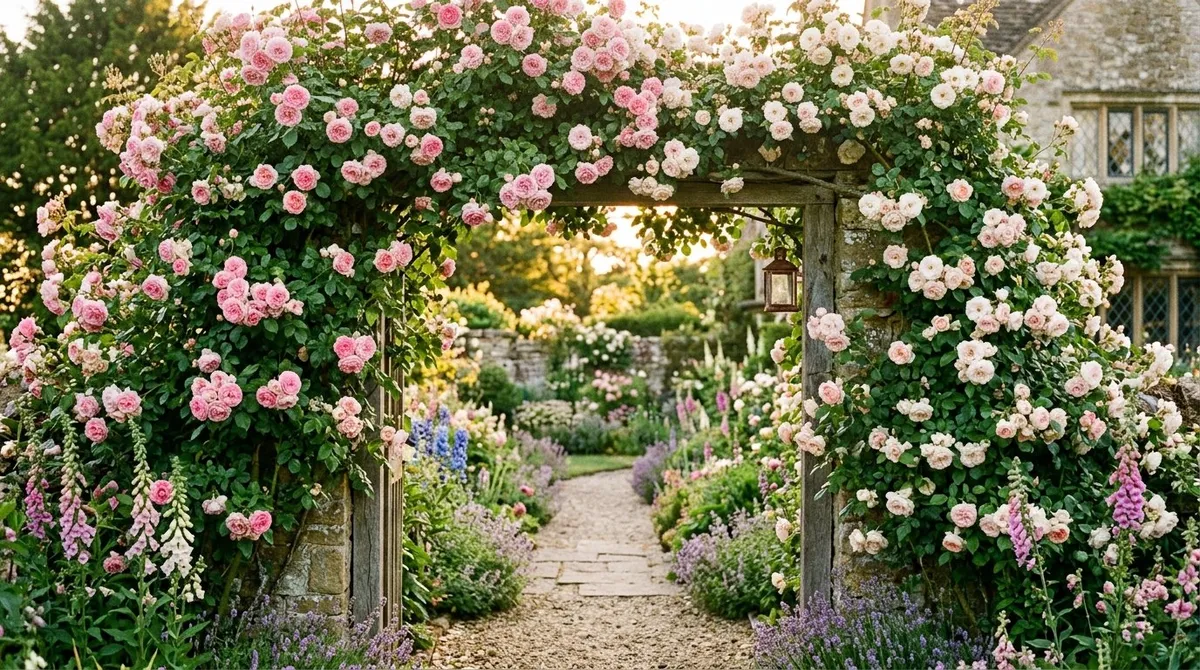
Passionflower is one of the most eye-catching climbers you can grow in a UK garden. The flowers of the blue passionflower look like they’ve flown in from the tropics, yet it copes with British winters against a warm wall. Once settled, it grows quickly, flowers from July to October, and the bees adore it.
Here’s which passionflower to pick, how to plant and train it, when to prune, how to get it through winter, and whether you can really grow passion fruit here. If you’re after more ways to cover a wall, see our guide to fast growing climbers for fences and walls.
Which passionflower can I grow in the UK?
For growing outside, choose the blue passionflower. Most others need a heated greenhouse or conservatory.
Passiflora caerulea (blue passionflower)
This is the passionflower that grows reliably outdoors in most of the UK. It’s a vigorous climber that holds on with curly tendrils and can eventually reach around 10 metres. It often keeps some leaves in winter. The flowers have white petals and a ring of blue, white and purple threads. They appear from July to October. After a hot summer, orange egg-shaped fruit follow in autumn, though they don’t taste of much.
It holds the RHS Award of Garden Merit. In a hard winter the top may die back to the ground, but the roots usually survive and send up new shoots in spring. The RHS growing guide for Passiflora suggests a south or west-facing wall for the best results.
‘Constance Eliott’ has pure white flowers with no blue. It’s just as tough, and handy if blue doesn’t suit your colour scheme.
Passiflora incarnata (maypop)
This one comes from the southern United States. It dies right back to the ground each winter and grows again from the roots in spring. It needs a long, hot summer to flower well. Against a hot wall in southern England it gives lavender-purple flowers from August. Further north it’s less reliable.
Tender passionflowers
The edible passion fruit (Passiflora edulis), the giant granadilla and the sweet granadilla are tropical. They can’t survive outside in the UK, so grow them in a heated greenhouse that stays at 10C or more in winter. Passion fruit is the most rewarding of these under glass.
| Type | Where to grow it | Flowers | Fruit |
|---|---|---|---|
| Blue passionflower | Outside on a warm wall or fence | Blue and white, July to October | Orange, bland |
| ’Constance Eliott’ | Outside on a warm wall or fence | Pure white, July to October | Orange, bland |
| Maypop | Hot wall in southern England | Lavender, August to October | Yellow-green, edible |
| Passion fruit | Heated greenhouse only | White and purple, summer | Purple or yellow, edible |
| Giant granadilla | Warm heated greenhouse only | Red and white, summer | Large, edible |
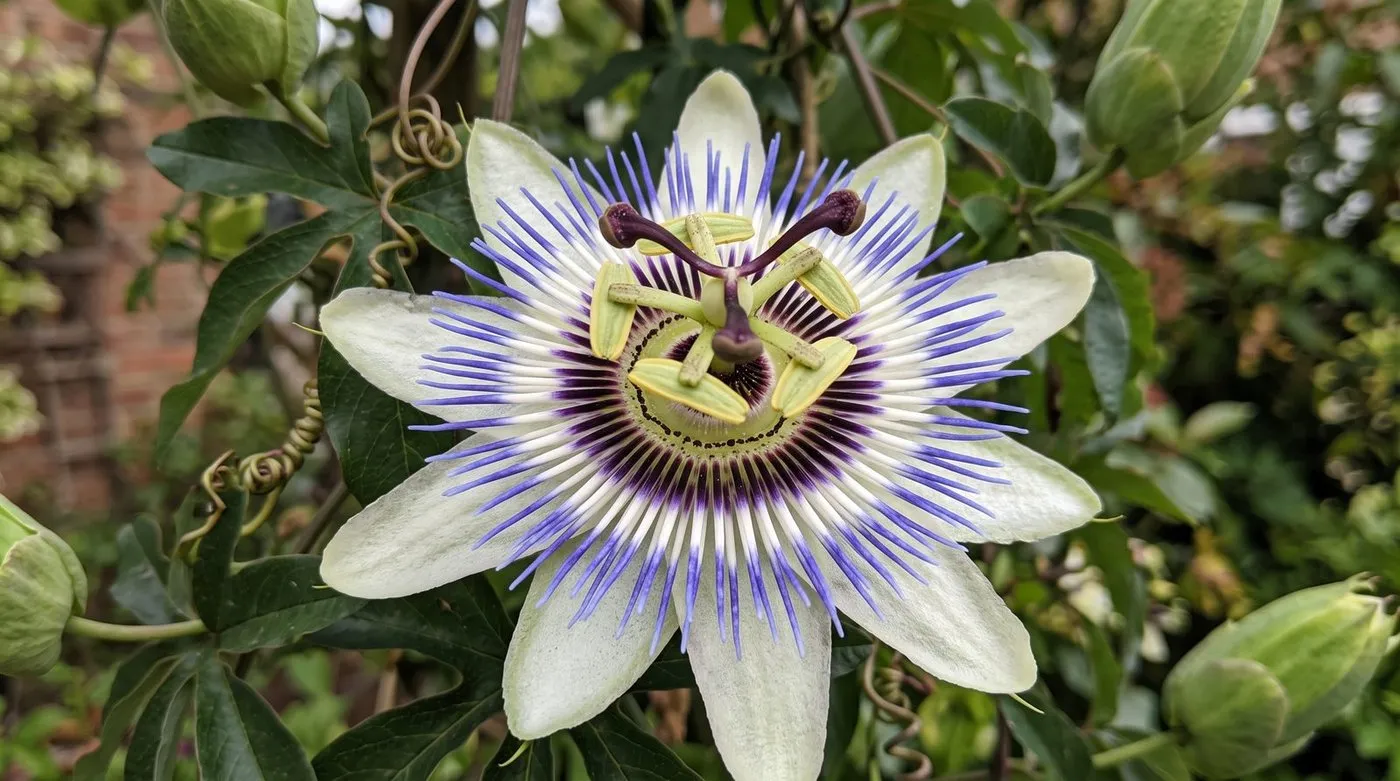
Those fine threads are what make the blue passionflower so striking. Each bloom lasts a day or two, but new ones keep opening from July to October.
Where and when to plant passionflower
Plant between April and June, when the soil has warmed and hard frosts are over. You can plant in autumn in mild areas, but spring planting gives the roots a whole season to settle before winter.
Picking the right spot
A south or west-facing wall is the best spot. The warmth from the bricks makes a real difference. East-facing walls work in mild areas, with fewer flowers. North-facing walls are too cold and shady.
The soil must drain well, as passionflower roots rot if they sit wet over winter. On heavy clay, dig in plenty of grit and composted bark. A raised bed against the wall is another good fix.
How to plant it, step by step
- Fix a trellis or horizontal wires to the wall first, with wires 30-40cm apart.
- Dig a hole 45cm wide and deep, at least 30cm out from the wall.
- Mix the soil you dug out with a bucket of grit and well-rotted compost.
- Soak the rootball in water for 20 minutes.
- Plant at the same depth it was in its pot.
- Fill in, firm gently and water well.
- Tie the main shoots to the support with soft twine.
- Spread a 5cm mulch of bark chippings, keeping it off the stem.
For more ideas on climbers and supports, see our guide to the best climbing plants for UK gardens.
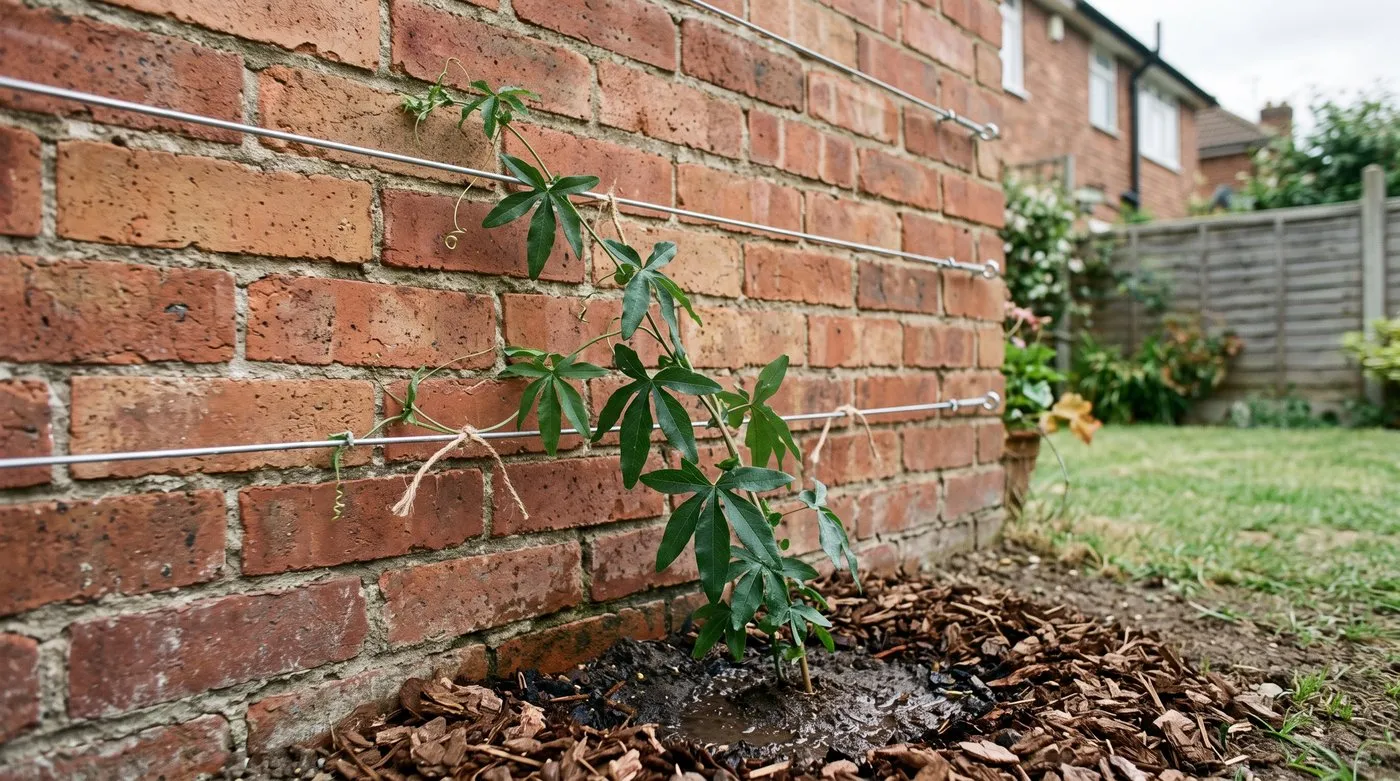
Fix the wires before you plant, and set the plant at least 30cm out from the wall. That way the roots aren’t stuck in the dry strip at the base.
Training and supporting passionflower
Passionflower climbs with tendrils that wrap around anything thin. Wires, trellis and netting all work. Thick posts and smooth walls don’t, as the tendrils can’t get a grip.
For the first two years, fan the main stems out across the support. Tie in new growth every few weeks in summer. Aim for a set of main stems roughly 30-40cm apart, with side shoots growing off them. That’s where the flowers come from.
It looks lovely on a pergola too. Train the main stem up one post and let it spread across the top. The flowers then hang down at eye level.

A passionflower over a pergola, with orange fruit after a warm summer. Pretty to look at, but bland compared with shop-bought passion fruit.
How to prune passionflower
Prune in late spring, usually late April or May, once you can see new growth. Don’t prune in autumn or winter. The old stems help shield the plant from frost, and cutting them early leaves it exposed.
How to do it
- Cut out all dead and frost-damaged stems. After a cold winter there may be quite a lot.
- Find the main stems tied to the support.
- Shorten the side shoots on these to about 15cm.
- Remove shoots growing out from the wall or tangling through each other.
- Tie in any loose growth.
Flowers grow on this year’s new shoots. Spring pruning gets lots of fresh shoots going, which then flower from July. Leave it unpruned and it turns into a tangle with flowers only at the top, out of sight.
If it’s completely overgrown, you can cut the whole plant back to 30-60cm from the ground in late spring. It soon shoots back from the base.
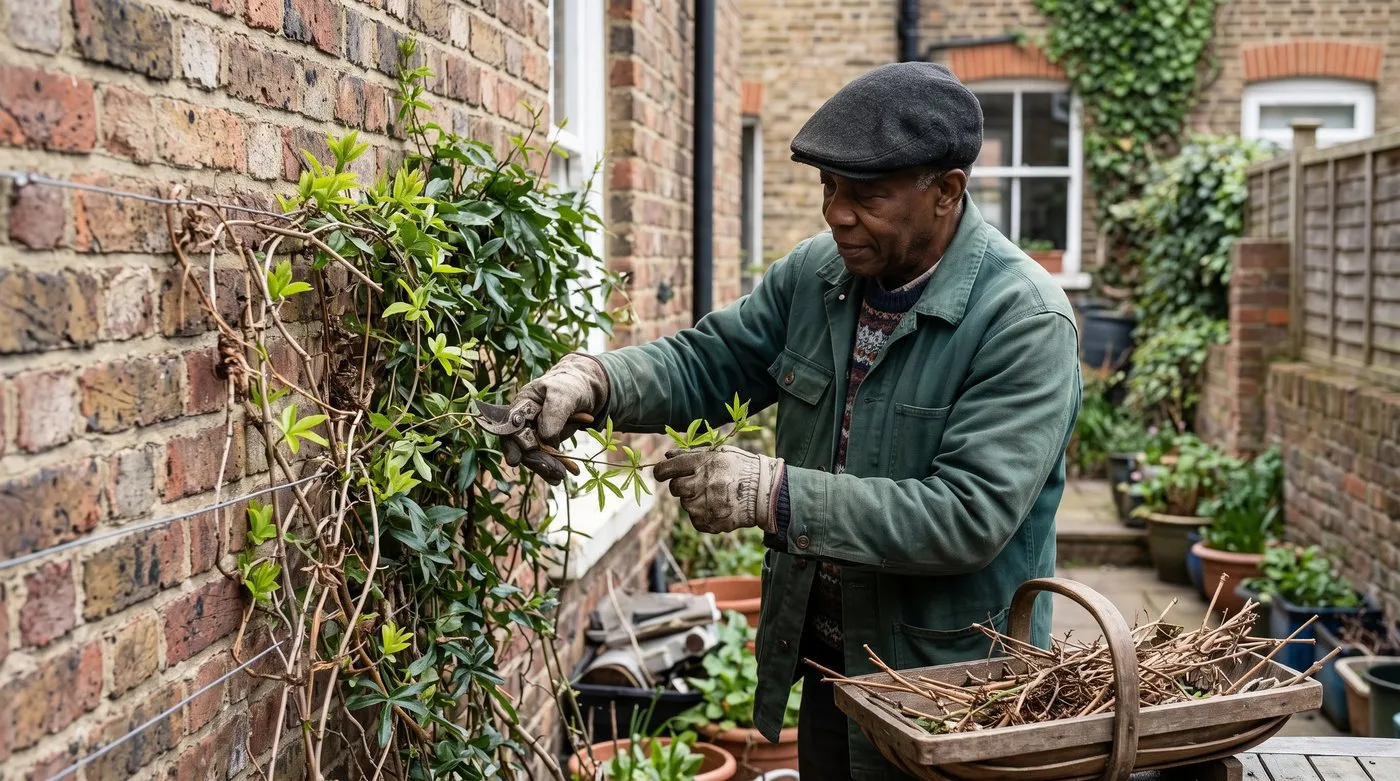
Shorten side shoots to about 15cm once new growth shows in spring. Fresh shoots carry this summer’s flowers, so wait until then rather than cutting in autumn.
Getting passionflower through winter
In mild coastal and town gardens, an established plant needs no winter help. In colder inland areas, the Midlands and further north, a few simple steps help:
- Mulch the base with 10-15cm of bark chippings or straw in November to protect the roots.
- Leave dead-looking stems until spring, as they shelter the living wood underneath.
- A house wall gives off a little warmth on cold nights, which helps.
- Young plants are the most at risk in their first couple of winters. Wrap the base in fleece during hard frosts.
After a harsh winter the whole top may look dead. Don’t give up on it until late May. Usually new shoots come up from the roots or the base of the old stems.

Tying in a young passionflower in spring. A little regular tying builds an even framework that’s covered in flowers later.
Growing passionflower in containers
A pot is a good option in cold areas or if you don’t have a suitable wall. Our guide to growing passionflower in a pot covers it step by step. You can also move a pot into a frost-free greenhouse or conservatory for winter.
Use a pot at least 40cm across with good drainage holes. Fill with John Innes No. 3 compost with some perlite mixed in. Put a sturdy trellis or obelisk in at planting time, and stand the pot in full sun against a warm wall.
Water regularly from April to September. Pots dry out quickly, so check daily in hot spells. Give a tomato feed every two weeks from May to September to encourage flowers rather than leaves.
Repot every two or three years in spring, going up one pot size. If it’s already in its biggest pot, scrape off the top 5cm of old compost and replace it with fresh.
Can I grow edible passion fruit in the UK?
Only in a heated greenhouse. The passion fruit you buy in shops comes from Passiflora edulis, a tropical plant. It needs at least 10C in winter and won’t survive outside anywhere in the UK.
In a heated greenhouse with good light, it can fruit well. Train it along wires under the roof. Help pollination by moving pollen between flowers with a soft paintbrush. The fruit slowly ripens from green to purple or yellow, depending on the variety.
The blue passionflower makes orange fruit outdoors after a warm summer. It has very little pulp and tastes bland. Grow it for the flowers rather than the fruit.
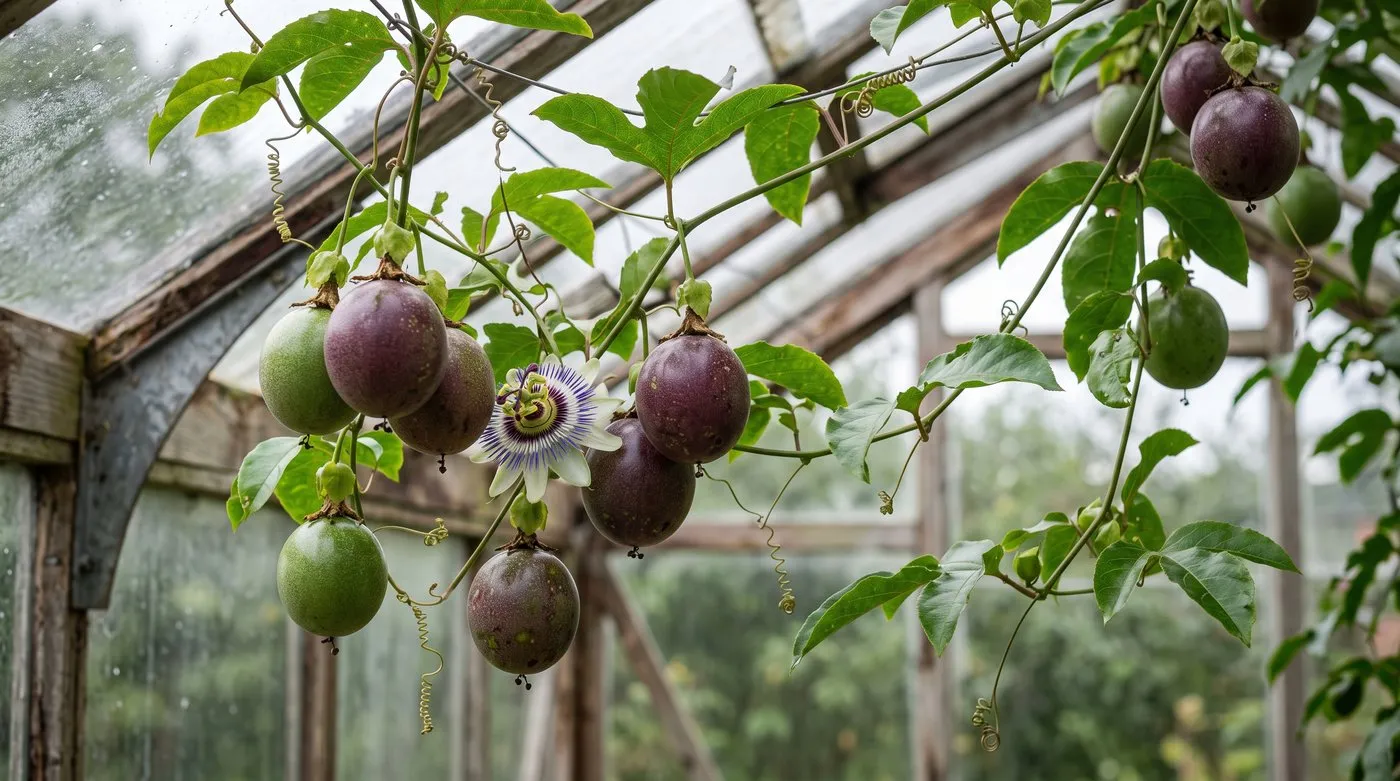
Edible passion fruit needs a heated greenhouse that stays above 10C all winter. The fruit slowly ripen from green to purple on the vine.
Taking passionflower cuttings
Semi-ripe cuttings taken in July or August root easily. It’s the cheapest way to get new plants, and lovely for sharing with friends. For other ways to make new plants, see our guide to plant propagation from cuttings, division, and layering.
How to take cuttings
- Choose a healthy shoot from this year’s growth with no flowers on it. It should be firm at the base and a little soft at the tip.
- Cut a 10-15cm piece just below a leaf joint with a clean, sharp blade.
- Remove the lower leaves and any tendrils.
- Dip the end in rooting powder if you have some.
- Push it into a pot of half perlite, half peat-free compost.
- Cover with a plastic bag, or pop it in a heated propagator at around 18-20C.
- Roots should form in four to six weeks. A gentle tug tells you when they have.
- Pot each one into a 9cm pot and keep it frost-free for its first winter.
Layering is even easier. In spring, peg a low stem down onto the soil, cover that bit with soil and leave it. Once it has rooted, cut it from the parent plant the following spring.
Passionflower month-by-month care
| Month | What to do |
|---|---|
| January | Leave it alone. The old stems protect the plant from frost. |
| February | Check the mulch around the base and top it up if needed. |
| March | Look for new shoots. Don’t prune yet. |
| April | Start pruning once new shoots are 5-10cm long. Cut out dead wood first. |
| May | Shorten side shoots to 15cm. Tie in new growth. Start tomato feed. |
| June | Lots of growth. Tie in shoots weekly and water in dry spells. |
| July | First flowers open. Take cuttings. |
| August | Flowers at their best. Keep feeding every two weeks. |
| September | Flowers carry on. Fruit may form after a warm summer. |
| October | Water less and stop feeding. Any fruit turns orange. |
| November | Mulch the base with 10-15cm of bark or straw before hard frosts. |
| December | Nothing to do. Leave the old stems in place. |
Passionflower and wildlife
Passionflower is a treat for pollinators. Bumblebees, honeybees and hoverflies all visit the big open flowers through the summer.
The thick growth gives birds and insects shelter, especially in mild winters when some leaves stay on. For a run of flowers for wildlife from spring to autumn, pair it with other climbers like clematis and jasmine.
Small birds sometimes nest in the tangle against warm walls. Nesting birds are protected by law, so check before you cut between March and August.
Common passionflower problems
No flowers
Usually too much nitrogen-rich feed. Switch to tomato feed. Not enough sun is the next most likely cause, so give it your sunniest wall. Pruning at the wrong time can also cut off the new growth that carries flowers.
Dying back after winter
This is normal in cold areas, so don’t dig it up. Wait until late May. Usually new shoots come up from the roots or the base of old stems. Mulch well the next autumn.
Yellow leaves
Often a sign of soggy soil. Improve the drainage by working grit around the roots. On chalky soil, yellowing between the leaf veins can mean a lack of iron, so give a chelated iron feed.
Aphids and red spider mite
Aphids gather on new shoot tips in spring. Wash them off with a jet of water or use a biological control. Red spider mite likes hot, dry summers, especially on south-facing walls. Mist the leaves often and try the predatory mite Phytoseiulus persimilis.
Give passionflower a warm wall and a little patience and it’ll reward you with exotic flowers from midsummer to mid-autumn. Grow it alongside wisteria for big, showy flowers from spring right through to October.
Frequently asked questions
Is passionflower hardy in the UK?
The blue passionflower is hardy in most of the UK. It’s happiest in a sheltered spot against a warm wall. In colder areas, mulch the base each November. Young plants are more at risk than older ones. After a hard winter the top may die back, but it usually regrows from the roots in spring.
When does passionflower flower in the UK?
From July to October. Flowers grow on this year’s new shoots, so a warm spring and hot summer give the best show. Each flower only lasts a day or two, but new ones keep coming all season. A south-facing wall gives the most flowers.
Can I grow passion fruit in the UK?
Only in a heated greenhouse. Passiflora edulis, the passion fruit you buy in shops, needs at least 10C in winter and can’t live outside here. Grow it in a big pot or border under glass in full sun. The blue passionflower makes orange fruit outside after a hot summer, but they’re bland with very little pulp.
How do I prune passionflower?
Prune in late spring once new growth appears. Cut out dead and frost-damaged stems first. Then shorten side shoots to about 15cm from the main stems. This gives you lots of fresh flowering shoots. Don’t prune in autumn or winter, as the old stems help protect the plant from frost.
Why is my passionflower not flowering?
Usually too much nitrogen-rich feed. That gives you lots of leaves and few flowers. Switch to a tomato feed from May. Not enough sun is the next most likely cause, so give it your sunniest wall. Pruning off all the new growth at the wrong time also stops it flowering.
Can I grow passionflower in a pot?
Yes, in a pot at least 40cm across with drainage holes. Use loam-based compost with some perlite mixed in, and add a trellis or obelisk. Water regularly from April to September and give a tomato feed every two weeks. Move it against a house wall for winter, and repot every two or three years.
How do I propagate passionflower?
Take semi-ripe cuttings in July or August. Cut a 10-15cm shoot below a leaf joint, strip the lower leaves and tendrils, and push it into a mix of perlite and peat-free compost. Cover with a plastic bag and keep it warm. Roots should form in four to six weeks. Keep young plants frost-free for their first winter.
Our team produces practical UK gardening guidance from source research, contributor records and established horticultural practice. Editorial standards are overseen by Matt W.