
Key takeaways
- Check your tenancy agreement before adding ponds, holes in fences or wild areas
- A 30-50cm flower strip along bed edges brings bees and hoverflies to your crops
- A 13cm square gap at the base of a fence lets hedgehogs roam between plots
- A log pile and a sunken-bowl pond take an afternoon and bring in beetles and frogs
- No-dig beds and peat-free compost look after the soil and the life in it
- Netting, barriers and hand-picking work better than sprays and spare the wildlife
A wildlife-friendly allotment is a plot where growing food and helping nature go hand in hand. A strip of flowers brings bees to your bean flowers. A gap under the fence lets hedgehogs pass through. A pile of prunings shelters the beetles that hunt pests at night.
None of it takes much space or money. This guide covers easy wildlife features for an allotment, how to fit them around your crops and how to stay within your site’s rules.
Check your allotment rules first
Before you add anything, read your tenancy agreement. Most sites expect the bulk of your plot to be cultivated for growing food. Many also have rules about ponds, trees, fences and bonfires.
Talk to your site committee if you’re unsure. Most are happy to see small wildlife features, especially when the rest of the plot is well kept. A tidy edge and a clearly planned wild corner look very different from a neglected plot. Our guide to allotment rules in the UK explains what’s usually allowed.
How wildlife helps your allotment crops
Wildlife isn’t just nice to have. It does real jobs on the plot.
- Bees and other pollinators help runner beans, courgettes, squash, strawberries and fruit trees set a good crop.
- Hoverflies, ladybirds and lacewings have young that eat aphids.
- Ground beetles, frogs, toads and hedgehogs eat slugs and other pests.
- Birds such as blue tits feed lots of caterpillars to their chicks.
None of these will clear every pest on their own. But together they keep things more in balance, especially on a plot that isn’t sprayed.
How to sow a pollinator strip on an allotment
A pollinator strip is a narrow band of flowers along a bed edge, path or fence. It keeps bees and hoverflies on your plot from spring to autumn.
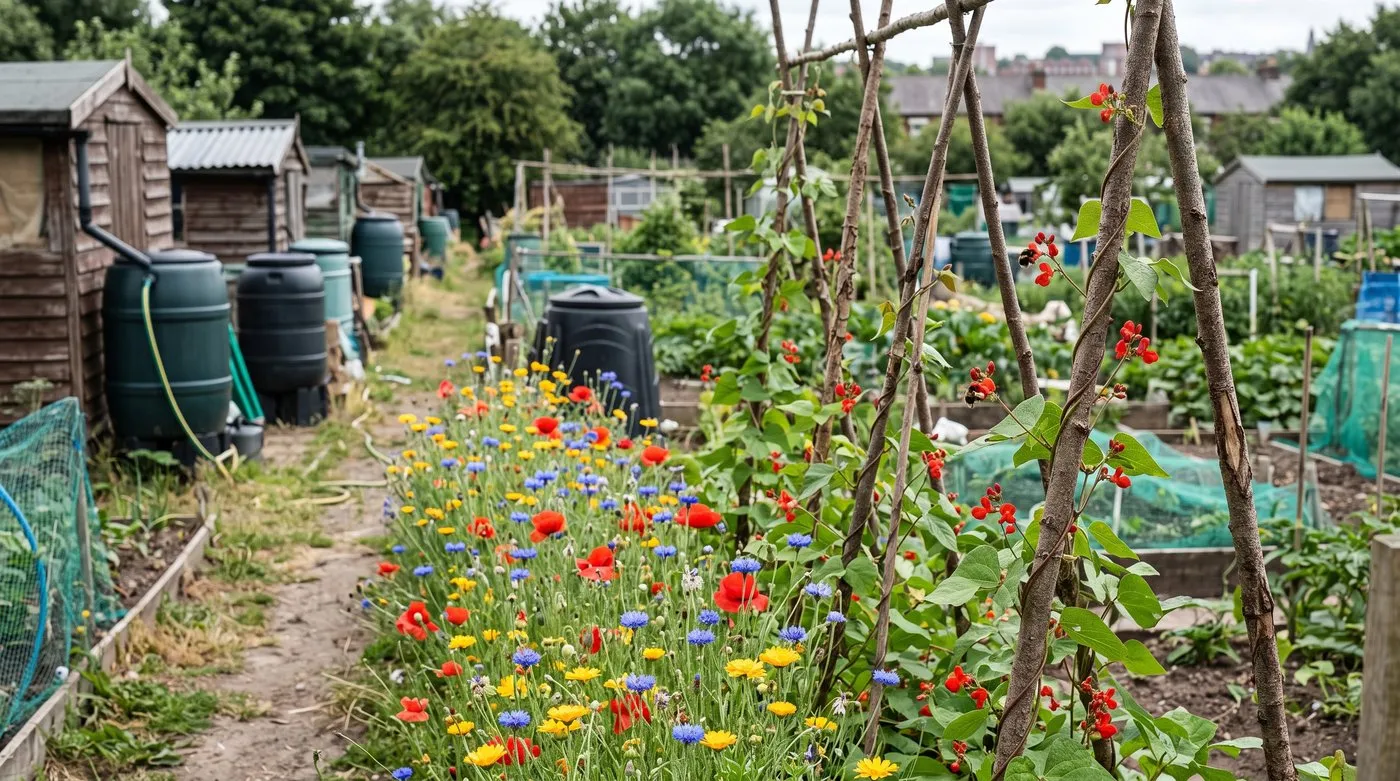
A strip of annual flowers along the bean bed keeps bees busy right next to your crops.
Make it 30-50cm wide, so you don’t lose much growing space. Allotment soil is usually rich, so choose flowers that cope with that.
| Mix | Example flowers | When to sow | First flowers |
|---|---|---|---|
| Cornfield annuals | Poppy, cornflower, corn marigold | March to April, or September | First summer |
| Perennial wildflowers | Red clover, bird’s-foot trefoil, ox-eye daisy, knapweed | September to October | Mostly the second summer |
| Easy garden annuals | Phacelia, calendula, borage | March to May | Early to midsummer |
Annuals are the simplest choice on fertile ground. Re-sow them each year, or let some self-seed. Our guide on when to sow wildflower seeds explains the timing in more detail.
How to make a hedgehog highway on your allotment
Cut a 13cm square gap at the base of a boundary fence, at ground level. That’s big enough for a hedgehog but too small for most pets. Hedgehogs travel a long way each night to find food, and solid fences stop them.
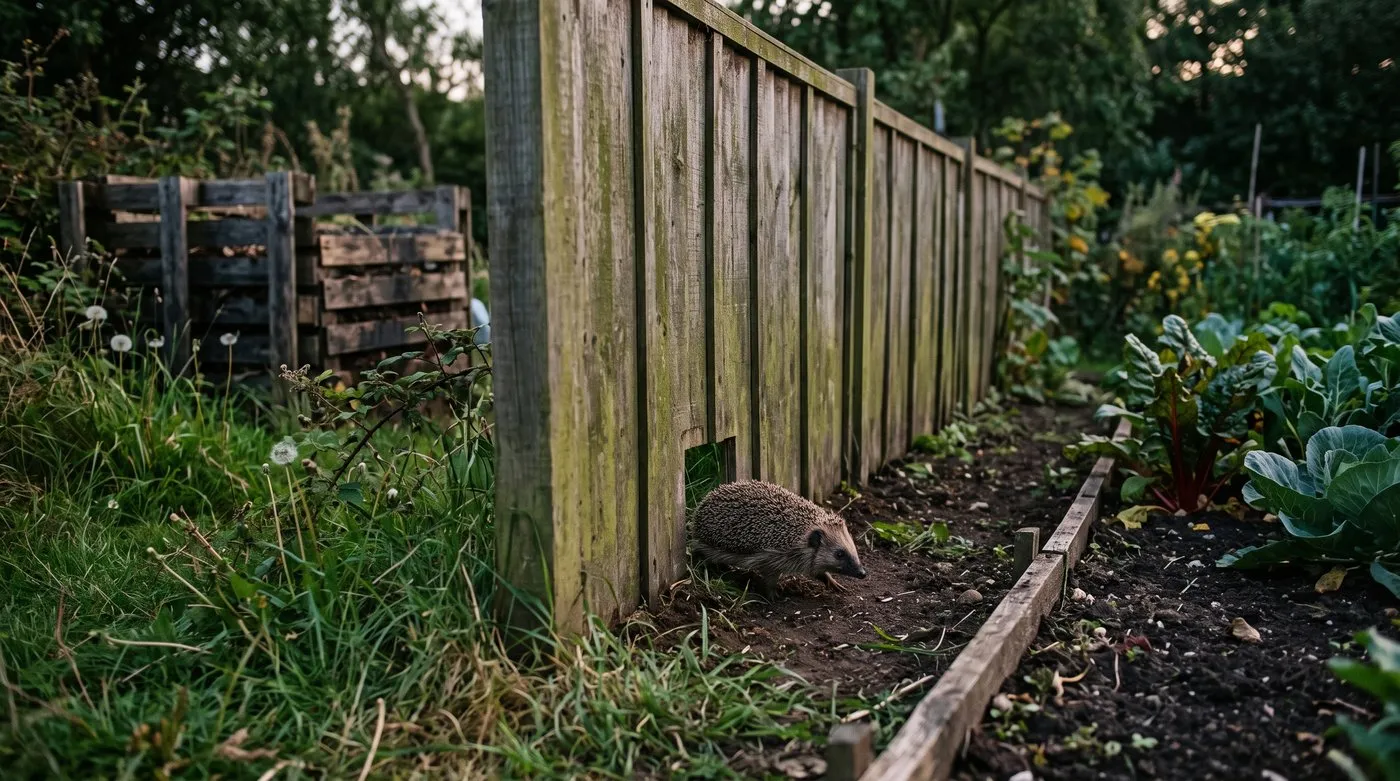
A small gap at ground level in fences between plots lets hedgehogs roam the whole site at night.
Ask your neighbour and the site committee first. Gaps in several fences across the site work best, so spread the word. Our hedgehog highway guide shows how to cut one neatly.
Gardener’s tip: Check strimmer and mower routes before cutting long grass. Hedgehogs often rest in tall grass and under brambles during the day.
Hedgehogs eat beetles, caterpillars, worms and some slugs. Never use slug pellets where they roam. Our guide to getting rid of slugs naturally covers safer options.
How to build a log pile from allotment prunings
A log pile is the easiest wildlife feature of all. Stack thicker logs at the bottom and thinner branches on top, in a shady corner. Partly bury a few logs to keep them damp.
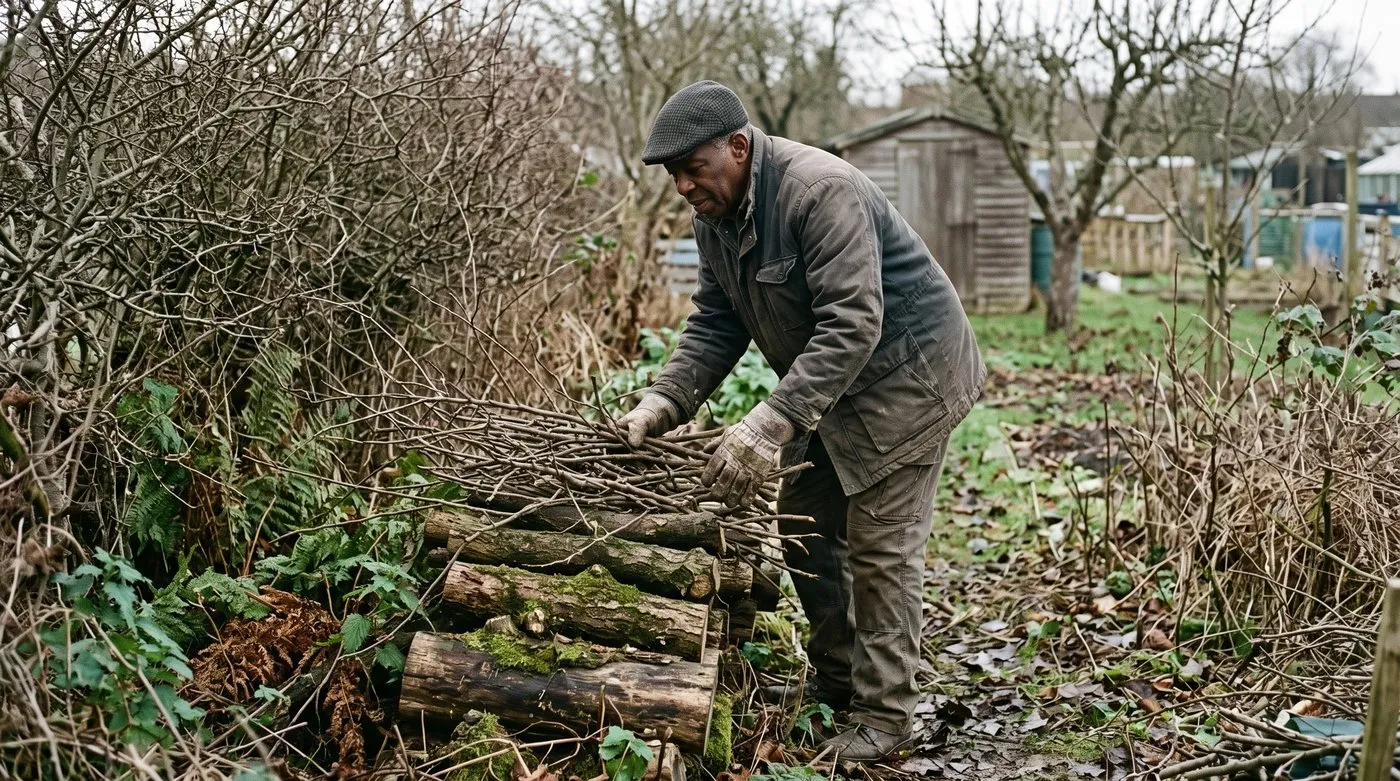
Winter prunings make a perfect log pile. Thick logs go at the bottom and twiggy bits on top.
Beetles, woodlice, centipedes and fungi move in first. Toads and frogs shelter underneath, and ground beetles hide there by day before hunting slugs at night. In the south, stag beetle grubs may feed in buried logs.
Use untreated wood only. Fruit tree prunings, willow and hazel are all fine. Stacking prunings is also kinder to wildlife than burning them, and many sites restrict bonfires anyway. Our guide to building a wildlife log pile has more ideas.
How to make a mini pond from a washing-up bowl
Even a sunken washing-up bowl or old sink makes a useful mini pond. Frogs, newts, water beetles and dragonflies often find it within a summer or two.
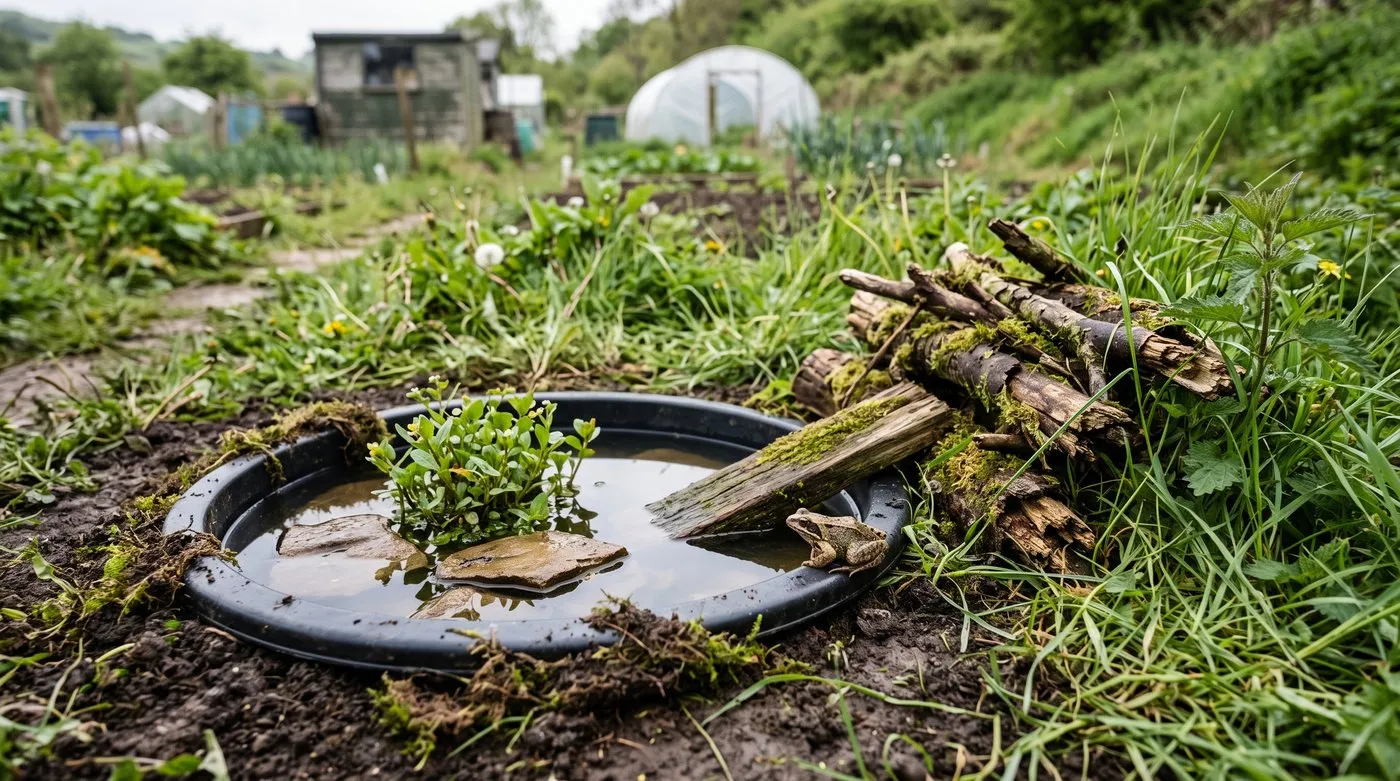
A sunken washing-up bowl, a few stones and a ramp out are all it takes to welcome frogs.
- Dig a hole and sink the bowl so its rim is level with the ground.
- Add a few centimetres of gravel or soil to the bottom.
- Fill it with rainwater from a water butt.
- Add one or two native water plants.
- Put in stones or a piece of wood as a ramp, so animals can climb out.
Place it near cover, such as long grass or the log pile, so frogs can move about safely. If children visit the plot, cover it with a strong mesh or keep a close eye on them.
How no-dig growing helps soil wildlife
No-dig means spreading compost on top of the soil each year instead of digging it in. Worms and other soil life pull the compost down for you.
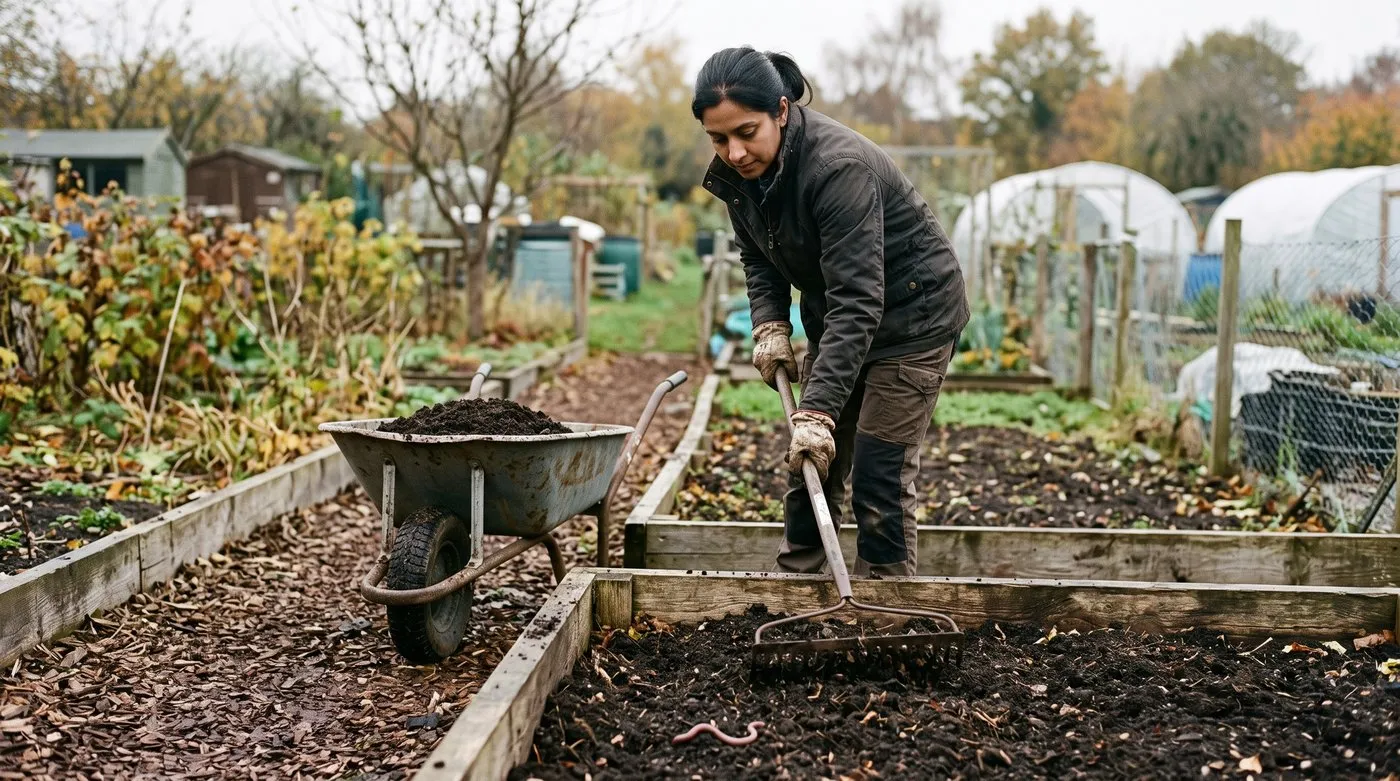
With no-dig, compost goes on top and the worms do the digging for you.
Digging breaks up worm burrows and the fine fungal threads that help plants find water and nutrients. A no-dig bed leaves them alone. It also brings fewer weed seeds to the surface. Our no-dig gardening guide shows how to set up the beds.
Choose peat-free compost for sowing and potting. Peat comes from bogs that are important wildlife habitats. Homemade compost, leaf mould and well-rotted manure are all great for feeding the soil.
How to control pests without harming wildlife
Use barriers, netting and good timing first. They’re more reliable than sprays and don’t harm the creatures that help you.
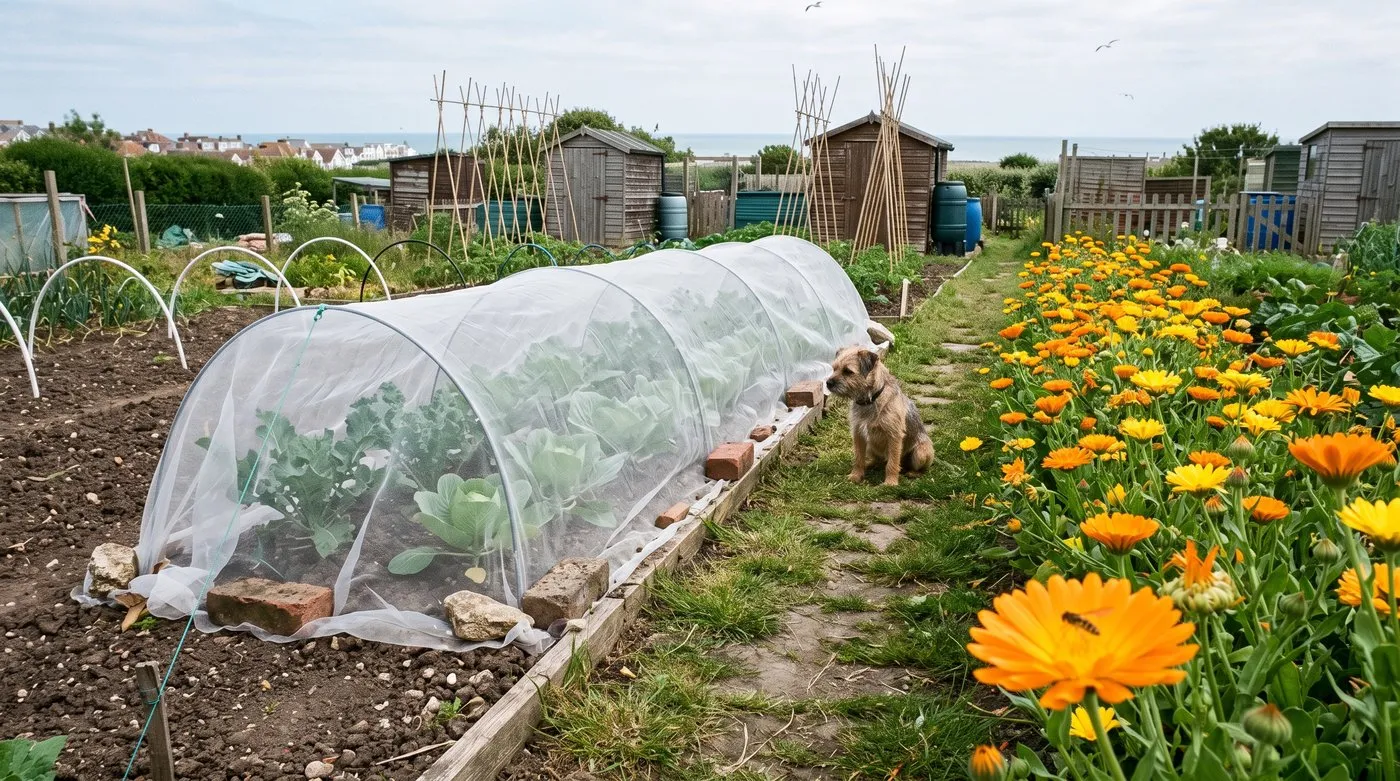
Fine netting keeps cabbage whites off without harming anything, while the flowers bring in aphid-eating hoverflies.
| Pest | Wildlife-friendly control |
|---|---|
| Slugs | Hand-pick at dusk, beer traps, protect seedlings, encourage frogs and beetles |
| Aphids | Squash or wash off by hand, attract hoverflies and ladybirds with flowers |
| Carrot fly | Fine mesh or a 60cm barrier around the bed |
| Cabbage white caterpillars | Fine netting over brassicas, check leaves for eggs |
| Weeds | Mulch, hoe on dry days, cardboard and woodchip on paths |
Companion planting can help a little. Marigolds and other open flowers bring in hoverflies, whose larvae eat aphids. Nasturtiums can act as a sacrificial crop for blackfly. Our guide to companion planting myths explains what really works and what doesn’t.
Bird boxes and hedges on an allotment
Bird boxes on sheds or posts give blue tits and great tits a place to nest. Their chicks eat lots of caterpillars. Use a 25mm hole for blue tits or 28mm for great tits. Fix the box 1-3m up, facing between north and east, out of strong afternoon sun. Put boxes up in autumn or winter.
If your plot has a hedge, avoid cutting it from March to August, when birds are nesting. It’s an offence to damage or destroy an active nest. Trim in late autumn or winter instead.
Wildlife-friendly allotment jobs through the year
| Season | What to do |
|---|---|
| Winter | Put up bird boxes. Trim hedges. Build a log pile from prunings |
| Early spring | Sow annual flower strips. Clean and fill the mini pond with rainwater |
| Late spring | Leave some nettles and long grass at the edges. Net brassicas and carrots |
| Summer | Top up the pond with rainwater. Let some herbs and veg flower for bees |
| Autumn | Sow perennial wildflowers. Leave some seedheads standing. Spread compost on no-dig beds |
Common mistakes on a wildlife-friendly allotment
- Letting it all go wild. Wild doesn’t mean neglected. Keep most of the plot growing food and the wild bits tidy at the edges.
- Using slug pellets. They can harm the hedgehogs, frogs and birds that eat slugs.
- Forgetting a way out of the pond. Without a ramp, animals that fall in can drown.
- Spraying aphids early. Give the ladybirds and hoverflies a chance to arrive first.
- Cutting hedges in spring. Wait until nesting is over.
For a deeper look at feeding wildlife through your compost heap, read our guide to composting for wildlife. For more ideas, visit the wildlife hub.
Frequently asked questions
Does a wildlife-friendly allotment produce less food?
Not if you plan it well. Flower strips and wild corners can sit along edges and in odd spots. Bees help beans, courgettes and fruit set well. Keep most of the plot cultivated, as your tenancy usually requires.
What is the best pollinator seed mix for an allotment?
A cornfield annual mix is easiest for a fertile allotment. Poppies, cornflowers and corn marigolds flower in the first summer. For a permanent edge, add perennials such as red clover, bird’s-foot trefoil and knapweed. Sow in March or September.
How do I make a hedgehog highway on an allotment?
Cut a 13cm square gap at the base of a boundary fence. Ask the site committee and your neighbour first. Gaps in several fences let hedgehogs move across the whole site at night.
Will a mini pond attract mosquitoes to my allotment?
A planted pond is unlikely to cause a mosquito problem. Water beetles, dragonfly larvae and newts eat the larvae. Neglected open containers of standing water are more likely to breed them.
Can I use companion planting instead of pesticides on an allotment?
Companion planting can help a little, but don’t rely on it. Flowers that draw in hoverflies and ladybirds help keep aphids down. Netting and barriers are far more reliable for pests like carrot fly and cabbage white caterpillars.
What should I do with prunings and hedge clippings on an allotment?
Stack woody prunings in a shady corner as a log or brash pile. Beetles, toads and other wildlife shelter in it as it slowly rots. Softer clippings can go on the compost heap.
Is no-dig growing better for wildlife than digging?
Yes, no-dig is kinder to soil life. Digging breaks up worm burrows and fungal threads in the soil. Spreading compost on top instead feeds the soil and keeps that life intact.
Our team produces practical UK gardening guidance from source research, contributor records and established horticultural practice. Editorial standards are overseen by Matt W.


