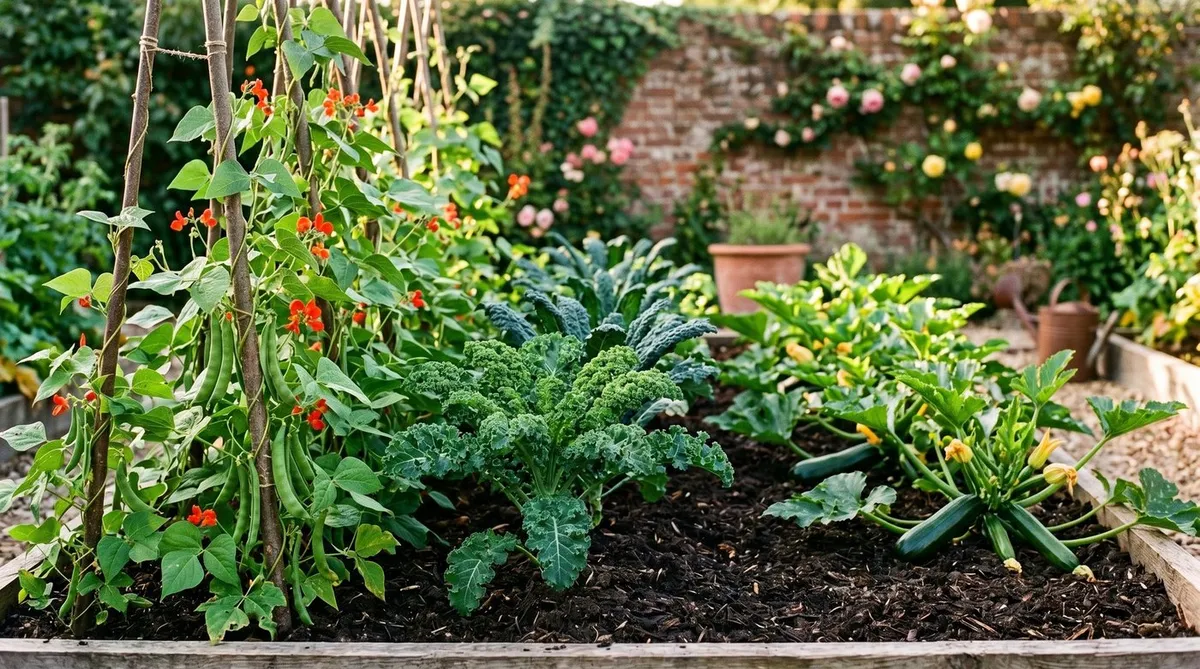
Key takeaways
- Never dig or fork. Spread compost on top and let worms mix it in
- Start a bed with overlapping cardboard and about 15cm of compost
- Top up with about 5cm of compost each year after that
- Grow courgettes, beans, salads and cabbages in year one, and root crops from year two
- Weeding gets much easier from the second year
- It works on any UK soil, and you can start at any time of year
No-dig gardening is one of the easiest and most rewarding changes you can make. Instead of digging and forking every year, you spread compost on top and let worms and soil life do the work. It sounds almost too simple, but it works, and your back will love it.
What is no-dig gardening?
No-dig means growing plants without ever digging or turning the soil. You feed the soil from the top with compost. Worms, fungi and other soil life pull it down and build a lovely crumbly structure with channels for air, water and roots.
Digging breaks up those channels. It also brings buried weed seeds up to the light, where they sprout. Leave the soil alone and the weed seeds stay buried.
In the UK, Charles Dowding has done more than anyone to make no-dig popular, through his market garden at Homeacres in Somerset.
The idea is simple. Keep the soil covered. Add compost to the surface. Let nature do the rest.
The Charles Dowding method explained
The Charles Dowding method boils down to a few easy habits. Many growers find no-dig beds crop just as well as dug ones, with far less weeding.
- Spread compost on the beds each year, usually in autumn or early spring
- Never fork, rotavate or turn the soil
- Pull weeds while they’re small, which is easy in the loose surface
- Keep beds in the same place, with paths between them
- Don’t walk on the beds, so the soil doesn’t get squashed
How to start a no-dig bed: step by step
You can make a no-dig bed in an afternoon with no special tools. All you need is cardboard, compost and a patch of ground.
Step 1: Choose your site
Pick a spot that gets at least six hours of sun a day, as most vegetables love sun. Avoid places under trees. Flat ground is best, though a gentle slope is fine.
Mark out your bed. About 1.2m wide lets you reach the middle from either side. Around 2.4m long is a good size to start. Leave paths about 40-50cm wide between beds.
Step 2: Lay the cardboard
Flatten big pieces of cardboard straight onto the ground. Take off any tape and staples first. Overlap the sheets by at least 15cm so weeds can’t sneak through. Use a double layer over very weedy patches.
The cardboard blocks light, so the grass and weeds underneath give up. Worms then eat the cardboard over three to six months, making tunnels that help drainage.
 Overlapping cardboard laid straight onto grass. Let it stick out past the bed edge by about 10cm to stop grass creeping in.
Step 3: Add compost
Pile about 15cm of compost on top of the cardboard for a new bed. This is what your plants grow in during the first season. Garden compost, mushroom compost, green waste compost or a mix all work.
In later years, about 5cm of fresh compost each autumn is plenty. Our composting guide shows how to make your own. For bigger areas, bulk green waste compost from the council or a supplier is good value.
Step 4: Plant or sow
You can plant straight away. Young courgettes, beans, squash and cabbages all settle in well. Lettuce, radish and beetroot can be sown directly, though carrot seed likes a finer surface.
Water everything in well. Compost holds moisture nicely, but new plants still need regular watering until their roots get going.
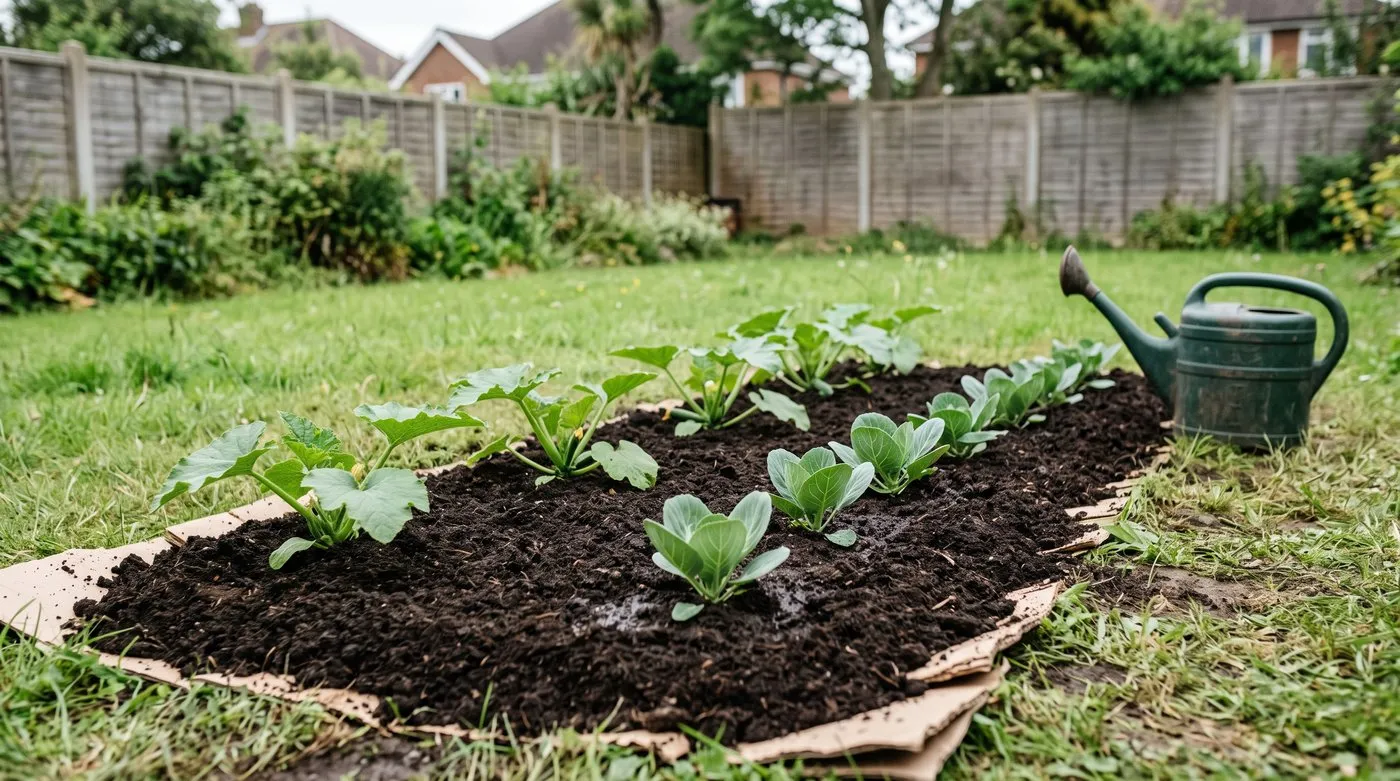
You can plant straight into the compost on day one. Firm young plants in and water them well while their roots reach down.
Materials you need
A no-dig bed can cost nothing if you make your own compost and collect free cardboard. Buying compost in costs more, but bulk deliveries keep it down.
| Material | Where to get it | Cost | Tips |
|---|---|---|---|
| Cardboard | Supermarkets, appliance shops | Free | Take off tape and staples |
| Garden compost | Your compost bin | Free | Takes 6-12 months to make |
| Green waste compost | Council or bulk supplier | Low | Best value for big areas |
| Mushroom compost | Garden centres, farms | Low | Slightly chalky, so not for acid lovers |
| Well-rotted manure | Stables, farms | Free to low | Must be well rotted, ideally a year old |
| Wood chip (paths) | Tree surgeons | Often free | Keeps path weeds down |
Building raised beds? The same materials work. Fill the frame with compost instead of piling it on flat ground. The sides keep paths tidy.
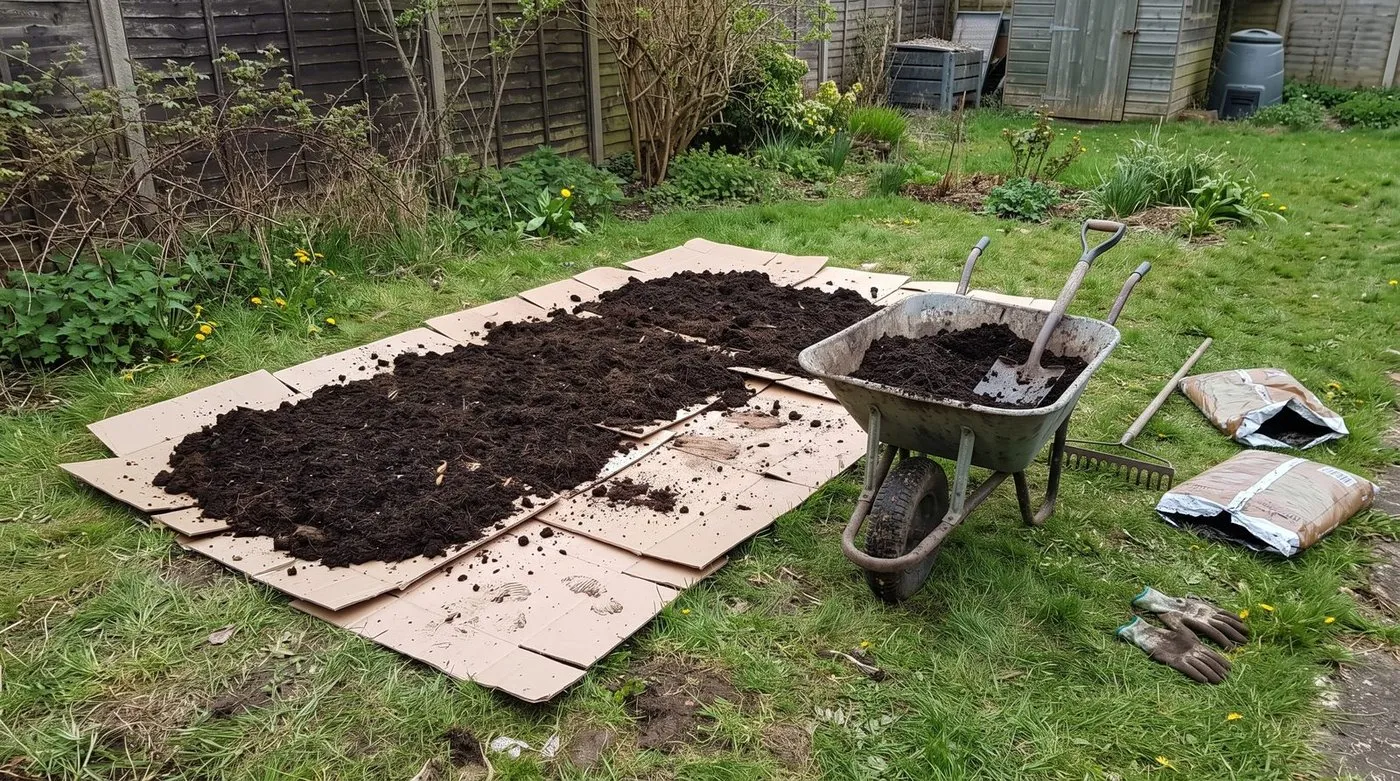 Cardboard on the ground and about 15cm of compost on top. Worms pull the compost down over time.
Which crops grow best in no-dig beds?
Almost every vegetable grown in the UK does well in a no-dig bed. The only crops to hold back are deep-rooted ones in the first year, while the cardboard is still there.
Best crops for year one
Stick to young plants and shallow-rooted crops in the first season.
- Courgettes and squash love the rich compost. Our courgette growing guide has variety ideas.
- Beans and peas grow happily in fresh compost, and their roots add nitrogen to the soil for next year.
- Lettuce and salad leaves are quick and shallow-rooted, great for filling gaps.
- Cabbages, kale and sprouting broccoli do well as young plants firmed in well.
Best crops from year two onward
Once the cardboard has gone and the compost has blended into the soil, root crops join the party.
- Carrots grow straight in fine, stone-free compost
- Potatoes can sit on the soil surface under a thick layer of compost
- Beetroot is quick and reliable
- Onions and garlic grow strongly in well-drained no-dig beds
No-dig vs traditional digging: a comparison
Digging costs less at the very start, since a spade is cheaper than a load of compost. But no-dig saves you hours of digging and weeding, and the soil gets better every year. On a bigger plot, that time adds up fast.
Year-by-year improvement
No-dig beds get better and better over the first three years. Knowing what to expect helps you stick with it.
Year one
Plants grow in the compost layer on top of the cardboard. Crops are good, if not amazing yet. A few weeds may poke through gaps, and slugs can like the damp cardboard. That settles down as it rots away.
Year two
The cardboard has gone, and worms have mixed compost into the soil below. Now you can grow root crops. Weeds drop off noticeably, because buried weed seeds stay buried. This is when most people spot the difference.
Year three and beyond
The soil is darker, looser and holds water better, with lots of worms. The yearly top-up takes about half an hour a bed. Plants settle in faster and crop well. The bed more or less looks after itself.
On heavy clay soil, allow an extra year. Clay loves no-dig, but it takes a bit longer for the compost to work its way in.
Weed suppression: why no-dig wins
You get fewer weeds because you never bring buried seeds up to the light. Digging wakes them up. No-dig lets them sleep.
Some weed seeds do arrive in compost, especially homemade compost that didn’t get very hot. But they’re shallow-rooted and pull out in seconds.
Mulching between plants with extra compost or leaf mould keeps even those in check. Keep a 5cm mulch in place and weeding becomes a quick, easy job.
Soil biology: the science behind no-dig
Healthy soil is full of life, from worms to tiny fungi and bacteria. Together they break down compost, feed plants and build the crumbly structure roots love.
Digging tears up fine fungal threads and wrecks worm burrows. The soil recovers, but dig every year and it never reaches its best.
The RHS page on no-dig gardening is a good extra read if you’d like to know more.
Leave the soil alone for a couple of years and you may spot fine white fungal threads when you gently scrape back the compost. That’s a great sign. Those threads help plants find water and food.
 A third-year no-dig bed in July, with dark, crumbly soil and hardly a weed in sight.
Managing a no-dig allotment
No-dig is brilliant on allotments, where time is always short. Most allotment rules ask you to keep your plot cultivated. Productive, weed-free no-dig beds tick that box.
- October to November: Clear finished crops and spread 5cm of compost on all beds
- December to February: Plan next year, order seeds, tidy paths
- March: Plant early crops like broad beans, peas and onion sets
- April to May: Plant out tender crops after the last frost
- June to September: Harvest, sow more, pull the odd weed
- Repeat
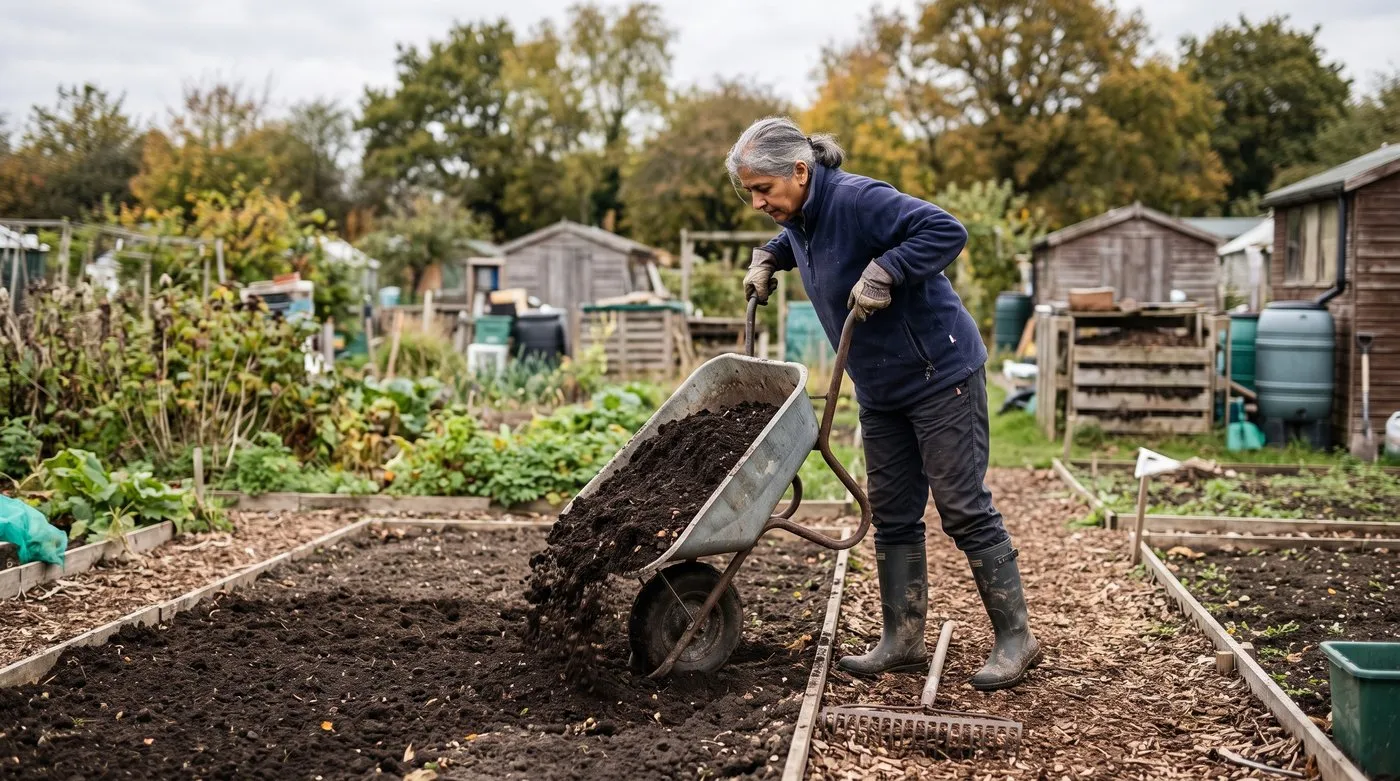
Autumn is the big no-dig job on a plot. Clear the finished crops, top every bed with compost, and the worms do the rest over winter.
Common mistakes to avoid
Using fresh manure
Fresh horse or chicken manure can burn roots and brings in weed seeds. Use manure that’s been rotting for about a year. It should be dark and crumbly and smell earthy, not sharp.
Skimping on the first layer
A thin layer of compost on cardboard isn’t enough in year one. Plants need about 15cm to root into while the cardboard rots. Be generous at the start, then cut back to a yearly top-up.
Leaving gaps in the cardboard
Weeds are brilliant at finding light. Even a small gap lets couch grass and bindweed through. Overlap every sheet by at least 15cm, and double up over couch grass, dock and horsetail.
Walking on the beds
Squashed soil undoes all your good work. Stick to the paths. If you must reach the middle of a wide bed, lay a plank across to spread your weight.
Expecting perfection in year one
Year one is a settling-in year. A few weeds, a few more slugs and the odd wonky carrot are normal. By year three, most of that has sorted itself out. Beer traps and an evening slug patrol help in the meantime.
No-dig for small gardens
You don’t need an allotment to go no-dig. One raised bed, a strip along a fence or even a few pots will do.
In small spaces, make beds about 60cm wide so you can reach across from one side. Paths can be narrower, about 30cm. Garden centre bags of compost are fine if you can’t get a bulk delivery. A couple of 50-litre bags give a 60cm by 120cm bed just over 10cm of compost.
No-dig works in flower borders too. Stop digging and spread about 5cm of compost around your perennials each spring. Dahlias, sweet peas, cosmos and sunflowers all love it. The same idea works in pots: just add fresh compost on top each year.
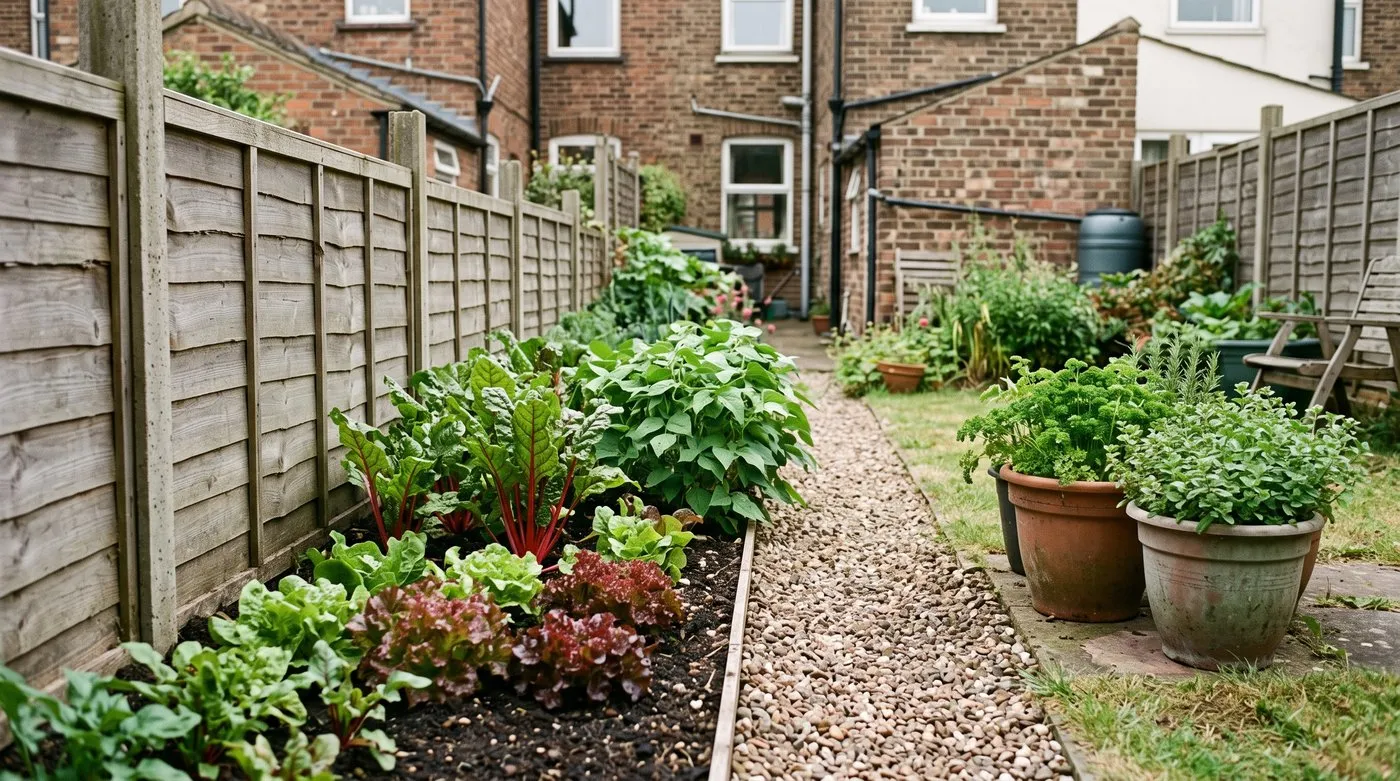
A strip just wide enough to reach across from the path is plenty. Keep topping it up with compost each year and it never needs digging.
Transitioning from traditional gardening
You can switch to no-dig at any time of year. There’s no need to clear everything and start again.
If you dig your veg patch now, simply stop. After clearing crops in autumn, spread compost on top. By spring, the soil will already feel firmer and darker, with more worms.
To turn lawn into a bed, lay cardboard over the grass and pile about 15cm of compost on top. The grass dies off underneath in a couple of months. If you only want one planting area rather than a whole plot, our guide on how to make a flowerbed in a lawn shows how to mark out the shape. You can put young plants in straight away. For sowing seeds, wait two or three weeks for the surface to settle.
Got a neglected plot full of weeds? No-dig is a great way to tackle it. The cardboard smothers most of what’s underneath. Bindweed and couch grass can take more than a season to weaken, so keep pulling any shoots you see. They get weaker every year, with no weedkiller needed.
Planning your first no-dig season
March is a great time to start a bed for spring planting. Here’s a simple first-year plan.
| Month | What to do |
|---|---|
| March | Lay cardboard, add 15cm of compost, sow peas and broad beans |
| April | Plant onion sets, sow lettuce and radish |
| May | Plant out courgettes, beans and squash after the last frost |
| June | Sow more salads, earth up any potatoes |
| July | Harvest early crops, sow autumn lettuce and spring onions |
| August | Sow green manure in empty spaces |
| September | Clear finished crops and start adding compost |
| October | Spread 5cm of compost on all beds for winter |
The next spring, just add another 5cm of compost and carry on planting. You won’t need cardboard again unless you’re making new beds.
Ready to make your own compost supply? Our guide to making your own compost is the perfect next step.
Frequently asked questions
Can I start a no-dig garden on clay soil?
Yes, and clay really benefits from no-dig. Spread a thick layer of compost on top of the clay and plant straight into it. Worms pull the compost down over time, which slowly improves drainage. Keep off the beds, especially when wet, as treading squashes clay.
How much compost do I need for a no-dig bed?
A 1.2m by 2.4m bed needs about 0.4 cubic metres. That’s roughly eight large bags from a garden centre, or part of a bulk bag. After the first year, you only need a few centimetres a year. Bulk deliveries are usually cheaper if you have several beds.
Does no-dig gardening really work for root vegetables?
Yes, root vegetables grow well in no-dig beds. Carrots, parsnips and beetroot like loose, stone-free soil for straight roots, and fine compost gives them that. In a brand-new bed, lettuce, courgettes and beans settle in more easily. Root crops do better once the soil underneath has settled.
When is the best time to start a no-dig bed?
Autumn is ideal, but any time of year works. An autumn start gives the compost all winter to settle and the worms time to get mixing. In spring, use a thick layer of well-rotted compost and plant straight into it.
Can I use no-dig methods in raised beds?
Yes, raised beds and no-dig go together nicely. Fill them with compost and don’t dig or turn it. Add a few centimetres of fresh compost each autumn or spring and plant into the top. You don’t need raised sides, though, as no-dig works on flat ground too.
What type of compost is best for no-dig beds?
Garden compost, mushroom compost or green waste compost all work well. Avoid fresh manure, as it can scorch roots and bring in weed seeds, so use well-rotted manure instead. Council green waste compost is often the cheapest for big areas, especially delivered in bulk.
How do I deal with perennial weeds like bindweed in no-dig?
Smother them with overlapping cardboard and a thick layer of compost. Many perennial weeds give up after a season without light. Bindweed and horsetail may still poke through, so pull any shoots as soon as you see them. They get weaker every year.
Do I need to add fertiliser to no-dig beds?
Usually not, as good compost provides most of what plants need. For hungry crops like tomatoes and courgettes, a liquid seaweed feed every two weeks in summer gives an extra boost. Keep up the yearly compost and you shouldn’t need granular fertiliser.
Our team produces practical UK gardening guidance from source research, contributor records and established horticultural practice. Editorial standards are overseen by Matt W.