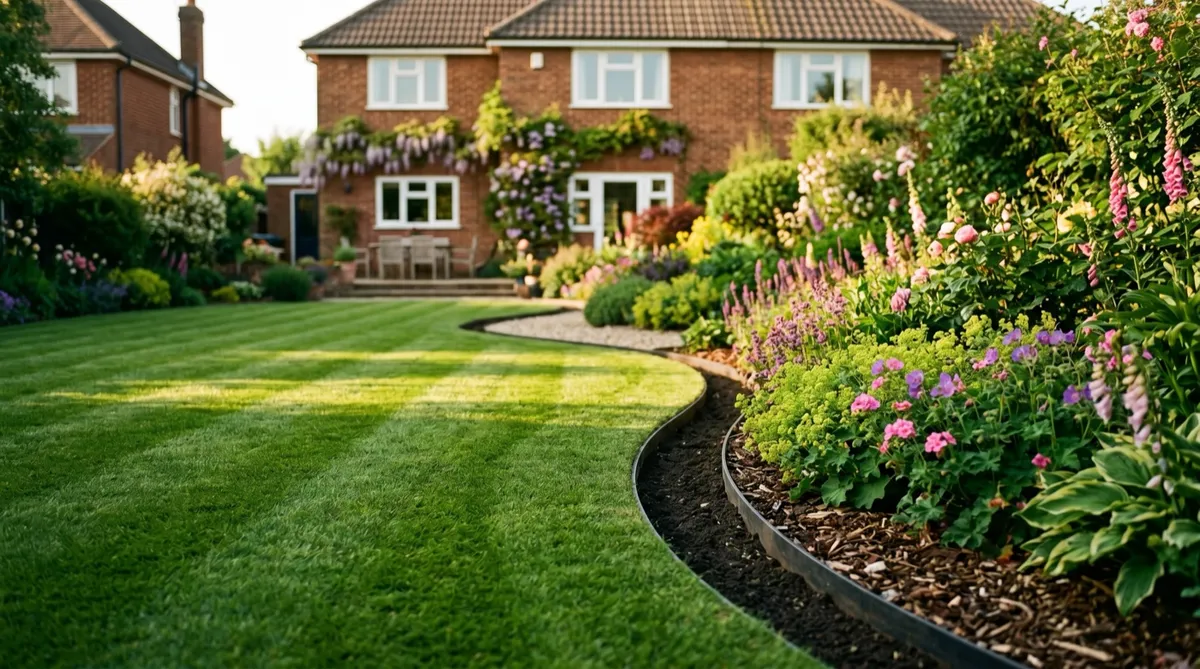
Key takeaways
- Lay a hosepipe on the lawn to try out the shape before you cut anything
- Dig the turf out to plant the same day, or smother it with cardboard if you can wait
- Make beds at least 60cm wide and loosen the soil about 30cm deep
- Stack lifted turf grass-side-down and it rots into lovely soil within a year
- Spring and early autumn are the best times to make a new bed
A new flower bed is one of the best ways to bring colour to a plain lawn. It comes down to two choices: the shape you want, and how you get the grass off. Get the shape right first, as a bed that flows with the garden looks planned, while a lopsided one looks like an accident. Then the turf can come out quickly with a spade, faster with a hired machine, or slowly with no digging at all.
Mark the shape before you cut
This is the most important bit. Lay a garden hosepipe on the lawn to draw your bed. It makes smooth curves and you can move it in seconds when you change your mind. For help with size and shape, the RHS advice on planning borders is handy.
Then pop indoors and look at it from the window you use most. You’ll see the bed from the house far more than from the garden. Shuffle the hose until the shape looks right. Along a fence, a gentle wave looks better than a dead-straight line.
For an island bed in the middle of the lawn, keep the curves wide. Tight wiggles look fussy and are a pain to mow around. Make a border at least 60cm wide, and ideally 1.2m or more, so you can layer plants front to back. Happy with the shape? Nick along the hose with a spade or trickle dry sand along it before you lift it away.
 A hosepipe makes a smooth curve and moves as often as you like until the shape looks right.
Dig the turf out with a spade
Digging out the turf gives you a bed you can plant the same day. Cut the turf into strips about 30cm wide with a half-moon edging iron or a sharp spade. Strips this size roll up neatly and aren’t too heavy.
Slide the spade under each strip at a shallow angle, about 3-4cm down, so you take the grass and its roots but not much soil. Go too deep and you waste good topsoil. Too shallow and the roots stay behind. Aim just under the mat of roots.
With the turf off, you’ve got bare soil ready to improve before planting.
 Slide the spade 3-4cm under the turf to lift the grass and roots and leave the topsoil behind.
When to hire a turf cutter
For a small bed, a spade is fine. For a big one, a turf cutter from a tool hire shop saves your back and your afternoon. It’s well worth the rental on anything larger than about 10 square metres.
Turf cutters don’t like slopes, soggy ground or lawns full of stones and tree roots. They also cut at one set depth, so set the blade as shallow as you can while still lifting clean strips. On a big, flat, dry lawn, they’re the way to go.
 A hired turf cutter slices neat strips fast, which makes it worth it for bigger beds.
The no-dig cardboard method
If you can wait a couple of months, the cardboard method means no digging at all, and it improves the soil as it goes. It’s perfect if you don’t like digging, have a bad back, or want to follow no-dig gardening from the start.
Mark out the bed and mow the grass short. Cover it with plain brown cardboard, overlapping the edges by about 15cm so no light gets through. Pull off any tape and glossy labels first. Soak the cardboard, then cover it with 8-10cm of mulch such as garden compost, well-rotted manure or bark.
The grass dies off in about 8-12 weeks, faster in warm weather. Worms pull the cardboard down into the soil, and you plant straight in.
 Overlapping cardboard under 8-10cm of mulch blocks the light and the grass underneath dies off.
What to do with the turf you lift
Don’t throw it away. Stack the strips grass-side-down in a hidden corner, like bricks, in a neat pile no more than about a metre high. With grass facing grass, it dies and rots instead of growing back.
Don’t dig live turf into your new bed, as the grass can come back. Within about a year the stack turns into crumbly, fibrous soil. If you garden on heavy ground, it’s brilliant for improving clay soil elsewhere.
 Turf stacked grass-side-down and covered rots into crumbly soil within about a year.
Getting the soil ready
Good soil makes a happy bed. For most perennials, fork the soil over to about 30cm deep once the turf is off. Shrubs and roses like a bit more depth so their roots can reach down for water in dry spells.
Soil under a lawn is often squashed hard from years of mowing and feet. Push a fork in and rock it back and forth all over the bed to loosen it. Pull out the roots of nasty weeds like bindweed and couch grass as you go, as any bit left behind regrows.
Spread a 5-7cm layer of garden compost or well-rotted manure and fork it into the top of the soil. It feeds the soil, helps clay drain and helps sandy soil hold water. No compost of your own yet? Our guide to making compost shows you how. Rake the bed level, and let it settle for a week before planting if you can.
Which method should you choose?
There’s no single best way. It depends on the size of the bed, how soon you want to plant and how much you fancy digging.
| Method | Effort | Ready to plant | Cost | Best for |
|---|---|---|---|---|
| Cardboard and mulch | Easy | 8-12 weeks | Low (just mulch) | Patient gardeners who hate digging |
| Spade | Hard work | Same day | Free | Small beds you want to plant now |
| Hired turf cutter | Medium | Same day | Hire fee | Big beds on flat ground |
| Weedkiller | Easy | A few weeks | Low | A last resort for big, weedy areas. Follow the label and keep it away from ponds |
If you’ve got the time, cardboard is lovely: it keeps all your soil, kills the grass and feeds the bed in one go. A spade wins for small beds you want to plant today. A turf cutter earns its keep on big, flat areas.
Edge the bed to keep grass out
A crisp edge makes a new bed look really smart. Cut a clean edge along the lawn side with a half-moon iron, slicing straight down about 10cm. Angle it slightly away from the grass to make a little gully the lawn can’t creep across.
Keep a narrow strip of bare soil, about 5-7cm, between the grass and your plants. Grass creeps sideways, so a gap and a sharp edge slow it down. Recut the edge two or three times a year to keep it neat.
For a permanent fix, sink a strip of metal, stone or thick plastic edging along the line, sitting just above the soil. It stops creeping grass and saves you recutting. It also makes mowing easy, as you can run the mower wheel right along it.
 A clean, straight-down edge (left) keeps grass out much better than a ragged one (right).
Common mistakes
- Making the bed too narrow. A skinny strip looks mean and can’t hold much. Go for at least 60cm, or 1.2m or more for a proper border.
- Digging live turf in. The grass can come back. Lift it and stack it, or kill it with cardboard first. This is the most common reason new beds fill up with grass.
- Skipping the soil prep. Soil under a lawn is squashed and tired. Fork it over and add compost, or your plants will sulk.
- Digging in a summer drought. Rock-hard soil fights the spade and new plants struggle. Wait for spring or early autumn.
- Leaving a ragged edge. It lets grass straight back in. Cut a clean edge and keep it tidy.
Tip: Mow the lawn short before you mark the bed. The hosepipe line shows up clearly and the edging iron cuts cleanly instead of skidding over long grass.
When to do what
Spring and early autumn are the best times to cut and plant a new bed. Here’s how the year shapes up.
| Month | What to do |
|---|---|
| January | Plan the shape on paper. Lay cardboard now for a spring bed. |
| February | Mark the shape with a hosepipe on a dry day. Lift turf if the ground isn’t frozen or soggy. |
| March | A great time to dig out turf and get the soil ready. Plant hardy perennials. |
| April | Finish the soil prep and plant most perennials and shrubs. Cut a clean edge. |
| May | Mulch the new bed. Recut the edge. Water new plants in dry spells. |
| June | Don’t start new beds in a drought. Keep new ones watered and weeded. |
| July | Lay cardboard over a future bed. Summer warmth kills the grass fastest. |
| August | Keep cardboard beds going. Plan autumn planting. Trim edges. |
| September | Another great time to dig out turf and plant. Warm soil and autumn rain help roots settle. |
| October | Plant spring bulbs and bare-root shrubs. Lift and stack turf for next year. |
| November | Mulch beds for winter. |
| December | Have a rest. Look at the bed from indoors and plan any changes. |
What to plant in your new bed
Plant in layers for a long season of colour. Put tall plants like delphiniums and grasses at the back of a border, mid-height ones in the middle and low plants at the front. In an island bed, put the tallest in the centre.
Choose plants that suit your soil. On heavy ground, our list of the best plants for clay soil has plenty of tough performers. Plant in groups of three or five for a natural look, rather than dotting single plants about.
 A finished island bed with layered planting and a crisp, mulched edge.
Ready for your next job? Browse our how-to gardening projects, or see how to lay turf if you ever want to turn a bed back into lawn.
Frequently asked questions about making a flower bed in a lawn
What is the easiest way to make a flower bed in a lawn?
Smothering the grass with cardboard and mulch is the easiest. Lay overlapping cardboard over the area, cover it with 8-10cm of mulch, and wait 8-12 weeks. There’s no digging. The grass dies, worms pull the cardboard down, and you plant straight in.
How do you mark out a curved flower bed?
Lay a garden hosepipe on the lawn to draw the curve. It makes smooth bends and moves in seconds. Shuffle it until the shape looks right from the house window. Then mark the line with a spade or a trickle of sand before you cut.
How deep should a flower bed be?
Loosen the soil to about 30cm deep for most perennials. Shrubs and roses like a bit deeper. Take the turf off first, then fork over the soil underneath and mix in compost.
When is the best time to cut a new flower bed in the UK?
March to April or September to October are best. The soil is warm and damp, so new plants settle in quickly. Avoid midsummer droughts and soggy winter ground.
Should I remove the turf or dig it in?
Take it off rather than digging it in. Grass dug into a new bed can come back and fight your plants. Either lift it and stack it to rot, or kill it first with cardboard.
How do I stop grass growing back into the new bed?
Cut a clean, straight-down edge and keep a narrow strip of bare soil. Recut the edge with a half-moon edging iron two or three times a year. A metal or stone edging strip stops creeping grass for good.
Can I plant straight after laying cardboard over grass?
Yes, if you add a deep layer of soil on top. Lay the cardboard, cover it with about 15cm of topsoil or compost, and plant into that. For shrubs and deep-rooted plants, wait for the grass underneath to die first.
What should I do with the turf I remove?
Stack it grass-side-down in a hidden corner. Within about a year it rots down into crumbly soil you can reuse. Cover the stack to keep the light off and stop weeds seeding on top.
Our team produces practical UK gardening guidance from source research, contributor records and established horticultural practice. Editorial standards are overseen by Matt W.