
Key takeaways
- Use plain brown corrugated cardboard with all tape and staples removed
- Overlap the sheets by about 15cm so no light gets through the gaps
- Soak the ground before laying and wet the cardboard afterwards
- Spread clippings about 5cm deep at a time and top up as they settle
- Only use clippings from lawns that haven't just been treated with weedkiller
- Plant through slits in the cardboard; wait a few months before sowing seed direct
A layer of cardboard topped with grass clippings is one of the cheapest ways to clear a weedy bed without digging. The cardboard blocks the light, the clippings hold it down and feed the soil, and worms do the rest. Both ingredients are usually free.
This guide is about that one combination: which cardboard to use, how much grass to put on, when to lay it and when you can plant. For the bigger picture of growing without digging, see our no-dig gardening guide.
How does a cardboard and grass mulch kill weeds?
It starves them of light. Weeds under the cardboard can’t make food, so they weaken and die.
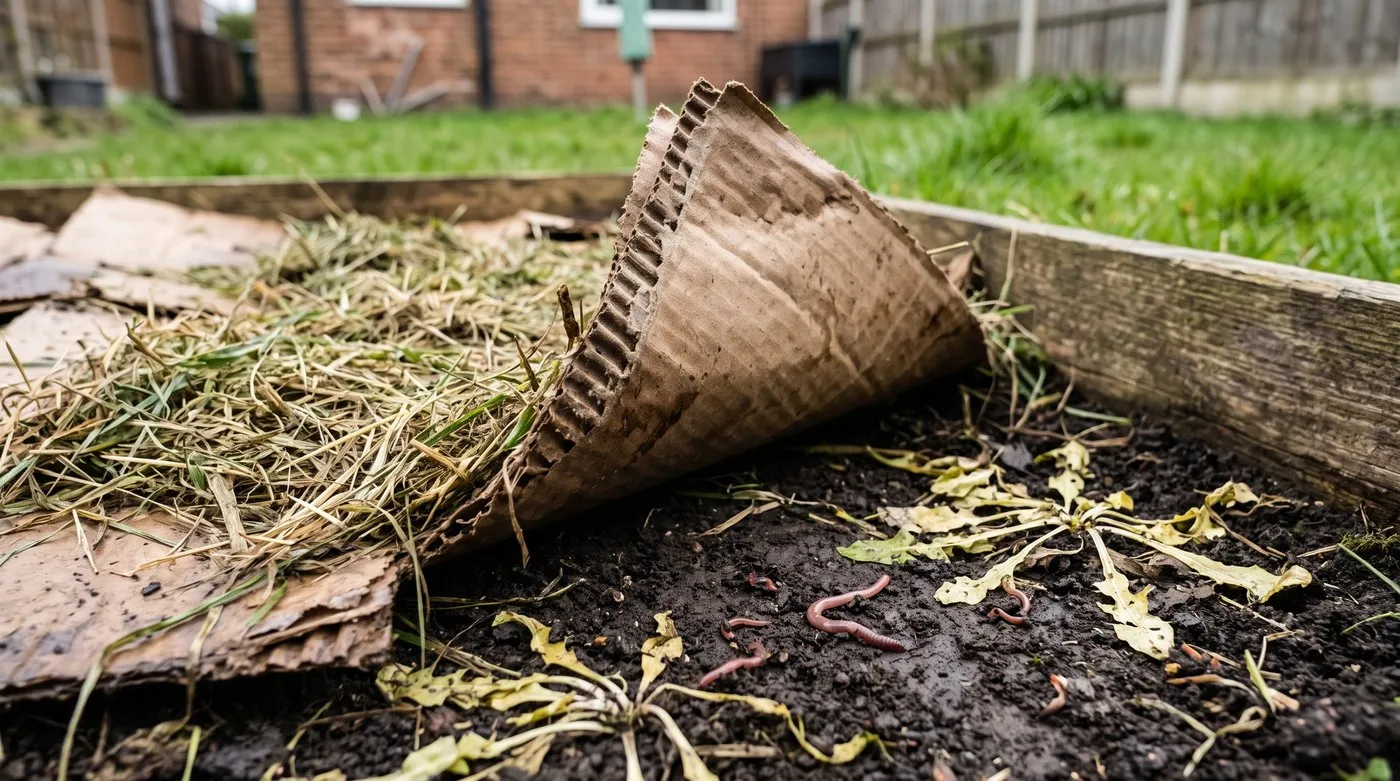
Peek under a corner after a few weeks. Pale, flattened weeds and busy worms mean the mulch is doing its job.
Annual weeds such as chickweed and groundsel give up within a few weeks. Perennial weeds with deep roots, such as bindweed, couch grass and ground elder, have food stored underground. They keep sending up new shoots for a while, so expect them to take a full growing season. Some will sneak round the edges, so pull them as soon as you see them.
The grass clippings do three jobs. They weigh the cardboard down, keep it damp so it rots, and add nitrogen and organic matter as they break down. Worms come up to feed on the damp cardboard and pull it into the soil.
How to lay cardboard and grass clippings step by step
Cut, soak, lay, wet, cover and weigh down. On a small bed it’s an afternoon’s work.
- Cut the weeds low. Use shears or a strimmer. There’s no need to dig them out. Remove any weeds that are setting seed.
- Soak the ground. Water the bed well, unless it’s already wet from rain. Cardboard laid on dry soil stays dry for ages.
- Lay the cardboard. Use flattened plain brown boxes. Overlap every edge by about 15cm, with no gaps.
- Wet the cardboard. Water it until it’s soft and damp all over. This is the step people skip, and it makes a big difference.
- Add the grass clippings. Spread a layer about 5cm deep over the cardboard.
- Weigh down the edges. Use bricks, boards or stones so the wind can’t lift it while it’s settling.
The clippings shrink as they dry. Add another thin layer every few weeks while you’re mowing. If you’d like to use the bed sooner, you can add a few centimetres of compost on top instead, which is the usual no-dig approach.

Press each sheet flat and overlap the edges well. Any gap lets light in, and weeds will find it.
Which cardboard is safe to use?
Plain brown corrugated cardboard is the safe choice. Delivery boxes and appliance boxes are ideal.
Use:
- Plain brown delivery and shipping boxes
- Brown corrugated trays from greengrocers
- Brown packing paper, layered thickly
Avoid:
- Shiny or glossy printed boxes, such as cereal or toy packaging
- Anything with a plastic film, foil or wax coating
- Greasy food boxes, which can attract rats
Take off all the tape, staples and plastic labels before you lay it. Plastic tape doesn’t rot, and you’ll be picking strips of it out of the soil for years. A light bit of printing on brown cardboard is fine.
For a whole allotment plot you’ll need a lot of boxes. Start saving them a few weeks ahead, and ask local shops or neighbours. Freecycle and Freegle groups often have flattened boxes going spare.

Build up a stack of plain brown boxes over a few weeks. Pull the tape off as you flatten them and the job’s half done.
Grass clippings: how much and which to use
Fresh clippings in thin layers work best. About 5cm at a time is plenty.
Too thick and fresh clippings pack into a wet, slimy mat. They start to smell of ammonia and can stop air getting through. If that happens, fork the layer over to let some air in. Too thin and they dry out and blow about. If you have lots of clippings, let a batch wilt for a day or two before spreading it.
Keep clippings a few centimetres away from the stems of any plants already in the bed. A wet mat pressed against a stem can make it rot.
Check where your clippings come from. Don’t use the first few cuts from a lawn treated with weedkiller. Most lawn weedkiller labels say how many mowings to wait before using clippings as mulch or compost. If a neighbour gives you clippings, ask first. If you’d rather keep your clippings on the lawn, our guide on whether to leave grass clippings on the lawn explains when that’s best.

A barrowful of fresh clippings goes a long way. Spread it thinly over the cardboard rather than tipping it in heaps.
When can you plant through the mulch?
Plant young plants through it straight away. Wait a few months before sowing seed directly.
To plant, push a trowel or knife through the cardboard and cut a cross. Fold the flaps back, plant into the soil below and tuck the flaps round the stem. Bigger transplants such as squash, courgettes, brassicas and potatoes cope well.
Direct sowing needs a fine surface, so wait until the cardboard has softened and broken down. In spring that usually takes a few months. A bed laid in autumn is often ready for sowing the next spring, especially with a layer of compost on top.

Cut a cross in the cardboard and plant straight through. The mulch keeps weeds down round the young plant.
When cardboard and grass clippings aren’t the answer
This mulch is great for clearing weedy ground, but it isn’t right everywhere.
- Japanese knotweed. Shoots push through cardboard with ease, and the plant needs specialist control. Our Japanese knotweed identification guide explains what to do.
- Brambles and docks. Dig out the main roots first, then mulch. Otherwise they’ll come straight through.
- Beds full of small plants. Low alpines and spring bulbs can be smothered. A thin mulch of leaf mould or compost suits them better.
- Steep slopes. Clippings slide off. Woodchip stays put better, as our woodchip mulch guide explains.
- Very overgrown plots. Cut and clear the worst first. Our guide to clearing an overgrown allotment plot takes you through it.
What about slugs?
The damp layer gives slugs a cosy place to hide, especially in the first couple of months. Lift the edges on damp evenings and pick off what you find. Protect young plants until they’re growing strongly. Our guide to getting rid of slugs naturally has more ideas.
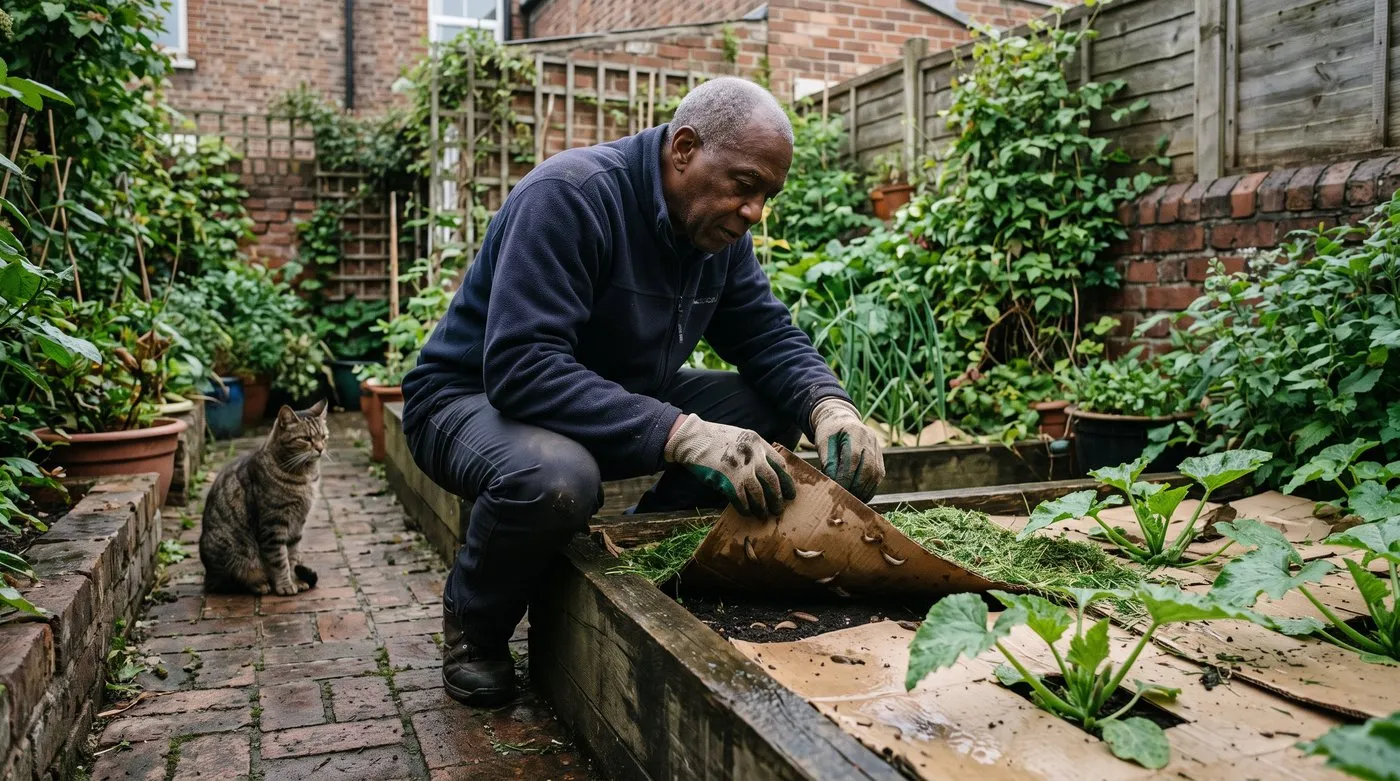
A quick look under the edges on damp evenings catches the slugs hiding there before they reach your young plants.
Cardboard and grass mulch calendar
| Month | What to do |
|---|---|
| January to February | Save and flatten delivery boxes. Remove tape as you go |
| March to April | Lay cardboard on beds you want to clear this year. Start adding clippings from the first mows |
| May to June | Main clippings season. Top up thin layers every few weeks. Plant transplants through the cardboard |
| July to August | Keep the layer damp in dry spells. Pull any weeds that find the edges |
| September to October | Lay cardboard on new beds for next year, while the soil is moist and warm |
| November to December | Check edges are still weighed down. Add a layer of compost on beds for spring sowing |
Common mistakes with cardboard and grass mulch
Laying cardboard on dry soil. It just sits there. Soak the ground first and wet the cardboard after.
Leaving gaps. Weeds race for any chink of light. Overlap every edge by about 15cm.
Piling on fresh clippings too thickly. A deep layer goes slimy and smelly. Add thin layers and top up as they settle.
Leaving tape on. Plastic tape doesn’t rot and ends up in your soil.
Using clippings from a freshly treated lawn. Weedkiller residues can harm crops. Check the label and wait the stated number of cuts.
If your plot is on heavy soil, our guide to no-dig on heavy clay shows how to build on this mulch over the next few years. You’ll find more soil and mulch guides in our how-to section.
For a wider look at mulches and when to use each one, read our guide to what mulch is and how to use it.
Frequently asked questions
Will cardboard and grass clippings kill weeds on an allotment?
Yes, it smothers most weeds if no light gets through. Annual weeds die within weeks. Tough perennials such as bindweed and couch grass often take a full growing season, and a few shoots will find the edges. Pull those as they appear.
What kind of cardboard is safe to use in the garden?
Plain brown corrugated cardboard is the one to use. Take off all tape, staples and labels first. Skip shiny, plastic-coated or waxed boxes, because the coating doesn’t rot down and leaves bits of plastic in the soil.
How thick should grass clippings be as mulch?
About 5cm at a time is plenty. Thicker layers of fresh clippings go slimy and smelly. Add another thin layer once the first has settled and dried a little.
Do cardboard and grass clippings attract slugs?
Yes, the damp layer gives slugs somewhere to hide. Lift the cardboard edges and check underneath on damp evenings, and protect young plants until they are growing strongly.
When is the best time to lay a cardboard mulch?
Spring or early autumn, when the soil is moist and worms are busy. Avoid a hot, dry spell, as dry cardboard sits there for months. In frozen midwinter little happens until the soil warms.
Can I use grass clippings from a lawn treated with weedkiller?
Not straight away. Lawn weedkiller labels usually say not to use the first few cuts after treatment as mulch or compost. Check the label, and if in doubt, leave those clippings on the lawn.
Our team produces practical UK gardening guidance from source research, contributor records and established horticultural practice. Editorial standards are overseen by Matt W.


